Loading summary
Transcript74 lines
- [00:00]
Sherrell Dorsey
Let's be real. When it comes to your health, authenticity matters. For nearly 30 years, Iherb has quietly built one of the world's leading online wellness destinations, trusted by millions of customers in 180 countries. At iHerb, every product comes from verified top rated brands, stored, handled and shipped directly from our own climate controlled, state of the art facilities. No third party sellers, no shortcuts, just the highest standards of quality and transparency from cart to doorstep. That's why more and more people are turning to iHerb, where wellness and integrity meet. Visit iHerb.com trusted wellness delivered worldwide. Hi, this is Sherrell Dorsey from TedTech and this episode is brought to you by Solidigm. The world runs on data in data relies on storage. But most businesses rarely think about how crucial that storage really is. The truth is it's no longer just a commodity with new demands and constraints, especially from AI. The old ways of managing data are holding innovation back. Solid state storage from solidigm is changing that. It helps reduce energy use, shrink physical footprints and accelerate data at the edge, unlocking more from your AI infrastructure. Learn more at whatsthestateofyourstorage.com.
- [01:27]
Freddie
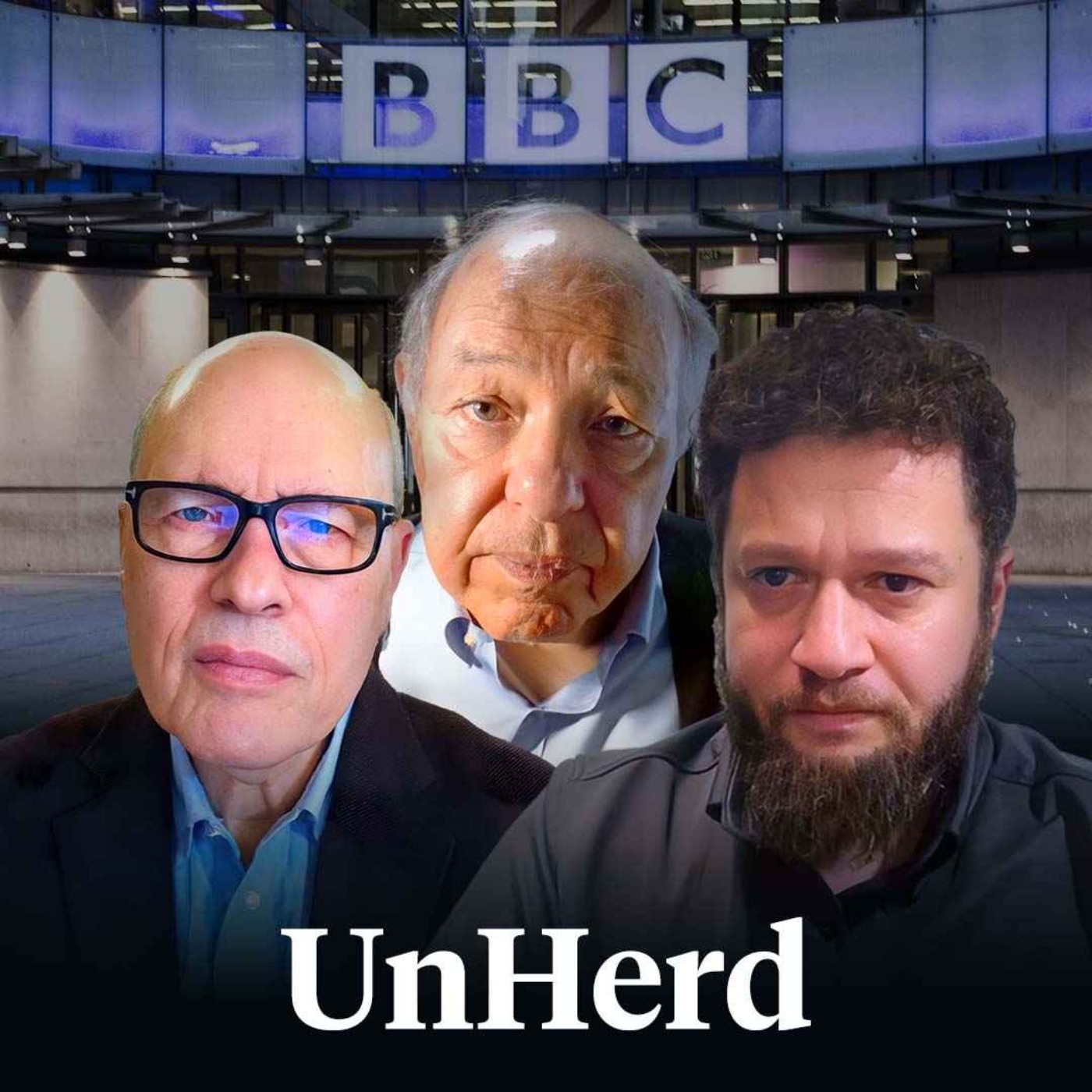
Hello. Welcome back to UnHerd. The big story this week has been the BBC and the argument, what now looks like it is a legal argument between President Trump and the national broadcaster here in the uk it's very significant because it's never happened that a sitting head of state or even elected politician is threatening to sue in the court of their own country. The BBC, there's been an apology, they've accepted culpability and they've said they don't want to pay any kind of compensation. We're going to hear back from Donald Trump imminently about whether he thinks enough is enough and he's going to leave it at that, or probably more likely, in my opinion, that he progresses it and tries to make more of this argument. What does it actually mean? What does it mean for precedent? Is there a legal case to answer? Could he be successful? Are we now going to see politicians just suing media organizations? Much more following in the Donald Trump slipstream. What does it mean for the BBC? It's a very perilous time for this organization. It's tried to improve, it's tried to be kind of self investigating and trying to fix its perceived liberal bias, but it doesn't seem to really be working. It seems to be getting more and more into hot water. So what is the future for that organization and is there an effect which people claim a lot a kind of chilling effect on the media from lawsuits like this coming out from the most powerful office in the land. We had an earlier lawsuit from Donald Trump against Paramount, CBS News, that settled for $16 million just months ago. So is there a new kind of dynamic here? And is that going to fundamentally change how the media operates? Over the last couple of days, we've been talking to legal experts, campaigners and people inside the BBC to try and do a bit of a deep dive for you and work out what are the big implications of this story.
- [03:26]
Sherrell Dorsey
Before we start this episode, a brief word from our sponsor, Charles Stanley Wealth Management. The economic tumult of the past month has forced many people to take another look at their finances and whether their retire retirement plans are on track. This is where having an experienced wealth manager can make all the difference because it's not just trying to hit a number. It's about planning the life and lifestyle that you want to lead. Charles Stanley Wealth Management can help you chart your financial course, guiding you on when you can retire comfortably, as well as how best to pass on your wealth to the next generation. Unless you're planning to spend it all. Discover how partnering with a dedicated wealth manager can let you focus on what matters most. For more information, visit charles-stanley.co.uk today to schedule a free no obligation call to discuss your situation. And remember, investment involves risk.
- [04:12]
Freddie
So the first thing we want to do is get into the legal aspects of this case. How is it being set up and does it stand any chance of success? So joining us to try and work this out is Professor Bert Newborn. He has been a legal professor at NYU since the 70s and has seen many such cases come and go. Thanks for joining us.
- [04:31]
Professor Bert Newborn
Professor Delighted to be here.
- [04:33]
Freddie
So, first of all, just set out what exactly is happening in this lawsuit between President Trump and the BBC? Where is he suing them and on what grounds?
- [04:42]
Professor Bert Newborn
The lawsuit is a libel or defamation suit, which is a suit that claims that a false statement was made about someone and harmed their reputation. Now, the common law, since the beginnings of the entire common law system in Britain, provide a remedy for a person who is the target of a false statement that harms their reputation. And that is the law that President Trump is asserting here. Now, he's thinking of bringing he hasn't brought the lawsuit yet. He's simply threatening, but he's thinking of bringing it in the state of Florida where he lives, and that gives him the appropriate linkage with the state to be able to file it in Florida. He's thinking of filing it in federal court. In Florida, there is a parallel court systems. In the United States, there is a federal court and a state court, and they often overlap. He's going to choose the federal court, which he can do because he's a resident of Florida and the BBC is a British corporation. And so federal courts would hear it. I see. Now, once he files, then there'll be very, very important and very difficult issues. The most important one, I think, is whether or not the lawsuit qualifies as a genu attempt to repair his reputation, or whether the BBC can invoke what in the United States is called the First Amendment, which is our free speech protection, which protects speakers and organizations like the BBC from retaliation.
- [06:22]
Freddie
And is that covered? Even though it's a foreign organization, the First Amendment still applies.
- [06:28]
Professor Bert Newborn
The BBC, as a foreign defendant, is entitled to exactly the same legal protections that a United States defendant would have. Since the 1960s, the law in the United States has made it very difficult to sue someone for defamation, because if the person is a so called public figure, and of course, you can't imagine more of a public figure than President Trump, if the person is a public figure, American courts say, well, you've opened the door to being criticized a lot, and that's very important that you be criticized a lot. And therefore we won't hear a libel or a defamation case again against you unless it was brought with actual malice or with reckless disregard for the truth. So in order to even get into court at all, Trump would have to argue that the BBC brought this or did its documentary with actual malice or with reckless disregard of the truth.
- [07:31]
Freddie
What would your estimate be on that? I mean, if you were having to give odds of whether the court would even hear it, what would you say?
- [07:39]
Professor Bert Newborn
My sense is that Trump has a fairly good case there because there's a Supreme court case from 1991 involving the new Yorker magazine in which a reporter taped a long series of interviews with a man named Jeffrey Masson, who was a Freudian analyst. Masson made some very interesting statements and allegations which were then printed in the New Yorker. But she put quotation marks around the statements. Even though they were at best paraphrases, they weren't accurate, necessarily, depictions of what he actually said. But she put quotation marks around them. And the Supreme Court held that falsely quoting something is itself a very serious journalistic error. And if the putting of quotation marks around something that the person didn't actually say alters the meaning in some way, then that's satisfying the test of actual malice. That you knew that what you were doing was putting something false out there, and you nevertheless did it. And I think that Trump may have a serious argument that splicing the pieces of the speech together in a way that make them appear to be a single coherent narrative rather than a series of isolated discursive statements. The way Trump usually talks all over the place, putting them together makes it more likely that someone is thinking that Trump. Trump is inciting the mob to violence rather than just babbling on as he often does.
- [09:15]
Freddie
However, though, Professor, I mean, if every politician sued every time a media organisation gave an unfavourable or perhaps unfairly suggestive edit of their remarks, I mean, there wouldn't be a politician in the world that hadn't sued for that. It's a very unusual course of action.
- [09:35]
Professor Bert Newborn
Let's distinguish between unfavorable and inaccurate. Unfavorable. No politician should be allowed to sue because people say unfavorable things about him. That's why the law requires actual malice and reckless disregard for the truth. But if you do something that alters the meaning of what someone said by changing the perception, either by falsely attributing a quote to them or by splicing some pictures together to make it appear that you're saying something other than you said, that then becomes a defamatory statement. I'm not sure that an American judge is going to have much patience with an argument that says the media should be insulated from lawsuits, even though they are changing the meaning of what they are depicting on the screen.
- [10:28]
Freddie
Okay, so let's say that you're right about that. Let's say the threshold of actual malice is reached, and so that part of the case is robust. Is there not a problem by bringing a case in the US about a British documentary that, frankly, very few American people even saw? I mean, talk to us about that component.
- [10:47]
Professor Bert Newborn
I think that's the weakest part of the case. Ironically, the strongest part of the case is the merits. The weakest part of the case is that he's chosen to bring the case in Florida. Now, my understanding is that he can't bring it in Britain because the statute of limitations is one year, and it's run. The statute of limitations in Florida is two years. So he has an extra year to bring it, and he's gotten inside that barrier. But in order for him to sue the BBC in Florida, the BBC has to have minimum contacts, is what the law in the United States says. You must have minimum contacts with Florida, making it fair and just to be forced to defend There. And since, as I understand it, the documentary was only aired in Britain and was not aired in Florida, and to the extent that it has been aired in Florida, it's been without the cooperation or participation of the BBC, it would be people taking unauthorized screenshots or unauthorized copies and putting it on.
- [11:50]
Freddie
Right. Just to say that the BBC has made that clear. They have said that it was not broadcast in the US and was not even available on the American version of iplayer or the American platform that they normally distribute on. So I suppose in theory, some people inside the state of Florida or the US could have fired up a VPN and watched it, or they may have seen social media clips about it. It's tough to think that it had huge effects on Trump's reputation.
- [12:18]
Professor Bert Newborn
Now, that's going to be Trump's argument. Trump's argument is that if you put something out there and then say, but you're not allowed to look at this in Florida, given the current media structure and media climate in the world, you have to understand that you can't build a wall around what you say. And so just because you've dissemin in Britain and said, please, I don't want anybody looking at this in Florida, that doesn't mean that people are not going to look at it in Florida. And so this is an open issue. This is an open legal issue that hasn't yet been resolved. But I think the BBC's strongest argument is they did everything they could to keep it from going into Florida. Therefore, it's unfair for them to be dragged into Florida involuntarily, to have to defend this in a court where they lack minimum contacts.
- [13:08]
Freddie
Just to say it would be an extraordinary precedent, wouldn't it? Let's say the case went ahead and he was awarded damages. It would mean that there was then precedent that anything said anywhere in the world on any media channel, could be sued about and damages could be awarded for inside the United States. I mean, that just opens up a whole new world.
- [13:28]
Professor Bert Newborn
That's better put than I've heard. Most lawyers do it, but it's exactly right. What we're talking about here is the risk of what I would call universal jurisdiction, that given the fact that what you have is this interconnected media universe, that anything you say somewhere is going to be eventually heard somewhere else, no matter how hard you try to stop that. If that's the case, then the idea of minimum contact no longer has meaning within the free speech world and anybody can be sued by anyone, anywhere for anything they say. Now, I think that's enough to frighten a good judge away from holding. There's jurisdiction in Florida.
- [14:10]
Freddie
There's a third component to this, isn't there, which is the damages component. So the dollar amount that has been bandied around is $1 billion. We know that Donald Trump likes these huge figures to go into lawsuits with. Normally, the history shows he settles at a much lower number, but it's a big, scary number. And it looks from the remarks of the BBC chairman, Samir Shah, that they are genuinely frightened. I mean, the BBC does not have a billion dollars to spare. So this is a kind of organization ending amount of money. And we are scared in this country of that kind of lawsuit. But you've got to prove, presumably, that you've suffered damages. And I suppose the main problem he has there is that he went on to win in Florida and to win the election. So it's very hard to say that that particular unfairly, inaccurately spliced documentary had any meaningful negative effect on his life.
- [15:06]
Professor Bert Newborn
Well, that's the other weak point in his case. I mean, you're absolutely right that the whole reason that American law is as protective of media as it is is they don't want reporters being frightened away from saying controversial things because they're afraid of being sued for huge amounts of money that would allow powerful people to shut up the media very quickly. The American rule comes from a case against the New York Times where the New York Times made a minor mistake and they were sued in a Southern courtroom by racists who were trying to drive them out of covering the civil rights movement in the South. And a jury issued a huge damage award against the Times for this very, very minor technical mistake. And the Times was on the verge of pulling its reporters out of the south because the damage awards were so huge. And that's when Supreme Court stepped in and said, wait a minute, you can't use libel this way. You can only use libel if it's malicious or reckless disregard of the truth. And if you have an honest belief that what you're doing is true, then go ahead and publish it and don't worry about the libel. Now, with Trump, there's something called a libel proof defendant, Someone whose reputation is already so shredded or so fixed in the mind of the public that no matter what you say about him, it's not likely to shift the public perception of the person in ways that would justify damages. So not only is it going to be hard for him to prove a billion dollars in damages, that's just pure Trump puffery. It'd be hard for him to prove substantial damages at all. But the hard issue here is this is all up to a jury. The jury will decide whether or not they materially altered the meaning of the quote. The jury will decide what the size of his damages are. And the risk is that you get a politicized jury. And these runaway juries are what create such ambiguity and such uncertainty in American law. American lawyers live in fear of being before a jury that they can't control.
- [17:23]
Freddie
Another reason why, no doubt, he will be bringing his suit in Florida, where he appears to be more popular. Let me ask a final question, professor, thinking about the history. I mean, you mentioned an interesting example there involving the New York Times, but it didn't involve a politician. We were looking at the records and trying to find examples where politicians were suing media outlets, and there are actually relatively few, it seems, over the decades. There's one quite famous example from the 1960s when Barry Goldwater, the Republican candidate, sued Fact magazine. They had reported that he has, quote, a severely paranoid personality and was psychologically unfit for the high office to which he aspired on the basis of a poll of psychologists, which sounds much closer to a genuine slander or defamation because it's making a kind of very specific medical accusation about the individual. And he was successful. He got $1 million, which at the time was a lot of money, of damages from that company. Are there other examples, or is Donald Trump totally creating a new precedent here?
- [18:27]
Professor Bert Newborn
Well, it's rare, it's very rare for a sitting official to sue for libel because the sitting official is the very definition of the public figure of the person who has put himself or herself out there and therefore has essentially waived the privacy rights that many of us would like to have in our private lives. They put themselves out as public figures, they are political figures, and they then have to take the slings and arrows of the free market and ideas where people will argue back and forth about them, but they're not completely immune. In other words, if they prove that it was a lie or that you were materially altering a quote and that therefore you were reckless and malicious in the way you published it, they can surmount this very high barrier. But it is a high barrier. I think it's unlikely that we're ever going to get to that because the case will be dismissed if he brings it on lack of in personum jurisdiction. There's no jurisdiction in Florida over the BBC for this.
- [19:32]
Freddie
So percentage chance of success. If you were counsel for the president, what number would you give him?
- [19:39]
Professor Bert Newborn
Well, for the President, I would say there's less than a 25% chance of success.
- [19:44]
Freddie
Well, it's not nothing then. You didn't come back with 1 or 2%. Less than 25 is still possible. The BBC has now apologized. If you were acting for them, do you think they did the right thing?
- [19:55]
Professor Bert Newborn
Yes, they absolutely did the right thing. They did the right thing both journalistically and that. They did the right thing legally. Journalistically. They made a serious error in judgment. And the BBC is an important institution. People trust it. I watch the BBC news every night because I trust its facts. And when they make a mistake, if they don't own up to the mistake, then you begin to erode your sense of trust in them. But if they do apologize, then the trust comes back because you realize that they're trying to do the right thing. And legally, there's just enough of a chance, just enough of a chance that he'll succeed and impose significant monetary damages on them that an apology is a great way to extricate yourself from a difficult legal position.
- [20:44]
Freddie
Professor, thank you so much for your time.
- [20:46]
Professor Bert Newborn
Thank you.
- [20:49]
Sherrell Dorsey
I'm done with subscriptions, streaming, fitness, razors, vitamins. I've got subscriptions for everything in my life. They lock you in and half the time I can't figure out how to unsubscribe. That's why I'm so excited about the new Blue Apron. Now you can get delicious meals delivered with no subscription needed, including new pre made options. Keep the flavor, ditch the subscription. Get 20% off your first two orders with code APRON20. Terms and conditions apply. Visit blueapron.com terms for more. Hi, this is Sherrell Dorsey from TedTech and this episode is brought to you by Solidigm. The World Runs on data, and data relies on storage. But most businesses rarely think about how crucial that storage really is. The truth is, it's no longer just a commodity with new demands and constraints, especially from AI. The old ways of managing data are holding innovation back. Solid State Storage from solidigm is changing that. It helps reduce energy use, shrink physical footprints and accelerate data at the edge, unlocking more from your AI infrastructure. Learn more at whatsthestateofyourstorage.com we all remember.
- [21:55]
Rulof Botha
The choices that shaped the course of our lives in business. World renowned venture capital firm Sequoia Capital calls them Crucible Moments. Their podcast brings you inside the pivotal decisions that define some of today's most influential companies. Hosted by Sequoia's Rulof Botha Crucible Moments Season 3 pulls back the curtain on the untold stories behind companies like Zipline, Palo Alto Networks, supercell and more. Hear about the make or break decisions, early stumbles and leaps of faith that turn scrappy startups into market defining forces. Once you're caught up on season three, check out some of the episodes from seasons one and two with guests like Steven Chen of YouTube, Tony Hsu of DoorDash, Steve Huffman of Reddit, Brian Chetzky of Airbnb, and more. Tune in to Sequoia's new season of Crucible Moments to discover how some of the most transformational companies of the modern era were built. Crucible Moments is available everywhere you get your podcasts and@CrucibleMoments.com go listen to Crucible Moments today Are you noticing your car insurance rate creep up? Even without tickets or claims, you're not alone. That's why there's Jerry, your proactive insurance assistant. Jerry handles the legwork by comparing quotes side by side from over 50 top insurers so you can confidently hit buy. No spam calls, no hidden fees. Jerry even tracks rates and alerts you when it's best to shop. Drivers who save with Jerry could save over $1,300 a year. Don't settle for higher rates. Download the Jerry app or visit Jerry AI Acast today.
- [23:30]
Freddie
So that is the legal ins and outs. But what now happens to the BBC and what will the effect be on the uk? Well, joining us, I'm happy to say, is Joshua Rosenberg. It's really hard to think of anyone better qualified to comment on this as not only is he one of the foremost legal experts in the uk, he was also legal correspondent and legal editor for the BBC for 15 years. Welcome to Unherd.
- [23:53]
Joshua Rosenberg
Joshua thank you very much indeed, Freddie.
- [23:55]
Freddie
Speaking as someone who knows the inside workings of the BBC, it seems almost ironic that this whole process was kicked off via an attempt to improve, via an attempt to look kind of self reflectively at perceived bias. This memo that was leaked to the Daily Telegraph that kicked off the whole thing by this guy called Michael Prescott was itself an attempt by the board of the BBC to see what errors they had made and had they been too left wing, were they biased? And ironically that process is now getting them into even more trouble. It feels like every time they make an admission it's just feeding the organization's enemies more kind of meat to go on. Do you think that's true? That there's a sort of slightly self destructive process going on at the BBC where they're trying to improve when those attempts are Making things worse.
- [24:47]
Joshua Rosenberg
They're certainly trying to improve and in this case it's made it worse. But of course, the purpose of Prescott's memo to the board and his review of how the BBC handles complaints was to improve the way in which the BBC does this. Now, had the BBC acted on these complaints sooner, they might have been resolved without ever being leaked to the newspapers, without ever becoming aware of the them. So it's not so much the fact that the BBC commissioned a look at how it was dealing with these complaints. And it's not just obviously about President Trump. There were many others covered by Prescott's memo. It's not just that, it's how they deal with it that matters. And that's where I think they've come in for criticism entirely fairly.
- [25:35]
Freddie
But also kind of ironically, the new chairman, Samir Shah, is considered by people on the political right as an ally. You know, he is the dissenting voice inside the BBC. He was an appointment by the conservative government in order to lead this kind of shakeup and now he is the one coming in for criticism for having responded badly. So it's another example of trying to change the so called left wing bias of the BBC is getting them into further hot water.
- [26:02]
Joshua Rosenberg
I think the problem is that Samir Shah is not the Director General. If he had been, he might have been able to handle this differently. Yes, he is chair of the board, but I suppose the board takes a hands off approach to editorial decision making. Even if it gets to hear about these things, I suppose it sends things back down to the Director General and to the CEO of News, Deborah Turness, and producers and editors down the line and says, you sort this out, you know, we can give you general guidance. So I can see why a large organization like the BBC is run in this way. In the past, the BBC has had directors general who were journalists. You think of Tony Hall, Lord hall of Birkenhead, and you think of course of people who've not been journalists by training but have been working closely in other areas of broadcasting. I think the problem is that the Director General has to be everything. He or she has to run the organization, report to the board and yet be editor in chief. And that must be a very demanding job.
- [27:05]
Freddie
You were at the BBC for 15 years. Do you think it is institutionally biased?
- [27:10]
Joshua Rosenberg
I think that is an inference that can properly be drawn from some of its coverage in some of its areas of reporting in news.
- [27:21]
Freddie
Is that a yes?
- [27:21]
Joshua Rosenberg
Obviously, if you're asking me, is it institutionally biased, it's not. If you're asking me, is some of its coverage of news biased, then? Many people would say so, including yourself. I am not very happy with the way that it's covered. The Gaza war and the Middle east conflict and many others in the Jewish community are highly critical. It's fair to say that many Palestinians are highly critical as well, and people who support the Palestinian cause. I don't think that the BBC has come out of this very well, and that is one of the areas that perhaps has been sidelined by all the attention on the editing of the Trump speech. But if you look at what was said by Prescott about that coverage and about other areas of public life, then I think the BBC does have a lot to answer for.
- [28:14]
Freddie
So it sounds like you do think parts of the news coverage are biased. That's what you said. So overall, would you still be a defender of it? Do you think the country is better off for having the BBC in its current form than not?
- [28:31]
Joshua Rosenberg
The BBC certainly contributes a very great deal to public life. It is very attractive to have a broadcaster that is not showing commercials all the time or having to get the sort of sponsorship that commercial broadcasters have to have and is able to take risks and so on. The BBC still has a very large news organization, despite all the cuts it's had to make and all the problems that it suffered over the years as a result of resources being pared back. I think the BBC has the potential for doing a great deal of good. I think there are some excellent radio programs. I think there is excellent coverage of music and concerts and the proms and all sorts of other things. But I do think that greater guidance from the board and perhaps a new Director General, new Head of News, would help. But it's really about the people, isn't it? It's really about having high quality, well trained, senior experienced people, particularly in journalism, to ensure that things are done properly.
- [29:34]
Freddie
Do you think we will hear from this government a renewal of the charter, just with some amendments, some tinkering around the edges, or do you think there'll be a radical re plumbing and maybe shrinking of the.
- [29:47]
Joshua Rosenberg
I don't think that they can simply renew it in its present form. And I think this sort of incident has made it more vulnerable to change. I do think that there needs to be rethinking, perhaps a smaller BBC, perhaps not doing all the things that it feels it has to do. You could perhaps fund that more readily. You might even fund that from general taxation, you know, to what extent should it be broadcasting abroad? Obviously, it's cut back many of its foreign language services, but you know, it then moved to television, which is much more expensive. I think that the BBC is being required to do more and more with less and less, and that is the sort of thing that perhaps the government will be reviewing.
- [30:32]
Freddie
Final question for you, Joshua. Does this lawsuit, this attack from a foreign president on the BBC worry you? Do you think it in some way signifies a broader chilling of the press? You hear that phrase a lot.
- [30:47]
Joshua Rosenberg
I don't think we've ever seen a serving president or a serving head of state or government actually threatening to go to court in his or her own country against the BBC before. But on the whole, we have seen restrictions on broadcasting in the United Kingdom which the Americans simply wouldn't tolerate. American journalists can't understand how the BBC can't discuss live court cases, for example, whereas in the UK we accept restrictions in order to ensure that people have a fair trial. People in the United States can't understand how the BBC can accept public money which is raised by law. Again, they think that a commercially funded organization is much more independent. So it is perhaps unique to the United Kingdom. It has its advantages, it has its disadvantages. I think a lot of people would be sorry to see it going completely, but I do think that the government is likely to consider that something needs to be done.
- [31:54]
Freddie
Joshua Rosenberg, thank you so much for your time.
- [31:56]
Professor Bert Newborn
My pleasure.
- [31:59]
Sherrell Dorsey
Hi, this is Sherrell Dorsey from TedTech and this episode is brought to you by Solidyne. The world runs on data and data relies on storage. But most businesses rarely think about how crucial that storage really is. The truth is it's no longer just a commodity with new demands and constraints, especially from AI. The old ways of managing data are holding innovation back. Solid State storage from solidigm is changing that. It helps reduce energy use, shrink physical footprints, and accelerate data at the edge, unlocking more from your AI infrastructure. Learn more at whatsthestateofyourstorage.com hey, Ryan Reynolds.
- [32:35]
Freddie
Here for Mint Mobile. You know one of the perks about having four kids that you know about.
- [32:40]
Joshua Rosenberg
Is actually getting a direct line to the big man up north.
- [32:43]
Freddie
And this year he wants you to.
- [32:44]
Joshua Rosenberg
Know the best gift that you can give someone is the gift of Mint.
- [32:48]
Freddie
Mobile's unlimited wireless for $15 a month. Now you don't even need to wrap it. Give it a try@mintmobile.com Switch upfront payment.
- [32:56]
Sherrell Dorsey
Of $45 for three month plan equivalent to 15 per month required new customer offer for first three months only. Speed slow after 35 gigabytes if network's busy. Taxes and fees extra. See mintmobile.com.
- [33:07]
Freddie
So we've talked a little bit about the legal aspects. The next thing to investigate is what is the effect on civil liberties? Is the freedom of the press actually endangered by a sitting president firing off lawsuits at major news organizations? Certainly the left of the political spectrum thinks so. Everybody on the left seems to say that President Trump is exerting a chilling effect, that the media is cowering, that he is dominating the free media, that free speech is in peril. Is that really true? We thought we'd bring on just such an activist to test those arguments. His name is Seth Stern. He is director of advocacy at the Freedom of the Press foundation, and he joins us now. Welcome to Unherd Set.
- [33:51]
Seth Stern
Great to be here.
- [33:52]
Freddie
So I presume from the name of your organization that you are not very keen on sitting presidents suing media organizations. Am I right?
- [34:00]
Seth Stern
You are correct. And whether it's a sitting president or not, we are not keen on baseless lawsuits against media organizations. Any lawsuit that claims election interference cost someone a billion dollars in an election they won does not seem to be pursuing good faith redress for damages actually suffered, whether it's a president, a local mayor, anybody else, for that matter. And Donald Trump, long before he was president, has been a fan of slap suits, strategic lawsuits against public participation. He's made his agenda clear. Suing costs him a little money, but he's got a lot of money. His opponents have to pay more than he does and have less than he does. And he recognizes the chilling effect of draining his opponent's resources, whether or not the lawsuit has any merit.
- [34:56]
Freddie
Let's just put the other argument here. We have an organization that has admitted wrongdoing, a very powerful media organization that many people think has a consistent political slant. We have the chairman of that organization, Samir Shah, apologizing for an error of judgment, acknowledging that this controversial edit quote did give the impression of a direct call for violent action. So it is a falsehood, which is exactly what defamation exists to counter. We've had the top two people resign from that organization. So evidently there's an admission of really quite serious wrongdoing. And if you're Donald Trump or one of his supporters, you say, well, look, this is the law. Why should these organizations be protected and have special treatment if they go around lying or putting out falsehoods about people? They should act within the law, and it's quite right that they should be sued for it.
- [35:51]
Seth Stern
Well, US Defamation law is not intended to punish news organizations for bad Journalism, it is not intended as a gotcha whenever a mistake is made. What it is intended for is to compensate people for damages they actually suffered because of falsehoods about them. Donald Trump suffered no damages as a result of this edit and certainly didn't suffer a billion dollars in damages. That figure is intended not because Donald Trump thinks that he has lost a billion dollars in business because of the way a BBC documentary that might not have even been seen in the United States was edited. It's because he realizes from his experiences with Paramount, from his experiences with Disney, that there is a chilling effect when he puts the power of the presidency behind a lawsuit. Now, was the edit ideal? Probably not. Would these people have resigned? Yeah. Would these people have resigned as they did, if a similar mistake was made with respect to someone who wasn't Donald Trump? I doubt it. The other issue I have with Trump's claim here is that defamation not only needs to be false, it needs to be harmful to the plaintiff. Donald Trump has spent the last several years claiming that January 6th was a day of love, that nothing wrong happened that day, that the protesters were acting in good faith. In fact, he's pardoned everyone who was convicted of any offense that day. So it seems logically inconsistent to me for Trump, on the one hand, to be saying January 6th was great and everything that the people, everything that the rioters did that day was great, and it's all a liberal conspiracy to turn January 6th into something bad, and then to say that it's defamatory to the tune of a billion dollars to even associate him with the same events that he's saying there was nothing wrong with.
- [37:50]
Freddie
Not sure about that argument, to be honest. I mean, if he thinks. Thinks the liberal media have been concocting a fake narrative about January 6th to turn a normal protest against perceived injustice into some supposed insurrection that he was orchestrating. And that's exactly what the BBC appear to have done in this highly edited clip. So I don't think there's an inconsistency there necessarily. But let me ask you something else. These other cases you just mentioned, the Trump lawsuit against Paramount, how. How significant of an effect do you think we're actually seeing there? Because in that example, as I understand it, there was a threatened lawsuit. It was connected with the Kamala Harris interview, and David Ellison has now settled, who is the new chief executive, having recently acquired that company. So in some way, that settlement was all about smoothing the passage of a big media transaction. Try to unpack that for us.
- [38:47]
Seth Stern
Yes, that's exactly right. It actually settled prior to the merger between Paramount and Skydance being approved by Trump's fcc, which is headed by a man named Brendan Carr, who wears a golden bust of Donald Trump as a lapel pin. So that tells you a little about where Brendan Carr's allegiances lie. Now, that lawsuit was entirely frivolous. That is not a matter similar to the BBC one, where there is a kernel of wrongdoing that might be improper but is not worth a billion dollars. That's for sure. That was a lawsuit that every legal scholar you'll talk to will tell you had no merit whatsoever.
- [39:28]
Freddie
It's worth noting that President Trump initially sued them for $10 billion. So 10 times what he's threatening the BBC with. He then upped it to $20 billion and walked away at the end of the process with $16 million, which is what Paramount actually paid out. But it's almost a new dimension to this story, isn't it? Because you've got a president who's using the judicial system to prosecute grievances with unfriendly media, but you've then got a media that is in some way complicit in this arrangement because they want their own corporate interests to be served. And so they are almost appearing to play along with this new legal kind of dance with the president in order to make sure they get their big mergers and acquisitions signed off. It kind of brings in the media into this. It's not a kind of virtuous media battling against autocratic wannabe president. It's media and the president in this together.
- [40:25]
Seth Stern
Yes, well said. And it's worth noting that in addition to the payment Paramount made as a condition of the merger, Paramount made editorial concessions. It promised to appoint a bias ombudsman who they said would be there for internal transparency purposes. Brendan Carr has said he would monitor the work of the bias ombudsman. And that's besides that. The merger in the first place was likely seen more favorably by Trump because the acquiring company was operated by the son of one of his biggest and wealthiest supporters. So it does indeed throw that new complication into government media relations. And we're seeing now Trump push for Paramount to be or for Skydance, the Ellison's company, to also be able to acquire Time Warner. He's trying to put his thumb on the scale as that transaction takes shape. So certainly a new and troubling dimension that is to some extent or to a large extent, enabled by the consolidation of the corporate media in the United States.
- [41:31]
Freddie
Let me just challenge this kind of Mood for a moment, though, on the other side, which is that there's a lot of this talk of Trump chilling the media. In fact, Nancy Pelosi used it in an interview this week about the chilling effect that Trump has on the media. It's a very common phrase, and yet from the outside, it looks to us like the American media is as noisy as it ever was. It is a complete cacophony of opinions. There is no shortage of criticism of Donald Trump across the Internet, across many big media organizations. So this idea that scary Donald Trump has successfully chilled the media into compliance is just a bit of a fantasy, isn't it?
- [42:15]
Seth Stern
Well, he's not done yet. It's an ongoing project that he is working on from day to day. You only know the news you read. You don't know the reports you haven't read. We have no way of knowing what stories have been killed out of concern of aggravating the Trump administration. Some outlets are critical of Trump, some are not. But we'll never know what was imprinted. We've heard countless reports of sources being afraid to come forward, journalists, particularly journalists who aren't citizens of the United States, either getting out of the profession or being unwilling to publish under their own byline. So we've seen plenty behind the scenes in terms of pushback from within the media itself on reporting that is critical of Trump. You are absolutely right. I criticize Trump every single day in my capacity with Freedom of the Press foundation, as I criticize Biden every single day back when he was president. And am I concerned yet about, you know, armed goons showing up at my door? No, not yet. But I don't think that that is. Is an outcome that Trump doesn't want. I just don't think he's been able to get there yet. And we have to stay vigilant to ensure he doesn't get there.
- [43:29]
Freddie
Seth Stern, thank you so much for your time today.
- [43:31]
Seth Stern
Thank you.
- [43:32]
Freddie
So there you have it. Our thanks to Professor Bert Newborn, to Seth Stern, and to Joshua Rosenberg for shedding some light and having the debate with us about law, media and the BBC. This was unheard of.
- [43:47]
Seth Stern
Foreign.
- [43:53]
Sherrell Dorsey
Hi, this is Sherrell Dorsey from TED Tech, and this episode is brought to you by solidigm. The world runs on data, and data relies on storage. But most businesses rarely think about how crucial that storage really is. The truth is, it's no longer just a commodity with new demands and constraints, especially from AI. The old ways of managing data are holding innovation back. Solid State storage from solidigm is changing that it helps reduce energy use, shrink physical footprints, and accelerate data at the edge, unlocking more from your AI infrastructure. Learn more at whatsthestateofyourstorage.com the holidays are.
- [44:29]
Seth Stern
About giving something truly special. I'm Martha Stewart and I believe the best gifts aren't just beautiful, they're useful every single day. Lennox has brought timeless beauty and lasting quality to our tables for generations, and their Lenox Spice Village is the perfect holiday gift for someone you love or for yourself. It's more than a spice rack. It's a charming collection of hand painted houses that turn ordinary spices into extraordinary experiences. Imagine cinnamon from a tiny Victorian cottage or oregano from a pastel townhouse. Suddenly, a simple meal becomes a moment to savor. Because spices can be more than ingredients, they can inspire memories, warmth and joy all year long. Give a gift that lasts beyond the holidays. Discover the collection@lenox.com SpiceVillage and now a next level moment from AT&T business. Say you've sent out a gigantic shipment of pillows and they need to be there in time for International Sleep day. You've got AT and T5G so you're fully confident, but the vendor isn't responding and International Sleep Day is tomorrow. Luckily, AT&T5G lets you deal with any issues with ease, so the pillows will get delivered and everyone can sleep soundly, especially you. AT&T5G requires a compatible plan and device coverage not available everywhere. Learn more@att.com 5G Network.