← Unholy: Two Jews on the News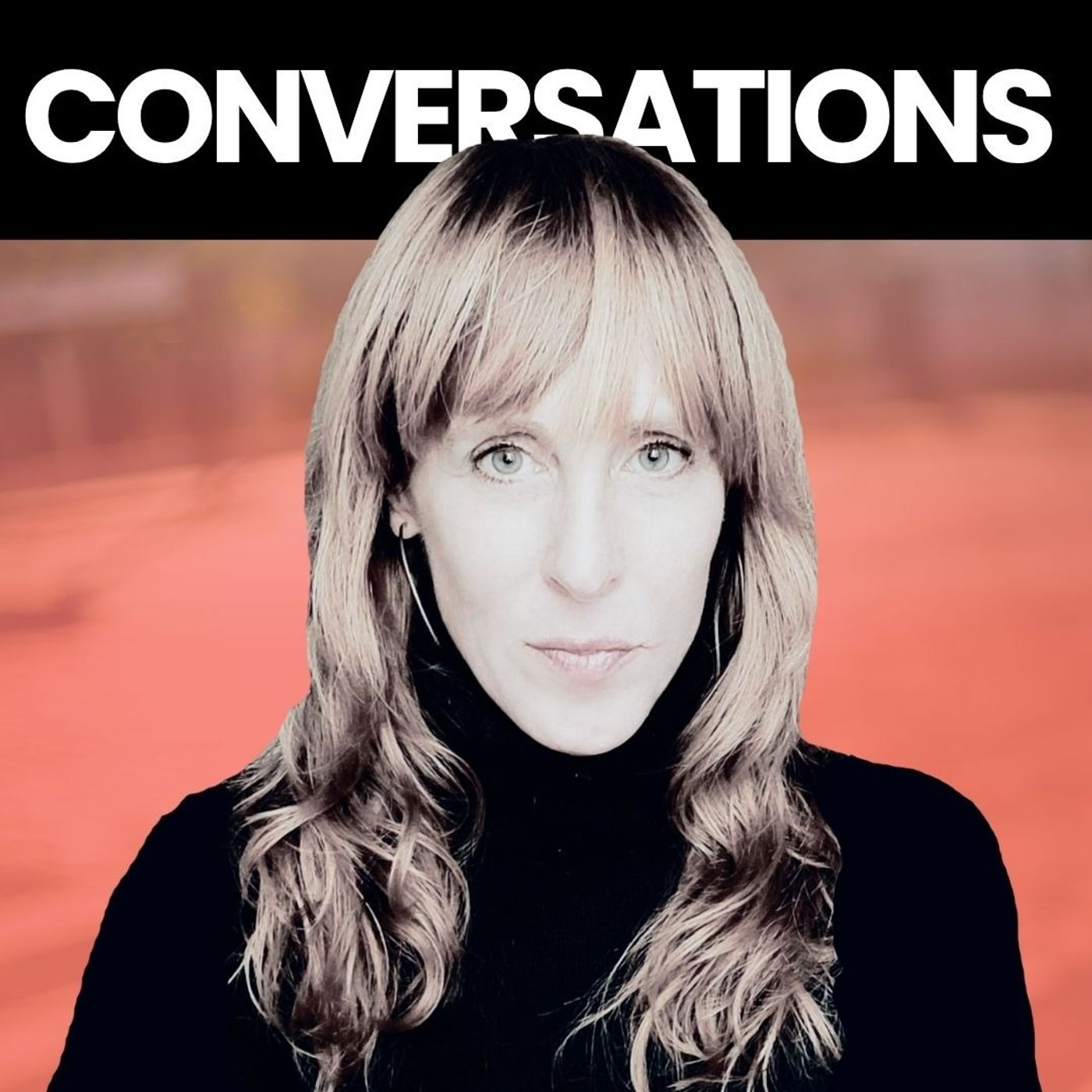
Unholy: Two Jews on the News
Danielle Haas on NGOs, Antisemitism & Institutional Bias
00:33:16
A new report accuses the world's most trusted human rights organizations of a problem that goes far beyond anti-Israel bias: antisemitism, and a culture that pushes out Jewish staff for naming it. This week, Yonit and Jonathan talk to Danielle Haas, a former senior editor at Human Rights Watch who spent 14 years inside the organization before co-founding EiGHT, a watchdog created to scrutinize the watchdogs. Drawing on interviews with over 70 staffers across nine major NGOs, the report documents internal messages calling for "liberating the world from Zionism," leadership reposting inflammatory rhetoric, and a pattern of employees being sidelined the moment they raised concerns.
Loading summary
Transcript43 lines
- [00:02]
A
Be honest. Be honest that you're an industry that is subject to all sorts of pressures, financial, ideological, operational. So, for example, when you're functioning in Gaza under Hamas control, which you might have to do, be honest that your work is produced under the restrictions of an armed militant group, because it absolutely affects the output.
- [00:38]
B
It's unholy. I'm Unit Levy in Tel Aviv.
- [00:40]
C
And I'm Jonathan Friedland in London.
- [00:42]
B
And this is our latest installment of our unholy conversations. And this week we wanted to focus on a report that came out and made a lot of headlines. Reports about several NGOs and speaking to staffers in these humanitarian organizations and what they say about the efforts to essentially shape a narrative that is more anti Israel, more pro Palestinian in these organizations that are supposed to be, of course, an empirical place searching for the truth. And actually it goes deeper than that. It does lay a foundation to say that there are not only anti Israel voices inside these organizations. I think that has been quite clear over the past three years. But actually that there are anti Jewish voices and there are a lot of Jewish staffers in these organizations that are talking about anti Semitism. And even more than that, the report is asking very important questions about the methodology of these organizations, how they work, how they scrutinize themselves or don't, and what that means for the region and beyond. So we thought we'd talk to the report's author. One of the authors,
- [01:53]
C
Danielle Haas, is a former senior editor at Human Rights Watch, where she worked for 14 years. She then went on to be one of the founders of Eight, an organization that aims to scrutinize groups just like Human Rights Watch. Danielle, welcome to Unholy.
- [02:09]
A
Thank you for having me.
- [02:11]
C
Your organization's put out a really eye catching, very arresting new report into the state of the whole NGO world when it comes to Israel and to Jews. And we're going to get deep into that. But first I thought it'd be useful just to talk a little bit about your own background and how you come to be connected to the world that your report describes. I mentioned your stint at Human Rights Watch, but perhaps tell us about that, how you came to be part of this and what your own experience of it was.
- [02:38]
A
Well, I came from journalism professionally. I had been correspondent for Reuters and then the San Francisco Chronicle, mainly during the Intifada period that had taken me up and into Iraq. And at that point I, I looked around and thought, well, this isn't the healthiest lifestyle and I need a break. And so that took me to Columbia to a PhD program as a non American. And when I became an American, that was my entree into employment in the States. And Human Rights Watch was the first and only place I then worked until I left America. And I worked there for 14 years in total. And it had happened by. I sat there on this cream couch in Queens and thought, well, where do I want to work? And I thought Human Rights Watch. And then I looked on their website and I thought that because it seemed to me to be a really perfect blend of academia, which I was involved with, and journalism, which I've been involved with, and speaking truth to power and very similar themes. And so there I went and you
- [03:42]
B
produced this report, of course, after leaving. It's a scathing report, a research of actually how these organizations work from the inside. You speak to 70 staffers. We wanna kind of unpack all of it. But would you go through for just for starters, the sort of most striking findings of this report?
- [04:01]
A
Yeah, so we say 70, but it's really more, we say nine plus organizations. It's really more simply through identifying the name, people could probably be extrapolated who they were. So we've sort of protected that. And what it points to, I think according to the methodology of human rights organizations themselves and the reports that I edited for years, is systemic problems. So it's not just, you know, one problem here and one problem there. We're getting similar themes, similar issues repeating across time and space and roles and organizations.
- [04:33]
C
Just before you get to that, because you used the word methodology, and I want to make sure that people listening to this know this wasn't just anecdote, that this was quite, that you pursued here, a rigorous study with rigorous methodology. Can you just say, and then we're going to get back to those, those striking findings, but just say something about the method you pursued.
- [04:49]
A
Well, the method was the method of human rights organization. So you can take it to be rigorous or not rigorous, but it is, it is what you're reading from these organizations, which means you're interviewing people, you're using and triangulating what you're finding with secondary sources to say is it credible according to other sources. And we're using internal documentation. We're also granting anonymity, much like they do to people who fear retaliation. And that's a common methodological practice too, with of course, the knowledge internally of who these people are.
- [05:23]
B
So now into the findings. So there is anti Semitism there, I think there's a lot of anti Israel. The fact that these organizations don't have Oversight. There's nothing that kind of, there's no kind of internal critique of what they do. And of course the kind of connection on the ground with local militants, it's
- [05:41]
A
framed that way partly because it was framed and put forward as a submission to the Royal Commission into anti Semitism and social Cohesion in Australia. And that was their own mandate. So we framed it in those terms. More significantly, I think we could frame it as a report on internal policy violations and violations of the sector's principles and own policies. So that's another way to understand what's happening to Jews. Or in terms of the Israel work,
- [06:08]
C
you know yourself as a journalist that, you know, what leaps out here is not the big picture, but it's sometimes the really specific details that give sort of flesh and color to the story you're telling. Some of those that just leapt out. I'm just going to mention a couple, but perhaps you can expand that because I think it will give listeners a flavor of what it is. You uncovered. For example, on the internal messaging platform used by Doctors Without Borders, Medecent, Sans Frontier, you found employees said in one case the fight for freedom is about liberating the world from the grip of Zionism. I mean, that's quite a striking statement because it goes to beyond just the conduct of Israel or its government. It goes into a sort of notion of a global dominating Jewish conspiracy. I would say, well, somebody else referred to Israel as a 76 year old crime scene. Again, the 76 leaps out because it's not referring just to the occupation since 1967. It's saying the whole of Israel is a criminal endeavor. On that same platform dismissed rape allegations made against what they called Palestinian resistance fighters as propaganda. So this is referring to October 7th, someone else was told stop playing the Jewish card and so on. And then just one more example, there was an Israel Palestine meeting held by Human rights watch on October 23, 2023. So that's just a fortnight after October 7. And it did not mention the Israeli casualties that had been incurred that day or indeed the hostages who'd been abducted on that day. Just no mention of that in that meeting. There's more in that vein, but perhaps there are things that you know that you and even you who so sort of battle hardened by this were really struck by. And what you think they tell us?
- [07:51]
A
Well, I think one of the tricky aspects of all this is that a lot of the problems are in the absence of, they're in the lacuna. So you know, people are looking for smoking guns and things like this. But it's often the sort of more subtle. So it's the lack, as you're pointing, out of acknowledgement or even reference to Jewish victims or hostages amnesties. Agnes Callamard barely referenced them in the month after October 7th. There's no campaign by Amnesty for hostages, unlike for Boko Haram's kidnapped girls. There's no reference to the Majd Al Shams attack that killed 15. You know, so there's a lot of absences that make it a very tricky, slippery thing. Or when they're referencing sort of an Israeli military incursion into Gaza in which there were casualties, not mentioning it was there to free the hostages, things like this. So that's one aspect of it. I think what is quite depressing and shocking is also the involvement of senior management. So, you know, a human rights organization would say abuses happen, but ultimate responsibility and accountability lies with those in charge. And what we're seeing is that it's not just a sort of lack of awareness of what's going on. It's that they're really leading and setting the tone in these organizations. So you have the head of MSF, 67,000 people work for MSF, you know, reposting that Israel is a group of child killers. You have the former, you know, former heads of Human Rights Watch. You have the British head of MSF applauding a donation by a band kneecap that has just promoted Hezbollah on stage and waved a flag. So, of course that sets the tone. You're watching your leadership do that. Well, what are you gonna do underneath them? Similarly, when you see Amnesty International, for example, swat down its Amnesty Israel chapter after it chall the legal interpretation of genocide after agreeing with much of the findings, including ethnic cleansing, and they send out a sort of almost communist Thai press release that says they're suspending the chapter for two years because of their hostility to Amnesty positions, you sort of see this creeping of groupthink and the lack of open dialogue. That has not only been a feature of the organization, I remember, but it's been the nature of human rights since they were being discussed in 1945, 1948, with the universal Declaration of Human Rights, there's always been a lot of debate. It's very interpretive, but it's becoming hardened and ossified, this point. And that's incredibly disturbing.
- [10:31]
B
I think we should say msf, Doctors Without Borders, if someone doesn't know the acronym here. I just want to read out one quote from the report, which is very poignant. Jewish employees raise concerns openly at first, then less often than not at all, in time, they were all gone. This is something that an employee of one of the international rights groups says. Could you tell us what happened to Jewish staff in these organizations when they tried to raise a concern when they thought there was an inaccurate in the reports or anything like that? What happened to them?
- [11:03]
A
Yeah, I think, look, a lot of These issues proceeded October 7th. This was not new. And a lot of people Cite sort of 2021 ish2022 as a very seminal sort of point at which these organizations came up with their apartheid reports. This is when the cultures to shift a bit and people describe as sort of being sidelined if they raised concerns. I should really point out this doesn't extend. Only you can be a Jew in these organizations if you publicly sort of parrot certain things. The question is not simply being Jewish. I think it's not being publicly overtly supportive of these positions. So, in fact, some of their favorite employees are indeed Jews who will say things very publicly. But what we've seen is repeated people going and through normal outlined paths of redress, raising concerns. I did it myself. And then you sort of. I used to kind of think in my mind it's three strikes and you're out. So the first time you'll raise something not to do with policies, but to do with how they're being carried out. And I would get, okay, you know, thank you, Danielle. You know, thank you. And then the next time it would be, thank you, thank you, Danielle. And then the next time it would be like, you could tell there was like a red mark. And so, you know, this was repeated across organizations. People, I can't tell you the number of documented and like three dossiers, huge dossiers were submitted in these organizations, and they're not at all interested. And quite frankly, people describe almost being marked out at that point for having even raised issues. So you see them removed from arenas, discussions, areas of expertise that they should be participating in. At some points you see jobs being eliminated out of the blue and sort of reconstituted later down the line. And you also see there's a case of someone from Plan International, not everyone is Jewish, who questioned her own feminist organization silence post 10-7-on sexual violence victims and describing a process of being sort of retaliated against and removed. And she's back going to a labor tribunal now.
- [13:01]
B
Yeah, this is Dan Richard, who's mentioned in the report as well.
- [13:04]
C
Just. That's helpful, actually, because I think it will just clarify something in a Way it shouldn't need saying because everyone can have their own views. But the people you're talking about, the Jewish employees who were sort of dissenting from the position, these are not people who are, you know, signed up members of Itamar Ben Gvir's party. These are not supporters of Netanyahu or the government in the war. These are people who are actually very troubled in many cases by what Israel is doing. As you mentioned, I think before they were on board with even a declaration that Israel might be committing ethnic cleansing. So it's not that they are, how would you put it, somebody who likes hamburgers in the vegetarian society. They're not at odds with the organization. They're adherents to the human rights ethos of these organizations. They just think that on these specific absences or other declarations that have gone too far, they've crossed some kind of line. I just think it's useful to clarify where the people who are those dissenters are coming from.
- [14:04]
A
Yeah, well, I don't know where they're coming from. Politics is irrelevant in all of this and they're certainly not coming from. You should be able to be working in a human rights organization, quite frankly, and hold right wing views. Human rights are sort of universal ideas of our rights and freedoms, but certainly not. I mean, I think by the nature of working in a human rights or humanitarian organization, you're liberally inclined. And I think one of the great ways in which they manage to get silenced is by making it so difficult to speak out and deliberately misinterpreting your positions. You know, it's totally irrelevant people's backgrounds that we come across from all parts of the world and that the issues raised, I want to reiterate, were not about policies taken. They were about the methodology and how things were enacted and the inconsistency. And why are you applying this? And how did you come to that legal determination? And why are you doing this when it comes to Israel, Palestine, but not doing that for Sudan? So these are professionals who are committed to the values, but that doesn't mean we should be in lockstep with the organization. And the minute you declare your allegiance to the organization above the principle is the minute you get real rot setting into the sector.
- [15:14]
C
Yes, I suppose what I mean was that this is not like we're saying that this was somebody who is really anti guns, who was working for the NRA and National Rifles association, didn't fit in because some people think, well, obviously this is not that. These are people who are in sympathy with the broad ethos of the organization. But as you say, they think sometimes the organization's own standards and rules are not applied consistently. And just again, one example, you quote an Amnesty International staffer who said employees had been encouraged to join anti Zionist protests, but not rallies for Israeli hostages, quote, because we're against the Israeli government. That would be just an example of that differential standards being applied.
- [15:54]
B
I'm wondering about these organizations that are considered by many as these reports are considered as scientific. Right? They're reported as if it is the truth. And when you talk about methodology, part of methodology is of course self scrutiny or self critique or something inside the organization, some kind of oversight. These organizations have none of that today.
- [16:16]
A
What you have is some degree of financial accountability. Right? But when we talk about accountability in terms of scrutiny of the standards and the methodologies and what they're employing, what they have are standards. They have their own principles and guidelines. And I was witness to many of these being created. They won't claim to be socially scientific, you know, that they themselves say they're not, but they are. I think it's a lack of attention. And that means we like human rights. We're inclined towards human rights. So we're inclined towards human rights organizations. We like NGOs. Studies show that NGOs have public confidence as opposed to business or as opposed to government. So there we have a sort of overall trust level. Then we have these organizations actively promoting the idea that they are the guardian of human rights. And then you have on the other side, very busy, distracted media, the public, public policy officials who, you know, 24 hour news cycle, they're not paying close attention. We want good guys in this world. And so altogether it's resulted in what is this kind of immense elephant in the room in my mind, which is that how did it come to be that such a powerful sector embedded in every aspect of our lives is simply allowed to freewheel, essentially. And even when challenged, what you'll really see is in their response, the quoting of policies that they have, no one goes beyond and says, but where do you prove they're enacted? And no one even calls them out on their inconsistencies. So for example, you an organization like Human Rights Watch regularly calling out dictators or heads of state, overstaying their welcome in terms of terms of office. And Ken Roth stays there at the head for 30 years. Or you have the fact that Ken Roth at Human Rights Watch took money from a human rights abuser in 2020. The money was returned, but he stays on. Now why does no one challenge these organizations from the point of view of protecting public trust and credibility?
- [18:18]
B
Yes. The Saudi billionaire who donated to former Human Rights Watch executive director Kenneth Roth was Mohammed Bin Isael Jabal.
- [18:25]
A
He was a Saudi construction owner, I believe. And Human Rights Watch had written a report about him in 2012 naming his labor rights abusers, and it accepts a donation from him.
- [18:36]
C
Yeah, and I'm sure Ken Roth would push back against that if he were here. I just want to. Cause you said at one point, how did it get to this point? So I want to ask you that question. Is this just. I think you used the word earlier group think, because that happens in institutions. Is that what is here? Is it a reflection of a broader shift in the culture progressively that you can see in the universities and in parts of the media going back 20, 30 years? Or is it. And I saw in one reaction to your report, to your organization's report, there was a reference back to a meeting that was actually monitored by the FBI in 1993 of sort of Hamas activists in the United States that was recorded in which they sort of plot a long term grand plan to infiltrate key cultural institutions. You know, there are some people who believe this is evidence, what you've uncovered is evidence of a plot to take over those big institutions. So there's a range of possibilities. I'm interested to know where you land on why this shift has come about.
- [19:42]
A
I don't know about plots, long term plots. And I think that's the stuff, hopefully of journalism and, you know, greater inquiries. I don't. It's a very hard ecosystem in which to even speak out. Things are incredibly sensational. They're incredibly unnuanced. What I can say in terms of my own experience and that of others is that there is certainly a generational shift happening within these organizations. I saw it myself. This is a very emboldened, aggressive generation that's very sure of itself and very outraged by so many things and they're not afraid to say it. And they're schooled in certain ideologies at this point, settler colonialism and all the rest of it. So I saw them coming into the organization and I saw the capitulation essentially of the old guard in response, because it was overwhelming, because many of the older guard were not the beneficiaries of dei. They know their days are numbered and they're just hanging on, quite honestly. And it doesn't take a lot for these organizations or our society in general to fall apart. What it really takes is good people and people in positions of power to do nothing. So that's what began to happen. Forgiving, excusing, overlooking behavior and bending of the rules and policies that really should have been addressed there and then and now I think they're totally swamped.
- [21:04]
B
Before we talk about what can fix this, I'm just interested in one more part of the puzzle. I think it's Article 8 in your report. And that has to do with the association with prescriber organizations, terror organizations, with militants, and the fact that in some of these organizations, the people who are working locally on the ground are either associated with terror organizations or themselves are employees of these. I think Israel was very concerned about proving that with unrwa, with the UN agency. How does that factor into all of this?
- [21:36]
A
I think it's just this flexibility of core principles that is again, like, you know, rigorous standards because you might be sympathetic to the cause. And so we see Amnesty's Middle east expert sharing a platform with the head of the PFLP in 2020. And we see Human Rights Watch taking as a board member, another PFLP member, and Ken Roth saying, well, that was ancient history, if indeed it was anything at all. Or Walid Dakar, you know, being another PFLP prisoner, Israeli prisoner, who died after. But he was, you know, had been convicted of serious abuses and being described as a poet death is heart wrenching without really referencing what his crime was. And so it's this sort of beginning, the softening of the whole integrity of the movement because there is sympathy for the cause and the consequences of that don't just pertain to Jewish employees. They don't even just relate to Israel, Palestine work. They relate to all the work and the credibility of these organizations. You no longer have integrity because you already excused Hamas killing civilians on the grounds that it was understandable reaction to apartheid. So if you've compromised your principles with Israel, what happens when the same thing happens in other context? Will you suddenly be outraged or will you forgive it then too on the basis of settler colonialism? So it's super dangerous to play with principles based on ideology.
- [23:05]
C
We should perhaps mention that other work has come up. We've found a similar pattern in that there was a survey last year by olam, which is a global Jewish humanitarian network that also surveyed Jewish professionals in these kinds of organizations. And 55% said they'd experience or witness anti Jewish bias and 57 said that they'd been reported anti Israel incidents. Again, I just want to hear your reaction to something. I suspect there will be some to a view that I think some people will hold, which is, given what has happened these last two and a half years, Israel's response to October 7, the intensity of the war on Gaza, the destruction that's been brought there, and indeed, indeed, what we're seeing in terms of extremist settler violence on the west bank, reported now daily, even by former generals, former defense ministers of Israel. Will there be some who go, yeah, surprise, surprise, there's anti Israel sentiment in organizations that are all about human rights. Forget the detail of this. Of course Israel's going to be unpopular in organizations that are really strong on human rights. When you have to mention him again, someone like Itamar Bengvir around, making all the statements he makes every five minutes, it's gonna happen. And therefore, unless something in the reality changes, of course organizations like this are going to have the kind of sentiments that you've detailed in this report.
- [24:34]
A
Of course they will. I mean, and there are all sorts of conflicts that go on around the world that take personal opinions in one direction or the other. Ukraine and Russia, the role of these organizations is not to get involved with every political conflict that comes up, but to really rise above the fray and to be credible in all instances, because they have remained consistently neutral and credible throughout all this. So I fully agree with you. But this is not a political situation, and so it shouldn't matter what's going on on the ground. There should be confidence that when these organizations criticize Ben GVIR and they criticize settlers, they can be regarded as serious because they've already been consistent in all their other methodology. The problem is they undermine themselves at this point. Who knows to take them seriously in other examples now because they have been so compromised over the past two or three years.
- [25:25]
C
What about those Israeli human rights organizations, B'Tselem and others, that have actually drawn similar conclusions? Maybe you think there's a groupthink issue even there. That would be interesting to hear.
- [25:36]
A
So, yes, indeed, there are Israeli organizations that replicate the findings of human rights organizations like Amnesty and, and that's again, fine. Let them find what they find. Let their methodology, we're saying be credible, scrutinized, consistent. You can't do one thing vis a vis Israel and another thing vis a vis North Korea and not at least be transparent about it. At least. We're saying, be honest. Be honest that you're an industry that is subject to all sorts of pressures, financial, ideological, operational. So, for example, when you're functioning in Gaza under Hamas control, which you might have to do, be honest that your work is produced under the restrictions of an armed militant group because it absolutely affects the output. Not noting that is sort of dishonesty by omission. So we're not saying doing anything crazy. We're saying, live up to your own standards of accountability and transparency. Be honest. Brokers, you know, all industries produce ecosystem, you know, Amnesty quotes, Human Rights Watch quotes Bet Salem, and sometimes they even do it in conjunction with each other. And again, all well and good. Let's just understand that that's what's happening. All we're saying is let's demystify this immense beast and say, understand there are processes. It's an industry. That's what's happening. And often what they're also doing is catering. I think it's very significant to say to their bases they have different financial structures, but somewhere like Amnesty is a grassroots kind of organ. And so if their base is responding to images of Palestinian children, and we know from insiders that they get more donations when they feature Palestinian children as opposed to Sudanese children, then, ergo, they're gonna start promote those campaigns more also. Fine. Just be honest about what you're doing. So you don't think the Joe public, that this is 20 times worse in Gaza than it is for the Sudanese child?
- [27:39]
B
We didn't ask, Daniela, if that is the reason that you yourself left Human Rights Watch. But I wonder, when you look at, you know, what this report says, can this be fixed at all?
- [27:50]
A
Well, I think there's even some discussion amongst us, you know, and I think that's a good sign because that suggests there's something there. I think the first sign of whether things can be fixed is whether there's interest on the side of these organizations. Are they at all open to considering that there might be a problem? I think it's fascinating that they haven't even responded at all to say, I would expect this to be the first response to be. This sounds troubling. Tell us more. At the very least, this is in fact what they do. They put out reports as a basis for further inquiry. So we haven't had none of that. That's already a red flag to me. How can you. You really. I mean, I would say to them, are you really saying there is no problem with antisemitism in your sector, despite the world being awash with it? Are you really saying there are no methodological problems in your sector? When we see problems in journalism and everywhere else? And again, so if and when they acknowledge some problem, and if and when they give their own staff a safe way to report their own experiences Then there's the basis to say, well, maybe they can start setting their house in order. But I will say I have grave reservations myself. I've seen decades of sort of years of minimizing scandal. And in fact, that's one of the features of the website of 8 is just to show that scandal is not a stranger to human rights and humanitarian organizations. It's a regular visitor every year. There's something that crops up and these are, these issues seem totally unrelated. You've got MSF recently in Chad with abuses on the ground. You've got OX spam in Haiti. You've got AI issues, a misuse of AI in Amnesty. You've got bullying at Amnesty, racism in msf. You've got the Red Cross doing X, Y and Z. And each time it flares in the media, they write a story, they get a response, it goes down. But really, what are all these things? They're related to a lack of accountability and scrutiny in the sector. So my own personal opinion is that change will have to come from without. And that much like these own organizations and their own approach to Israel, which is, as I heard it articulated, we no longer have faith in the Israeli government. So we're going above it and around it. I think we need to go above and around these organizations and, you know, independent third party mechanisms need to finally be employed to just make sure that they're doing what they say they're doing.
- [30:29]
C
Just a final question to you because you have all the different people testifying in your report, but you are, I think, as Yoni sort of hinted, you're in an unusual position because you've been in their shoes. You were inside Human rights watch for 14 years. Just what it does actually feel like to be in an organization that has the defects you've described for as long as you.
- [30:51]
A
Well, I think it's a whole lot better three years later and being affirmed by the experiences of others and knowing that you're part of something that really happened. I mean, I think there's a huge amount of gaslighting that goes on and it's very isolating to be in these organizations. And I really didn't talk about my own experiences and I certainly wouldn't have spoken out had it only been my experience. And I think that's one of the great misconceptions about whistleblowers or speaking out is that you do it because you, you're disgruntled. And in fact, endless evidence shows people don't speak out when they have personal experiences. You generally go away and hide in a corner, which is what I did. I just sort of lived it. But when you understand that the situation is getting worse, when you understand you're part of a bigger wrong, when you see this as a moral issue, that's when people speak out. And so it's immensely better to speak, I have found, and to be working towards change than it is to simply be silent.
- [31:53]
B
Daniel Hess, we're very grateful for you, to you for not being silent and for talking to us on Unholy. And thank you very much for this conversation.
- [32:01]
A
Thank you.
- [32:07]
C
Very good to hear from Daniel Haas of Asia, this organization which aims to impose accountability scrutiny on organizations that do that for the rest of the world. And her argument, as she put it very clearly, was they don't do that so much for themselves. I mentioned, I think we mentioned at the top, you know, it's made a lot of news in a way. It's quite striking. The media that have picked up on this has tended to be, you know, websites, news sites in Israel or of Jewish interest. Not sure that this has yet got the track outside. Perhaps that's quite telling in its own way. But hopefully we've shed some light on what she and her colleagues have found there.
- [32:47]
B
Yes, indeed. And I think one of the poignant points in this conversation is when she says, just tell the truth. Just say what you are doing and how you are doing it and transparency. And that will help a lot in these organizations and the trust that they are trying to garner as well. So we will say our thank you to Nils Jonathan, and we will meet in a regular episode on Friday.
- [33:10]
C
See you then.