Podcast
Unit Economics
Hosted by The Unit Economics Podcast · EN
The real mechanics behind your favorite brands. Conversations with founders on how products are designed, manufactured, priced, and distributed — with a focus on the decisions, economics, and tradeoffs behind the scenes. Hosted by Josh Stabinsky.
🎧 New episodes every week.
🌐 More at uepod.com
Want to get in touch? hello@uepod.com
52episodes
Episodes
Newest firstAll episodes
[Joy Supply] Lindsay Leopold
Yesterday00:51:02Tap to summarizeLindsay Leopold is the founder of Joy Supply, a cookie brand focused on making a great-tasting, better-for-you product while creating more demand for regeneratively grown ingredients.In this conversation, we talk about how an oat cookie recipe from Lindsay’s great-grandfather’s 1908 bakery became a starting point for the product, what it took to develop the final recipe and bring it into commercial production, sourcing regenerative ingredients, and finding a co-manufacturer willing to work with a more custom supply chain.We also discuss why Lindsay completely reworked the brand after getting feedback on early samples, how she thought about packaging and pricing, why Joy Supply is primarily focused on retail rather than DTC, and what the company is already learning about inventory, forecasting, fulfillment, and distribution as it grows.Finally, Lindsay shares how she thinks about new flavors, certifications, fundraising, and deciding which parts of the business are worth holding onto and which she’s willing to change as she learns.I learned a lot during my conversation with Lindsay, and I hope you enjoy it as much as I did.
Transcribe →
[Caro] Caroline McKay
1w ago00:41:45Tap to summarizeOn today's episode, I sit down with Caroline McKay, the founder of Caro, a PR agency focused on design and hospitality.Before starting the firm in 2020, Caroline worked on both the agency and in-house sides of public relations, including running communications for Soho House across North America.In this conversation, Caroline explains what a PR agency actually does, why even Caro’s most established clients still receive roughly 90% of their opportunities through active pitching, and why every successful pitch needs to answer one question: why now?We discuss what makes a company ready to invest in PR, the materials and founder participation required to support a campaign, and how Caro decides which potential clients are likely to be a good fit.Finally, Caroline shares how smaller editorial teams, affiliate commerce, podcasts, Substack, AI, and changing media habits are affecting the way brands earn attention.I learned so much during my conversation with Caroline, and I hope you enjoy it as much as I did.
Transcribe →
[Noshi for Kids] Tomo Delaney
2w ago00:45:09Tap to summarizeOn today’s episode, I sit down with Tomo Delaney, founder of Noshi for Kids.Tomo started Noshi in 2015 with Food Paint, a line of fruit and vegetable purees that kids could use to decorate their food. Over the years, Food Paint made its way into Walmart and eventually onto Shark Tank, where Tomo struck a deal with Mark Cuban.Now, more than a decade later, Tomo is preparing to launch a new version of Food Paint, this time made with naturally colored frosting.In this conversation, we talk about what Tomo learned from building the original product, his experience selling through Walmart and appearing on Shark Tank, and what ultimately led him to rethink Food Paint.We also get into manufacturing, pricing, margins, the decision to start with DTC, and how Tomo is approaching the business differently with this new version of the product.I learned a lot during my conversation with Tomo, and I hope you enjoy it as much as I did.
Transcribe →
[Biche] Alexandra Pauly
3w ago00:39:24Tap to summarizeOn today’s episode, I sit down with Alexandra Pauly, founder of Biche, a luxury pet grooming brand bringing beauty-industry standards to dog care.After working in fashion and beauty media, Alex started Biche out of frustration with the grooming products she was using on her own dog.She spent roughly a year and a half developing their first two products, and in April, went to market with a gentle shampoo and leave-in conditioning oil designed to be better for a dog’s skin and coat while creating a more enjoyable experience for the owner.In this conversation, we talk about what translates from human beauty into pet care, the challenge of developing a fragrance that works for both dogs and their owners, how Alex approached pricing without many direct comparisons, the roles of DTC and retail in the earliest stages of building the brand, as well as how she's thinking about customer acquisition, fundraising, and expanding the product line without losing focus.I learned a lot during my conversation with Alex, and I hope you enjoy it as much as I did.
Transcribe →
[Brightland] Aishwarya Iyer
4w ago00:45:10Tap to summarizeOn today’s episode, I sit down with Aishwarya Iyer, founder and CEO of Brightland, a brand best known for its high-quality, California-sourced olive oils, vinegars, and other pantry items.Ash started Brightland after a career spanning beauty, technology, and venture capital, combining her interest in olive oil with a desire to build products that encourage people to live a little more offline. Eight years later, Brightland has become one of the most recognized names in the space while managing to remain remarkably deliberate about how the business grows.In this conversation, we talk about the realities of entering the olive oil industry without a traditional food background, how Ash approached pricing and product development, as well as why she's been so selective about retail expansion.We also discuss gifting, collaborations, fundraising, personnel management, and how her approach to building Brightland has evolved over time.Without giving away too much, I think Ash’s philosophy is one of the most unique I’ve come across to date, so it shouldn't come as a surprise that I learned a lot during our conversation. As always, I hope you enjoy it as much as I did.
Transcribe →
[MAHSA CHAI®] Mahsa Darabi
Jul 800:53:49Tap to summarizeOn today’s episode, I sit down with Mahsa Darabi, founder of MAHSA CHAI®, a premium chai company built around high-quality ingredients, and a powdered format designed to be easier for both consumers and cafes.What started as a personal blend Mahsa made for herself during a period of postpartum anxiety eventually became a product people in her community kept asking for, and today MAHSA CHAI® has moved from hand-filled tins and local pop-ups to retail, cafes, production partners, and customers across the country.In this conversation, we talk about what actually goes into making chai at scale: sourcing dozens of premium ingredients, working with spice and tea suppliers, how tariffs, packaging, and shipping create real fragility for small food businesses, and why MAHSA CHAI® has chosen a powdered chai format instead of the concentrates most cafes use. We also get into pricing, margins, consumer education, retail expansion, the decision to launch a caffeinated blend, and what it means to scale a business while staying extremely protective of the product, the customer, and the values behind the brand.I learned a lot during my conversation with Mahsa, and I hope you enjoy it as much as I did.
Transcribe →
[Betty Jo's] Erin Forden & Maddie Nehlen
Jul 100:44:24Tap to summarizeOn today’s episode, I sit down with Erin Forden and Maddie Nehlen, co-founders of Betty Jo’s, a small-batch, pastry-inspired ice cream brand based in Brooklyn.Betty Jo’s makes hand-packed pints built around dessert-inspired flavors, with eye-catching handmade toppings like pie lattices, buttercream, jam, and other pastry elements. The business started with small drops for friends and family, then grew quickly after its cherry pie pint went viral. Today, Erin and Maddie are producing roughly 1,500 pints a month, selling primarily through monthly drops and local pickup.In this conversation, we talk about what it takes to scale a handmade food business without turning it into a conventional CPG brand. We get into kitchen capacity, freezer space, pickup logistics, repeat customers, pricing, collaborations, events, wholesale licensing, retail ambitions, and why the next version of Betty Jo’s may look more like a pint shop and production space than a national grocery brand.I learned a lot during my conversation with Erin and Maddie, and I hope you enjoy it as much as I did.
Transcribe →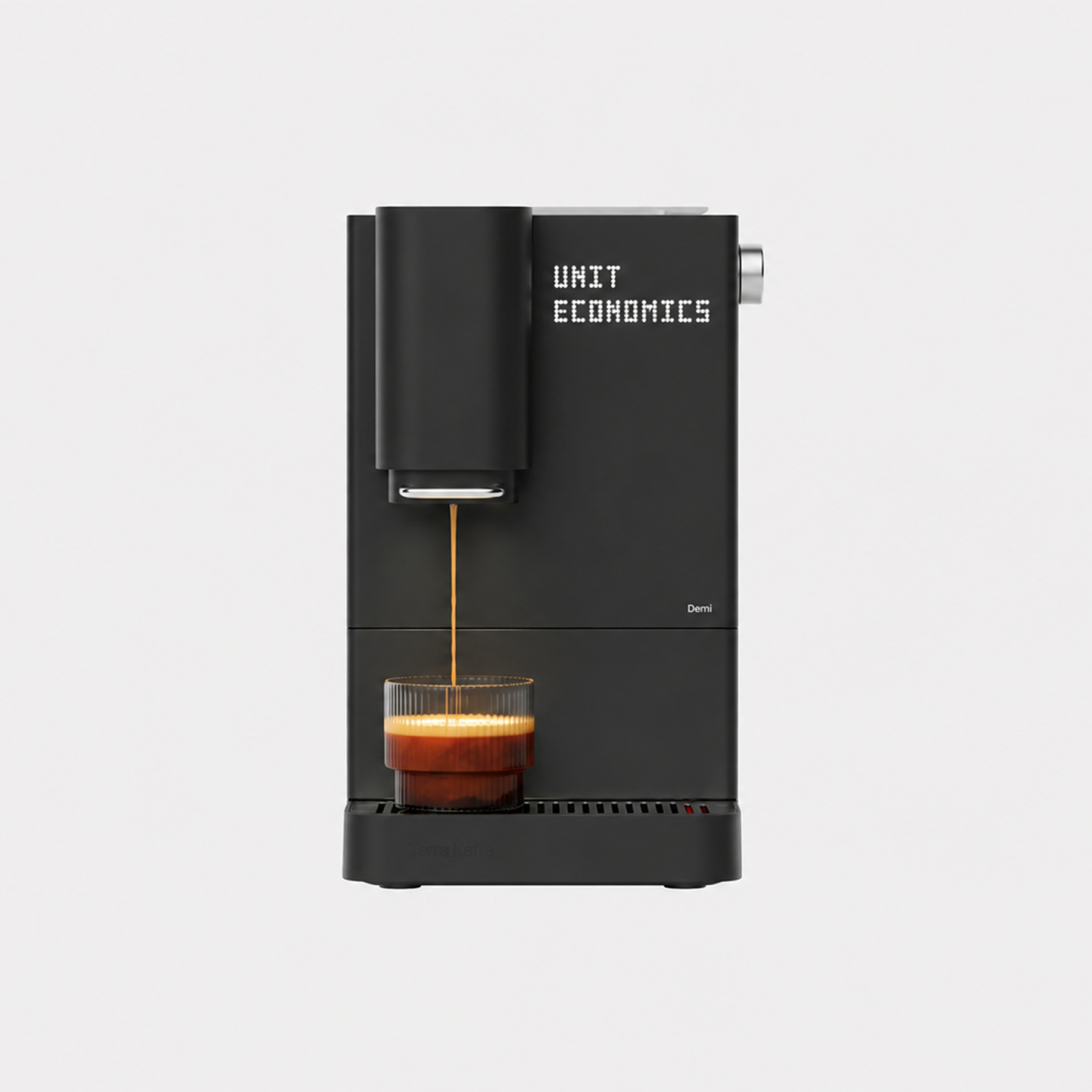
[Terra Kaffe] Sahand Dilmaghani
Jun 2400:55:35Tap to summarizeOn today's episode, I sit down with Sahand Dilmaghani, founder and CEO of Terra Kaffe, a company building connected, bean-to-cup espresso machines for people who want better coffee at home without relying on pods or manual barista equipment.In this conversation, we talk about how Terra Kaffe brought its first machine to market through contract manufacturing, what changed between TK-01 and TK-02, and how the company uses connected-device data, customer feedback, and firmware updates to improve the product after it ships. We also get into pricing, product-line expansion, the risk of cannibalization with Demi, coffee subscriptions, rentals, B2B demand, and why offices, hotels, showrooms, and bars may become important channels for the business.I learned a during my conversation with Sahand, and I hope you enjoy the conversation as much as I did.
Transcribe →
[Jamie's Farm] Jamie Kim
Jun 1700:41:45Tap to summarizeOn today's episode, I sit down with Jamie Kim, founder of Jamie’s Farm, a premium granola company based in New York.Jamie started the business while she was at Cornell, first baking every batch herself and sourcing ingredients like butter and honey from nearby farms. Since then, Jamie’s Farm has grown into about 250 doors, including Whole Foods, Central Market, FreshDirect, Farm to People, Amazon, and independent retailers.In this conversation, we talk about the operational realities of scaling a product that many consumers might assume is simple: sourcing oats, almonds, coconut, ghee, vanilla, cherries, and honey; finding a manufacturer that could handle dairy; dealing with ingredient shortages and tariffs; financing inventory for retail growth; and deciding where to preserve quality versus where to make practical compromises.We also get into Jamie’s views on bootstrapping, regional growth, seasonal flavors, brand collaborations, and building a business around her own definition of success.I learned a lot from my conversation with Jamie, and I hope you enjoy it as much as I did!
Transcribe →
[Pistakio] Francine Voit & Nicola Buffo
Jun 1000:53:26Tap to summarizeOn today’s episode, I sit down with Nico and Fran, co-founders of Pistakio.Pistakio makes pistachio spread built around real pistachio flavor, but the product is really built around a harder question: how do you take an ingredient that is already loved in Italy, and turn it into a pantry staple for American consumers who mostly know pistachios as a snack, a gelato flavor, or a recent Dubai chocolate trend?In this conversation, we get into the early pivot from pistachio mayo to sweet spread, what they learned from launching into New Seasons, how demos shaped the product and packaging, why food service has become such an important discovery channel, the role of TikTok and influencer seeding, and what changed when they moved from making the product themselves to working with a co-packer.I learned a lot during my conversation with Nico and Fran, and I hope you enjoy it as much as I did.
Transcribe →