Podcast
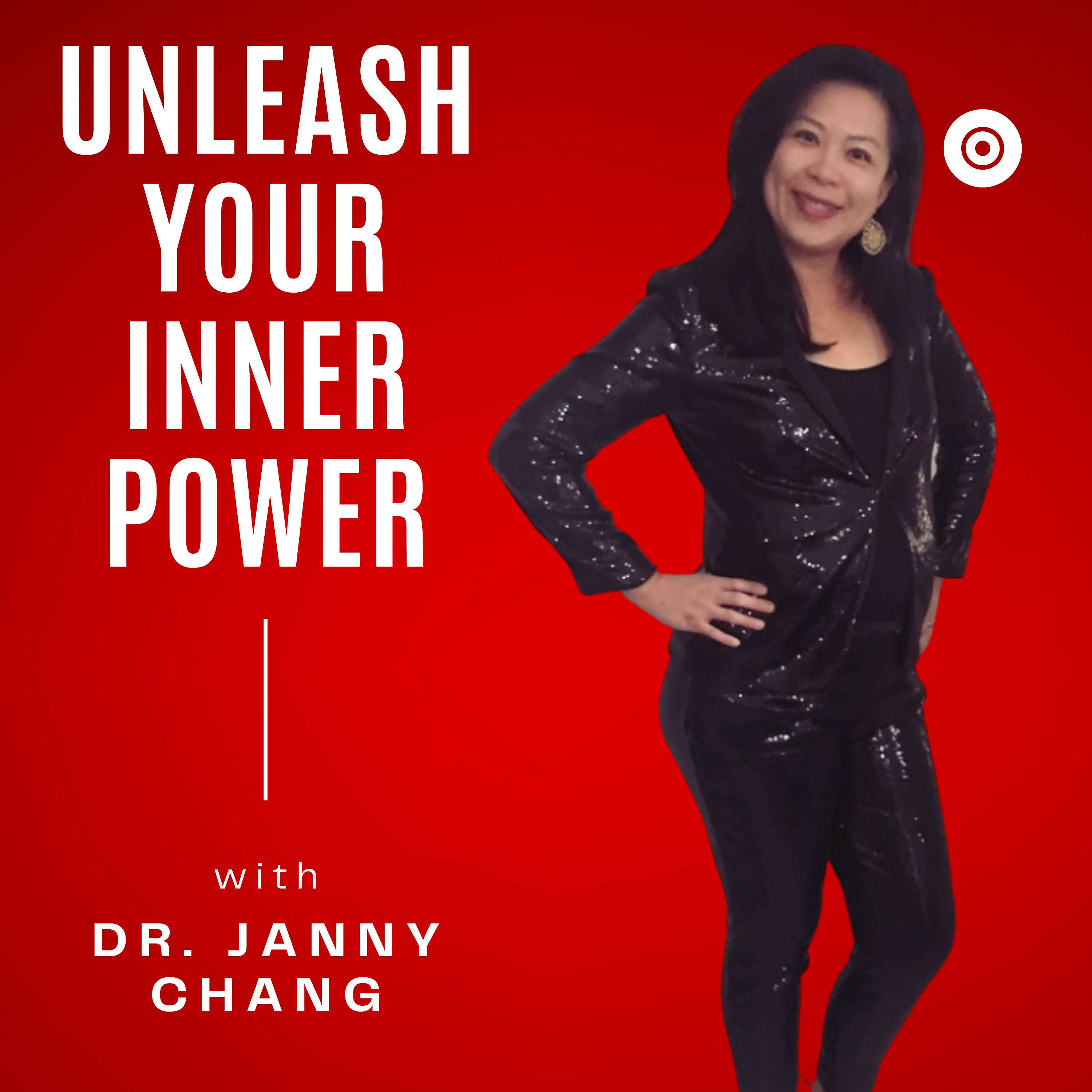
Unleash Your Inner Power with Dr. Janny Chang
Hosted by Janny · EN
Welcome to Unleash Your Inner Power with Dr. Janny Chang! I am so glad to be on this journey with you. Together, we will tap into and unleash our inner power and collectively as women. In this podcast, I introduce myself and talk about my story and how I came to coaching. Managing my mind and using thoughtwork has always been a part of my life, but using practicing it on a daily basis has transformed the way I approach every aspect of my life. I talk about the methods I use - a combination of thought work, research, and storytelling - to give clients the tools to unleash the inner power. I talk a bit about anthropology here and how thought work complements this background. I want to offer the best and customized tools for you. Learn to manage your mind and the rest will follow. If you want to tap into your inner power, then join me on this journey. Let's dig in!
11episodes
Episodes
Newest firstAll episodes
Ep. #16: My Love Letter for Y'all through Mary Oliver and bell hooks
Dec 31, 202100:21:31Tap to summarizeThis is the last episode of this podcast for 2021. It's a love letter to my friends and clients and all my listeners and includes some of my favorite poems and writings from bell hooks and Mary Oliver.
Transcribe →Ep. #15: Anxiety and Worrying: 3 Brain Hacks to Try
Dec 29, 202100:32:19Tap to summarizeIn this episode, I talk about: 1) what anxiety is and how it feels in our body2) why anxiety and worry are maladaptive, but fear is not,and3) how we can conquer anxiety and worry by paying attention to our thoughts and emotions.I offer 3 brain hacks that can help with anxiety and worrying, especially with regards to the pandemic and the holiday season. One of the most creative ways is to reframe anxiety as excitement and I offer some tips for that.
Transcribe →Ep. #14: Self-Sabotaging thoughts and behavior
Dec 6, 202100:24:58Tap to summarize"Our deepest fear is not that we are inadequate. Our deepest fear is that we are powerful beyond measure. It is our light, not our darkness that most frightens us. We ask ourselves, 'Who am I to be brilliant, gorgeous, talented, fabulous?' Actually, who are you not to be? " - Marianne WilliamsonIn this episode, I talk about self sabotage and in particular, how it's tied to our fear of success and failure. How do we stop the spiral of thoughts and beliefs about our unworthiness and develop an awareness of our self-sabotaging beliefs and behavior? I talk about three major assumptions that's tied to self-sabotaging beliefs. I recommend some mental and writing exercises we can do help rewire our brains so that we stop these beliefs in their tracks and focus on a revolutionary and loving relationship with ourselves. Imagine a world where women and folks from marginalized/resilient communities shower ourselves with affirmations and unconditional love and encouragement. What a wonderful world that would be.
Transcribe →Ep. #13: Codependency, culture, and the holidays
Nov 19, 202100:26:08Tap to summarizeAs the holiday season approaches and people use the buzzwords "codependency" and "enmeshment" to talk about their relationships with others, I talk all about relationships in this episode. Where does the term "codependency" come from? How do we take into consideration cultural and historical context when we talk about "codependent" relationships? In some cultures and in the historical context, being a "fixer" was valued and was the means to survival. This is similar for cultures and groups with generational trauma. I explore this discussion and provide a step-by-step plan on how you can transform triggers and any of these relationships that you have into a deeper, intimate, and more loving relationship with yourself. This will plan will help you in your journey towards healing and it will save you mental drama during the holiday season.
Transcribe →Ep. #12: Our Nervous Systems and Channeling our Predator Energy
Oct 25, 202100:26:04Tap to summarizeThis week's episode is all about our nervous systems and trauma and how channeling our predator energy can move us towards healing and unleashing our inner power. I draw from the book Call Of the Wild: How We Heal Trauma, Awaken Our Own Power and Use it for Good by Kimberly Ann Johnson. In this episode, I talk about: The difference between Trauma (with a capital 't") and trauma.Why humans and domesticated animals have traumas, but wild animals don'tWhat it means to feel unsafe in our nervous systemsHow our responses to situations can be habitual trauma responses, like over-identifying with the prey versus the predatorHow to channel the predator energyThe difference between healthy aggression/power and force/dominationWhy it's so important to get to know our nervous systems
Transcribe →Ep. #11: Burnout and Completing the Stress Cycle
Oct 8, 202100:23:29Tap to summarizeIf you're in the nonprofit, international development, and education sectors where you experience compassion fatigue, then you understand well the topic of burnout. In this episode, I talk about what burnout look like and how it's different than just feeling tired. Using the book Burnout: The Secret to Completing the Stress Cycle" and drawing from polyvagal theory, I talk about the four trauma responses (fight or flight, freeze, and fawning), why stressors are different from stress itself, and useful and evidence-based strategies to help complete the stress cycle in order to prevent burnout.
Transcribe →Ep. #10: Mean Girls, Different Kinds of Anger, and Neural Pathways
Sep 19, 202100:19:52Tap to summarizeIn this episode, I talk about the different kinds of anger and when it's productive and when it holds us back.This episode covers the following:1) Unproductive anger - what that looks like.2) What productive anger looks like and how anger in general affects the nervous system3) What questions to ask when we are angry and how to process it4) What the thoughts around anger do to our neural pathways in our brain5) How to mindful with intention and without judgment
Transcribe →Ep. #9: Neuroplasticity
Aug 17, 202100:20:06Tap to summarizeIn this episode, we talk about the science behind neuroplasticity - how scientists have found that the brain is mutable and that our thoughts have the power to rewire our brain.What does this look like for us as women and/or members of marginalized groups who have told ourselves thoughts and stories that are limiting and negative? I break it down for you with some amazing garden metaphors and some tips:What visualization can do for youHow to be more attuned with our feelings and flirt with our negative feelings, but not let them stayHow we can shift our attention when we have these negative thoughts about ourselves The key questions to ask ourselves so that we're consciously selecting and cultivating those thoughts that we want in our brain and our sanctuary gardens
Transcribe →Ep. #8: What Nepalese rituals, our past, and belief in ourselves have to do with each other
Aug 6, 202100:47:33Tap to summarizeIn this episode, I talk about why your brain is a liar when it comes to thoughts you have about yourself. It's conditioned to find evidence for negative thoughts or beliefs because it wants you to stay stagnant and not take any risks. But as the Field of Dreams goes, if you believe it, the results will come. Take the leap to believe in yourself, and your brain will look for evidence of this new thought. I also talk about what happens when you think the past holds you back. Maybe you think of yourself as a different person or you have friends and family who are attached to a certain thought about you - a thought that you are trying to change. The past has no bearing on your present or future. The past is over. I look at how we can trick the brain to focus on your present and future self. Then, I talk about the importance of ritual in helping to part ways with old thoughts and strengthen new ones. I use the Lohorung people from Nepal as an example of why rituals are so powerful and effective in bringing new thoughts to the fore and helping you step into your own power.
Transcribe →Ep. #7: Emotional Adulthood vs. Emotional Childhood
Jul 23, 202100:39:38Tap to summarizeIn this episode, we explore what it means to be an emotional adult and how being in emotional childhood holds us back. For activists and academics, we look at how managing our mind and leaning into emotional adulthood actually helps us tackle social justice issues and energizes us to go change the world around us. I look at codependent behaviors that keep us in emotional childhood and how these behaviors prevent us from having healthy and loving relationships with ourselves and others. I give practical tips, questions, and exercises you can do to lean into emotional adulthood when you find yourself in a strained relationship with someone.
Transcribe →