← UNMARKED: A True Crime Podcast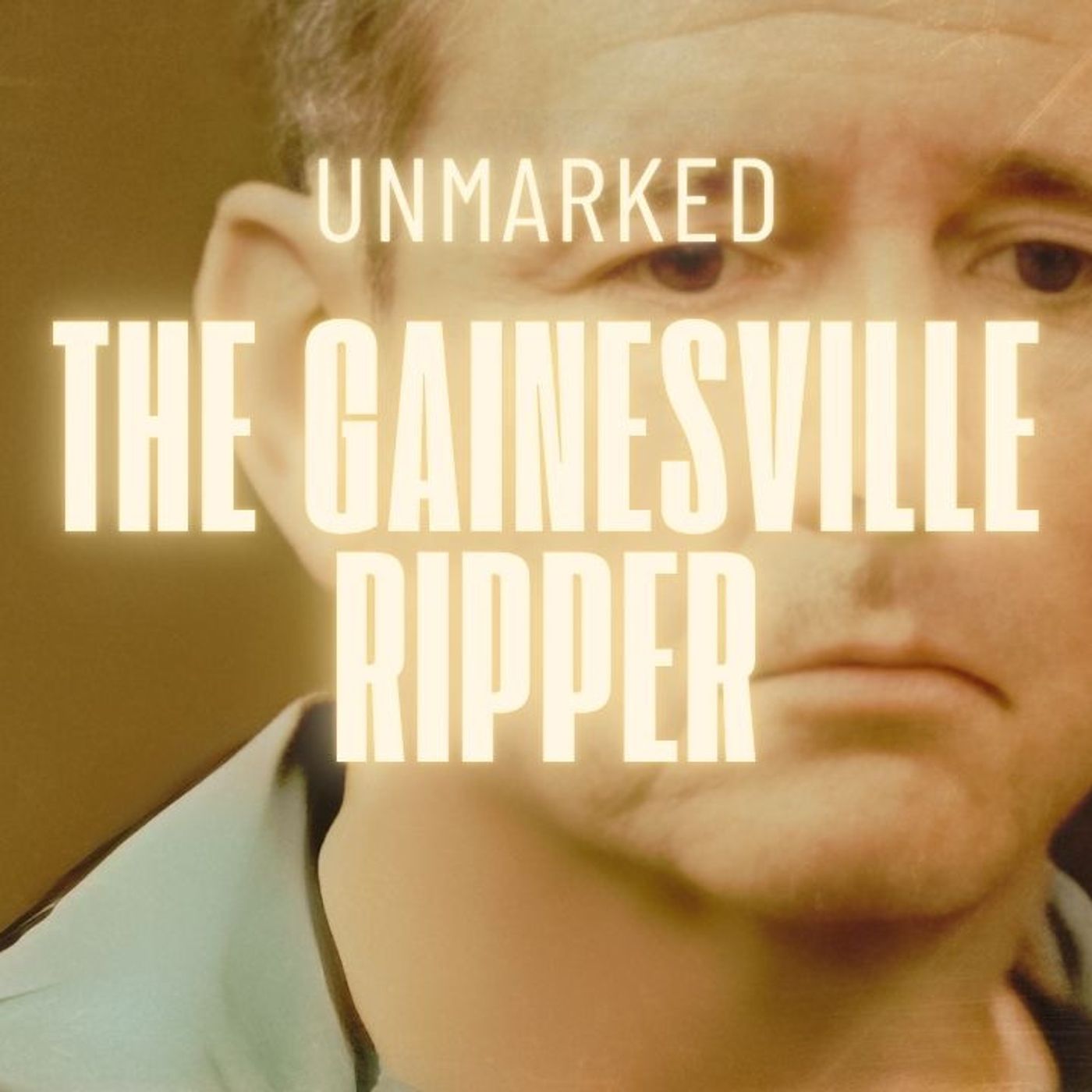
Loading summary
Transcript90 lines
- [00:00]
Howie Mandel
The global Gaming League is presented by Atlas Earth, the fun cashback app. Hey, it's Howie Mandel and I am inviting you to witness history as me
- [00:08]
James Buddy Day
and my how we do it gaming
- [00:09]
Howie Mandel
team take on Gilly the King and Wallow $267 million gaming in an epic global Gaming league video game showdown. Plus a halftime performance by multi platinum artist Travy McCoy. Watch all the action and see who wins and advances to the championship match right now@globalgamingleague.com that's globalgamingleague.com in partnership with Level Up Expo. The Bleacher Report is your destination for sports right now. The NBA is heating up. March Madness is here, and MLB is almost back. Every day there's a new headline, a new highlight, a new moment you've got to see for yourself. That's why I stay locked in with the Bleacher Report app. For me, it's about staying connected to my sports. I can follow the teams I care about, get real time scores, breaking news and highlights all in one place. Download the Bleacher Report app today so you never miss a moment.
- [01:02]
Mike Deason
I've never seen a city so overtaken with panic in my entire career.
- [01:07]
James Buddy Day
This is the story of a serial killer whose crimes are so calculated, so theatrical, they would echo far beyond one campus and inspire an entire horror franchise.
- [01:20]
Mike Deason
It was palpable, the fear that was going through the student body.
- [01:26]
James Buddy Day
In 1990, Danny Rolling committed a series of five murders over the course of one weekend. The crimes shattered the University of Florida, locked down Gainesville, and sent a wave of fear across the country. Six years later, elements of those killings would resurface in the horror franchise Scream. But the reality was far more disturbing.
- [01:52]
Melissa Rancourt
I mean, as 18 years old, you freak out and think, what? What is going on? And it was very scary.
- [02:00]
James Buddy Day
I spent a significant amount of time in Gainesville speaking with reporters, authors, and students who lived through those days. People who remember the sound of helicopters overhead, the rumors spreading through dorms, and the creeping realization that this wasn't random.
- [02:19]
Melissa Rancourt
You hadn't heard anything like that since. Like Ted Bundy, at least in our area.
- [02:23]
James Buddy Day
This isn't just about what the Gainesville Ripper did in Florida. It's about what was already happening long before Gainesville. And by the end of this episode, you'll understand exactly where it began and why no one stopped it. I'm James Buddy Day. This is unmarked. Florida isn't just palm trees and postcards. It's. It's a peninsula. Three sides, water, one long highway in and out A transient state. Tourism, college towns, seasonal residents, people arriving, people leaving. And historically, it's been a place where violent offenders surface, or perhaps I should say resurface. Ted Bundy ended his run here. Eileen Wuornos operated along its highways. Florida isn't the cause, but it's often the convergence point. And in the case of the Gainesville Ripper, the people who live through it are still there.
- [03:28]
Mike Deason
I was doing daily stories about the murders at that point. So that's where my focus was, on the murders and who was doing this. And then the panic on the University of Florida campus.
- [03:40]
James Buddy Day
That's Mike Deason, an Emmy winning investigative journalist who I spoke with at his home in Tampa.
- [03:47]
Mike Deason
I've never seen a city so overtaken with panic in my entire career.
- [03:52]
James Buddy Day
Before we go deeper, here are the basics. Danny Rolling was a Louisiana native, a drifter who ended up in South Florida. And In August of 1990, over a single weekend, he committed five murders that would define the case and earn him the name the Gainesville Ripper. These crimes were violent. They were public coverage spread across the state and then the country. In fact, a screenwriter named Kevin Williamson watched the panic unfold. And years later, elements of that fear would reappear in the horror film he wrote called Scary Movie, which became the franchise Scream. But what happened in Gainesville wasn't cinematic. It was procedural and preventable.
- [04:43]
Mike Deason
The entire state became focused on what is going on in Gainesville. Who's this monster?
- [04:55]
James Buddy Day
In the case of Danny Rowling, it's difficult to comprehend the level of trauma, physical and psychological, that precedes the murders. To understand him, we have to go back long before Gainesville, before he's even born. Rolling's family history is marked by violence and severe mental instability. His great grandfather murdered his great grandmother in their home, an act witnessed by Danny's father, James Rolling.
- [05:26]
J.T. Hunter
Danny's father, James, his grandfather, I think, killed his wife like the kitchen table, like basically slithered road right in front of. Right in front of James.
- [05:40]
James Buddy Day
He saw it. That's the voice of J.T. hunter, author of A Monster of all the True Story of Danny Rowling, the Gainesville Ripper. It's one of the most detailed examinations of the case.
- [05:54]
J.T. Hunter
I know there were other people in his family. His uncle I know committed suicide. His mother had schizophrenia, gained biola indications, definitely had mental health issues himself.
- [06:06]
James Buddy Day
There's no clean way to measure heredity, not yet, but it's reasonable to say Danny Rolling likely inherited a predisposition toward mental illness and volatility. What we can say with certainty is that whatever vulnerability existed was compounded repeatedly inside his own home.
- [06:27]
Mike Deason
He had a rough childhood, as I recall. Remember, this is a long time ago. The murders were 1990, but he had a very rough childhood and was an unusual kid, as I recall. Didn't get along well with his father.
- [06:42]
James Buddy Day
James Rolling is central to understanding the crimes his son would go on to commit. A Korean war veteran, James Rolling marries D. Danny's mother, Claudia, when she's 19. Neighbors described him as erratic and cruel. At trial, one witness describes the Rolling household as, quote, chaotic and unstable, where physical and emotional abuse were daily occurrences. Claudia is beaten while pregnant, strangled, and in one instance, James shoves her down a flight of stairs while she's carrying Danny. What that level of stress does to a developing brain is still debated. Nonetheless, Danny Rowling is born on May 26, 1954. A younger brother follows 15 months later. In the early days, the family moves frequently through Georgia and Louisiana before settling in Shreveport when Danny is only six years old. There, James Rolling becomes a police officer. And this is crucial because the man responsible for the abuse isn't just a violent father. He is law enforcement. And this is a message his son receives loud and clear.
- [08:02]
J.T. Hunter
James was a cop there at the Pine. Knowing how a brotherhood that cop has to begin with, you know, they tend to look out for each other. They tend to kind of protect one another. So, you know, it's certainly very feasible that he, you know, kind of got
- [08:20]
James Buddy Day
away with some things at the time. The Shreveport Police Department is plagued by allegations of corruption and mismanagement. Police Chief Georges d' Artois would later be accused of running the department like a personal empire, shaking down businesses, associating with organized crime. By the time Danny and his brother can walk, their father is already punishing them. Belts, ropes, hours of forced stress positions. The infractions are minor. Talking back bad grades, spilling something at the dinner table, wearing blue jeans to church. Reports are made to Shreveport police, but documentation later describes the situation as, quote, a family matter, with police notes indicating that James Rolling is, quote, a good officer. It's a systematic failure that will cost lives for decades to come.
- [09:23]
J.T. Hunter
You kind of put yourself in a position as a young boy growing up, and like all young boys, you. You're going to admire your father, you know, and you want approval. And to have that deliberately withheld and go through all the horrible things that went through with your father growing up.
- [09:44]
James Buddy Day
Neighbors pressed the issue to Police Chief George D. Nothing changes. The system that could intervene protects its own. Witnesses later say James appears to take satisfaction in the abuse, Dani's mother leaves the home repeatedly two dozen times over the course of the marriage. But she always, always returns. Each time she leaves, the boys remain behind. Danny grows up in a constant state
- [10:15]
J.T. Hunter
of fear, like he was abandoned as a child by his mother. Basically, you just never interceded, protected him as a child.
- [10:24]
James Buddy Day
Danny rolling is so anxious, he injures himself compulsively scratching at his skin, picking at his fingers. Unable to regulate the stress response that never shuts off to cope, he begins peeping into windows. And this is key. He's watching other families through the glass. Later, he will describe imagining himself inside those homes. Not as an intruder, not at first. At first, it's about being a member of the family. This is a key moment in understanding Rowling. Research on psychopathy and severe antisocial behavior suggests that in some individuals, early trauma disrupts identity formation. The sense of self becomes fractured. Shame and rage begin to coexist. When control feels absent, that's when fantasy steps in. The internal world becomes more vivid than the external one. Depression deepens, Substance use increases.
- [11:30]
J.T. Hunter
We heard stranger to bars and drinking. It certainly seems like he drank quite a bit. I don't know if he was, you know, stumbling around alcoholic level, but he fit in with me a lot and I. I believe he drank before he committed rocketing murder.
- [11:46]
James Buddy Day
At 14, Danny comes home with alcohol on his breath. His father beats him, handcuffs him to a chair, and he calls his fellow officers. When the police arrive, they arrest Danny and they place him in juvenile detention. From his perspective, once again, authority does not protect him. It punishes him. Not long after, his mother leaves again, this time hospitalized for severe mental illness, Danny attempts to escape by joining the Air Force, but he's discharged within the year. Rowling is now 19, a high school dropout with no prospects, when he meets a woman named Omather Loomis. It's shortly after he joins a Pentecostal church where, surprisingly, they marry on September 6, 1974, and they have a daughter. And for a brief period, the only stable stretch of his life, Rowling appears functional. But trauma doesn't disappear just because circumstances temporarily improve. The marriage begins to deteriorate. Almost immediately. Rowling starts disappearing at night with no explanation.
- [13:05]
J.T. Hunter
Emotionally, he. He's still stuck to act as almost a child. And he has this anger, resentment, this rage by the way he was treated from his father, but then also towards his mother as well.
- [13:24]
James Buddy Day
Roland gets drunk and peeps into windows, and he's seen at one point, police question him. They even interview his wife at his home, but fail to intervene once again. And one evening, during an argument, Danny rolling holds a shotgun to his wife's head and threatens to kill her. She takes their baby and leaves. Neither see him again until he's arrested a decade later. Spiraling Danny Rowling attempts to rob a Winn Dixie with an unloaded gun. Psychologists later describe the robbery as reckless, Possibly an unconscious attempt to provoke a lethal response. He serves time and is released in 1982, and he moves back in with his parents, where the abuse resumes. So In July of 1985, Danny Rolling Walks into a Kroger in Jackson, Mississippi, Pulls a gun at the checkout, and demands money. He leaves with just $290 and is caught the next day. Like before, the crime is impulsive and sloppy, but it's this robbery that changes things, Because Rolling is sentenced to five years in prison, where he struggles mightily with incarceration. He later claims it was the cause of his subsequent murder spree. But this type of justification is not unusual for individuals with severe antisocial traits.
- [14:59]
J.T. Hunter
Prison was no joke. It was a pretty harsh prison.
- [15:04]
James Buddy Day
It is known to be that way.
- [15:06]
J.T. Hunter
So I suspect, yeah, I mean, it was certainly no cakewalk run there. So he probably had some pretty bad conditions when he would nightmare was it to the extent he. He said, you know, maybe not.
- [15:18]
James Buddy Day
While incarcerated, a psychiatrist evaluates him. The assessment lists multiple personality disorders. Substance abuse and paraphilia, Specifically voyeurism. Though it's worth noting that the diagnostic criteria in the 1980s was much different than it is today. Labels shift, terminology evolves. But what doesn't change is behavior. By this point, Rolling's peeping is no longer occasional. It's compulsive. He admits to spending two or three hours a night looking into windows, Sometimes for sexual arousal. And that connects to a larger pattern. Children raised in constant threat learn to live inside their own heads. Hypervigilant, preoccupied, Reinforcing fantasy through early stalking behavior. And when control feels absent, fantasy becomes reality. The internal world grows stronger than the external one over time. Watching is not enough. This comes to a Head in 1989. Rolling is released from prison, and on November 4, he's living in Shreveport, Louisiana, where he's fired from yet another menial job.
- [16:37]
J.T. Hunter
It was literally the same day that he aspired from a job he'd been working at, and he was fired for grounds that he thought were unfair. You know, he thought he was getting basically picked on or something and was unfairly coordinated. So right out the rage of him, you know, he already had this. He had this anger that was kind of like constantly simmering.
- [17:01]
James Buddy Day
He wanders his neighborhood. He's agitated, aimless. That's when he sees Julie Grissom, 24 years old, a college student at Louisiana State University, Shreveport. As he has dozens of times before he follows her. Investigators later estimate Rolling enters the Grissom home sometime between 6 and 8pm There are no signs of forced entry, no ransacking, no robbery. This is not opportunistic theft. It's targeted. Once inside the home, he attacks Julie's father, William Tom Grissom, who'd been outside grilling Rowling kills him. He also murders Julie's young nephew, a third grader visiting for the weekend. Finally, he finds Julie in her bedroom. Evidence later shows he remains inside the home after the murders. The scene is staged. Julie Grissom's body is posed. This is no longer voyeurism or anything like it. This is domination.
- [18:06]
J.T. Hunter
You kind of go back and trace his behavior to cruel behavior. He started out peeping in windows, watching you went and undressed, things like that. And then, you know, he eventually got in through robberies, armed robberies and rapes. And then, you know, escalated to murder afterwards.
- [18:25]
James Buddy Day
Rowling drives home. It's 10 minutes away. The proximity is predictable. Serial offenders frequently operate within comfort zones. Familiar streets, known escape routes, predictable terrain. But despite the brutality and the amount of physical evidence left inside the home, police make no immediate arrest. Rolling watches the coverage. And something shifts.
- [18:52]
Mike Deason
They're using all their police resources to try to solve this murder. And he slipped through the cracks.
- [18:59]
James Buddy Day
Criminologists describe a phenomenon that often follows a first successful murder. It's called perceived omnipotence. When there are no immediate consequences, the offender's fear diminishes. Control expands. The fantasy becomes reinforced. For Rowling, this manifests at home, where for the first time, he stands up to the his father. In May 1990, an argument inside the Rolling house escalates into gunfire. Accounts differ about who fired first, but what is undisputed is that Danny retrieves a pistol and shoots his father in the head. At that point, Rolling believes he's killed him. He hasn't. James Rolling survives and Danny leaves.
- [19:48]
Howie Mandel
The Bleacher Report app is your destination for sports right now. The NBA is heating up, March Madness is here, and MLB is almost back. Every day there's a new headline, a new highlight, a new moment you've got to see for yourself. That's why I stay locked in with the Bleacher Report app. For me, it's about staying connected to my sports. I can follow the teams I care about. Get real time scores, breaking news and highlights the all all in one place. Download the Bleacher Report app today so you never miss a moment.
- [20:18]
James Buddy Day
Tyler redick here from 2311 Racing game night's fun until someone spends five minutes lining up one shot. Chalk, breathe, rechalk, still aiming. While they figure it out, I fire up Chumba Casino. I can spin anywhere, anytime. And there's always a new social casino game every week. Spins happen way faster than that shot. Play now@chumbacasino.com let's Chumba SP sponsored by Chumba Casino no purchase necessary.
- [20:44]
Mike Deason
VGW Group voidware prohibited by law 21
- [20:47]
James Buddy Day
terms and conditions apply. Six miles away, Danny breaks into another home and holds a couple at gunpoint, forcing them to call the hospital to confirm whether his father is dead or alive. When he learns his father survived, he thanks the couple, accepts a coat, $21, an apple, some cookies and he walks out. He abandons his car at a Motel 6 around the corner and boards a Greyhound bus. Records show Danny rolling, checking into a travel lodge in Tallahassee under the name Michael Kennedy.
- [21:26]
J.T. Hunter
Ironically enough, I guess you know he ended up in Tallahassee. You know where Bundy did some of his notorious feelings. That's where he ended up burning. Got off the bus there very quickly and that's where he actually purchased the night being of a few of the students in Hindville.
- [21:48]
James Buddy Day
Throughout August of 1990, he moves across Florida, staying in motels, sleeping outside, circling apartment complexes. On August 5 in Sarasota, he breaks into the home of Jeanette Frake. He restrains her and sexually assaults her, but doesn't kill her. Two weeks later, on August 18, he checks into the University Inn in Gainesville, still using the name Michael Kennedy. This again is investigative reporter Mike Deason.
- [22:19]
Mike Deason
Gainesville is an idyllic college town. It is just a beautiful city. It's the college campus that you would see in a movie with ivy on some of the the buildings. And the town just revolves around the university. Most of the people that live there are associated in some way or another, either as professors or or they've got friends that work at the university. It, it dominates the town.
- [22:47]
James Buddy Day
You have to picture rolling at this point. He doesn't look dangerous. He's quiet, withdrawn, slight, five foot nine. He's only about 160 pounds. Not physically imposing. He does not stand out in a transient state like Florida. Hitchhikers, drifters, students, seasonal workers. He looks just like another man passing through five days later, on August 23rd, he checks out of the motel. He purchases a screwdriver and camping supplies from a Walmart. He sets a campsite nearby.
- [23:22]
Mike Deason
He was acting like a hunter. So he was on a camping trip and he was camping, and then he was hunting his victims, and then he would go to the campsite again afterwards. That was my take on why he was camping in the woods.
- [23:41]
James Buddy Day
On Friday, Aug. 24, 1990, the Florida Gators are preparing to open the season. The following weekend. Students are moving into the dorms for the fall semester. This is Laura Azzarello Thompson, who was 18 years old at the time, a freshman at the University of Florida.
- [23:59]
Laura Azzarello Thompson
I heard good things about the academic program. I was pretty motivated to succeed academically and I applied to several universities and I was fortunate enough to get a Florida academic scholarship. So I can't tell you there was any one specific thing that led me to University of Florida, but it was two hours from home, but not home. Good academics. So that's why I decided to go there.
- [24:25]
James Buddy Day
Laura's experience reflects that of thousands of students settling into campus that weekend. That night, around 3am Rolling enters the apartment of Christina Powell and Sonja Larson in a small complex near the university. Sonja Larson is studying to become a teacher. Christina Powell is studying law enforcement. Neither have any connection to Danny Rowling whatsoever. In the early morning hours of August 24, Rowling enters their apartment through the rear dining room door. The door is locked, but it's the only entrance not reinforced with both deadbolt and chain. The frame is slightly warped, allowing him to force it open. Powell is asleep downstairs on the couch. Rolling stands over her briefly. Then he goes upstairs. He enters Larson's bedroom and attacks her in bed. The medical examiner will later describe the injuries as consistent with a rapid, overwhelming assault, the kind designed to incapacitate almost immediately. The report notes that Larson likely loses consciousness very quickly after she's killed. There's evidence her body is moved. Blood patterns indicate post mortem repositioning. Rowling then returns downstairs. Powell is awakened, restrained and sexually assaulted before being led into the living room and killed. When it's over, he doesn't leave immediately. He remains inside the apartment. He wipes down parts of the scene. Clothing is scattered. Objects are moved deliberately. The apartment itself is altered. He goes into the kitchen and eats fruit. The brutality is shocking. But what is equally disturbing is the orange order. This is not frenzy. It is control. Later, Rowling will claim that during this period he is psychotic, that he believes himself to be possessed by a demon called Gemini, he saw himself more as
- [26:38]
J.T. Hunter
kind of a victim of what had happened to him. And you know, he basically a nice guy deep down all these book of things. So I think he invented that afterwards as a way to distance himself from the things he had done.
- [26:54]
James Buddy Day
We need to be precise here. Psychosis involves a break from reality. We're talking about hallucinations, delusions, disorganized thinking. But what we see in the Powell and Larson apartment is structured behavior. Entry, isolation, control, staging that does not resemble a mind in chaos. Some offenders construct narratives of madness after the fact. But true psychosis destabilizes planning. It fragments behavior. But Rowling's actions here are sequential and deliberate. The next night on October 25, 1990, Rowling returns to the home of Christa Hoyt, an 18 year old chemistry honors student at Santa Fe College, whom he'd been watching for days. Once again, this is not psychosis. This is premeditated and carefully planned. This is Melissa Rancourt, a Florida based journalist who attended a nearby school at the time.
- [27:57]
Melissa Rancourt
It just shows that he's a sick bastard, I mean, or was, you know, I mean unfortunately that it's not just, okay, I got my thrill of a kill or whatever. It's that I'm on a mission here, you know, I mean I, looking back at it a couple years afterwards, I was like, that's what this guy was doing. He's like, I'm just gonna continue to, I think, continue to do this until I get caught, you know, because to do it that quickly, I mean again, I don't study the minds of serial murders, but usually it is like a day or two, a couple days. They spread it out, it seems like, but he just seemed like he was on a mission to kill as many women as he could.
- [28:31]
James Buddy Day
Investigators later identify a rear sliding glass door as the point. Point of entry. There are primarks along the frame. Rowling enters before Christa Hoyt returns home. Inside, he moves a bookcase from behind the front door into the bedroom, positioning it so he can ambush his victim once she arrives. Hoyt spends the evening playing racquetball with a friend. She returns home around 10pm Crime scene investigators later find her racket and a can of balls near the locked front door. The medical examiner concludes the attack is sudden and overwhelming. Survival brief consciousness likely lost. Almost immediately after killing her, Rowling stages the scene again.
- [29:20]
Mike Deason
Not only did he murder them, slaughter is a good term, but then he posed the bodies in sexually suggestive positions. I mean it was, it was more than just that he was a murderer. He wanted to leave a message.
- [29:36]
James Buddy Day
Later, he realizes he's lost his wallet and he returns to the apartment to search for it. While inside, he further manipulates the body.
- [29:46]
Mike Deason
He didn't want to be a run of the mill serial murderer. He wanted to be spectacular and he wanted to shock the people who would find the bodies.
- [29:55]
James Buddy Day
When Rolling returns to his campsite, none of the Gainesville victims have been discovered. The following afternoon on Sunday, August 26, at around 3pm the bodies of Christina Powell and Sonja Larson are found.
- [30:11]
Melissa Rancourt
I watched all this unfold on the news and then was calling my friends up there and was like, what is going on? And they were like, we're freaking out. You know, there's obviously a serial killer on the loose. We're all starting to, to pair up and stay together in people's apartments, in people's dorms. One of a good guy friend of mine was like, we're trying to find a gun to protect ourselves.
- [30:32]
James Buddy Day
The response is immediate. Police flood the area. News spreads quickly across the campus. Neighbors gather outside the apartment complex.
- [30:42]
Mike Deason
Parents panicked right away. First when the first set of murderers. My news director at the time, time said to me, go to Gainesville and find out who's responsible for this. And I looked at him, I said, come on, you're kidding me. You know, everybody in the state, all, all law enforcement. He said, no, go up there. You're an investigative reporter. You won't have to do daily stories. Just find out. I couldn't dissuade him. So I get up there to Gainesville.
- [31:09]
James Buddy Day
But while the media scrambles, Rolling is there, blending into the crowd, watching.
- [31:16]
Melissa Rancourt
Yeah, the speculation and again was that he would kind of hang out there and watch it all and kind of take in that this is all for me again. This is what people were saying at that time, that that's what he was doing, that he wasn't hiding, he was going out in plain sight and standing around, you know, the, you know, where the media was set up and going, still going to stores and kind of like taking it all in.
- [31:41]
James Buddy Day
The next night, August 27, he begins surveilling another apartment. Tracy Paulus, 23 years old, lives there with her roommate, Manny Tabata. Phone records later show Paulus is on the phone until 1am Tabata leaves work shortly after 1:20, finishing a bartending shift. While Rowling is outside the apartment watching, another discovery is made. Made across town. Police enter Christa Hoyt's apartment and find her body.
- [32:12]
J.T. Hunter
You can imagine as the police officer arriving at the scene, walking in on that, you know, the shock of that experience. So that did seem to be a dig at both his father, but then also police in general.
- [32:30]
James Buddy Day
Around 3am, rolling enters the apartment of Tracy Paulus and Manny Tabata through the rear sliding glass door. A man living in the apartment directly above later reports hearing a scream sometime between 2 and 3am Inside, Tabata is asleep. Rowling attacks him first. It's sudden, overwhelming. Tabata dies quickly.
- [32:55]
Mike Deason
The only reason we figured that he was murdered, it was he had the unfortunate circumstance of being a roommate of Paulus. I don't believe they were in any relationship other than they were friends. They're a roommate. And when, when he got there and Tabata was there, he murdered him.
- [33:16]
James Buddy Day
Tracy Paulus witnesses the attack and runs into her bedroom, locking the door. Investigative notes later show the door frame is damaged, consistent with it being forced open. What happens next is prolonged. The medical examiner documents extensive sharp force injuries. There is evidence Paulus is restrained. Curtains are taped shut. The apartment is contained. By morning, both Paulus and Tabata are dead. The bodies are discovered the next day.
- [33:49]
Laura Azzarello Thompson
I moved into the dorm somewhere in mid August and then, you know, once school start and that's when we heard about the murders.
- [33:57]
James Buddy Day
That again is the voice of Laura Azzarelo Thompson, who was an 18 year old student at the University of Florida at the time.
- [34:04]
Laura Azzarello Thompson
I really had no experience with anything like this ever in my life. We're all 18 year old girls on a floor and I can't say that any of us really had much clue as to, to what was going on, that we were just scared.
- [34:23]
James Buddy Day
Running low on money, Rolling breaks into another apartment in northwest Gainesville on Aug. 30. While inside, he eats oatmeal, leaves dishes in the sink, watches a Playboy video and leaves the television on when he departs. Next, he steals the occupant's car and drives to Tampa. He spends spends the next week committing small robberies. On September 7, 1990, he robs a Winn Dixie in Ocala brandishing a handgun. But robbery has never been Rolling's strength. The store manager follows him out of the shopping center and gives police a detailed description of his location. As Rolling attempts to leave the parking lot, patrol cars are already closing in and he's arrested.
- [35:11]
Mike Deason
He was a much better serial killer than he was a robber and so he went back to robbing. He gets caught and then they go to his tent. He was camping in the woods and they find evidence that links him to the rapes and the murders. So it was, it was serendipitous that they caught him. Had he not done the robberies or had he not been camping in the woods with all the evidence, he could have gone on to someplace else.
- [35:41]
James Buddy Day
Police quickly realize Rolling is wanted in Louisiana for the shooting of his father. They locate his campsite near the University of Florida. Almost immediately inside his tent is evidence tying him directly to the Gainesville murders. When I spoke to Mike Deason, he recalled seeing Rolling in person.
- [36:00]
Mike Deason
He was really unusual. I mean, in some of the court appearances, he started singing. He just. He was in a different world. He was a different type of person that looked like he was trying to be famous. I mean, when you get into a courtroom and he starts singing or doing Elvis songs, that's. That's not typical.
- [36:25]
James Buddy Day
Over the next several years, Rowling gives multiple connections, Confessions. Lengthy, detailed, and at times contradictory. Eventually, he pleads guilty.
- [36:35]
Mike Deason
We're in the courtroom and they're about to begin, and he stands up and he says, says something like, I don't want to make this go out any further. I plead guilty. I mean, they were ready to do their opening arguments and. And he stood up. I don't even know if his attorney expected him to do that. It was a true, true shock. But that's Danny Rolling.
- [36:59]
James Buddy Day
Danny Rolling is responsible for what he did. But this episode isn't just about the week in August when he terrorized a college town. It's about what came before. The abuse documented and dismissed, the warnings that reached the chief of police and went nowhere. The pattern of escalation, peeping, burglary, violence, all treated as isolated incidents instead of a trajectory. When he arrives in Florida, Rowling doesn't appear out of nowhere. He's grown up in a house defined by fear. His abuser is protected by a department protecting its own inside a system that repeatedly chooses not to intervene. By the time Danny Rolling arrives in Florida, the the pattern is already set. Gainesville didn't create Danny Rowling. It encountered him at full escalation. When early violence is ignored, when authority shields itself, when red flags are dismissed as family matters, the consequences don't stay local. We've seen it before with offenders like Bundy and Wuornos. And like them, Danny Rowling is executed by the state of Florida on October 25, 2006.
- [38:17]
Mike Deason
There's been so many serial murderers that we've had in, in Florida, unfortunately. But I have never seen such an intense police manhunt for someone because these were college students at the premier university in the state of Florida.
- [38:36]
James Buddy Day
Trauma travels from one state to another. Until someone finally pays attention. Before we wrap up, a quick note. Now, Unmarked takes a lot of work to produce. Every episode comes out of weeks and weeks of research and documents and interviews. So we're starting to work with advertisers to help support us. But you can always listen without ads and get early access to episodes inside of Unmarked case files. And if it's the Manson murders that interest you, my book, Charles the Last Words is available on Amazon and Kindle. That book contains interviews I've done with the members of the Manson family for the last decade, including Charles Manson himself. This episode of Unmarked was produced by John Eddow and edited by Dave Alderson. Our additional producer is Jesse demarais. Until next week, this is Unmarked.
- [39:35]
Howie Mandel
The Bleacher Report app is your destination for sports right now. The NBA is heating up, March Madness is here, and MLB is almost back. Every day there's a new headline, a new highlight, a new moment you've got to see for yourself. That's why I stay locked in with the Bleacher Report app. For me, it's about staying connected to my sports. I can follow the teams I care about, get real time scores, breaking news and highlights all in one place. Download the Bleacher Report app today so you never miss a moment.
- [40:05]
James Buddy Day
Hello, it is Ryan and we could all use an extra bright spot in our day, couldn't we? Just to make up for things like sitting in traffic, doing the dishes, counting your steps. You know, all the mundane stuff. That is why I'm such a big fan of Chumba Casino. Chumba Casino has all your favorite social casino style games that you can play for free and anytime, anywhere with daily bonuses. So sign up now@chumbacasino.com that's chumbacasino.com no purchase necessary.
- [40:30]
Howie Mandel
VGW Group void where prohibited by law
- [40:33]
Mike Deason
21 terms and conditions apply.
- [40:35]
Melissa Rancourt
Certified Plant Genius here. Most people see a busy plant shop, but I see a perfectly balanced ecosystem thanks to Genius from Global Payments Inventory. Tracked payments, seamless reviews in one place. Absolutely Genius. From sold out crowds worldwide to running this shop, Genius grows with you. Your monsteras potted healthy roots, strong growth just like this shop. Big league reliability for your business. That's Genius.