← UNMARKED: A True Crime Podcast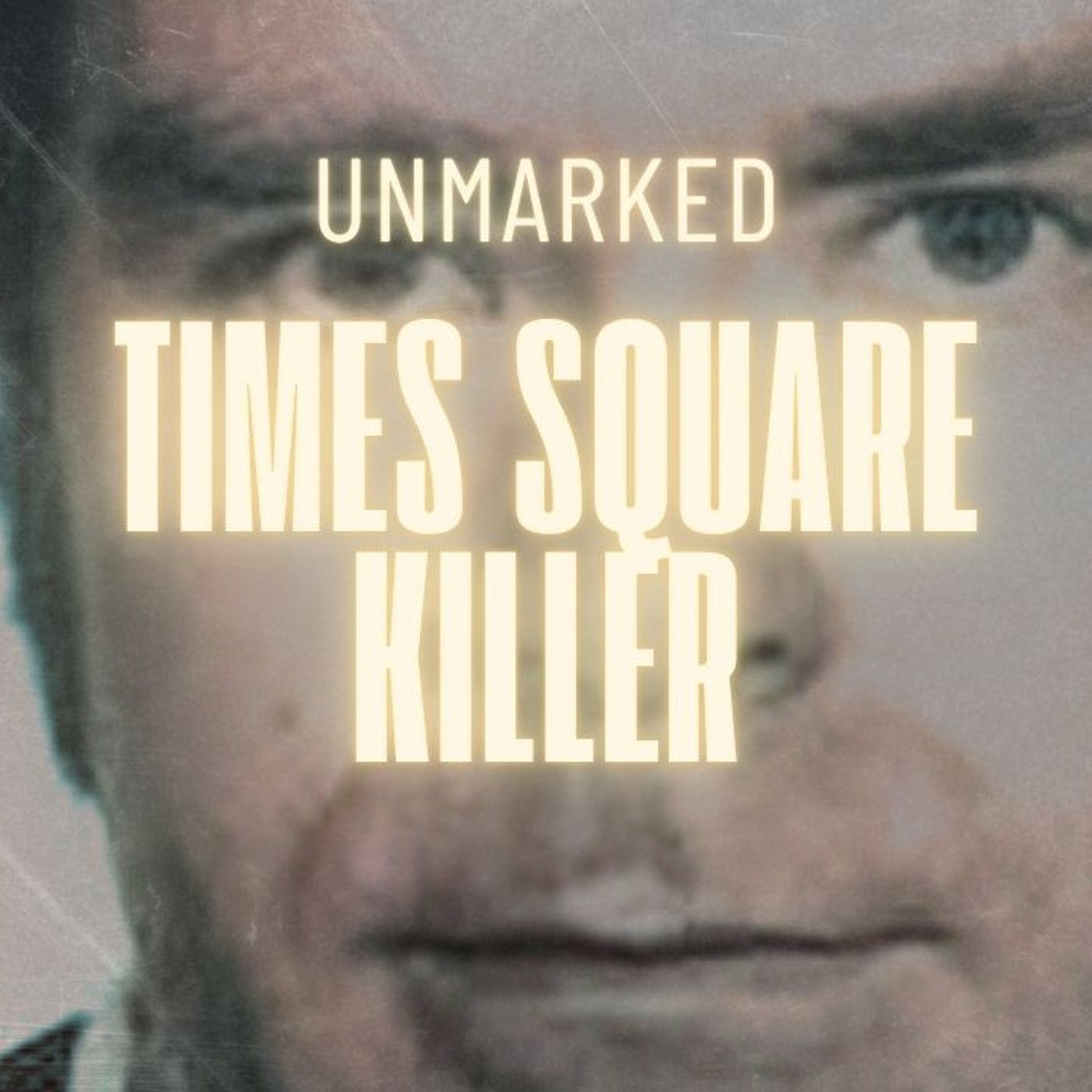
UNMARKED: A True Crime Podcast
18: The Times Square Killer: Reconstructing the Crimes — What His Conversations Reveal
00:42:32
Loading summary
Transcript117 lines
- [00:00]
Commercial Announcer
Save on family essentials at Safeway and Albertsons this week at Safeway and Albertsons, fresh cut cantaloupe, watermelon, pineapple or melon medley bowls 24 ounces are $5 each and wild caught lobster tails are $4.99 each. Limit eight member price plus selected sizes and varieties of Doritos, lays, Cheetos, sun chips and kettle cooked chips are $1.99 each. Limit four member price. Hurry in. These deals won't last. Visit safewayoralbertsons.com for more deals and ways to save.
- [00:31]
Podcast Host (James Buddy Dane)
This is the new Weight Watchers, built for real life and real results no matter what mode you're in. Maddie went all in for her big day and lost 33 pounds. Emily lost 85 pounds and hit her goal while still living her life.
- [00:45]
Dr. Peter Vronsky (Criminologist)
Weight watchers gave me the tools and I feel amazing.
- [00:48]
Podcast Host (James Buddy Dane)
Join the millions of members and lose weight with the number one doctor recommended weight loss program. Lose more@weightwatchers.com at six months, participants in a clinical trial of weight watchers program lost an average of £12. The thing I've learned about serial killers is this for something we think we understand. We really don't. The reality is they live in the margins. Unseen, misread and often misunderstood. Police are asking for the public's help
- [01:20]
Richard Cottingham (The Times Square Killer)
in identifying two women found in a Times Square motel.
- [01:24]
Podcast Host (James Buddy Dane)
Few cases make that clearer than Richard Cottingham.
- [01:28]
Dr. Peter Vronsky (Criminologist)
I started talking to him. He feels no remorse whatsoever. He leads these double lives. He is very deceptive.
- [01:40]
Podcast Host (James Buddy Dane)
Richard Cottingham is currently incarcerated for crimes associated with the murders of 20 women between 1967 and 1980 across New York and New Jersey. But the record, the one most people know, only goes so far. Today I'm speaking with a criminologist who spent hundreds of hours with Cottingham.
- [02:04]
Richard Cottingham (The Times Square Killer)
You have a prepaid call.
- [02:06]
Podcast Host (James Buddy Dane)
It took him years to get close.
- [02:09]
Richard Cottingham (The Times Square Killer)
Hello?
- [02:10]
Podcast Host (James Buddy Dane)
Years to move past the version of the story told at trial, the version repeated in the media, and towards something else entirely.
- [02:20]
Richard Cottingham (The Times Square Killer)
The ones that I have given up are easy ones. I told you many times I changed up and I did things different.
- [02:31]
Dr. Peter Vronsky (Criminologist)
He says to me, killing doesn't make you God. Knowing who lives or dies does that.
- [02:41]
Podcast Host (James Buddy Dane)
I'm James. Buddy Dane. This is unmarked. The challenge with interviewing a psychopath is this. They're charismatic, they're engaging, they want to talk. But you can never take them at their word. John Wayne Gacy gave multiple interviews before his execution denying his involvement with victims and he'd buried in his home. Ted Bundy never gave a full Accounting of his victims despite having every opportunity. This is Ted Bundy speaking to a reporter after he was convicted of an attack in which the survivor gave an eyewitness account. You issued a statement saying you feel that everything will turn out all right,
- [03:33]
Richard Cottingham (The Times Square Killer)
that you are innocent.
- [03:34]
Podcast Host (James Buddy Dane)
Do you still feel that?
- [03:37]
Richard Cottingham (Interview/Police Recording)
Yeah, more than ever.
- [03:39]
Podcast Host (James Buddy Dane)
And I've experienced this myself. Robert Pickton, Charles Manson, Scott Lee Kimball, all of them have told me things directly that were clearly untrue. So just to be clear, you. You didn't kill anyone?
- [03:54]
Richard Cottingham (The Times Square Killer)
That's right, I did.
- [03:56]
Podcast Host (James Buddy Dane)
But that's the problem. If you want to understand these men, you have to separate fact from fiction, and they are exceptionally good at blurring that line.
- [04:07]
Richard Cottingham (The Times Square Killer)
You have a prepaid call. You will not be charged for this call. This call is from an inmate at New Jersey State Prison.
- [04:15]
Dr. Peter Vronsky (Criminologist)
I started talking to him 30 years later. When the daughter of one of the victims contacted me, I began writing.
- [04:25]
Podcast Host (James Buddy Dane)
That's the voice of Dr. Peter Vronsky, a crime historian and scholar. For nearly a decade, he's been in direct contact with Richard Cottingham, who's currently incarcerated at Southwood State Prison in Bridgeton, New Jersey.
- [04:41]
Dr. Peter Vronsky (Criminologist)
We began talking, and we got along, and from then on, it just one thing started leading to another, and I spent two years visiting him in prison.
- [04:57]
Richard Cottingham (The Times Square Killer)
The problem you have, you have preconceived ideas about how things work.
- [05:04]
Dr. Peter Vronsky (Criminologist)
Yeah, that rich. And then there's, you know, the question of how much I trust what you say right to this day, including today. I just finished talking with Cottingham about an hour ago. We talk on the phone daily, so I probably put in about 700 hours of conversations with. With Cottingham.
- [05:32]
Podcast Host (James Buddy Dane)
Before we go any further, let's establish what's been reported. Richard Cottingham is often referred to as the Times Square Killer, a name that comes from a series of highly publicized murders discovered near Times Square in 1979. At the time of his arrest, investigators believed he was responsible only for a relatively contained series of homicides. But that was just a fragment of the story. Over the years, it's become clear that Cottingham's crimes extend far beyond that initial window. By his own estimation, he may be responsible for between 85 and 100 murders.
- [06:16]
Dr. Peter Vronsky (Criminologist)
If you break down 100 murders, let's say it was 100. You break down 100 murders over 15 years, that's one murder every two months. In an era when there's no DNA, no cell phone evidence, it's entirely plausible,
- [06:37]
Podcast Host (James Buddy Dane)
given what Dr. Vronsky has uncovered about Cottingham. It Seems more than plausible. His access to Cottingham is rare. Anything Cottingham is willing to admit, he's told Vronsky. But like much about Cottingham, this is just a part of the story.
- [06:55]
Richard Cottingham (Interview/Police Recording)
I never. I never went out to kill. That's why I didn't say. I said I'm not really like a standard serial killer. And that's the truth.
- [07:05]
Podcast Host (James Buddy Dane)
That's the voice of Richard Cottingham himself from a 2014 police interview. Throughout this episode, you're going to hear his words not as explanation, but as illustration. Because understanding a man like Cottingham isn't just about what he says. It's about what he avoids, what he reshapes, what he refuses to remember. You have talked to him for 700 hours. Who is this guy? So my understanding is he grew up in New Jersey. Is that correct?
- [07:41]
Dr. Peter Vronsky (Criminologist)
Yes.
- [07:41]
Podcast Host (James Buddy Dane)
What was he like as a child? What was his home life like?
- [07:45]
Dr. Peter Vronsky (Criminologist)
He insists he has no memory of his childhood.
- [07:49]
Podcast Host (James Buddy Dane)
A convenient excuse for someone who doesn't want people looking too closely. We're gonna take a short break. Stay with me. This episode is sponsored by BetterHelp. Given the stories that I cover, I'm a firm proponent of taking care of yourself. And one of the most common stressors we overlook is financial. It doesn't just live in your bank account. It follows you into your day, into your sleep, and into your relationships. And it's one of the leading sources of conflict for couples. I remember a stretch where I felt like no matter how hard I worked, I. I couldn't quite get ahead. And what surprised me wasn't the numbers, it was the pressure, the anxiety, that constant background noise. But that's where therapy can help. BetterHelp is the world's largest online therapy platform. But remember, therapy isn't about getting financial advice. It's about managing the stress, even the shame. It's a safe space to unpack your relationship with money, to understand your patterns, and to build healthier ways of coping. BetterHelp does the initial matching work for you so you can focus on your goals. I actually went through the process. It's straightforward. A short questionnaire helps you identify needs and preferences. And with more than 12 years of experience and an industry leading match fulfillment rate, they typically get it right the first time. When life feels overwhelming, therapy can help. Sign up and get 10% off@betterhelp.com unmarked. That's BetterHelp. H E L P.com unmarked. Thank you again for staying with us. Now back to the record. We know Cottingham was born in the Bronx in 1946, the first of four children. His father was an insurance executive. On paper, there's no obvious warning signs, no documented mental illness, no clear history of abuse. He has siblings. Most reporting I've come across claims he grew up in a normal household. But there's one event that stands out. At four years old, Cottingham is struck by a car and suffers a significant, significant head injury.
- [10:15]
Dr. Peter Vronsky (Criminologist)
He ran head first into a car when he was 4 years old into a moving car. And it was family lore. And the injury was severe enough that it was reported in the newspapers. The headline was boy hits car. And when I did a search for that headline, I found it.
- [10:38]
Podcast Host (James Buddy Dane)
Injuries to the frontal lobe, especially in early childhood, are often associated with impulse control, emotional regulation, and empathy. It's not a cause, but a sign I've come to expect neurological vulnerability. It's the kind of pattern that shows up again and again in cases like Aileen Wuornos, who experienced both head trauma and severe abuse, Or Richard Ramirez, whose neurological damage and early exposure to violence intersected in ways that are still studied. In Cottingham's case, we can only speculate that those who knew him describe a child who is isolated and lonely. He has few friends before high school and gravitates towards solitary pursuits. Raising pigeons, spending time alone. And then there's his mother.
- [11:34]
Dr. Peter Vronsky (Criminologist)
It's not somewhere I can go with him until the end, you know, because if I go there, it's going to be war.
- [11:41]
Podcast Host (James Buddy Dane)
By some accounts, Cottingham was very close to her as a child. Other accounts suggest she was critical, harsh on its face, nothing too out of the ordinary.
- [11:54]
Dr. Peter Vronsky (Criminologist)
One only thing he told me was that one thing that irritated him about his mother when he was a boy was she would send him for cigarettes all the time, and he would have to go down the road to the corner store and come back with cigarettes.
- [12:12]
Podcast Host (James Buddy Dane)
And this is where the absence of memory starts to matter, because decades later, Cottingham would describe murdering a woman after she asked him to go out and get her cigarettes. The autopsy indicates a cigarette found in her stomach lining, ingested prior to death. That isn't random because forcing victims to ingest objects. It appears in Cottingham's other crimes. And when something like that repeats, it reflects something internal, A psychological need being expressed. He obviously learned that behavior from somewhere, whether it was a person or an experience or a book. And to say for him to say that, well, I don't recall my early fantasies and I don't recall my childhood, that's just pure Manipulation.
- [13:03]
Dr. Peter Vronsky (Criminologist)
He has a need for excitement. He feels no remorse whatsoever. He leads these double lives. He is very deceptive. All those things that we associate with
- [13:19]
Podcast Host (James Buddy Dane)
psychopathy, how that early psychopathy becomes violent. Fantasy is something Cottingham won't fully account for. But the outline is there. Neurological vulnerability, unresolved or unspoken trauma, and a growing inner world of fantasy. A lot of his behavior is driven by sadistic fantasies that started looked like pre high school. Have you ever asked him where they came from, when they first developed?
- [13:50]
Dr. Peter Vronsky (Criminologist)
You know, here's the thing. He told me that he started going to Times Square around the time he was 14, as an adolescent. His father, of course, worked in New York.
- [14:04]
Podcast Host (James Buddy Dane)
According to Richard Cottingham, these fantasies, sadism, bondage, they begin early. The details are vague, but we know that his early fantasies were influenced by his experiences in Times Square. You have to imagine Times Square in the 60s, what was once the cultural center of New York. Broadway, theaters, nightlife. It gives way to something else. Post war economic decline, white flight. It reshapes the city. Businesses close, property values drop and law enforcement becomes easier, inconsistent, to put it nicely. Things like vice, prostitution, pornography, underground economies, they flourish. For a psychopathic adolescent like Richard Cottingham already developing deviant fantasy, this is not neutral exposure. It's around this time that Cottingham has a sexual encounter with a sex worker.
- [15:08]
Dr. Peter Vronsky (Criminologist)
I still have not been able to get him to describe to me the first time he had paid for sex.
- [15:18]
Richard Cottingham (The Times Square Killer)
There are things I haven't told you the truth on deliberately, but they're meaningless at this point.
- [15:28]
Dr. Peter Vronsky (Criminologist)
He says, if you caught a thousand fish, would you remember your first fish? And I go, damn right I would remember my first fish. Fish. So I don't know to this day whether he is naturally repressing it or he doesn't really remember, or he's hiding it, but. But I can't get that out of him.
- [15:50]
Podcast Host (James Buddy Dane)
Once again, that absence is psychologically significant. In most individuals, early sexual experiences, especially novel ones, are strongly encoded in memory. They're formative. So when Cottingham claims he doesn't remember, there are just a few possibilities. Repression, dissociation, or most likely in this case, strategic omission. Dr. Peter Voronsky believes something else. He believes Cottingham's reluctance to speak about this period isn't random. It's because this is when things change, when fantasy becomes action.
- [16:33]
Richard Cottingham (The Times Square Killer)
I have deliberately and always kept from you the early ones, the real early, early ones and the earliest.
- [16:45]
Dr. Peter Vronsky (Criminologist)
I have a murder I'm working on that I think took place in 1963 when he was 16 and a half. So I believe he began. And he told me he actually said that he committed his first murder when he was a junior in high school. And that would be 1962. 1963.
- [17:11]
Podcast Host (James Buddy Dane)
A quick break to tell you about a podcast that I just can't get enough of. If true stories of the strange and unexplained are your thing, you need to hear Odd Trails. Each week, Andy and Brandon explore firsthand encounters submitted by listeners. These are stories of lost time, cryptids in the woods, ghostly visits, and reality glitches that defy all logic. And don't worry, they save the personal banter for the very end. These aren't campfire tales or secondhand urban legends. They're raw, deeply personal accounts from people who experience something they can't explain and haven't forgotten. Odd Trails is for anyone drawn to the eerie, the mysterious, and the question what's really out there? Search for Odd Trails wherever you get your podcasts. But fair warning, don't listen alone. Thank you again for staying with us. Now back to. On Sunday, June 2, 1963, 14 year old Sophie Olezhnik leaves her home in Hillsborough, New Jersey to attend an afternoon dance just over two miles away. She's last seen at 2:30pm her body is later found drowned in a creek just a few hundred yards away from where she was last seen. To date, it remains unconfirmed whether this was Cottingham's first victim, but there are connections. Another victim, later linked to Cottingham, was found in the same location. And the specific timing matters because this is the same period when Cottingham obtains his driver's license.
- [19:01]
Dr. Peter Vronsky (Criminologist)
He got his driver's license the week before and he was a compulsive driver. He would drive everywhere. He called it scouting.
- [19:11]
Podcast Host (James Buddy Dane)
That word scouting. It's significant. At the time, Cottingham reports difficulty sleeping, so once he gains access to a vehicle, he starts spending hours at a time driving with no destination.
- [19:28]
Richard Cottingham (Interview/Police Recording)
I never needed that much sleep. I wasn't a guy. I never stopped. Eight hours. I don't think in my life. Now I don't see more than an hour at a time.
- [19:37]
Podcast Host (James Buddy Dane)
On September 24, 1965, Cottingham drives an hour southwest and follows an 18 year old nursing student named Alice Aberhart in Bergen County, New Jersey. He breaks into her family home where she's later found stabbed and bludgeoned. It's a brazen escalation, and until Cottingham confessed to this murder earlier this year, it was the only unsolved homicide in that jurisdiction.
- [20:06]
Dr. Peter Vronsky (Criminologist)
September of 65, he killed Alice Eberhardt, and he would have been 18 years old. So that's statistically the average for these guys is 27, 28. So he's already ahead of the curve.
- [20:22]
Podcast Host (James Buddy Dane)
Most serial offenders don't commit confirmed homicides until their mid to late 20s. Early onset, especially before 18, is exceptionally rare. And in the research, it's often associated with earlier and more intense violent fantasy or extreme developmental disruption. But Cottingham's motivation at this stage remains unclear.
- [20:48]
Richard Cottingham (Interview/Police Recording)
I didn't go out to kill somebody. Most anyone I killed was when I would be somehow connected to them and I didn't want to get caught.
- [20:57]
Dr. Peter Vronsky (Criminologist)
He gives a lot of excuses why he took lives. I mean, sometimes he says, well, I had to kill her because she would have, you know, reported me to the police. And I know that's bullshit.
- [21:08]
Podcast Host (James Buddy Dane)
What's clear is this. At this point, Cottingham is experimenting with violence. There's no stable pattern yet. Different victims, different methods, different approaches.
- [21:22]
Richard Cottingham (Interview/Police Recording)
My whole thing was not to make a pattern, which I never did not, and never to try to kill him the exact same way or to, you know, leave a signature. I wasn't stupid, you know.
- [21:35]
Podcast Host (James Buddy Dane)
On January 24, 1967, at around 9:30pm Cottingham is driving, scouting, as he calls it, when he sees 18 year old Marianne Della Sala, a high school senior, walking home from her job as a cashier. Her body is found in the river in Hackensack, New Jersey, less than a mile from her route home. No obvious cause of death is determined at autopsy, but Cottingham's early offenses are consistent with what's known as blitz attacks. Rapid, high intensity assaults with minimal planning. And very quickly, that pattern evolves. He begins using what criminologists call the con approach, engaging the victim, establishing a role and creating compliance.
- [22:29]
Dr. Peter Vronsky (Criminologist)
He would pose as a store detective, and if he saw a woman that inspired him as a target, he would see where she was shopping and then he would wait for her to get to her car and he would confront her.
- [22:47]
Podcast Host (James Buddy Dane)
Remarkably, it's the exact same ruse Ted Bundy was arrested for utilizing in the attack on Carol Durant eight years later. In Cottingham's case, he realizes he no longer needs to overpower a victim. He can direct them, and that's a different kind of control. So on October 27, 1967, Cottingham stalks 29 year old Nancy Vogel at a local mall. She's on her way to church. Bingo. When Cottingham intercepts her, he overpowers her, ties her with a nylon stocking and kills her in her car in the parking lot. February 15, 1968. He repeats the same crime. He follows 23 year old Diane Cusick at Greenacres Mall in Nassau County, New York. He impersonates a security guard or police officer and accuses her of stealing. He then attacks her in her car. Her body is found where it happened. And then In July of 1968, he returns to more familiar habits. Cottingham abducts and murders 13 year old Jacqueline Harp. She's taken while walking home in Bergen County.
- [24:07]
Dr. Peter Vronsky (Criminologist)
He drives into this town and he's thirsty. He doesn't know what town he's in. It's just another town in New Jersey. He sees a steward's root beer, he goes in to get, sits down for a root beer and she's on her way home from marching band practice and she walks by in front of the restaurant. He sees her. Fifteen minutes later, she's dead.
- [24:38]
Podcast Host (James Buddy Dane)
These victims aren't disappearing into the margins. They're noticed. Families report them almost immediately. Their bodies are found, but the cases don't connect. Different towns, different methods. No shared suspect. This again is Cottingham speaking with authorities.
- [24:57]
Richard Cottingham (Interview/Police Recording)
You know, no cops ever came around me or stepped around like you see on TV was getting away with it
- [25:04]
Podcast Host (James Buddy Dane)
back in the late 1960s. There's no framework for what this is. The term serial killer isn't even in use. So each case is treated as its own event, isolated and contained.
- [25:17]
Dr. Peter Vronsky (Criminologist)
Part of the problem is the police at that point. Right. Again, Prior to the 1980s, throughout the 1960s, 1970s, police had a very simplistic approach to multiple murders. I mean, there were no. That concept again of serial killer did not exist. And so if he stabbed one victim, but another victim was strangled, the police immediately assumed, oh, this is not his mo. This is a different guy.
- [25:51]
Podcast Host (James Buddy Dane)
There's a moment here where the mask slips. Cottingham is arrested for a DUI. He spends 10 days in jail, pays a small fine and then he's released. In the months after multiple young women are murdered. 18 year old Irene Blais in Bergen County. 15 year old Denise Velasque, who leaves her home in July 1969 and never returns. And Lorraine McGraw in Rockland County, New York at the time, these cases, they just are not connected. They remain unsolved for decades. Cottingham's involvement doesn't come to light until 2020, when the families of the victims confront him directly and push him to admit what he did.
- [26:43]
Richard Cottingham (The Times Square Killer)
You don't have the scope of what I've done. Now, times have changed and they may
- [26:53]
Podcast Host (James Buddy Dane)
all come out, but in 1970, there's another shift. Conyham marries a woman named Janet. They settle in Little Ferry, New Jersey, and he takes a job as a computer operator at Blue Cross Blue Shield in Manhattan. On the surface, this is stability, routine, work, marriage. But underneath it, nothing has stopped.
- [27:20]
Richard Cottingham (Interview/Police Recording)
I worked for MedLife for two years and I went over to Blue Cross, but I always worked at ship work in Blue Cross. And you get out of work 11 o' clock in New York City, all the nurses from all the hospitals get off work at the same time. So the boss bars are empty at 10 o' clock and 11 to 12 o'. Clock, they still 200 people coming and I can stay out all night, I mean go out driving around, driving all over the city.
- [27:52]
Podcast Host (James Buddy Dane)
During his daily commute, women disappear. On May 5, 1972, Cottingham abducts Mary Beth Hines in Nassau County. Her body is later found near a creek in Rockville Center. On July 20, 1972, he murders 23 year old Laverne Moy. And this is only what we can account for, because part of the problem in a case like this is time. The records are incomplete, the details have been lost, connections have been missed, and Cottingham is careful.
- [28:31]
Dr. Peter Vronsky (Criminologist)
He was so forensically aware that out of the 20 confirmed cases, one latent fingerprint found one. And not another one ever.
- [28:47]
Richard Cottingham (The Times Square Killer)
You may see down the line things that I'd done just to throw the cops off.
- [28:56]
Podcast Host (James Buddy Dane)
We know Cottingham was seeing sex workers during this time because on September 4, 1973, after he brutalizes a sex worker, she reports him to police. He's arrested for sodomy, assault and robbery, but talks his way out of it. Police ultimately find the victim not credible. Something that happens time and again in cases like this.
- [29:23]
Richard Cottingham (Interview/Police Recording)
I always appeared innocent, naive, green. I, I played at, like I didn't know what I was doing. But I would get them so greedy by showing so much money. I would, I would show them a wide like thousand twelve hundred dollars their eyes and go crazy. So in their mind they're going to rob me. Most times we went out drinking, I'd get them drinking, get them drunk, get
- [29:48]
Dr. Peter Vronsky (Criminologist)
him in a room.
- [29:49]
Richard Cottingham (Interview/Police Recording)
I never paid him.
- [29:51]
Podcast Host (James Buddy Dane)
Cottingham is able to explain the arrest to his wife and a month later their son is born. That same year, he follows Sheila Hyman, a mother who'd been out shopping while her children were away at summer camp. She's found on July 20, 1973, in North Woodmere and her husband is long suspected. Then on December 27, 1973, 18 year old Merida Rosado Nieves, who's visiting from Puerto Rico, is found dead on Jones Beach. You must have asked Cottingham why. Why is he doing all this? And what does he say?
- [30:33]
Dr. Peter Vronsky (Criminologist)
Sometimes there is no why.
- [30:37]
Podcast Host (James Buddy Dane)
That's a convenient answer. Yeah, but there is an answer. At this point, Cottingham is a violent psychopath operating within a geography that allows him to disappear. He's constantly in motion. New York, New Jersey, Hoboken, Long Island, Hell's Kitchen. He's not returning to the same locations, not establishing a pattern that can be easily tracked. On August 14, 1974, he's driving to work in Manhattan when he passes two girls walking in the opposite direction. Marianne Pryor, 17, and Lorraine Kelly, 16. They're hitchhiking to a mall in Montvale, New Jersey. He offers them a ride. He takes them to a motel, holds them captive, and eventually drowns them in a bathtub cub before leaving their bodies in the woods. It's a crime unlike the others. And that difference is exactly what protects him. And this is when Cottingham's movements become murky. We know that on October 21, 1975, he murders Rosalie Riseberg in New York City. Two years later, December 1977, he abducts Marianne Carr for from her apartment in New Jersey. Her body later found near a chain link fence in the parking lot of a Quality Inn. And it's at some point in this time period when Cottingham begins to consolidate. He moves his hunting ground into Times Square, the environment that will ultimately define him.
- [32:18]
Richard Cottingham (The Times Square Killer)
Times Square has changed now. Well, now with that day, you can go any, you can get a gun in Times Square any, any day of the week.
- [32:26]
Dr. Peter Vronsky (Criminologist)
He would park his car on the other side of Times Square towards 10th Avenue, and then he would walk across 42nd street, through, along the Forty Deuce, through the porn area.
- [32:42]
Podcast Host (James Buddy Dane)
By this point, Cottingham has rented an apartment in Midtown. He's working nights three to 11, which gives him both access and anonymity. Times Square, and more specifically an area known as the deuce in the 1970s, is dense with pornography, sex clubs and street level sex work. It's an environment built for transients, where people move in and out without record, and where certain populations, especially sex workers, exist in a space that is both visible and unprotected. Cottingham's interactions with women during this period is difficult to fathom. He's married, he frequents sex clubs, he hires Sex workers regularly.
- [33:29]
Dr. Peter Vronsky (Criminologist)
He tells me that he killed maybe one out of 10 to 12 girls, that he abducts that most of them. He said, I let them go because I knew that they wouldn't report me. He says to me, killing doesn't make you God. Knowing who lives or dies does that.
- [33:53]
Richard Cottingham (Interview/Police Recording)
You might think the number I threw out 80s as being a lot. But for everyone that I killed, I'd done this to 30 other girls for every 100 I was out there every night. I answered.
- [34:10]
Podcast Host (James Buddy Dane)
And he even maintains multiple mistresses in the city.
- [34:14]
Richard Cottingham (Interview/Police Recording)
I had regular girlfriends. You know, I was juggling a girlfriend here, my wife here, girlfriend here. You know, I go from one to. I mean, it was a comedy.
- [34:27]
Dr. Peter Vronsky (Criminologist)
He had two mistresses. He would go see one girlfriend, then he would go see another girlfriend, and then he would make sure his home in time so the neighbors wake up and don't see that he's been away all night, that he parks his car and he sees his kids off to school, and then he goes to sleep. So he has a secret life inside a secret life inside a secret life.
- [34:53]
Podcast Host (James Buddy Dane)
This is compartmentalization on a high level. Cottingham describes many nights spent scouting sex workers, robbing them, or in some cases, committing a murder. Or before going to see one of his mistresses and then going to see the other.
- [35:09]
Richard Cottingham (Interview/Police Recording)
I went scouting hookers every day, seven days a week, 10 years, 15 years, every day. But I was always looking for an opportunity, or like, that's why I say there was. So I just had the knack. I could pick up on it.
- [35:31]
Podcast Host (James Buddy Dane)
Pay attention to what Richard Cottingham says. He calls it a knack, as if this is charm, instinct, something natural. It isn't. What he's describing is predation, deception, manipulation, the use of authority, pressure, and when needed, force. Case in point, on September 23, 1978, Cottingham meets Karen Schilt in a bar on Third Avenue. After she rebuffs his advances, he drugs her and lures her into his car. She wakes up in a drainage ditch, assaulted but alive and unable to identify him.
- [36:13]
Dr. Peter Vronsky (Criminologist)
I found three victims who survived that nobody knew about. And when he went on trial, four victims had testified against him who survived.
- [36:27]
Podcast Host (James Buddy Dane)
Another Survivor is on October 11, 1978, when Cottingham meets sex worker Susan Geiger. He drugs her at a bar and takes her to the airport motel in Hackensack. She wakes up the next day and calls police, but again, she cannot identify him. He wears wigs. He uses a false name, drives a secondary car. Fragments of a man who, at this point understands exactly how much of himself to reveal and how much to keep hidden. Cottingham's downfall begins on December 2, 1979. He picks up 22 year old Dita Godarzi, a sex worker, as well as another female who remains unidentified to this day. He takes them both to the Travel inn on West 42nd Street.
- [37:27]
Dr. Peter Vronsky (Criminologist)
He held those girls in that hotel room, not by force, but by not paying them. They had to wait to be paid and kept saying, well, stay with me a few hours more, I'll give you more money.
- [37:45]
Podcast Host (James Buddy Dane)
Cottingham ultimately murders both women. The details are graphic and unclear. And that's because of what he does next. After the murders, he removes the victims heads and hands. He'll later claim this was to avoid identification. He then sets the room on fire. As cottingham leaves room 417, he runs into to Dr. Peter Vronsky.
- [38:14]
Dr. Peter Vronsky (Criminologist)
I had a brief encounter with him when I was a young man in 1979 when he was fleeing the scene. I was trying to check into the hotel and we had maybe what was a 12 second encounter in the elevator doors. He was going out, I was going in.
- [38:42]
Podcast Host (James Buddy Dane)
Cottingham continues on his way though he's stopped by a police officer en route to his car. At the time, he's carrying a duffel bag full of the victim's remains. But Cottingham stays composed and after a few questions the officer lets him go. At the Same time, Duff, Dr. Vronsky is still at the scene.
- [39:05]
Dr. Peter Vronsky (Criminologist)
The moment I got off on the elevator up on his floor, I could right away I smell something like something burning. But I figured that's what the hotel smells like. And I see hotel staff knocking on doors telling people to leave, right? And I realized right away, because you know, now I know what I'm smelling, it's for fire.
- [39:30]
Podcast Host (James Buddy Dane)
Cottingham buries the remains in a vinyl suitcase. To date they've never been recovered, though Cottingham himself has told Dr. Vronsky of their approximate whereabouts. The search continues because discovery would allow authorities to identify the unknown victim left in that motel room.
- [39:50]
Dr. Peter Vronsky (Criminologist)
The second victim, a teenage girl, has not been identified. If we can recover the head, we can still get the DNA off the head and we can do now a facial reconstruction.
- [40:04]
Podcast Host (James Buddy Dane)
In May of 1980, Cottingham kills three women. On May 5, he leaves the body of sex worker Valerie street in a motel room. He commits a nearly identical crime 10 days later on May 15, abandoning the body of Jean Robert Rainier in a motel near Times Square. One week later, on May 22, 1980, Cottingham checks into a motel in New Jersey with 18 year old Leslie Ann Odell, another sex worker. Inside the room, the pattern continues, but this time, something breaks. In the early morning hours, her screams are heard by hotel staff. Police are called, and when officers arrive, they force entry into the room. They find Cottingham half dressed, Odell bound to the bed, severely injured, but alive. And for the first time, Cottingham isn't moving between jurisdictions. He isn't hiding behind an alias. He isn't disappearing into the city. He's caught in the actual. And just like that, the pattern that allowed him to operate for decades has stopped. What follows is Cottingham's first real confrontation with a system he spent years slipping through. After his arrest in May of 1980, the case against him begins to take shape, not as a single crime, but but as a pattern. Investigators start connecting motel rooms, victims, timelines, survivors come forward. And for the first time, Richard Cottingham faces accountability. At trial, the focus is immediate and contained. Leslie Ann Odell is alive. She can testify. And that matters because so much of Cottingham's violence leaves no voices behind it.
- [42:07]
Dr. Peter Vronsky (Criminologist)
When he went on trial, he pled not guilty and went all the way to prison insisting that he was framed. He didn't admit that he actually committed those murders until 2009.
- [42:23]
Podcast Host (James Buddy Dane)
Cottingham is convicted and sentenced to a lengthy term in prison. He receives a sentence of 173 to 197 years. For all intents and purposes, a life sentence. But that number only reflects what the court could prove at the time, not the full scope of what he'd already done.
- [42:47]
Dr. Peter Vronsky (Criminologist)
In the process of these conversations and visits, I've managed to assist law enforcement in 11 cold case closures.
- [43:00]
Podcast Host (James Buddy Dane)
And that's the reality of this case. There isn't a clean ending. There's no single trial that closes the book. It's a slow, deliberate, and incomplete process that's still ongoing, because with Richard Cottingham, the story doesn't end with his arrest. It doesn't end with his sentence. It unfolds over decades, one admission at a time, one name at a time. Because even now, there are still victims without names.
- [43:31]
Dr. Peter Vronsky (Criminologist)
We did now three searches and we're getting closer, but, you know, we need a little bit more technology. It's a very difficult terrain, so we need that ground radar and we need the time. But like I said, ordinary NYPD cops on their days off showed up to help us do the third search and the second search that was done. And we're going to go back. We're going to keep looking.
- [44:00]
Podcast Host (James Buddy Dane)
That search for a head, for a name, for an identity, it says more than anything else. Because this isn't just about what Cottingham did. It's about what's still missing. But what you're hearing now, what Dr. Vronsky has uncovered, this is what happens when those gaps start to close. Not all at once, not cleanly, but piece by piece. And maybe that's the real ending here. Not justice in a single moment, but the slow, methodical recovery of the truth, one victim at a time.
- [44:35]
Richard Cottingham (The Times Square Killer)
I might sound like I'm proud of that, but I'm proud of the way I got away with some of the things. Because logically, somebody somewhere should have said, you know, something's going on here.
- [44:54]
Podcast Host (James Buddy Dane)
Before we wrap, a few notes, the 2014 interrogation with Richard Cottingham is a fascinating watch. So I'm going to post it inside Unmarked Case Files, our research portal where you can examine the evidence for yourself. And if you're like me and obsess about these cases and want to leave no stone unturned, then my research on the Charles Manson case is available in my book, Charles the Last Words on Kindle and Amazon. On a personal note, I just released my first novel. It's called A Plague of Steel. It's a grim dark fantasy about what war leaves behind. It's available now, now on Kindle, Amazon and Kindle Unlimited. And if you do dive in, please leave a review, which is the lifeblood for indie authors like myself. A big thank you from all of us here at Unmarked. We spend weeks researching, going through documents, conducting interviews, and as this series grows, we've started to work with advertisers to support us. If you prefer, early and ad free episodes are available inside Unmarked case files, but either way, listening, subscribing your support is what keeps this going. This episode of Unmarked was produced by John Nadeau and edited by Dave Alderson. Our additional producer is Jesse demarais. Until next week, this is Unmarked
- [46:22]
Commercial Announcer
Save on family essentials at Safeway and Albertsons. This week at Safeway and Albertsons, Fresh cut cantaloupe, watermelon, pineapple or melon medley bowls can 24 ounces are $5 each and wild caught lobster tails are $4.99 each. Limit eight member price plus selected sizes and varieties of Doritos, Lays, Cheetos, Sun Chips and Kettle cook chips are $1.99 each. Limit four member price. Hurry in. These deals won't last. Visit safewayoralbertsons.com for more deals and ways to save.
- [46:53]
Podcast Host (James Buddy Dane)
This is the story of the 1. As a maintenance tech at a university, he knows ordering from multiple suppliers takes time away from keep keeping their arena up and running. That's why he counts on Granger to get everything he needs, from lighting and H Vac parts to plumbing supplies all in one place. And with fast, dependable delivery, he's stocked and ready for the next tip off. Call 1-800-GRAINGER click granger.com or just stop by Grainger for the ones who get it done.
- [47:23]
Commercial Announcer
Save on Family essentials at Safeway and Albertsons this week at Safeway and Albertsons from Fresh cut cantaloupe, watermelon, pineapple or Melon Medley Bowls, 24 ounces are $5 each and Wild Caught Lobster Tails are $4.99 each. Limit eight member price plus selected sizes and varieties of Doritos, Lays, Cheetos, Sun Chips and Kettle cooked chips are $1.99 each. Limit four member price. Hurry in. These deals won't last. Visit safewayoralbertsons.com for more deals and ways to save.