← UNMARKED: A True Crime Podcast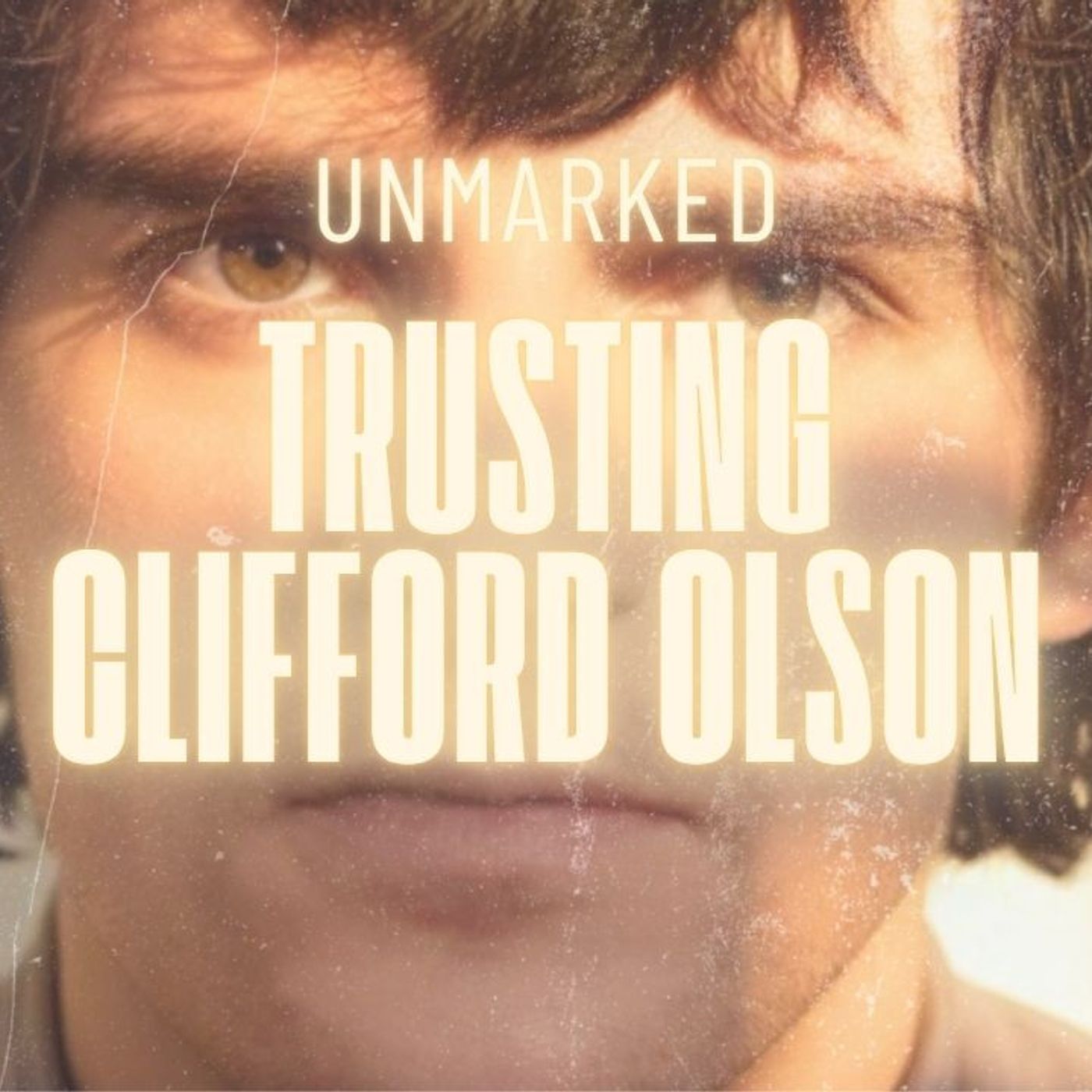
Loading summary
Transcript66 lines
- [00:00]
Narrator (Grainger Ad)
This is the story of the 1. As a maintenance engineer at a beverage manufacturing plant, he starts his day knowing every line is ready to run. Because Grainger delivers the industrial grade products he needs to keep mixers, conveyors and packaging equipment moving. With Grainger's vast selection of bearings, belts and motors, he keeps operations running smoothly so nothing grinds to a halt. Call 1-800-GRAINGER Click grainger.com or just stop by Granger for the ones who get it done.
- [00:30]
Shannon Maldonado
My name is Shannon Maldonado. I'm the founder of Yaoi, a gift shop. From the lens of artists and handmade objects, I chose Shopify because when I was testing other platforms, it was definitely one of the most user friendly. It was important to me to think about where we would be in the future. All of the tools for reading your sales, like planning inventory, they're just right there on your dashboard. For anyone starting a small business, the biggest thing I can tell you, it doesn't have to be perfect. Shopify can help you build upon it. Start your free trial on shopify.com
- [01:01]
Dr. Eric Hickey
he had this very strange laugh. Like it was this evil laugh. He would laugh like he thought everything was funny and that he had something special going on and I could be part of his world if I would just do his bidding for him.
- [01:16]
James Buddy Day
I was 4 years old when this happened. I don't remember understanding the details, just fragments. News reports flickering from the television in the other room. Adults lowering their voices when certain names came up. The feeling that something bad was happening in British Columbia, even if no one could quite explain it.
- [01:38]
Narrator (Grainger Ad)
He was known as the beast of BC. He confessed to murdering 11 children 30 years ago.
- [01:45]
James Buddy Day
For nine months in the early 80s, a man named Clifford Olson moved through the province next door to me. He inflicted suffering, eventually confessing to 11 murders and impacting an untold number of survivors. And this is not a monster lurking in the shadows. Clifford Olsen was in plain view. He talked to the police. He worked as a paid informant. He taunted his victims, inserted himself into investigations. And when he was finally caught, he negotiated. Authorities paid Olson $10,000 for every body he would lead them to. A deal made with grieving families waiting for answers. A deal so controversial it still hangs over this case more than 40 years later.
- [02:38]
Dr. Eric Hickey
He felt very important when he could talk to someone who was educated, when he could talk to someone who had standing in the community. He was a researcher, professor, someone who had degrees. And it made him feel important.
- [02:57]
James Buddy Day
How does something like this happen? How does a violent predator move freely through a community While children are disappearing around him. And when authorities finally had him cornered, did they make the right decision? This case, it forces a brutal question. What would you trade to get answers from a serial killer? I'm James Buddy Day. This is unlearned. 1981 feels like a turning point. Cases that were once treated as isolated murders were being connected for the first time. And that's because the term serial killer was entering the mainstream, not just inside the FBI or criminology textbooks, but on nightly news broadcasts and in newspapers. And all of this coincided with the arrest of Wayne Williams in Atlanta. But at the same moment the Atlanta child murders were dominating headlines in the United States, children were also disappearing in Canada. Along the highways and small towns of British Columbia, Another predator was caught. A man named Clifford Olson. In fact, Olson and Williams were arrested less than 60 days apart. Before we get too deep, let me catch you up. On January 11, 1982, Clifford Olsen pled not guilty when charged with 10 murders committed during a nine month spree stretching from November of 1980 through July of 1981. Three days later, he returned to court and pled guilty to 11 murders. It's these bizarre contradictions that define the Olsen case. He treated everything, the police, the prison, the media, even the murders themselves like a sick game he never stopped playing. Before his arrest, Olsen moved in and out of prison for years, racking up nearly 90 convictions. When he was in prison the final time, he'd spent less than five years of his adult life on the outside. Yet he worked as a paid informant at different points and regularly interacted with the police. And after his conviction, Olson bargained with journalists, lawyers, and investigators for things like attention, privileges, money, or access. He promised information about unsolved crimes in exchange for media coverage. He taunted lawyers. He tormented the families of his victims, Anything that fed what psychologists would later describe as an endless need for control, stimulation, and recognition. Which is why I wanted to get the first hand account of someone who knew this man. Dr. Hickey, how did you first meet Clifford Olsen?
- [06:00]
Dr. Eric Hickey
How did I get involved with Clifford Olson? See, this would have been back in the. Back in the early 90s, I would be going around the country interviewing different serial killers. And so I contacted him. He agreed to do the interview in person. And so I contacted the corrections Canada and they responded, and they said, yes, you can come and see him.
- [06:25]
James Buddy Day
That's Dr. Eric Hickey, a renowned forensic psychologist specializing in serial murder, sexual predators, and victimology. He's a professor at Walden University and a former consultant to the FBI. Hickey spent years corresponding with Olson and is one of the few researchers to gain insight into what drove him.
- [06:49]
Dr. Eric Hickey
Clifford overall perhaps one of the less intelligent people I've ever met, but extremely crafty, street wise, great imitator, great manipulator, you know, very low self esteem and yet want to be able to look at him. Want, love the attention.
- [07:11]
James Buddy Day
As I dug into the Olsen case with Dr. Hickey, my own memories started coming back. In the early 1980s. This story terrorized Canadian children like me. The public version of the case felt almost mythological. A monster taking children from bus stops, shopping malls and and roadside highways before vanishing back into the dark. But in the years since, a much clearer picture has emerged. And honestly, it's scarier. Olson wasn't some criminal mastermind hiding in the shadows. He was a career offender who repeatedly came into contact with police. He gave bad information and still got paid. He was tolerated, trusted at times, released over and over and over again, believed and eventually even paid to reveal the location of his victims bodies. How could any of this have happened? How did Clifford Olsen come to exist? How could police not see him for what he was? Those are the questions I want answered by Dr. Hickey. The same questions that I've been turning over in my mind since I first heard about this case. And to do that, we have to go all the way back to the beginning. A quick pause. Stay with me. This episode is sponsored by BetterHelp. Summer is one of those seasons that always looks perfect from a distance. Long days, vacations, barbecues, that time with family. But if you're anything like me, it can also become a season when you're trying to do everything at once. For me, summer usually means more travel, more projects, more events, and somehow less time to actually slow down. And before I know it, I'm always spending more time managing the season than enjoying it. One thing I've learned over the years, whether I'm working on documentaries, writing books, or producing this podcast, it's that if you don't make time for yourself, no one will do it for you. That's one of the reasons therapy can be so valuable. It can help you better understand your needs, feel more confident setting boundaries, and create a version of summer that actually feels good instead of one you're just trying to survive. I'm proud that BetterHelp continues to support our podcast because it's the world's largest online therapy platform with over 30,000 therapists and more than 6 million people served globally. They match you with a therapist based on a short questionnaire I've done it. No big deal. And if the fit isn't right, you can switch it anytime. You don't have to say yes to everything this summer. Find support in therapy, sign up and get 10% off@betterhelp.com unmarked. That's better. H E L P.com unmarked and now back to the record. Canada in the 1940s is not the country we see today. British Columbia is still a place defined by distance. The city of Vancouver is not on Vancouver Island. It sits on the mainland, separated from the island by the Strait of Georgia. To the west is the Pacific, to the north are mountains, and to the south and east are smaller communities. And in the 1940s they're still growing. Places like Burnaby, Coquitlam, Surrey, Richmond. That's where this takes place. A place where the cities end quickly and the wilderness begins almost immediately. This is where Clifford Olson is raised. Born a junior on January 1, 1940, to Clifford Sr. And Leona Olson.
- [11:12]
Dr. Eric Hickey
Nobody is born a serial killer, but given the right elements in the right environment, it's amazing what can happen.
- [11:20]
James Buddy Day
Olson's childhood is not well documented. In fact, Dr. Hickey is one of the few people who ever cuts through Olson's fog. And there's a reason for that. We'll get to it.
- [11:32]
Dr. Eric Hickey
He wasn't really open about his childhood too much. I did press him a couple of times.
- [11:38]
James Buddy Day
Here's what we his father, Clifford Olson Sr. Is a soldier, though it's unclear how much time he spends away from home or exactly when he returns. Olsen will later tell Dr. Hickey that he's born illegitimate, or at least he claims to be. Like so much else in Olsen's life, the details are murky, half confession, half performance.
- [12:05]
Dr. Eric Hickey
He lived a very deprived childhood. He felt unloved. Clearly, to me, he was driven by his childhood to act out why he did what he did.
- [12:14]
James Buddy Day
What's clear is that Olson shows the precursors of psychopathy at a very young age. For example, after returning from the military, his father works as a milkman, and as a child, Clifford helps him with deliveries, noticing that people leave their milk money outside waiting to be collected. And by just 10 years old, Olsen starts waking up early and stealing the money off doorsteps before his father can arrive. This is the beginning of a child learning that other people can be used, that trust is something to exploit. And this is supported by extensive accounts from people who knew Olsen as a child. Remarkably, their descriptions are very consistent. Bully, liar, thief, troublemaker. As an adolescent, he rarely attends school. Teachers describe him as a compulsive talker, below average in intelligence, with severe difficulties in English. At this point, Olson is not just struggling academically. He's completely unable to internalize the morals in the same way as other children. And by grade eight, he becomes completely unmanageable and leaves school. You said he's one of the less intelligent people you've ever met. Is that what you said? So that's interesting because they often, you know, the cliche of these psychopaths is they're very charismatic, they're very charming, which I always kind of find ironic when people describe it like that.
- [13:50]
Dr. Eric Hickey
He knew he was different from everybody else in his perception.
- [13:54]
James Buddy Day
Now, we don't have medical records for Clifford Olson's parents or extended family, so we can't know how much of this is genetic. But according to Dr. Hickey, this is more than just bad behavior. This is a child who cannot attach properly, cannot regulate himself and is already carrying something deeper. He started showing kind of those psychopathic tendencies quite early, quite young, a lot of, you know, dyslexic, unable to attach. I mean before grade school.
- [14:26]
Dr. Eric Hickey
I suspect he was sexually assaulted as a child.
- [14:31]
James Buddy Day
You're convinced that he was abused in his childhood. You must have asked him directly were you abused in your childhood? Was he evasive?
- [14:40]
Dr. Eric Hickey
He was evasive at the time he said he, he hated his parents or hated his mother.
- [14:48]
James Buddy Day
Throughout his life, Olson carries a deep resentment towards his parents. Whatever happens in that house, whatever is real and whatever Olson later reshapes for sympathy or control, the wound becomes part of his identity.
- [15:04]
Dr. Eric Hickey
Clifford Olsen came from a very, I would say from what he would said, a traumatic childhood where he did not attach in a healthy way to his parents.
- [15:16]
James Buddy Day
By 1955, Clifford Olsen is only 15 years old and he's already a con artist. He sells out of date lottery tickets door to door. His thefts become more brazen. He starts to break into his Neighbors Homes. At 17, he's sent to prison for the first time. And this begins the cycle that defines the rest of the of his life. His first stretch is at New Haven Borstal Corrections center in Burnaby. But shortly after he's imprisoned, he escapes. It won't be the last time. He returns to Richmond, steals a powerboat, gets caught, and is sent to another prison, Hanney Correctional Center. And from that point forward, Clifford Olsen is never free for long. Between 1957 and his final arrest in 1981, Olson spends less than five years outside of prison. And this is where we begin to see something developing inside of Olson. Something that will eventually drive the murders to come.
- [16:27]
Dr. Eric Hickey
So the piece that we often don't see in the development of a serial killer is the fantasy development. And over time, these guys, they will get into fantasies of control, and that becomes their kind of like their drug. And the more they do it, the more they want it. And eventually they're going to cross the line where they're going to go out and get past the fantasies. They're going to go out and realize those fantasies.
- [16:56]
James Buddy Day
You have to picture Clifford Olson. At 18 years old, he's small, only about 5 foot 7, roughly 160 pounds, pounds. A compulsive talker, manipulative, street wise, but not particularly intelligent. He's highly adaptive in social situations where control matters more than intellect, and prison becomes the perfect environment for that. By his 20s, Olsen has already developed a reputation for repeatedly sexually assaulting younger inmates. And according to Dr. Hickey, these assaults are about far more than sex. It's a window into Olson's fantasy life. It's about recreating trauma through power over somebody weaker.
- [17:45]
Dr. Eric Hickey
To him, it was having that power to have the power he had to have control, so he controlled him in prison. There's only one way I can explain this is from his childhood.
- [17:55]
James Buddy Day
As Dr. Hickey explains, Olson sees his victims almost as a distorted reflection of himself. On the surface, he can talk endlessly, manipulate conversations. But deeper emotional concepts evade him. And underneath that is someone carrying humiliation and unresolved trauma that he can't properly articulate. This is psychological repetition that I've seen more than once in these offenders, and it's supported in the literature. Researchers who study sexual homicide and sadistic violence describe how early abuse, humiliation, and powerlessness can become fused with fantasy, especially fantasies of control and domination. Over time, those fantasies become rehearsed, escalated, and eventually acted out. For Olson, violence becomes a way to reverse helplessness, to become the dominant figure in the scenario instead of the vulnerable one. This is something he expanded on when speaking with Dr. Hickey about his later victims.
- [19:05]
Dr. Eric Hickey
He felt those kids had it coming. It was like he not just did them a favor, but he felt he needed to do that to them. It was a way of almost killing himself.
- [19:19]
James Buddy Day
But this fantasy world is not the only thing Olson develops in prison. He also learns the system. He befriends guards, contacts, authorities, constantly searching for ways to manipulate the people around him. Over the course of his life, Olson speaks to hundreds of journalists, lawyers, investigators, police officers. And when I'm speaking with Dr. Hickey, he. He remembers a perfect example of how Olson operates.
- [19:51]
Dr. Eric Hickey
I remember getting A call from Corrections Canada from the prison said, have you been getting phone calls from Clifford Olson? I said, yes, for the past two years, quite frequently. They said, we had no idea he was calling you. None. I said, I'm gonna get this straight. You consider him to be the most dangerous person you have in all of Canada, you haven't locked him in a plastic glass cell and you don't know who he's calling? No, we thought he was calling his attorney. He'll never call you again. That's fine. Six months later, he calls me again. Oh, they don't mind. So he worked the crowd for Olson.
- [20:33]
James Buddy Day
This pattern accelerates in 1978 when he meets another inmate named Gary Francis Marcoux. Two years earlier, Marcoux abducted and murdered nine year old Gina Dore, leaving her remains in the Fraser Valley. The geography here is important. The Fraser Valley is a vast region of farmland and forest east of Vancouver. At the time of the murder, Marcoux was on parole for a violent sexual assault and had been placed in at a halfway house near the trailer park where Gina lived. This despite reassurances from authorities that offenders like him would not be housed there. Now, this is just one of many institutional failures surrounding this case. But back in 1978, when Olson meets Marcoux. Marcoux is being held on a psychiatric evaluation awaiting trial. And reports suggest that the evidence against him is largely circumstantial. Clifford Olson sees this as opportunity. He offers Marku an alibi in exchange for a detailed written confession. And it works. Marcoux gives Clifford Olson A 120 page statement. Olson then hands it over to authorities and it directly contributes to Marcoux's conviction. And this is the beginning of a pattern. Olson learns he can trade information for value. And over the years he repeatedly cooperates with authorities on his own terms. Sometimes while incarcerated, sometimes while free. But each time he receives favors, special treatment and eventually even cash payments. Is that what you saw? He was kind of this chronic snitch.
- [22:24]
Dr. Eric Hickey
He liked being in the spotlight and he didn't really care what you said about him. He just wanted to be in the spotlight. So. And he, for him it was just all a lot of fun, fun and games.
- [22:35]
James Buddy Day
By 1979, Olson is facing more charges, this time in Nova Scotia. Fraud, theft, break and enter. And while out on bail, he assaults a seven year old girl in Sydney. Now this is important. This is not the first time Olson attacks a child on the outside. It remains unknown when this begins, but what we can say is that between incarcerations, Olson spends years hunting for opportunities by this point in his life, he's a prolific sexual predator, targeting victims repeatedly across the country. He offers rides, jobs, alcohol. He isolates victims in his car or motel rooms. And once they begin to feel intoxicated, he offers pills, later identified by investigators as chloral hydrate, a powerful sedative once commonly used in medical procedures. And we know all of this because he's caught repeatedly. I want to read you something from a federal committee that reviewed aspects of the case years later. By 1960, Olson had added convictions involving 19 offenses of theft and break in entry. Through the 1960s, he was further convicted of 43 offenses, which included break and entry, armed robbery, false pretenses, and escapes. Through the 1970s, he was convicted of another 25 offenses involving similar crimes. Yet between 1961 and 1982, 16 offenses were either stayed or dismissed. One of these was a robbery with violence in 1978. End quote. What we're seeing now is not random violence. It's the development of a psychopathic fantasy life built around domination and control. And worse than that, it's thriving inside a system that cannot see it. Because every time Olsen is dismissed as a snitch, a liar, a nuisance, a low level criminal, he learns something. He learns where the blind spots are. He learns which victims won't be believed. He learns how to talk to the police, how to trade information, how to make himself useful. And all of that has a real world cost.
- [25:09]
Dr. Eric Hickey
He had no victim empathy, could never connect to his victims. That's why it was very easy for him to kill people, kill, kill teenagers. He probably saw them as reminders of his own life when he was a teenager and how horrible it was. And he said, I'm doing them a favor by killing them. Which, of course, that was just silly.
- [25:33]
Ornod Founder
I started Ornod in 2013 and we make bike apparel. The best part of Shopify for me is our ability to run the business as essentially non technical people. We're able to admin everything on the back end, front end, and sell things online easily. If Shopify were a bike accessory, I think it would actually be the bicycle. It's the thing that you do the thing on. We run the business on Shopify. Start your free trial on shopify.com.
- [26:02]
Jenny Lusko
what if you started your day with Jesus before life pulls you in all the ways that it does? I'm Jenny Lusko and my new audiobook, Fresh Mercies. Every Day, is your invitation to do just that. This 40 day devotional helps you bring God into life's messy everyday moments and build A moment by moment. Trust in him. Let today be the beginning of a soul deep transformation. Start listening to fresh mercies every day. Available wherever you enjoy audiobooks.
- [26:32]
James Buddy Day
These patterns repeat over and over again through the late 1970s, leading to the fall of 1980, when Olson commits his first known homicide. Now Olson is traveling constantly prior to 1980. Between short prison sentences, he moves across Canada and into some adjoining states. So are there homicides in his past before November of 1980? I would say almost surely. In fact, throughout his life, Olson claims responsibility for as many as 97 murders. He boasts to journalists and police that he targeted teenage runaways in Seattle, Oregon, California, New York, even Florida. But this is the problem with Olson. He's a psychopath and pathological liar who would confess to anyone who would take his call. Many of the victims he tried to take credit for are known victims of other serial killers, including the Green River Killer, who's later identified as Gary Ridgway. Others appear to be obvious attempts to extort money from authorities. And when I'm speaking with Dr. Hickey, he tells me about his own experience with this.
- [27:51]
Dr. Eric Hickey
One day I get. I get a letter from him and he says, so I. I need to tell you something. I am one of the. So the green. The Green Bear Killer. I'm the other one. There were two of us. And I know that sounds crazy, but I have proof. I have all the photographs.
- [28:12]
James Buddy Day
As Dr. Hickey remembers it, Olson once claimed he'd made a deal with the Canadian federal government to secure his own release and. And relocation to Israel. In exchange, he would provide information about the Green River Killer, who at that point had not yet been publicly identified. Olson even went so far as to send Hickey signed documents on government letterhead. Prove the story.
- [28:38]
Dr. Eric Hickey
I thought he's up to something, of course. So he sent me this letter and he sent me this follow up. This is on letterhead from Corrections Canada. It was a bona fide letter. I mean, in all the right. Everything was perfect.
- [28:51]
James Buddy Day
When Dr. Hickey followed up with the government, officials were baffled. The letterhead and signature provided by Olson appeared to be authentic, but the claims were all lies. And to this day, it's unclear exactly how he pulled it off. But it shows who Olson was. Manipulative, relentless, Always looking for a weak, weak point in the system, always trying to turn attention into currency. So when it comes to his real victim count, or when exactly he crossed the line into murder, the honest answer is we don't know.
- [29:27]
Dr. Eric Hickey
You could never quite believe him because he would embellish things.
- [29:31]
James Buddy Day
What we do know is that the 11 murders he later confesses to begin on Monday, November 17, just after 5pm this is when Olsen encounters 12 year old Christine Weller leaving her father at the Surrey Place Mall on a friend's bicycle. She's heading back to the Bonanza Motel where she's staying with her parents. Not far from where Olsen is also staying at the time. Olson lures her into his car and leaves her remains in the Fraser Valley, the same area where Gary Marcoux, Olson's prison contact, had left the body of his own victim. This is not a coincidence. Researchers have long noted that offenders learn from other offenders. In multiple studies I found, criminologists describe offenders adopting scripts they believe are successful. And Olsen has a direct model sitting right in front of him. He knows Marcu's case in intricate detail. He knows how the body was hidden. And he knows how close Marku came to getting away with it. Back on November 17, 1980, Christine Weller's parents report her missing almost immediately. But the investigation falls way short. When her bicycle is recovered near the motel, Christine is dismissed as a runaway. More than a month later, On Christmas Day 1980, Christine, a man walking his dog, discovers her body in a ditch along the Fraser River. The autopsy reports multiple stab wounds and strangulation. And this begins a nine month murder spree so chaotic it's difficult to fully understand in retrospect.
- [31:19]
Dr. Eric Hickey
He never really could appreciate the gravity of what he did. He could never connect with the victims, ever.
- [31:26]
James Buddy Day
A week later, on January 2, 1981, Olson is arrested. But it has nothing to do with the murder of Christine Weller. Instead, he's caught red handed with an intoxicated victim in his car. And I want to read the federal report on this matter because it really shows the timeline here. Quote. Olsen's first known murder victim died on November 19, 1980. Just six weeks later, on January 2, 1981, Olson was charged with rape, buggery and other sexual offenses and weapons offenses in relation to an offense that undoubtedly would have ended in murder had the victim not escaped. End quote. After his arrest, Olson is held for two months, released on April 8, 1981, when the entire matter is dropped by prosecutors who decide to believe Olson over his victim and recognize him as a paid informant. And once released, Olsen meets his future wife, Joan Hale at the Caribou Pub in Lougheed Village, known locally as the Caribou. But on the night they meet, Olson reportedly drugs and assaults her, though she doesn't recognize the attack until years later. Soon thereafter, she's pregnant the relationship is violent. Almost immediately, Olsen drinks heavily, steals from her, including part of a $43,000 divorce settlement. And at one point, according to accounts from Joan herself, he threatens to kill their baby to control her. At the same time, Clifford Olsen is repeatedly stalking other victims and keeping trophies in his parents garage. It's a consistent and almost unbelievable pattern of manipulation by Clifford Olsen, pursuing the outward appearance of a normal life while simultaneously living inside an escalating sadistic fantasy world. At this point, Olson is moving constantly through shopping centers, bus routes, highways and suburban neighborhoods, searching for opportunity. And on Thursday, April 16, 1981, Olsen encounters 13 year old Colleen Daniel waiting at a bus stop near Surrey. Remember, this is less than a week after being released from prison. He abducts her using familiar tactics. Her body is not recovered until after Olson's arrest. Five days later, on April 21, 1981, Olson encounters 16 year old Darren Johnsrud at Birquitlam Plaza. At the time, Darren had been moving in and out of the area and had just returned to Coquitlam. His family report him missing immediately, but police dismiss the victim as a runaway and carry out no investigation whatsoever. They even refused to publish a missing poster. His body is recovered 11 days later on May 2, near Daroche, a small rural community east of Mission along the Fraser River. The same night, Olson is arrested for drunk driving and released the next day. And through all of this, Olson continues to find other victims. At a church in Surrey, Olson is reportedly caught abusing children. But instead of notifying police, the congregation handles it quietly. And Olson begins to attend the People's Full Gospel Church in in Surrey, where on May 15, 1981, Olson marries Joan at the church. This is shortly after the birth of their son, Clifford Olsen iii. And the night before the wedding, Olsen babysits several children while Joan celebrates with friends. Later, it is uncovered by investigators that Olsen had sent older children to the store for bubblegum while he sexually assaulted a five year old left alone with him in the apartment. Another example of Olsen's depravity and the indifference of the systems around him. Just five days later, another teenager disappears. On May 19, 1981, Olsen abducts 16 year old Sandra Wolfsteiner, who's hitchhiking. We know that Olsen offers her a ride and promises her work cleaning windows for $13 an hour because Sandra later tells this to a friend and is last seen getting into Olsen's vehicle. Once again, her parents report her missing and she's dismissed as a runaway by police. Then on June 21, 1981, 13 year old ADA court disappears after getting off a bus near Olsen's apartment complex. Olson will later lead authorities to her body. After his arrest,
- [36:33]
Dr. Eric Hickey
he hated himself, he hated his life, what he had in his life. And so now he's killing these other, these like proxy murders. Rather he's killing them, crushing them, making them suffer as he suffered in his own fantasy world. And of course he, he turns, he sexualizes that and turns that into sexual gratification for himself.
- [36:59]
James Buddy Day
Over the next month, Olsen kills repeatedly. On July 2, 1981, Olson abducts and murders nine year old Simon Partington. Seeing the boy riding his bicycle, the victim's parents even make a public plea for his return and demand an investigation. But the case is dismissed by authorities as being connected to the UN other disappearances. Four days later, Olsen is once again charged with indecent assault after attacking a 16 year old girl. She flags down police after escaping and identifies Clifford Olsen directly. But the case is dropped when she's declared to be unreliable. Despite the fact that Olsen has been charged or convicted of nearly a hundred crimes by this point. Looking back at investigative notes, the witness is considered to be quote, unreliable because she's a child sex worker. Which sounds insane in retrospect, but even then it's not just the police who can't see Olsen for what he is. That's one of the most disturbing parts of his psychopathy. The ability to psychologically compartmentalize this monstrous behavior while preserving a completely different self Image. It's something Dr. Hickey confronted Olson about directly.
- [38:21]
Dr. Eric Hickey
I actually asked him how do you rate yourself compared to Ted Bundy? He says oh no, I'm not one of those sex offenders. I said, but you saw the mindset olse victims. He said yeah, but I was never convicted of that. So in his thinking, because he wasn't convicted of that officially, that he wasn't a sex offender.
- [38:40]
James Buddy Day
By now, Olson is not only violently abusing his wife, he's cheating on her and maintaining relationships with multiple women. Simultaneously, one of his mistresses inadvertently introduces him to 14 year old Judy Kosma. And on July 9, 1981, six days after his last homicide, two days after being picked up for brutalizing a surviving victim, Olsen is still on the streets when he sees Judges Judy leaving a phone booth outside Royal Columbian Hospital in New Westminster. Her autopsy documents 19 stab wounds. Two weeks later, on July 23, Olsen murders 15 year old Raymond King Jr. Olson lures Ray with promises of work and drives him east along Highway 7 toward Weaver Lake. At a remote forest service Campground Olson Olsen leaves the body down a steep hillside trail. And just two days later, 18 year old German student Sigrun Arnd disappears while traveling through British Columbia. Her disappearance is not even noticed publicly until Olsen later confesses. Even though two days after abducting and killing her, Olsen caches her traveler's checks at a bank in Hope, British Columbia. And before investigators can even begin making sense of that case, olson kills again two days later. Terry Lynn Carson, 15 years old. this point, Olsen is killing so rapidly, it's impossible to make sense of it. The cooling off periods that criminologists often describe in serial murder are collapsing entirely psychologically. This is what escalation looks like. The fantasy is no longer occasional, it is consuming him. Each successful murder reinforces the illusion that he's untouchable, smarter than the police, invisible to the public, immune to consequences. And there's a good reason for this. Throughout this entire period, Olsen is interacting with the police, offering information about the murders he is committing, presenting himself as helpful, even acting as a paid informant. Olson was able to manipulate the police. And even though that they had met with him multiple times, even though that he was a paid informant of theirs during the investigation, they could never see him for what he was.
- [41:20]
Dr. Eric Hickey
The police saw what they wanted to see. How often do they get exposed to someone like Clifford Olson, who's a serial killer, who is a master manipulator, and, and he would be very convincing that he could help them. And he wasn't smarter than them, he just was better at manipulating people.
- [41:40]
James Buddy Day
Authorities meet with Olson frequently, but never see him for who he really is, is. And eventually the appearances become impossible to ignore. Public outrage grows and the RCMP launches what they claim is the largest manhunt in Canadian history at that time. But the irony is almost unbelievable. While the police are hunting for the killer of these missing children, they're also meeting with him regularly.
- [42:13]
Dr. Eric Hickey
Clifford couldn't resist. He wanted to be part of the action.
- [42:17]
James Buddy Day
You said he wanted attention, which is interesting because, you know, during the murders, while he's committing these murders in between, he goes to the police and says, hey, I'll give you information on these murders if you pay me. He had no fear of being caught whatsoever.
- [42:35]
Dr. Eric Hickey
Fearless. So, which is, doesn't mean he's brave, it just means he's fearless. He doesn't care about consequences because the need for being recognized, being appreciated, being part of what's going on in the world, he was very kind of an insignificant person in his own mind. And so by doing that, he could
- [42:57]
James Buddy Day
be Somebody during this time, there's also the unsolved disappearance of 16 year old Werner Bjerke on May 2, 1981. Over the years, Olsen alternately confesses to killing her, recants, then claims he merely knows who's responsible. To date, her family believes Olsen murdered her and some of her belongings are eventually found along routes that we know Olsen frequented while traveling, while disposing bodies. By this time, Olson is completely out of control. He's killing so frequently, traveling so aggressively across British Columbia, interacting with police so openly, that the entire thing feels surreal in retrospect and still, somehow he keeps slipping through the cracks. In one specific meeting, Olson offers investigators information about the murders he is committing. He positions himself as helpful, then leaves the meeting and is stopped on Vancouver island after attempting to lure two female hitchhikers into his vehicle. But once again, they recognize him and let him go. The next day, he kills again. 17 year old Louise Chartrand is abducted on July 30, 1981 while walking to her night shift. As a wake up, Beatrice Olson drives her to a remote area near Whistler and leaves her in a shallow grave. Every failed investigation, every drop charge, every conversation with police where Olsen walks away untouched, it all reinforces the fantasy. Until on August 12, 1981, police finally arrest him. But not because they've sold solved any of the murders. Olsen is arrested because after meeting with police, they witness him attempt to abduct two teenagers near Port Alberni. And when they search his car, they find Judy Cosma's notebook. He's taken to Chilliwack for questioning. And investigators begin to realize the scale of what they're dealing with. But again, it's not because they're putting the pieces together together. It's because after a week, Olson begins to tell them he was kind of
- [45:22]
Dr. Eric Hickey
person that wanted to be really recognized for what he had done, like he'd done something important. And so just being in the news wasn't enough. He needed his name, needed to be in the news, and so he wasn't unhappy that he was caught at all. I mean, it was, you know, look at me, look at me.
- [45:39]
James Buddy Day
And then comes the most controversial decision in Canadian criminal justice history. The so called cash for bodies deal. In exchange for revealing the locations of victims the police failed to even recognize when they were missing, the British Columbia government agrees to place money in a trust fund. Olson is promised $30,000 for the first four bodies he identifies and $10,000 for each additional victim afterward. In total, Olson leads investigators to seven victims and receives $90,000 they shouldn't have
- [46:19]
Dr. Eric Hickey
given not a penny. It made the government look very weak. Of course, in the end, he played them all. He played everybody.
- [46:28]
James Buddy Day
Now, before condemning the decision outright, it's important to understand the thinking at the time. Investigators and prosecutors justify the deal in two ways. First, it allows families to recover the bodies of their children instead of spending years wondering where they might be buried. Second, it forces Olson to plead guilty, avoiding a prolonged public trial where the details of the murders would be exposed in horrifying detail. And to their credit, that's largely what happens. On 1-14-19. In 1982, Olson pleads guilty to 11 murders and receives 11 life sentences. The proceedings last less than a day. Many details never become public. And the money itself is not directly paid to Olson. Instead, it's put into a trust overseen by his wife, Joan Hale, on behalf of Olson's son. That's the government's position. But on the other side, you have police negotiating with a serial killer. And honestly, there's no way around what that means. The state effectively rewards a man for murdering children. Not metaphorically, literally. Money in exchange for bodies. You can understand their reasoning, but the problem is that deal fundamentally misunderstand who Clifford Olsen is, because Olson is not motivated by money in the normal sense. He's motivated by power, by recognition, control, the emotional gratification of making other people react to him. And this agreement, it gives him exactly what he wants. It confirms his fantasy that he's smarter than the system around him. And for a psychopath driven by sadistic fantasy and pathological narcissism, that's gasoline on the fire. Even decades later, people in Canada still react viscerally to this phrase, cash for bodies. Because intrinsically they understand something about it feels morally wrong. Decades later, in 2010, new outrage erupts when reports reveal Olson has been receiving thousands of dollars in federal old age payments while incarcerated. At the same time, he's able to mail letters to families of his victims simply to inflict more pain. These sick games that Clifford Olsen continues to play don't end until 2011, when he dies in prison on September 3rd 30th, 71 years old, cause of death, cancer. No execution. No dramatic final confession, no true remorse. Just another aging inmate dying inside a system he spent his entire life working. And maybe that's the final, uncomfortable truth about the Olsen case. People want monsters to feel separate from from society. It's easier to believe someone like Olson simply appeared out of nowhere, fully formed evil from the beginning. But that isn't what this story shows. What this case actually reveals is something far more disturbing. A disturbed child who grows into a predatory adult while drifting almost continuously through institutions that repeatedly fail to stop, stop him. This isn't just about the police, though. They failed repeatedly, but so did schools, prisons, churches, agencies, courts. And maybe that's why this case still lingers in Canada decades later. Because underneath the horror is a deeply unsettling realization. Clifford Olson didn't just exploit individuals, he exploited weaknesses in the society around him.
- [50:35]
Dr. Eric Hickey
Quite frankly, this is where my bias comes in. People who harm children, like here in the States. In some states, we have capital punishment. So I'm the guy for. I'm all about that. I'll be happy to pull the switch. Yeah, I have no problem with that for certain people.
- [50:53]
James Buddy Day
And was Clifford Olsen one of those people?
- [50:56]
Dr. Eric Hickey
Oh, yeah.
- [51:02]
James Buddy Day
Before we wrap, a few show notes. First, all our episodes are available inside unmarked case files on Patreon. And this includes expanded commentary and evidence that you can examine for yourself. And if you want to see what I'm working on and thinking about for future episodes, you can follow me on Instagram amesbuddyday. I'm not hard to find. Next, if you want to explore the Charles Manson case through in depth research and interviews, my book, Charles the Last Words is available on Kindle and Amazon. This episode of Unmarked was produced by John Nadeau and edited by Dave Alderson. Our additional producer is Jesse demarais. Until next week, this is Unmarked.