← UNMARKED: A True Crime Podcast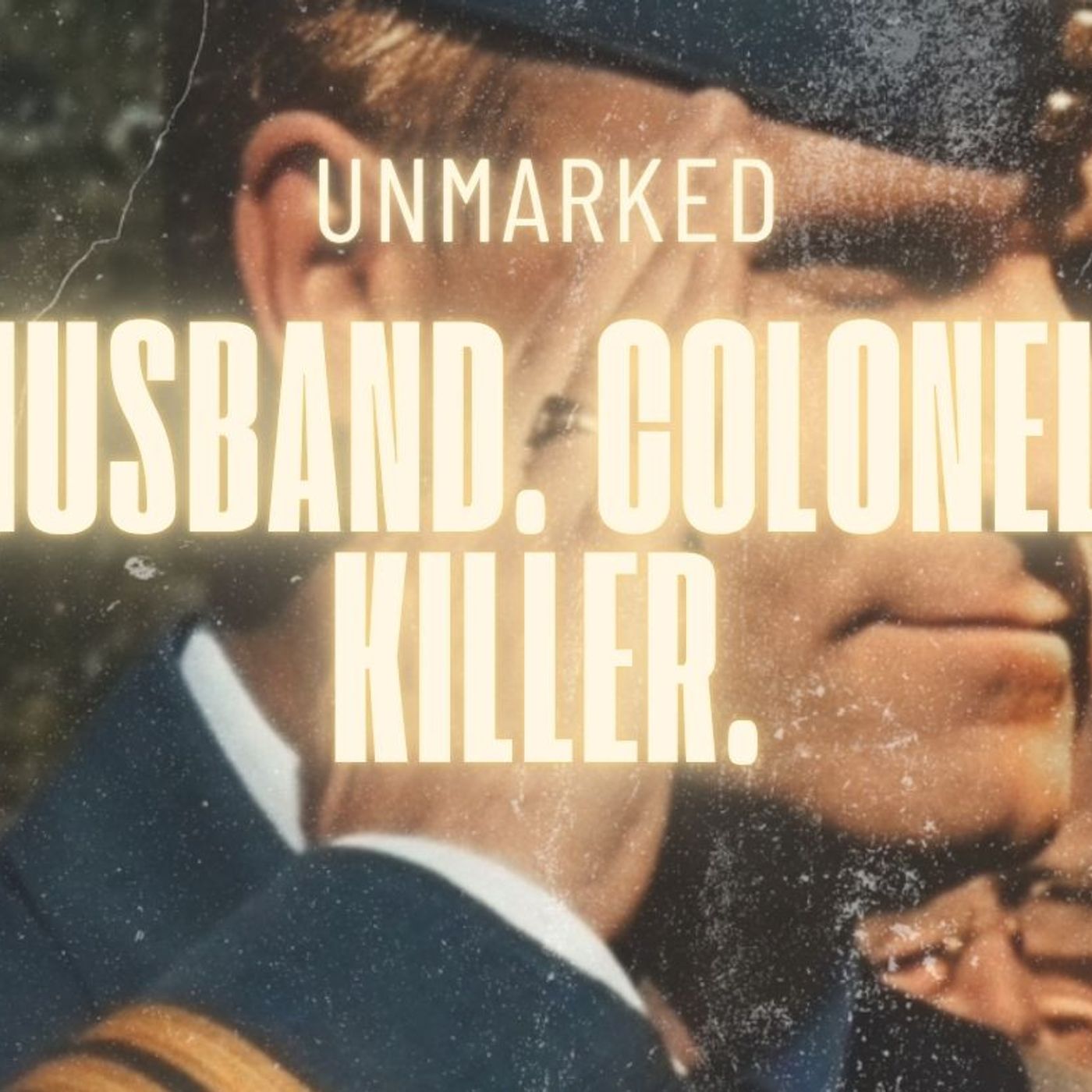
Loading summary
Transcript171 lines
- [00:01]
Spin Quest Advertiser
Hanging out at the pool is great. Relaxing and playing Vegas style games on my phone at the same time. Drink in one hand and a blackjack in the other. It's all at spinquest. Over a thousand games including your favorite slots and table games. Be cool with this summer special new players get 30 coin packs for 10@Spinquest.com
- [00:24]
Spin Quest Disclaimer Announcer
Spin Quest is a free to play social casino void where prohibited. Visit spinquest.com for more details.
- [00:31]
Talkspace Sponsor Announcer
This podcast is sponsored by Talkspace.
- [00:33]
Talkspace Testimonial Speaker
Last year I went through many different life changes. I needed to take a pause and examine how I was feeling in the inside to better show up for the ones who need me to be my best version of myself.
- [00:45]
Talkspace Sponsor Announcer
When you're navigating life's changes, Talkspace can help. TalkSpace is the number one rated online therapy, bringing you professional support from licensed therapists and psychiatry providers that you can access anytime, anywhere.
- [00:58]
Talkspace Testimonial Speaker
Living a busy life, navigating a long distance relationship, becoming a first stepfather, Talkspace made all of those journeys possible. I could speak with my therapist in the office. I could speak with my therapist in the comfort of my home. I was never alone.
- [01:12]
Talkspace Sponsor Announcer
Talkspace works with most major insurers and most insured members have a $0 copay. No insurance, no problem. Now get $80 off your first month with promo code space80 when you go to talkspace.com match with a licensed therapist today at talkspace.com save $80 with code space80@talk space.com
- [01:33]
Detective Jim Smith
why do you think these things happen?
- [01:36]
Russell Williams
I'm pretty sure the answers don't matter.
- [01:40]
James Buddy Day (Podcast Host)
There are serial killers who are frightening because of the violence they commit. And then there are those who are even more unsettling because they manage to live seemingly ordinary lives. But none of these men come close to Colonel Russell Williams.
- [01:57]
Alan R. Warren (Investigative Journalist)
It was always a single woman. He would focus in on them, and he had several going at the same time.
- [02:05]
James Buddy Day (Podcast Host)
In 2010, Russell Williams confessed to two murders, two sexual assaults, and nearly 100 break ins, crimes driven by voyeurism, obsession and dark fantasy, all simmering beneath the surface of one of Canada's most decorated military offices.
- [02:25]
Alan R. Warren (Investigative Journalist)
By then, he's the Colonel and his neighbors know him. Everybody knows who he is, and the people have a lot of respect for him.
- [02:33]
James Buddy Day (Podcast Host)
This is the story of a serial killer who stood directly in front of the people tasked with finding him. People trained to identify risk, to assess character, to detect threats before they become catastrophes.
- [02:49]
Alan R. Warren (Investigative Journalist)
He had to go through are in Canada, our highest security clearance. He also had to go down to the Secret Service and go through their Security clearances.
- [02:59]
James Buddy Day (Podcast Host)
That raises a difficult question at the center of this episode. What if the systems we've built to protect us don't work? To answer it, I'm going through Russell Williams videotaped confession and speaking with an investigative journalist who spent years interviewing the people who knew him best. And by the end, you'll have to decide whether Russell Williams was a master manipulator or whether we simply don't understand what dangerous people look like. I'm James Buddy Day. This is Unmarked. We often talk about the idea of monsters hiding in plain sight. It symbolizes one of the most persistent myths about serial killers, this idea that they're normal people living double lives with normal childhoods, normal families, and no indication of what's coming. We've all seen the neighbor on television the next day saying things like, I had no idea he was so quiet. But that's rarely true. If you've been watching or listening to Unmarked, you've seen that psychopathy and sadistic violence don't come from nowhere. The seeds are sown long before the crimes begin. And that brings me to Russell Williams, a serial offender who wasn't simply visible. He was respected, acknowledged, even celebrated. A man trusted with extraordinary responsibility. An officer who was vetted at the highest levels of national security. Before we get too deep, let me catch you up. On October 18, 2010, Colonel Russell Williams pled guilty to two counts of first degree murder, two counts each of sexual assault and forcible confinement, and 82 counts related to breaking and entering. His arrest shocked the country, and not simply because an unknown serial offender was exposed, but because Colonel Russell Williams commanded Canadian Forces Base Trenton. That's Canada's most strategically important air force base and a key hub in the war effort in Afghanistan at the time.
- [05:27]
Detective Jim Smith
That's a little microphone just to make sure there's nice and clear. As you can see here, everything in this room is videotaped and audio taped.
- [05:33]
Spin Quest Disclaimer Announcer
Check.
- [05:34]
James Buddy Day (Podcast Host)
This is a videotaped interrogation with Russell Williams filmed at the Ontario Provincial Police Detachment, which is about three hours from CFB Trenton. It was conducted by Detective Sergeant Jim Smith on February 7, 2010. At the time it was filmed, it was a little more than a week into the investigation and search for William's final victim, Jessica Lloyd.
- [06:01]
Detective Jim Smith
We don't give up on somebody being alive until we get evidence that they're not. So because of that, we're treating Jessica's case as an emergent situation, obviously.
- [06:12]
James Buddy Day (Podcast Host)
Throughout this episode, you'll hear excerpts from this interview as we attempt to answer questions that are Central to this case,
- [06:19]
Detective Jim Smith
what's happened is over the past about four or five months, there have been four occurrences, like I said, that we're looking into. Two of those occurrences occurred in September of 2009, and very briefly, they were up in the Tweed area. They involved somebody entering two different women's houses in the evening hours and committing sexual acts.
- [06:45]
James Buddy Day (Podcast Host)
Russell Williams confession points us towards an uncomfortable conclusion. This isn't a man who slipped through the cracks. People at the highest level of national defense failed to see what was right in front of them.
- [07:00]
Detective Jim Smith
You ever been interviewed by the police in a. In a room like this before?
- [07:02]
Russell Williams
I've never been in a room like this.
- [07:04]
Detective Jim Smith
Oh, no. Okay.
- [07:05]
Psychologist / Expert Commentator
No.
- [07:06]
Detective Jim Smith
Let's get this set up there.
- [07:12]
Russell Williams
Interview by NIS for Top Secret clearance.
- [07:15]
James Buddy Day (Podcast Host)
Now, it's one thing for a serial killer to find cracks in the system or target vulnerable populations. We see that all the time. But this is next level. I can't find another example of a serial offender who was subjected to the level of scrutiny that Russell Williams endured throughout his career. Over and over again, highly trained professionals sat across the table from Russell Williams and concluded that he was exactly the kind of person who should be given more responsibility. If that doesn't force us to reexamine how we identify dangerous people, what does?
- [07:56]
Alan R. Warren (Investigative Journalist)
A couple of officers talked to me about him, who worked with him, and then his wife communicated with me, which is really bizarre.
- [08:10]
James Buddy Day (Podcast Host)
That's Alan R. Warren, host of KCAA 106.5 FM in Los Angeles. He's a researcher and investigative journalist who spoke with William's family, including his wife, neighbors and friends.
- [08:25]
Alan R. Warren (Investigative Journalist)
That was enough to get me going, because then you start developing more of a life story of who Russell Williams was as compared to just what you hear on the news.
- [08:39]
James Buddy Day (Podcast Host)
That's exactly what I'm attempting in today's episode to get past the superficial retellings of this case. How does a man subjected to some of the most extensive vetting and security screening in the world earn the trust of governments, intelligence agencies and military leaders while carrying out increasingly violent crimes? The answer is in the past. To understand who Colonel Russell Williams is and where he came from, we have to go all the way back to the beginning. A quick pause.
- [09:17]
Psychologist / Expert Commentator
Stay with me.
- [09:19]
James Buddy Day (Podcast Host)
This episode is sponsored by BetterHelp. Summer is one of those seasons that always looks perfect from a distance. Long days, vacations, barbecues, that time with family. But if you're anything like me, it can also become a season when you're trying to do everything at once. For me, summer usually means more Travel, more projects, more events, and somehow less time to actually slow down. And before I know it, I'm always spending more time managing the season than enjoying it. One thing I've learned over the years, whether I'm working on documentaries, writing books, or producing this podcast, it's that if you don't make time for yourself, no one will do it for you. That's one of the reasons therapy can be so valuable. It can help you better understand your needs, feel more confident setting boundaries, and create a version of summer that actually feels good instead of one you're just trying to survive. I'm proud that BetterHelp continues to support our podcast because it's the world's largest online therapy platform, with over 30,000 therapists and more than 6 million people served globally. They match you with a therapist based on a short questionnaire. I've done it. It's no big deal. And if the fit isn't right, you can switch at any time. You don't have to say yes to everything. This summer, find support in therapy. Sign up and get 10% off@betterhelp.com unmarked this. That's better. H E L p.com unmarked and now back to the record. Russell Williams doesn't begin life in Canada. He's born in England in 1963 to Christine and David Williams, one of two sons. When Williams is still a toddler, the family relocates to Canada, eventually settling in Ontario, where his father works at a nuclear research laboratory.
- [11:19]
Alan R. Warren (Investigative Journalist)
He was growing up the same as a lot of us were. You know, it was a fairly conservative, strict household. You go to school five days a week, you behave yourself. You know, you do everything you're supposed to do.
- [11:31]
James Buddy Day (Podcast Host)
You have to put yourself in the context of the time. This is the late 1960s and early 1970s. The sexual revolution is reshaping both the United States and Canada. The birth control pill is changing the relationship between sex and marriage. Divorce is becoming less socially taboo. Ideas about open marriages, communal living and sexual freedom are moving into the suburbs. This is when the Williams family moves to Ontario.
- [12:05]
Alan R. Warren (Investigative Journalist)
They would all get together and all the kids would stay in one family's home and all the other parents would get together and they would drink and they would partner up with other spouses. I don't think they understood what it was until they were older.
- [12:24]
James Buddy Day (Podcast Host)
William's parents became involved in an open marriage within their social circle. Partner swapping is, is not unusual. And relationships, they often extend beyond traditional boundaries. Now, I'm not saying that early exposure to non monogamy creates A serial killer, that would be ridiculous. But as a child, this takes the form of stories that Russell Williams builds around his parents.
- [12:52]
Alan R. Warren (Investigative Journalist)
It all sort of fell into place when his mother eventually married or yeah, she actually ran away and married one
- [13:02]
James Buddy Day (Podcast Host)
of the other fathers in 1970. Williams is seven years old when his parents divorce. Both remarry partners from the same open minded social circle. And according to Alan Warren and others, the emotional weight of that event does not fall evenly in Williams mind.
- [13:23]
Alan R. Warren (Investigative Journalist)
There was an issue with his mother and, and how she left for another man and how they lived their lifestyle and what he pictured her to be more than what she really was. He had an image of her being that lingerie sexy woman sleeping with men and you know, turning people on and doing that whole thing. But I don't think that's reality. I think that's how he put it in his mind. I think that's what he told himself about her.
- [14:00]
James Buddy Day (Podcast Host)
By the mid-1970s, Williams is living in Scarborough, Ontario, a suburb on the eastern edge of Toronto, with his brother, his mother and his stepfather. And this is where the shape of the fantasy system that drives him begins to emerge
- [14:21]
Psychologist / Expert Commentator
in his later life. You see him fetishize women wearing provocative clothing, lingerie specifically. He dominates in them and controls them. And then even after he assaults them, he, he spends time taking pictures of them. You know, there's just this ongoing themes of controlling a woman completely. Do you think those fantasies come from that period of time?
- [14:47]
Alan R. Warren (Investigative Journalist)
I think it's probably true. I think it's about, you know, control over the female. But I think for him it was about his mother. And so I think he was trying to stop females from doing this and maybe control them some and also punish his mother.
- [15:15]
James Buddy Day (Podcast Host)
This idea is consistent with a concept that researchers call implicit theories. Psychologists Devon Polischek and Tony Ward argue that sexually violent offenders often construct elaborate belief systems about women, relationships and sexuality. These beliefs aren't necessarily conscious. They're stories that offenders tell themselves about how the world works. Now Williams has always been guarded when asked about these specific fantasies. But there's a telling moment I found in the confession where he lets the mask slip.
- [15:54]
Detective Jim Smith
Why do you think these things happen,
- [16:02]
Spin Quest Disclaimer Announcer
Huh?
- [16:04]
Detective Jim Smith
Have you spent much time thinking about that? I'm pretty sure the answers don't matter. Well, let me, let me ask you this. Did you like or dislike these women?
- [16:16]
Russell Williams
I didn't know any of them.
- [16:20]
James Buddy Day (Podcast Host)
That answer is more revealing than Williams probably realizes. Normal people don't need to know someone personally in order to care about them. We don't need A relationship with someone to recognize their suffering. But Williams immediately frames the question through his relationship to the victim. And throughout this confession, this is exactly how Williams talks about his victims. Not as people with lives, but as targets who existed only long enough to serve a purpose. And this makes William what police find after his arrest all the more revealing. Because while the victims barely register in Williams account of the crimes, the fantasy itself is documented in extraordinary detail. When investigators search his home, they seize thousands of photographs and videos, along with more than 1300 trophies. These are things like articles of clothing, personal belongings, or intimate items taken from his victims.
- [17:24]
Russell Williams
When you walk into the office on the left side, there's a dust of drawers, side drawers like a filing cabinet.
- [17:36]
Alan R. Warren (Investigative Journalist)
Wooden Ikea.
- [17:38]
James Buddy Day (Podcast Host)
That's Williams from his confession. He's walking investigators through where they can find the over 3,000 images of his crimes that he meticulously kept in one
- [17:50]
Russell Williams
of the top two drawers. And there's a plastic divider.
- [17:53]
Detective Jim Smith
Yeah.
- [17:55]
Russell Williams
And there's inside there, there are two memory cards.
- [18:00]
Detective Jim Smith
Okay. And whose images are on those cards?
- [18:06]
Russell Williams
Well, I've erased them.
- [18:09]
James Buddy Day (Podcast Host)
Williams isn't simply preserving evidence of his crime crimes, he's preserving evidence of his mind. The photographs become a private archive he can return to again and again. But back in the late 1970s, these fantasies are still being formed. In 1979, William's stepfather relocates the family to South Korea for his work. But Russell Williams stays in Canada. He spends his final years of High School, from 1980 to 1982 at Upper Canada College while his parents live overseas.
- [18:50]
Alan R. Warren (Investigative Journalist)
He wasn't unpopular or he wasn't weird in that way. He wasn't like to himself and, and real quiet and all that stuff. He was very into the scene. He, he had lots of different girlfriends throughout that time, and even he was one he was supposed to marry that he was with on and off for about two years.
- [19:09]
James Buddy Day (Podcast Host)
What Alan Warren is describing is attachment. Williams has the ability to form relationships, maintain friendships, and navigate social life. By all outward appearances, he's functioning normally. There are no reports of violence, no criminal record, no obvious warning signs. He has colleagues, roommates, friends. And among those friends is another young man from Scarborough, a man who will eventually become one of the most notorious serial offenders in Canadian history. Paul Bernardo. In the early 1980s, Williams moves back to Scarborough and enrolls in economics and political science at the University of Toronto's satellite campus. It's where Paul Bernardo is studying accounting and at the same time committing a high profile series of attacks. Sometime around 1986, Paul Bernardo begins this series of sexual assaults that would later lead him to being identified in the media as the Scarborough rapist. Over the next three years, 14 incidents are officially connected to Bernardo, but that may not be the full number. Bernardo himself later admits to additional victims, possibly as many as 30.
- [20:35]
Alan R. Warren (Investigative Journalist)
The Scarborough Rapist was going around, and the Scarborough rapist had the same kind of technique of attacking a woman from behind and blindfolding, covering their eyes, assaulting them and then leaving them, not killing them.
- [20:55]
James Buddy Day (Podcast Host)
If you lived in Scarborough during the late 1980s, it would have been impossible not to know about this. The attacks dominate local news coverage. It fuels public fear. It's kitchen table conversation at a time when Russell Williams is living there and attending college with Bernardo. And for someone with a developing violent fantasy life, this kind of coverage is highly charged. Researchers have long noted that violent offenders often consume media coverage of crimes that mirror their own fantasies. And this is all occurring at a time when Williams and Bernardo become acquainted.
- [21:36]
Alan R. Warren (Investigative Journalist)
They would talk in the pub. All the time. All the time. They were like buddies, not so much enough. They were, you know, what you call bar buddies. You know, it was just the bar scene. They didn't hang out at home, they didn't go to movies. They didn't do any of that stuff. They were just sitting there drinking, like, with other college students and. And stuff. It just seemed really strange to me. So did. Did they know what each were doing? You have to ask those questions. Of course, that's conspiratorial and kind of go. You can kind of go crazy, but that's strange to me.
- [22:13]
Psychologist / Expert Commentator
I wonder if they just, you know,
- [22:16]
James Buddy Day (Podcast Host)
Bernardo was a psychopath.
- [22:18]
Psychologist / Expert Commentator
You know, did. Did they see something in each other that was just, you know, not to say that they ever said it out loud or discussed anything. But did they. They have. They see something in each other that drew them together?
- [22:31]
Alan R. Warren (Investigative Journalist)
Who knows, right?
- [22:32]
Spin Quest Advertiser
Who knows?
- [22:32]
Spin Quest Disclaimer Announcer
Yeah.
- [22:33]
Detective Jim Smith
Yeah.
- [22:33]
Alan R. Warren (Investigative Journalist)
We can't go back. But one thing when you say that, you have to be wondering, you know, he knows about the Scarborough rapist. You know, you hear the news and stuff. I think it definitely had an influence on him because when he started attacking the girls, then he started doing it the same way.
- [22:50]
James Buddy Day (Podcast Host)
What was said between Bernardo and Williams? We don't know. There's no evidence of a conspiracy. But the overlap, it's disturbing. Two men in the same community, both socially functional, both moving through university life, both later revealed to be violent sexual offenders. And according to witnesses, they're at least familiar enough to talk in the same bar scene back in 1987. Williams life takes a Turn that makes this case so extraordinary. He joins the military. And Williams isn't just a decorated officer. His career is exemplary. He rises from one posting to the next, earning strong reviews, medals and promotions. He becomes a pilot in 1990, is promoted to captain in 1992. In 1999, Williams is promoted again, this time to major. He attends the Royal Military College in Kingston, where he receives his master's degree. And he's later promoted to lieutenant colonel and appointed commanding officer of the 437th Troops Transport Squadron in Trenton in 2004. And much later, in July 2009, he takes command of CFB Trenton. This is the part of the story that feels almost impossible to reconcile. And it's exemplified by moments in the confession when earlier interactions between Russell Williams and the police are referenced.
- [24:25]
Detective Jim Smith
When the officers talked to you on Thursday night, we kind of went from there because when I think you discussed with him the fact that you were a colonel at the base.
- [24:36]
Russell Williams
I was in uniform at the time, yeah.
- [24:38]
Detective Jim Smith
So pretty obvious, right?
- [24:40]
James Buddy Day (Podcast Host)
As William's military career accelerates, his personal world appears to contract as he got
- [24:47]
Alan R. Warren (Investigative Journalist)
even older, into the early 20s, he stopped talking with his brother, who's a doctor. He stopped. He basically cut himself off from his family. He just wanted to walk away from them. So there was a type of embarrassment at the same time as an anger.
- [25:11]
James Buddy Day (Podcast Host)
At this point, William's public life and private life are moving in opposite directions. On the surface, he's become the perfect officer. But beneath something else is being preserved. A private mythology about women, shame, control and punishment. Did anyone see this darker side of Williams? Were red flags ignored? Those are the questions. There is one person who remains controversial in this context. Williams wife, Mary Elizabeth Harriman, who Williams marries in 1991 when he's 28 years old.
- [25:56]
Bretzky (Spin Quest Advertiser)
What's up everybody? It's Bretzky. And America is turning 250. And I can't think of a better way to celebrate that than playing on an American owned social casino. Spinquest.com with all of your favorite favorite games. Live crabs, bubble craps, live blackjack, there's no better place to play for free and win real cash prizes.
- [26:17]
James Buddy Day (Podcast Host)
Spinquest.com Spin Quest is a free to
- [26:22]
Spin Quest Disclaimer Announcer
play social casino Boyd. Where prohibited. Visit spinquest.com for more details.
- [26:27]
Alan R. Warren (Investigative Journalist)
One thing that did did come from the interviews from neighbors was that they noticed the two of them never touched each other. They weren't a touchy, lovey couple. He would hold chairs, he would open doors, he would go get her a glass of wine and bring it to her he would do things that were very polite, but they weren't affectionate.
- [26:52]
James Buddy Day (Podcast Host)
The timing of these accounts are important because around the same period that Williams is building a successful marriage and military career, we see the first documented signs of another life.
- [27:08]
Alan R. Warren (Investigative Journalist)
He started going out for runs like when he was newly married. Like he'd jog and, and what he was doing was looking at his neighbors. He was checking out all the streets up and down and. And he was slowly determined who he wanted to watch.
- [27:28]
James Buddy Day (Podcast Host)
This is the beginning of a process that will consume William's life. Stalking.
- [27:34]
Alan R. Warren (Investigative Journalist)
It was always a single woman. He would focus in on them and he had several going at the same time. And then he would, when he got the opportunity, would break in and start going through the clothes and wearing them.
- [27:48]
James Buddy Day (Podcast Host)
We don't know when this behavior truly begins. And according to investigators, Williams doesn't take significant action until 2007. But by the time Williams is caught, this is no occasional compulsion. He's ultimately charged with 61 counts of breaking and entering and theft, 11 counts of attempted breaking and entering, and 10 counts of breaking and entering.
- [28:15]
Alan R. Warren (Investigative Journalist)
Evenings, days off, daytimes. He did it around their cabin as well as the house. He had it all scoped out.
- [28:26]
James Buddy Day (Podcast Host)
At one point, Williams breaks into a neighbor's home and spends nearly three hours inside the bedroom of their 12 year old daughter. When no one is home there, he photographs clothing carefully, arranges items throughout the room and photographs himself.
- [28:44]
Alan R. Warren (Investigative Journalist)
What he was doing is at first he was being quiet, like people didn't know. Then he started becoming make. He. He would make himself known. He would move things in. In the woman's bedroom. And I think that was if he was interested in them more than just taking their clothes.
- [29:03]
James Buddy Day (Podcast Host)
In research, this kind of behavior is usually understood through paraphilia. The clothing isn't just clothing. It becomes a sexualized object, a symbol of the victim.
- [29:15]
Alan R. Warren (Investigative Journalist)
One lady, he actually took her computer and wrote a message on it.
- [29:21]
Psychologist / Expert Commentator
I wonder if that's an underlying desire to be recognized. Like I wonder if that. If that is a window and that he is. Is grant into grandiosity within himself, that he feels special and he feels that people should appreciate what he's doing. Or is it an extension of the, the control, like, you know, he. It's not enough that he takes the item. He needs the woman to be scared, fearful.
- [29:48]
Alan R. Warren (Investigative Journalist)
I think it was, it was this entrance way into manipulation and controlling of the woman.
- [29:55]
James Buddy Day (Podcast Host)
I think that's closer to what's happening at this point. Russell Williams understands he doesn't need to be physically present to influence a woman's behavior.
- [30:05]
Alan R. Warren (Investigative Journalist)
He was controlling her at a distance in a way, because then it made her react in a certain way and start behaving a certain way. And so he started doing things like that. Before he got into the attacking of females, it seemed to grow as he went. This wasn't. It didn't just turn on, it didn't turn off. It just seemed like each one, he got more and more brazen, or he got more and more into it.
- [30:33]
James Buddy Day (Podcast Host)
At this point, Williams often spends hours dressing in the victim's clothing, heightening arousal, deepening the violation. It allows him to occupy the victim's private world, and it gives him something to photograph, something to preserve, something he can return to later.
- [30:52]
Alan R. Warren (Investigative Journalist)
He would take all of the clothing that he took from that house, and he would have the film and the video that he took from that day or night or whatever he was doing, and it all be in the same duffel bag. And I think, what, 12 of them were found on the initial search.
- [31:10]
James Buddy Day (Podcast Host)
Williams keeps these duffel bags in his basement. Each duffel bag becomes a complete record of Williams fantasy. This is Williams from the police interrogation. He's describing the amount of underwear trophies he took from his two murder victims, which he left sitting in plain sight in his rec room.
- [31:32]
Detective Jim Smith
How much underwear is in Those boxes?
- [31:35]
Russell Williams
Probably 60 pieces or so. Total.
- [31:38]
Detective Jim Smith
All women's?
- [31:40]
Russell Williams
Yeah. 60 pieces of theirs.
- [31:44]
Detective Jim Smith
Of whose?
- [31:45]
Russell Williams
Of Jessica's and Mel. Tr.
- [31:53]
Detective Jim Smith
So you took 60 pieces from between the two of them?
- [31:56]
Russell Williams
Yeah.
- [31:57]
Detective Jim Smith
Okay.
- [31:58]
James Buddy Day (Podcast Host)
And while this secret life is expanding, so is his public one. Though no one in the military suspects a thing. In December 2005, Williams is given command of Camp Mirage, the Canadian military's secret logistics base in the Middle East.
- [32:17]
Alan R. Warren (Investigative Journalist)
By then, he's the colonel, and his neighbors know him. Everybody knows who he is, and the people have a lot of respect for him. He's military. He's doing all these. These, you know, good things. And they would even go to him and say, can you take care of our place? We're going up north for a month. Can you keep an eye on our house? Oh, sure. Not a problem. So they would be. They would go, and then he would go to the house, and he would stay a whole night.
- [32:47]
James Buddy Day (Podcast Host)
Once again, we see the contradiction at the heart of the Russell Williams case. The more trusted he becomes, the more opportunity he gains. The higher he rises, the easier it becomes for him to hide.
- [33:01]
Alan R. Warren (Investigative Journalist)
When dignitaries came to the country from the U.S. canada, anywhere. So you had the Queen of England. You could have vice president of the US he was in charge of their transportation and security arrangements from the moment they got into the country to the moment they left. So he had to go through our, in Canada, our highest security clearance. He also had to go down to the secret service and go through their security clearances. And also in the uk that's what
- [33:31]
James Buddy Day (Podcast Host)
makes this case so unsettling. Russell Williams isn't some drifter living on the margins of society at this point. He's one of the most vetted people in the country. Yet beneath all of that is a man carrying out increasingly disturbing crimes of sadistic fantasy.
- [33:50]
Alan R. Warren (Investigative Journalist)
One of the interviews I did was with a CIA. You know, it's really kind of amazing who is on the Secret Service. And then when they did the one he did one of the interviews with Russell Williams. And even and he said Russell Williams was perfect at what he did, there was absolutely no reason they would suspect him of being who he ended up being.
- [34:16]
Psychologist / Expert Commentator
Well, there was lots of reasons, but they missed it. I always find that really interesting, and you see this in police over and over again, is if someone is a CIA agent, former secret service, who is doing background interviews at the highest level for the highest level of national security, and they interview a serial killer offender and are not able to tell, then the interview doesn't work. What they're doing is way off base. They need to reevaluate how those security checks are being done and how those interviews are being performed. But instead they say, oh, there is nothing, you know, there's nothing I could have done. Obviously that's not true.
- [34:55]
James Buddy Day (Podcast Host)
This reluctance to acknowledge the failures of the vetting process is frustrating. There are plenty of examples of serial offenders interacting with authorities during their crimes. Scott Kimball worked as an FBI informant. Clifford Olson was a paid informant by federal authorities. Lonnie Franklin Jr. And Jeffrey Dahmer both served in the military. But none of these serial killers passed through some of the most extensive vetting and security screening in the world. How does this happen?
- [35:28]
Alan R. Warren (Investigative Journalist)
It put him in a mindset of being better than cops.
- [35:35]
James Buddy Day (Podcast Host)
This failure by the military has a real world cost. In the fall of 2007, Williams breaks into three properties within walking distance of his cottage, including the house directly next door. Twice by early 2008, the pace is intense. In March, two different homes are broken into on the same Friday night. A week later, Williams allegedly sneaks into a home that would become his favorite target. According to investigators, he returns to the same address eight more times. Soon afterwards, Williams crosses a line, attacking his first victim. In September of 2009. This is the first of four known victims Williams attacks over over a five month period before he's identified. This again is William speaking to Detective Jim Smith.
- [36:32]
Detective Jim Smith
Because essentially there was a, a connection between you and, and all four of those cases, would you agree?
- [36:43]
Russell Williams
Geographically, as I drive past, yes, I would have to say there's a connection, yeah.
- [36:49]
James Buddy Day (Podcast Host)
Williams is connected to all four victims with surprising ease. The same man trusted with some of Canada's most sensitive responsibilities, makes mistakes that in retrospect seem almost reckless. But I don't think what we're seeing is recklessness. This lifelong ability to fool investigators from the Secret Service and the CIA, it allows Williams to operate as though he's untouchable. On September 17, 2009, Williams accepts a donation from a group of police officers raising money for wounded soldiers at a nearby Ramada Inn. That night, while searching for victims, he notices a woman he's never met.
- [37:37]
Russell Williams
I had just spotted her from our boat, actually. I got into the house while she was asleep, noticed that she was on.
- [37:54]
James Buddy Day (Podcast Host)
This surviving victim has never been publicly identified. Williams breaks into her home and sexually assaults her while her eight week old daughter sleeps in the next room.
- [38:07]
Russell Williams
Just hit her with my hand while she was sleeping. Subdued her mostly just my weight on top her. Head, her take off her pajamas, took some pictures, took some of her underwear and left.
- [38:40]
James Buddy Day (Podcast Host)
The details Williams glosses over are telling. What he completely omits is that this is not a brief crime. Williams spends roughly two hours with the victim from 1am till 3am that tells us that the objective is not simply sexual. Researchers who study sexual sadism have literally long noted that gratification often comes not from the sexual act itself, but from controlling another person's emotional experience over time. By this point, Williams is no longer simply targeting victims. He's attached to the fantasy itself. Before, during and after the crime, he
- [39:25]
Alan R. Warren (Investigative Journalist)
would put on her clothes and put himself through the fantasy of whatever that was that he was getting from it. And he would have those pictures to relive it. You know, he was really getting obsessed with living out these fantasies that he had created.
- [39:42]
James Buddy Day (Podcast Host)
And while this is happening, Colonel Williams continues living an apparently normal life. Williams spends the rest of that week attending a military parade.
- [39:53]
Psychologist / Expert Commentator
Parade.
- [39:53]
James Buddy Day (Podcast Host)
He plays golf in a tournament. He's photographed smiling with minor hockey players. But just two weeks later, on September 30, 2009, Williams attacks his next door neighbor, Lori Massacot, during a home invasion. He's already broken into her home twice in the days leading up to the assault.
- [40:15]
Russell Williams
She was sleeping in her, not in her bedroom, but in her for the
- [40:21]
Detective Jim Smith
tv
- [40:23]
Russell Williams
very much the same story. I did have the flashlight that time. I hit her with the flashlight, took off her clothes, took some pictures and left.
- [40:36]
James Buddy Day (Podcast Host)
The attack follows a similar pattern and once again we see it minimized. In Williams retelling, according to investigative notes, William spends three and a half hours with the victim. He takes extensive photographs. He controls every aspect of this encounter. The fantasy is becoming more elaborate and we see this in November of 2009 when Williams escalates again. This time he becomes fixated on Corporal Marie Frost Como, a 12 year military veteran and his own subordinate serving with him him at CFB Trenton.
- [41:17]
Detective Jim Smith
And how did you know Marie Franz Coma.
- [41:20]
Russell Williams
I'd only met her once. She was on a crew I was on just after I got to the base. Okay. So I can't even remember. I think it was a one day trip.
- [41:32]
James Buddy Day (Podcast Host)
Once again, in Williams retelling, he minimizes the victim, even though in this case he was close enough to Como that he participated in her funeral.
- [41:42]
Alan R. Warren (Investigative Journalist)
He went to the funeral and spoke good about her at her funeral. She was a corporal in his unit. They didn't really work together but once they did, they, he had to fly British royalty and he had to fly them around in Canada and she was on the plane with them.
- [42:05]
James Buddy Day (Podcast Host)
At this point point, the distance between Colonel Williams public life and private life is collapsing. On November 17, 2009, he breaks into Corporal Como's home and steals seven pieces of lingerie recording 52 photographs over a two hour period. He returns eight days later.
- [42:27]
Russell Williams
There was an open window in the basement of her, her house when she was away. I went in there a couple of nights before she came home, looked around. I went back in there late at night when she was at home. She's on the phone in her bedroom. She actually discovered me in the basement.
- [43:02]
Alan R. Warren (Investigative Journalist)
He was in that basement. And so he assaulted her and killed her. And it was just, it was, it was fairly quick compared to the other and got out by the next day and the boyfriend came home and discovered her.
- [43:16]
James Buddy Day (Podcast Host)
On November 25, 2009, Marie France Como is found dead in her home. The autopsy report indicates she suffocated with duct tape. But despite three attacks and close to 100 fetish robberies in a relatively concentrated area, police quickly dismiss any connection, telling William's neighbors that the murder is an isolated incident and there are no public safety concerns. At the same time, Colonel Williams dress drives directly to Ottawa after the murder where he attends a highly secure meeting, discarding evidence along the way. Once home, he takes screenshots of Facebook, dedication pages, news websites and police websites to follow the investigation. All the while, he's planning his next murder, which occurs less than 60 days later.
- [44:13]
Detective Jim Smith
Jessica Lloyd is. Is one of four cases that we're currently investigating.
- [44:20]
Russell Williams
Right. I saw her in her house on her tripna Wednesday night, I guess. And I noticed she wasn't there Thursday. So I got into the house, look around then and then left. Noticed she'd come home, so I went back in through the back patio door while she was sleeping.
- [44:54]
Alan R. Warren (Investigative Journalist)
So I woke her up with that particular case. He makes her shower, ties her up. This is after four or five hours, okay, of having her there. And then takes her up to the truck, throws her in and takes her back to his place. Then he takes her down to his basement, ties her up, and then he leaves.
- [45:17]
James Buddy Day (Podcast Host)
In a moment that personifies this case, Colonel Williams attends a high level security meeting involving the CIA. Not before or after the murder, but during. He leaves Jessica Lloyd restrained in his basement, drives to a location near Washington, dc, Attends the meeting and returns home. What stands out here is not simply the violence. Imagine this. While Williams is attending security meetings and interacting with intelligence personnel, Jessica Lloyd is tied up in his basement. Let that sink in. A serial killer is sitting in a room with some of the most highly trained security and intelligence professionals in the world, while at the same time holding a victim captive. And nobody sees it. Can you blame them? I think you can. Because this is precisely what these institutions exist to assess risk, evaluate character, identify threats before they become catastrophe. Now, that's not to say that a CIA officer should be able to read minds. But if a man can spend decades carrying out increasingly deviant behavior, progress to sexual assault, commit murders, hold a victim captive, and still repeatedly pass, then we have to ask whether the problem is Russell Williams ability to deceive or our assumptions about what dangerous people look like.
- [46:52]
Detective Jim Smith
Well, let's talk about Jessica. Because she was there with you for the whole day, right? What kind of feelings were you experiencing while you were with her that day?
- [47:02]
Russell Williams
She was afraid of scar.
- [47:05]
Detective Jim Smith
Can you tell me why you killed her? Right. Do you know why you killed her?
- [47:11]
Russell Williams
Well, I think I killed her because I knew that her story would be recognized.
- [47:18]
Detective Jim Smith
Her story will be recognized. How do you mean, Mom?
- [47:22]
Russell Williams
Because she knew I was taking pictures.
- [47:26]
James Buddy Day (Podcast Host)
This moment from the confession stands out to me. And it's something I discussed with Alan Warren.
- [47:31]
Alan R. Warren (Investigative Journalist)
He wanted to get the pictures of her dying.
- [47:35]
Psychologist / Expert Commentator
You know, I remember this moment in
- [47:37]
James Buddy Day (Podcast Host)
the confession where he says, I took a lot of pictures.
- [47:39]
Psychologist / Expert Commentator
You know, that Speaks to someone who is unable to appreciate the suffering of another person. Because when you're taking items when they're not home, you don't really experience their, you know, their, their perceived suffering. Their fear is, is theoretical. You don't actually experience it. But when he is assaulting a woman when he's in the room over expended period of time, he is seeing the suffering firsthand and it's not affecting him.
- [48:05]
James Buddy Day (Podcast Host)
That's one of the clearest indicators that we're no longer dealing with fantasy alone. During the burglaries, the victim's suffering is abstract. During the assaults, it's immediate. He sees it, hears it, experiences it firsthand. And this callousness is further seen after the murder when Williams attempts to frame one of his neighbors.
- [48:32]
Alan R. Warren (Investigative Journalist)
He goes over, breaks into the guy's garage, takes a pair of his gloves, takes a towel that he had on the ground which he would let his dog sleep in while he worked in his shop, I guess. And he took a few pieces like that. Then he took it, put it in with the body. Then he took it up to the area where the guy said he liked to go hunting and then he come back and then he had it reported to the police. There was a body.
- [48:58]
James Buddy Day (Podcast Host)
The ruse is a failure. In fact, authorities don't locate Jessica Lloyd's body until Russell Williams leads them to it nearly two weeks later. Which brings us to how Williams is actually identified. After decades of vetting, interviews, background checks, security clearances, psychological screening, after years of increasingly brazen offending, with boxes of evidence sitting in his living room and thousands of trophies stored in his basement, Russell Williams is ultimately undone by a set of tire tracks. Investigators noticed the tracks left by Williams Nissan Pathfinder in the snow outside Jessica Lloyd's home.
- [49:46]
Talkspace Sponsor Announcer
That's it.
- [49:47]
James Buddy Day (Podcast Host)
Not a background investigation, not an intelligence review, not one of the countless professionals who had evaluated him over the course of his career. A tire track. After all the sophistication, all the scrutiny, all the institutions designed to identify risk, Russell Williams is exposed by a Canadian snowfall. On February 8, 2010, Williams leads police to Cary Road in Tweed, Ontario, where they find the body of Jessica Lloyd. On October 21, 2010, a judge sentences Williams to two life terms for the murders of Jessica Lloyd and Marie France Como. He also receives 10 years for each sexual assault along with additional sentences for the dozens of break ins and related offenses. Under Canadian law, Russell Williams will surely die in prison.
- [50:46]
Alan R. Warren (Investigative Journalist)
The military, right? They scrub his name, melt his honors, his medals, take him off of everything completely. He's completely dishonored.
- [50:59]
James Buddy Day (Podcast Host)
And maybe that's the final irony of this case. For years after every promotion, every background check, every security clearance, every glowing performance review, institutions looked at Russell Williams and saw proof that their systems weren't were working. Then the moment that he's exposed, those same institutions move quickly to erase him. But erasing Russell Williams doesn't explain Russell Williams and it doesn't explain how he got there. At the beginning of this episode, I asked a simple question. What did they miss? After spending weeks with the confession, the police reports, and the people who knew him, I think that's the wrong question. Because they didn't miss him. They saw him. The problem is that they saw exactly what they were trained to see. They couldn't see Russell Williams for what he was because they were looking for a monster. And what stood in front of them was a decorated officer, a husband and a respected leader. And that's why this case is important, especially now. Because somewhere right now there are people making life and death decisions, waging wars, all in the name of national security. And yet those same people stood before a serial killer and shook his hand. And if we can't understand how that happened, then it will surely happen again. Before we wrap, a few show notes first, you can find Alan R. Warren at alanrwarren.com and I'm currently reading his book Peace, Love and the Charles Manson Story. And in fact we compared notes on Manson and seem to have a similar view of the case.
- [52:51]
Psychologist / Expert Commentator
But you can decide that for yourself.
- [52:53]
James Buddy Day (Podcast Host)
Pick up my book, Charles Manson the Last Words, exclusively available on on Kindle, Amazon and Kindle Unlimited. And if you want to support us and get access to our ad free episodes, they are available inside unmarked case files our Patreon including expanded commentary and evidence that you can examine for yourself. And if you want to see what I'm working on and thinking about for future episodes, you can follow me on Instagram amesbuddyday. I'm not hard to find. This episode of Unmarked was produced by by John Ado and edited by Dave Alderson. Our additional producer is Jesse Demarais. Until next week, this is Unmarked.
- [53:38]
Spin Quest Advertiser
Forget whatever plans you have this weekend because you're staying at home and playing on Spin Quest. And there's never been a better time to sign up than right now. New users get $30 coin packs for just $10. All the table games you love with hundreds of slot games and real cash Prizes. That's at spinquest.com S P I N
- [53:57]
James Buddy Day (Podcast Host)
Q U S T.com Spin Quest is
- [54:00]
Spin Quest Disclaimer Announcer
a free to play social casino void where prohibited. Visit spinquest.com for more details.