← UNMARKED: A True Crime Podcast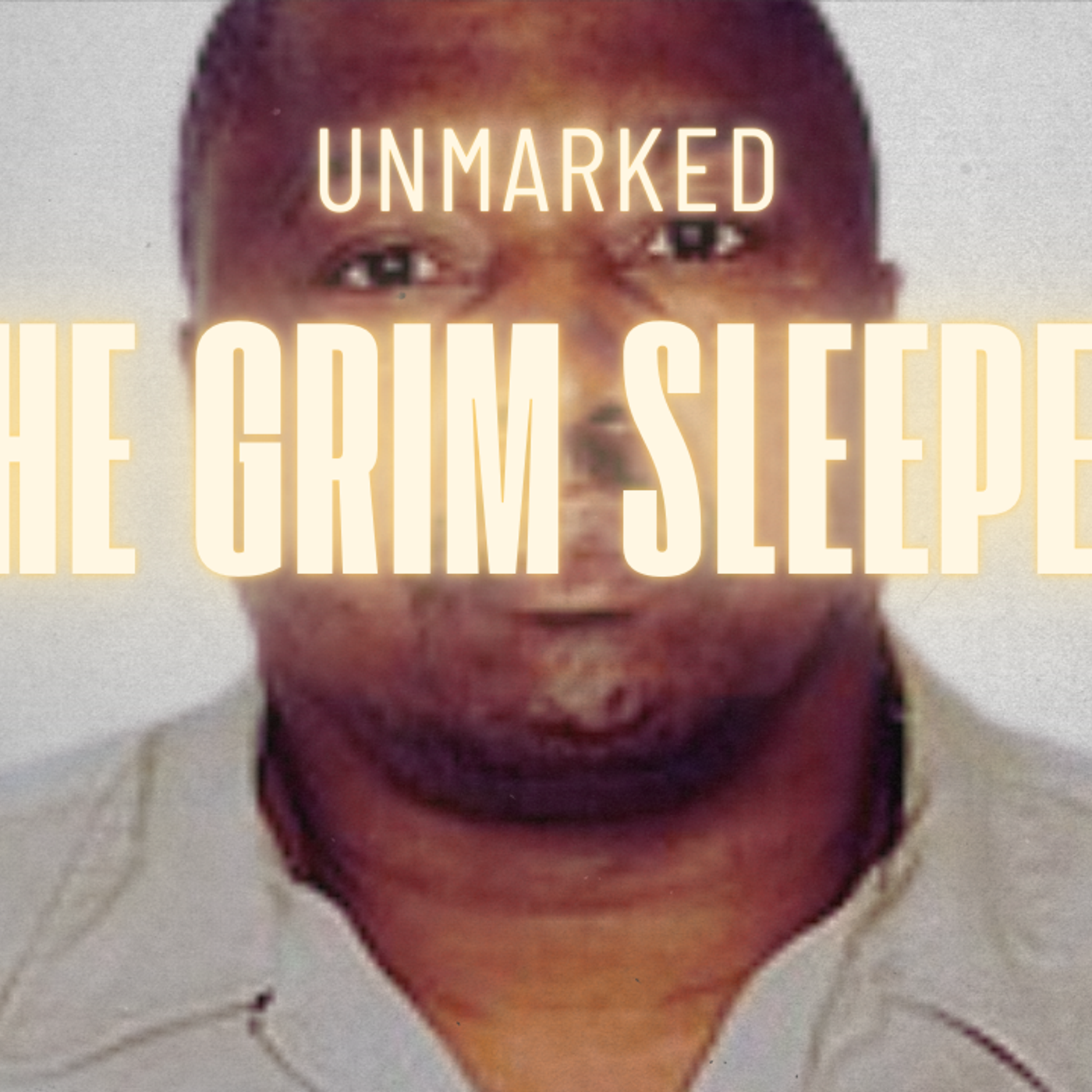
Loading summary
Transcript96 lines
- [00:01]
LAPD Detective Dennis Kilcoyne
You know what the news calls you? I know damn well. You know, Grand Reaper something. The Grim Sleeper.
- [00:10]
Dominique Smith
Oh, okay.
- [00:10]
LAPD Detective Dennis Kilcoyne
I know it's something like that. Yeah, I saw it on TV.
- [00:14]
James Buddy Day
That's Lonnie Franklin Jr. He's being interviewed by the LAPD on the day of his arrest. In speaking to serial killers, I've learned something important. Serial killers aren't born, they're made. They emerge from a perfect storm of circumstance, pressure and opportunity.
- [00:31]
Richard Harris
Yes, I like to put a murder or a dead body or something, and.
- [00:36]
James Buddy Day
Nowhere is that clearer than the case of the Grim Sleeper.
- [00:40]
LAPD Detective Dennis Kilcoyne
All of these people that you say you don't know through scientific evidence are all pointing the finger at Lonnie David Franklin Jr.
- [00:55]
James Buddy Day
Convicted of 10 murders, suspected of dozens more, maybe even hundreds. This is a monster hiding in plain sight.
- [01:04]
LAPD Detective Dennis Kilcoyne
How did this happen?
- [01:07]
Dominique Smith
I felt like LAPD didn't care. I feel like at the end of the day, the government didn't care because it was a bunch of black women.
- [01:14]
James Buddy Day
Walking in the footsteps of the Grim Sleeper and talking to the people who knew him best. It's obvious police have been looking at serial killers the wrong way. Not just in this case, in all of them. I'm James Buddy Day. This is unmarked. When most people think of la, they picture Hollywood movie stars. The Hollywood sign, Malibu Rodeo Drive. It's the postcard vision of palm trees lining Sunset Boulevard. I've probably spent more time in LA than in the city where I actually live. I've filmed many documentaries there and attended my fair share of Dodger games. But that's not Lonnie Franklin's la. The Grim Sleeper stalks south central Englewood and Hawthorne. Lonnie Franklin lived right there on West 81st street, tucked beside the LAX flight path, about a mile and a half from what is widely considered the only permanent open air sex market in America.
- [02:17]
Dominique Smith
I met the grim sleeper in 2009. No, 2000. Like 2007. In between, like 2007. 2009. And I dated him several times.
- [02:30]
James Buddy Day
This is Dominique Smith. Like many of the witnesses, she still lives in the neighborhoods next to the airport. Dominique is one of dozens, maybe hundreds of former sex workers who crossed paths with Lonnie Franklin over the 22 years leading up to his arrest. During that time, Franklin picked up hundreds of women and in many cases left their bodies in alleys, dumpsters or unmarked places that will never be uncovered.
- [02:57]
Dominique Smith
Prior to dating him, for me, the Grim Sleeper or Lonnie, I had heard about women being missed in that area and there was like rumors about, you know, him hurting Women. But there's always rumors about the track. So I didn't pay no mind because I was, you know, into the money part of it.
- [03:21]
James Buddy Day
Lonnie never left South Central Los Angeles. He lived there, found his victims there, left dozens of bodies in his wake. And yet it took decades to identify him. Decades. The best place to start is 1974. Lonnie is 22 years old, stationed overseas with the US army in Stuttgart, West Germany. Lonnie isn't a big guy. He's about 5 9, African American. Not physically imposing, but intelligent, soft spoken and disarmingly ordinary. In the army, he trains as a mechanic, a skill he'll use his entire life. But during his service, something significant happens. Something that will cast a shadow over the rest of his life and eventually Los Angeles. This is Cliff Sheppard, a former LAPD detective who worked on the Grim Sleeper task force, now retired.
- [04:18]
Cliff Sheppard
We found out that Lonnie Franklin was stationed in Germany. He was in the Army. We found out that he was arrested for sexual assault. Two German women back there. He and a couple of other army personnel apparently picked the women up, took them out, and then sexually assaulted them.
- [04:38]
James Buddy Day
The details of this incident will not become public until Lonnie's murder trial decades later. But according to court records, private Lonnie Franklin Jr. And two other servicemen approach one or possibly two women. I've heard different versions, but one of the Victims is a 17 year old girl. They offer her a ride, drive to a remote area, and as she'll later testify, they threaten her with a knife and assault her. When one of the men photographs the attack, this is a defining moment for Lonnie. He'll spend the rest of his life trying to return to that night. Decades of criminology and forensic psychology show that for sexually violent offenders, these early assaults confuse violence with arousal. The first act becomes a blueprint and later acts become attempts to recreate or intensify that original experience. This isn't nostalgia, it's conditioning. And with Lonnie, that conditioning becomes the emotional template that that governs the next three decades of his life. He spends night after night, often with other men, picking up women, taking photos, inflicting suffering. But in 1974, nobody catches on. At the time, Lonnie already has a juvenile record, suspicion of car theft, stealing property from a vehicle, probation. And the Army's internal investigation recommends a three year sentence. But Franklin only serves a year for reasons the LAPD have never been able to determine.
- [06:16]
Cliff Sheppard
He did serve sometime, was released back to the United States and came back to Los Angeles. I know in the mid-70s, 77 or so, he's back in his neighborhood.
- [06:28]
James Buddy Day
When Franklin returns home, he finds a community beginning to fracture. And this is a reoccurring theme in serial killer investigations, something I've seen time and again. Chaotic moments create vulnerable populations, whether it's war or culture. And that's where men like Lonnie Franklin Jr thrive. In this case, the chaotic moment is the 1980s crack cocaine epidemic.
- [06:55]
Cliff Sheppard
Because of the advent of rock cocaine. In the 80s, you saw an explosion of gangs growing, violence growing, and drugs. I mean, the rock cocaine was everywhere.
- [07:09]
James Buddy Day
Walking around LA today, you can still see the scars, the faded mural half scrubbed off a liquor store wall, the strip of motels with boarded windows and hourly rates. The corners where memorial candles burned down. The bones of that era are still visible in the architecture, in the policing, in the way the neighborhoods talk about violence like it's weather.
- [07:31]
Dominique Smith
It's funny because, like I said, I grew up in that neighborhood. Like, I grew up literally four blocks down. So, like, that's the area I was in. Like, it's crazy. You make more money further down. Western, for those who don't know that.
- [07:45]
James Buddy Day
Again, is Dominique Smith. And what she's describing is the unique geography of South Central. You see, in the 80s, the influx of crack cocaine creates a vulnerable population of black women. Hundreds of people battling addiction drift towards two parallel streets, Western and Figueroa. And this forms a dependable market for traffickers, dealers and buyers. These two streets grow into one of the most visible tracks on the west coast still visible today. By the mid-80s, Lonnie spends most of his days in the front yard of his lime green family home. It's one sewn by his parents, passed down to him. It's walking distance from where the victims are picked up and from where many of the bodies are eventually discovered. This again is Detective Cliff Shepherd.
- [08:39]
Cliff Sheppard
In his backyard, he had a garage. Garage had like three stalls to it. He added one on at one time. Plus, he had vehicles, including one rv. And he was entertaining women. And in the back of them, Lonnie.
- [08:53]
James Buddy Day
Franklin Jr. Is married around this time, though, despite two children, friends and neighbors recall the relationship barely existed as early as the mid-80s. The couple lives largely separate lives.
- [09:06]
Richard Harris
I sort of figured back then maybe their marriage wasn't what it's supposed to been. And she had a job that kept her away from home.
- [09:14]
James Buddy Day
That's Richard Harris. He lived across the street from Lonnie. His employees, they knew each other for decades.
- [09:21]
Richard Harris
She was a school principal at what school I don't know.
- [09:26]
James Buddy Day
You have to form a picture of what Lonnie's life is like day to day. He doesn't work in a traditional sense. He survives on hustling and crime. Insurance fraud, drugs, trafficking in stolen goods, loan sharking, whatever brings in the cash.
- [09:42]
Richard Harris
I always thought it was because of the money he raised. He would always keep a stack of money, hundreds, fifties. So maybe that's how he got his women in the car with him, flashing money in drugs, because he always kept a handful of drugs.
- [09:56]
James Buddy Day
Lonnie's crimes are tolerated, but they don't go unnoticed. Police records show that Lonnie is arrested at least 15 times. Car theft, burglary, receiving stolen property, assaults, firearm possession, grand theft auto, battery, assault, likely to produce great bodily injury, false imprisonment. It's all there. He serves some brief prison sentences, but in his community, he's well known and well funded.
- [10:23]
Richard Harris
He would buy cars from insurance auctions, totaled out cars, and have his crew go steal a car just like it and take the parts off of it and sell his car for practically new.
- [10:38]
James Buddy Day
Because of the criminal hustle, Lonnie is wealthy by neighborhood standards. He employs people. Folks come to his house every day. His backyard is a maze of cars and junk. But people in the community, those who knew him, they remember him fondly.
- [10:54]
Richard Harris
Lonnie was perceived as a nice guy. He was a really nice guy. To live in your neighborhood, he would fix your cars for free. If he knew you, he wouldn't charge you anything for free fixing your car. If you needed to buy a car from him, he would charge you a little bit of nothing.
- [11:09]
James Buddy Day
At night, when his neighbors are asleep, Lonnie cruises the blade. He rotates through cars, sometimes an orange Pinto, other times a large blue and white church van he converts with a mattress and a tripod in the back. And just like his 1974 conviction in Germany, he's not alone. He picks up sex workers alongside other men. And he photographs the encounters.
- [11:35]
Richard Harris
Nanny was very weird. He was like. He bragged a lot on girls that he had girls. Did he meet girls that he picked up, girls that he had sex with. He kept a photo album of a lot of women. He would show us. He would show us albums and albums. He had stacks of them. Somebody out of the group would always say, they know this girl, that girl. And sometimes it made me feel that maybe he's doing this to see if we knew any of them.
- [12:05]
James Buddy Day
I want to be clear. As far as we know, Lonnie commits the murders alone. Even though he gets a thrill out of including others on the margins.
- [12:13]
Richard Harris
I do carpet in linoleum and I used to clean the carpet in his mobile home. He had a miniature mobile home. He and I used to clean carpet and I cleaned his carpet and it looked like. He said it was oil stains, but it didn't clean like oil stains because it wouldn't come out. It seems like it was blood stains in the carpet.
- [12:32]
James Buddy Day
The scary truth is that no one knows when Lonnie truly begins to kill women or how many murders he commits during those early years. For example, as early as 1982, on June 9, a woman named Catherine Davis is struggling with addiction and sex work. She's last seen one block from Figueroa, never seen again. And Davis has never been officially tied to Lonnie Franklin Jr. But people in the neighborhood, including her family, believe she was one of the victims. And she's not the only one. Even though, according to official records, Franklin's first known victim isn't until two years later. We know that in the years leading up, Lonnie is living in his parents house halfway between Western and Figueroa, working as a garbage collector.
- [13:21]
Richard Harris
When we first met Lonnie, he was working, he was on a trash truck. That's when I first noticed him. He was doing the trash back when the trash man was on the back of the truck and he had to jump off and dump the trash can.
- [13:34]
James Buddy Day
There's a persistent belief among neighbors and investigators that some of Lonnie's victims may still be buried inside the massive Los Angeles land in unmarked graves. But we know from DNA that Lonnie killed a woman in 1984. On January 15th, Franklin picks up 21 year old Sharon Dismiyuk. Franklin is 31 at the time. Her body is found at an abandoned gas station, shot twice, gagged and left on the concrete. At the time, the investigation is minimal. Police don't even realize she's a victim in the Grim Sleeper case until more than 20 years later when she's connected through ballistics when the murder weapon is found inside Lonnie's bedroom. DNA also confirms Lonnie murdered 29 year old Deborah Jackson on August 10, 1985. Police find the body in an alley near West Gage Avenue, two blocks from Figueroa. She shot three times in the chest. By this point, more than a dozen women have gone missing from Western and Fig, many not even properly documented as missing.
- [14:45]
LAPD Detective Dennis Kilcoyne
Mr. Franklin, you have a major problem.
- [14:49]
James Buddy Day
That's LAPD Detective Dennis Kilcoyne speaking to Lonnie on the day of his arrest. Twenty years later, he describes the simple truth. It will take investigators decades figure out.
- [15:01]
LAPD Detective Dennis Kilcoyne
You've had this problem for at least that we're aware of for 25 years. You creep out, you pick up these young ladies that are out work at Western or Figueroa or whatever in the middle of the night. You have sex with them, you kill them, and then you dump their bodies in alleys throughout the city of Los Angeles, most of them near, not too far from your house.
- [15:25]
James Buddy Day
The tragedy of this city is that if police had thoroughly investigated even one of those early murders, if they had interviewed the women on Western and fig, listened, recognized them as a vulnerable population, paid closer attention to the geography and the fragile communities around it, the trail would have led right to Lonnie's house.
- [15:46]
Cliff Sheppard
Decades earlier, all these victims had been shot. All of them but one were female, all shot with a.25 caliber bullet. And the bullets were compared and thought to be fired from the same gun. So after about the second murder, our firearms unit and detectives from those divisions and one was 77th, said, okay, it looks like we've got a serial murder out there.
- [16:17]
James Buddy Day
At that point, the LAPD establish a task force. They call these cases the strawberry murders.
- [16:24]
Richard Harris
Well, a woman that does anything for drugs, such as sexual favors and stuff like that is known as a strawberry.
- [16:34]
James Buddy Day
It's a surprising lack of respect for the victims in hindsight. And perhaps it contributes to the fact that the task force stalls almost immediately, really for two major reasons. First, there's no consensus on how many women are missing. Many disappearances aren't reported. Others are dismissed or misclassified. Countless cases fall through the cracks. Second, at this time, there are at least seven serial killers operating around Western and Fig. 7 in the period we're talking Daniel Lee Siebert, Lewis Crane, Ivan Hill, Michael Hughes, and Chester Duane Turner are all operating on the stretch of road so small you could drive it in about 10 minutes. In fact, it was originally believed that all these men, including Lonnie, were one person dubbed the south side slayer. And by 1987, when the task force is abandoned, four of these men have been arrested. And it leaves police with the false impression that no one else is out there. This is a phenomenon I've seen many times in these cases. And it's called case clearance pressure. Police departments are judged heavily on clearance rates. So once a high profile offender is arrested, and in this case, they arrested four, there's a lot of pressure to close other open cases and reassure the public. That pressure creates this perverse incentive. Assign unsolved Murders to the offender already in custody, even when the evidence doesn't fully match. Over my career, I have seen this repeatedly. Wayne Williams, Henry Lee Lucas, even the Zodiac Killer all include cases lumped in that clearly belong to someone else. And ironically, this is where the name the Grim Sleeper comes from. But it isn't police who coin it, it's LA Weekly Reporters interpret missing and incomplete data to be long gaps or sleeps between murders and assume the killer dormant. But that isn't what happened.
- [18:39]
Cliff Sheppard
We, the lapd, have been blasted over the years for not caring for the people, not caring about the victims, and ignoring what's happening. That is not true. Problem is, it's a city of 465 square miles, over three million, three and a half million people. And we have a lot of crime. In the 90s, we were hitting over a thousand murders a year. That's three people a day, depending what area you are. And I'm aware of murders, three murders occurring in one day in South Los Angeles. So you only have so much man power that you can devote to it.
- [19:15]
James Buddy Day
This is the environment. Lonnie thrives in a chaotic landscape where vulnerable people are overlooked and where a predator blends into the noise.
- [19:27]
Richard Harris
Yes, I like to put a murder.
- [19:29]
LAPD Detective Dennis Kilcoyne
Or a dead body or something.
- [19:32]
Richard Harris
The address is 1346 East 56th street in the alley. And the guy that dropped the office driving a white and blue Dodge fan.
- [19:45]
James Buddy Day
That is the 911 call from January 10, 1987. Thirty minutes after Lonnie Franklin Jr. Leaves the body of Barbara Ware in an Alley. She's 23, later confirmed through DNA. And she isn't the only victim we know about. Lonnie kills Henrietta Wright, 35, on Aug. 12, 1986. And it goes on and on and on. Bernita Sparks tells her mother she's going to buy cigarettes. She never returns. She's later found shot to death with Lonnie's.25 caliber semi automatic pistol. On April 15, 1987, Mary Lo, 26, tells her mother she's going to a Halloween party. She's later discovered shot. Investigators believe she's killed on or around November 1, 1987. Then, on January 30, 1988, Lonnie murders Latricia Jefferson, shot with the same.25 caliber pistol later tied to Lonnie through ballistic evidence. Eight months later, on September 8, 1988, he murders Alicia Alexander, again with the same handgun. This is by no means a comprehensive list. There are many families still in South Los Angeles who believe their loved ones were killed by Lonnie Franklin Jr. But never connected to his case. Officially possible victim Rosalynn Gillies is Last seen on January 10, 1991. Never heard from again. Another possible victim, Lisa Renee Knox, disappears on May 11, 1993. Never found. Another possible victim, Anita Parker, vanishes on November 17, 1998. Never found.
- [21:38]
Dominique Smith
I felt like LAPD didn't care. I feel like at the end of the day, the government didn't care because it was a bunch of black women. So had it been anywhere else, it would have been televised more.
- [21:50]
James Buddy Day
We have every reason to believe many of these women fell victim to Lonnie Franklin Jr. After his arrest, detectives uncover more than 1,000 photographs and hundreds of hours of video inside his home. These images show women in disturbing parts, poses, and some are seemingly unconscious. And then there are the survivors. Many women survived violent or disturbing encounters with Franklin during this time. For example, on November 20, 1988, Franklin shoots in Tria, Washington with the same.25 caliber gun. But she survives. She becomes a key witness in the case. But even though she leads police right right to Lonnie's street, where Lonnie is frequently standing out front of his house with the.25 caliber pistol in his pocket, the LAPD comes up empty. Here is LAPD Detective Paul Coulter interviewing Lonnie years later after his arrest. In the video, lonnie denies owning the.25 caliber handgun found in his home and used in many of the murders.
- [22:59]
Cliff Sheppard
You don't own any more handling?
- [23:01]
LAPD Detective Dennis Kilcoyne
No, ma'.
- [23:01]
James Buddy Day
Am.
- [23:02]
LAPD Detective Dennis Kilcoyne
What about that.25 caliber there in your closet? A pistol? Mm, yeah, over the. That's not mine. It's not? No, that's my brother in law's we just picked up pissed off last. Last week.
- [23:17]
James Buddy Day
If police had performed a targeted geographic search or gone door to door, they likely would have found Lonnie years earlier. Which makes sense because of a discipline called geographic profiling. This is what we've been getting wrong about serial killers. Research shows that most serial killers commit their crimes within five miles of their home. One major study of 54 serial killers found that 87% of their crimes fell within that radius. With geographic profiling. The idea is simple. Simple offenders choose locations they know the alleys they cut through, the corners they watch, the places where they feel invisible. Victim encounters, attack sites, disposal points. They all fall within this little comfort zone. And get this. Using conventional profiling, the FBI has claimed that there are maybe 50 serial killers in the United States at any given time. But using geographic profiling and DNA links, one research group, the Murder Accountability Project, has shown There are over 2,000 active serial killers in the U.S. but in the 80s and 90s, the LAPD never connects these dots. They think he's sleeping. They think he stopped. They're wrong. But they don't wake up until 2007. By that time, California has completely overhauled its DNA laws. What was once collected only for violent felony cases is expanded to all felony convictions and eventually all felony arrests under Proposition 69. In 2004, the state also clears out a backlog of untested evidence and requires new DNA samples to be uploaded into the federal system. These reforms transform California's DNA archive from a modest collection into one of the largest in the country. And almost overnight, cold cases across the state begin getting solved at a rapid rate. But despite being arrested dozens of times, the LAPD never collects Lonnie Franklin Jr's DNA. In 2003, Lonnie is even charged with a felon felony that requires a mandatory DNA sample. But despite a lifetime record of violence, he is allowed to plead it down to a misdemeanor, avoiding DNA collection entirely. This means Lonnie is on probation when he commits many of the murders.
- [25:52]
Dominique Smith
Now, let me give you an incident when I met Lonnie.
- [25:55]
James Buddy Day
This is Pamela Brooks, another former sex worker who encountered Lonnie in 2007.
- [26:01]
Dominique Smith
So he came down in his van one day and he kept circling the block.
- [26:07]
James Buddy Day
According to Pamela, she goes with Lonnie into the back of his van where he asks her to wear a collar and pose for him.
- [26:15]
Dominique Smith
You know, talking like, well, we really don't have to do anything. I want you to start being like, bark and act like a dog.
- [26:21]
James Buddy Day
Pamela refuses. And when Lonnie isn't paying attention, she slips out and walks away before. Before he can follow. It's a decision that may have saved her life.
- [26:30]
Dominique Smith
But I didn't know he was a grim sleeper until it all came out the wash, you know what I'm saying?
- [26:37]
James Buddy Day
On January 1, 2007, the body of 25 year old Janisa Peters is discovered on the 9500 block of Southwestern Avenue by a homeless man searching dumpsters for cans.
- [26:50]
Cliff Sheppard
Dumpster was a little bit different from the original location. It was down maybe a building, but it was still there, right there in that alley. So this guy is using these alleys. He's familiar with these alleys.
- [27:05]
James Buddy Day
LAPD Police Chief Bill Bratton convenes the 800 Task Force, a specialized investigative team assembled to solve what they wrongly believe is only 11 unsolved murders dating back to 1985.
- [27:20]
Cliff Sheppard
Two of the women, Bernita Sparks. And I don't recall the other one offhand. They were found in dumpsters around 95th street and Western, about 10 years apart. We had a DNA profile for our guy. We had him on about six murders that connected them from murders from the 80s to 2007.
- [27:48]
James Buddy Day
But Lonnie has more victims than anyone realizes. Georgia Mae Thomas, 43, is found fatally shot on December 18, 2000, just a mile from where Barbara Ware was left. Ballistics match the weapon to multiple other victims. Princess Barthamu, 15, disappears in December 20, 2001. She's found strangled and beaten in an Inglewood alley. DNA from her body links directly to Lonnie. In July 2003, a crossing guard in Westmont discovers the body of Valerie McCorvey, 35. She has trauma to the neck.
- [28:29]
LAPD Detective Dennis Kilcoyne
2002, this young lady was found. Do you recognize her? No, I don't. Princess? Never seen her before. Okay. In 2003, this young lady was found, too. Have you ever seen her? No, I haven't. You don't know that lady? No, I don't. You've never seen her? No, I haven't. All right, Mr. Franklin, just like the other one, your DNA was found on this young lady.
- [29:09]
Cliff Sheppard
Okay.
- [29:09]
LAPD Detective Dennis Kilcoyne
Is there a way to explain that? No, it's not.
- [29:12]
Dominique Smith
There's.
- [29:13]
LAPD Detective Dennis Kilcoyne
No. I don't know. I don't know if they are.
- [29:16]
James Buddy Day
Two more women. Aaliyah Marshall, 18, missing since 2006, and Rolina Morris, 31, missing since 2005. Neither are found, but Marshall's student ID and Morris driver's license and photo are later found inside a refrigerator in Lonnie's garage. When Lonnie is arrested in 2010, the LAPD describes it as a painstaking process, claiming detectives undertook revolutionary DNA work to finally solve the case. This is not true. The LAPD caught Lonnie Franklin Jr. Completely by accident. In 2010, Lonnie's son Christopher is arrested on an unrelated felony charge. When Christopher's DNA is uploaded into the state database, it triggers a familial match to the Grim Sleeper murders. At the time, Christopher is living with Lonnie at the house on West 81st Street. Detectives trail Lonnie knowing that he's Christopher's father. They wait for him to discard something with his DNA on it. When he throws away a piece of pizza crust, they recover it, test it, and it matches the Grim Sleeper profile. This is how the case breaks.
- [30:35]
Cliff Sheppard
We had guys watching them. We used to have him. He was going to Western Avenue. And approaching women on Western Avenue presented a problem. For us because. Because we didn't want him picking up a woman on Western Avenue or anywhere else at that time. We couldn't let that happen. So we were trying to make a decision. What are we gonna do if he does that or tries.
- [30:54]
James Buddy Day
Franklin is taken into custody on July 7, 2010. That morning, LAPD surveillance teams watch him leave the house, unaware that detectives already have his DNA from the discarded pizza slice. As he returns home later that afternoon, officers move in. He's surrounded in his driveway and arrested without a struggle. The end of a 25 year killing spree hidden in plain sight.
- [31:24]
Richard Harris
One day the LAPD showed up and we thought it was for the stolen cars, but it wasn't because they had the crime lab. When the crime lab showed up, we really knew it wasn't. Then one of the officers, LAPD officers, explained to us that it was that Lonnie Franklin was arrested for multiple murders inside the house.
- [31:45]
James Buddy Day
Detectives finally see what Lonnie has been hiding.
- [31:50]
Cliff Sheppard
Well, we served the search warrant on his house. We did a quick walk through once we got everybody out to get an idea what, where we're going to examine the and who's going to be assigned to what area and what search. He had an office, a bedroom. He had a closet. And inside the closet, I opened it up, there was a military jacket in there. I patted the military jacket. I could feel there was a gun in the pocket. I didn't pull it out. I said, we'll wait for the search team to let them find it, but I'm a search. It was going to be a gun.
- [32:27]
James Buddy Day
The home is filled with piles of belongings. There's magazines, junk, household debris. And buried within are troves of pornography, sex toys, homemade tapes, objects belonging to victims, and photographs of more than 180 women in various states.
- [32:47]
Cliff Sheppard
In his garage, one of the teams was going through holes in the areas in the garage and reached in and pulled out a handful of photographs of women. And disrobing.
- [33:01]
James Buddy Day
This again is Dominique Smith, who encountered Lonnie in 2007.
- [33:06]
Dominique Smith
I felt hurt because maybe if I would have said something to somebody, I probably could have saved a life. I was hurt because, like, just not caring enough to know who's around me or what am I, what I'm doing, or what predator I'm sleeping with. That's where the hurts really came from. Like, I knew this man was a pervert. I knew he was weird. And here you go. He a killer.
- [33:33]
James Buddy Day
The same day of his arrest, Lonnie is interviewed by LAPD detectives.
- [33:39]
LAPD Detective Dennis Kilcoyne
Let me ask you something. Do you know what DNA is? Yes. The blood, saliva, anything, any body fluids can make contact.
- [33:47]
Richard Harris
Okay.
- [33:47]
LAPD Detective Dennis Kilcoyne
And it's. It's. It's like a fingerprint. Yeah. Only one person has that DNA. Okay, so you understand it probably better than I do. I understand, but I don't know these people. So. Yeah, you got five or six people here so far. So far, yeah.
- [34:04]
James Buddy Day
He says little and asks for a lawyer after about 40 minutes, ending the interview. And it will take six years before Lonnie David Franklin, Jr. The man now known as the Grim Sleeper, is convicted of 10 counts of first degree murder and one count of attempted murder. He's sentenced to death, but before that sentence can be carried out, he dies in prison before all the questions can be answered. The Grim Sleeper is found unresponsive in his cell on March 28, 2020, at the age of 67. Prison staff attempt to revive him. He's pronounced dead shortly thereafter. There are no signs of trauma found on his body, suggesting he dies of natural causes.
- [34:52]
Cliff Sheppard
When I heard that Lonnie had died in prison, I thought, okay, well, California won't make sure justice is done. But God did, so he'll never kill anybody else. We're done here.
- [35:06]
James Buddy Day
For decades, we've looked at serial killers the wrong way. Most of these people are not Hannibal Lecter. They're not geniuses, for the most part, not even drifters moving across state lines. They're the people living among us. Neighbors, co workers, the man fixing the car in his backyard down the street. And the Grim Sleeper case shows exactly what this blind spot looks like. Lonnie Franklin Jr. Is not a criminal mastermind. He's a man who operated for decades inside a few square miles because the victims were vulnerable, the investigations under Resourced and the community's warnings ignored. The lesson from this case isn't about how one killer got away. It's about how many others. We fail to see if we want to stop the next Grim Sleeper. The answers won't come from profiling cliches or Hollywood tropes. They'll come from the ground level. From listening to the people who are most at risk. The people whose lives and deaths rarely make the news. Because the truth is, serial killers don't vanish. We just fail to look in the right places. And when we do, the map lights up. If you go to our social channels, YouTube, TikTok, Facebook, and Instagram, you'll see additional content about this episode, more phone calls, insights and interviews. And we'll be posting daily from the last decade of our true crime reporting. This season on Unmarked, you'll hear exclusive audio and interviews, calls and content, including the last interview with Charles Manson. We're all opening our archives one case at a time. Subscribe to Unmarked so you don't miss what we reveal next. This episode of Unmarked is produced by John Nadeau, edited by Dave Alderson, and our additional producers are Jesse demaray and Steve McClellan.