← unPAUSED with Dr. Mary Claire Haver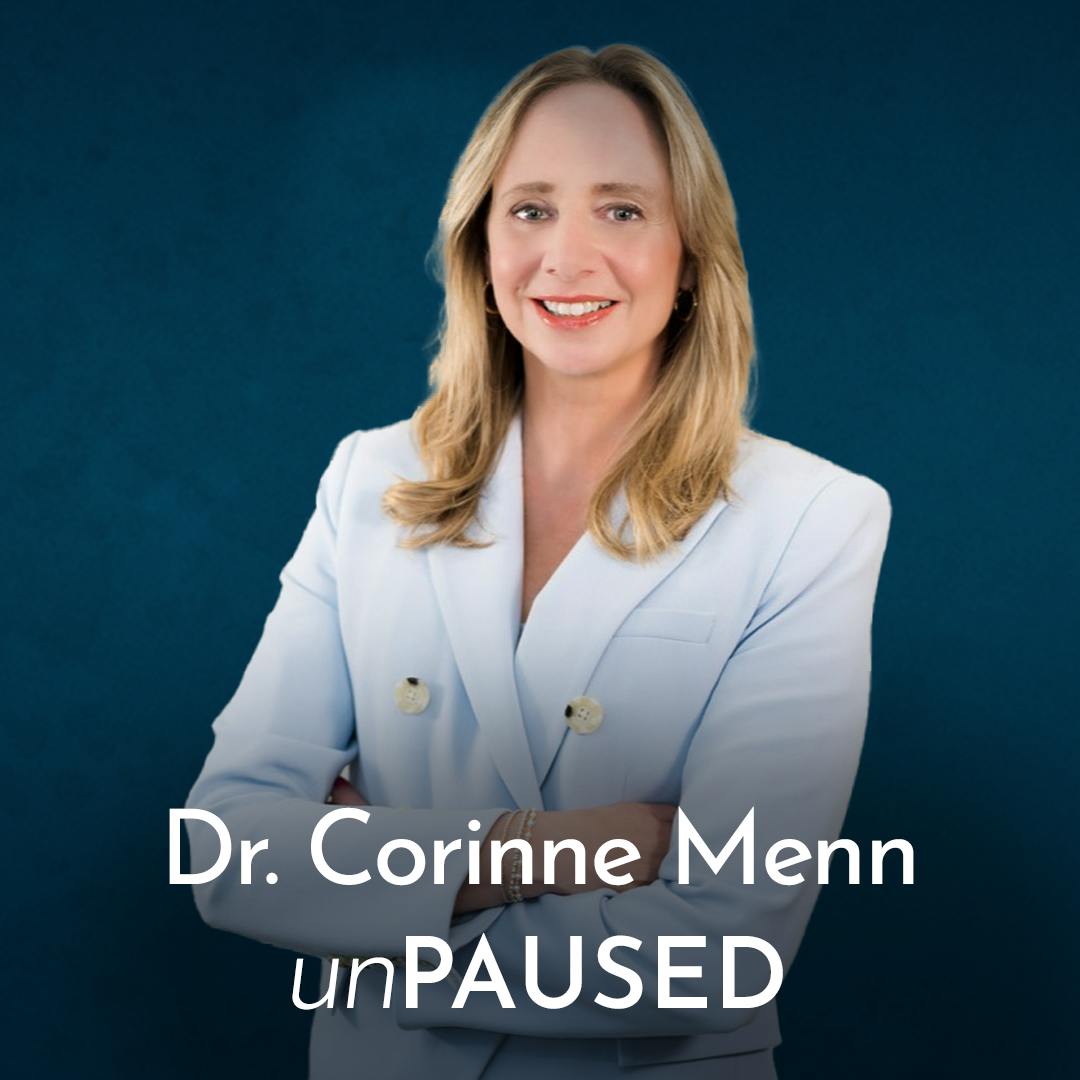
unPAUSED with Dr. Mary Claire Haver
Can't Take Estrogen? Dr. Corinne Menn on Who Can, Who Can't & What's Changed
01:19:42
Loading summary
Transcript231 lines
- [00:01]
Dr. Mary Claire Haver
K18's leave in molecular Repair Hair Mask was created to truly care for your hair. When your hair is bleached, colored or grays are covered, your hair can experience changes that affect how it looks and feels. That's when hair often needs extra support. K18's biomimetic K18 peptide is designed to mimic hair keratin, helping to repair damage at a deep molecular level. The result is hair that feels strong, resilient and healthy no matter what it's been through. And because it works from the inside out, it's not just a surface fix. It may help hair stand up to the wear and tear of coloring, styling and everyday life. Healthier looking hair begins with care that starts from the inside. It's a convenient leave in formula that works in just four minutes with no extra rinse required, and many members of my unpause team swear by it. You can find K18's molecular repair hair mask at sephora or get 10% off your first purchase with the code unpaused18hair.com that's code unpaused18hair.Com Most humidifiers are clunky, hard to clean, and a total hassle to maintain, but the Canopy humidifier is different. It's designed to deliver clean, mist free moisture that fits seamlessly into your daily routine. Unlike traditional humidifiers that create a visible mist, which can carry particles and bacteria into the air, Canopy's invisible hydration keeps things clean and mess free. Its antimicrobial filter helps trap minerals and impurities from the water before it evaporates into your space. Canopy uses a unique technology that keeps the unit running until there's no water left inside, so it's simple to keep dry and fresh between uses. And when it's time to clean, just place it right into the dishwasher. No scrubbing, no complicated steps. Plus, Canopy doubles as an aroma diffuser, using gentle evaporation to fill your room with your favorite scents. No synthetic sprays or heat required. Go to Canopy co to save $25 on your Canopy humidifier. Purchase today with Canopy's filter subscription and look for other Canopy products such as the Canopy Bath and Shower Filter. Even better, use the code unpaused at checkout to save an additional 10% off your Canopy purchase. Hi, I'm Dr. Mary Claire Haver. If you're loving these bold, unfiltered conversations about what it takes to thrive in midlife, make sure you never miss an episode. Follow unpaused with Dr. Mary Claire Haver on Amazon Music it's free and easy. Just Tap follow in the Amazon music app so every new episode is ready when you are.
- [02:46]
Dr. Corinne Mann
So my whole thing is I wanna try to find a way for women to have their cake and eat it too. Yeah, I want you to be treated for your breast cancer. I want you to stay on your medications and if you need to be menopausal for them, either forever or for some period of time, well, we need to support you in every other way because it's very hard for women to hear all the benefits of HRT and all the problems when you lose estrogen early. It's scary. Mensia, osteoporosis risk, cardiovascular risk goes up. And so when you hear that, you're like, you're like, well, this is depressing. This sucks. Well, maybe I shouldn't be doing these breast cancer treatments. And I'm like, no, you need to do your treatments, but we need to find a way to make them tolerable to improve your quality of life.
- [03:38]
Dr. Mary Claire Haver
The views and opinions expressed on Unpause are those of the talent and guests alone and are provided for informational and entertainment purposes only. No part of this podcast or any related materials are intended to be a substitute for professional medical advice, diagnosis or treatment. Today on Unpaused, I am joined by someone who feels like she's been in my life forever. Honestly, I can't Even remember when Dr. Corrine men and I first connected. Probably through a social media post, but first. From that very first exchange, she's become one of the closest people in my professional circle. She's one of the women I literally text with every single day in our group chat and I can't imagine this work without her. Dr. Min is a board certified obstetrician, gynecologist, a certified menopause practitioner, and a medical advisor and prescribing doctor at Alloy Health, a menopause telehealth platform. She's also a 24 year survivor of breast cancer and premature menopause. Her story of loss, survival and resilience is one of the most gut wrenching and compelling I've ever heard. And beyond her story, she has taught me and so many others what true survivorship looks like, what risk reduction really means, and why centering the patient experience is just as important as the medicine itself. She's also shown me how quality of life is not a luxury, but the very heart of patient care. I am so excited to share this conversation with her today. If you've ever been told you can't take estrogen, or if you've been labeled high risk because of a family history, a genetic mutation, or you're a previvor or survivor yourself. This is an episode you cannot miss. I'm Dr. Mary Claire Haver, a board certified obstetrician and gynecologist and certified menopause practitioner. I'm also an adjunct professor of obstetrics and gynecology at the University of Texas Medical Branch. Welcome to Unpaused, the podcast where we cut through the silence and talk about what it really takes for women to thrive in the second half of life. Dr. Mann, welcome to Unpaused.
- [05:43]
Dr. Corinne Mann
Thank you for having me.
- [05:45]
Dr. Mary Claire Haver
So give me some backstory. Where did you grow up?
- [05:47]
Dr. Corinne Mann
I grew up in upstate New York in a pretty rural place with my younger brother.
- [05:53]
Dr. Mary Claire Haver
And then did you know right away you wanted to be a doctor?
- [05:56]
Dr. Corinne Mann
Absolutely not. The famous thing is I remember sitting like in a diner with my mom when I was in high school and thinking, like, what am I gonna be? I kind of went through this, like, I don't know, some career inventory list at the high school guidance counselor. And I was like, no, no, no, no. And I was so nervous about that. But I always liked more of the social sciences, so social studies, anthropology, English writing. And so I was not the science girly. In fact, like, when they talked about the cardiovascular system in like, whatever science class, I would feel a little faint, like I was going to pass out. So then I fast forward, I went to George Washington University in D.C. and I went in as a political science major. And then pretty soon after, knew that wasn't for me. And then sophomore year, I'm like, I'm gonna be a double major in French and art history. And I was like, yay. And then I was like, no. And then I was like, oh, psychology is interesting. And then some one day I got a little brochure in my, like, student mailbox or whatever for this biology and medical technology major. I just went and I was taking a record acquired biology class. And I really liked it. And I said, well, maybe, you know, women's health is interesting. Like, I could do that. And I was like, I'm just gonna be pre med. And everyone was like, what? You hate science? They're like, what? I was like, yeah, I'm just gonna do this and that's it.
- [07:21]
Dr. Mary Claire Haver
And there you went.
- [07:22]
Dr. Corinne Mann
I liked that if I studied this, I could do this. And there was a clear path.
- [07:27]
Dr. Mary Claire Haver
Yes.
- [07:28]
Dr. Corinne Mann
My mom didn't go to college and my parents got divorced. And I saw kind of where that left her in some ways. And I felt a real burden, but it really Made me want to have a path where I knew I was gonna get a job and be able to take care of myself. But really looking back, if that had not been a concern, what I really wanted to be was a teacher. But there was this attitude back then, and sometimes still now, like, oh, you're not gonna make any money, why would you do that? But that's what I liked. And it's really funny. Cause I feel like life has come full circle and now I'm a teacher. Same and just in a different way.
- [08:03]
Dr. Mary Claire Haver
So my, my parents had. They're still married. They were married. You know, my father passed away. But, you know, they. They made it through all the things. But my aunts, several of them, divorced on the young end. And I kind of watched one of my aunts, like, had to move into like government sponsored housing because she was so destitute from her divorce. And I like, remember that. So when I was growing up and making choices, I'm like, I have to do something where I'm not dependent on someone else for my livelihood and I can take care of any of my kids. And so I get it. Like, I've got to be in the med school. I loved that. They take all the guesswork out. You just show up and here's your books and here's your classes. And the biggest decision is what do I want to specialize in? So what made you pick Ob gyn?
- [08:49]
Dr. Corinne Mann
So I think very early on, even when I was in undergrad, I says, well, I'm going to do this pre med thing. And I didn't have like a love of chemistry or physics. I just did those classes that I had to get through. But I was really like, okay. I could see myself in a caring field. So that's why I was attracted to medicine. And I thought, well, if I'm going to be in medicine, I think maternal health, women's health, that just always spoke to me. So it was just very early on. I just knew I was going to do something in women's health. And so just OBGYN seemed like the natural thing, even though I knew it was a really tough specialty. But for me, it was really the only one.
- [09:26]
Dr. Mary Claire Haver
When then you start your residency, your mother had ovarian cancer.
- [09:30]
Dr. Corinne Mann
Yeah. So I start residency in 2000, right after getting married. And so sometime in my first year of residency, later in the year, my mom was diagnosed with ovarian cancer.
- [09:43]
Dr. Mary Claire Haver
Now what kind of symptoms was she having?
- [09:45]
Dr. Corinne Mann
I don't even really know at the time. It's a long story. But at the time, my mom was not living in this country, and she had called me and was like, oh, just to let you know, tomorrow, I don't know. They think I have these, I don't know, fibroids. It feels like I can actually feel it. Like there's a grapefruit. And my mom is very petite and thin, and I suspect for a number of reasons, she just let her symptoms go. So she has a surgery. Not in this country. And she tells me everything's okay. And I believed her. And what was really interesting is right before residency, I got married. And when she got off the plane, when I went to go pick her up before our wedding, I don't know what it was. As soon as she got off the plane, I saw her. And my very first thought in my mind is, goodness, she looks like she has cancer. Like, I don't know why that thought came in my mind. I just think she was a little thinner. She looked a little gaunt in her face, but otherwise she appeared healthy. It was just this weird sense. I was not even a resident at that time, finishing up medical school, but you've seen enough patients to kind of know when someone's not right. So a little thought passed my mind, and I let it go. So fast forward, then I start residency. You know, I get this call at the end of my first year, and she said she had masses removed from her ovaries, but everything was okay, and she didn't need any further treatment. It was just a benign cyst. And I was like, okay. And I was busy. I was in residency. And she was just like, you're good. You do your thing, girl. Because she was supportive of me, and she wanted me to. I don't think she wanted to pull me or my brother down with any burden of taking care of her. So then fast Forward next year, second year of residency, I get a call, September of 2001, that she's got recurrent ovarian cancer. And so it was obviously spread. It was stage four. And so we were kind of trying to coordinate how to get her home and what to do and all of that. And it was very stressful. And she was supposed to. My brother was supposed to fly down and bring her back. She was in Costa Rica. And the morning that she was supposed to come back, I was on call on. And my husband shows up with security from. They wouldn't let people just up to the labor floor. I'm like, david, what are you doing here? And he's like, come in the call room. I've got to Tell you something, your mom died last night. So she knew she was ill, she knew she was dying, she wanted to get home to us, and she just didn't make it. But the thing is, a week before that, I felt a lump in my breast. And I was just a busy resident. And I was like, oh, it's probably just a little cyst. Right, Right. I'll just watch it. And then I get this news that my mom has passed away. And so then I go into the mode of like, I was the eldest daughter. Yeah. My mom was not married, she was divorced. And so I had to arrange the funeral and call the relatives and get it all in order while being a resident. Yeah. And so I kind of let this little breast thing go.
- [12:46]
Dr. Mary Claire Haver
So to let our audience understand who don't understand medical residency, this was the years before duty hour. Yeah, Restrictions. And we were working, we trained at the same time in different institutions. We didn't know each other, but, you know, a hundred hour weeks were the norm.
- [13:02]
Dr. Corinne Mann
Very normal.
- [13:03]
Dr. Mary Claire Haver
So huge patient loads, you know, incredibly aggressive training programs. And that's just what was built into the system and to layer on your mother's illness, her sudden death, her funeral, all of the arrangements. She's living in Costa Rica. I didn't know this part of the story.
- [13:22]
Dr. Corinne Mann
All I knew, it was complicated.
- [13:24]
Dr. Mary Claire Haver
Your. And right around that time, you found a lump in your breast, so you were just balls to the wall. I mean, David, your husband, he is my savior.
- [13:34]
Dr. Corinne Mann
He's always been my savior. He's amazing and he's my backbone and, you know, he helped get me through it. But you know what? When you're so busy, you don't have time to grieve or deal with anything. So I was just like, this is what I have to do. My program gave me a week off to deal with my mom's funeral.
- [13:50]
Dr. Mary Claire Haver
How nice of them.
- [13:51]
Dr. Corinne Mann
They were very supportive. Looking back, my residency program director and all my co residents were actually incredible. And so then I came back a week later, and when I came back from my mom's wake, I said to myself, I was like, damn, that cyst is still there. And I had had my GYN feel it. And she says, ah, let's just watch it with a few cycles. You're too young for breast cancer. You have no family history.
- [14:18]
Dr. Mary Claire Haver
Wait, did she know your mom had ovarian cancer?
- [14:20]
Dr. Corinne Mann
No, this was like before I felt it. And then we knew that my mom had. So like. But even back then, this was 2001, there still wasn't a lot of widespread Knowledge, even in the medical community of, like, this hereditary breast and ovarian cancer syndrome. A lot of times people didn't put the pieces together so much, and I was like, you know what? I still feel this. My fellow residents and some of the younger attendings who I was friends with, who were women, I had them check it. They're like, yeah, just, you know, watch it for a couple cycles, you know. You know, it's probably a fibroid adenoma. If it's still there, get it checked out. I really need to do this. So Finally, December of 2001, I go in for an ultrasound, and they're like, immediately want to do a biopsy? And still then I was like, I literally wasn't scared. Looking back, I'm like, was I crazy? And I just kind of went home and I forgot about, like, them even calling me with the biopsy report. And then I was in the middle of prenatal clinic seeing a woman, you know, for her. Her pregnancy, and she didn't speak English. And the poor woman, you know, I get a page. There's no cell phones, and so I get the call, I answer it. Radiology resident who was sweet. We got your report, Kryn. Like, it's breast cancer. And I threw my pager across the room, screamed, started hysterical crying. The poor patient had no idea what was going on. The nurses and doctors come running into the exam room, and, you know, they whisk me away and go and comfort me, but it was a shock. And the very, very first thought was not that I was going to die, nothing. It was that I might never be a mom. And damn, David married a lemon. That's what I thought.
- [15:55]
Dr. Mary Claire Haver
So first three days of this, like, did you go home? Did you take time off? Did you dry your tears and turn around and pick up the pager again and start seeing patients?
- [16:04]
Dr. Corinne Mann
I took a very little, brief time off, but I knew I had to save my time off because I knew I had a lot ahead of me. And luckily, again, I had a supportive colleagues. And remember, this was right before the holidays, it was like mid December. And so luckily, my contacts in the medical world got me in to see the top breast surgeons and plastic surgeons in New York City. So I got a lot of access really fast. So it was a big whirlwind, and I just had to go in and make my decisions and move forward.
- [16:37]
Dr. Mary Claire Haver
They gave you multiple options.
- [16:39]
Dr. Corinne Mann
They gave me multiple options because as a young woman with breast cancer, there's a lot to think about, and we've come a long way since then. But at that time, breast conserving surgery. So having a lumpectomy was definitely a choice on the table. Having a mastectomy on just one side was on the table, having both done. And so I got, like, four opinions, kind of four slightly different treatment plans. And it was the surgeon who said to me when I sat across the table, and I said, what would you do if this was your sister? And she said, corinne, I would at very least do a mastectomy. But she goes, before you make a decision, I want you to go see the radiation oncologist. And I will always remember this. It was a young radiation oncologist, because if you make this choice to have, say, a lumpectomy, you're gonna have to have radiation. So you should really know what that means for you. Normally, you wouldn't go see the radiation oncologist till, like, later. And so then I met with that radiation oncologist, and she says, corinne, you're young. You've got many years to deal with a radiated breast and that skin, if you ever wanted reconstruction, there are late side effects of radiation on heart, et cetera. And so she's like, just think. And she got a lot of pushback. She told me they presented my case at grand rounds, and she got a lot of pushback for, like, saying that to me. But I'm so glad she did, because it was because of that that I was like, you're right. And I also knew myself, psychologically, I was not really interested in lots of mammograms, et cetera, right? But I did start with just one side, even though my gut said, do both. Because everybody kept on saying, but you could get pregnant one day and maybe breastfeed. So there was that hope. I was like, okay, well, I'll save the other breast, right? But as soon as I was done with chemotherapy, I was like, take them both off. Because I am not dealing with the stress of repeated screenings, and I'm not saying to anybody listening that that would be the right decision for them, but for me, at the time, it just felt like the right decision. And remember, I was tested genetically, and it was negative for the BRCA1 and 2 gene at that time. And we can circle back to that, but. So I wasn't under the impression that I carry this, but my mom was only 54 when she passed. I was 20 to diagnose this. I was like, something's not right with my genes. Yeah, that's how I felt.
- [19:01]
Dr. Mary Claire Haver
So you're still a resident. You're still working all those Hours. You are still managing these major surgeries. You did an outpatient mastectomy, is that right?
- [19:12]
Dr. Corinne Mann
Yes. So I chose my breast surgeon partially because I loved the center that she was associated with. And they had this beautiful comprehensive cancer center where they had ambulatory surgery center. And she's like, corinne, we can do your mastectomy as an outpatient. And I was like, I love that because I'm not sick. I don't need to be in the hospital. I'm not one of those sick people. Right. Like, literally, that's how, from a psychological standpoint, I liked that idea, sounded great on paper. But, you know, my case was long. It went for a long time. And by the time I got out, it was like the evening. And David and I, we lived in Manhattan and we didn't have a car and we didn't have a ton of money at the time. They wheeled me out and there was a yellow taxi cab to like, they shoved me in there and they brought me home. And anyone who's had surgery, especially one that was hours long, you're pumped with fluid. So I had to get up to go to the bathroom so frequently over it that night. And I was in so much crushing pain on my chest, totally shell shocked. And I didn't have a mom there to take care of me. Thank God I had my amazing mother in law who is like a mom to me. And so she was there to help me. It was really, really hard. And fast forward years later when one of my friends had breast cancer and she stayed overnight for two nights in the hospital with her mastectomy. I actually cried because I was like, wow. It was really screwed up how they treated me.
- [20:40]
Dr. Mary Claire Haver
And you went back to work?
- [20:41]
Dr. Corinne Mann
I went back to work. I took like a week and a half off and I went back to work because I knew that I might need to take more time off. But I was crossing my fingers. Initially, they said my lymph node was negative, but two weeks later, I got the phone call that there was a tiny area of cancer spread in my lymph node and that I was gonna need chemotherapy, which was very devastating to me. So that's why I was trying to be efficient with my time off. So, yeah, went back to work.
- [21:10]
Dr. Mary Claire Haver
Now let's go through the post care. The top thing on your mind when you got the diagnosis was, am I gonna be a mom?
- [21:17]
Dr. Corinne Mann
Yep.
- [21:18]
Dr. Mary Claire Haver
And how did that shape your future decision? So you've had your mastectomy, you're getting your chemo, and are they recommending having your ovaries removed.
- [21:27]
Dr. Corinne Mann
No, no. So before chemo, I was really lucky. So this is where I was heard as a patient. Cause there was a lot of times where I was dismissed. But in this instance, I was heard and my doctors did really value my choice to preserve fertility, which, you know, for 2001.
- [21:42]
Dr. Mary Claire Haver
Let me ask, do you think that because you were so young and you were young, and it was because I.
- [21:46]
Dr. Corinne Mann
Was so young and because I was a doctor and because I was in New York City, and luckily my oncologist is like, I'm gonna get you in immediately with Dr. Octay, who, fast forward. Presented at the Menopause Society conference last year. And he, at the time, was doing groundbreaking work on creating a protocol of how young or breast cancer survivors, patients who were about to undergo chemotherapy could safely. Right. Stimulate their ovaries and collect eggs and fertilize embryos. Because there was a concern, right. Like I had estrogen receptor positive breast cancer. I was about to start chemotherapy. I knew what to follow was going to be ovarian suppression. So they're nervous about ivf. We've got a lot more data on how safe fertility preservation is in that setting. But at the time, they were nervous about it. And so he had this protocol where I was given tamoxifen, and that's what was used to stimulate my ovaries. So I was able to have a few embryos saved in case chemo killed my ovaries, which was a huge blessing. So I was able to enter chemo.
- [22:48]
Dr. Mary Claire Haver
That's not cheap.
- [22:49]
Dr. Corinne Mann
Who paid for this insurance?
- [22:51]
Dr. Mary Claire Haver
Oh, thank God.
- [22:52]
Dr. Corinne Mann
Yes. But they probably. Well, I'm not gonna even get started on insurance now. But it was interesting. It was a long time ago. This is almost 25 years ago. And my husband was at a big bank, so we had a really good insurance policy, but we never saw a dime. We never saw a bill. And we all know, I think in the past 25 years that that's all changed for the worse. So I was very lucky. I never had any problems with insurance, but now I think a lot of the things might have been barriers.
- [23:18]
Dr. Mary Claire Haver
So you have some embryos frozen, and then you go back to work.
- [23:22]
Dr. Corinne Mann
I go right back to work, start my chemo. And the beginning of chemo was hard, but I kind of. I was okay with it at first. And my program director allowed me to not take call. So I did as much clinic time and daytime work as I could. And my fellow residents picked up the call, which I'm forever grateful. Cause it was a huge burden on them. But it really became after months and months of chemo. So as I was making that six month mark, it was just, it was getting so brutal, the side effects of chemo. And at the time I thought it was the chemo. What I know now is it was the induced menopause from the toxicity of chemo on my ovaries. I didn't realize that me calling my husband at 1 o' clock in the afternoon saying I feel like I'm crawling out of my skin and I want to jump out a window and I'm having a panic attack or the very low mood and depression. Because I'm a pretty resilient, upbeat person. For people who know me, I could roll with a lot. But this was the first time in my life where I felt so. And of course I was depressed about cancer, of course. But it was more than that. It was this darkness and gloom paired with a lot of insomnia, horrific hot flashes and night sweats.
- [24:33]
Dr. Mary Claire Haver
Did anyone whisper the word menopause to you?
- [24:36]
Dr. Corinne Mann
No, they're just as a parent, I mean, they said, oh, it might shut your ovaries, might. You may not get your period and they'll probably recover your ovaries because you are so young. And then at some point, I can't even remember some point in the middle of my chemo, they're like, you know what? There's some studies showing that if we give you Lupron to really shut down your ovaries, that it might protect them from the chemotherapy. So on top of like the chemo kind of slowly shutting them down temporarily, then they gave me Lupron injections, which then I think just put me over the edge.
- [25:07]
Dr. Mary Claire Haver
Yeah. So Lupron is the medication that we give in a lot of fertility treatments and they give in certain cancers where it basically complete. It's a, it's a chemical menopause. And it's immediate.
- [25:18]
Dr. Corinne Mann
Immediate. Yeah.
- [25:19]
Dr. Mary Claire Haver
So.
- [25:20]
Dr. Corinne Mann
And I just, honestly, I just really didn't know. I mean, I know it sounds silly that I'm an OB gyn, but remember I was a second year, so I was still young in training. And that's when the WHI came out. It was 2002. There was no talk about premature menopause, menopause and all the other side effects. And if anything, I was like, it was the hot flashes. I didn't realize it was everything else.
- [25:40]
Dr. Mary Claire Haver
So when did chemo end?
- [25:41]
Dr. Corinne Mann
It ended sometime that, like late summer. I actually refused my last chemo. I could not take it anymore. And like a crazy person I like called up the preeminent person in the world at the time who was like an expert in young women and breast cancer. And I cold called him. I'll never forget it. I think he was at the University of Michigan, and he took my call and I was just like, I know this is really weird, but I just want to tell you this. And I'm so scared that, you know, I'll never be a mom and I want my ovaries to come back and do you think I need that last dose of Taxotere? And he's like, no, it's okay. You don't need that one. It's okay. And I was like, oh, okay. So I went into my own college. I'm like, I'm not doing the last one. She was just like, you are the last. The biggest pain in the ass patient. But she supported me on that. And then they're like, okay, let's kick you while you're down. And now let's put you on tamoxifen and ovarian suppression. So my new line is that, listen, we have got to think about someone who has had breast cancer or some other complicated medical thing. But in breast cancer, they've been through surgery, they've been the emotional stress of being diagnosed with cancer, They've had all these treatments, chemotherapy. And then when they're done, they're like, okay, now when you're really low, now, we're gonna put you on prolonged estrogen deprivation for five to 10 years, but we're not gonna prepare you for any of it. To me, it's like kicking a dog when they're down. That's how I felt. And in retrospect, I'm like, whoa, whoa, whoa, whoa. When we are embarking on that, we really need to empower women so that we can optimize things. Be like, come on, come on, girl. We gotta get you ready for the marathon. Because it's a marathon. It is not a sprint. And that conversation isn't always happening.
- [27:24]
Dr. Mary Claire Haver
And there's so much rush, rush to get the chemo, rush to get the surgery, rush.
- [27:28]
Dr. Corinne Mann
I understand that, and that's important, but there are times where I say it's okay to just, like, take a pause and be like, we've got to regroup, reboot for this next phase. And I never really had that chance along the way.
- [27:41]
Dr. Mary Claire Haver
So you talk about all this stuff they gave you before chemo, prophylactically, stuff for nausea. Talk about that.
- [27:48]
Dr. Corinne Mann
Yeah. So when you go.
- [27:49]
Dr. Mary Claire Haver
The listeners are taking notes right now.
- [27:51]
Dr. Corinne Mann
Yeah. So when you go in for chemotherapy, they give you a steroid, like a dose of prednisone. They give you anti nausea medication, Multiple different choices. They gave me injections, Neupogen to keep my white blood cell counts up. They give you Ativan while you're getting the red devil, Adriamycin, to help, like, keep you from, like, having a panic attack. Spinning out during that.
- [28:12]
Dr. Mary Claire Haver
Crashing out, as the kids say.
- [28:14]
Dr. Corinne Mann
Yeah, crashing out during that chemo infusion. But they didn't give me anything or offer anything to help me cope with the induced menopause that was about to happen and was happening. So, for instance, I didn't know at the time at all anything about genitourinary syndrome. Menopause. That was like a foreign thing. No one ever said that to me.
- [28:36]
Dr. Mary Claire Haver
So for our listeners, what is genitourinary syndrome? Menopause.
- [28:40]
Dr. Corinne Mann
It's when loss of estrogen, the vagina, vaginal dryness, vulvar atrophy, clitoral atrophy. Like, yes, it's more than vaginal dryness. Everything is drier, shrinking, thinner, poor quality tissue, decreased lubrication, pain with sex, decreased sensation, urinary. But it's urinary syndrome too. So urinary tract infections, urinary urgency and frequency. So of course that was happening to me. So that's just one example of. I didn't even get, like, use a moisturizer or lubricant or these are the things you can do.
- [29:11]
Dr. Mary Claire Haver
No one gave you a tub of coconut oil.
- [29:13]
Dr. Corinne Mann
Well, no, because this was 2001. 2002. Like, no one was talking about sexual health with cancer treatments. I mean, we've come a long way and we're doing better. But you gotta remember, at the time, it was not at all addressed. Right. And so now I say, like, okay, if I could have looked back, I would've said, oh, let's premedicate her. Give her, like, the lowest dose of vaginal estrogen, like, twice a week to prevent the downward decline. Yeah, because we know. We know the hot flashes are coming. Let's offer this woman something we know. She's likely at very high risk for mood issues, anxiety and depression. But I was never offered an antidepressant or even the talk of it until years later. Like, literally years later, when I don't even know. It was, like, probably five years into treatment on tamoxifen. And finally, the nurse practitioner, the new medical oncologist that I went to, she was so lovely. She's like, corinne, you don't need to suffer. She wrote me a prescription for an ssri. And I was like, oh, okay, maybe that will hot my hot flashes. I mean, it was crazy.
- [30:18]
Dr. Mary Claire Haver
Five years of it.
- [30:19]
Dr. Corinne Mann
And I actually have. I pulled my medical records. I have the note from the middle of chemo when I was almost about to just, like, lose my mind and, like, stop taking the chemo. And in the note it says the doctor wrote, like, horrible hot flashes, hasn't slept in months. She's terrified of premature menopause. That was the line. And then I looked at the plan, and the plan was prescription for Ambien. That was it. That basically sums it up.
- [30:48]
Dr. Mary Claire Haver
So you did have a baby.
- [30:50]
Dr. Corinne Mann
I did.
- [30:51]
Dr. Mary Claire Haver
So walk me through that. You were allowed.
- [30:53]
Dr. Corinne Mann
Yeah. So I finished up chemo, and then at the time, they just. That I started tamoxifen. And tamoxifen does not cause you to. You go into menopause. It just blocks estrogen receptors on the.
- [31:05]
Dr. Mary Claire Haver
So you feel like you're menopausal. It does feel like you're.
- [31:07]
Dr. Corinne Mann
Yeah, you get menopausal symptoms. But because I was very young and at that point they. They stopped the Lupron. They stopped the forced menopause. Let's just see what happens with your ovaries. And so I started tamoxifen and I actually tolerated it. Okay. Because slowly over the months, my ovarian function came back. Right. And so I was doing okay on it. Right. And at about the 18 month mark, I decided sort of on my own. I was a little bit of a cowgirl about it. I was like, yeah, I'm gonna just stop this. I'm going to get pregnant and then I'll go back on it. And that is what we tell patients they can do now. So there was recently something called the positive trial that looked at young women like me where they would pause their adjuvant endocrine therapy, so tamoxifen, aromatase inhibitors, for up to two years to get pregnant either naturally or use ivf, have the baby, even breastfeed if they could. So this two year pause and then you go back on to complete your treatment. So I basically did the positive trial on myself back then, and my doctors were sort of supportive of it because at the time there was observational data that pregnancy after breast cancer didn't seem.
- [32:18]
Dr. Mary Claire Haver
To increase the recurrence.
- [32:20]
Dr. Corinne Mann
Recurrence risk or change the prognosis. And so I was like, like, I'm gonna do this. And we didn't need to use our frozen embryos. We were really lucky. Like, literally, we had sex 11 days later. I was a crazy person. And I drew my own blood in the call room and I ran it down to the lab and an hour later I go onto the computer and like my HCG was like.
- [32:42]
Dr. Mary Claire Haver
I don't know, it was like 47. No, not even that high.
- [32:45]
Dr. Corinne Mann
No, it was like 16. It was so low. I think I had.
- [32:49]
Dr. Mary Claire Haver
This was like. You wouldn't even have a positive pregnancy test.
- [32:51]
Dr. Corinne Mann
No, no, it was like. Yeah, it wasn't even urine.
- [32:54]
Dr. Mary Claire Haver
I hadn't even missed a period yet.
- [32:56]
Dr. Corinne Mann
I didn't even miss a period yet. And I was crazy. And then like 36 hours later, I drew my blood again and I did it again.
- [33:01]
Dr. Mary Claire Haver
It's doubling.
- [33:02]
Dr. Corinne Mann
Yeah.
- [33:02]
Dr. Mary Claire Haver
And that's Ava.
- [33:03]
Dr. Corinne Mann
And that's Ava.
- [33:04]
Dr. Mary Claire Haver
Yeah.
- [33:04]
Dr. Corinne Mann
And she's 21 now.
- [33:11]
Dr. Mary Claire Haver
In midlife, so many women struggle with fatigue, brain fog, weight changes, hot flashes, and they're still being told these symptoms are just a part of getting older. I hear about it every day from women who are searching for real answers and not getting the care they deserve. That gap in menopause care is exactly what Midi Health is here to close. Midihealth is a telehealth clinic serving women in midlife with expert evidence based care. Their clinicians and medical leaders are professionals I trust committed to treating the whole person. And as the only national women's telehealth clinic covered by major insurance, they make high quality care accessible and affordable. When you work with miti, you'll get a personalized plan built around your unique needs. This might include hormone therapy, nutrition, lifestyle guidance or support for weight management. Everything is designed to help you feel better now and protect your long term health. We're seeing the difference MITI is making with patients everywhere and women are getting the answers, relief and care that truly makes an impact on their daily lives. It's such an encouraging moment for women's health. We're finally seeing menopause care evolve into what it should be. Thoughtful, informed and centered on women's real experiences. I'm so thrilled by what Midi Health is doing to help women feel supported and empowered. You deserve care that supports you now and protects your long term health. Visit joinmitti.com to meet with a MIDI clinician and start feeling your best for the years ahead.
- [34:54]
Dr. Corinne Mann
This episode is brought to you by State Farm. Listening to this podcast Smart move. Being financially savvy. Smart move. Another smart move. Having State Farm help you create a competitive price when you choose to bundle home and auto bundling. Just another way to save with a personal price plan. Like a good neighbor, State Farm is there. Prices are based on rating plans that vary by state, coverage options are selected by the customer. Availability, amount of discounts, and savings and eligibility vary by state.
- [35:23]
Dr. Mary Claire Haver
Calling all home cooks, bakers and kitchen creators, this one's for you. Whether you're perfecting your sourdough, whisking up a souffle, or just making dinner on a busy weekend, having the right gear makes all the difference. And that's where Headley and Bennett comes in. They make premium kitchen gear that blends style, durability and real function. From their iconic aprons to their incredibly sharp Japanese steel knives, every piece is designed by chefs for chefs with the highest quality materials to help you cook and look like a pro. And yes, they've sold over a million aprons, so it's safe to say that people are obsessed. You've probably seen their gear on top chefs, in world class restaurants or even featured on your favorite cooking shows. And here's the best part. Everything comes with a lifetime guarantee, so it's a kitchen investment that actually lasts. Searching for the perfect holiday gift, their latest collaborations with the NFL, One Piece, Bob's Burgers, Disney, and more. Make it easy to find something fun, thoughtful, and just right for every cook on your list. Ready to upgrade your kitchen? Take advantage of free embroidery for every apron purchase through December 10th. Head over to hedleyandbennet.com and get free embroidery to make your apron extra special this holiday season. Elevate your cooking experience with Hedley Bennett today. You've had multiple surgeries since then. Too many. Lots of reconstruction. You have become a leader in this space in medical communication, especially around survivorship and previvership. What is the, and I hope I pronounce it correctly, what is the Young Survival Coalition?
- [37:09]
Dr. Corinne Mann
So the Young Survival Coalition is the premier nonprofit organization worldwide that addresses breast cancer in women 40 and younger. Because our needs are different. They're unique and more impactful in ways that aren't in someone who is menopausal. Say when. When they have breast cancer. Right.
- [37:27]
Dr. Mary Claire Haver
My DMs constantly, constantly. Every time I post about menopause or estrogen.
- [37:32]
Dr. Corinne Mann
Yeah.
- [37:33]
Dr. Mary Claire Haver
There's at least 10 or 15 people. What about me?
- [37:35]
Dr. Corinne Mann
What about breast cancer survivors?
- [37:37]
Dr. Mary Claire Haver
And it's the survivors, the previvors. Or people have just been told you're too high risk, you can't take estrogen.
- [37:42]
Dr. Corinne Mann
Yeah.
- [37:42]
Dr. Mary Claire Haver
And they just feel like they're left in the dust.
- [37:44]
Dr. Corinne Mann
Absolutely. And so that feeling of left in the dust, I felt it not in terms of the menopausal conversation HRT at the time, but even when I was diagnosed, I felt left in the dust because I was the youngest person in the chemo room and I didn't relate to like, the support group women who were much older than me. So the YSC became a real lifeline. And I feel like it's a similar reflection of the community that I have now in the menopause space. And they were really like my sisters in arms at the time, advocating for what we needed. But now full circle now, me being a menopause specialist now, I'm trying to speak to the needs of those young survivors who, like me, are dealing with premature menopause. They're dealing with gsm, genitourinary syndrome, sexual health stuff. And they're not getting answers from their doctors. What they're allowed to do is get pregnant, but no one is talking to them about, oh, well, does it hurt when you try to get pregnant because the sex is so painful?
- [38:42]
Dr. Mary Claire Haver
Yeah.
- [38:42]
Dr. Corinne Mann
You have a choice as an adult woman to make a risk benefit decision for yourself, to pause adjuvant endocrine therapy, to attempt pregnancy.
- [38:51]
Dr. Mary Claire Haver
So most women don't understand this. It's really a radical concept, especially in the oncology space, that a patient would have as much input into the decision making around her care. It's almost like it's like medical school. Here you go, here's your plan, here's your chemo, and you're lucky to be alive. Like you've described stories of people coming to you after they find you on the Internet and talking about their experiences. Like, give me again. They're taking notes. What should they not hear?
- [39:21]
Dr. Corinne Mann
Well, listen, I think most medical oncologists out there, I am so grateful for them and they do want shared decision making. They're so smart and they know all the ins and outs of these things. But the reality is they are working in the same medical system that you and I worked in. And they are pressured for time. They're pressured from a hierarchy of an institutionalized, like, protocol. They're afraid of all sorts of the medical legal. The medical legal stuff, the insurance things. So I think even with the best intentions, it's very, very, very hard for women to get individualized care. And then when this elephant in the room of like the fear of death, I mean, I feared it for years. I mean, it's still sitting in the back of my mind. Recurrence and mortality. When that enters the room, it really gets in the way. It's like, you know, and if a medical oncologist, or increasingly there's. There's a lot of, you know, there's nurse practitioners and PAs who are also seeing these patients. If they don't have that kind of clinical expertise or interest in helping with sexual health or the menopausal symptoms or premature, the mental health and stuff that's going on, all these other things, it's just easier to be like, well, you know, you don't wanna risk a recurrence. You have to stay the course and do the most. And sometimes doing the most leads to people stopping treatment, not completing treatment, or just really suffering. So my whole thing is I wanna try to find a way for women to have their cake and eat it too. I want you to be treated for your breast cancer, I want you to stay on your medications and if you need to be menopausal for them, either forever or for some period of time, well, we need to support you in every other way because it's very hard for women. All the benefits of HRT and all the problems when you lose estrogen, especially early, it's scary. You lose estrogen, osteoporosis risk, cardiovascular risk goes up. And so when you hear that, you're like, well, this is depressing, this sucks. Well, maybe I shouldn't be doing these breast cancer treatments. And I'm like, no, you need to do your treatments, but we need to find a way to make them tolerable, to improve your quality of life. And there's lots of ways we can support your long term health. And even if we can't do systemic hormones. And this is why it is maddening and it's sickening to me that we would ever deny women safe things like local low dose vaginal hormones, vaginal estrogen, because I like to picture there's all these bricks on your, on your back. You know, you're, you're as a cancer survivor, you're dealing with all of these struggles and if you just take one or two of the bricks off that woman's back, she could stand a little straighter and she'd could feel a little bit more like herself. So I might not be able to give her systemic estrogen in many cases.
- [42:07]
Dr. Mary Claire Haver
Yeah.
- [42:07]
Dr. Corinne Mann
Although maybe down the road we can talk about that. But I can give her local vaginal estrogen and maybe she can have sex with her partner and get, keep with the intimacy. Maybe she doesn't have to go to the bathroom five times, you know, a night. Maybe riding a bike or hiking doesn't hurt because it's so painful and dry down there. Maybe she could have a pap smear. I had two patients in the past couple weeks who can't have pap smears anymore because the aromatase inhibitors have made their vulvas, the vaginas, so atrophic and stenotic that they can't tolerate a speculum. So they can't have cervical cancer screening. That's not okay. Yeah, it's insane. And these are women who are already past treatment stage one. Like the lack of knowledge in the oncology community about the importance of just this one little thing. I hate to heartburn.
- [42:54]
Dr. Mary Claire Haver
No, but it's everything.
- [42:56]
Dr. Corinne Mann
This one thing affects intimacy, relationships, your urinary health. It affects your ability to have a damn pap smear to get cervical cancer screening. Come on, people.
- [43:06]
Dr. Mary Claire Haver
These are. Now, as I've come to learn, I did not learn this in residency or training, but the mental health, the cognitive changes, the genital urinary. I did know about some of the genital urinary changes, but not all are expected and predictable.
- [43:19]
Dr. Corinne Mann
We know they're coming.
- [43:20]
Dr. Mary Claire Haver
It's not like it's not gonna happen. It's going to happen. Every woman in menopause and every doctor involved in this care, like, we're failing. The medical system, is failing women because we are not training these clinicians. They're good people. They want to do the right thing. And the bias that is just built into this of. You're worried about your vagina. How dare you.
- [43:42]
Dr. Corinne Mann
Actually, my medical oncologist, who is still practicing. So what are my patients? And she didn't know that it was one of my patients. The patient found me afterwards. And when the patient asked to have vaginal estrogen. And the patient is a complicated. She had recurrent breast cancer. She's at high risk for not a good outcome. But her GSM was incredibly severe. Her 20 year marriage collapsed and her husband left her. And she was really just like, please, can I consider some vaginal estrogen? And you know, I'm really worried about my heart health. And my oncologist slammed. Well, my old oncologist slammed her hand on the desk and said, is this about your goddamn vagina? Use some coconut oil. And if you're worried about your heart health, go see a cardiologist. I'm here to save your life. And so that's an extreme example. Some things have changed, some things have not. There's much more awareness. There's a lot of medical oncologists.
- [44:38]
Dr. Mary Claire Haver
Well, the AUA guidelines. AUA guidelines, American Urological Association.
- [44:42]
Dr. Corinne Mann
Yes, and ASCO is having more of this context.
- [44:45]
Dr. Mary Claire Haver
What is ASCO?
- [44:46]
Dr. Corinne Mann
American Study Clinical Oncology. There's leaders friend, Dr. Eleanor Teplinsky, shout out to her. She's a leading voice out there trying to bridge this gap and help communicate with the menopause specialists need to communicate with the oncologist, as all the psychiatrists need to communicate with the menopause specialist. The orthopods need to communicate because we're all seeing the impacts of menopause. And I use the breast cancer patient as the most extreme example. But everything we talked about also applies to the woman with endometriosis, the woman with premature ovarian insufficiency, for a reason that we don't even know why it happened. For the woman who just had a complicated menopausal situation. Cause maybe she has some other comorbidity. I don't know. She's got hypertension or something, and someone told her she couldn't have this or a family history of breast cancer. So they tell her she can't have that or that. Right. So this is the most extreme example, but it applies to really all women, I find. Yeah.
- [45:41]
Dr. Mary Claire Haver
So you finish residency, you make it through, and then you work. You go to work.
- [45:47]
Dr. Corinne Mann
Yep.
- [45:47]
Dr. Mary Claire Haver
And a traditional OB GYN practice.
- [45:50]
Dr. Corinne Mann
Yeah. So my first job is actually in a community health center because it was really close to my house, so I can, like, come home for lunch to see my daughter Ava. And so I did that for a little bit. And then my friend from the Young Survival Coalition, who became like a sister to me, she had a recurrence of her breast cancer. Our breast cancers were very, very different. She had a recurrence when she was pregnant, and she delivered her baby, and she died two weeks later. And while we were in the hospital there, my husband said to me, he's like, you're not getting pregnant again. You're gonna stay in your tamoxifen.
- [46:20]
Dr. Mary Claire Haver
It scared him so bad.
- [46:22]
Dr. Corinne Mann
Yeah. And you know what? He was right. Because Nicole's situation was very different. And I can't compare our medical diagnoses in terms of our breast cancers were very, very different. But at the time, I just said, I have a daughter. She's healthy. I have a wonderful husband. I'm gonna stick on my medication. I'm gonna do what I need to do. I can't pause again. And then that's when. Because I make decisions, like, literally two weeks later, we have an agency. We're going. We're doing international adoption. And we adopted Lucia from Guatemala. She was born in 2006, and she came home at the very end of 2006.
- [46:57]
Dr. Mary Claire Haver
And she's a sophomore in college.
- [46:58]
Dr. Corinne Mann
She's a sophomore. She's 19. Yeah. So I say, Ava saved me emotionally. Cause I was in a very dark place, thinking I'd never be a mom. And then Lucia, I say, saved me physically. Because of her, I was allowed to stay on my tamoxifen. Yeah.
- [47:17]
Dr. Mary Claire Haver
When did you decide to make the switch to menopause care?
- [47:21]
Dr. Corinne Mann
So after I got back from taking care of Lucia's adoption, I chose to have my ovaries removed at that time. Cause I was like, I'm not gonna have another baby. Well, I'm not gonna have another baby. I was BRCA negative. And so the do like, you don't have to do this, Corinne. Well, I was like, I'm going in for a new reconstruction. They were fixing my. My breast implants. And I says, well, I'm under. Just take the damn things out. I don't want them anymore. My mom died at 54. I know you all tell me I'm Broca negative, but there's something not right with my genes. I said, they're like, you don't have to. I'm like, no, it's okay. I'll do. I don't even. I'm glad I did it. We'll tell the audience why in a little bit. But again, clueless. I didn't really realize what surgical menopause was gonna mean for me. And bam.
- [48:03]
Dr. Mary Claire Haver
Talk to our listeners about the differences between abrupt menopause, surgical induced menopause, and natural menopause.
- [48:12]
Dr. Corinne Mann
Surgical menopause is abrupt because you walk in to the OR with ovarian hormones being produced, and then you walk out, those ovaries are removed. There's no more production of estrogen progesterone, and you're losing a big source of your testosterone. Testosterone is made in other places. And so from a symptom standpoint, it's more abrupt and more severe, and it's permanent. And I think I didn't realize it because my other menopause times were temporarily and chemo kind of gradually put me in, and then, you know, and then again with the loop run. So I don't think. And I was like, oh, I weathered that. And you were older, and I weathered that. And I was just like, I was in a better place. I had my two kids. I'm like, I could handle this, right? But it was really hard. So when I realized, like, wow, over two months, I got, like, I gained weight. I gained, like, at least £10 really quickly. The sleep, all the things. Right? All the stuff. And then I was at a Private practice. I was starting to see more women coming in with perimenopause and menopause complaints. I'm like, I need to figure this stuff out. I'm like, because I am not capable of taking care of my own patients with these complaints, much less someone like me who is very complicated. And so then I got involved in the Menopause Society and I got certified and just started to like, slowly tailor my practice in that kind of way.
- [49:29]
Dr. Mary Claire Haver
And when did you make the switch to. You're working with Alloy Health now with a telemedicine platform?
- [49:34]
Dr. Corinne Mann
Yeah, I stopped doing OB around that time of switching towards menopausal stuff.
- [49:39]
Dr. Mary Claire Haver
That's delivering babies, which a lot of us do eventually. Because babies come when they want to come and we have to sleep.
- [49:45]
Dr. Corinne Mann
Exactly. So it was, I don't know, it was probably sometime around 2010, 2011, I stopped OB, switched to GYN office based practice, and then Covid hit and I just started to do a little bit of telehealth just for my established patients during COVID because in New York, you know, no one was coming into the doctor. And by that point my daughters were in high school and I was trying to be there for them and supportive of them with their high school years. And I was like, you know what, this telehealth thing kind of works for a lot of education. Menopause is a lot of talking. Breast cancer survivorship is a lot of talking. It's a lot of like education. Right.
- [50:18]
Dr. Mary Claire Haver
Taking minivisit is not gonna cut it.
- [50:20]
Dr. Corinne Mann
Yeah. And also I didn't need to examine these patients in the same way. Like said, I, they can still have their gyn. I'm not replacing their gynecologist to do their in person exams. But I says, this works. And then I was at a Menopause Society conference in Washington D.C. and Monica Molinar and Anne Follenweider, the co founders and co CEOs, were, were there, they had a little booth and I met them. I'm like, I do telehealth and I do menopause. They're like, oh, we're gonna start a menopause telehealth company. I was like, oh, we should talk. And so we, we stayed in contact and then I joined them and got a lot of medical licenses and started to see patients in a lot of states through alloys, but also still maintained my own small telehealth practice. So, you know, over. So fast forward over the last, like, I'd say, you know, three, four years, I've really, I've learned a lot because the more you see, the more you learn.
- [51:06]
Dr. Mary Claire Haver
Yes.
- [51:06]
Dr. Corinne Mann
So I've learned a lot by really only focusing on this. You know, it makes you a better menopause doctor. And so now I'm like really on my mission to cause I have all this experience now to really help the most dismissed the most complicated. And so I'm coming back to what I always wanted, wanted to be, which was a teacher.
- [51:30]
Dr. Mary Claire Haver
Taking care of your mental health can feel isolating. There are days when scrolling through advice online just doesn't give you what you need. And let's be honest, reaching out for support can be overwhelming. It can be hard to know where to start. But that's where ALMA comes in. With a nationwide network of over 20,000 diverse licensed therapists, 99% of whom accept insurance, ALMA makes finding the right care simple and affordable. You can search without creating an account, then filter by what matters most, like gender, race or therapeutic approach, and even see the session costs up front with their free insurance estimator. On average, people using Alma save 80% on their sessions. What stands out most about Alma is that this isn't about quick fixes or generic advice. It's about real human connection, which means you can schedule free 15 minute consultations with as many therapists as needed to find one who truly fits your goals. Building a meaningful relationship over time leads to better mental health outcomes. And ALMA makes that easier than ever. Better with people, better with Alma. Visit helloalma.com unpaused to get started and schedule a free consultation today. That's helloama.com unpaused hormones affect more than how you feel.
- [52:52]
Alloy Health Representative
They affect your skin too. As estrogen drops in midlife, your skin can lose collagen, hydration and elasticity. That's where Alloy Health comes in. Alloy makes evidence based menopause care accessible, connecting women with menopause trained doctors. And now they're redefining skin care with M4, their prescription line made with X, a form of estrogen that only works on the skin. It started with the M4 Face Cream RX and now Alloy's added two game changers. The M4 Face Serum RX and the M4 Eye Cream RX. Getting started is easy. Head to myalloy.com that's my a L-L-O-Y.com answer a few quick questions and a licensed physician will review your info. Use code MCH20. That's MCH20 for 20 bucks off your first order, your personalized skincare ships right to your door. No appointments, no pharmacy lines. Because your skin's changing and your routine should too. Visit myalloy.com and use code MCH20.
- [53:48]
Dr. Mary Claire Haver
That's MCH20 this holiday season Gift giving shouldn't mean compromising on quality or clean ingredients. Primally Pure makes it easy with toxin free small batch bundles that are ready to wrap and designed to actually work. Looking for a non toxic deodorant and a body butter that feels both luxurious and clean? Their charcoal natural deodorant is made with vitamin rich bioavailable ingredients that work with the body not only to effectively neutralize odor but to help minimize toxic buildup. You may also want to try their best selling almond and Vanilla body butter which is not only moisturizing but free of toxins and perfect after a shower or bath bath. Need a hostess gift for the holidays? Try their new limited edition picks like the cozy Vanilla Mint Body Care or Cranberry Red Lip Balm that are at the top of my list. The good news is that Primally Pure isn't just a gift, it's an invitation to clean living and mindful self care. Their best sellers are luxurious non toxic staples that everyone will appreciate. Use code unpause to get 15% off your Primally Pure purchase. That's www.primallypure.com and don't forget to use Code Unpaused at checkout for 15% off your order. There's a lot of I can't take estrogen. I've been told X, Y and Z. What are some legitimate reasons? Because there's so much misunderstanding even amongst clinicians as to who can and cannot take. So in medicine we call it an absolute contraindication. What are the absolute contraindications to someone taking estrogen?
- [55:26]
Dr. Corinne Mann
So I'll be bold and say I don't believe in medicine. There are any absolutes.
- [55:31]
Dr. Mary Claire Haver
As Dr. Blooming said, it's not cyanide.
- [55:34]
Dr. Corinne Mann
Yes, and I think so. What I like to say is like listen, yes, we have some general contraindications that we're always gonna talk about. You have unexplained bleeding, postmenopausal bleeding. We've gotta work that up and figure.
- [55:44]
Dr. Mary Claire Haver
Out what's going on. Meaning you're having vaginal bleeding, not your normal right. You don't wanna start hormone therapy in that case, cause there might be something there that the estrogen would feed and we have to figure that out.
- [55:54]
Dr. Corinne Mann
Absolutely. Especially postmenopausal bleeding or really new onset of very heavy, very abnormal bleeding in the perimenopause. You have some real active liver Disease, complicated active liver disease. You've had a recent thrombosis. So a blood clot, or a blood clot that goes to your lung called a pulmonary embolus. Right. We're gonna be very careful there. You have complex cardiovascular disease like a massive heart attack, a bypass, something significant. Hypertension, High cholesterol is not seriously.
- [56:22]
Dr. Mary Claire Haver
Right. Women are being told if they have any risk factors for heart disease, they can't take it.
- [56:26]
Dr. Corinne Mann
Yeah, no.
- [56:26]
Dr. Mary Claire Haver
If they have any family history of breast canc, they can't take it. Even with negative gene testing.
- [56:31]
Dr. Corinne Mann
Exactly. And then the last one, as you alluded to, you personally have an estrogen dependent breast cancer new diagnosis. You're in the middle of breast cancer treatment. Right. Those are the big ones. But like we can find things in really most of those scenarios where there might be situations where we could consider it in the right context. Right. So those are the big things. But notice none of those were a family history of anything. Right. So the biggest one, the biggest barrier that we get is, is family history of breast cancer. That is not a contraindication to hormone therapy. I tell patients, I want to know your family history and I want to know your other. Because it's not just family history. We need to look at all of your risks for breast cancer so that we can personalize your screening. Talk to you about preventative measures, both lifestyle, sometimes medication, even surgery, depending on you're the most high risk. Like you carry a BRCA mutation, for instance. But it's to do those things. It's not to deny you a conversation about your choices on hormone therapy. And the menopause society makes this very clear. So don't take my word for it. Look at the experts and the guidelines that are generally on the more conservative side. And it says that the preponderance of evidence does not show that menopausal hormone therapy further adds to your risk of breast cancer. Your risk is elevated. It's elevated. We're gonna address that with your screening, surveillance, et cetera. But adding menopausal hormone therapy isn't going to significantly increase that risk more. That's how you have to think about it. And so that family history is often used as like a guillotine. A guillotine, yeah.
- [58:03]
Dr. Mary Claire Haver
To say absolutely no. You talk a lot about weird Barbie. Who is weird Barbie?
- [58:09]
Dr. Corinne Mann
So the weird Barbie is this is idea is that doctors now are coming to the place where they're like, okay, we get it. This menopause train is happening. We've got to get along the ride. Okay, I'LL learn how to prescribe hormone therapy for the ideal perfect candidate.
- [58:22]
Dr. Mary Claire Haver
Like this ideal stereotypical thin, Caucasian, healthy, you know, no risk factors like, yes, you can have it.
- [58:31]
Dr. Corinne Mann
Exactly. Like your breast density is zero, there's no family history, et cetera. But we're all weird Barbies. We're all unique and different. We all bring different things to the table. Whether it's like 80% of us, by the time we're 50, we'll have some other medical condition. Migraines with or hypertension, endometriosis.
- [58:52]
Dr. Mary Claire Haver
Women, right now I get blowing up.
- [58:54]
Dr. Corinne Mann
Yes.
- [58:54]
Dr. Mary Claire Haver
Oh, I have fibroids. I've been told I can't take it. Oh, I have endometriosis. I've been told I can't take it.
- [58:59]
Dr. Corinne Mann
That's true. Yeah.
- [59:00]
Dr. Mary Claire Haver
Oh, I have autoimmune disease. I've been told I can't take it. I have migraines with aura.
- [59:05]
Dr. Corinne Mann
Yeah. Factor 5 Leiden. It's like the bane of my existence. Factor 5 Leiden, mph or far. So. So these inherited clotting situations, Prothrombin, factor V. Labin, great example of individualization matters. We can give you transdermal estrogen. We would just avoid oral. Right. It doesn't mean you can't have it.
- [59:25]
Dr. Mary Claire Haver
Yeah. So we do not increase the risk of a blood clot with a non oral estrogen formulation.
- [59:32]
Dr. Corinne Mann
Exactly.
- [59:33]
Dr. Mary Claire Haver
But let's talk about some statistics that you love to throw out there. One in eight women lose ovarian function before natural menopause.
- [59:42]
Dr. Corinne Mann
That's a inconvenient one in eight. And I. So I say the one in eight, everyone thinks, oh, one in eight women will get breast cancer in their lifetime. And that is true if you live to 80. It's not one in eight women at age 40. Yeah, no one talks about that. One in eight women are going to lose their ovarian function prior to the age of natural menopause. Average age is about 51. Right. Ranges from 45 to 46. So that's a lot of women. So premature menopause is under 40, early menopause is under 45. Okay.
- [60:08]
Dr. Mary Claire Haver
And they're some specific risks associated with early and premature menopause that a lot of women don't know. I mean, I can't tell you people coming into my office who had ovaries out with surgery electively at 45 and no one counseled them as to the earlier loss of hormones and what that would do to her long term risk of chronic disease.
- [60:32]
Dr. Corinne Mann
I mean, it is, it's shocking and in my mind it is medical Malpractice to remove somebody's ovaries prematurely and not have pre op counseling. Pre op plan. There are many good reasons why we move ovaries early. I removed mine and I am so glad I did because fast forward years later, I found out on update testing that I do carry a BRCH2 mutation. My gut was right. I'm glad I did it.
- [60:57]
Dr. Mary Claire Haver
What is update testing? This is important because most a lot.
- [60:59]
Dr. Corinne Mann
Of women don't understand a little sidebar here. So family history of breast cancer. You get tested for a gene or you say, oh, my mom is tested for that because she had breast cancer and it was negative. Anybody listening? If you had testing, really prior to 2014, 2013, 2014, you should speak to a certified genetic counselor or your physician or ask for a referral to genetic counselor. Because prior to that time, we didn't do panel testing. So we didn't include other genes because it's not just brca. There's other genes that can raise the risk of ovarian and breast cancer, but they didn't even do the full sequence of the BRC gene. They just did, like, the most common mutations. And my mutation is in something called the BART sequence, which is the large rearrangement of the gene. It's less common, but it exists. So if you had a negative BRCA test in your family prior to that time, you need update testing. And when I called my oncologist, I think I need update testing because I was doing all this, like, continuing medical education, and I read about it and he was like, oh, you don't probably need it. It's really rare. I was like, just do it. And then three weeks later, he's like, oh, I've got bad news. I was like, no, it's good news. Because now I know why. Because now I could have my family members tested and you know, they can take proactive steps. Right? So that gets back to, why would someone remove their ovaries early? And with enhanced. There's more women having genetic testing out there, which is good. So we know. And then they're done with their babies having babies. Okay, you don't need your ovaries anymore in terms of the fertility perspective. So we can remove them surgically. You could have your cake and eat it too. You can lower your risk of ovarian cancer. You will wake up in the recovery room with that estrogen patch on you. We can give you progesterone, we can give you testosterone. We can manage it. So you've lowered your risk and you get your hormones back.
- [62:45]
Dr. Mary Claire Haver
And that confuses a lot of women. Why would you remove my ovaries and then give me hormones back? Isn't that going to increase my risk?
- [62:51]
Dr. Corinne Mann
So first of all, with BRCA carriers in particular, they're at risk of breast cancer and ovarian cancer. So you remove the ovaries physically and the tubes, you're dramatically lowering your risk of ovarian cancer. It doesn't matter whether we give you the hormones back there. And what's so fascinating, and we can't explain this necessarily, but you remove the ovaries, you actually also lower her breast cancer risk, even if she still has intact breasts. Many of these women will have a prophylactic mastectomy. But what the studies have shown is giving back hormones doesn't negate the risk reduction in breast cancer. We don't know why. That's another question, but it's really interesting. So basically the guidelines are actually quite clear. This is NCCN guidelines as well as acog, Menopause Society is that if you are a BRC previvor, meaning you've not had cancer, you've removed those ovaries, whether you've had your prophylactic mastectomy or not, you can and really should have those hormones given back to you up till at least the age of natural menopause, when you can have that same discussion that every average age menopausal woman has about what do you want to do now going forward? Right. And what's really shocking is many of these women have already had their bilateral mastectomies. There is literally no reason to be withholding hormones from them because of all the risks that you were alluding to.
- [64:13]
Dr. Mary Claire Haver
So you did a study, you co authored a study and you found that 94% of breast cancer survivors report moderate to severe menopause symptoms and 89% felt that the care was inadequate.
- [64:27]
Dr. Corinne Mann
How groundbreaking was that with my co authors, Dr. Layla Aggarwal and Dr. Eleanor Chaplinsky. And this is the positive power of social media. Right? So we did a study looking at, we called it wish women's insights in Sexual Health Breast cancer. So what kind of information were they getting and access to care for their sexual health concerns? After breast cancer, we focused a lot on sexual dysfunction, gsm, we asked a few questions about like their menopausal symptoms as well other menopausal symptoms. And within three weeks we got over 1800 people who completed the survey. Normally it takes months and months and months to recruit that many people, but we had this outpouring of participation and the results were profound. You know, 85% said that they had had significant moderate to severe impact on their sexual health. And almost 90% said it caused them moderate to severe amounts of distress, which is important. So the dysfunction was there and it caused them a lot of distress. And close to 80% says it greatly impacted their relationships with their partner. And we allowed patients to make a comment to all the questions. So we have literally thousands of comments on their experiences. And it is, I like to call it shock and awe. So we were really proud to present it at asco and it got published because we really want, like this to be a wake up call. Right. It wasn't actually surprising that women had these things, but I think it was jarring to see how explicit they wrote about how much it hurt them and how little information they got. Like, basically nobody got referrals, nobody was offered all the things. Cause it's vaginal estrogen. Yes, but there's a lot of things we can do for sexual health. Basically, they weren't getting much.
- [66:21]
Dr. Mary Claire Haver
Yeah, I'm gonna call myself out here. Cause you fixed my semi broken vagina. You know, we're friends, we talk quite a bit. And I was on HRT early in the game, within nine months of when we figured out it was menopausal. Cause I was on birth control pills. I came off, I was immediately off hormones and figured out, oh God, my ovaries quit somewhere back there. And here we are. But I never started vaginal estrogen. I wasn't having any symptoms, so I thought I wasn't having much dryness or anything. And I was like, well, when I get there, I'll get there. Cause I often prescribe them together. But I never thought about prophylaxis. Like, why would I wait till something breaks? But I was, we were chatting and I was symptomatic because I was struggling with orgasm. I was literally like, why is this taking so long? Like this used to not take so long. Like, I am like frustrated here and you know, trying all the different techniques and different vibrators. And you know, we go to these conferences and they're throwing vibrators at us. So I feel like I have to try them all so that I can talk to patients about the different methods. And I'm like, this is taking forever. And Corinne just casually goes, I think we were texting. No, we were on you guys.
- [67:29]
Dr. Corinne Mann
You're like, girl, I don't know what's going on with it.
- [67:31]
Dr. Mary Claire Haver
I said, mary Claire, how much vaginal estrogen are you on? And I was like, oh.
- [67:35]
Dr. Corinne Mann
I was like, I'm gonna out you on social media that the menopause queen isn't using vaginal estrogen.
- [67:40]
Dr. Mary Claire Haver
Me? Me, the woman who talks about this stuff all the time. Well, doctors make the worst patients. And then, really, within a month or two, everything was kind of back to normal. So. Thank you.
- [67:48]
Dr. Corinne Mann
You're welcome.
- [67:49]
Dr. Mary Claire Haver
My distress is much lower. And now I, you know, if I lay off, I immediately have urgency and frequency and stuff. So, like, that keeps me on track.
- [67:59]
Dr. Corinne Mann
But it's interesting that you mentioned, like, the decreased or, you know, diminished orgasm or, like, it's harder to orgasm. It's because this is the one area that we don't say it that much. With gsm, it is clitoral atrophy, people. You don't atrophy the vagina and the vulva, and the clitoris stays robust magically. Yeah. And also, like. And our friend Dr. Rachel Rubin is always, like, saying that, like, guys, like, vaginal estrogen is like Viagra for women in terms of. It's not exactly the same, but the idea is Viagra brings blood flow to the genitals, and that's what vaginal estrogen does. And blood flow is a clitoris's best friend.
- [68:36]
Dr. Mary Claire Haver
So did you ever imagine that in all of this, you'd be a medical communicator or an influencer, as some people like to refer to us?
- [68:43]
Dr. Corinne Mann
No, we're thought leaders. We're medical experts, we're medical educators, and we are medical communicators. Because I'm not in the clinic doing, like, seeing 30 patients a day anymore.
- [68:55]
Dr. Mary Claire Haver
No, me.
- [68:55]
Dr. Corinne Mann
And God bless. And I'm so grateful for my colleagues who are on the ground providing that excellent care in this very, very broken medical system that does not value patients. And it doesn't value doctors either. When we complain about what's happening out there with women getting information or getting menopause care, I don't want the doctors to feel attacked. We get it. We understand.
- [69:16]
Dr. Mary Claire Haver
We did that job.
- [69:17]
Dr. Corinne Mann
We did that job, and we need you to do that job. And so we're trying to educate patients so that they're more empowered, so that when they get to you, you don't have to spend an hour explaining the difference between transdermal estrogen and that vaginal estrogen is safe. Right.
- [69:31]
Dr. Mary Claire Haver
The day that we're recording this, you posted a video that I shared, and it was a very, very popular medical influencer, medical communicator, Dr. Mike. And he was speaking on a panel at a large conference. So tell me. And You've reposted it and duetted it, and you put in your thoughts about it. Let's go through that right now.
- [69:52]
Dr. Corinne Mann
Yeah. So I just.
- [69:53]
Dr. Mary Claire Haver
You just got back from a big conference where something similar had happened.
- [69:55]
Dr. Corinne Mann
Yeah, yeah. Dr. Mike was on this panel, and they were talking about the role of how do we communicate health messages to the public? They were talking about it in the framework of what happened with COVID and public health officials and doctors and communicating to the public. So that was the theme. But then it kind of got a little bit deeper and kind of talking about what does the role of social media play and what does the responsibility of people whose job it is to tell people information from a public health standpoint or anything, how do you communicate? And there is a tension in this world now between the people who are publishing and in the research and the people who are on the ground doing the really hard work in the clinics, and then the people who are out there publicly facing and talking to people on social media. Right. This is the new newspaper. You know, it's the new radio. It's the new this. And Right. It's not going away, but people are a little uncomfortable with it. Right. And I get it. It's very, very frustrating as a doctor, and we see it, too, that there's a ton of misinformation out there. Huge. And I can't imagine being in that clinic every day and having patients say, look, I heard this, I heard that, I heard that. And I get it. And sometimes it can make you roll your eyes when you hear, oh, that. You heard this on social media. Okay, great. Right. But that can be a bit dismissive to the patient, and it can be a bit dismissive to the colleagues who are out there. Like, it's hard doing this. It's a lot of work. I do it because I love talking to people on social media about being empowered. Because. Because I lived all these things. If you listen to my reels, I'm very emotional about it. I really believe what I'm telling patients. And it's work. It's my role that I'm giving back to the medical world. But what I see sometimes at medical conferences or within these professional societies is a little bit of a roll of the eyes. Oh, the doctor influencer, Which I don't. Yes, we have influence, but I'm not an influencer like someone who. Who does not have any medical training. I'm actually a medical expert who's communicating. That's why I like to call ourselves medical communicators. Communicators right. And so Dr. Mike was talking particularly about something with the AMA and some kind of messaging that they sent out in rebuttal to some public health information that wasn't right. So he said the AMA sent out a strongly worded tweet that got 5,000 views. And he's like. And then they put their president on camera with, you know, a webcam that was like, like, didn't work well. And the microphone was not great. I'm like, no, no, we have to be better at communicating because this is the world, right? And so when people roll their eyes and be like, oh, you probably heard that on social media, or some doctors on social media are talking about progesterone or talking about that women should consider, you know, menopausal hormone therapy for xyz. We can't be dismissive of our colleagues who are out there. We should build bridges. Because. Because I love to bring the research to the public. Like, I'm not doing all those research studies, so I love to read them and then communicate them to the public. So I'm grateful for them for doing the research. Yeah, I want them to be grateful for us.
- [73:03]
Dr. Mary Claire Haver
It's almost like a translation service. We do backdrops of the studies behind us to like share the new information that comes out. The new guideline updates anything we think would enable a patient to make a better informant decision for herself.
- [73:17]
Dr. Corinne Mann
And I think some physicians and I hear this, are just like, oh my God, I feel so, like stressed that I have to get up there and do that on social media. I'm like, no, girl, you don't gotta do that. You could reshare stuff. You can give a little list of the doctors that you really like in your specialty that speaks to your patient's concerns and say to your patient, yeah, I don't go on social media, but here are the accounts that I think are providing high quality information. Tell your patients that. Or if you are on social media, you don't have a big account. It's okay. Just reshare other good content. Direct your patients to credible sources and be careful about battling in the comments misinformation from people who are not experts, who don't.
- [73:57]
Dr. Mary Claire Haver
So much of it is bots.
- [73:59]
Dr. Corinne Mann
No, because you feed and you give that person more power when you attention better is to shine light in the darkness. So lead with good information or direct your patients to the people who are giving good information. And together us physicians can drown out all the crap that's going on out there.
- [74:18]
Dr. Mary Claire Haver
We've got some previvers We've got survivors. You know, a lot are going to be listening to this. What are some top resources for them? What would you recommend?
- [74:26]
Dr. Corinne Mann
So if you are a breast cancer survivor listening to this, my favorite source is Menopauseand Cancer.com because she has information on managing all aspects of menopause and cancer. Because it's not just breast cancer, it's colon cancer, it's cervical cancer, it's ovarian gyn cancer, it's lung cancer. There's lots of women out there dealing with that. She's an amazing source. She has physicians, she's got a podcast, she's got a book. Tons of free resources, nonprofit. That's one of my favorite. If you're young and just diagnosed with breast cancer, the Young Survival Coalition, of course.
- [74:59]
Dr. Mary Claire Haver
Any books?
- [75:00]
Dr. Corinne Mann
I do like this one book called the New Manifest.
- [75:02]
Dr. Mary Claire Haver
No, I don't do a lot of. I don't cover a lot. I always refer out, you know. No, no, no.
- [75:08]
Dr. Corinne Mann
But I think if.
- [75:08]
Dr. Mary Claire Haver
I think it's really important because that's a whole nother book.
- [75:10]
Dr. Corinne Mann
Yes.
- [75:11]
Dr. Mary Claire Haver
You know, it's so nuanced.
- [75:12]
Dr. Corinne Mann
Yes. But no, no, I think it's really, really important for women.
- [75:15]
Dr. Mary Claire Haver
I'm manifesting your book for you.
- [75:16]
Dr. Corinne Mann
Right. Oh, well, thank you. But I think it's really important that women actually understand the basics of what's happening from a hormonal standpoint. Put the HRT question aside for a second. Like, you have to name the problem and understand the problem, understand the physiology, so that then you can say to your healthcare team, okay, doctor, I understand why I need to do a hormone blocker or have my ovary removed or whatever the case is. So how are you going to then address the estrogen deficiency? The British Menopause Society has a very lovely guideline called the management of Estrogen Deficiency in and breast cancer survivors. And it's a really simple checklist of all of the things. One of the leading things they say is that women should be referred to a menopause specialist, preemptively get them involved early. That's not happening, let's face it. So you need to take charge and really say, like, okay, I'm gonna do these things, but you need to support me with all of my body systems on how that's gonna be impacted by this menopause.
- [76:24]
Dr. Mary Claire Haver
So hormones are off the table for her. What are some of those resources? We talked about vaginal estrogen, so we've covered that.
- [76:31]
Dr. Corinne Mann
Yeah. Vaginal estrogen, of course, if you have vasomotor symptoms, hot night sweats, and insomnia, you must address it. I know many people don't wanna take another medication. And there are some, you know, yes, you could sleep in a cool room in layers, I get it. But you know, what if a medication. And there are non hormonal medications, both off label medications as well as specific FDA approved medications. The guidelines are clear on that. The Menopause Society has a whole list of the non hormonal evidence based approaches. You must do that. Don't try to ride it out, stick it out. Because if you are not sleeping at night and your quality of life is poor, it is very, very hard for you to do the lifestyle pillars of nutrition and exercise and sleep and community and you know, your mental health and all of those things. So you know my friend, a new friend, Dr. Shannon Clingman, who created Lume. She's an amazing entrepreneur physician.
- [77:28]
Dr. Mary Claire Haver
She's incredible.
- [77:29]
Dr. Corinne Mann
And she is now fighting breast cancer. And so she's gone public with it and I've helped her with things. And she was on hrt, living her best life and she loved it. And listen, I love HRT too. Like we wanna prescribe it to the people who we can prescribe it to, but right now she's having to use an aromatase inhibitor. And so, so she says, you know what, I am feeling better than I ever have in my life because when I was taking my patch, which I did love, it gave me in some ways a little false sense of health where she's like, I wasn't leaning into the lifestyle pillars which you and I always preach about. It has to be non negotiable. Non negotiable. The HRT is like a nice ingredient, but you've got to do these other things. And so she goes, now she's exercising and doing all these things like her life depends on it because she says it is. And she says, I feel better, I'm stronger, I have more muscle, my bone is going to be healthy, I'm sleeping better, I'm eating a cleaner diet, I've gotten rid of alcohol. She feels great. So I tell patients, I know that it's a lot of pressure when you've just been hit with all these treatments to be like, oh, I've got to become like this superwoman now. No, I say, but you could take like one brick off your back like I was alluding to. So you could say, okay, well you know what, for the next three months I'm just gonna eat clean. Or the next three months I'm gonna like invest in that group exercise class. Or that personal trainer, or I'm going to speak to my nurse practitioner or my medical oncologist about getting something for those hot flashes, because then we slowly piece everything together and we can really improve your quality of life. And then there's some women and the conversations moving forward. There are some women within this breast cancer survivor world who may consider menopausal hormone therapy in the future. Sometimes it's not right for them at that time, sometimes it's never right for them. But there's subsets of them who might consider it, because breast cancer is not one disease. It's heterogeneous. Each cancer can't lump a dcis, Someone who had DCIS and a mastectomy, or.
- [79:25]
Dr. Mary Claire Haver
What they call stage zero.
- [79:26]
Dr. Corinne Mann
Yeah. With someone who has more advanced breast cancer or someone who is triple negative. And we never shut down our ovaries before. So, like, why can't we talk about hormones? Well, we can. So it's opening up. There's a paper being published in January that's talking about a trial that we're going to support worldwide called the MENOABC trial, where they're going to enroll women who are breast cancer survivors and collect observational data about their outcomes. Dr. Larkin and a team had a wonderful editorial in the Menopause Society Guidelines Journal. And there was just recently a Practice Pearl by Dr. Holly Peterson about how we need to approach this difficult conversation because there's more than 4 million women in the US alone. These women want some answers.
- [80:12]
Dr. Mary Claire Haver
So how would you advise a partner, if they're listening, to be supportive and lean in? Because women take on all these roles, right?
- [80:20]
Dr. Corinne Mann
Yeah.
- [80:21]
Dr. Mary Claire Haver
Mother, cook, organizer, head child, you know, whatever. And then all of a sudden, they get these diagnoses and they have to pull back from all those other roles, and someone has to step up to fill the gap.
- [80:36]
Dr. Corinne Mann
It's a huge burden on. On the partner in your life. Your husband, your wife, partner. Because they do often have to take on other responsibilities. But if they really want to be supportive of some of the collateral damage that's happening, I'm going to really beg them to, like, get educated like you. You gotta know what's happening to your. To your, you know, the woman in your life. You have to understand, like, she may not want to have sex with you not because she doesn't love you, but because it hurts or because it's just less. It doesn't feel as good, and so her brain doesn't want it as much. Or maybe she's so exhausted because her hot flashes are keeping up at night that by the time she hits the bed, she's not thinking about sex. She just wants to try to desperately go to sleep or if her muscles are hurting or joint pain or all of the menopausal syndrome. So get educated. Read a book like yours. Get information. Read our friend's book. You are not broken is another great one, because I think it really helps with intimacy and talking about how to communicate when it comes to, like, maintaining that relationship and that connection that goes a long, long. And tell her she doesn't always have to put up such a happy face. I always wore a mask in terms of. I had the perfect wig. My makeup was always on. No one knew I had cancer. We kind of didn't tell a lot of people about it. I put up a good, good front, and I didn't have to. So tell her it's okay for her to be a little vulnerable and break down sometimes. And guess what? When chemo ends, that's when the sadness and the grief sometimes kicks in because everyone's like, you're done. Yay. Pink ribbon. Let's go on, like, a 5K walk. I'm like, no, I can't be around this. This is depressing. I have so much fear of recurrence and all the collateral side effects. And people don't realize women are in breast cancer treatment for years. It doesn't end when the hair grows back.
- [82:19]
Dr. Mary Claire Haver
How old was your mom?
- [82:20]
Dr. Corinne Mann
My mom was 54 when she died, and we were born on the same birthday. So next December, I'll be 54.
- [82:28]
Dr. Mary Claire Haver
Yeah, I just.
- [82:28]
Dr. Corinne Mann
Which will be 25 years.
- [82:30]
Dr. Mary Claire Haver
And that's a big day for you. This is 57 and the year I outlive all three of my brothers who died. So I get it. But you do say that the last third of your life should be the best third.
- [82:42]
Dr. Corinne Mann
Yeah. It only gets better.
- [82:43]
Dr. Mary Claire Haver
And you're great. Relationship, healthy, kids thriving. You've got this incredible career that you've pivoted and you're teaching. You've got this incredible following. Community. And it's just such an inspiration, I think, to our. Our listeners. So, so much in menopause is expecting women to be quiet and to fade away and to become invisible. But unpaused is about really taking the reins back on this part of our life. What are you unpausing in your life?
- [83:14]
Dr. Corinne Mann
Ooh, what am I unpausing? I think this part of my life has given me now this freedom to kind of. Of finally really focus on myself, my development, and let my wings fly like I let my Birdies fly. They've flown the coop. They're always welcome back to the nest, of course. But I'm unpausing, you know, worrying about everybody else and focusing here and leading. Right. So that my daughters won't have to face the same struggles in accessing quality healthcare and making hard decisions in the women's health, health space. Because no one has it easy. Sometimes I look back and think, like, why me? Why. Why did this happen to me? I went through so much. But now when I talk to all these women out there, every woman is dealing with their own challenge. You don't. You don't know until you walk in her shoes. We're all, at some point in our life as a woman, going to have to deal with something difficult within our health, right? And so I'm excited to empower women to not have to face the barriers that we all had to well, thank.
- [84:23]
Dr. Mary Claire Haver
You for coming on Unpause. We loved having you.
- [84:25]
Dr. Corinne Mann
Thank you for having me. Menopause made me do it.
- [84:28]
Dr. Mary Claire Haver
Oh, she gave me this button.
- [84:30]
Dr. Corinne Mann
Yeah, Menopause made me do it.
- [84:31]
Dr. Mary Claire Haver
Menopause made me do it. It's my new mantra.
- [84:34]
Dr. Corinne Mann
Thanks, Mary Claire.
- [84:37]
Dr. Mary Claire Haver
As a reminder to our audience, you can find out more information from Dr. Min at her website, Dr. Min.com or you can follow her on Instagram TikTok and substack@ Dr. Min OBGYN. For more information, check out her CME course Managing Menopause and Breast Cancer at heatherhirshacademy.com I'd love to hear from you about this topic and anything else that's on your mind. You can find me on Instagram Dr. Maryclair, and get honest, accurate information on health, fitness and navigating midlife@thepauselife.com Also, my new book, the New Perimenopause is currently available for pre order on Amazon. If you're loving this podcast, be sure to click Follow on your favorite podcast app so you never miss an episode. While you're there, leave us a review and be sure to share the show with the women you love. We would be so grateful. You can also find full episodes on YouTube at Dr. Maryclair. Unpaused is presented by Odyssey in conjunction with pod people. I'm your host, Dr. Mary Claire Haver. The views and opinions expressed on Unpaused are those of the talent and guests alone and are provided for informational and entertainment purposes only. No part of this podcast or any related materials are intended to be a substitute for professional medical advice, diagnosis or treatment.