← unPAUSED with Dr. Mary Claire Haver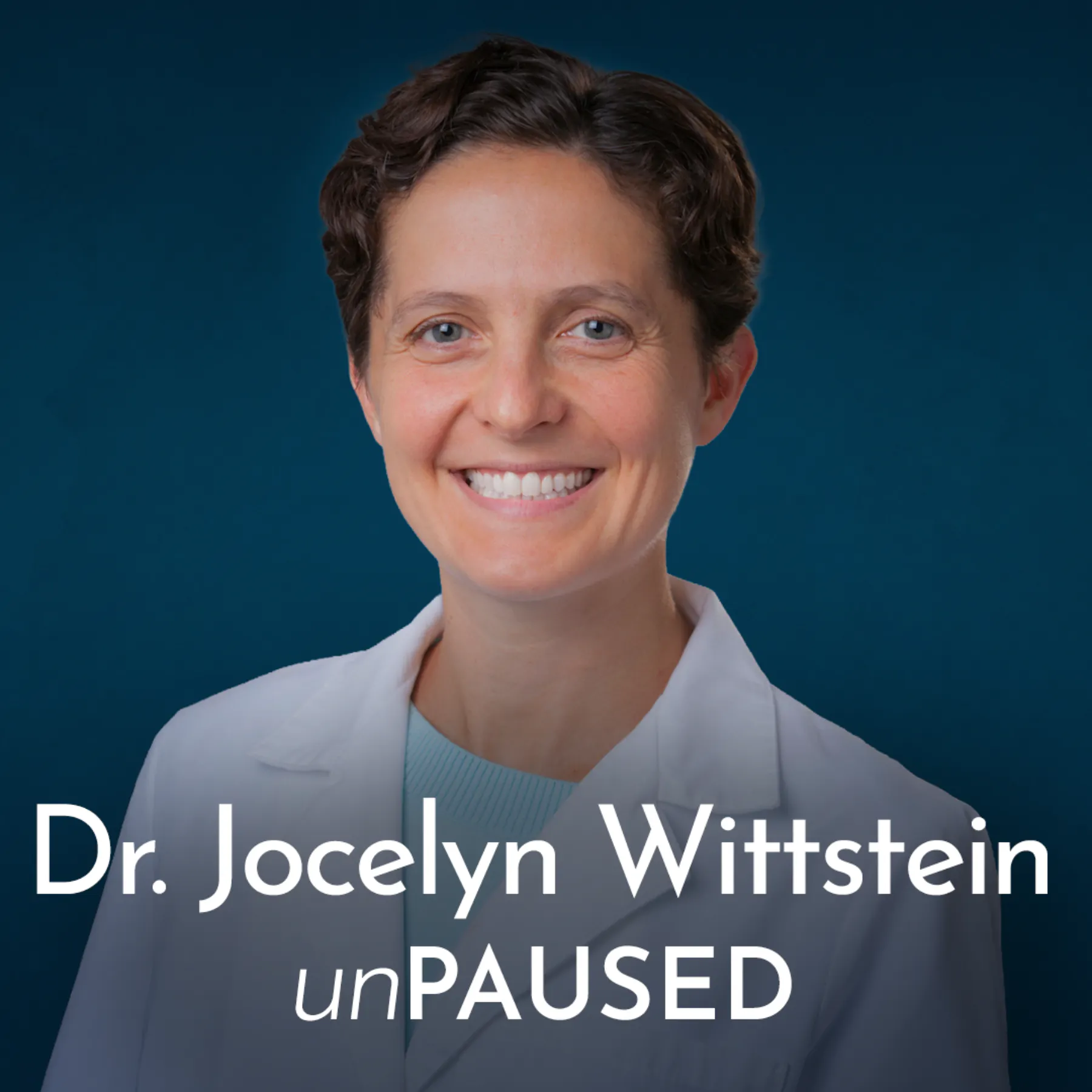
unPAUSED with Dr. Mary Claire Haver
Strong Bones, Strong Body, Stronger Second Half with Dr Jocelyn Wittstein - Part 2
00:44:11
Loading summary
Transcript148 lines
- [00:09]
Dr. Mary Claire Haver
The views and opinions expressed on Unpaused are those of the talent and guests alone and are provided for informational and entertainment purposes only. No part of this podcast or any related materials are intended to be a substitute for professional medical advice, diagnosis or treatment.
- [00:26]
Podcast Co-host
In our last episode of Unpaused, we started a conversation with Dr. Jocelyn Wittstein about what really happens to our joints, bones and muscles as we move through midlife, why osteoarthritis hits women harder, why frozen Shoulders seems to love this life stage, and how hormones weave through all of it. It was one of those conversations that made a lot of invisible dots suddenly connect, and we had far too much to talk about for just one episode. So today we're back with part two. Dr. Wittstein is a practicing orthopedic surgeon, researcher, and associate professor of orthopedic surgery at Duke University. Her work focuses on female athletes across the post traumatic arthritis frozen shoulder and what she calls the musculoskeletal syndrome of menopause. She's president of the Forum for Women in Sports Medicine, a core leader in the Duke Female Athlete Program, and a member of the Milken Institute Women's Health Innovation Initiative, and co author of the Complete Bone and Joint Health Plan. She's not just treating fractures in patients, she's asking the bigger questions about why women's joints and bones behave the way that they do and what we can actually do about it. In this episode, we get into hormones, pain and cartilage in a way that most of us have never heard before. Jocelyn explains how estrogen and progesterone modulate pain, why fibromyalgia and diffuse joint pain so often show up in midlife women, and the role testosterone plays in arthritis risk for women. She walks us through her current research to understand how aging and sex hormones change the resilience of our joints and whether hormone therapy might one day help narrow the arthritis gap between women and men. And perhaps most important, she outlines a real world prevention plan, including what she does to protect her own bones and joints. This conversation is detailed, whole, hopeful and incredibly actionable. If you missed part one, I hope you'll go back and listen. And if you're ready to rethink how you move and take a 360 degree approach to protecting your bones and joints, then you need to listen to this conversation. You know that feeling when a workout just clicks? Meet the new Peloton Cross Training Tread plus it's powered by Peloton iq, your new strength coach. Peloton IQ takes the guesswork out of Every move. It sets your goals and and provides weight suggestions to ensure you're always making progress. With the new movement tracking camera, it actually counts your reps and corrects your form in real time. It's about making training safer, lifting smarter, and making every single rep count. When you're ready to switch gears, the swivel screen makes it seamless. Go for a 45 minute run on the tread plus, then in one smooth spin transition to a five minute stretch on the floor. It offers endless ways to train for a well rounded routine, no matter how busy your day gets. Best of all, Peloton IQ builds your personal workout roadmap. You get weekly recommended classes led by instructors who match your mood, your vibe and your personality with personalized plans and deeper insights. Peloton IQ helps you finally unlock those new breakthroughs. Let yourself run, lift, sculpt, push and go Explore the new peloton cross training tread +@1peloton.com hey, it's Brooklyn Adams and.
- [03:48]
Brooklyn Adams
I'm partnering with Abercrombie to tell you about the newest drop from their Active brand. Your personal best YPB leggings are made with buttery soft fabrics that hug you in all the right places. And common Abercrombie's viral curve Love fit designed to eliminate waist gap. Paired with sports bras and super soft sweatshirts, it's activewear that supports every part of my busy lifestyle and gives me my best butt ever. Head into the new year feeling your personal best. Shop Active by Abercrombie in the app, online and in stores.
- [04:17]
Dr. Mary Claire Haver
All right, let's move on to pain, hormones, pain and musculoskeletal health. So you've talked about estrogen and progesterone as pain modulators. How does that work? How do you think these hormones actually influence our pain?
- [04:31]
Dr. Jocelyn Wittstein
And this isn't my own research, just things that I, you know, read that make sense. There's, there's a study out of. And again, a lot of this relates to animal data, which is where we learn so many of these things and maybe hopefully eventually apply to humans and learn more. There was a study done on UCSF on mice looking at basically cells located like centrally in the spinal cord and showing that estrogen and progesterone stimulate these cells to create like an endogenous analgesic, basically. Okay, you know, which is a pain reliever. Pain reliever, you know, so suggesting that maybe there's like some central pain modulating effect. Um, there are some studies on people with fibromyalgia showing relationships between Progesterone levels and pain.
- [05:19]
Dr. Mary Claire Haver
What is fibromyalgia?
- [05:21]
Dr. Jocelyn Wittstein
That's a tough thing because the actual definition of fibromyalgia relates to these very specific number of painful points on, you know, myofascial tissue. I think we'll learn more about fibromyalgia over time. Cause I half wonder. We see it a lot in my, A lot of menopausal women get diagnosed with fibromyalgia.
- [05:38]
Dr. Mary Claire Haver
So some people vonda, you know, has stated in, you know, to me that she wonders how much of fibromyalgia is just musculoskeletal syndrome and menopause. I mean it's a, it's a clinical definition based on you're having pain in.
- [05:51]
Dr. Jocelyn Wittstein
Certain areas in myofascial tissue.
- [05:53]
Dr. Mary Claire Haver
She thinks a lot of it, rather than just being this de novo condition, could just be a symptom of menopause.
- [05:59]
Dr. Jocelyn Wittstein
Yeah, it could be. I mean we see, I do see many more women with fibromyalgia than.
- [06:04]
Dr. Mary Claire Haver
I didn't know any men had it.
- [06:06]
Dr. Jocelyn Wittstein
I, I, yeah, I think I'm, I think, I don't know if I have any. Yeah, it's definitely more common in women and it may be something I think we understand more over time. Again, these things get named something and you know, do we figure out what they are later. I also have a lot of women who get worked up for rheumatologic conditions because they have this new onset joint pain many times, but X rays that don't look abnormal yet and they're just having, you know, a lot of polyarthralgia. And I sometimes think that is just related to systemic inflammation. And even, you know, some of the earlier studies from the Women's Health Initiative did show reduction in number of and severity of pain and you know, painful joints with hormone therapy that included estradiol and then even like rebound or worsening of joint pain with withdrawal of that.
- [06:52]
Dr. Mary Claire Haver
When they stopped it.
- [06:53]
Dr. Jocelyn Wittstein
And there are like some systematic reviews and analyses that don't clearly show a relationship of joint pain and use of menopausal hormone therapy. And I think even the Menopause Society has a statement like that on their website like, you know, that we need more research in this and I'm studying that now, but I do think we need to understand that better. But there's gotta be something. If women have this really disparate rate of especially like knee arthritis at age 50, it's just, you know, there has to be.
- [07:22]
Dr. Mary Claire Haver
Comes out of nowhere.
- [07:22]
Dr. Jocelyn Wittstein
Yeah.
- [07:23]
Dr. Mary Claire Haver
So it's a combination, you feel of Your the tolerance to pain, you're saying, you know, we have less of an analgesic effect combined with increasing inflammation.
- [07:32]
Dr. Jocelyn Wittstein
Yes.
- [07:32]
Dr. Mary Claire Haver
From estrogen withdrawal. Does testosterone have a part anywhere in here?
- [07:36]
Dr. Jocelyn Wittstein
Because we don't tank our testosterone. Like. Yeah, like estrogen, progesterone do more gradual.
- [07:42]
Dr. Mary Claire Haver
It's a more gradual with age.
- [07:43]
Dr. Jocelyn Wittstein
Yeah. There's some data coming out that seems to relate. There was a, A large study that looked at women and men over time. I think it had like 9,000 subjects in it, about 5,000 women. And they followed them over time with sex hormone levels and rates of arthritis. And uh, they did see a correlation with lower testosterone levels in women over time in terms of risk of knee and hand arthritis, but they did not see that correlation in men. So yeah, we're seeing some, I think more research about testosterone and women later in life potentially being also related to knee and hand arthritis, which are of course very common sites. Yeah, yeah, I'm trying to get at the answer to that. I'm doing a study or trying to um, launched a study that we've done a lot of the preliminary parts for that will really look at early changes in cartilage in women and men, you know, in the early 50s, as well as correlating with testosterone and estradiol and progesterone levels using some of those models we built from the ACL research actually on these models we make where we. Yeah, and if anyone is listening to this and wants to be my research fairy godmother and wants to give me $3 million to solve this arthritis versus in men versus women, I have the. We took our same. All the work we did on the machine learning to build the models of the knees where we have all the cartilage traced all over the different parts of the knee. And we use a very similar model that we use to study post traumatic arthritis in ACL torn knees, which is where we bring people in and we have them rest for 30 minutes so their cartilage is fully rested. We do a resting MRI of their knee and then that shows us the thickness of their cartilage liver. Then we have them walk for 30 minutes on a treadmill, which is. Compresses your cartilage and your cartilage is the smooth gliding surface of the knee compresses it. And then we put them back in the MRI scanner and we kind of rescan them with this one sequence every six minutes for like 30 minutes. And over the course of those 30 minutes we see how much the cartilage rebounds to its normal thickness and Then we generate a curve and it tells us how many minutes it would take for the cartilage to go back to normal. So like in a normal person It'd be like 25 minutes. And people who've had ACL tears, even just like one or two years after their injury because they're so prone to developing arthritis over time from the trauma, it takes like, you know, more than an hour. It takes a long time. So we're applying this same tool that we developed for post traumatic arthritis after ACL injury. Except for the injury is not the ACL tear and ptoa or post traumatic arthritis, it's aging. Sex hormones.
- [10:22]
Dr. Mary Claire Haver
Yeah.
- [10:23]
Dr. Jocelyn Wittstein
Plus or minus hormone therapy. And so then we'll have their testosterone, their estrogen, their progesterone levels, and we will see how the early signs of arthritis are appearing in men versus women with and without hormone therapy. With test, you know, knowing the levels, it basically, you know, my hypothesis is that I, I do think that, you know, maintaining or supplementing, you know, the estrogen levels will preserve that resiliency of the cartilage. That's my hypothesis. I could be wrong.
- [10:52]
Dr. Mary Claire Haver
So that it's. Could be preventative potentially.
- [10:55]
Dr. Jocelyn Wittstein
And if we can, if we can. That's what we're studying. We want to know, because this isn't clearly answered, we want to know is hormone therapy that may include estradiol, testosterone, progesterone, are these things protective of the cartilage, especially in women, so that we can narrow that gap, that 35% difference in knee arthritis. If we do end up showing that the resiliency or that ability of the cartilage to rebound is restored or maintained or related to the estradiol and progesterone levels. You know, that may be another indication or it may expand our thoughts about, like, what is hormone therapy for? But we haven't clearly shown. And a lot of the old research, again, is on, like, different forms of hormone therapy. Right.
- [11:36]
Dr. Mary Claire Haver
And only for the presence or absence of hot flashes.
- [11:39]
Dr. Jocelyn Wittstein
Yeah. Related to arthritis, though. It's. It's kind of. It's not necessarily looking at the actual health of the cartilage. And so we're. Yeah. So that we've submitted another grant to the nih. I just applied to another private foundation and. Yeah. So if anyone wants to help me solve arthritis in women, call me. You can come to our lab. I can show you how we do everything. And I really, really hope we get funding for this because that is one of the studies I'm extremely excited about.
- [12:05]
Dr. Mary Claire Haver
You mentioned that in your previous writings. That and help me say it. Ephops trial E F O P S, which studied the effect of long term exercise on bone density fracture risk in osteopenic women. Different than the Liftmore trial. Did it show fracture prevention?
- [12:23]
Dr. Jocelyn Wittstein
Yes. One of the reasons why I like the EPHAPS trial is, you know, we have all these studies that show, okay, jumping helps with hip bone density, strength training helps, you know, improve especially lumbar spine bone density. Again, what do we really want to prevent? Like, maintaining bone density is great and nice, and we presume in most cases, like we know from many medications, you know, that improving bone density reduces fracture risk. But what that trial did was they followed women. I think most of them were on average when they enrolled them like 55. And then they followed them for 60. So now after like age 70ish, this is really interesting. I mean, they, they work, they had these, you know, supervised sessions, then independent sessions, and they carried this out like all this time. And then they followed them for. They follow their bone density over time, but they also followed obviously their fracture risk. And so there are a lot of trials that really show you the impact of an exercise program on like long term fracture risk.
- [13:18]
Dr. Mary Claire Haver
Because it takes a long time to measure.
- [13:19]
Dr. Jocelyn Wittstein
Yes. Again, I just feel like we don't. I sometimes I feel like, why don't we have these trials in the United States that are this, some of them are just not this good. But, but in any case, what they found was over time that the women who participated in the exercise group, as compared to the control group, had approximately 50% reduction in fracture risk. Yeah, but interestingly, near the end of the trial, you know, at first the women who were doing the strength training, it included strength training and impact and they kind of use periodizations. It wasn't always intense. Sometimes it was like less intense. But they did have periods of higher intensity. And what they found was obviously a major reduction in fracture risk. And earlier on, there were larger differences in bone density. The exercise group was like gaining, whereas the other group was losing, as you would expect. But over time, those gains like trailed off. And near the end of the study, you know, the exercise group was losing bone density, but at a slower rate. Okay, but my point is, and why I like that study so much is it shows the effectiveness of exercise for fracture prevention even as bone density is declining, maybe at a slower rate. But there's more to exercise than just the bone density. It's like your coordination and your balance.
- [14:27]
Dr. Mary Claire Haver
And there's more to fracture than just your bone density.
- [14:29]
Dr. Jocelyn Wittstein
Yes. Yeah.
- [14:30]
Dr. Mary Claire Haver
So if you don't fall, if you're more, if you're less stiff, if you.
- [14:34]
Dr. Jocelyn Wittstein
Are, you have better mobility, better balance, like less likelihood of falling out. So, so I, I like that trial because I think they did such a good job of following through with the, the fracture risk.
- [14:44]
Dr. Mary Claire Haver
All right, so back to fractures. I get this question all the time. And our clinic has dug into what research is available, and I'd like to hear it from you. How much estrogen, estradiol levels specifically is needed for bone protection?
- [14:57]
Dr. Jocelyn Wittstein
Yeah, so this is a very interesting question. I read about this a lot and I think the confusion around this question comes from there was a study that looked at markers of bone turnover and associated levels of estrogen, and they found that if the estradiol level was 60 picograms per milliliter or higher, basically there was the greatest reduction in markers of bone turnover. So basically breaking down bone.
- [15:24]
Dr. Mary Claire Haver
So for our listeners, you know, bone is not static. It is constantly turning over. And until 30ish, maybe in our late 20s, we are laying, we're building more bone than we're chewing up. But we're constantly like, your bones turn over every 10 years.
- [15:39]
Dr. Jocelyn Wittstein
We're remodeling.
- [15:40]
Dr. Mary Claire Haver
We remodel.
- [15:41]
Dr. Jocelyn Wittstein
Yeah, we're remodeling.
- [15:42]
Dr. Mary Claire Haver
Muscles do something similar too. So when we go through menopause, we. And with aging, we accelerate how much we chew versus what we lay down. In menopause, it goes crazy where we chew up way more bone than we lay down and that leads to bone.
- [15:55]
Dr. Jocelyn Wittstein
Loss and then osteoporosis and even maybe in perimenopause.
- [15:58]
Dr. Mary Claire Haver
Oh yeah.
- [15:59]
Dr. Jocelyn Wittstein
Massive acceleration in perimenopause. Massive acceleration. And I read a study recently that showed that there are faster and slower bone losers in perimenopause. And just looking at basically the people who had the greatest bone loss or acceleration of bone loss and perimenopause were the women who had the lowest frequency of population. Like they're, you know, had a, obviously as we get towards the bottom.
- [16:22]
Dr. Mary Claire Haver
So they have lower estradiol levels.
- [16:23]
Dr. Jocelyn Wittstein
Yeah, yeah. They have like, you know, less, you have less cycles. But people who have like this longer period of more spread out cycles where the people who lose more bone and perimenopause. So it's like, you know, that prolonged decreased frequency of cycles is kind of a marker for being a fast bone loser and perimenopause.
- [16:42]
Dr. Mary Claire Haver
So the bone turnover marker.
- [16:43]
Dr. Jocelyn Wittstein
Bone turnover marker.
- [16:44]
Dr. Mary Claire Haver
As we're chewing up bone and laying down bone, there's little chemicals that get excreted into the blood. So we can say, oh, she's going through a lot of bone turnover and bone loss.
- [16:54]
Dr. Jocelyn Wittstein
Yep.
- [16:54]
Dr. Mary Claire Haver
So that's a way to kind of measure how these medications are working without having to wait two years for a bone density scan.
- [16:59]
Dr. Jocelyn Wittstein
So this, the study showed that if you were at least at 60 picograms per per milliliter, you had the greatest reduction in those markers, so suggesting you're having the least bone loss. And then once you got to 90 or higher, there was no difference. Which makes sense because 80 is the level and luteal phase of many women who are menstruating. So why would you need to be higher than. Than that? Probably not. So that sort of led to, I think, has made people think, oh, we need to be at least 60. But on the other hand, there is also data that comes from all of the studies of Mennostar, which is the ultra low dose transdermal estrogen, the 14 microgram dose, showing that using that and even people not even exceeding a level of 20 picograms per milliliter protects bone and reduces bone loss and even increases density in the lumbar spine by like two and a half percent. And so I think that kind of leads to this confusion of where do we need to be is more better?
- [18:02]
Dr. Mary Claire Haver
And there's, in my world, in the menopause society and the OB literature, they're very hesitant. They do not want to measure estradiol levels. They're like, no, we treat hot flashes. You give her enough estrogen to treat a hot flash. But my bone people are like, just because you're protecting her from hot flashes does not mean her bones are necessarily protected. And I think maybe they're very keen on dose.
- [18:24]
Dr. Jocelyn Wittstein
Yeah. And I don't want to, like, overstep my boundaries or my sphere of boundaries.
- [18:28]
Dr. Mary Claire Haver
But why do you think the hesitation?
- [18:29]
Dr. Jocelyn Wittstein
There was a trial called the ultra trial, where, again, looking at mennostar, the 14 microgram dose, where if you looked at what level of estrogen women were at, they were all like, all these women under 20, which would be typical of menopausal women and people.
- [18:43]
Dr. Mary Claire Haver
You made an estradiol level of 20?
- [18:45]
Dr. Jocelyn Wittstein
Yes, estradiol level, yeah. Like that. There were. Within that.
- [18:49]
Dr. Mary Claire Haver
So that's how we define menopause to our listeners. Is an estradiol level less than 20? Pretty much postmenopausal.
- [18:54]
Dr. Jocelyn Wittstein
But these postmenopausal women, there's even variation within that number under 20. So some people live like under five. Yeah. Some people are at 15. You know, so you could have these quartiles, let's say. And in the study of the Metastar dosing, one study found that the people who were in the lowest quartile had the greatest response to the Metastar. So they had the biggest, the greatest reduction, you know, in their turnover markers. So I think maybe some of the concern about looking at levels is that people respond differently. Like some people just live at different levels and then it's a relative change. So then if you're checking a level, what does the level mean for this person versus that person? And so I think that study actually made me think, well, maybe that's why people are hesitant.
- [19:41]
Dr. Mary Claire Haver
There's some nuance. Yeah.
- [19:43]
Dr. Jocelyn Wittstein
But on the other hand, if you look at dosing, I mean, for. If you look at fem ring, which is systemic estradiol, which can be protective of bone density, you're looking at transdermal estrogen. If you compare the 50 microgram doses to 100 microgram doses, there really isn't a significant difference in the increases in bone density. They're very similar, but they're a little higher with the 100 microgram doses. So if someone is having side effects or symptoms like breast tenderness or whatever, and they don't have it at 50 micrograms, but they do it 100, you're probably not doing them a disservice to have them at the best, because. So if you look at the 14 micrograms versus 25 versus 50 versus 100 in various studies, like the 14 microgram dose over two years, increased lumbar spine bone density like 2.5%, which is on par with Avista. Similar amount of increase, if you look at the 25 microgram dose, does a little more. If you look at the 50 and 100 microgram doses, you're seeing, you know, a 5ish percent increase as compared to 2 1/2% with the men of star. So obviously dose matters, but when you get to the 50 or 100, not.
- [20:57]
Dr. Mary Claire Haver
That, not different, not much of a difference.
- [20:59]
Dr. Jocelyn Wittstein
As an orthopedic surgeon, that's my understanding.
- [21:03]
Dr. Mary Claire Haver
There's nuance.
- [21:03]
Dr. Jocelyn Wittstein
And in our clinic. Yes, nuance. Yeah.
- [21:05]
Dr. Mary Claire Haver
And most of my, you know, the menopausy kind of people, we don't sit here and slap an estrogen patch on someone and be like, go and live. You know, it's like if you want to protect your bones, you have to do all the things.
- [21:16]
Dr. Jocelyn Wittstein
Yeah.
- [21:16]
Dr. Mary Claire Haver
Which includes the lifestyle. Yeah. You are not doing the lifestyle changes, including diet, including nutrition, and lowering inflammation and all the things you are not this is probably not likely going to have, you know, not the greatest effect.
- [21:32]
Dr. Jocelyn Wittstein
Yes, diets with less inflammation reduced risk of fracture. You know you need adequate calcium, magnesium, vitamin D, all those things.
- [21:44]
Eczema Medication Advertiser
Eczema is unpredictable, but you can flare less with epglis, a once monthly treatment for moderate to severe eczema after an initial four month or longer dosing phase. About four in ten people taking EBGLIS achieved itch relief and clear or almost clear skin at 16 weeks. And most of those people maintain skin that's still more clear at one year with monthly dosing.
- [22:03]
Emplis Lebricizumab LBKZ a 250 milligram per 2 milliliter injection, is a prescription medicine used to treat adults and children 12 years of age and older who weigh at least 88 pounds or 40 kilograms with moderate to severe eczema, also called atopic dermatitis that is not well controlled with prescription therapies used on the skin or topicals or who cannot use topical therapies. EBGLIS can be used with or without topical corticosteroids. Don't use if you're allergic to ebglis. Allergic reactions can occur that can be severe. Eye problems can occur. Tell your doctor if you have new or worsening eye problems. You should not receive a live vaccine when treated with ebglis. Before starting ebglis, tell your doctor if you have a parasitic infection.
- [22:37]
Ask your doctor about evglis and visit ebgliss.lily.com or call 1-800-lilyrx or 1-800-545-5979.
- [22:44]
Mint Mobile Advertiser
Well, the holidays have come and gone once again. But if you've forgotten to get that special someone in your life a gift, well, Mint Mobile is extending their holiday offer of half off unlimited wireless. So here's the idea. You get it now, you call it an early present for next year.
- [22:59]
Dr. Jocelyn Wittstein
What do you have to lose?
- [23:01]
Mint Mobile Advertiser
Give it a try@mintmobile.com Switch limited time.
- [23:04]
Dr. Jocelyn Wittstein
50% off regular price for new customers. Upfront payment required $45 for three months, $90 for six months or $180 for 12 month plan taxes and fees. Extra speeds may slow after 50 gigabytes per month when network is busy. See terms.
- [23:15]
Dr. Mary Claire Haver
In our clinic we talk about lifestyle as well as HRT and of course some of the other drugs, bisphosphonates, you know, if they're already diagnosed. But you know, talk to me about the difference between exercise versus medications and what are the outcomes.
- [23:32]
Dr. Jocelyn Wittstein
Yeah, so certainly I don't Want to imply that you're never going to need a medication. Like if you have osteoporosis and you know, your frac score says you have a more than 3% chance of having a hip fracture in the next 10 years. Like you should probably be on some osteoporosis medication. What do all these things do for you? Lifestyle vs medication or hormone therapy? I do like to kind of just level things a little bit and think about, you know, what are your returns on investment. So if we look at, you know, the timeline for your effort and what you might get out of it, if you're doing like, let's say you initiate some impact exercise and you know, over a six month period you might increase your hip bone density by 1%. That's a six month investment. I mean, I think you should continue it. But you're, you've got. So imagine that 6%, 1% if you were doing the lift more protocol, for instance, and over an eight month period we would expect you to see a 3% increase in your lumbar spine. So think about that, that's eight months, 3%. If we think about estradiol therapy over two or three years giving you a 3% increase in your hip, 5% in your lumbar spine region, generally, something like that. So that's three years of using a medication to get 5% increase ish in your lumbar spine. You know, think about the impact of exercise. If you're doing an eight month program and you're getting a 3% increase, that's really impactful. So I just want to emphasize the, and the timeline with the exercise you have other benefits.
- [25:04]
Dr. Mary Claire Haver
You're also getting so many other benefits.
- [25:06]
Dr. Jocelyn Wittstein
So many other benefits for your insulin resistance. Yes. For your muscle mass. Yes. And then medications like zolendronate like the Reclast, if you know the brand name, you know, once per year infusions of bisphosphonate, for example, those are going to increase your hip bone density about 5%. Your lump, your, your vertebral, your spine bone density about 7%. You're going to get a 70% reduction in fracture risk, say of the spine, 40% of the hip. You know, we don't have, like I said with exercise, we don't have all those numbers. But so that would be like three years of getting a once a year infusion. So those numbers are larger. But again, like if you just look at the scale of them, like the lifestyle things, do they add up quite a lot. And again, scale wise, it's Hard to say okay for hormone therapy. If you look at a meta analysis, we know that this corresponding increase in bone density reduces our hip fracture risk by about 30% or vertebral body fracture risk by about 40%. We don't have those exact numbers for like exercise. And you can't really take the numbers from medication and be like, this percentage equals this much fracture reduction. It doesn't work exactly like that. But my point is, if you just look at the scale of these things, 1% gain is a really big deal, 3% gain is a really big deal. And if we think about that, I think it just helps people value these exercise interventions more. Okay, that makes sense.
- [26:25]
Dr. Mary Claire Haver
So my grandmother had multiple fractures. Not hip, but she had forearm, ribs, multiple falls. You know, spent the last three to five years with dementia and then the last couple of years completely bed bound. And, you know, my mother is 88 and has Alzheimer's, so I'm sure her mother had it too. And on New Year's Day, had a uti, hallucinated, thought she heard my dad calling her, got out of bed, fell, broke her hip, delirium, has no cardiovascular issues whatsoever. So it was perfectly fine to survive the surgery and had her hip, you know, rotted and whatever the hell they did to it. And it still just scoots around in a wheelchair completely. You know, that's terrible.
- [27:08]
Dr. Jocelyn Wittstein
With her dementia.
- [27:09]
Dr. Mary Claire Haver
So talk to me about how I can. What would you recommend for me for avoiding this fate? I can handle the dementia, but talk to me about my bones.
- [27:18]
Dr. Jocelyn Wittstein
Yeah, yeah, yeah, the dementia. Dementia. Of course, you know, the benefits of exercise, which are huge like that is the most protective thing women can do to prevent dementia is exercise for our brains. But yeah, so for build me up.
- [27:32]
Podcast Co-host
Build me a protocol.
- [27:33]
Dr. Jocelyn Wittstein
I would, I recommend. And what I do is a couple of days, a week of heavier strength training, making sure you're doing like large muscle groups again, similar to those lift more protocols. The balance work. I do some of that every day. Flexibility work. I like to. I don't have time to do like a yoga class every day, but I do incorporate that in my routines again because you do need joint mobility. And then I always try to build in agility. I sometimes I'll use agility work within my cardiovascular exercise. So I use it as part of the cardiovascular exercise because if we don't have it stack, we just like run out of time in the, in the day. Yeah. And then, you know, dietary wise. You're a big fan of this. I know. And it's very important for actually reducing inflammation and helping our bones and joints is a high fiber diet. Getting, getting adequate fiber. And, and for me that's a lot of variety of fruits and vegetables, vegetables.
- [28:28]
Dr. Mary Claire Haver
And seeds, nuts and legumes.
- [28:29]
Dr. Jocelyn Wittstein
All those things. Yeah. And those, those foods generate basically short chain fatty acids which then impact the inflammatory pathways that contribute to bone resorption and your cartilage, you know, breaking down actually. And I don't want to get too basic sciency, but there's a lot of that, that happening. Yeah. And then, you know, I use creatine monohydrate, 5 grams per day. There is not a study showing that creatine specifically, it doesn't grow bone.
- [28:57]
Dr. Mary Claire Haver
No.
- [28:57]
Dr. Jocelyn Wittstein
Grows bone. It doesn't directly. But there are studies that when combined with strength training, you know, you can increase your.
- [29:02]
Dr. Mary Claire Haver
Increase your gain.
- [29:03]
Dr. Jocelyn Wittstein
Your gain. And secondarily that has benefits for, you know, bone health. Oh, back to the exercise part. Jumping. Yeah, Doing box jumps. Now. I love jumping. Now the thing about box jumps is the jump down up is a soft landing and then people step down. You want the jumping down? Yeah.
- [29:19]
Dr. Mary Claire Haver
And I have the little. I got the weightless jump rope.
- [29:22]
Dr. Jocelyn Wittstein
Yeah, the one I showed you.
- [29:23]
Dr. Mary Claire Haver
But I, they keep hitting me. I think my wrist angle isn't right. So I just need to go back.
- [29:28]
Dr. Jocelyn Wittstein
To regular jump up. Yeah, you can do regular jumping. So. And again, the jumping, it doesn't have to be off a gigantic box. It could be an 8 inch step. And there's a really smart lady named Tracy Glissold who's done tons of basic science on how much impact is created from jumping off an 8 inch step with a rebound or heel drops which also create that, that impact jumping for sure. A few days a week.
- [29:49]
Dr. Mary Claire Haver
Okay, what about. I'm on hrt. Would you recommend that?
- [29:52]
Dr. Jocelyn Wittstein
Yes. And I think for sure menopausal hormone therapy that includes esty is protective of bone density. For those who are candidates for it, definitely there is some reasonable evidence I think behind and I think you've highlighted for. There's something called fortabone, which is a hydrolyzed type 1 collagen that, you know, they have randomized prospective studies showing improvements in bone improvements.
- [30:15]
Dr. Mary Claire Haver
Give me some of that.
- [30:15]
Dr. Jocelyn Wittstein
Yeah. And so I don't think that hurts anyone.
- [30:17]
Dr. Mary Claire Haver
Yeah, yeah. What about. Lots of questions I get on calcium, phosphorus, vitamin K. What are your thoughts on it?
- [30:26]
Dr. Jocelyn Wittstein
Yeah, I mean most people have a hard time eating enough calcium, but yes, you want to get 1200 milligrams of calcium per day, 400 milligrams of magnesium a day. 100 micrograms of vitamin K per day. Vitamin D, you want to get at least 600 units per day. You should not exceed 4,000 units per day if you don't have a deficiency for various reasons. And you know, data that I've read, I do take 2,000 units a day. I'm not exceeding that upper limit of what's safe. But there are studies, correlative or not, that show vitamin D supplementation reduces risk of or is associated with less risk of dementia and depression. Also at that level, at least 2,000 units per day is correlated with benefits for reducing joint pain. So there are some side benefits of it. So while you do need about 600 units per international units per day, I do take the 2,000. So those are important aspects as well. The dietary aspects, I have a hard.
- [31:24]
Dr. Mary Claire Haver
Time absorbing, I guess. So I take four.
- [31:27]
Dr. Jocelyn Wittstein
Oh, yeah, a lot of people do. And then low and diets that are like less inflammatory. So there's something called the Dietary inflammatory index, which unfortunately there's not like that.
- [31:36]
Dr. Mary Claire Haver
That's what I built the Galveston diet based on. Was that because I went back for nutrition?
- [31:40]
Dr. Jocelyn Wittstein
Yeah.
- [31:40]
Dr. Mary Claire Haver
And so that dietary index score, you know, we used to have a little quiz you could take on our website.
- [31:45]
Dr. Jocelyn Wittstein
Oh, I've taken the class.
- [31:47]
Dr. Mary Claire Haver
Yeah, it's based on that. So it's the poor man's version.
- [31:50]
Dr. Jocelyn Wittstein
Yeah. And. And there are studies correlating, you know, a less inflammatory diet with less risk of fracture. So that is another reasonable thing to do.
- [32:01]
Dr. Mary Claire Haver
So back to my mom for a little bit. You've talked in the past about this connection between UTIs, like general urinary syndrome and menopause and hip fracture. Yes, I think it's worth.
- [32:10]
Dr. Jocelyn Wittstein
For our listeners, I think this is underappreciated.
- [32:12]
Dr. Mary Claire Haver
I know this is what happened to my mom. You know, she was a sad.
- [32:15]
Dr. Jocelyn Wittstein
Oh, I've had so many people with this story or tell me this is what happened to their mom. So big picture, and I'm not saying this to scare people or anything, but when you, when you hear about hip fractures, which of course 75% of them occur in women, and then, you know, statistically speaking, just if you have a hip fracture, depending on the study or population you're looking at, the one year mortality rate is some studies 15%, some studies 30 or two years out, I like to quote the 30 a third of women. Yeah, I know. I try to always give nuance in numbers because some of the numbers sound more scary than others. So it's not always 30, but it can be 15 to 30% in a year. So, you know, we don't want people to have this happen. But like, what is causing death? Actually, a lot of it is, it can be urosepsis, a post operative urinary tract infection. So you have the SIP fracture, sometimes you've needed a fully catheter, there's urinary retention from pain, people can't get out of bed. And I think aside from the fact that urinary tract infections are the number one complication after hip fracture surgery, and it can lead to readmissions, urosepsis, septic shock, things like that, I think many of them are actually present, you know, prior to the hip fracture. And so people who have general urination or menopause, they may have increased urinary frequency. They may have, you know, recurrent UTIs. And what happens if you have that and you're an older woman, you're getting up in the middle of the night, a little confused, a little delirious, more than you normally would, and they trip and fall. I mean, almost every time you get called by the emergency room for hip fracture, it's like in the middle of the night. I should actually look and see if there's a study on this. But I think most fractures happen at night. And it's so often the story. Untreated gsm, yeah, getting up, dripping, falling. And then. So there are patients that are diagnosed with a urinary tract infection preoperatively, but you're not going to like, you can't delay surgery because outcomes are worse. Survival is worse if you delay more than a day or two. And so you got these people who either have the infection pre op or develop it post op and it delays. You know, they're in the hospital for longer. Women who have a urinary tract infection diagnosed at the time of hip fracture have like four times the rate of septic shock postoperatively as compared to those who weren't diagnosed with a pre op. I actually think many of them are under diagnosed pre op, so I think it contributes to the falling, contributes to the urosepsis after probably, you know, contributes to death. And we know that vaginal estrogen prevents urinary tract infections. 50%. Yeah, prevents a lot of them. And so if we could reduce those, I swear we would reduce hip fractures and we would definitely reduce urosepsis. It's not like you can just give someone vaginal estrogen right after hip fracture surgery and expect them to have less UTIs, because it takes six weeks or so to be effective, to grow Back.
- [34:59]
Dr. Mary Claire Haver
The mucosa to change the microbiome.
- [35:01]
Dr. Jocelyn Wittstein
So we're not going to magically make someone not get UTIs by putting them on that right after surgery. But I do think we should actually educate hip fracture patients. Hey, you have recurrent UTIs. I don't want you to break your other hip. You might benefit from being on vaginal estrogen. And that's something I'm actually working on with our trauma team right now. We're looking at how frequently our hip fracture population, we're looking at our last 500 hip fractures in women, and how many of them were on vaginal estrogen, how many of them have the UTI pre op and post op. And if you look at reviews of hip fracture studies, you know, you'll see anywhere from like 10 to 40% of people having a UTI perioperatively. Yeah. So it is, it is a really large problem.
- [35:45]
Eczema Medication Advertiser
Oh, it's such a clutch off season pickup, Dave. I was worried we'd bring back the same team. I meant those blackout motorized shades. Lines.com made it crazy affordable to replace our old blinds. Hard to install. No, it's easy. I installed these and then got some for my mom. She talked to a design consultant for free and scheduled a professional measure and install hall of fame son. They're the number one online retailer of custom window coverings in the world. Blinds.com is the goat. Visit blinds.com now for up to 50% off with minimum purchase plus a free professional measure. Rules and restrictions apply.
- [36:16]
Dr. Mary Claire Haver
Since you're here this week, while we're recording, this is the week that the box warning on vaginal estrogen has been struck and removed. And just the normal warnings are there, as they should be. You know, for those listening, Vaginal estrogen is preventative. It can be prophylactic. It is safe and effective. Almost 99.9% of women can use it and probably should for keeping the risk of UTI at bay and keeping their vaginal and vulvar health in tip top shape so they decrease their risk of delirium, of falling and then a fracture, and then having a better post op course if they do fracture. So I wanted to be clear about that. So women are going to want to know, what can I do for myself? You know, how can they better advocate for themselves when their musculoskeletal pain isn't taken seriously?
- [37:03]
Dr. Jocelyn Wittstein
I know. I can't tell you how many times I see a patient who feels like they haven't been heard when their X ray is normal or their MRI is normal or even if someone does recognize that they have frozen shoulder, they might hear, well, that just happens to women, you know, just recognizing, yes, it happens to women, but is there anything else we can do? So I, I think health literacy is so important and I mentioned to you earlier when we were chatting, I actually had like never even been on Instagram before January and my 19 year old daughter Chloe, who is Chloe on Canvas on Instagram, She's a cute little artist, but she helped me make that page and I'm using it for health literacy because I think if people have awareness they can be, you know, more of an advocate for them, for themselves. And I like, I, I wrote this book with my co author Siddhi Naskorski, the Complete Boundary Joint Health Plan because people just don't understand their bodies. Like they don't understand arthritis and osteoporosis.
- [38:07]
Dr. Mary Claire Haver
Let me plug your book. It's excellent. You open it up, it's recipes, it's exercises, it is literally a how to manual from the ground up on how to protect your bones and joints. So if you're like, okay, what do I do? 90% of it is pictures of people doing exercises and recipes on how to.
- [38:23]
Dr. Jocelyn Wittstein
And we tried to explain like what is arthritis, what is osteoporosis, what are the things you can do to take course because, but again, so it's not only for women but because arthritis is more of an issue for women and osteoporosis is like I do have a lot in there explaining that because I just think if people don't understand, like if women don't understand that yes, I am going to be more prone to arthritis than a man at age 50 and I am going to be more prone to prone to frozen shoulder. You know, I think just having an understanding of that can help them advocate more for themselves or not let it.
- [38:55]
Dr. Mary Claire Haver
Go for so long as I think a frozen shoulder, getting in there early is key.
- [38:59]
Dr. Jocelyn Wittstein
And like just taking an index of your own symptoms, like are, are you having this increased joint pain or your frozen shoulder at the same time that you're having like vasomotor symptoms and general urinary symptoms and like talk to your women's health doctor about that. I love my male orthopedic surgery partner so much and I have actually so many of them are now talking to women. I don't want to pick on my husband Tal, but he's also an orthopedic surgeon and we actually work with, we're like a rotation for our fellowship. So one fellow will come and Work with both of us at the same time. And he.
- [39:30]
Dr. Mary Claire Haver
Sports medicine too.
- [39:31]
Dr. Jocelyn Wittstein
Yes. One day one of the fellows told me, I think you need to help Dr. Lasseter. He's talking to women about the change. But I said, no, that's so great. He's asking women with shoulder pain about their symptoms and texting me, how do I refer to women's health. And some of my fellows are now doing this. And so I just think that because men don't go through menopause, like they're not gonna experience this. They just, they don't have the same lived experiences. They may have less awareness of this connection. But I think, you know, I'm trying to educate my in your trainees. I can't tell you how many of my, you know, her Instagram is excellent. My male orthopedic residents are. They come out of a room telling me someone's like menopausal history and whether or not they're on hormone therapy as part of the orthopedic history. Which is really cool. But. Yeah, but for patients, I think if you're, if you're feeling dismissed or someone isn't listening to you, I mean, it's okay to get another opinion. Like, don't feel like you're, you know, stuck with, with one person. And I just, I think what happens is it's hard when an X ray is normal and MRI is pretty normal, but you're having increased joint pain. You know, we've talked about some of the things you can use, an anti inflammatory diet, certain supplements, things like that. But I just think taking a look at the whole person.
- [40:44]
Dr. Mary Claire Haver
Yeah.
- [40:45]
Dr. Jocelyn Wittstein
And collaborating. Stop siloing. Collaborate with women's health. I'm not saying that magically going hormone therapy is going to make your knee pain feel better, and that's what we're trying to study. But I think we need to kind of look at women as a whole person, not like a knee.
- [40:58]
Dr. Mary Claire Haver
And stop siloing women's health to the bikini area.
- [41:01]
Dr. Jocelyn Wittstein
Yeah, yeah. Like, yeah, yeah, exactly.
- [41:05]
Dr. Mary Claire Haver
Well, I'm so happy you came with us today. Educated our listeners so much. They and I will go through on the show notes. They will have how to find you on social media, how to buy your book and how to find you. Get ready because you're, you're about to get a lot more referrals for frozen shoulder at Duke. Get ready.
- [41:20]
Dr. Jocelyn Wittstein
Yeah. Well, thank you for having me. And I'm, I like to say I am only an orthopedist. I am not an expert in all things women's Health, but you're changing the world. You realize the most meaningful research relationship are my cross collaborative ones, you know, with my women's health partners, with my biomechanics PhD, you know, with the PhD who does all of the biomarkers with me. I mean we really have to be cross collaborative to change, get rid of these disparities. Yeah, excellent.
- [41:53]
Podcast Co-host
Are you looking forward to menopause?
- [41:54]
Dr. Jocelyn Wittstein
I mean, I'm not fearing it. Funny story. My youngest, my now 18 year old son was like menopause sounds really terrible. And then my 20 year old daughter said I really don't want to go through menopause and they're just talking. But I think I'm almost 48 and I feel like I'm getting into a phase of life where I can have so much more. I don't know, freedom of thought and independence and time and I mean I had my kids pretty early, so I do have more time now. But I don't dislike aging. You know, I, I change some of the ways, some of, some of my look, I don't exercise exactly in the same way as I used to. I don't do backflips on the floor, only in a trampoline. But I, you know, I, I'm not fearful of it. I feel very, I feel empowered by the knowledge I have. But I have a strange amount of niche knowledge and I love to share it with people.
- [42:52]
Dr. Mary Claire Haver
Well, and I think that you sharing that knowledge with, with your students but also on social media is going to continue to just elevate this conversation and empower women in a way that we haven't been able to in medicine before.
- [43:08]
Podcast Co-host
As a reminder to our audience, you.
- [43:10]
Dr. Mary Claire Haver
Can follow Dr. Wittstein on Instagram @JocelynWitsteinMD.
- [43:15]
Podcast Co-host
Her book the Complete Bone and Joint.
- [43:18]
Dr. Mary Claire Haver
Health Plan is available on Amazon. I'd love to to hear from you about this topic and anything else that's on your mind. You can find me on Instagram rmaryclaire and get honest and accurate information on health, fitness and navigating midlife@thepauzelife.com My upcoming book, the New Perimenopause is available for pre order on Amazon. If you're loving this podcast, be sure to click follow on your favorite podcast app so you never miss an episode.
- [43:44]
Podcast Co-host
While you're there, leave us a review.
- [43:46]
Dr. Mary Claire Haver
And be sure to share the show.
- [43:47]
Podcast Co-host
With the women you love.
- [43:49]
Dr. Mary Claire Haver
We would be so grateful. You can also follow full episodes on.
- [43:53]
Podcast Co-host
YouTube at Dr. Maryclaire Unpaused is presented.
- [43:57]
Dr. Mary Claire Haver
By Odyssey in conjunction with Pod People. I'm your host, Dr. Mary Claire Haver. The views and opinions expressed on Unpaused are those of the talent and guests alone and are provided for informational and entertainment purposes only. No part of this podcast or any related materials are intended to be a substitute for professional medical advice, diagnosis or treatment.