← unPAUSED with Dr. Mary Claire Haver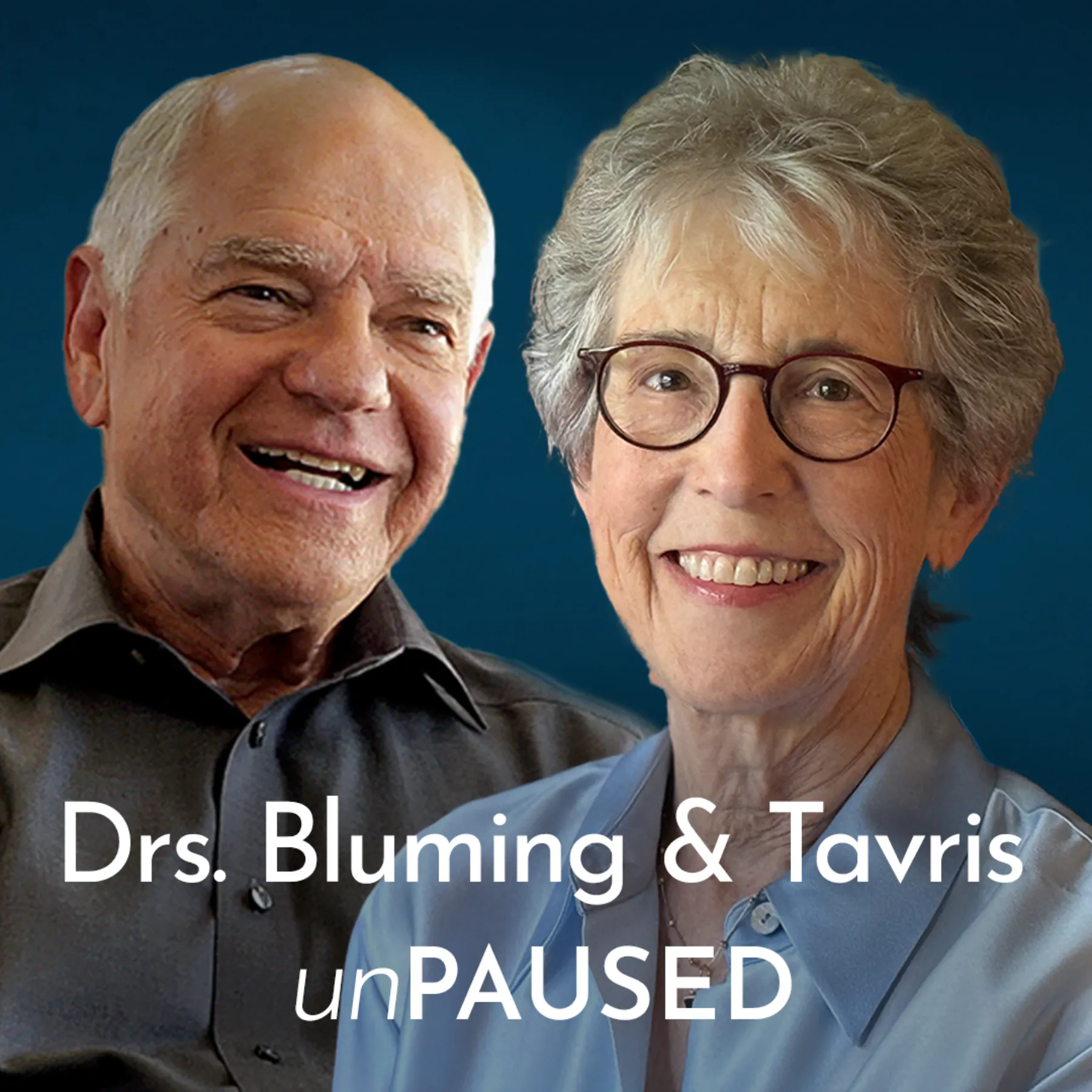
unPAUSED with Dr. Mary Claire Haver
The Truth About Estrogen: What the Women's Health Initiative Got Wrong with Dr. Avrum Bluming & Dr. Carol Tavris
01:16:28
Loading summary
Transcript218 lines
- [00:00]
A
If you're an experienced pet owner, you already know that having a pet is 25% belly rubs, 25% yelling drop it. And 50% groaning at the bill from every pet visit. Which is why Lemonade Pet Insurance is tailor made for your pet and can save you up to 90% on vet bills. It can help cover checkups, emergencies, diagnostics, basically all the stuff that makes your bank account get nervous. Claims are filed super easily through the Lemonade app and half get settled instantly. Get a'@lemonade.com pet and they'll help cover the vet bill for whatever your pet swallowed after you yelled drop it.
- [00:33]
B
When my patients come to me in clinic, it's number one to put out the fire. Get them to a functional status again. Then the conversation about the next 30 years begins.
- [00:41]
C
When a woman, either with a history of breast cancer or with no history of breast cancer, asks for estrogen, she is often told I don't want to talk about it. That's not open for discussion and if you insist, you'll have to find a different doctor to refuse to discuss it in today's world is no longer acceptable.
- [01:02]
B
Men on social media squawking about how they want to live to 120. No woman I know wants to live that long. She just wants to stay out of a nursing home and to maintain her independence. The views and opinions expressed on Unpaused are those of the talent and guest alone and are provided for informational and entertainment purposes. No part of this podcast or any related materials are intended to be a substitute for professional medical advice, diagnosis or treatment. I'll never forget the first time I heard Dr. Avrim blooming and Dr. Carol Tavris speak. It was at my very first menopause conference in Santa Monica. I had been invited to speak about nutrition and menopause based on my work with the Galveston Diet. They were being interviewed by Dr. Sharon Malone, a nationally recognized obgyn and menopause expert. And as I sat in the audience, I listened to them dismantle the Women's Health Initiative. They exposed the flaws in its design, the way the findings were misrepresented, and the truth Estrogen was not the villain I had been taught it was. I felt tears streaming down my face. It was a lightning bolt moment. I was shocked, ashamed, furious. Not because I had missed something, but because this information had never been given to me. Even as a board certified OB GYN through my years of recertification, this information was nowhere to be found and that realization cut me to the core. If this could blindside me as a trained obgyn. Imagine what it had done to millions of women. My field is supposed to be the gatekeeper of women's health. Yet somehow menopause, something that affects more than half the population, had been pushed to the margins and treated like a side note instead of central to our specialty. That was a turning point for me. Sitting in that room, hearing Dr. Blooming and Dr. Tavris tell the truth, I couldn't stay quiet. I had to use whatever platform I had to make sure that women knew the truth that had been hidden from me as a doctor and and from them as patients. Because here's the reality. The Women's Health Initiative study did a number on us. It created fear and confusion around hormone therapy and set back menopause care 20 years. Women suffered because of it. I've spent my career since then helping women untangle those myths and get the information they deserve to make informed choices about their health. And now with this podcast, we're going even further, setting the record straight, cutting through the fear and giving women science backed practical advice in conversations with experts and others they can trust. Midlife isn't easy. Your body changes, relationships shift, careers take turns, and you're left asking what's next. Unpaused is here to provide a place for conversations with honesty. No fluff, no judgment. Just real talk and actionable advice. And I can't think of a better way to begin than with the two people who lit this fire in me, Dr. Avram Blooming and Dr. Carol Tavris. I'm Dr. Mary Claire Haver, a board certified obstetrician, gynecologist, and certified menopause practitioner. I'm also an Adjunct professor of Obstetrics and Gynecology at the University of Texas Medical Branch. Welcome to Unpaused, the podcast where we cut through the silence and talk about what it really takes for women to thrive in the second half of life. Dr. Blooming is a medical oncologist, emeritus, clinical professor at USC and a former Senior Investigator at the National Cancer Institute and a Master of the American College of Physicians. He spent more than 30 years studying the benefits and risks of hormone therapy, including including in women with a history of breast cancer. Dr. Carol Tavris is a social psychologist, writer and lecturer best known for her books Mistakes Were Made, but not by Me and Estrogen Matters, which she co authored with Dr. Blooming. She's a Fellow of the association for Psychological Science and has dedicated her career to showing how science and psychology shape our beliefs and why myths are so hard to Shake. Welcome. So glad you're here. How did your paths cross and what made you decide to write this book together?
- [05:37]
D
Oh, it's a long path, but a very windy and fun one. I learned about Avram because he saved my sister in law's life. That was the first time I'd read him.
- [05:44]
B
I don't know the story.
- [05:45]
D
Oh, well, no, I mean, so he was a big name in my family. She'd had a terrible reaction to a medication that nearly killed her, and Avram hematologist saved her life. So I knew all about Avram Blooming. And then mutual friends invited us both to dinner, thinking we might enjoy meeting each other. And I walk in, and there is Auburn Blooming. That was a very long time ago. And we discovered that we shared in our professional and intellectual lives a passion for bringing the best science and the best information to public attention and clinical practice, even when people may not want to hear that information. That was the challenge.
- [06:22]
B
And then what made you decide to write the book together?
- [06:24]
C
Well, I was writing a book about the different experiences I've had as an oncologist. And one of the chapters in the book dealt with estrogen and breast cancer. And Carol said, that should be its own book.
- [06:40]
B
Did you agree at the time?
- [06:41]
C
I don't remember if I agreed, but Carol is very persuasive, and it just grew.
- [06:47]
D
Well, as I'm fond of saying, what I know about medicine is what Avram knows about book publishing. So we were the perfect collaboration in that sense. But no, over the years, when the Women's Health Initiative first came out and Avram called me up practically at dawn, saying, have you heard this horrible, horrible press conference? And the mistaken information they're providing? We shared a passionate disagreement with what we were being told at that time. And so we had many years run up collecting all of the information about the Women's Health Initiative to write this.
- [07:19]
C
Book actually, as a test, we collaborated on an article talking about hormone replacement therapy, real concerns and false alarms. And I sent the article to a physician and oncologist I respected for his comments. The oncologist is Vince DeVita. Vince was the head of the National Cancer Institute. He was the director of oncology at Sloan Kettering. He's been the director of oncology at Yale. And he called me the next morning, and instead of giving me comments, he said, you know, I'm also the editor in chief of the cancer journal, and with your permission, I'd like to publish it.
- [08:00]
B
Wow.
- [08:00]
C
That was Christmas morning, December 25, and the first call I got was From Vince. And the reason it surprised me is Carol says things in medical articles that we usually don't say, like, what were they thinking? It's in the article. And it caused me to change my style, make it a little less dry and a little more Carol like. And that's what we've been doing.
- [08:29]
B
So you decide to make this book. And in publishing, I've authored a couple of books. Now you have to basically sell your idea to a publisher. What was that like? How hard was this? Or did you. Was it like, yes, we want this book, or did you have to convince them?
- [08:44]
D
Well, no, I was sitting with my former editor from Harcourt, actually, and we were having lunch and I was telling her about what we had been writing about and thinking about, and she said, oh, my God, this is a book. Who killed hrt? Who killed hrt? I'm connecting you with my agent right now. And she did. And the next day, we had an excited agent. We wrote a proposal quickly and within a few weeks.
- [09:09]
C
In two weeks, she said, I have five people from major publishing firms who want to speak to you. And within two weeks, we.
- [09:17]
B
You had a contract.
- [09:19]
D
Now, what's really interesting is that at that time and when the first edition of this book came out, we were expecting a kind of blockbuster reaction. It was too soon. The world was not ready for the many women who became the menopausi who were picking up the challenge and the criticisms of the Women's Health initiative. But now that that's happened, our book has really taken off, as you know and as yours have.
- [09:39]
B
I mean, the book changed my life very much for the better. And I think because your work has changed my life, you've then changed the life of millions of my followers and all of my patients.
- [09:50]
D
Thank you.
- [09:50]
B
Thank you for that. So, Dr. Blooming, you've spent decades in the oncology space treating breast cancer. I know you've shared your wife's story of her breast cancer and kind of you rethinking her experience and her life. Walk me through your patients experiences, your wife's experiences, and how that kind of helped you shape the thought process in the book.
- [10:11]
C
For several decades, about 60% of my practice was breast cancer. And I've watched breast cancer prognosis improve over those decades.
- [10:22]
B
So let's talk to our audience a little bit. What does that look like now? If I get diagnosed with breast cancer cancer tomorrow, what is my risk of death?
- [10:30]
C
The current cure rate. Cure defined as the cancer goes away and you live a normal lifespan. The current cure rate for newly diagnosed Breast cancer, certainly in western countries, is over 90%. It's approaching 95%.
- [10:47]
B
Okay.
- [10:48]
C
Which doesn't mean to belittle cancer.
- [10:51]
B
No, absolutely.
- [10:51]
C
It's a frightening word. I wish it on nobody. We have a healthy respect for that, but that shouldn't overshadow all other considerations.
- [11:01]
B
Okay, so let's go back to the thought process. You know, these decades of how the thought process changed as the prognosis improved.
- [11:10]
C
What's happening in cancer generally now is patients are being allowed into the decision process. That's happening in many conditions. To give one example, there's a blood condition called multiple myeloma, which used to be almost uniformly fatal. Multiple myeloma now has a very significant cure rate, and patients are being allowed to decide what treatments they will take. And there are patient groups that are being formed, sitting in with doctors, making this decision, with individual physicians. Eric Weiner. And I've mentioned Eric Weiner several times. Eric Weiner is a very interesting oncologist. Eric was born with hemophilia, and when he was a very young boy, he got factor viii, which can help save the lives of hemophiliacs, which also caused him to get an HIV infection. And so he's been treated for that. Eric went on to graduate medical school. He became the director of breast cancer research at the Dana Farber Cancer Institute. He became the president of the American society of clinical oncology, which is the largest group of organized oncologists in the world. And he's now the director of oncology at Yale. Eric, in his presidential address to ASCO titled the address, partnering with the cornerstone for cancer care and research.
- [12:51]
B
And this was revolutionary.
- [12:52]
C
This was 2023, and it shouldn't have been revolutionary, but it clearly is and was. And what he's saying is patients should be allowed into the discussion. As you know, you and I and many members of the menopause are contacted by women all over the world.
- [13:12]
B
All over the world.
- [13:13]
C
They often tell us stories about how they interact with physicians. And one of the most common interactions, when a woman, either with a history of breast cancer or with no history of breast cancer, asks for estrogen, she is often told, I don't want to talk about it. That's not open for discussion. And if you insist, you'll have to find a different doctor. That is a totally unacceptable response. A doctor can have strong feelings about it, feelings that are backed up by data, but to refuse to discuss it in today's world is no longer acceptable.
- [13:51]
B
I think this is going to come as a surprise to a Lot of our listeners is that they are under the assumption they go in and they're told what to do and that this is a little bit of a radical concept that especially in cancer care, that you should be allowed to have this conversation of risk, benefits, alternatives across the spectrum. Dr. Tavris, what made you want to step into the medical side of this debate?
- [14:16]
D
I've been in it since I was a baby, probably. Noel. This is a debate in which feminist issues of what is best and healthiest for women have often obscured women's decision making because over many years women have thought, well, are hormones? Is that an unfeminist thing to do? Is it unnatural? Is it going to hurt me?
- [14:38]
B
I see that a lot on social media, like this debate over age naturally and.
- [14:43]
D
No, exactly right. Well, as Barbara Sherwin, who studied the benefits of estrogen on cognition going forward, she said, what's not natural is living 30 years after menopause. Let's just get the natural part out of the way. And I think that's why estrogen has been the Jekyll and Hyde of treatments for women. For me, the question is what is healthiest and best for women regardless of what the so called feminist position is one way or another? That is when I was starting out feminism, that is emphasizing and identifying the bias against women in medicine, that balance between the feminist question of what is best and healthiest for women against what does the science say, what does the research say is where I land in between.
- [15:22]
B
And what do you take away from this? You know, was this the worst of bias in medicine? You know, this whole estrogen debate and women not being allowed to have a voice in their own healthcare and weighing risk and benefits and then we create a boogeyman of estrogen through the whi, basically. Do you think that this really represents the worst of this bias?
- [15:41]
D
Not the worst, the bias against women, against listening to women, against studying women who are not differently shaped men. Right, the medical biases against women. I mean, for example, in how we diagnose heart attack and heart disease in women. There's so many ways in which women's bodies are misdiagnosed, if you will, against the male norm in medicine. So it's part of a long standing medical tradition, starting with the questions we ask about women's health, what we do for women's health, and whether we even listen to women in our offices and take their complaints seriously or ignore them.
- [16:15]
B
In my training I only took care of women like the only penises I saw were baby, you've heard me talk about the care gap in menopause, how women's symptoms are often dismissed or left untreated. I see it all the time in my practice. There are many women struggling for answers, unsure where to turn and too often not getting the support they need. That's why I'm so excited to tell you about MIDI Health. MIDI Health is a telehealth clinic focused exclusively on women in midlife. Led by trusted medical leaders and clinicians, the team is committed to evidence based whole person care. They're also the only national women's health teleclinic covered by major insurance, Making expert care accessible and Affordable when you work with Mitti, you get a personalized plan that can include hormone therapy, nutrition guidance, weight management and lifestyle support. It's care designed not just to help you feel better today, but to protect your heart, bone and brain health for the future. This is such an exciting moment. Menopause care is finally evolving into what it should be, accessible and centered on women's real needs. It's inspiring to see the progress MIDI is making helping women feel truly heard and supported. You deserve care that supports you now and protects your long term health. Visit joinmitti.com to meet with a MIDI clinician and start feeling your best for the years ahead. Now that fall is here, my family is starting to crave warm, healthy, comforting meals. That's why we love HelloFresh. It's not just about the food, it's about how it brings us together in the kitchen. They deliver chef crafted recipes and fresh seasonal ingredients straight to my door. And this fall they've seriously leveled up. HelloFresh just dropped their biggest menu refresh yet with more variety, bigger portions and new seasonal favorites. Now you've got a hundred delicious options each week, from global flavors to hearty favorites. Plus, HelloFresh is all about bigger portions to keep everyone at the table happy looking for healthier choices. You'll love veggie packed, high protein recipes that help you eat greener. Here's the tastiest part. There are three times more seafood and steak recipes every week and seasonal produce like corn on the cob, stone fruit and snap peas, all delivered to your door at no extra cost. The best way to cook just got even better. My family orders hellofresh all the time and honestly, it's a nutritious and delicious time saver. 91% of customers say they feel healthier eating with HelloFresh and 9 out of 10 say their dinners are more delicious. The best way to cook just got better. Go to hellofresh.com unpause10fmnow to get 10 free meals and a free item for life, one per box with an active subscription. Free meals are applied as a discount on the first box. New subscribers only and varies by plan. That's hellofresh.com unpause10fm to get 10 free meals plus a free item for life. Boys at birth, you know, and then I handed them back to their mothers. And talk to me a little bit about the bias you see, like, if you had a male patient come in with, you know, X, y, and Z, how the system kind of taught you. Now, you've practiced for decades now, but you know how we address female versus male concerns. So, for example, in urology, they have people coming in with the same list of complaints. Low libido or fatigue, energy. And like, immediately the men, you check a testosterone level, you think of these things. And in women, it's a psychiatric referral. Did you see that in your training and your interactions? You know, through the years, it's been.
- [19:42]
C
Subtle, but to compare prostate cancer with breast cancer, approximately as many men die of prostate cancer as women die of breast cancer in the United States. And prostate cancer was treated with a prostatectomy, which can often cause.
- [20:01]
B
So that's surgical removal of the prostate for those who are listening.
- [20:05]
C
And impotence, meaning an inability to get an erection, is a common side effect of that. And we've now reached a point where we can treat with less surgery. But once prostate cancer spread, there was very little we could do except give men estrogen, which helped some, not very much. Women with breast cancer had their breasts taken off. The radical mastectomy took off the breast and all of the tissue up until the chest wall so that you could see the ribs underneath the skin. And they had many, many lymph nodes taken out from under their arm. And we've backed away from that surgery. So that now lumpectomy with radiotherapy is often more often used than mastectomy. But when a woman had metastatic cancer, we were so sure that it was caused by estrogen that we took out the women's ovaries as treatment. And when the cancer progressed, we took out their adrenal glands, because estrogen can come from the adrenal gland as well. And when it progressed, we took out their pituitary glands so that women were abused medically with very little benefit. We don't do that anymore. But somehow we could do that to women. There isn't a chance for we would be allowed or taught to do that to men. And we never have.
- [21:35]
B
Let's talk about the Women's Health Initiative for our listeners who may not have heard of it. What was that study?
- [21:41]
C
The Women's Health Initiative was set up by Bernadine Healy. Bernadine Healy was a cardiologist who was the first female director of the National Institutes of Health. And what she said echoes what Carol said, that women have been treated largely as almost men. And most of the medical studies were done on men, not on women. Right. And the rationale was women have a tendency to get pregnant, and they may not know that they're pregnant. And if we were doing a study on them, we could be subjecting the fetus to something in our ignorance. So that's the rationale. But not only are studies done largely on men, animal studies are done on male animals, laboratory studies are done on male cells and the results extrapolated to women. And we're learning that women aren't almost men. They're their own. They're women. Bernadine Healy said it's time we did studies on women that we could learn from and would help us treat women. And so she set up what was to become the Women's health initiative. In 1992, they pulled together 44 highly respected academicians and practitioners to study heart disease in women. Heart disease is the leading killer of women in Western countries. Seven times as many women die of heart disease as die of breast cancer.
- [23:13]
B
I want to make sure everyone understands this. The number one killer by far in the United States of women is not breast cancer. Not even close. It is heart disease.
- [23:24]
D
More breast cancer survivors will die of heart disease than of breast cancer.
- [23:28]
B
So you're after your breast cancer diagnosis. You're still more likely to die of.
- [23:31]
C
Heart disease, cause of death among breast cancer patients.
- [23:35]
B
So this is an important study. I remember being excited about it before 2002.
- [23:40]
C
This study was intended to do a prospective, meaning patients are admitted to the study before you decide how they're going to be treated. Double blind, which means neither the physician nor the patient knows whether they're getting the test treatment or a placebo. Randomized trial so that the doctor and the patient don't pick the treatment. It is randomized.
- [24:03]
B
Right.
- [24:04]
C
And that is the purest form of unbiased study.
- [24:08]
B
So for our audience, we knew from observational studies for decades before that women who were on hormone therapy tended to have less heart attacks. This was the proof.
- [24:18]
C
You know, this was intended to be the proof. And in fact, it's worth pointing out historically that in 1991, the lead editorial in the New England Journal of medicine, written by Drs. Lee Goldman and Anna Tostessen. Lead editorial, New England Journal of Medicine was titled Postmenopausal. Time for action, not debate. That was 34 years ago. And Bernardine Healy said, okay, it's time we tested that. And she raised a half a billion dollars. That's $500 million. To date, that study has cost us 1,000 million dollars or a billion dollars.
- [25:02]
B
And it is the most expensive study the NIH has ever.
- [25:05]
C
It's the most expensive study ever done anywhere, as far as I'm aware, in medicine.
- [25:10]
D
And I have to interject that the man, the leading investigator of this bazillion teen dollar project, Jacques Rosso, had published an article in the 1990s calling for a halt to the HRT bandwagon. This was the impartial person put in charge of this study.
- [25:29]
B
Turns out that doesn't sound impartial.
- [25:31]
D
That doesn't sound impartial. It's time to call a halt this bandwagon. All these women taking hrt, let's get. Let's stop the bandwagon.
- [25:38]
C
And so the study was initiated and then in 2000, and there were two major arms to the study. One arm was estrogen alone was randomized against a placebo for women who no longer had a uterus. Since estrogen does increase the risk of uterine cancer. And it was felt that if a woman is still in possession of her uterus, she should get progesterone as well as estrogen, since that eliminates the increased.
- [26:08]
B
Risk, we can negate that risk.
- [26:10]
C
And so women who still had a uterus were ranked randomized to either the combination of estrogen and progesterone or women without a uterus were randomized to estrogen versus placebo. And in 2002, there was a press conference. Now usually, and Carol will interrupt and say, press conference, I thought the first thing you do is you write and publish the article so that the doctors can learn the data on which the results are based.
- [26:39]
B
So I was sitting in Eminem, which in the hospital setting is Morbidity and mortality conference, basically a once a week meeting from our Department of obstetrics and gynecology where we go through cases that week and, you know, our hits and misses and wins and some lectures and learning things, when that press conference broke and all the whispers, you know, going, this is before the Internet, before cell phones. And everyone was so upset. And it was just like, I remember that lightning bolt moment.
- [27:08]
C
And the press conference said, estrogen increases the risk of heart disease, of death, of Stroke and of breast cancer. And the headline was in the New York Times, Estrogen increases the risk of breast cancer. Breast cancer is the red flag here. Yeah, well, actually, that's not what their data said.
- [27:32]
B
So you've once said in the book once they misinterpreted their own data. Now you say they're misrepresenting it.
- [27:39]
C
That's correct. We have to talk about each one of these. Let me just dispense quickly with heart disease. They said it increased the risk of breast cancer. Actually, the median age of patients, the average age was 63, not between 45 and 51. When most women reach menopause, half of the women were smokers. Many of them had hypercholesterolemia, many were overweight, and 25% were obese. This wasn't a representative population, although at the time of the press conference, they said these data can be extrapolated to the general female population. But on breast cancer, what they said is it increases the risk of breast cancer. Actually, there are laws that allow us to determine the significance or validity of. Of a result.
- [28:29]
B
So we're talking about statistics.
- [28:30]
C
We're talking about statistics. And the laws are kind of like basketball. In basketball, if you sink the ball through the basket, you get two points. If the ball bounces off the rim, you get zero points. Now, I don't have to argue the validity of that, but those are the rules in statistics. In order for something to be called statistically significant, it has to have a likelihood of developing of less than 1 in 20. Right. Okay. And there are mathematical tests that determine that. The mathematical test for the increase that they saw in breast cancer, and this was only among the women who got the estrogen and progesterone, not the women who got estrogen alone. The mathematical test didn't hit the rim.
- [29:20]
D
Hit the rim. Hit the rim.
- [29:21]
C
That's right. It hit the rim and bounced off. And in that article said the increased risk of breast cancer almost approached nominal statistical significance. I have never seen that statement before or since in any published medical article on any topic.
- [29:41]
B
Let me review this. So the average age of women in the study was 63. Very different than the average age of women who would typically start hormone therapy at 50 or 51 when they hit full menopause. This group of women were 70% overweight and then like 30 something percent obese.
- [29:58]
C
Yes.
- [29:59]
B
40% were smokers. They had several risk factors for cardiovascular disease being elevated much higher than ladies who would have been early in menopause taking the medications. And the outcome was cardiovascular disease. You Know that was the primary outcome was is she gonna have a heart attack or not starting this medication. There's also problems, as you've talked about before, with the control group, it's worth.
- [30:26]
C
Saying, so that we don't confuse people listening what they said about heart disease, they have walked back so that now what they say is actually estrogen or the combination decreases the risk of heart disease. When started within 10 years of a woman's last menstrual period. Right. The stroke, they've also now stated, they said it increases the risk of death. Again, starting, they say within 10 years of the last menstrual period. It actually prolongs life, it doesn't decrease lifespan. Estrogen, they now say, based on 20 years of follow up, estrogen actually decreases the risk of breast cancer development among women who never had breast cancer by 23%. And that is a significant reduction. And, and here's a very important point, decreases the risk of death from breast cancer by 40%. Also statistically significant.
- [31:26]
D
Stunning.
- [31:26]
C
The one other thing they said, they said this the following year, they wrote it up that estrogen has no effect on quality of life. Well, I'm sitting here with two women, of course, you smart. But the question was, well, how is that possible? And if you read the article on quality of life that was published in 2003, they said, we knew that women who were symptomatic who were randomized to placebo would know within weeks that they were getting a placebo, not the hormones, and they would drop out of the study, which we didn't want. So we intentionally did not select symptomatic women to join the study.
- [32:08]
B
So symptomatic meaning severe hot flashes.
- [32:10]
D
Yeah, exactly.
- [32:11]
B
So women with severe hot flashes were largely excluded.
- [32:14]
C
Correct.
- [32:14]
B
From the study.
- [32:15]
C
Correct. And so what they say in the article, but most people don't read the fine print, they said the symptoms that these women didn't have were not affected when they got hormones.
- [32:28]
D
You can't make this up, you know. But they did.
- [32:30]
B
And all of this has been.
- [32:33]
C
So now they say that hormones are actually the best choice for symptomatic treatment. But following up on the question of breast cancer, the one thing they still hold onto, and this is now 23 years after that famous press conference, they say that the combination estrogen alone, I said, decreases the risk of breast cancer death from breast cancer, but they say the combination increases the risk of breast cancer development but doesn't increase the risk of death from breast cancer. And they still say that. And Carol and I said, well, they misunderstood Their own data. Well, now, having spoken with them, having written with them, having debated them, having debated them in the medical literature, everything I'm about to say they know. And what, what I am saying is their first conclusion wasn't statistically significant. In 2006, they published an article saying, you know, we hear that we've been challenged because as you mentioned, the study was directed at heart disease, not at breast cancer. And in order to have a fair study, what we have to do is balance risk and the risks for heart disease. Cigarette smoking, high fat diet, high cholesterol levels are different than the risk for breast cancer development, family history of breast cancer, number of children. And so since our population was not selected on the basis of breast cancer risk, people have said that the increase we reported is not meaningful. And so Garnet Anderson, the chief biostatistician for the Women's Health Initiative, published an article in 2006 that said, okay, what I've done is I have retrospectively balanced for breast cancer risk. And I reanalyzed the data looking only at breast cancer risk factors for women. And she said, it makes no difference, meaning I still see an increased risk. That's a lie. It makes a huge difference. Because we spoke about the basketball rules or the statistical rules. It went from being borderline statistically significant to statistically not significant. This is a biostatistician. And she said it made no difference. It made a huge difference.
- [35:05]
B
So why do you think that me board certified OB GYN on the front lines counseling women day after day in menopause about the risk and benefits of hormone therapy, did not know any of this information. This all didn't come out in the last three years since I heard you guys speak or since I read the book. This has been coming out for. Since the study was published, Right. Trickling out over time. I do my recertification every year. I have articles put in front of me that are the latest, greatest updates, you know, new guidelines. And none of this until recently was put in front of me. I was out there counseling patients based on 2002 erroneous data. I mean, why do you think that is?
- [35:49]
C
Well, first, it's still being reported in 2025. They are still reporting an increased risk associated with the combination hormones.
- [35:59]
B
And the guidelines today from acog, American College of OB GYN are lowest dose, shortest amount of time.
- [36:06]
C
Still, still that for which there is no data.
- [36:08]
D
Yeah, see, that's the deadly compromise, which is we actually know that hormones are beneficial and helpful. But wait, the WHI says that they're dangerous. So what's the compromise that will allow us to use a little in the shortest time, which is like, okay, smoking could kill you. So only smoke one pack instead of three packs and only for a year instead of for 10 years. That would be stupid advice. Either it's not a risk, in which case take the drug, or it is a risk, in which case don't. But the shortest dose for the smallest amount of time represents a foolish compromise.
- [36:42]
C
I think, because let's take two steps back. What is the risk? It's not a risk of death, it's a risk of breast cancer development. Even if they're right and they're not, what is the risk? The risk is one extra case of breast cancer. Non fatal breast cancer, non fatal per thousand women taking hormones if their data's correct. Like it's not correct. But even if their data works correct, if we believe it, that's right, one per thousand. Well, you can't know that in human beings a one in a thousand increased risk is nothing. Is nothing. Human beings aren't genetically identical mice. There are differences among us even in the best controlled studies. And there is no other study where this kind of a libel against the drug would stand for 30 plus years based on one extra non fatal case of breast cancer per thousand. But even that one extra case is wrong. It's important to know I said that there were four different groups in this the combination, women against placebo and the estrogen alone, women against placebo. And if you look at the combination against placebo, it does look on the graph as if there is a difference. In fact, the combination does have a higher risk of breast cancer than the placebo. But it's not because there's an increased risk among the women who got the combination. In fact, that risk is identical to to the risk among the women who got estrogen alone.
- [38:24]
B
Right?
- [38:25]
C
And I said that that showed a decreased risk. It's the placebo group against which the combination is measured that has a lower than expected risk. And that's been ignored. Except for an article in 2004 that was ignored, an article in 2018 by Howard Hotis from USC and Phil Sorrell from Yale saying the placebo group is the problem. It isn't that there's an increased risk among the women getting the combination. And so one has to ask the question, why would the placebo group have a lower than expected risk? And the first answer is I don't know. And the second answer is a significant number, 23% of women who were randomized to Placebo had taken hormones before they were randomized to the placebo group. And if the hormones decrease the risk of breast cancer and they were taking them, well, what would happen if we eliminated women who had taken hormones before they joined the study, both from the test group and the placebo group? And no surprise, the placebo group risk goes up. And the graph for both the combination and the placebo group are now the same.
- [39:45]
B
Yeah. Proving in both groups that estrogen, plus or minus a progesterogen, would be protective against breast cancer.
- [39:51]
C
Best we could tell. It's so easy to accept data, especially now with media trumpeting results, because bad news sells. And again, the investigators here are respectable people. I have respect for them, even though I disagree with what they're writing. The first is the collaborative reanalysis in 1997. There, a group of physicians from England put together, I think, 51 different studies and analyzed the studies to see if hormones increased the risk of breast cancer. And what they reported is that they had no data on women who had taken hormones and stopped. They didn't see any increased risk among that group. But women who had taken hormones and continued to take them had. And this is true for estrogen and the combination have an increased risk of breast cancer. Really? How much of an increase? Well, it's about 6 per thousand women taking it for over 10 years. That is absurd. But that's what they reported. And because they're respected physicians, it's been published, and it's still quoted. Interestingly, 80% of the women in that study were on estrogen alone. The Women's Health Initiative cites the collaborative reanalysis as confirming what they said. Well, no, what the Women's Health Initiative said is that estrogen alone decreases the risk of breast cancer. Well, they sort of glide over that. They really can't explain that, but they use the collaborative reanalysis to support what they're saying. The second study, also out of England, is called the Million Women Study. Million Women study is a very big name. Actually, a million women did get mail sent to them, and they were drawn from a list of women who got mammograms. Well, first, the list women who got mammograms may have had a reason for getting the mammogram. So it may not be an unselected. They're not all screening, but they sent a million. About 400,000 answered the two mailings. The mailings were separated by three years.
- [42:16]
B
Okay.
- [42:17]
C
And they reported an increased risk of breast cancer among women who took hormones. Estrogen alone, or estrogen and progesterone first of all, they said women who had taken hormones in the past, even for more than 15 years, had no increased risk of breast cancer. Well, wait, wait, wait. Really? How do you explain that? No explanation. Second, the increase that they saw went from 1 in 100 women to 1.4 in 100 women. Yes. I mean, that's a 50% increase, but it's 1 to 1.4. Come on, somebody from crossing the speed.
- [42:59]
D
To having an aspirin has a risk. We hear women say things like, okay, so the risk is only one in a thousand. But I don't want to be that one.
- [43:06]
B
I hear that all the time. What if I'm the one?
- [43:09]
D
The one? Exactly. So this in psychology is called risk aversion. If I'm thinking in terms of my risk of getting something, you know, I don't want it. If I think in terms of my benefits of getting something, that's a different calculation to say, okay, one in a thousand of getting breast cancer, but how about 500 in a thousand of avoiding heart disease? Or I'm going to make up numbers here, but okay, so you have this one risk. But what if your benefits are greatly enhanced by your taking the drug? Most people don't think in terms of what they can gain. They worry more about what the risk is. That's a natural part of human thinking, I suppose, from our prehistoric tendency, we better look for that one tiger that might bite us, you know? But now the concern really is how to assess the overall risk versus benefits and overwhelmingly the benefits for women. How many things can we take in our lives that prolong our lives by three or four years? What do studies show? If you use this thing, you'll live three months longer. Really? But years?
- [44:11]
B
I don't know of a single drug that will improve the quality of life of women over a certain age on multiple levels than estrogen hormones.
- [44:20]
D
Estrogen, then estrogen. Exactly.
- [44:22]
B
But that's left out of the conversation. It's only, how do we get to the point where the worst thing in the world is developing breast cancer fear cells? I fear breast cancer. Trust me, I have a healthy respect for breast cancer. But not to the exclusion of osteoporosis and heart disease.
- [44:38]
D
Exactly. But breast cancer does get the attention. Every celebrity woman who gets breast cancer immediately makes a public announcement about it and then gets prayers and wishes from everybody that she doesn't die. Even though, as Avram said, she has an extremely high likelihood of surviving. But it immediately gets sympathy and attention and publicity. And of course, it's our Breasts, we worry about them, we love them, we want them. So of course women are going to be distressed by this particular form of breast cancer. But it is unrelated to both probabilities of survival and the greater risks. What are the greater harms? Right.
- [45:14]
C
And it's not just breast cancer.
- [45:16]
B
Okay.
- [45:17]
C
It's against hormones.
- [45:18]
B
Yeah.
- [45:19]
C
The Women's Health Initiative, now, they studied heart disease. They extrapolated to breast cancer in 2009. They said hormones increase the risk of ovarian cancer. Around that same time, they said hormones increase the risk of lung cancer death, not increase the risk of lung cancer, but increase the risk of lung cancer death. There are now studies showing that's not true, that if anything, it may actually decrease the risk of lung cancer death, but it certainly doesn't increase it. They never retracted that the ovarian cancer. Wolf Odian, who was the head of the North American Menopause society, challenged the WHI authors in 2009 and said, Wait, what you said about ovarian cancer is not statistically significant. They backed off, but there was no retraction in public media. It's an attempt to frighten people away from hormones. We came across an article that was published in JAMA Neurology last week that said that progesterone contraceptives increase the risk of brain tumors. Oh, my God. Brain tumors. That's terrible. So you read the article. It was published in JAMA Neurology is from the Cleveland Clinic. Again, respected people. And the increase doubles the risk of meningioma. That's the one brain tumor they looked at. The increase went from 3.5 to 7 per thousand women. Taking it for several years. Those are nothing. Numbers. Those aren't numbers that I would accept as an editor for a publication. I'd be ashamed to write an article with that conclusion. But it's there.
- [47:13]
B
We don't see that for when we talk about testosterone for men, you know, and hormone therapy for men. We don't see this demonization or this otherness or this somehow it's bad for you. So let's talk about the cost of fear.
- [47:25]
D
Well, the cost of fear, I want to say, by the way, about publication, as we know in science, well, throughout the sciences, it's far easier to get a publication when you have a finding of alarm than when you have no results.
- [47:37]
C
And if you want to say something positive about hormones, forget jama, forget Lancet, forget the New England Journal for our listeners.
- [47:46]
B
These are the major, most well respected publications in the world.
- [47:50]
C
They don't accept articles that are in favor of hormones. When I suggest to co authors that I write a paper with, why don't we try sending it to, they laugh and say, good luck. Menopause, which is a very good journal. Climacteric, which is a very good journal. There are three menopause like journals, and they publish the favorable articles.
- [48:13]
B
Yes.
- [48:13]
C
That's an imbalance that reverberates through social media and mainstream media that pick up the lead articles from the most reputable medical journals. I don't know why that is, but it is clearly a practice that's been going on for a long time.
- [48:31]
D
They will not dispute the women's health initiative. They just will not permit anything that disagrees with them. And what's interesting is, I mean, it may be that their view is the women's health initiative was so big, so powerful, so, you know, such a governmentally supported project that it has to be right.
- [48:46]
B
It's too big to fail.
- [48:47]
D
It's too big to fail. And in the absence of the women's health initiative doing the right thing and calling another press conference, here's where we are today. In 2025, isn't it important that we sort of review everything and reassure women that hormones are really safe, effective, and healthy and prolong life? Let's do that. And by the way, along the way, correct what we've been saying about breast cancer, but they haven't done that.
- [49:06]
B
So let's take it back to 2002. Press conference happens before the article's even published and we can read it. They're making all these claims. What happened on our end, on the front line, is we were getting calls because it was viral before there was the Internet. Right. It was the newspapers, magazines, Good morning America. It was the number one medical news story of 2002. I want to make sure everybody realizes this. And women, by and large, threw their hormones in the trash and said, this will give me cancer. I can't do this, that this is gonna hurt me somehow. Doctors offices were getting called. So here we have this 70 something percent of prescriptions are no longer being filled. What do you think this meant in real life? Do we see more broken bones? Do we see more heart disease? Are we seeing more dementia?
- [49:49]
C
Bill sorrell, who we already mentioned, who's an obgyn at Yale, who educates obgyn physicians about hormones, who runs an organization called improving health after hysterectomy, wrote an article in 2012 saying the best data they could get suggested that there was somewhere between 50 and 90,000 extra deaths in the United States from People who had been taking estrogen and weren't taking it. Now, in fairness, having said that, the numbers weren't statistically significant have to be fair on both sides.
- [50:25]
B
Right.
- [50:25]
C
I've spoken to Phil numerous times. He believes the numbers are even better now. But there hasn't been a follow up article on that. But there are unquestionably going to be more broken bones. We mentioned heart disease being the seven times as common as breast cancer as a cause of death. And I ought to mention when I say that, women respond by saying, well, old women die of heart disease and young women die of breast cancer and I'd rather die when I'm old than die when I'm younger. And in point, the fact in every decade of a woman's life, her risk of dying of heart disease is greater than her risk of dying of breast cancer. And that difference increases with every successive decade.
- [51:09]
D
One answer to your question comes from the Women's Health Initiative itself, which has concluded that estrogen is the best and safest thing to prevent osteoporosis.
- [51:16]
B
Yeah, it's FDA approved.
- [51:17]
D
Absolutely.
- [51:18]
B
For the prevention.
- [51:19]
D
For the prevention of osteoporosis. For the prevention. In that statement is the women who were not taking it in the 20 years that we told them it was not good for them did not get its protective benefits. So that is, in a way, one answer.
- [51:33]
B
So the boomers are really mad. The boomers that follow me, that generation who weren't given the option, told it was too dangerous, and then given sleeping pills, anxiety medications, they ended up on polypharmacy to treat all of their symptoms, are now really upset that they've been left out of the conversation.
- [51:52]
D
Good. Let's get mobilized then.
- [51:54]
B
Gen X isn't standing for. They're not going to sit around and wait, you know, for the guidelines to all agree and catch up with each other.
- [52:00]
C
Which is why it is so important to have a doctor willing to sit down with you, educate himself or herself and discuss with you what the risks for you are.
- [52:13]
B
Let's talk about who shouldn't take these hormones. Let's lay it out for the audience. What are the absolute contraindications?
- [52:19]
C
We started this whole discussion by talking about an open decision with your physician. In that open decision, there are no absolute contraindications. This isn't cyanide.
- [52:32]
B
That's a great way to put it. This isn't cyanide.
- [52:35]
C
This is a medicine that's got pros and cons. And in your individual situation, you must weigh the pros against the cons. And together with your physician, decide whether it's worth it to you.
- [52:48]
B
Gynecologic cancer survivors, specifically breast, ovarian, even uterine, are being told by oncologists, you cannot have this medication. You will die.
- [52:58]
C
You know what? The only prophylactic medicine we know of that helps prevent ovarian cancer is its estrogen. Estrogen taken as contraceptive estrogen, which there now seems to be some movement against. But estrogen will decrease the risk of ovarian cancer by somewhere between 4 and 10% for each decade that a woman takes it. Nothing else does that. And the data do not support that estrogen increases the risk of ovarian cancer. They do support that it increases the risk of uterine cancer, an increase that's eliminated by the use of. That's correct.
- [53:40]
D
I would add one other element, because I was One of the 37 women in America who had no symptoms at all in menopause. Neither did my mother, for that matter. And a woman asked me after a lecture, she said, well, I'm 50 and I have no symptoms. Should I take HRT?
- [53:56]
B
I get this question. Yeah, my patients ask all the time.
- [53:59]
D
So I said, you know what? When you're my age, you'll have a different answer than the answer that you have right then. You know, and because the answer has to again involve in conversation with your doctor, what are your risk factors going forward? My father and three of his brothers died of sudden heart disease when they were 50. What about osteoporosis? What about dementia? What about other risk factors in your family that you might like not to have when you are in your 70s and 80s? And of course, when you're 50, you're not thinking about when you're 80. You're thinking about, what is my health benefits right now for this decade?
- [54:29]
B
When my patients come to me in clinic, it's number one to put out the fire, like, get them to a functional status again. Usually they're coming in very symptomatic. They've been to several different clinicians before. They end up with me, and they saw something I said on social media, and it drives them to my office. Office. So we get them back their functionality, usually some combination of hormone therapy. Then the conversation about the next 30 years begins and the prevention. And we talk about, how's your mom, how's your grandmother, how are your aunts? How are the women in your family aging? And of course, it's a package. It's not just hormone therapy. And we talk about what the data's showing for cardiovascular protection. Definitely for her bones, possibly for dementia prevention, but also the lifestyle factors that are going to play into that as well. Because with all the bro science, you know, forgive me, Dr. Blooming, you know, of all the men on social media squawking about how they want to live to 120, no woman I know wants to live that long. She just wants to stay out of a nursing home and to maintain her independence and functional life and her brain power for as long as she possibly can so that she doesn't burden her children or her husband. You know, she kind of is like buying into she's going to be his caretaker, but, like, who's going to take care of her.
- [55:42]
D
Exactly right. Exactly right.
- [55:43]
B
Okay, let's break down risk communication in estrogen matters. You both say statistics can terrify or clarify depending on how they are used. Let's put that in plain English for me, for our listeners.
- [55:55]
D
Well, it's really what we were talking about before, about whether you want to see yourself as the 1 person in 10,000 who's at risk of something or if you want to see yourself as part of the 500 who will benefit. The communications researcher George Gerber once said, human beings are the only species to distinguish us from all other species. We are the only species that tells stories. And then he added, and lives by the stories we tell. And that is why the power of one anecdote, one story. My mother had a really bad time on estrogen when she was taking birth control pills. I'm never gonna do it myself. Or my beloved fill in the blank person got breast cancer because she had been taking hormones. One compelling story often drives the narrative, drives the fear or the optimism. You know, my friend is drinking kumquat juice every morning and swears that it's, you know, made her skin better, whatever it might be and the reason this matters. A friend of mine told me that she had been at her oncologist and the women were there were all dealing with breast cancer in one way or the other. And she said some of us had been on HRT and we were sure that hormones had caused our breast cancer. And then she paused and said all of us had had coffee that morning too. Right?
- [57:02]
B
Yeah.
- [57:03]
D
If you're looking for a cause, as we all do, when something we're really.
- [57:09]
B
Seeing this amplified on social media, right?
- [57:10]
D
Oh, yeah. Oh, yeah, yeah. It's this looking backward fallacy. If A comes before B, A must have caused B. There are a lot of things can cause B and we might want to select one. But it behooves us to think further and see if it's really a logical cause or not. You know, one of the things I think that women don't understand about estrogen is that it is a hormone that affects every damn part of our bodies. I didn't realize this. I thought when I went into menopause, I thought estrogen declined gently the way it declines gently in men. No, it's a plummet. It's a damn plummet off a cliff down to, you know, 1% of what it had been. And since every organ in our bodies is affected by estrogen, what are we depleting our bodies of? If you have thyroid removed and you need Synthroid to stay alive, no one thinks that somehow unfeminist or inappropriate or unmedically sound, it's replacing what you lack.
- [58:06]
B
Protecting us from male levels of heart disease was estrogen.
- [58:09]
C
And talking about prevention, it's worth noting that estrogen's benefits, especially in areas that we can measure easily, last as long as you take it. And they stop when you stop. So that a woman who takes estrogen will decrease her risk of an osteoporotic hip fracture, around which about as many women die each year as die of breast cancer.
- [58:33]
B
Say that again. Because I don't think people realize that.
- [58:35]
C
Osteoporotic hip fracture is associated with the same number of deaths in this country, close to the same number as breast cancer. And that can be prevented in half half by women who take estrogen.
- [58:50]
B
But as long as she takes it.
- [58:52]
C
Stop taking the estrogen within six or seven years, measuring your risk of osteoporotic hip fracture reaches a point where your bones will look as if you had never taken it.
- [59:04]
B
So you've both been really clear it's not enough just to critique the Women's Health Initiative that, you know, I've heard the critiques. Millions of women have heard the critiques. Physicians are starting to hear the critiques. But we're not really shifting practice patterns. What do you think it's going to take to make that happen?
- [59:21]
C
I'm so glad you asked that. I mean, Carol and I, for the last eight years, have been talking to women all over the world. Really? And it's easy to get them riled up.
- [59:36]
B
Yeah.
- [59:36]
C
Hey, sister, let's fight this. You're not changing much. How can we change?
- [59:40]
B
She walks into her doctor's office, locked and loaded, ready for this discussion, and is met with 94% of the time a brick.
- [59:48]
C
That's right. I don't want to talk about it. So first I Don't want to talk about it. Doctor, that is not an acceptable response. I am your patient. If you don't want me to be your patient, I understand. But as long as I am here as your patient, I need a discussion. By the way, I came armed with information and I don't accept everything I read, even by these two people, as gospel. But I need feedback from you. And the doctor must respond in an open way. But we need more than that. And in discussions that we've had many, many times, we decided there are two main reasons why doctors aren't keeping up with women's desire for estrogen by giving estrogen. One is the fear of legal culpability. Some women who take hormones that doctor you may prescribe will come down with breast cancer. And who wants to be sued? And we live in a litigious society. What we've decided is let's put together an informed consent form. Doctor, I understand your concern about legal culpability. I want to spare you that aggravation. And so this informed consent form goes over the benefits of referenced and the risks, including the risk of breast cancer development. And I will sign consent saying I won't hold you legally liable should I come down with breast cancer. I think that's a wonderful first step.
- [61:22]
B
It's a fantastic tool. And for our listeners. We're going to have this on our website at thepauselife.com, click a button, easy to download, that you can take to clinic, and it'll be linked in the show notes as well.
- [61:33]
C
That's great. Okay. The second thing that we put together is a quality of life questionnaire. Most people aren't aware that there are many symptoms associated with menopause, not just hot flushes and night sweats. There are palpitations, there are joint aches.
- [61:49]
B
There are frozen shoulder bloating, fatigue, problems concentrating or remembering. I'm reading right off the list. Mood swings, headaches, bloating, swelling of hands or feet, muscle or joint pains, breast tenderness, palpitations, chest pain with exertion or with exercise. These are the ones that stop me in my tracks. Fear of heart disease, fear of osteoporosis, fear of breast cancer, recurrence.
- [62:12]
C
Right. And what we suggest is that you download this quality of life questionnaire and each one of these complaints is in a column where you can grade the.
- [62:26]
B
Symptom as either tolerable, unbearable, or not at all.
- [62:30]
C
Right. And on the second column, how much it interferes with the quality of your life. And you fill that out before you start the hormone therapy and fill it out once a month or twice a month until you get tired of it and share it with the doctor treating you. I remember when we were talking about lumpectomy as a possible alternative to the radical mastectomy and surgeons refused. They said it would be malpractice not to do the radical mastectomy. And I remember the first time a doctor in our community in Los Angeles did a lumpectomy. And he walked to the patient's bedside after the surgery and after the conversation he said to me, he was so overwhelmed by the patient's gratitude, he said I'll never do another mastectomy. And it has spread.
- [63:21]
B
Right? It's standard of care. Now that this lumpectomy radiation is and accept, you know, is now the standard of care.
- [63:28]
C
It's certainly as good as. And it's much less toxic than the mastectomy, even the modified radical mastectomy.
- [63:35]
D
I want to add to the Quality of Life questionnaire. It's a fabulous document to bring to the doctor even on your first visit. And the reason is that we all know the experience of. I have all these symptoms I want to discuss with the doctor and then seven of them go out of your mind when you actually arrive. Like you forget to mention the heart palpitations which are driving you crazy. So by filling out this list of symptoms associated with menopause and seeing where you are on them and how you are responding to them, it's a great document for the doctor to have as well.
- [64:01]
B
And let me add what you can't see, you know, our listeners can't see is on the informed consent form there is about two full pages of medical references, of journal articles that is attached to this in case the doctor has any questions or wants to read up on their own. So you and other members in our menopause have published criticisms in peer reviewed journals and spoken at leading institutions, myself included. I spoke at acog. Yet prescribing practices are resistant. As a matter of fact, the, the most up to date guidelines are the Menopause Society guidelines and they were changed in 2022. Like stepping away from the smallest dose for the shortest time possible. Yet you know, the American College of OB GYN still hasn't updated their guidelines and I think 14 years at last count. You know, why do you think change is so slow here?
- [64:50]
D
You have to admit you were wrong. That's just a starter.
- [64:53]
C
Mistakes were made, but not by me, not by them.
- [64:56]
B
So that's your another book?
- [64:57]
D
Well, that's another book exactly. No. Why? Why no change well, who are, who are we to criticize the Women's Health Initiative? But once a practice is established, I mean, look how long the radical mastectomy existed. Many medical practices sort of get into the system and it changing them is like, I'm fond of saying it's like turning a battleship around in a tiny river. You need a lot of tugboats, I guess.
- [65:20]
B
Yeah.
- [65:21]
D
And even then, it's not going to be an easy process because the new guidelines become so entrenched that turning them around requires people to change their minds, change their practices. They have to actually read and learn why the original assumptions were wrong.
- [65:36]
B
I read a study that said specifically on this subject of from new research to clinical guidelines being updated to clinical.
- [65:45]
D
Practice change 212 years.
- [65:47]
B
17.
- [65:48]
D
Yeah.
- [65:48]
B
So that's about as long as the WHI.
- [65:51]
D
Oh good, it's only 17.
- [65:52]
B
We're going to skip a whole generation of women. But what I love about social media and podcasts now is we are out there. I think the tide is turning and women are realizing that they have power here and that they need to be the CEO of their own healthcare and that they can go in with these tools that we're arming them with to speed this process up. Because I think by and large clinicians are good people. They want to do well, they care deeply. But we're busy, especially in menopause care. I mean, as a former program director in obstetrics and gynecology, we had six hours of menopause built in hours in a four year curriculum. So if you want to do up to date menopause care, you have to go seek outside training because they're not giving it to you in your cme. This is something you have to like, really want to do. So I want women to realize you really right now cannot expect to walk into your regular doctor's office. You might get lucky, but more than likely they're not prepared to help you here. But like, I graduated from my training the year the study hit and I was terrified of it. You know, I was sitting in your lecture three years ago, reluctantly myself on hormone therapy because I thought, well, if I get breast cancer, at least I'll have a better quality of life knowing my chances of surviving breast cancer were good. But I couldn't live like that. So realizing that I wasn't hurting myself and I had left a lot of patients bereft because I didn't know. And that's what we have to change.
- [67:13]
D
Well, and we have to understand too, the dilemmas for so many women Going to see a doctor who has a tiny amount of time to devote to them.
- [67:19]
B
Yeah, 15 minutes.
- [67:20]
D
At least the 15 minutes exactly. So to have this complicated conversation in 15 minutes is right away daunting for women. And because of the sad, long history of women not being listened to by their doctors when they do come in, the concern I would raise for women. Women have always been good at getting information from other women, but your best friend and your mother may not have the best answers for you. And that's really something to keep in mind because this whole movement about this isn't natural and this isn't, it's unhealthy for you and so forth that comes from the women.
- [67:53]
B
That's not what I did.
- [67:54]
D
No. Yeah, it's not what I did. You don't really need this. It's adding something to your body that isn't natural and so forth. That is all from the women's whisper network of bias. Some superstition, some anti medication, anti medicalizing of menopause, anti pathologizing of menopause. It's not pathologizing menopause to say you will benefit by restoring the you that was. That's the difference.
- [68:18]
B
If you were going to design, I have very strong thoughts here, a menopause curriculum from both from the psychological standpoint and from the medical standpoint. What are the top three things you would want your trainees to walk away with?
- [68:32]
C
Trainees? Physicians.
- [68:33]
B
Physicians, yeah.
- [68:34]
C
Well, first, listen to the patient. The patient is an important part of the care team, probably the most important part. Second, you must keep up with the literature. What we're talking about now is what we understand today. One of the exciting but sometimes frightening things is we never know enough. We are learning all the time. So keep an open mind. Data accumulates and criteria change and stay abreast of that.
- [69:08]
D
Yes, yes, I would say this. It's kind of interesting to me that for a very long time when women say to their doctors, you know, all the symptoms of menopause. And they say, well, but, you know, midlife is a very difficult time for women. Women are anxious because I'm not. I don't look the way I did at 25. And because I'm taking care of my parents who are in trouble, I'm taking care of my teenagers who are in trouble. I have so many social, economic and personal concerns. My husband and I are quarreling all the time. There are so many midlife emotional and psychological concerns for women about their changing bodies, about work, about family. So for a very long time, the intervention Was, well, let's just solve those problems, dear. Let's get you an antidepressant for your unhappiness, a little Ambien for your sleep, a little cosmetic surgery, all of which might be appropriate or timely in certain circumstances. But the number one line of issue for the, for the doctor is how are you medically? How is your estrogen? That is, I mean, in so many of the cases in our book that we describe where women are told, well, you better quit your job. It's obviously too stressful for you. And, you know, how can you manage such a high, high powerful job with all of these symptoms? You better cut back. You better get out of the workforce. Well, no, how about helping me do my job better?
- [70:25]
B
Right.
- [70:25]
D
And so on. So I think it would be useful in my menopause class for physicians to understand that these patronizing views of just quit working, you know, spend more time baking, drink more wine, they're not what we're talking about as the first line of issue for women in menopause.
- [70:43]
B
So my mother is 88 and is in a memory care facility with Alzheimer's. And in January 1st, she thought she heard my father. She was hallucinating, and she got out of bed in the middle of the night without her walker, and she fell and broke her hip. And so she survived. She was well enough to have the hip replacement and survive the surgery. And it's just now, eight months later, walking with her walker again. Some. It's been a lot. I want a different legacy. And my grandmother had a very similar course and, and she's incontinent.
- [71:15]
D
She.
- [71:15]
B
She's in a diaper. And so her quality of life is terrible. It's as good as it can be. Given the situation. I'm refusing for that to be my inevitable. And I think estrogen matters and is going to have a huge part along with lifestyle and, and all the things that we're working towards. Dr. Blooming, you've said my patients are my teachers. After decades in oncology and women's health. I mean, I'm assuming, I don't know how old you are. I'm assuming you could retire. You know, I know you've retired from, from clinical practice, but you are always working, you are always lecturing, you are always teaching. What keeps you going here?
- [71:50]
C
First, passion. And second, I, I love what I do. There are very few ways to spend your life where you can go to bed every night and think how you made a difference. Now you want that difference to be for good. But physicians are blessed with that as a built in part of their job.
- [72:17]
B
And what about you?
- [72:19]
D
What keeps me going?
- [72:20]
B
What keeps you going? I'm assuming you could retire and just read and knit or do what we expect women or certain things to be doing, but you are always working well.
- [72:29]
D
Teaching, giving back, that's what keeps me going. A mentor of mine said to me years ago, I said, don't you feel sometimes, certainly for the movement for women's equality and rights that we're Sisyphus? You know, we're just, how do you keep going? Pushing that rock up the hill, up the hill, up the hill. And he said, think how much further down the hill it would be if we did not keep going. And you know, I mean, the path toward education and change is slow. The forces of reaction will always stand in your path. The people who don't want to change will stand in your path. They will call you cranks, outsiders. But you know, enough. Outsiders becomes a movement. And that's exactly what's being created here. And it is exhilarating and motivating to.
- [73:16]
B
Be a part of it for both of you. For the women listening right now who have been told by their doctors usually that hormones aren't safe, what do you want her to know?
- [73:26]
C
There is a place where she can get information that is sitting right in front of us. The reason we wrote the book is. I can't say it in a sentence. There are no absolute answers. But the balance has to be correct. And this book gives you the information to help achieve that balance in your own situation.
- [73:50]
D
What would I say to such a woman? Learn, read, share. Become angry. As the first reaction often is, you know, I've been lied to. I've been lied to by a massive enterprise that has not given me the full truth. And then once you get through being really angry, do something with it. Tell your sisters, tell everyone you can that they have been misled and there is a better path.
- [74:18]
B
Well, I want to thank you both for writing this incredible book, for joining me today, for changing my life and the lives of my followers and of course, my patients. And for all of you listening, welcome to Unpaused. We are just getting started.
- [74:34]
D
We want to thank you for your wonderful support, your enthusiasm, your efforts, not just for our book, but for the cause for women and for the work you do. It's been just magnificent.
- [74:44]
B
Thank you.
- [74:45]
D
So, thank you.
- [74:46]
B
Thank you.
- [74:46]
C
Your opinion obviously matters because it's informed, because you're open to learning new things and you're honest in the way you evaluate the new things. And we are Very grateful for that. Very glad.
- [75:02]
B
Thank you. I'd love to hear from you about this topic and anything else that's on your mind. You can find me on Instagram @Doctor Maryclair and get honest and accurate information on health, fitness and navigating midlife@thepawslife.com if you're loving this podcast, be sure to click Follow on your favorite podcast app so you never miss an episode. While you're there, leave us a review and be sure to share the show with the women you love. We would be so grateful. You can also find full episodes on YouTube @Doctor Maryclair. As a reminder to our audience, you can follow Dr. Tavris and Dr. Blooming on Instagram estrogenmatters For more information or to contact Avrim O', Carroll, go to their website at www.estrogenmatters.com. unpaused is presented by Odyssey in conjunction with Pod People. I'm your host, Dr. Mary Claire Haver. The views and opinions expressed on Unpaused are those of the talent and guest alone and are provided for informational and entertainment purposes. No part of this podcast or any related materials are intended to be a substitute for professional medical advice, diagnosis or treatment.