← UNRULY WITH SHELAH MARIE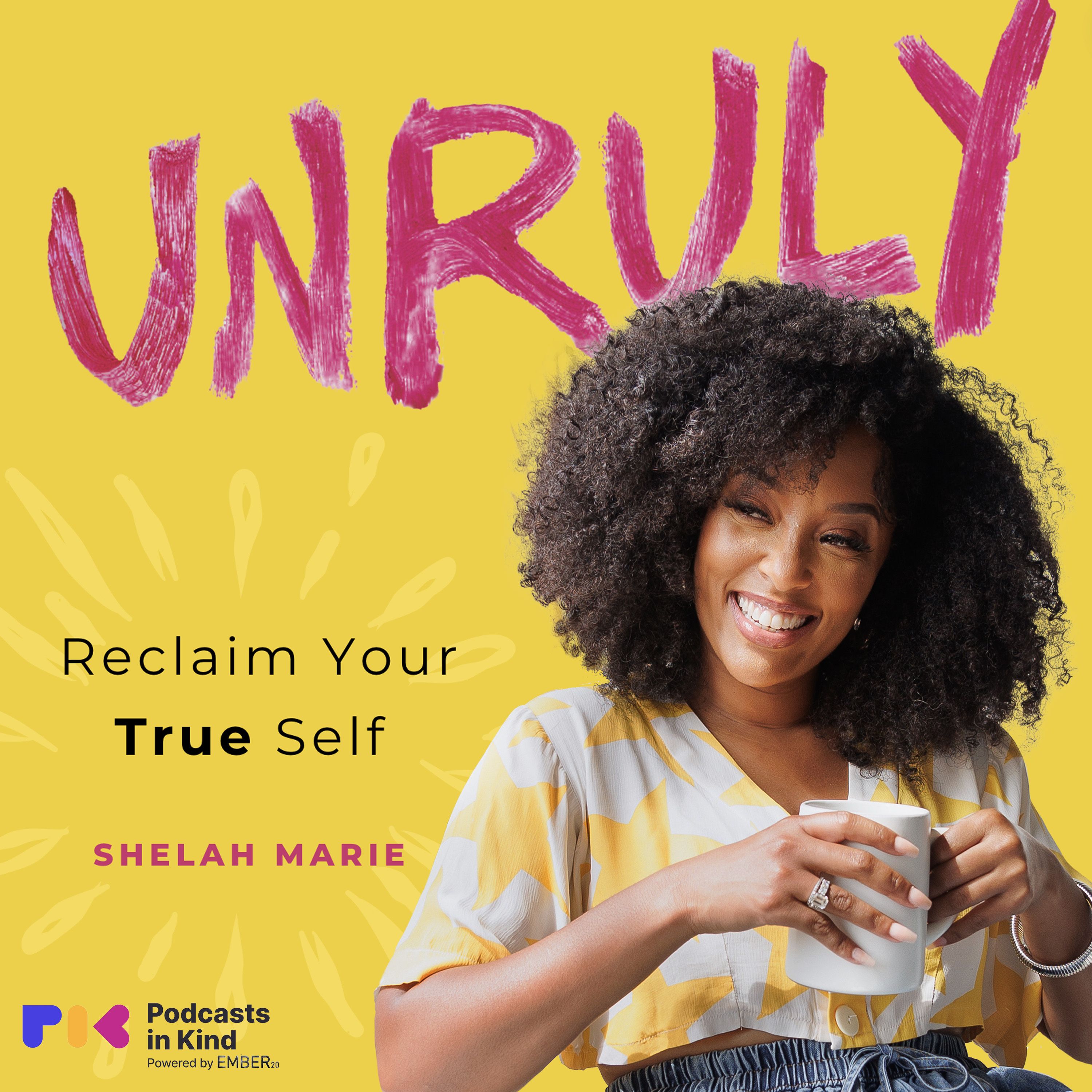
Loading summary
Transcript210 lines
- [00:00]
Ritual
Hey there Ritual. Here to give a big shout out to you for making it through the hectic holiday season. The magic of those family moments, that was you. And now there's new milestones to Prep for in 2025 this new year. Check Clean Quality Pregnancy Nutrient support off your to do list with Ritual. We've done the research to create science backed pregnancy support like our prenatal multivitamin, natalcholine and fertility support. All designed to be taken alongside each other. But don't just take our word for it. They're also third party tested for microbes and heavy metals and clean label projects certified. So whether you're trying, thinking about trying or already there, we don't have to tell you that prioritizing yourself can be the hardest part. That's why we're helping you get started today with 30% off a three month supply for a limited time@ritual.com podcast. These statements have not been evaluated by the Food and Drug Administration. This product is not intended to diagnose, treat, cure or prevent any disease. Big shout out to you for making it through the hectic holiday season this new year. Get Clean Quality Pregnancy nutrient support off your to do list including Ritual's best selling Essential Prenatal multivitamin designed with 12 traceable key ingredients to support a healthy pregnancy. With big changes coming up, take the small steps now and start today with 30% off a three month supply@ritual.com podcast. These statements have not been evaluated by the Food and Drug Administration. This product is not intended to diagnose, treat, cure or prevent any disease.
- [01:32]
Sheila Marie
Welcome to Unruly. I'm your host, Sheila Marie. I'm an author, a fierce advocate for black women, and the founder of the Curvy Curly Conscious movement. In this space, I'm sharing what I've learned on my own journey while sitting down with some amazing women who are all navigating their own paths to healing. Because there's no better time than now to get a little unruly. Welcome back to Unruly. You know, you know, just the podcast where we have conversations that challenge, inspire and transform. And for those of you who don't know, a big tenant. One of the core tenets of unruly philosophy is the ability to choose what you want for your life. And that includes spiritual practices. All right. And so today we're going to navigate the very loaded topic of liberation and spirituality. To help us navigate these turbulent waters, we have my girl Danielle Thomas with us today. Danielle is a public theologian, a speaker, an author and founder of Unfit Christian her new book that I have right here with me, the Day God Saw Me as Black is defined as a genre defying exploration of faith, white supremacy, and the beauty of reclaiming yourself in the process. Danielle, I am so excited to have you. Welcome to Unruly.
- [02:59]
Danielle Thomas
Woo woo.
- [03:01]
Sheila Marie
Thank you.
- [03:02]
Danielle Thomas
I'm glad to be here.
- [03:04]
Sheila Marie
I am so excited. You know, you got this little cute little demeanor, but baby, one thing I.
- [03:09]
Danielle Thomas
Love about you, I'm keeping it cute for now.
- [03:12]
Sheila Marie
Yes, I love it. I just love, love, love. I always ask everybody just cause I don't know, I'm an astrology girly.
- [03:18]
Danielle Thomas
Ha.
- [03:19]
Sheila Marie
Where's the pitchforks?
- [03:20]
Danielle Thomas
Would you like my big three?
- [03:21]
Sheila Marie
Yeah, yeah, yeah. I want to know. Yes, I would like them.
- [03:26]
Danielle Thomas
So I am a Gemini Sun. I am a Capricorn moon, and I am a Sagittarius Rising. I am a Gemini Mars as well. I think my Venus is also in Gemini.
- [03:38]
Sheila Marie
Oh my goodness. I'm sorry.
- [03:40]
Danielle Thomas
Yeah, I have a lot of Gemini placements, including my chiron. My chiron is also in Gemini.
- [03:45]
Sheila Marie
So the Gemini placements makes perfect sense with how you wrote about like your entry point to Christianity and just like how it's almost like you're, you're, you're between these two worlds betwixt and between. And so we gonna get into that. I love that we love betwixt in between on this side. So let me start with a little icebreaker. So I want to ask you, do you have like a favorite hymn or a gospel song that just no matter what, will always lift your spirit?
- [04:13]
Danielle Thomas
Oh, man. Okay, first of all, difference between him and a gospel song. For me, I'm going to answer your hymn question. So great is Thy Faithfulness is my favorite hymn, but my favorite lined hymn. If we want to talk about styles of hymn and singing hymn, it would be Guide Me, oh thou Great Jehovah. I love to hear that line. I love to hear that.
- [04:41]
Sheila Marie
For the people in the back. That could be me in the back. What is the difference between a song and a hymn? I actually don't know.
- [04:48]
Danielle Thomas
So for me like when I think of hymns, I really do think of traditional in the hymn book can open up as a hymnal or also negro spiritual. So things that the ancestors developed, sang and got us over. Hymns, of course, not exclusively written by black folks. But the way in which like black church will carry out a hymn, AKA when you heard me say lying to him is much different than like reading the hymn as it is written. So aligned him in the Baptist tradition. You'll have the person Leading the song, call out the first line, the hymn, and then the congregation will come and join in after. Now, I imagine that tradition probably started out of practicality, of people's literacy skills, but it has evolved over time to really just be this very deep, sacred tradition of traditional music within the black church. So I have different favorites when it comes to that. Now, gospel music, just straight up gospel music, in the words of Kirk Franklin, for those of you who think gospel music is gone too. There is, there is. So gospel for me is everything else right? So, you know, your contemporary gospel, your traditional gospel, AKA quartet music or traditional sense of choir music. But I love gospel. I love hymns. I love music in general. So you could have asked me any genre and I would have had an answer. I love that.
- [06:11]
Sheila Marie
You know, I'm from the theater, so one thing that it's a. It's in many different art forms, but the call and response technique. A lot of the call and responses in jazz and in gospel. And to me, like in the theater, whenever I have a call and response moment, I noticed that, well, let me say this. My entry point into the theater was I started out in white theater, and then I was like, oh, okay, black people. When I go to the theater and it's considered a quote, unquote, black play, or it's a play where there's a. I find that there's such a more. The call and response is like a relationship. The actor does something and the audience is like, you know, they'll take it from church and bring it to the theater. Or, you know, they're just saying, like, you know, they're just. They're very present. It's a very much an understanding that although I'm an actor. So let me say this, let me, let me back it up. Traditional theater is like, I'm an actor, I'm on stage. There's the fourth wall, which is the wall that separates me from the audience. And it's never to be broken. That would be, like, sacrilegious. Like, I'm supposed to be on here doing my complete thing, and you're there witnessing, but I'm not supposed to know that you're there witnessing. It's like we're supposed to both act like we're not. But when it comes to black artists tradition, we are very much like, I want you to know I'm here. I'm speaking to you. I'm giving you feedback. And what I love so much is that it becomes a dialectical thing. It becomes like a relationship. So the actor might Even change their performance or the way that they say something. Picking up off of the vibes of the audience. And then so some people. I remember, to me, when I was in my acting training, the best actors were the ones that could perform in those environments. I know some actors would get very thrown off. So I just love that you. You brought up the call and response. And to me, I feel like we're gonna talk about that. Cause that even when it's in a spiritual tradition, to me it implies a relationship. Somebody's listening, somebody's talking. I'm talking back to you. And so I love that you brought that up. I just went on a tangent for no reason.
- [08:05]
Danielle Thomas
It's fine. I'm gonna actually go with you on that tangent.
- [08:08]
Sheila Marie
Let's go.
- [08:09]
Danielle Thomas
I saw my first Broadway play last year. I went to go and see, like, a show about the Wiz. So the Wiz is like, one of my favorite, favorite, fav. Favorite musicals ever. And so I always, like. I have a very secret dream to, like, one day, like, get a chance to sing on Broadway in the Wiz. Specifically, like, put me at.
- [08:33]
Sheila Marie
Yeah, I'm putting this out to the universe right now.
- [08:37]
Danielle Thomas
It's just. It's one of my favorites. I love it, like, obviously, as a piece of art, but I also very much see it theologically. So, like, I really do love that play.
- [08:47]
Sheila Marie
I absolutely could see your book. It makes perfect sense to me that there's this.
- [08:53]
Danielle Thomas
The way that. This connection there. Yeah. The way that they perform. No Bad News is a different arrangement than, of course, the film. And so it's kind of like, ah. When I first I was like, okay, whatever. Then it finally got to like, that definitely audience interaction piece. And so Melody is performing this piece. And then it gets to very much call and response. Just very much high things. I think black church is high theater. Anyway, so it gets to very high theater. And it's just like. Like you said, it was that intimate moment between us and the actor and us and the stage. But I also feel that way when I went to go see Alvin Ailey. And they get to the Revelations piece.
- [09:34]
Sheila Marie
Revelations. It's always Revelations with that umbrella.
- [09:38]
Danielle Thomas
Yeah. And so, like, it's just. I personally, it's so funny because I never thought of myself as, like, an arts girly because, like, I wasn't in theater. I wasn't. Well, I did play in band for a little bit, but I didn't go through high school. I think I played, like, middle school band for a couple years. The only reason I ended up not Doing it in high school is. Cause, like, the school I went to didn't have a band. But as I have gotten older and, like, kind of put myself back into, like, the art space. So going to theaters, going to the opera for the first time. I saw Porgy and Bess. That was my first opera. I didn't think I was an opera girly. And then like. Like, I go and I look into this space. Yeah. And it's like, oh, my God, like, this is beautiful, the way these people's voices and movement and performance. And so, like, I have found such a deeper connection spiritually to the arts. And I'm so much in a space where I think there's so much richness that a lot of us miss from the arts because we don't think there's a place for us. But there is. And there are many places and spaces for us that really do acknowledge the cultural impact or cultural intent of what it is to live, be, and move as a black person in this country.
- [10:58]
Sheila Marie
So, yes, I think that, to me, I don't get to talk about the arts as much as I want to. You're making me realize this now because I'm like, me. You could riff for days, but I really think there is communion. That's the way that I felt when I was in the theater, either on stage or in the show. Also, too, when I am in the theater, like, the thing is now I primarily engage with digital. Like, Right. It's Netflix. It's different. It's recorded. You know, it doesn't matter what you do. You could scream at the screen. They're not going to hear you. It's not going to throw them off. It is what it is. But in the theater, to me, time stops. I'm not checking my phone. I'm thinking, like, oh, my gosh, if they miss their cue, like, then what happened? It's just, to me, it is such an being present, and everybody in there has to touch and agree. All right.
- [11:49]
Danielle Thomas
Yes.
- [11:49]
Sheila Marie
So we just gonna keep with the theatrical, spiritual metaphors throughout this.
- [11:53]
Danielle Thomas
I love it.
- [11:54]
Sheila Marie
I have one question for you. One more. One more warmup question is. So if you were just gonna create your own faith tradition, what would like, your top, like, one or two commandments be?
- [12:07]
Danielle Thomas
Oh, man. Love yourself as you would love your neighbor. A lot of people can't love their neighbor as themselves because they don't love themselves. And sometimes people do better at loving others than they do at loving themselves. So the same love and compassion that you would give to other people learn to Give that to yourself first. Because when you can be self compassionate and you can love yourself, it means that you have no choice but to live in this world in a way that is empathetic and thoughtful everybody else around you. So that would kind of be my first thing. Second thing would probably be like, remember that you are made in the reflection of God. So that means it comes with all of the power and beauty and creativity that we assign to God and that we admire God for. If you are made in reflection of God, that means you are also imbued with that power. So there is nothing that you can't change when you realize that all this shit is made up. Literally, literally everything and every system that we adhere to is made up. And so you have the power to recreate things in an image that is better for you. Yeah, you get to choose.
- [13:21]
Sheila Marie
That is the main thing, if you take nothing away from this unruly podcast, is you get to choose. I think women need permission. Sadly, a lot of us just need permission. Like you said, this is just permission to practice in a way that feels good to you. I want to read a little bit of your book. So this is from the chapter White Man's Religion. It's the opening to the chapter. First of all, if you have not picked up Danielle Thomas book, her book is called the Day God Saw Me as the Journey to Liberated Faith. If you have church hurt, if you are struggling to figure out where you lie in the spectrum of spirituality, if you are interested in deconstructing and decolonizing your personal experience with the black church, this book is probably perspective shifting, opening, mind opening. It's so good. Danielle, I am so proud of you. I see you all the time speaking on socials, and every time I see you, I'm just like, I love her because you stand on exact. You're standing completely in your square. So this is how you start out. White Man's Religion chapter. I do not and cannot subscribe to a faith in a God that ignores how race, class, gender and other forms of oppression intersect and compound, nor one that asks me to do the same. And I wanted to start here because I really feel like this intersects with my book too. Because I'm like, I'm writing a self help book. Ah, blah, blah, blah, self love, self love, ooh, self development. But I'm not gonna do this if I'm not gonna talk about the ways in which race, class, gender affect your ability or inability to self actualize.
- [15:04]
Danielle Thomas
Yeah.
- [15:05]
Sheila Marie
And I appreciate you starting there. So tell me, because your work you really combine theology with social justice. And I want to ask you, why are these, this intersection, so important to you?
- [15:16]
Danielle Thomas
So it's funny that you asked that, because I actually dug back to find what my first social post was when I first started using the hashtag unfit Christian. And at that time, it was actually the unfit Christian. And I'm actually going to read it verbatim. I said, when will the black church start calling out the sin of political apathy that keeps us socioeconomically bound, chronically and generationally poor and ignorant as passionately as they fight homosexuality? What greater sin is it to live in poverty when we serve a God of all sufficiency? What greater sin is it to have communities of broken families, low education, and chronic low income for continued generations? When God called us to greatness and I hashtagged it disillusioned Christians and hashtag the unfit Christian. And so from the very beginning, I've always been very much like, the personal is political and the political is personal. And I believe that people carry God with them that, you know, are theists, of course. They carry what they believe to be true about God and the character of God into everything that they do. And politics is no exception. Politics, religion, sex. How people feel about those three things will tell you everything you need to know about that person. And all three of them overlap. People like to separate. They're not separate. And so when you understand what do.
- [16:48]
Sheila Marie
You mean, they're not separate.
- [16:49]
Danielle Thomas
So they're not separate. So the way people feel about sex can tell you a lot about how they feel about their politics. And the way they feel about their politics can tell you a lot about how they feel about God. And how they feel about God can also tell you a lot about how they feel about sex, right? So these things and these experiences and how you develop your ideology around them usually are very much intersectional, as opposed to just being completely separate. So for me, God is a God of justice, and justice means actually doing the work to bring balance and equity. I don't believe that. I don't necessarily think about it in the terms or the principles of voodoo, which is that there is no light and no darkness. There is only balance, right? And so for me, when I look at God and I think about the concept of God and being made in the image of God, I don't believe that what makes up my visual, my race, my gender, my body size, my ability, although disability is not always visible, right? So when I look at all those things and I see those identities being treated as less than God, then that is unjust. So there is no separation for me. If I am a child of God and made in the image of God, it means that you cannot continue to marginalize me based on the physical phenotypes that I have. That you have decided as a society is necessary as a counterweight of deficit to uplift the opposite. So my blackness is necessary to uplift white supremacy. My fem, you know, female identity as a cisgender woman is necessary to oppress a trans people or non binary people and be oppressed by cisgender men or heteronormative, you know, masculinity. None of those things feel like God's justice to me. So when we talk about the scriptures, where it says, walk humbly, do justice, have mercy, those things are not aligned to an experience where we try to separate religion and politics, religion and justice. It is unjust. It is treating the reflection of God poorly. So those things are always intertwined for.
- [19:08]
Sheila Marie
Me, where two or more are gathered. Okay.
- [19:11]
Danielle Thomas
Because where am I in the midst.
- [19:13]
Sheila Marie
Okay. Because I feel like this is what I feel like I'm going through my own deconstruction and trying to figure out where I stand as well. And I'm like. But church is everywhere to me. I commune with trees. You know, like when I'm talking to you right now, like, I feel goosebumps.
- [19:32]
Danielle Thomas
Yeah.
- [19:32]
Sheila Marie
Because you're naming, and you're probably. So many people listening are probably having this experience, too, that you're naming and giving language to things that we might have felt but not known how to articulate. Yeah.
- [19:45]
Danielle Thomas
And it's so interesting that you say you talk to trees. That's a hoodoo practice. I tell people, if you're having problems, your home, talk to the trees on the land. If you are concerned about losing your home, talk to the trees on your land. Talk. Those trees have been there longer than you have. They've been there longer than the home probably has.
- [20:04]
Sheila Marie
It's a fact.
- [20:05]
Danielle Thomas
Talk to those trees.
- [20:07]
Sheila Marie
And who taught us? That's wrong. That's crazy. But I did want to back up and say, for those who are not familiar with your journey, you're a preacher's daughter, correct. Or pastor's daughter Again, I am a preacher.
- [20:18]
Danielle Thomas
Correct.
- [20:19]
Sheila Marie
Okay. Yeah. Yeah. Pk Is that what it's called? Okay. And so can you tell us from being raised, I mean, in the home, I'm sure you lived, breathed this from the time you were young. How did you get to unfit Christian? How did that happen?
- [20:36]
Danielle Thomas
So for me, yeah, I grew up. My father Was a pastor. Was in past tense. My father passed in 2016. He was a preacher. Let me be very specific. There's a difference. He did not pastor a church. He was a preacher.
- [20:47]
Sheila Marie
See, I feel like I'm learning because I sometimes use those words interchangeably and that's not correct.
- [20:52]
Danielle Thomas
Okay, yeah. Cause some people actually have like a church that they pastor, so you would call them a full on pastor. My father was a preacher, so he was ordained as an elder to preach. And so he would go to different people's, different pastors, churches and preach it. But my father actually never pastored his own church. So it was something he thought about doing but ultimately never did. But nevertheless, growing up with him. And then my mom, you know, I called myself Baptistal, so my dad was Baptist, my mom Pentecostal. It is because I grew up in a hyper religious environment. Really, the Unfit Christian came around. Yeah, you know, I tell this story in the book, so I'll try to keep it brief, but basically when I went to college, that was kind of my battleground. It was very much a space of like, I'm learning all of these things in class and they make sense, they're logical, I agree with them at an ethical point, but they don't align with what I learned in church. And so for me, it became very much a point of like, I'm either going to find a new way of seeing and understanding God or I'm gonna walk away from this altogether because I don't want to continue a faith practice that makes me hate myself. Not just other people, it makes me hate myself. I can't even enjoy sex because I hate myself because of my religious upbringing. I can't enjoy my pleasure because I hate myself because of my religious upbringing. You know, all this constant space of like self deprec disguised as like deliverance and like healing and all of these things that just did not feel like they aligned with what I believed. I had to find a new way to understand God and to see myself reflected in God. So basically, honestly, the beginning of Unfit Christian was really just me deconstructing and decolonizing my faith out loud. That's really what it was, was me really kind of just doing it publicly, what a lot of people now have the privilege to do privately. But because I did it public, I can give people the instructions of how they can do it privately and on their own accord and how it works for them. But that's how I got here was really just kind of growing up in that oppressive system and then finding something New and finding identity of myself in college. That just really helped me shift what I think honestly was just a very childlike mentality of obedience without question. That was my religious upbringing, was a lot of obedience without interrogation. So like, what am I saying yes to?
- [23:32]
Sheila Marie
And let me tell you, as a child, I don't know if you were anything like me. I doubt it because I feel like it wouldn't have fly in your household. But I always had so many questions, like, about everything. Life in general. I'm watching a show, anything. How does it work? Why? In my mind I was. I don't know. I could be a cool stick, neuro spicy, all that. But to me, I wanted to. Like, if I'm. I'm asking because I don't understand. I'm not asking because I'm being disrespectful. I'm not challenging you, but I don't understand. And I remember like when I would. I would go to sleep and pray at night, I'm like, so wait a minute. You said that you created us in your image. Well, so then why would you create hell for us? You made that. You said you loved us so much. I remember just being like in Bible study, getting in trouble because I was just literally asking.
- [24:23]
Danielle Thomas
I was fortunate. I was very fortunate to have parents who prioritized education. So there was never a problem with asking for.
- [24:32]
Sheila Marie
Shout out to your parents.
- [24:33]
Danielle Thomas
Listen. I could not have asked for better parents who. My mom always says that, like, I was her ministry and raising me and being a parent to me was her ministry. That's beautiful. Yeah. For that she was just very much like, I want you to grow up and be a whole person and to like, be a whole woman. And like, I was raised with a very strong black ethic in my household. This is not something I developed in college. My dad used to call my mom Lil Louis Farrakhan, if that makes any contextual sense. For those who are listening. Like, no white dolls. It don't look like her. You can't bring it in my house. Like, my mother was very emphatic on raising me to love my black self in a world that she knew would not love me. And my father was very emphatic of, like, he's the reason I love politics. We used to sit together and watch like. Cause he watched CNN all the time. So we would watch that and documentaries. And I used to watch C Span for fun. Yes. So I had great parents who had no problems with me asking questions. And more than that, like, they were my advocates. When I would Ask questions in church. So they would never allow anybody to be like, you know, shut up. Don't ask any questions. Like, no. I had par. Really very much supported doing the necessary interrogation of like, why do you believe what you believe? I just didn't have the same courage or I would even say information to say, you know what? This religion part is worth questioning too. I question things that. It makes sense in the Bible all the time. But just like the overall faith practice, the way that I question and interrogate it now, it's something that came to me as an adult and it came to me as a necessity of saving my faith at all.
- [26:28]
Sheila Marie
Have your parents. I'm sorry, so has your mother.
- [26:31]
Danielle Thomas
You can ask about both.
- [26:33]
Sheila Marie
Okay. Cause I wasn't. I don't think your father was. Your father's been. Not on this earth when you published this book.
- [26:39]
Danielle Thomas
No, but my father is very much part of it. As my best friend said when I.
- [26:43]
Sheila Marie
Mentioned this story, it's very present in here.
- [26:45]
Danielle Thomas
Yeah. And she. She said every debate that you got. Cause we would have debates about faith. And like, one of the ones I remember the most is we were talking about his own evolving ideology around like, same gender loving people. As you notice, in the book, I talk about my father's best friend, Uncle James. They have been best friends since high school. Uncle James is very gay. Flamboyantly gay. Right. Like, there's no question if you had ever met Uncle James if he was gay or not. Right, right. And of course, he passed about a year before my father passed. And so we talked about it and we would debate and he would be like, you know, maybe the Bible doesn't mean this or maybe it doesn't mean that. And so my best friend reminded me, you know, of these conversations and she was like, all of that prepared you for this book. So he is as much a contributing factor of this book as my mom is.
- [27:38]
Sheila Marie
So what do your. What is your mother's reception to the book and your family?
- [27:43]
Danielle Thomas
She loves it. She is so proud of me. Of course, I had to ask her permission to include her story, which I talk about in chapter three quite extensively. And she's read, you know, she read it while I was writing it. She read it when it finally came together and everything. And so, you know, she's just proud as she's peacock proud of me. Oh, I love that.
- [28:05]
Sheila Marie
All right, so let's dive a little bit more into women when it comes to women and how they're reflected in faith. I wanna read another part from your book that I Absolutely loved. And you said, what we call things matters. It's why the church will call my gift of future casting prophetic within its walls, but call it witchcraft outside of them. Yeah. And this, that hoodoo, that whole, like, if God won't do it, the hoodoo lady. I can't remember all this.
- [28:36]
Danielle Thomas
If Jesus won't fix it, the hoodoo lady will.
- [28:39]
Sheila Marie
There you go. Jesus.
- [28:39]
Danielle Thomas
Everybody loves that title.
- [28:41]
Sheila Marie
It's all of them black and ugly as ever. All of it. I was like, this book is so. I feel like this is a book I'm gonna reread over and over again.
- [28:51]
Danielle Thomas
That's the goal.
- [28:53]
Sheila Marie
You've done an amazing thing, I think, for years to come. You will be rewarded in so many ways for what you put out into the world. You know, they'll call us. Yes, absolutely. You know, I've been called a witch a lot.
- [29:06]
Danielle Thomas
Yeah. Whoa. It's me.
- [29:12]
Sheila Marie
So it feels ok. But all the time. I got my sage, I got my crystals, I got my thing. I talked to ancestors.
- [29:21]
Danielle Thomas
You talk to the trees.
- [29:22]
Sheila Marie
I talk to the trees. I do all the things, you know, And I always thought it was interesting. Well, wait a minute. But aren't we all engaging in ritual? And I love that you talked about ritual. Black Eyed peas is a ritual. Cleaning your house before New Year's, the 31st, or whatever the first comes is a ritual. It's a ritual. Isn't drinking the blood of Jesus a ritual?
- [29:45]
Danielle Thomas
It's a ritual.
- [29:45]
Sheila Marie
And you guys are worshiping your ancestor. Isn't that an ancestor?
- [29:49]
Danielle Thomas
That is a master ancestor.
- [29:51]
Sheila Marie
So when it specifically comes to women, because I feel like when it comes to magic, when it comes to, you know, this mysticism, women are much more likely to be demonized for it than men. Okay? Even the history of Salem and all, it started with Tituba, started with women. So I want to know from you, tell us more about how you feel about that. How does the black church support or not support black women's magic and ability to grow?
- [30:22]
Danielle Thomas
Let's talk about starting from Christian theology. You do not get the gospel without.
- [30:27]
Factor
Women ready to optimize your nutrition. This year, Factor has chef made gourmet meals that make eating well easy. They're dietitian approved and ready to heat and eat in two minutes.
- [30:37]
Sheila Marie
Minutes.
- [30:37]
Factor
So you can feel right and feel great no matter what life throws at you. Factor arrives fresh and fully prepared, perfect for any active, busy lifestyle. Lose up to eight pounds in eight weeks with Factor Keto meals based on a randomized controlled clinical trial with Factor Keto results will vary depending on diet and exercise. With 40 options across eight dietary preferences on the menu each week, it's easy to pick meals tailored to your goals. Choose from preferences like Calorie Smart, Protein plus or Keto Factor can help you feel your best all day long with wholesome smoothies, breakfast grab and go snacks and more add ons. Reach your goals this year with ingredients you can trust and convenience that can't be beat. Eat Smart with Factor get started@factormeals.com FactorPodcast and use code FactorPodcast to get 50% off your first box plus free shipping. That's code FactorPodcast@factormeals.com Factorpodcast to get 50% off plus free shipping on your first box.
- [31:28]
HelloFresh
With HelloFresh you get farm fresh, pre proportioned ingredients and seasonal recipes delivered right to your doorstep. Skip trips to the grocery store and count on HelloFresh to make home cooking easy, fun and affordable. That's why it's America's number one meal kit. It's easy to find time to eat well with 50 wholesome, hassle free meals to choose from each week delivered to your door. Their lineup of prep and bake meals come together with minimal mess and only five minutes of prep, so your oven does most of the work. Not you. Get up to 10 free meals and a free high protein item for life@hellofresh.com hellofreshpodcast One item per box with active subscription free meals applied as discount on first box. New subscribers only. Varies by plan. That's up to 10 free HelloFresh meals. Just go to hellofresh.com hellofreshpodcast hellofresh America's number one meal kit.
- [32:25]
Danielle Thomas
It is a woman who first carries the gospel of the resurrection of Jesus Christ. Jesus Christ first appears to the women. He does not appear to his male disciples. He appears to the women. It is a woman who first carries the gospel of a risen Savior. It is without a woman you don't even get the birth of Jesus Christ right. So a woman quite literally conceives, carries and births the Savior. Before we get to a point of who first tells the Gospel of Jesus Christ. So when you look at it from that perspective and you think about the number of churches that form a theology based on First Timothy and Paul and his bullshit, Paul don't even know Jesus like that. That's always my number one GR is there are a lot of Paulinian Christians and everything that Paul says, Paul don't even know Jesus like that.
- [33:14]
Sheila Marie
He don't even know him like that.
- [33:16]
Danielle Thomas
He don't know him like that. But you get all of this and you get all of this rhetoric around, like, what women are supposed to do in the church. Who benefits from that oppression? Men who are trying to form a patriarchal form of power, particularly in a black church where the pulpit is the last bastion of power for black men who otherwise do not get access to white male patriarchal power in the world. Right. Even mentioning Salem, white women like to co opt that movement as, like, we're the granddaughters of the witches you couldn't kill. No, you're not. The reality is the Salem witch trials started with the investigation of black people.
- [33:56]
Sheila Marie
Yep.
- [33:57]
Danielle Thomas
Like, it starts there with black women doing these powerful works, indigenous women doing these powerful magical works. When you think about everybody else's culture, pre US culture of assimilation, like women being imbued with magical powers was never really an issue. It was something that was praised. It was something that was worshiped. So when you ask me, like, why I think the target is, it's because there's a benefit to that oppression. If you can tell women or disempower women from remembering just who they are, they will begin to tolerate all the bullshit that you put in their face. And so many men profit from women's disemp, profit from it in their marriages, because a lot of women start to do a lot of domestic work that they otherwise would not do or at least do without balance if they did not believe that, like, the achievement of marriage is the pinnacle of their womanhood. Right. And so, so many of us are convinced religiously to be subservient instead of walking in partnership. For me, it's not about a woman leading a man or a man leading a woman or a woman leading the relationship. You know what I'm saying?
- [35:13]
Sheila Marie
I'm so sick of it. This subm. If we was naturally submissive, you would not be on these podcasts telling us all the time to be it. We would just do it.
- [35:22]
Danielle Thomas
Cool.
- [35:23]
Sheila Marie
Just like. And why are you so invested in that? I'm done.
- [35:27]
Danielle Thomas
Because that is what is necessary to create apocryphal or fake power. I tell people this a lot. In the book, so much is crafted and created to sustain ill gotten power. This is my theological position. There are people who are trying to reflect God and then there are people who are trying to be God. And so when you look at all of those who have to keep emphasizing things that are out of natural order, such as submission to patriarchy and the inferiority of blackness or brownness or yellowness, think about Asians and the inferiority even then of Southeast Asians who turn out to be a little more brown. All of that benefits these systems and structures of hegemony. White supremacy is just an arm of hegemony. Patriarchy is a arm of hegemony. Misogynoir and misogyny are just arms of hegemony. The whole part, or whole point, rather, is to have power. And so I believe that is why it is so emphasized. Especially black women. Right. I think this applies to more than one race. But I'm speaking from my experience as a black woman is that so many of us are trying so hard to be good, and so we look for that salvation and that goodness and that holiness inside of our religious practice. And so a lot of us are willing to take on these deeply oppressive realities because we wanna be good, we wanna be holy. Cause our blackness, by default is seen as everything but. And I think that applies to multiple ra in multiple different segments. I don't know if I should say this. Oh, you definitely should. But I'm going to.
- [37:18]
Sheila Marie
Yeah, you definitely should.
- [37:19]
Danielle Thomas
One thing I've been thinking about in this current political environment is how much I want white women to realize that their men hate them. And it's not just everybody. Like, they don't like you either, right? Come on.
- [37:37]
Sheila Marie
Serena from Handmade.
- [37:40]
Danielle Thomas
Like, it's so unfortunate to me that I don't think a lot of white women recognize the ways in which their men hate them. You look at all these billionaire white males who are forming this oligarchy, and none of them are married to white women. Trump's not married to a white woman, to a US White woman. They are all married to foreign women who may be white and ascetic, but not us born and raised bred white women. Right. Every wife that man has had has been a foreign. Elon Musk ain't married to nobody. Jeff Bezos got him a nice little exotic, right? Like, they all. Mark Zuckerberg, an Asian woman. Like, they had.
- [38:27]
Sheila Marie
So can you give an example, like, give me an example of one way that you're like, they hate you. This is an example because quite literally.
- [38:35]
Danielle Thomas
I have watched white women vote in lockstep with their husbands in order to keep the peace.
- [38:42]
Sheila Marie
But.
- [38:43]
Danielle Thomas
But when we think about a lot of language around the depravity of marriage or the lack of desirability for marriage, in my experience, a lot of that came from white men. Ball and chain.
- [38:56]
Sheila Marie
Yeah.
- [38:57]
Danielle Thomas
Like the describing their wives as just like these weights that they just got. It's just. It's so attached to me, and I hate it.
- [39:05]
Sheila Marie
Right, yeah.
- [39:06]
Danielle Thomas
They actively are voting against just even your care. I don't care if you want access to reproductive care in terms of abortion or not, but literal access to just straight up gynecological care, like it's being restricted and it's being done in such a way where they defend child marriage more than they defend your right to access birth control unencumbered. So they don't even like you from the time that you are born out the womb because they're willing to steal your childhood in order to uphold their masculinity. You only go and get a child when you want something you can control. So these young babies are not even getting a chance to grow into their own womanhood because they have to serve as somebody's, you know, spouse. You can't get a divorce when you're a child. So by the time you become an adult, if you get into a child marriage at 12 or 14, and these are not unrealistic numbers when you get into a child marriage at those ages because nobody thought to protect you, by the time you're 18, you're so fully indoctrinated, you might before you actually leave. And how many children have you been saddled with by that time? How much of your life has been stolen? The fact that there are just, to me, so many ways in which I see white women being unprotected by the very same men that they sacrifice their political power to and for I struggle with it. This is, I think, if that ever became a realization among that community, that is when we will actually really see a really huge political shift in the favor of those of us who still need justice to be adjudicated by law. I'll close by saying this. A lot of black people have a lot of laws that bind us but do not protect us. And so a lot of us who are marginalized identities are living under laws that bind us, but they don't necessarily protect us. And those laws are being made by people who the law protects but doesn't bind. Right. So if you think about just the convict in Chief, you got 34 felony counts that you were convicted on.
- [41:18]
Sheila Marie
Convict in chief is crazy. It took me a second.
- [41:24]
Danielle Thomas
Like, if I got convicted of one thing, I'm going to jail for seven years. You know what I'm saying? Like, whatever the term I'm facing, I'm probably going to.
- [41:32]
Sheila Marie
And then got the nerve to stand on a moral, like a pedestal as if what?
- [41:37]
Danielle Thomas
Yeah.
- [41:38]
Sheila Marie
What's going on?
- [41:39]
Danielle Thomas
Right. So.
- [41:41]
Sheila Marie
Yeah, yeah. You barely can vote. You can't even vote for one. And then here you go. Yeah, you're right. The hypocrisy is loud. Speaking of, like, women and young women being harmed by these ideologies, I want to talk about this clip, which you also commented on socials. There's a clip of a woman, and she's 15 years old, and she's asked to stand in front of a congregation and repent and confess her pregnancy in front of the congregation. Praise the Lord.
- [42:14]
Danielle Thomas
Saints, stand right in front of the congregation. And right in front of you. Don't touch that table. I want to apologize to everybody in here because I am pregnant. I'm sorry, y'all. And I just hope that y'all all forgive me. And while praying for.
- [42:59]
Sheila Marie
And the bishop says, oh, and make sure that she don't have a baby shower. And none of you better go to her baby shower in secret, because we don't celebrate sin. It's a very hard clip to watch. It seems so violent. It's like, to me, if I could point to a clip that is so emotionally violent without actually physical violence happening, because she's up here, and what's missing is the person who got her pregnant, Right? There will be no ch. There will be no service where he's called to the front. Right where he's. He's shamed. It reminds me of reading the Scarlet Letter in middle school where it's only. It's only her. She's gonna wear that a. Yes. She's the only one. And you had a lot to say. Can you. Can you speak to this? Because I think this. This example highlights a larger issue.
- [43:48]
Danielle Thomas
Yeah. I grew up with that, so I could. Literally, as soon as I saw it, I thought back to my memories of young dragged in from the church in the altar to repent for getting pregnant, to repent for the consequences of sex. Right. And even now, I'm just kind of like, what did their sex have to do with me? Right? Like, what? It had no impact on me, my relationship with God, our relationship to the church, any of that. And it's just the theatrics of needing to embarrass young women. That is the shame. Shame is an effective tool, particularly in communities like this. So for those of you who are not familiar with the clip and perhaps not with the church or the denomination, it's an apostolic church, I'm assuming, probably paw. So Pentecostal Assemblies of the World, a very apostolic church's overview. They don't for women. No makeup, no pants. If you ever watch other clips of that church, the women and the men sit separate by gender in the church space. Even if they're married, they sit on opposite sides of the church. Very long dresses, no jewelry. It's very ascetic in that way. I don't wanna say they praise poverty, but I do wanna say they praise a very modest life. Modesty is very heavy. Legalism, AKA all the human laws about what you should or should not do in terms of holiness is very deep in that church space. But no, you'll never see the impregnator. 100% of pregnancies are caused by sperm.
- [45:32]
Sheila Marie
Woo. Fun fact.
- [45:34]
Danielle Thomas
And you'll never see them, you know, being brought to the front of the church. But I know that that is very much a power move and it is unfortunately something that is very normalized. And I think especially now about that part where he's like, no baby shower, no celebration, da da da da. This is very similar the House bill being introduced just yesterday.
- [45:59]
Sheila Marie
Oh, you did exactly what I was going to do. Thank you.
- [46:01]
Danielle Thomas
Yeah. A federal abortion ban coming down in the same week where we just cut off funding and said school age children.
- [46:10]
Sheila Marie
Yeah, yeah.
- [46:10]
Danielle Thomas
Like elementary children should get a job to work in. Right. If they're hungry, let's put em back in the mines. Basically that's why we call them minors.
- [46:20]
Sheila Marie
Good night.
- [46:21]
Danielle Thomas
It's essentially let's bring back child labor, you know what I'm saying? We don't even love children enough. We love. Here's the thing. The reason that you see so much protection and care around abortion and preborn humans is twofold. One, it is a power move to oppress women and to remove the choice. And I'd go a step further and say to preserve the population of whiteness. I think there's more care about the race and gender of children that we don't abort as opposed to just across the board care. But the second thing that I would say that I believe that particular thing is about. Oh Lord, bring it back to me. You have to edit this out. I had my thought but now I forgot it.
- [47:10]
Sheila Marie
It's okay, we can edit that out.
- [47:13]
Danielle Thomas
So yeah, I think there's a abortion. I forgot just that quick too.
- [47:19]
Sheila Marie
I know, me too. You were talking about the House bill that was introduced and its primary functions. You said one is to control women. Two, population.
- [47:31]
Danielle Thomas
Control population.
- [47:32]
Sheila Marie
White babies.
- [47:33]
Danielle Thomas
Yeah. Of population in general. I think there's a control factor there. But more than that, I just think. Oh man, it was good too, Was a good point.
- [47:43]
Sheila Marie
But it'll come back, it'll come back, it'll come back.
- [47:47]
Danielle Thomas
But no, there is very much this space around controlling the autonomy of women. Going back to your earlier question about why do we convince women that their practices are demonic? Essentially it is to disempower them in the same way. Oh, yeah, that's what we were talking about was literally the second reason around that is because it's easy to say, I protected the lives of the preborn. They have no accountability. To give you a fetus is not going to hold you accountable. A living, breathing child can. But notice that that protection and care does not extend beyond that. It is why you can normalize and find some kind of justification for not feeding kids. I don't care what people are buying with their SNAP benefits. I don't care.
- [48:37]
Sheila Marie
I don't care.
- [48:39]
Danielle Thomas
Feed those babies. Feed these people whatever. I don't want hungry people walking around. Like, if I can pay taxes and not consent to you sending bombs to other countries via drones, via drops, all these other. Then trust me when I say I consent to feeding people because I don't want children out here hungry. But you can protest abortion because there's no accountability there. You just get to say you did the right thing and there's no accountability there. Once you understand that abortion, or being anti abortion is actually not biblical, it doesn't have anything to do with the Bible. This is a political construct developed right after passage of the Civil Rights act because you could no longer just openly be racist as your platform now it's gotta be the preservation of life. Mind you, these are the same people who have never cared about preserving any kind of life. They want to fight childcare, they want to fight, you know, social welfare, but nothing on corporate. We pay way more in corporate welfare than we ever do in social. They don't want to have housing as a right. They don't want to have food as a right. But they want to convince you that they are so moral and ethical and they care about life so much that they are fighting the access to a poor.
- [49:58]
Sheila Marie
Yeah, because it's easy. You know, again from the theater, one thing I picked up from, like before I even entered the theater, I had it in me, this idea. I was raised as the only black person in my household. So from a young age, the first performance that I recognized was race. I recognized how individuals perform their race similar to actors performing a role. And when it comes to performance and this whole, oh, the sanctity of life and oh, like, oh, I'm like, it just looks like A moral performance to either assuage. Assuage. How you say that word?
- [50:32]
Danielle Thomas
How you say it? Close enough, you right there. To swage.
- [50:34]
Sheila Marie
I'm close. I'm close, I'm close. To make yourself feel better for the ways in which you're not living up to this moral code that you push on everybody else. And then secondly, I think it's just to show it's just a performance, to solidify their moral standing or something. And I'm just like. I don't know. I feel like the more performance that I see, the louder it gets, the more exaggerated it gets. I'm always concerned that in the opposite direction, there's, like, a lot of heinous shit going on. Like, you know, what are you covering up for? I don't watch hand. I don't. Margaret Atwood and told us already, like, when I watch handmade, like, yeah, okay. Yeah. The more you speak out about something, that's why when people are always like, no, I'm not using no pronouns. They, them, da, da, da, this and that, y'all. So I'm like, why you care so much? Why? What is it there that's triggering you? And. And.
- [51:29]
Danielle Thomas
And I think I'm thinking about. It's interesting that you come up with pronouns, because one thing that really matters to me is, like, people's identities. It's the one reason that I'm always like, no, tell me how to pronounce your name. If it's a little, you know, a little trouble, let me learn and get my tongue to working. Because your pronouns are just as intentional as your name. Your mama didn't just name you haphazardly. Your daddy didn't just name you, like, whatever name you were given. I don't care if it's got 45 consonants in it. I'm gonna figure out, pronounce it in the same way. I can respect somebody's pronouns. Now, I will be honest to say some of these pronouns I just ain't heard of. Right? Like, Z zer, Zimzar. But I'll respect it. I ain't never heard of it, but I'll respect. Because it doesn't cost me anything to respect somebody's humanity, but it costs me.
- [52:18]
Sheila Marie
But you know what?
- [52:18]
Danielle Thomas
You don't cost everything not to.
- [52:20]
Sheila Marie
Yes. And you don't need to understand it in order to respect it.
- [52:24]
Danielle Thomas
I don't.
- [52:25]
Sheila Marie
We don't have to do it because.
- [52:26]
Danielle Thomas
It'S the same way. Like, people are like, what is the first D and D Danielle stand for? You don't even because that is a name that is between me and the people that I want to call me that name. It's a very intimate space, right? And so I. You don't have to understand why it's just literally me saying, hey, respect me so I can respect your humanity and we can all have a deeper respect for one another. I don't need to know why those are your pronouns that you choose to identify. I just need to know that those are your pronouns. And so when people make such a fuss about that, what I really hear is I am so limited in my respect for anybody's humanity that I'm going to go out of my way to bitch about what you're telling me. Your humanity is defined as you just don't respect anybody, including yourself. This is why I say, learn to love yourself as you would love your neighbor. Y'all don't love yourselves enough to learn. Love your neighbor as yourself.
- [53:21]
Sheila Marie
You know, I want to talk about liberation, but before we move on, I just want to end out this segment about women. So if there's someone listening right now who has a very strong relationship to Christian faith, but they also do recognize the ways in which it degrades them as women, what do you suggest?
- [53:42]
Danielle Thomas
God or. Christianity does not have a monopoly on God. You can still love God and you can still feel deeply inspired by the tenets and text and ideas of this faith without thinking that you have to confine yourself to. If I believe some of it, I must believe all of it. There are things I literally call, and this is not my original word, but of course, credit to where it is due with Dolores S. Williams. There are texts of terror in the Bible that I literally will not own as part of my theological framing. And I still mostly identify as Christian. I mean, because that's what I was raised as. But I am so much more competent and confident in the expansion of my spiritual practice because my blackness is older than Jesus. My blackness predates Christianity. My blackness predates all of this theological framework. And we were somebody before this. We had spiritual practices before this. We had deep faith before this. You don't get to this point without that kind of deep faith and relationship to spirit, relationship to nature. We were talking to trees long before we codified it as part of a religious practice. Like, it's so interesting to me. And again, I have to speak to my experience as a black person is that, like, we'll say things like, oh, turn off all these electronics. It's a storm. The Lord is talking. So you believe the Lord is talking through winds and rain. But you are scared and terrified to incorporate that as a practice without feeling that it's witchcraft. You know what I'm saying? So if you're listening to this and you are a woman, I don't care what your race or your gender or. Yeah, your race or your gender, because you could be femme, you can be, you know, a trans woman. You could be agender, like, whatever it is, if you feel some semblance or connection to femininity, you do not have to take the text of terror that say you are less than and apply that to your life. Because Christianity and Christian theology does not have a monopoly on God, who God has said to you that you are and who you believe that you are. That's all that matters. Everything else is somebody else's suggestion. But you and God, your creator, who made you, you know in your discernment, you know in your intuition, you know in your. Whatever you call it, baby, you know who you are and who you feel called to be. Walk in that you don't need permission. And if you do, I'm giving it to you now.
- [56:20]
Sheila Marie
Permission received. There it is. You got it, Stamp. Let's talk about liberation as we come to an end here. I. I could talk to you forever, by the way, about this stuff, but I wanna read something that you wrote because, like, your wr. Profound, I don't even like to paraphrase. I wanna read directly. This is from a social media post on Instagram. And when I read this, I was like, oh, my God, baby, I know they gonna come for her.
- [56:45]
Danielle Thomas
Ooh.
- [56:46]
Sheila Marie
I don't even know how you deal with it, but you said, I beg of you black folks, please free yourself from the shackles of supremacist salvation. Y'all cannot continue to be this delusional going forward. You cleave to slave master ideology, never questioning anything about its intentions or impact. You condemn astrology, queerness, gendered pronouns, television shows and films, and only offer silent thoughts and prayers for hunger, housing crises, child abuse, mass death, political tyranny, tyranny and crooked police. Aren't you tired yet? That's such a mic drop. Like, wow. So can you tell me what does this. What would this, this decolonizing look like on an individual? So if I'm. I'm. Let's say I'm. I'm hearing you, and I agree with some of what you said. What do I do with this?
- [57:42]
Danielle Thomas
The first question and the consistent question you will always have to ask is, who benefits from my oppression? Who benefits from me believing These oppressive truths. So who benefits from me? Just basically, to echo the sentiments of a freaking sitting Congressman, Hakeem Jeffries, God is still on the throne. Who benefits from me defaulting to just throwing it all at God and not having any kind of shucking and driving.
- [58:10]
Sheila Marie
And driving was insane.
- [58:11]
Danielle Thomas
Oh, man.
- [58:12]
Sheila Marie
Stepping fetch me right off. Cause what is that, right? Oh, yes.
- [58:17]
Danielle Thomas
You know what I'm saying?
- [58:18]
Sheila Marie
Oh, I'm like. And, And. And they let. They back there laughing. Sorry, guys. If you didn't see it, was this at the inauguration.
- [58:26]
Danielle Thomas
No, he tweeted this. I know who you talking about?
- [58:30]
Sheila Marie
Oh, I'm talking about a different.
- [58:31]
Danielle Thomas
Yeah, Hakeem Jeffries is the minority leader in the House.
- [58:35]
Sheila Marie
Sorry. Nevermind. Whoops.
- [58:37]
Danielle Thomas
I know who you talk about. You talk about the one that was calling him daddy and basically was praising the Lord. I know you talk about that fool. But that is what happens when you don't decolonize your faith, right? That is what happens when you don't interrogate it. It'll have you trying to put your faith in your salvation, coming through your transfiguration into whiteness. I say this in the book. You literally will start to say, as long as I play the scripting of supremacy and I don't question anything, I don't push anything, that I'll be okay. But if you're on your individual journey, first question, like I said, who is benefiting from my oppression? But B is really like, what do I gain from this belief? How is this adding to my life? How is it shifting my life? Is it pushing me into my purpose? Am I feeling healed from this? Do I feel like I'm healing my generations backwards and forwards from this belief? Or am I just believing something that I was told to believe and never really interrogating if that belief aligns with who I am or who I hope to be? Right? So that personal journey really starts by asking those questions that you are terrified to ask. And that's where many of us start off with the faith is because we have been discouraged from asking those questions. Like you said, you got in trouble at Bible study. Study, Bible study for asking questions, questions about the text, study of the Bible, Right? Like, when you think about it like that, you're just like, that's crazy. But it's normal, right? And so when you understand there are some things that have been normalized, and there are some things that are normal. So, like, what has been normalized is accepting this supremacist theology as like the infallible and irrefutable word of God. And it's just like, is that truly what you think God is saying about you and your black flesh or your womanly flesh or your queer flesh or your sometimes a combination of all three of those things, right? Like, is that truly what God is saying about you? And do you want to be in relationship with a God who thinks the worst of you? That is enough to make you start interrogating and questioning and decolonizing or deconstructing. Deconstructing really means to tear it apart. So you've got to ask questions. You gotta start asking, is this actually what the Bible says? I just heard this verse my whole life, and you've never heard the verse that came before it or the one after it, right? So people can quote Hebrews 11:1 all day long. Now, faith is the substance of things hoped for and evidence of things not seen. How do you get to now if you don't read Hebrews 10, how did you get to now? Right? It's not just saying instantaneous faith. That is a statement that comes after we talk about all the things that built that faith, right? So Hebrews like 10 and like, I think it's 31 till about 36, right? Explains all the ways in which this faith is built, which of course comes from the faith of your ancestors and the faith of your lived experiences of trauma and hardship and being, you know, ostracized and marginalized. That is what builds your faith. It's not just having faith in things that you cannot see. It literally is coming from, well, you've been through all this, so now you can have faith and hope for something greater. But if your hope is only built on, I'm going to get to heaven someday. Whole time you got an average of 74 years on this earth and you just like, I'm just going to live to die again. Like, ask yourself, who benefits from you waiting for heaven in the next life while they get to benefit from your marginalization and live in heaven in this life, they get to live in heavenly ways in this life. So you have to start asking yourself those hard questions. That is the whole purpose of deconstruction. And unlike me, you now have so many spaces at this time because so many of us are publicly talking about it, that you can find community. I was doing this by myself. Was nobody doing this back in 2014 when I started unfit Christian, you know what I'm saying? Like, not to this point, of course. I found a lot of scholarship and scholars at this point, but in the way that I have done it, and building public community in that way. These are not questions that were happening outside of seminary. These were not questions that were happening outside of Hush Heart. But now we have the benefit of more of us, especially black folks, publicly deconstructing and decolonizing. I am grateful to those who are not black who saw the need to deconstruct this faith and the ways in which it contribute to the terror of people who were non white, non straight. So this is a work that we do collectively. I think you have to decolonize the faith in order to deconstruct all of the precepts that uphold supremacist salvation. So, yeah, that's really the boulevard, but that's how we get there.
- [63:45]
Sheila Marie
Yeah. Okay, gps. What is one piece of scripture or one theo, like ideology that you refrained that has brought you the most liberation?
- [64:00]
Danielle Thomas
Oh. Oh, my gosh. Okay. There's a lot of scripture I reread, honestly, and I reframe in a way that feels. That feels better. Right. For me, the first text I ever really reframed was the book of Job. Because that thing was so onerous on me. You gotta have the patience of Job. You gotta endure all this hardship and never question God, right? When I finally actually read the book of Job from, like, chapter one to chapter 42, and I realized that that man spent damn near 40 chapters complaining and lamenting. He did not have no damn patience. None. He was so frustrated and angry and upset. He talking to his friends, he talking to his wife. He talking to the wind. God don't speak to job until chapter 40, right? So from chapter one through chapter 39, this man is like, lamenting like, I can't believe all this is happening to. And there was something so freeing about that because it truly made me say, oh, I have been told to accept my oppression with a smile. There's somebody who's benefiting from me believing that this is biblical and that this is godly and that I'm behaving like Job and I'm gonna be blessed like Job in the end. Cause I'll get all this material acquisition, right? I think people should question why heaven is described in the most capitalist wet dream you could think of. Streets paved with gold.
- [65:36]
Sheila Marie
It's also a socialist wet dre. Low key, everybody.
- [65:40]
Danielle Thomas
Low take. Because you're just in this for. No, you know what? Listen, Everybody's contributing to the same pot, right? Like, but nobody wants to believe that socialism is probably the way forward. In my head, I'm a democratic socialist. So, like, that's kind of More of my political framework. But that was one that I really shifted. There's a verse specifically that I shift all the time, and I use it to explain to other people. And that is a very. Another popular one. Proverbs, trust in the Lord with all thy heart and lean to not to thine own understanding, but in all your ways, acknowledge him and he will direct your path. For most people, that begins and ends with like, well, I'll just trust God and then I'll get direction. The way I reframe that is like, you really have to trust God with all your heart. Which means I have to trust God with the angry heart, the confused heart, the I don't understand heart, the I gotta cuss you out God heart. Like literally all of your heart. You understanding God in a way that is closed, that you can't be your full authentic self with, is you leaning on your understanding and not actually trusting the Lord. The only way you can get your path directed is if you are honest about your location. You can't get GPS directions if you're not honest about your starting point.
- [66:53]
Sheila Marie
Uber can't come pick you up.
- [66:55]
Danielle Thomas
You feel me? The Lyft cannot come pick you up.
- [66:58]
Sheila Marie
If it don't matter where you are, you standing outside. Cause I don't see you.
- [67:01]
Danielle Thomas
You know what I'm saying? You've got five minutes before the Lyft leaves, right? Your Uber has arrived. You're Gonna lose your 6% cash back if you use Uber One for canceling this ride. Like, it's really that. But you really cannot unless you have a true starting location, which is trusting all of your heart to it. So there are just so many texts like that that I, Like, I reread now, for me, the scriptures are. I'm not saying they're not holy and they're not sacred to me, but I read them in a much more metaphysical way now. I read them in a much more philosophical way now. And instead of just like, well, this is what it is and there's nothing deeper to it. The only way I can take back this text is to read it in a different way that feels more authentically aligned to my work of liberation and justice. So, yeah. Yeah.
- [67:56]
Sheila Marie
Okay. Last thing before we get into the toolkit is where are you now? Like, spiritually? What does your day look like? Are you into prayer? Meditation? Do you read the Bible daily? Like, what is your spiritual life look like right now?
- [68:10]
Danielle Thomas
A mess. No, I'm kidding.
- [68:12]
Sheila Marie
I love it. Human.
- [68:15]
Danielle Thomas
I do rituals. I do ritual work. Currently, one of my practices is A daily Oracle card pull. So I read Tarot professionally for clients, but for myself, I've gotten into.
- [68:28]
Sheila Marie
Look at her. She's wicked.
- [68:31]
Danielle Thomas
Very much. But for myself, I pulled Oracle cards. So Tarot, most of you are probably familiar with, but Oracle is another form of cardamom. Cardamancy is literally just using cards to read or predict future predictions. So some people use playing cards, some people use Linderman cards. A lot of people use Tarot, a lot of people use oracles. Tarot is more about understanding the intention behind the card and its imagery and all of that. But Oracle is usually just like, picture word. It'll be like, picture resist. Right. Picture seek deeper. Right. Like, it's not as deep as.
- [69:12]
Sheila Marie
Is your deck with you right now?
- [69:14]
Danielle Thomas
It is, but it's across the room, and I can't get it back. Okay.
- [69:16]
Sheila Marie
I was gonna say let's pull a card, but thank you for that.
- [69:20]
Danielle Thomas
In that sense of, like, that's part of my practice. And I'll ask the deck, like, I'll say the Lord's Prayer to open it up and to call down the spirits. And then I'll ask, like, what do I need to know for the next 24 hours? Right? And Oracle is a conversation Tarot for me. So I am a seer, an oracle, a prophet, whatever you want to call it. I don't need the cards for clients. I tell people the cards are for your comfort, not for my necessity.
- [69:47]
Sheila Marie
But for me, what ways do you see? What's your particular method?
- [69:51]
Danielle Thomas
So for me, I have all the Claire's. I hear it, I see it, I can smell like jk. It just depends on what it is.
- [69:59]
Sheila Marie
Jk.
- [70:00]
Danielle Thomas
It just truly depends on what it is and how I'm talking. But for me, my primary thing is clairvoyance. So that's my favorite one. But I'm also clairaudient in a real serious way, especially when I'm dealing with clients. But for me, my daily practice includes that Oracle card pool and treating Oracle as a conversation rather than a storytelling like Tarot can be. So I do that. I journal. So I'm not a daily journal girl. I'm not gonna lie. But when I need to process something, I will write through it. That's definitely a thing for me. I do a lot of that publicly. Like, so on my patreon, on social media, a lot of those things are thoughts that I've already had and I've talked through and kind of pushed through. But my Patreon, I get a little bit more my personal way. But Yeah, I pray. I feel like my life is a constant conversation of prayer. And then I sit still and I listen. That's a big part of practice too. I read. I read a lot. And so it's not just, it's not just nonfiction. I read, you know, fictional works because I find God in everything. Music is a deep practice for me. So yeah, like a lot of music will speak to me in that way. I have worship in that way. And it's not always gospel. So like that's my practice is what do I feel called to like you? A lot of nature work. So, you know, going out and grounding and earthing, just putting my feet on. It's been a little cold, but we're having a fake spring here in Atlanta, So it's like 60 plus today.
- [71:38]
Sheila Marie
Oh, I know, I forgot. You're in Atlanta and I'm in Atlanta.
- [71:42]
Danielle Thomas
So, you know, we're having our fake spring.
- [71:44]
Sheila Marie
I know it's like 60 degrees.
- [71:45]
Danielle Thomas
Yeah, it's been real nice. So I could go outside and do some grounding. But things like that, that's my practice. Community is a spiritual practice for me. Real heavy. So not just worrying about myself, but checking in on people that I lead, you know, kind of being there, being of service to them. So it's a mess, like I said, but it's my mess and it works.
- [72:07]
Sheila Marie
I love that. And now speaking of mess, we're going to leave behind something for our listeners. So I always like to end the interview on with the toolkit. So something that they can take away. If someone is like on the cusp of like maybe starting to interrogate their faith on a deeper level. Is there any particular tool that you can leave behind? You've left behind so many. But is there anyone that you can add to their toolbox like a take it with them?
- [72:32]
Danielle Thomas
Yeah, aside from my book the Day God Saw Me as Black, the Trinity to Liberated Faith. Honestly, one of the tools that I would leave you with is to stop seeking out specific religious community and just seek out community. Community is the way forward. So many of us think that we'll find that deconstruct itself in a new church or in a new, you know, group and you know, gathering. That's still very relig a lot of my deconstruction. That was the room that was made for me were by people who were not religious, but spaces that affirmed who I was. So getting into more woman centered spaces helped me getting into more spaces that really focused on justice and liberation were pertinent for me. Like I Said doing a lot of deep reading. One book I would strongly recommend is the Spirit of Intimacy by Sibonfu Somme. It's a book that I started reading in undergrad and I read it occasionally, like probably every three to five years. And it's a book about relationships, but it's really a book about how we relate to one another. It's not your typical like self help relationship book. It's about or it patterns itself after the religious rituals, I'm sorry, the relational rituals and practices of African people. And I can't recall what specific cause. I wanna say it's Burkino Faso, but I don't wanna lie.
- [74:15]
Sheila Marie
Please go ahead.
- [74:16]
Danielle Thomas
But it's somewhere West African. If you look up the book, it's there. It's a West African tribal traditions. But the reason I read that book so frequently is because it addresses every area of life and bucket that you would think of. Finances, sex, sickness or wellness identity. It talks about religion, it talks about all those things and how they influence how we see one another. So yes, it's talking about romantic relationships, but it also talks very heavily about community. And the one thing you're going to need in your deconstruction journey is to form new community. Because if you're leaving a church, that community will not be your community anymore. Because what they believe is no longer what you believe. And they gonna love you with the love of the Lord. But they may not be able to make room for the new you that is evolving. And so now you need to learn how to form community in ways you did not have to know when you were going to church. All you gotta do is become a member and you almost instantly become part of community. But it's the same thing when you decide to leave the church. You also become a banished member of community. So learning how to see people in a new respect as it relates to yourself and the world around you, that is definitely another book I would recomm to help you begin to identify communities that might be better suited to you than the one that you're coming from. So I hope that's helpful.
- [75:45]
Sheila Marie
Yes. Wow. Danielle, thank you so much. This was incredible. And I feel like, I just feel as I'm recording it, I've gained so much and I know that everyone listening to this will gain. And I just want to thank you. I really want to thank you for being so bold and being so courageous. It takes a certain level of courage to do this work privately. It takes another level to do it publicly. So I just want to say thank you from one spiritual, curious, learning, girly to another.
- [76:17]
Danielle Thomas
You're so welcome.
- [76:18]
Sheila Marie
Everyone listening. Where can they find you? Where they want to work with you. They want a reading, they want your book. Where can they find you? All the things.
- [76:25]
Danielle Thomas
I'm everywhere. So on all social media, I'm always fit Christian. You ain't got to search too far. And My website is unfitchristian.com. all of my services are there. Of course you can find my book wherever books are sold, including your local Barnes and Noble. I am fortunate in that Barnes and Noble actually does carry my book, so everybody can say that. So if you want to pick it up there, please shop local. If you can support an indie bookstore, if they don't have it in stock, they can order it for you. But yeah, that's how you find me. I'm all over social media, nfitchristian. I'm more active on some platforms than other, but threads, I'm on mostly all of them.
- [77:05]
Sheila Marie
Instantly on threads now.
- [77:06]
Danielle Thomas
Yeah, so I see.
- [77:08]
Sheila Marie
I like threads.
- [77:09]
Danielle Thomas
Me too.
- [77:10]
Sheila Marie
Thank you, Danielle. I hope this isn't our last conversation.
- [77:14]
Danielle Thomas
And I. I'm sure it won't be.
- [77:15]
Sheila Marie
And I hope this isn't your last book. I don't think it will be.
- [77:18]
Danielle Thomas
It's not.
- [77:19]
Sheila Marie
No, it's not. You got more of a. I'm already.
- [77:20]
Danielle Thomas
Working on the next one.
- [77:21]
Sheila Marie
Yeah, you are. I know it, I feel it. And just thank you. I really. I really appreciate all your insight and I just. Again, I'm just thankful. Thank you for having us and thank you for joining us, son Unruly. I appreciate it. Thank you for having me and thank you for listening. I love you. Down Know the deal. Please, in the words of Jesse Woo, subscribe, subscribe, subscribe, subscribe. So please subscribe. Share this podcast we it really helps us. All the numbers make the difference. So share it. Like it? I don't know, just do stuff, interact with it. Tell the algorithm you like me and I'll see you on the next Unruly. We love you. Down.
- [78:08]
Danielle Thomas
Then.
- [78:08]
Sheila Marie
And to the rest of the unruly community, if you have something on your mind, a question or something you want me to answer, just send in a voice note@speakpipe.com unruly I can't wait to hear from you. Thank you so much for listening. Be sure to follow or subscribe so you never, ever, ever, ever miss an episode of Unruly.
- [78:32]
Danielle Thomas
SAP.