← UNRULY WITH SHELAH MARIE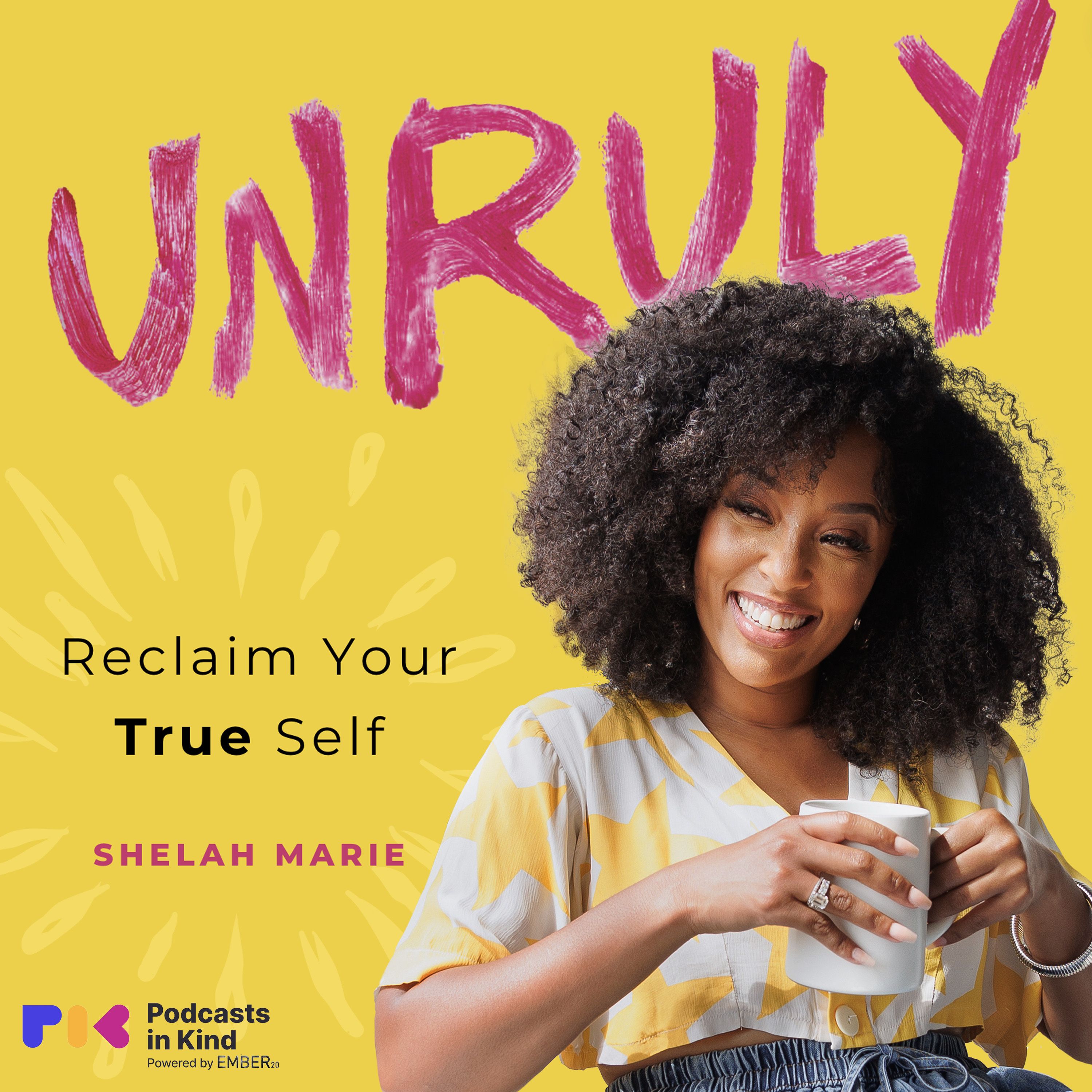
UNRULY WITH SHELAH MARIE
34: Your Body Knows: Healing Outside the System ft. Walda Laurenceau
00:57:42
Loading summary
Transcript133 lines
- [00:02]
Lowe's Advertiser
Memorial Day deals are here at Lowe's. Get up to 40% off select major appliances, including Samsung. Plus save an extra $50 on every $500 you spend on select major appliances. $396 or more like the Samsung Bespoke AI laundry combo, the largest, capacity, fastest all in one laundry combo available that washes and dries in one machine. Lowes we help you save ballot 515 through 618. Selection varies by location. Total savings varies based on purchase amount. See Lowes.com for details.
- [00:31]
Azure Standard Representative
@ Azure Standard we believe healthy food shouldn't be complicated. That's why we've spent 30 years delivering clean organic groceries and earth friendly products to families who care about what goes on their plates and into their lives. From pantry staples to wellness essentials and garden ready seeds, everything we offer is rooted in real nutrition, transparency and trust. Join a community that believes in better naturally. Visit azurestandard.com today and discover a simpler, healthier way to shop for the things that matter most.
- [01:03]
Sheila Marie
Welcome to Unruly. I'm your host Sheila Marie. I'm an author, a fierce advocate for Black women, and the founder of the Curvy Curly conscious movement. In this space, I'm sharing what I've learned on my own journey while sitting down with some amazing women who are all navigating their own paths to healing. Because there's no better time than now to get a little unruly. Hey there beautiful people. Welcome back to Unruly. It's your girl, Sheila Marie. And today we are exploring healing, but not the kind that comes from a bottle. No shade. Because many of us Black women, you know, Western medicine isn't always enough. Sometimes it rushes, sometimes it misses things, sometimes it medicates instead of listening. Wow, that was bars. And it rarely treats you as a whole person. So what else is out there? What other healing modalities are there for us to care for ourselves in ways that feel more rooted, more embodied and more ancestral? Well, we have the answer. Sway. Today we have the beautiful and lovely Walda Lorenzo. She's a licensed acupuncturist, a herbalist and founder of Root and Essence Acupuncture in Brooklyn. Shout out to BK Walda's journey to healing started not in a clinic but in her culture. Drawing on her Haitian roots, time spent studying with indigenous healers in Guatemala, and a background in both Eastern and Western herbal traditions, Walda brings us a rare, layered perspective to what care can look like, especially for us. So let's get right into it. Walda.
- [02:46]
Walda Lorenzo
Welcome to Unruly thank you for having me, Shayla. Yay.
- [02:50]
Sheila Marie
And for those of you who cannot see Walda, because most of you are gonna be listening to this, although we do have some clips on socials that'll be video. Walda is absolutely stunning. Like, if you told ChatGPT, be like, please make a healthy and happy beautiful woman that can give me sage advice, it would be her. So I am so happy to have you. I want to actually start with some quick, rapid fire icebreaker questions. So these are questions that are going to be asked fast, answered fast. Okay.
- [03:22]
Walda Lorenzo
Okay.
- [03:23]
Sheila Marie
I know they're going to be kind of hard, these ones. I kind of made them a little challenging, you know?
- [03:26]
Walda Lorenzo
Okay. And all right, here we go.
- [03:28]
Sheila Marie
So what's something your body taught you this week?
- [03:31]
Walda Lorenzo
Oh, my body taught me this week that I need to sit down when I get overwhelmed.
- [03:40]
Sheila Marie
If you had to choose one, would it be acupuncture or cupping?
- [03:46]
Walda Lorenzo
Right now I'd do some cupping.
- [03:47]
Sheila Marie
Okay, great. If you only had to pick one, what would you prioritize? Healthy diet or exercise routine.
- [03:55]
Walda Lorenzo
Ooh, that's tough.
- [03:57]
Sheila Marie
Yeah, I know, right?
- [03:57]
Walda Lorenzo
Oh, wow. I think I would do movement. I would do some type of movement, because sometimes you just need movement.
- [04:05]
Sheila Marie
Okay, if someone dropped into one of your sessions unexpectedly, what would surprise them the most?
- [04:13]
Walda Lorenzo
If they dropped into one of my sessions unexpectedly, they'd probably realize how much I actually sit down and talk with my clients. I spend a lot of time heart to heart conversations, just really trying to delve into what we're really going to be working on.
- [04:28]
Sheila Marie
Wow, I love the sound of that. Okay, so you're making tea for your younger self. What's in the cup?
- [04:35]
Walda Lorenzo
Ooh. I would give myself some oat straw, which is a great nervous system replenisher, and some lemon balm, which helps to settle and calm the mind of anxiety and anxious thoughts.
- [04:52]
Sheila Marie
Oh, you are really reminding me that I really need to take tea more seriously. My mom's Cuban, so I'm like a coffee girl. Like, I just love coffee. And I'm like, tea, eh? If I have to drink something, I'm gonna drink coffee. But there's so many healing benefits of tea that I'm being reminded of. I definitely wanna explore more.
- [05:10]
Walda Lorenzo
Absolutely.
- [05:11]
Sheila Marie
So you started in publishing and now you are a licensed acupuncturist, blending Haitian remedy. I don't know if I. I can't do the.
- [05:20]
Walda Lorenzo
You said it perfectly. Lemon? Yeah.
- [05:22]
Sheila Marie
Okay, good. I can't do the. That part with the R, but yes, in Eastern medicine. So how. How did you Connect all of these healing dots.
- [05:31]
Walda Lorenzo
So it was never, it wasn't even a linear experience for me. To be very honest. I initially wanted to become an attorney. That was like the standard for me. I come from a Haitian household and so there are very high esteem careers. And it was either becoming a nurse, a doctor or a lawyer. And I had no interest in wellness at the time as far as a nurse and doctor. And I thought, oh, I could be a lawyer. So I put it in my mind that I would become a lawyer. And it went into publishing much later. It wasn't until I realized that when it came down to taking my LSAT because I had gone through pre legal studies program when I was in college, it was for college students and it was taking you on the route to becoming an attorney. Seton Hall Law University wanted to take on some college students for eight weeks so that we can experience what it would be like to be a law student. And I actually fell in love with it. I love the concept of using language, the language of law and using the precedent of law to not only think about how to fight and win a case, but to also tell a compelling story. And I think when I realized I no longer wanted to go into the area of law because it wasn't, I think, what was really calling me, but there was something about language, there was something about storytelling. And I went into publishing as a self published. I created my own magazine at the time, so I started my own magazine called Everything Goes. And that's really was my, I would say, my foray into publishing. And I published three, three cycles of my magazine. And it was something about creating a platform to create dialogue around community, around what was happening socially, politically. And there was something within the power of language that I just loved. And I think that's what I fell in love with when I was in that pre legal program. The power of language that you can actually use words to inspire, to create, to incite some sort of change and bring about more awareness. So there was something in the language and communication that I loved. Now how that got me into wellness is still not fully connected, but ultimately the wellness aspect really crept in after my third issue. After really kind of working in the creative field of putting a magazine together, my body started to communicate with me and realizing that I had my own health concerns at that time. I was diagnosed with fibroids really early on my 20s. And the symptoms and just getting to a place where you go to doctors and they're like, well, we'll just watch and see how it goes. It just wasn't enough. And so coming into the wellness space really was just about my need to understand what was happening with what my body was saying to me. And that's pretty much how I dipped into the wellness space. It all became more of a selfish, self centered desire to figure out how to create tangible change in my body.
- [09:03]
Sheila Marie
Sorry. That's so interesting that you, you pointed out that you just love the, the aspect of communicating in the courtroom. Because I think if there's any place where your communication is like life or death, like the stakes are so high and your ability to weave words and tell a story is so important is in a courtroom. So it makes sense that that must have unlocked a certain power within you to know that you can command your words and your stories and.
- [09:31]
Walda Lorenzo
Yeah.
- [09:31]
Sheila Marie
And they have such high consequences. I can only imagine how that reflected in your body at that time. I can't imagine being a lawyer. It seems so stressful. But what I want to know is, can you talk a little bit more about what happened with the fibroids? Like what, what did. Did you end up going through western medicine to heal that or.
- [09:52]
Walda Lorenzo
Well, yeah, so when I was diagnosed, I was in college, I was about 21, which is kind of unusual back.
- [09:59]
Sheila Marie
Yeah. Young, right? Yeah.
- [10:01]
Walda Lorenzo
And it was just a routine thing, you know, oh, you have fibroids, tumors, and we'll just watch and see. That was the, that was the constant reply back to me. It was never really explained to me, like where it's coming from, why it's happening. I think the most I got was that it's predominant among black women. Why is it predominant among black women? Like, why are you telling me that? What is it about it? So I never really got a clear answer, but I did end up having to get what they call a myomectomy, which is where they. You get the surgery to remove the fibroids. But even then, there was not enough education on nutrition. There was not enough education on how to go about, you know, taking care of yourself from a nutritional perspective or even an herbal perspective, because everything is all about the heroic medicine. Cut it out. If it's not good, let's cut it out, you know, let's remove it. And so I think for me it was just about, okay, this is not necessarily it's helping, but it's not really taking me at the root of where I need to understand what's happening. And that's where I really started to explore in my. I would say by the time I was 24, that's when I Wanted to understand, okay, what am I doing or what am I not doing that I need to start incorporating into my life. I started diving into herbs, learning more about herbs. I started learning more about nutrition. This was just all for me. It was all self centered. And I say self centered in a very healthy way because I really needed to understand why was my body responding this way. Mm. And I had to self study. And so I started studying herbs, Western herbs. I started looking at other traditions, even in my own family. You know, my family is from Haiti. And your family's from Cuba, you said, right?
- [11:56]
Sheila Marie
Yes. Well, my mom's side, my dad's side is African American.
- [11:59]
Walda Lorenzo
Okay. So even then, just coming from the Caribbean, you see your family doing certain things with dried herbs and they're throwing things in pots. And so I never really paid much attention to that. I know that I would take the medicine if necessary, but then I really wanted to explore what is it that I need to do as far as creating my own medicine, as far as understanding how to support myself. Because the question was, can I heal? Can I give my body an opportunity to heal? And that was really where it was in terms of me and my relationship with Western medicine. I wasn't getting that. I was just getting wait and see, wait and see. And I wanted to not wait and see. I wanted to see what I can do now.
- [12:44]
Sheila Marie
What did you do?
- [12:46]
Walda Lorenzo
So I shifted my diet completely, right? So 24. This was before, like, organic was a thing. This was Whole Foods was around, but it wasn't even as popular as it is now. And so I started to cut out flesh. I said, okay, let me cut out meat, let me cut out dairy, let me cut out all the processed foods. I started even looking at things that I was putting on my body, right? So I. I just need to strip away whatever it was I was doing prior. And the more I would read, the more I would read about animal flesh, you know, because of the hormones, the more I would read about high processed sugars, the more I would read about how even stress, anxiety, all of those emotions. I got my hands on a book by Carolyn Miss, and this book dealt a lot with women's health. And depending on where you were, is, let's say, if you had issues with fibroids, she would always attach it to an emotion. And so I was learning how to work through emotions and with issues like fibroids, I was like, okay, what emotions have I been working through or do I need to work through? And a lot of it came out of feeling stuck and stagnant or abandoned. Right. In many ways, not loved, not supported. And I had to figure out why. Maybe I was feeling those emotions. Where were those emotions coming from? So it wasn't just about food and herbs. It was really also about me exploring my emotional landscape and figuring out where I was stuck, what patterns I was holding onto, and what patterns I needed to recognize. So it became like an inner journey to dissect myself, not just physically with what I was eating, but mentally and emotionally.
- [14:40]
Sheila Marie
And because this podcast speaks primarily to black women who overwhelmingly suffer from fibroids.
- [14:48]
Walda Lorenzo
Yeah.
- [14:49]
Sheila Marie
What? How did your fibroid journey. I don't say end because I don't think it ever ends, but, like, what ended up happening. Is there any tips you can give for women who are listening who have fibroids as well?
- [15:00]
Walda Lorenzo
Well, I would definitely say, first and foremost, pay attention to what it is you're eating. Obviously, the cleaner and healthier you eat, because the way foods are processed now is really going to affect your hormones. So pay attention to your food. Number one, I can't say eliminate all flesh, all meat. You really have to know what's going to work for your body, but know that you have to be willing to sacrifice a little bit to understand what works for your body. So, for example, for me, I was only pescatarian for a very, very, very long time, for well over 15 years. Wow. And that worked for me. I noticed, like, I was including certain supplementation that would help detox my liver. Because the thing about the liver is when you have women with fibroids, it's what we call estrogen dominance. So there's almost too much estrogen circulating in our bloodstream. So our liver is responsible for metabolizing that excess estrogen. And if our liver is not properly functioning, what it's going to do is it's going to take up all that extra estrogen and put it back into the bloodstream, and that's going to show up as growths, as fibroids. So we have to make sure that our liver is the most important organ in our body outside of our skin, is functioning really well, which means we have to unload those toxins that deplete the liver energy that. That creates stagnation. So eating a lot of bitter greens, Milk thistle, is a great herb to help support liver health. All the bitter greens, like dandelion greens, don't be afraid of bitter greens. Those are the things that help stimulate the liver. So that's one. Focus on your liver health, because your liver is going to help you metabolize the organ. I'm sorry, the excess hormones, as well as extra toxins that we inhale that we take in with our food as well. So liver health, emotional health, where are you emotionally? I think emotions have such a big role to play in how our bodies, especially black women and how our bodies take on illness. I think when it comes to levels of stress, we can't avoid stress. Stress will always be a part of life. But the question is, are we learning to ask for help or are we always feeling like we need to be the ones that have to carry the weight? So learning to ask for help and also learning to recognize what your weaknesses are, and weaknesses aren't necessarily a bad thing, but recognizing maybe where you are holding space for people and situations that you don't need to hold space for. So our emotional health, really recognizing where we are emotionally, Are we feeling stagnated? Are we feeling stuck? In what areas are we feeling stuck and stagnated? Is it in our career? Is it in our relationships? Is it in. So when we start to feel stuck and stagnated from an Eastern perspective, right, the liver is all about free flow. And so when we feel stuck and stagnated, the liver cannot move freely, and therefore our emotions get stagnated, our emotions get stuck. And a lot of the times that stuckness shows up within our reproductive organs.
- [18:32]
Sheila Marie
I've definitely had that experience myself, having to have a hysteroscopy, a laparoscopy to remove ovaries and all of that. And absolutely, I did the Western and the non traditional healing route. And that was like, the first thing I worked on is like, what am I storing energetically in my womb area? Like, a lot of shame. Is it repressed anger? Is it sadness? And so absolutely, I agree with that. On that note, you studied with indigenous healers in Guatemala. How did that experience deepen your perspective on what healing really is?
- [19:06]
Walda Lorenzo
Oh, my gosh, it was phenomenal. So when I went to Guatemala, I was still an acupuncture student, and I went through this program called Healer to Healer. And what that did was it allowed other healers to learn from each other. So we were paired with the indigenous women healers of Guatemala, and they specifically focused on what they call, if you're familiar, the Mayan abdominal massage. Right. So they're the originators of it. And one of the things that I learned that was kind of mind blowing was how everything overlapped from east, from the Eastern perspective, to what was happening through their medicine in Guadalupe. So I was one of the models getting the Treatment. And while they're telling us through their translator what they're doing, my instructor is also getting a translator to explain to them, like, wow, this mirrors our medicine. And it just made me realize that when it comes to healing, like, true healing, that it's on a global consciousness level. It's not something that separates us culturally. It's a universal language. It may show up differently. It may be called something different.
- [20:24]
Sheila Marie
Yes.
- [20:24]
Walda Lorenzo
But ultimately, it's under the same umbrella of consciousness. And I think that, for me, was one of the most fascinating experiences because when they were going through, they were, like, pressing through on my leg, and that's what they was pressing on against a meridian channel. And it was intense. Very intense. Painful. Intense, really. And very painful to the point where I felt like I wanted to cry. And what they said was, because it was going along the liver, meridian channel, and the liver is all about storing our emotions. It's all about our repressed emotions. Right. And as they were pressing through, they were explaining that a lot of women tend to hold on to their emotions on these pathways, which is like, around, like the inner. Inner thigh area. And it was so intense that you have to push along these pathways in order to release the emotion. And acupuncture worked similarly in that we would use needles and palpation to allow these emotions to flow so that you can actually release whatever that stagnated issue is, whether it be anger, fear, sadness, whatever it may be. But it just showed me that there was just a global overlap that went beyond separation. It was no separation.
- [21:46]
Sheila Marie
It's true. The more you study different healing modalities that are non Western or, you know, ancient practices that people, you know, cultures from the diaspora practiced, you find, like, they always meet. There's always so much overlap. Even one of my womb healer that I go to is Haitian as well. And even her, she does womb massage, basically similar to what you're doing describing. And I'm sure that you said it's Mayan. It's. Some versions are Haitian. Some versions have, like, Latin American flavor on it. And I love that. That we find through the specific. We find the universal, which is really beautiful.
- [22:23]
Walda Lorenzo
Yeah.
- [22:24]
Sheila Marie
You've said that Western medicine treats symptoms, while Eastern medicine treats disharmony. Can you unpack what that looks like in real life, like, for black women?
- [22:33]
Walda Lorenzo
Yeah. So in Western medicine, we go to the doctors and we say, hey, this hurts. Okay. And they say, here, take this. This will help remove the pain. Right. But from an Eastern perspective, we hear that that hurts, but we want to go beneath the Surface. And so when we look at someone, oftentimes we try to look at the whole person versus Western. They're just looking at the symptom of that person. Right. We look at that symptom as the branch on a tree. Right. The symptom is simply the branch. But we really want to look at the root of that tree because what's in the roots is going to be a reflection of what's happening at the branch level, what's happening at the root. For some, it's not necessarily a personality trait, meaning just because someone has pain doesn't mean that they have a personality trait that can tolerate pain more. It means that they are carrying something and they're overusing a certain element within their body and it's creating disharmony. So for black women, I think it's really important because we often are misdiagnosed, not fully heard. Right. And everything is just sort of like, you'll be fine, it'll be fine. Here, just take this. And a lot of the times that is what I call malpractice in a way, because you are not really addressing the whole person. Just because someone comes in with a symptom does not mean that it's just easy to treat on the surface, because two people can come in with the same symptom. But how we treat them from an Eastern perspective is going to be completely different. Because we're looking at their patterns, we're looking at their psychology, we're looking at their emotions, we're looking at their constitution. And the more we sit down with the patient, if I'm sitting down with you, I want to know, okay, when did this start? Well, it started two years ago. What was happening around the time that started? Oh, well, I remember I was going through this really stressful time, and that's when I noticed it. Okay, so something triggered this issue. It just didn't pop out of nowhere. And a lot of the times those issues that are triggered are stuck in the body sort of at an emotional level. And we can't get to it unless we know how to approach it. And I think it really falls in line with questioning the right way versus just saying what hurt.
- [25:16]
Sheila Marie
Agreed. During my fertility. I've been on my fertility journey for maybe two or three years, three years now. And once I had an ectopic miscarriage or an ectopic pregnancy, I should say. And I'm thankful to Western medicine because they saved my life. I mean, I would have died, but I noticed during that time I started looking to holistic healing and the first thing, when I go into holistic doctor's office, it's just like you said, she sits me down. What time do you go to bed? What do you eat? What is your relationship like? Like, you know, do you get sunlight? Like, asking me all the. I mean, it took like. I think our first session was nothing but asking me questions about my lifestyle. And literally the first prescription she gave me was cut out. And. And she gave me a whole long list prescription. I was like, oh my gosh, this is so much stuff to do. But I didn't find out until after that. She was like, I was just giving you that and hoping you'd do a few. Even if you did a few, it helped. She told me, no processed foods, no refined sugars, no alcohol, go to sleep and wake up the same time every day, 30 minutes of exercise daily and drink. I think it was two times my body weight and water, something like that. It was very. All of this basic stuff. I'm like, ah, what? I can't eat? Oh, man. Like, I had to cut out wheat and all these things. And I'm like, I don't know, I can't do all this. I put so much stress on myself and I went back and my blood work was so good and I hadn't done everything, like, stick to it. I tried, though. I really did, because at this time, I was like, man, if this is going to prevent me from having more miscarriages, I'm going for it. So, you know, I tried and it literally changed my whole life. Like, I lost weight, I got so much healthier, and it was nothing. Not a quick bullet, not a magic fix. It was like little tiny tweaks and I didn't have to go sweeping. She was just like, I hoped that, that you try some of them even. And that's what I ended up doing. I. I stuck to them, you know, in moderation. To this day, I feel like I go back and forth. But I really liked how much she personalized it to me. She did not give me, first of all, the prescription was nothing but listen to your body, essentially. And it was like she was kind of workshopping to see what worked. Like you do the same, same kind of thing. I had to do a saliva test also to measure cortisol levels. That's a big thing with women, is hormone imbalance. And so I love it because I didn't feel. Just rushed off. I felt that sometimes when I went to the doc, like the obgyn, it was kind of this rushing through the thing and I left with it, having all these questions, and ultimately the feeling after the sessions was the most important thing to me. When I left my holistic appointments, I left feeling, like, empowered, like I knew something more about myself. When I left a lot of my appointments at my ob gyn, I kind of felt a little bit depressed, a little bit. You're old. You're. You know, they wouldn't say that, but you're geriatric. You know, you're 39, or you have low AMH levels, your eggs and, you know, people will tell you that. So I. I love healers like you because we need them now more than ever. We need you.
- [28:19]
Walda Lorenzo
Yeah.
- [28:21]
Sheila Marie
So issue that we find with healing a lot, especially in. In Western medicine, is that we don't look to heal something until after we find out. We find out something's wrong, and then we go look to try to fix it. How did we shift this idea from a response to being in front of the problem?
- [28:38]
Walda Lorenzo
I think you always have to put yourself in that preventative state of mind. Right. Meaning what you said earlier was really important that you saw this list and you were like, oh, my gosh, all this stuff I have to do. And I say if I try to tell people if you can turn your resistance into ritual, then you are a head start. You're at a head start. A lot of the things we tend to be resistant towards is. Are the things that we often feel like is a lot of work. And sometimes, you know, cutting back on certain foods can bring about a feeling of resistance, or eliminating certain foods can bring about a bit of resistance. But I say try to approach these things that you may have to be willing to let go of as a ritual. And what do I mean by that? So for someone who can't. Who's being asked to eliminate processed sugar. Right. Damn it, you can't have your cookie. Damn it, I want that chocolate. Right. Think about other ways that you can enjoy that similar flavor, but without compromising your health. I think it's important for people to be willing to do the work. And what I. And what I mean by that is you can't go to anybody, whether it's a Western doctor or someone like me and expect anyone outside of yourself to really create that change.
- [30:05]
Sheila Marie
That's right.
- [30:06]
Walda Lorenzo
Right. Like I always tell my patients, I'm in partnership with you. Like, you can come see me, and we can do all the treatments, but if you don't leave the treatment run with the rec and following through with the recommendations I give you, then a big part of that work is on you. What you do outside of the treatment room is so important. It may seem like extra work, it may seem like one more thing to do, but I say turn that resistance into ritual. How can you do that? Get up a little extra early in the morning, maybe make that cup of tea versus maybe drinking that coffee, or maybe prep your meals a little bit more in advance so it doesn't have to feel like work. You know, think about shopping differently. Maybe shop along the perimeter of the supermarket a little bit more versus going in the center. So whatever you find you are getting resistance with, I would say try to create ritual with it.
- [31:07]
Sheila Marie
I love that. And you're not going to believe this, but I did an interview earlier today about creativity, and that was her answer as well. Her answer was to turn discipline from thinking of discipline as this harsh fatherly thing to thinking of it as a ritual, like, to stay on your creative practice. The fact that you guys both gave the same answer on that, I'm like, okay, spirit, trying to give us a message here.
- [31:31]
Walda Lorenzo
Yeah, because you know what it. Yeah, because what it does is it creates a sacredness to your routine.
- [31:38]
Sheila Marie
Right.
- [31:39]
Walda Lorenzo
You bring about a sacredness to your routine. Like, our bodies are temples that we need to uplift and honor the right way. And so when you do these little rituals, there's a sacred energy you're bringing forward. You're recognizing the divinity that you have within this physical body, this emotional body, this. This mental body. And you're really trying to align it, keep it in alignment with the sacred.
- [32:08]
Sheila Marie
So let's talk about acupuncture.
- [32:11]
Walda Lorenzo
Yeah.
- [32:11]
Sheila Marie
So this is one of your healing modalities. What is it that acupuncture can do for us that we're not listening to?
- [32:20]
Walda Lorenzo
So, okay, let me give you this quick example of how I like to explain acupuncture.
- [32:24]
Sheila Marie
Okay.
- [32:25]
Walda Lorenzo
Okay. So just so I can give a visual. So we're all familiar with the highway systems in America, right? They go in many different directions. They go north, south, east, west. Right. And so our bodies are very similar. We have energy pathways that go up, down, left. Right. And so in order for traffic. Right. In order for those highway systems to run smoothly. Right. We need to make sure there's no. There are no weird detours that's blocking us from going from point A to point B. Right. But when traffic gets backed up in real life, what happens? We get frustrated, we get anxious, we're running late, we're trying to get wound up. And similar, our bodies react the same way when these energy pathways Start to get wound up and blocked. We then get frustrated. We develop symptoms, these branch symptoms that can show up as anxiety, that can show up as digestive disorders, that can show up in our fertility, both men and women, right? That can show up through. As insomnia, right? That can show up through depression. And so when these energy pathways get blocked, the highway system gets blocked. We need to find detours so that we can find our way. And acupuncture acts as that detour. So the needles, the needles themselves. Because we have over 2000 acupuncture points in the body, we know as acupuncturists, Depending on what you're coming in for or what the needs are, we know how to create a specific, what I would call prescription of points that will help create a detour so that you can move along and get to where you need to get to. And the acupuncture point acts as that, like road opener. It stimulates the areas of stagnation and stuckness, and it creates a pathway so that the energy can flow so that traffic can move.
- [34:33]
Sheila Marie
I've always wondered this. When you say it stimulates, because the needle doesn't go very far in the skin, right? What is it actually moving? Is it the blood moving, the stimulating or the nerve? How does it.
- [34:45]
Walda Lorenzo
What we're. What We're. What we're tracking. So each acupuncture point has an energy center, what we call Dache. Dache. And what we want to do is stimulate. Once we get that needle in, you feel it going in like a pinch, you. But what I'm feeling for is if it feels empty, there's an empty quality that I feel. And if it feels empty, it means I'm trying to connect to the qi. I'm trying to connect to that energy, to that almost like electric pattern, right? And then once I'm able to tap into it, there's a certain heaviness. It grow, it latches onto the needle.
- [35:24]
Sheila Marie
Interesting.
- [35:25]
Walda Lorenzo
And so then I can stimulate and move the needle either counterclockwise or clockwise to figure out the direction I need that energy to move. And so when that needle goes in, it creates a detour so that it can flow a little smoother, a little better. And so when people are coming for acupuncture, I try to explain to them that even though you may be coming in for one thing, right? You have to look at it as like, the highway is blocked, and we're just trying to get that. We're just trying to get movement, right? And then that movement is going to help reduce a little bit of that stress, a little bit of that anxiety. You'll notice with regular sessions, you will notice, oh, wow, I slept better or I felt less stressed or my digestion improved. So acupuncture works in that way where it just unlocks blocks within the system.
- [36:24]
Sheila Marie
What would you tell someone who's apprehensive to start? I don't like needles. I'm scared it's gonna hurt. Yeah.
- [36:30]
Walda Lorenzo
What would you tell them? I mean, I try to explain it. Like, if you look at your hair, like, so thin. That's like the best. Such a thin gauge, you know, when people think needles, I think oftentimes they're thinking about, oh, like when you go get your blood drawn, the needle is so much thinner than that. I still have patients now who kind of like cringe if they know the needle is coming. And I just say, look, let's just take a breath in. And then. And once they exhale, I just pop that thing in and like, oh, is it in? I'm like, yeah, it's in. But I try to tell people, you know, and I respect where people are. So if they're really cringe about needles, sometimes I will start off with essential oils just to stimulate the points and then graduate to needles. But I think it's really just about getting in practice with stimulating the points. Because even acupressure is useful in cases where people are really scared of. Scared with needles, about the needles. But the needles are so thin. They're so thin, you may feel a quick pinch, but it's not a pinch that's going to linger. And as long as you're calm and your muscles aren't tense, you won't feel it.
- [37:44]
Sheila Marie
Yes. If you're listening. And you never tried acupuncture? I remember my first time trying acupuncture. Did I hear you right, Waldi? You said you have an acupuncture center in Brooklyn.
- [37:56]
Walda Lorenzo
Well, I used to practice in Brooklyn. I now practice in New Jersey.
- [38:01]
Sheila Marie
Okay. Okay.
- [38:02]
Walda Lorenzo
I'm in New Jersey right now. And once a month, probably with the warmer weather, I'll be going into back into the city to practice.
- [38:10]
Sheila Marie
Okay. As I was actually living in Brooklyn at the time, I think it was like, Brooklyn Open Collective. I can't remember the name exactly of the center, but God bless them, because what they would do is offer a sliding scale. And at the time, I was a college student. I didn't have a lot of money. And so I was. So I was. That was my. I was like, okay, my. My roommate's like, Sheila, you gotta try acupuncture. Acupuncture. And I went there and I was nervous. It was the most relaxed I've literally ever been. And I am a person who is glued to my phone. Like, I probably have a level of addiction to the phone. Like the ding, the ding, the notifications. I'm on socials. That's my work. And so when you can't use your phone, you can't move, you can't do anything. And I would have the most beautiful daydreams. Like, they had plants everywhere and, like, nice soft music playing. And if you are on the fence, I absolutely recommend. But with that said, Waldo, who's a candidate? Should everybody try acupuncture? Or how does one know that they should get into it?
- [39:09]
Walda Lorenzo
Well, I mean, obviously, first and foremost, if you have some pressing issues, let's say, for example, you're having a hard time falling asleep and staying asleep, and you keep getting up in the middle of the night and you don't feel like you can rest. Like, even after you sleep, you don't feel fully rested. Folks like that can come in, right. If you're going through perimenopause, you're getting hot flashes. And again, if you're having a hard time sleeping, if you're having a little. You not know why you're gaining weight. That can also help if you're having digestive issues like constipation, diarrhea, bloating. And quite honestly, acupuncture is superior for women's health. So if you're someone who suffers with heavy bleeding, cramps, irregular periods, acupuncture, because it really focuses on nourishing blood and qi. Acupuncture is like a woman's best friend.
- [40:03]
Sheila Marie
I've heard this over. I need to get back in there. I am. I am getting an acupuncturist here because it's like something that I've been putting on off. I'm reminded that when I was going, I have tmd, like, I clench my jaw at night. It was the only thing that worked. I couldn't believe it. Dentist couldn't solve it. The orthodontist. I went to acupuncture, and it was great.
- [40:23]
Walda Lorenzo
Yeah.
- [40:23]
Sheila Marie
So I also. I was kind of stalking you on socials, and I saw that you made. You made some posts about. I hope I'm gonna say this correctly. Moxibustian.
- [40:33]
Walda Lorenzo
Moxibustion.
- [40:34]
Sheila Marie
Yeah, Mox. And so, guys, it's, it's. It almost looked like. Oh, it almost reminded me of, like, Sage, Apollo, Santo. I don't. You're gonna tell me what it is. And it was like she was holding it not on her skin, but very close to the skin. And it's like heat therapy on meridian points.
- [40:51]
Walda Lorenzo
Yes, very good. Yes, I got it right. Yes.
- [40:57]
Sheila Marie
Can you tell us what is. I was so interested in this because this is something that you can do on yourself, right?
- [41:03]
Walda Lorenzo
This is something that you can do on yourself, so long as you know how to do it. Like, I usually show my patients how to do it so they can do it at home. That continues the treatment. So moxa is essentially mugwort. It's dried mugwort. So you guys are familiar with Harry Potter? They talk about mugwort earlier.
- [41:18]
Sheila Marie
Yeah. Yes.
- [41:19]
Walda Lorenzo
So it's mugwort and it's dried and rolled up, or sometimes it's loose. And honestly, it gives off the smell of a cleaner weed. So it has, like, a very cleaner weed smell. Not quite like sage, but I love moxa because what it does is it really penetrates deep into the tissues and it penetrates deeply into the acupuncture point. And so, for example, if I'm not doing needling on someone, so let's say I'm working with a woman and she has digestive issues or even menstrual cramps, for example, I like to apply moxa to certain points because what it will do is it will go into the channels and we'll begin to warm up the channels. And what that warming up does is increases the Yang activity. So you've heard of yin and you've heard of yang, right? So yin is more the. It goes inward, it's more the feminine. Right, Energy, whereas yang is more the masculine. It goes upward and out, but it's very warming. And so in our bodies, as just humans in general, but specifically as women, we need to be felt, we need to feel warm interiorly, because when our uterus is cold, it affects how we bleed, it affects how we feel our periods, it affects our fertility. And so moxa is often used to warm up the uterus when you're looking at issues with fertility or reproductive stuff. But also moxa is used to go into the muscles. Like, if you're feeling tightness and pain, the moxa will actually go into the muscle tissue, warm up that tissue, bring about more blood flow. And so you're noticing, oh, it's less painful, it's less stiff. So Amoxa is an amazing tool that can be applied at home. So what you do is you light up the moxa and you never Put it on the skin, you keep it hovered at least an inch above the skin and maybe even a little bit more. And when you keep it hovered above the skin skin and directed above acupuncture point, you'll feel a little warmth and heat. And then you let it go until it's uncomfortable. And you. You take it off and you go back and you keep doing that for certain cycles. You put it on, you take it off, you put it on, you take it off, and you take it off when it feels too hot. And what it does is you're treating the acupuncture point without actually using a needle. Now, one of the ways we like to use this. So for women who tend to bleed heavily, whether it's through a hemorrhage or because of fibroids or whatever reason, we will go on certain points at the feet, and we will apply moxa to the big toe on either side of the big toe, and that will help reduce bleeding. So another way we use moxa is in the case of a breech baby. So if the baby is breech. Right. We use moxa on a point that's along the kidney, that's along the pinky toe, and that will help turn the baby back around to a normal position. Yeah. So moxa is really good for creating, like, instant change. It's really great for breach baby.
- [44:39]
Sheila Marie
That's. Women are so incredible. Every time I'm like, wow. How do you recommend, like, if someone's listening, they're like, oh, that sounds so interesting. I want to get started on it. Where do they get this? How can. Is it something they can start themselves?
- [44:53]
Walda Lorenzo
Well, they can, but I recommend, like, if you can find a practitioner who knows which points, they'll tell you the direction because you don't want to get the mox and not know what to do with it.
- [45:04]
Sheila Marie
Right, right, right.
- [45:05]
Walda Lorenzo
You want to make sure that you're hitting the angles and points that you need to hit. So I would say find an acupuncturist, and once that you get to them, and they'll probably do moxa on you, and if not, tell them, look, I'd like to do some moxa at home. And based on the issues that I have, what points would you recommend me do at home? And they should be able to say, okay, here, do stomach 36. These are two points that you can do at the low leg, and that'll help boost digestion and boost your immunity. Or if you're having digestive issues, you can, like, hover that. That moxa above Your belly button, and that'll help, you know, with digestive issues. So I would just say make sure you speak to a practitioner, because what you don't want to do is try this at home and not know how to use it and then end up burning yourself. Right, okay.
- [45:56]
Sheila Marie
Sounds like something I would do. So I'm not going to do that. Yeah, I am also want to ask you about cupping. I know, like, it's getting more popular now. I've definitely. I have cups at home. But what is cupping? How can it help us?
- [46:11]
Walda Lorenzo
Cupping. I like to describe cupping as almost like a massage without the hands. So what cupping does is it creates a suction, obviously. And what it does is it helps to release the fascia, which is a layer that sits above the muscle. So when we have, like muscle tension or tightness, for example, let's say we have tight traps and we have tightness in our arm.
- [46:35]
Sheila Marie
How did you know?
- [46:37]
Walda Lorenzo
Right. Yeah. All of us. How about that? All of us. So what Matzah does is it creates a stage suction and it sucks up the flesh. But what it does is in sucking up the flesh, it allows blood to rush to those areas and brings about more oxygen and blood flow to those areas of tightness. Because where there is pain, there is not enough blood flow. Where there is pain, there's stagnation. And because stagnation is there, the pain is going to constantly be present. And so in order to release pain, we need to get blood moving, get oxygen moving to the tissues. Right. And so moxa. I mean, not moxa. Sorry. Cupping does that. It creates a suction and it allows the blood to move a little better. It allows the stagnant blood to come up to the surface. So, you know, when someone gets cupping done, they have these red marks on them, right?
- [47:34]
Sheila Marie
Yeah. That's why they're so.
- [47:36]
Walda Lorenzo
Right. Or they. Sometimes they could be super bright, some they can be super dark, they could be purple. And it's because it's the old blood that's been sitting in the tissues. Ooh. That comes up to the surface. Right. And now you've allowed a fresh blood to go to the area. Fresh oxygen. And that old blood is coming up to the surface and is being released literally from the skin. Right. So cupping is great. Cupping is something I. I would. I need to do more often.
- [48:05]
Sheila Marie
Yes. What do you primarily use cupping for?
- [48:09]
Walda Lorenzo
I primarily use cupping for muscle.
- [48:13]
Sheila Marie
Okay, cool. Me too.
- [48:15]
Walda Lorenzo
Pain, obviously, you know, you can do cupping for the face, but it's a different type of cupping.
- [48:21]
Sheila Marie
I was going to Be my next question. I saw you did facial cupping, which I did not even know existed.
- [48:27]
Walda Lorenzo
Yeah.
- [48:28]
Sheila Marie
Can you tell us what is facial cupping?
- [48:31]
Walda Lorenzo
So facial cupping pretty much works similarly, as when you're doing cupping along, let's say, the body, the back or something. But the difference is you're not allowing those cuts to sit on the face, because what you'll end up with are big red marks on your face. But you're using glass cups in particular. What I. Is what I tend to use. You can use a silicone cloth with the glass. It's better. And what you're doing is you're allowing more lymphatic fluids to flow out and down. Right. But you're also creating a little bit more lift in the muscle. So you're allowing the muscles to be exercised in a way. So when you're moving upward, upward with the cups, you're moving in this direction. You're sort of exercising those muscles. Because the muscles, just like the body and our muscles need to be worked whether they're in the face or in the body. And a lot of the times we forget that we have muscles in our face. Our forehead has a muscle, our temples have a muscle. All of this, the zygomatic arch has muscle. And if we don't exercise these muscles either through cupping or gua sha, or even just. Just massaging a certain way and stimulating muscles, they'll start to sag. Right. And so when it comes to facial cupping, this is all, yes, beauty, but it's also about keeping the muscles rejuvenated, keeping the muscles supple, keeping the muscles lifted in the face.
- [49:55]
Sheila Marie
Is this. Do you do face facial cupping, like, on a regular. Is this part of your routine?
- [50:00]
Walda Lorenzo
It's part of my routine. I also do it in practice as well. So I do facial rejuvenation with acupuncture cupping and gua sha. So that's like a whole nother thing. But when we treat the face in particular, we're also treating the whole body. Because a lot of times when people come in, they have dark circles or their skin is not the best. We're not just looking at the skin and putting product on. We want to know, okay, the dark circles. We're looking at you from a constitutional level. We're looking at the kidney energy, looking at how blood is moving, looking at the nourishment of blood. And so we're treating the body while we're also treating the face. Because remember, beauty comes from within.
- [50:43]
Sheila Marie
Yes.
- [50:43]
Walda Lorenzo
If we can't figure out what's happening on the inside, no matter what we do on the outside, it doesn't really matter. Right, Right. But my routine, I love doing facial cupping, but I also, honestly, I think the best tool is. Are your hands. Ah, best tools are your hands.
- [51:02]
Sheila Marie
Okay, so let us know what's tea, what should we be doing with our hands, with our face? Let us know.
- [51:07]
Walda Lorenzo
Obviously, after you, you know, cleanse, you wash, you get a good quality moisturizer or. And a little oil. And I always say you want to, like, work. You see these areas here? It's a lymphatic. Lymphatic lymph nodes here. So you want to make sure that you're naturally draining the lymphatic system. So you always want to start first by draining the lymphatic system. When you think about your face and your neck, I want you to think about your face being the sink bowl and your neck being the drain. Okay. When you get clogged up in the drain, what's happening with the water in the sink bowl? It's not going down. Right. When there's clogging up in the pipes, the sink bowl is just going to keep holding on to fluid, which means your face is going to get puffier or the definition in your face is not going to be its balance. And so you want to make sure that you are clearing out any congestion here in the neck here. So what I like to do is I like to pump the underarms. You get this area right here and you pump 1, 2, 3, I say about 15 times under each arm. Right. So you do each arm 15 times. And then you want to go behind your ear and start moving the energy down. These are drainage points. And you pump, pump, pump, pump. Because our lymphatic system doesn't have a pump. Right. So we pump these areas and we move the lymphatic flow up and down. We kind of do this motion. And then once you kind of move the fluid out, you want to now just start bringing up the tissues and massaging the face, bringing everything upward and also lifting the scalp, moving the scalp around. When you move the. Even if you do it now, if you move the scalp around, you start to feel like your face lifted a little bit. So there are so many ways that you can work on your beauty that doesn't even necessarily focus on skin product. It's really about skin integrity. It's all about your lymphatic health.
- [53:17]
Sheila Marie
Oh, And I feel like there could be a whole episode just on lymphatic health alone. Oh, my gosh.
- [53:24]
Walda Lorenzo
Yes.
- [53:25]
Sheila Marie
Maybe we need to do that, but thank you. We've reached the toolkit part of the episode, and this is where we give them a tool to add to their unruly toolkit. So if you were going to add a tool to their toolbox, what would it be?
- [53:40]
Walda Lorenzo
I do this regularly and I tell my clients to do this is do a check in with yourself on a regular, daily basis, the same way you would check in on a friend, a family member, get on a group chat. I literally want you to check in out loud. And what that looks like for me and what it should look like for you is literally out loud asking yourself, are you okay? What do you need right now? What are you feeling right now? Those are like my main three are you okay? What do you need right now? How are you feeling right now? And I say this because oftentimes we don't get in the habit of doing these things for ourselves. And the reason why we have to. I say not just ask it in your head, but ask it out loud. Because then you start to create a dialogue. You start to open up a dialogue with the divine. With the divine presence. Not so much that you need to give an answer, but so that you can start listening to what that answer may be. Have you ever asked yourself, how are you feeling right now?
- [54:54]
Sheila Marie
Maybe not. Not. Not recently. I haven't, no.
- [54:57]
Walda Lorenzo
Yeah. I think the more we ask ourselves, like, honest questions. How do you feel right now? What do you need right now?
- [55:05]
Sheila Marie
And I love that you said to do it out loud.
- [55:08]
Walda Lorenzo
Out loud.
- [55:09]
Sheila Marie
Yeah. Somehow out loud feels like initiating a real conversation.
- [55:14]
Walda Lorenzo
Yeah. Because the truth of the matter is you may ask these questions and then not logically have an answer.
- [55:21]
Sheila Marie
Right.
- [55:22]
Walda Lorenzo
But you're asking it, and you're waiting for the cue. You're waiting for the answer. You're waiting for the guidance. And that would be the main tool, the listening.
- [55:34]
Sheila Marie
That's the listening. I love that. I have one final question for you, and that is if you could go back and tell your younger self one thing, what would you tell her?
- [55:47]
Walda Lorenzo
Wow, that's great. I would tell her to not be afraid. I would tell her that you are much more than you think you are, and you're so much bigger than you realize from the inside out that you have so much more to give to others than you seeking others. Giving to you.
- [56:16]
Sheila Marie
That's a word. I hope you listen and I hope you take that. I am taking that. I received. Thank you for sharing that wisdom with us. Thank you so much for this conversation, Wanda. I feel like this conversation recalibrated me. Like, after this, I'm gonna go really make that acupuncture appointment. And I wish that I was in New Jersey near you. Maybe when I go to New Jersey, I will.
- [56:38]
Walda Lorenzo
Yeah.
- [56:39]
Sheila Marie
Yes. From, you know, telling black women to listen to their bodies, stepping outside of systems that weren't built with us in mind. All of these things are so important, and we really just thank you for joining us and reminding us to slow down, to ask new questions. Try something different, Wanda, before we get out of here. Walda. Why do I keep saying Wanda like WandaVision, that show? It's not Wanda, it's Walda. I'm sorry, Wanda.
- [57:02]
Walda Lorenzo
Yes.
- [57:03]
Sheila Marie
Please let the people know where they can find you and work with you, follow you all the things.
- [57:09]
Walda Lorenzo
So you can find me@waldo.com on Instagram, you can find me at Wellness with Walder. And obviously, I offer acupuncture, but I also offer virtual programs as well. I offer a kitchen hygiene program where I guide folks through creating that ritual, through the resistance, and learning how to approach food almost with a sacred energy so that you can reset and recalibrate. And I do that seasonally. So that's pretty much what I'm doing right now.
- [57:45]
Sheila Marie
That sounds amazing and so needed. Walda, thank you so much for joining us at Unruly, and thank you for listening. And we will see you next. See, hear you talk to you next time.
- [57:58]
Walda Lorenzo
All right, take care. Thank you.
- [58:00]
Sheila Marie
Thank you. If you have something on your mind, a question or something you want me to answer, just send in a voice note@the speakpipe.com unruly I can't wait to hear from you. Thank you so much for listening. Be sure to follow or subscribe so you never, ever, ever, ever miss an episode of Unruly Audio up.