
Podcast
Untangling Web3
Hosted by Jack Davies & Alec Burns · EN
The podcast that simplifies tomorrow's tech, today.
Untangling Web3 dives deep into the world of the next-generation Internet, exploring the groundbreaking technologies, projects, and ideas shaping the future of the Web. Join us as we demystify the concepts behind Web3 and learn how you can be relevant in this radical digital and societal transformation.
This series is hosted and produced by Jack Davies and Alec Burns.
31episodes
Episodes
Newest firstAll episodes
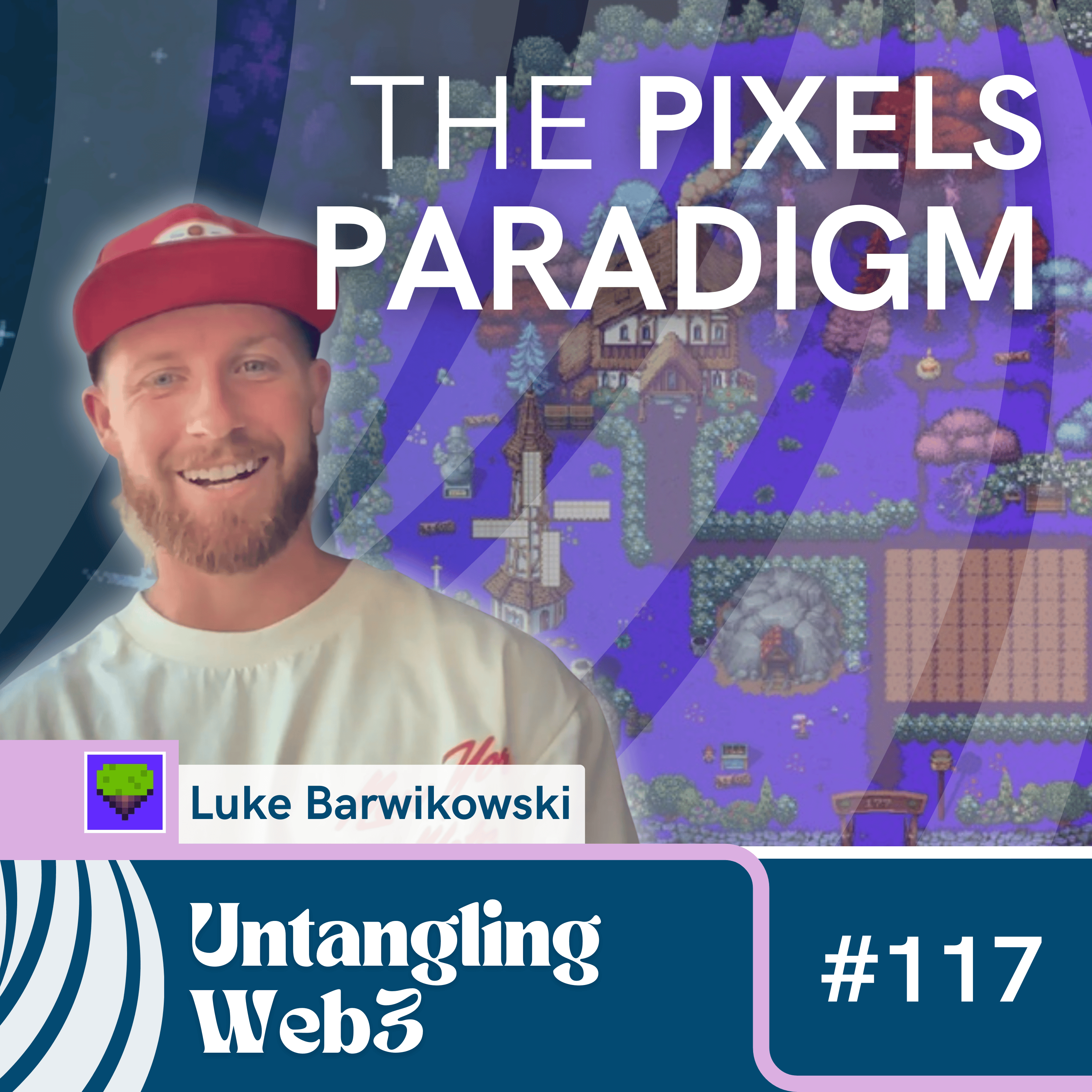
#117 Untangling: The Pixels Paradigm with Luke Barwikowski
Aug 2700:40:09Tap to summarizeGaming is evolving beyond entertainment into a dynamic, player-driven economy—and Web3 is at the heart of that transformation. In this episode of Untangling Web3, Luke Barwikowski, founder and CEO of Pixels, joins to explore how blockchain is reshaping the gaming industry. Pixels is a social Web3 game that fuses casual farming gameplay with real-world economic mechanics. With over 10 million registered users, the game is setting new standards for interoperability, player ownership, and scalable token-driven economies in the Web3 space.Key highlights:Web3 gaming demands new economic models: Traditional gaming revenue models are struggling. Studios spend magnitudes more on user acquisition than on game development, often with razor-thin margins. Pixels flips this model by directly rewarding users for valuable behavior. Instead of spending $1 on ads, that dollar is given to users through the game itself—an approach made scalable through tokens. This “reward-to-play” model uses data-driven segmentation to tailor incentives to user profiles, ensuring economic sustainability while strengthening community participation.Precision reward systems drive user growth and retention: Rather than blanket airdrops or undifferentiated incentives, Pixels uses predictive analytics and behavioral segmentation to issue rewards based on user potential and engagement patterns. Whether encouraging gameplay, referrals, or in-game spending, each incentive is optimized for long-term growth. These mechanics mirror Web2 adtech systems but replace ad spend with value distribution to players, forming a player-centric economic loop.Bridging crypto-native and mainstream audiences Pixels initially focused on crypto-native users, but reaching the next wave of players means eliminating crypto onboarding barriers. Future iterations will remove mandatory wallet sign-ups and minimize crypto UX friction. While blockchain infrastructure powers the backend, the frontend will prioritize smooth, intuitive gameplay. New users can access Web3-native benefits—like real ownership and tokenized economies—without having to confront the technical complexities.Pixels illustrates how Web3 gaming can move beyond hype into scalable, user-owned ecosystems. By aligning player incentives with network growth, eliminating friction for mainstream adoption, and reimagining game economies through blockchain, projects like these signal a future where fun, fairness, and functionality co-exist. Web3 isn’t just enhancing games—it’s reinventing how they're built, played, and sustained.__Learn more about Pixels here:https://www.pixels.xyz/--This episode is sponsored by the VeChain foundation. Learn more about VeBetterDAO here:https://vebetterdao.org/--Learn more about Web3 at:https://untanglingweb3.com/--Untangling Web3 is brought to you by hosts Jack Davies and Alec Burns, with music by Daniel Paigge. Got a question or topic suggestion? Send us an email at theuntanglingweb3podcast@gmail.com.Love what you're hearing? Show your support by becoming a subscriber and don't forget to leave us a stellar review.The views we express here are our own, and do not represent the views of our employers. Nothing discussed or stated in the show should be considered advice.
Transcribe →
#92 Untangling: Web3's Branding Problem with Diego Borgo
Feb 26, 202500:49:04Tap to summarizeIn this episode of Untangling Web3, brand strategist and Web3 expert Diego Borgo explores the challenges and opportunities of branding in the decentralized space. With extensive experience advising global brands like Adidas, Prada, Mastercard, and Porsche, Diego shares insights into the evolving perception of Web3 and how brands can adapt to the changing digital landscape.Key highlights:The Branding Problem in Web3: The term "Web3" carries a branding challenge due to its association with scams, speculative trading, and complex technology. Many mainstream brands and consumers perceive it as a high-risk space, making it difficult for businesses to position themselves within the industry.Reframing the Narrative for Mass Adoption: For Web3 to achieve widespread adoption, brands need to shift their messaging away from technical jargon like "decentralization" and "zero-knowledge proofs" and instead focus on tangible benefits. Successful branding strategies must highlight real-world applications, ease of use, and how blockchain technology improves customer experience.Building Trust and Utility in Web3: Trust remains a major barrier for mainstream adoption. Many companies struggle to communicate the practical value of blockchain beyond speculation and trading. To overcome this, brands must emphasize transparency, security, and user-centric design to attract and retain non-crypto-native users.AI and Web3 as Complementary Forces: The rise of AI presents both a challenge and an opportunity for Web3. AI-powered automation is simplifying complex blockchain interactions, reducing the need for technical knowledge. In the future, AI agents could act as intermediaries between users and decentralized systems, removing friction and making Web3 more accessible.Web3 branding needs a fundamental shift from its current perception of being technical, speculative, and difficult to understand. To reach mainstream audiences, companies must prioritize trust, user experience, and clear messaging that resonates with non-technical consumers. The convergence of AI and Web3 offers a promising path forward, where automation and intelligent systems make decentralized applications more accessible and integrated into everyday life.--This episode is sponsored by the VeChain foundation. Learn more about VeBetterDAO here:https://vebetterdao.org/--Learn more about Web3 at:https://untanglingweb3.com/--Untangling Web3 is brought to you by hosts Jack Davies and Alec Burns, with music by Daniel Paigge. Got a question or topic suggestion? Send us an email at theuntanglingweb3podcast@gmail.com.Love what you're hearing? Show your support by becoming a subscriber and don't forget to leave us a stellar review.The views we express here are our own, and do not represent the views of our employers. Nothing discussed or stated in the show should be considered advice.
Transcribe →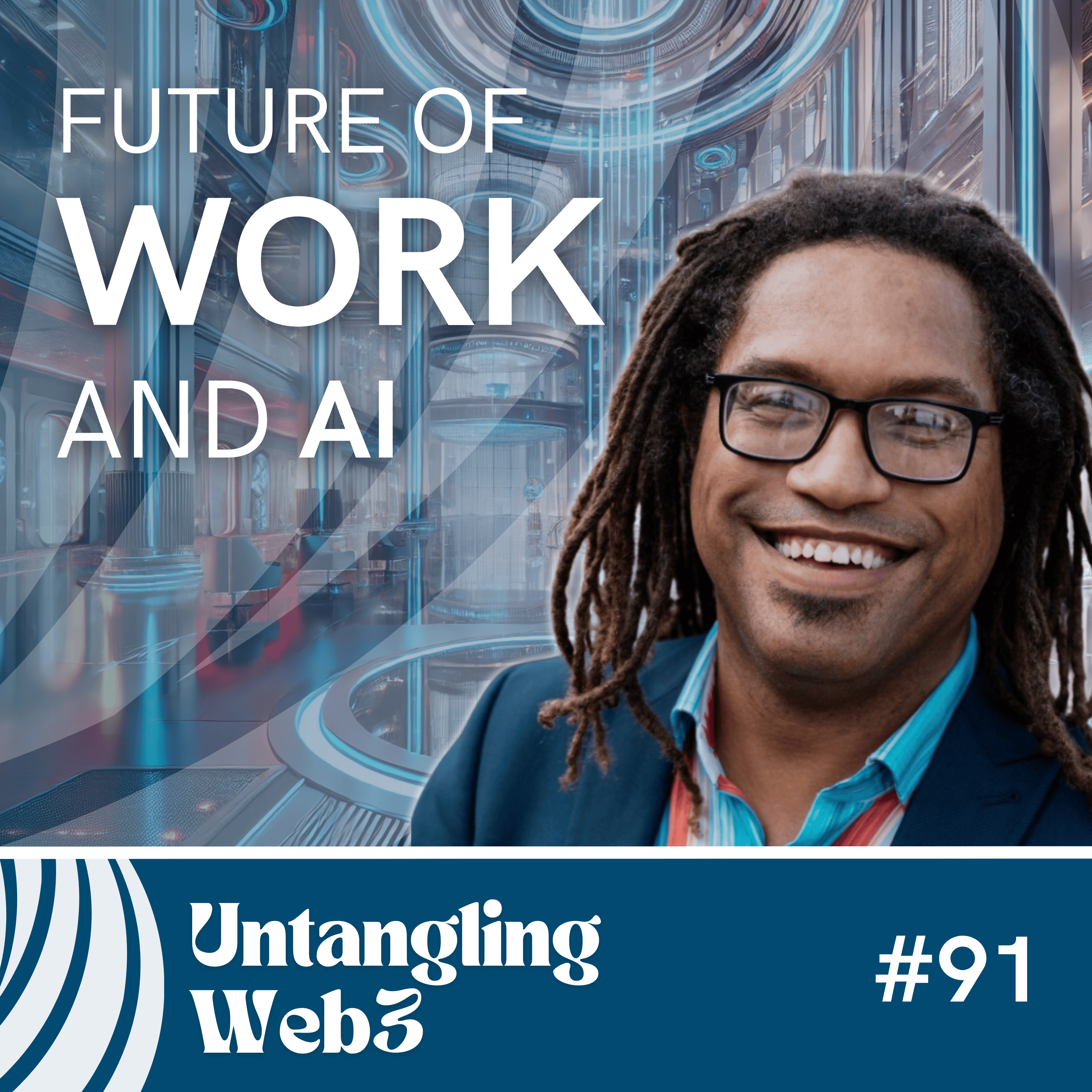
#91 Untangling: The Future of Work and AI with Dan Södergren
Feb 19, 202500:53:12Tap to summarizeIn this episode of Untangling Web3, futurist and AI expert Dan Södergren joins the conversation to explore how artificial intelligence and Web3 technologies are transforming the future of work.With a background in digital transformation and consumer rights, Dan explains why the rise of AI is triggering what he calls the Fifth Industrial Revolution and what it means for individuals, businesses, and society.Key highlights:The Fifth Industrial Revolution and Work Transformation: AI is fundamentally changing work structures, just as previous industrial revolutions redefined labor. Automation is shifting the balance of power, enabling individuals to have supercharged productivity through AI agents and automation tools. Unlike past technological shifts, this transformation allows individuals—not just large corporations—to own the means of production.AI Agents and Workplace Automation: The emergence of AI agents capable of automating entire workflows is reducing the need for repetitive human tasks. Instead of simple tools like ChatGPT providing single responses, autonomous AI assistants are now able to act on instructions, execute tasks independently, and integrate with various business systems. This shift is leading to radical flexibility in workplaces and the potential for decentralized, AI-driven companies.The Role of Open-Source AI in Decentralization: The future of AI is moving towards open-source models and small language models (SLMs) rather than relying on centralized proprietary systems. This shift allows businesses and individuals to run their own AI models locally, maintaining data privacy while customizing AI to their specific needs. As AI costs drop, running private AI models for personal and business use is becoming an accessible reality.AI is no longer a futuristic concept; it is an immediate and disruptive force in the workplace. The shift towards AI-powered automation and decentralized digital workspaces will require individuals and organizations to rethink productivity, employment structures, and business strategies.Embracing AI while maintaining ethical and responsible use will define success in the evolving digital economy. The companies and individuals that adopt AI intelligently will lead the charge in the Fifth Industrial Revolution.Learn more about how to use AI for Marketing with Dan's course here:www.aimarketingcourse.co.uk--This episode is sponsored by the VeChain foundation. Learn more about VeBetterDAO here:https://vebetterdao.org/--Learn more about Web3 at:https://untanglingweb3.com/--Untangling Web3 is brought to you by hosts Jack Davies and Alec Burns, with music by Daniel Paigge. Got a question or topic suggestion? Send us an email at theuntanglingweb3podcast@gmail.com.Love what you're hearing? Show your support by becoming a subscriber and don't forget to leave us a stellar review.The views we express here are our own, and do not represent the views of our employers. Nothing discussed or stated in the show should be considered advice.
Transcribe →
#90 Untangling: The Blockchain Blueprint for Digital Identity with George Kassis
Feb 12, 202500:50:33Tap to summarizeIn this week's episode of Untangling Web3, we dive deep into the future of Web3 identity with George Kassis from Kinexys by J.P.Morgan. George's blockchain journey began a decade ago with a university thesis on Bitcoin prediction models, and he has since become a thought leader in the space. In this episode, we explore the evolution of identity from Web0 to Web3, discussing how identity has transformed from physical documents to digital representations.Key highlights:Evolution of Digital Identity: The episode traces the journey of digital identities from simple web-based user accounts to sophisticated blockchain-enabled identity systems that ensure privacy and security.Challenges of Web2 Identity Models: Discusses the limitations of Web2 identity systems, particularly how they handle personal data without adequate security, leading to increased fraud rates during crises like the COVID pandemic.Web3 and Blockchain Solutions: Explores how blockchain technology offers a foundational solution for secure, decentralized identity management, potentially preventing fraud and enhancing user control over personal information.George emphasizes the importance of identity in the digital age, where fraud rates soar due to inadequate identity systems. We discuss the need for a more efficient, privacy-preserving identity solution that respects user autonomy while ensuring security. George shares insights on the role of blockchain in creating a common source of truth for identity verification, highlighting the potential of decentralized identity systems. This episode highlights the transformative potential of blockchain in reshaping digital identity management systems, moving towards more secure, user-centric models. It emphasizes the need for an overhaul in digital identity structures to accommodate the demands of a fully digital world, proposing blockchain as a viable solution to existing vulnerabilities.--This episode is sponsored by the VeChain foundation. Learn more about VeBetterDAO here:https://vebetterdao.org/--Learn more about Web3 at:https://untanglingweb3.com/--Untangling Web3 is brought to you by hosts Jack Davies and Alec Burns, with music by Daniel Paigge. Got a question or topic suggestion? Send us an email at theuntanglingweb3podcast@gmail.com.Love what you're hearing? Show your support by becoming a subscriber and don't forget to leave us a stellar review.The views we express here are our own, and do not represent the views of our employers. Nothing discussed or stated in the show should be considered advice.
Transcribe →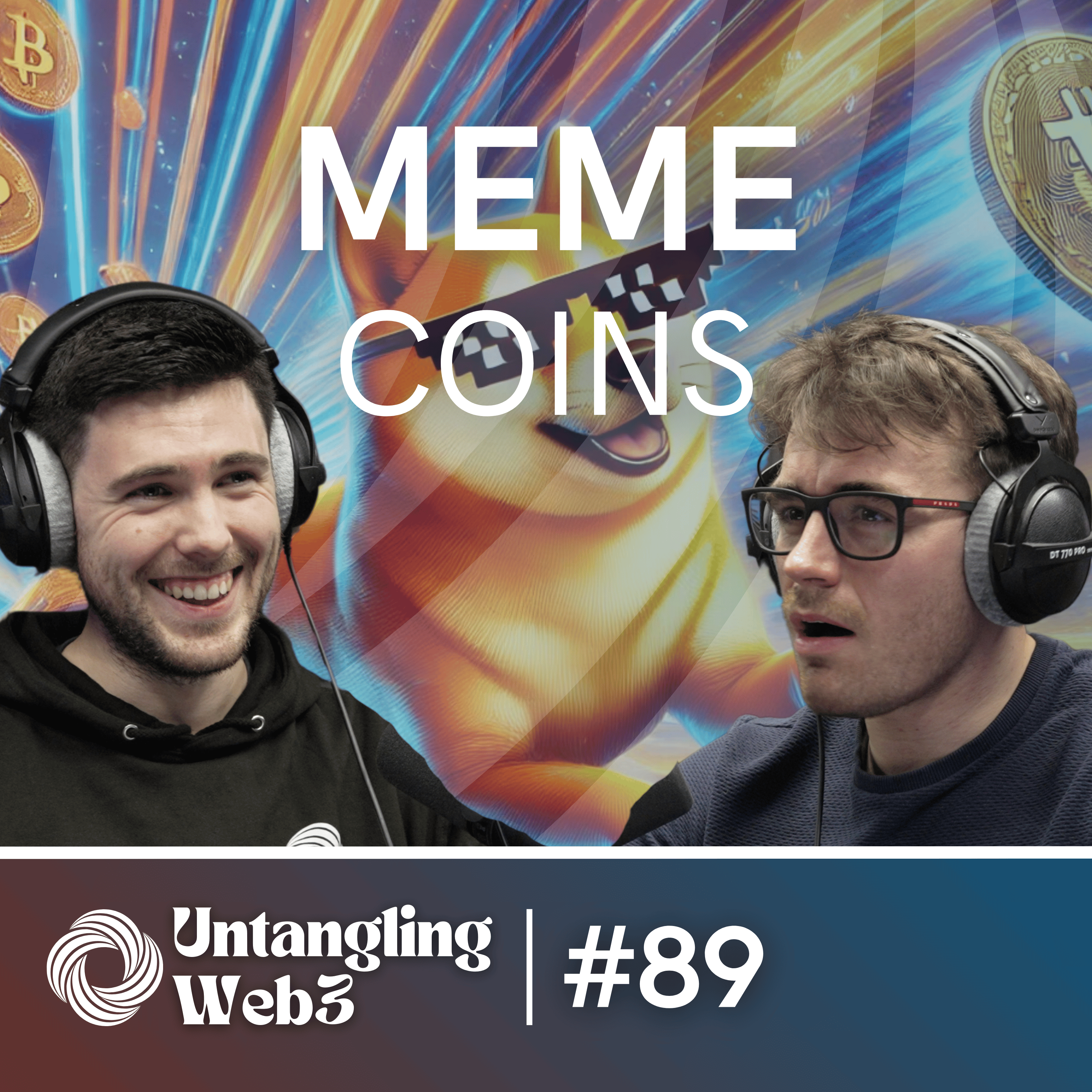
#89 Untangling: Memecoins
Feb 5, 202500:32:34Tap to summarizeIn this week's episode of Untangling Web3, we dive into the booming yet controversial world of memecoins—tokens built on blockchain but driven primarily by internet memes and social media virality. From the iconic rise of Dogecoin to the latest meme-based tokens, this episode unpacks the hype, the risks, and whether memecoins offer any meaningful value or are just a speculative frenzy.Key highlights:The Origins and Evolution of Memecoins: Memecoins trace their roots to Dogecoin, created in 2013 as a parody of the crypto world but unexpectedly evolving into a multibillion-dollar asset. The episode explains how memes, originally shared as images or videos, have extended their influence into financial instruments through memecoins, leveraging internet culture and online communities to create viral economic ecosystems.Community, Virality, and the Get-Rich-Quick Mentality: We explore the dual nature of memecoins, highlighting their appeal to communities while also acknowledging the speculative dangers. Memecoins thrive on the shared humor, narratives, and stories propagated by internet communities, but this virality often leads to speculative bubbles. Examples include Dogecoin, Hailey Welch’s controversial Hawk token, and some notable "others", which shot to billions in valuation before dramatic crashes.Risks, Scams, and Regulation: While some see memecoins as fun community projects, others view them as dangerous speculative traps. The discussion covers the risks of rug pulls and financial losses when inexperienced investors get caught up in viral hype. The episode emphasizes the need for better education, potential regulation, and distinguishing between genuine community-driven projects and bad-faith actors exploiting meme culture for profit.Memecoins encapsulate both the power and pitfalls of internet culture when mixed with financial incentives. While some projects may foster genuine community engagement, many pose significant risks for investors seeking quick gains. The key takeaway: Always DYOR, and be careful out there. --This episode is sponsored by the VeChain foundation. Learn more about VeBetterDAO here:https://vebetterdao.org/--Learn more about Web3 at:https://untanglingweb3.com/--Untangling Web3 is brought to you by hosts Jack Davies and Alec Burns, with music by Daniel Paigge. Got a question or topic suggestion? Send us an email at theuntanglingweb3podcast@gmail.com.Love what you're hearing? Show your support by becoming a subscriber and don't forget to leave us a stellar review.The views we express here are our own, and do not represent the views of our employers. Nothing discussed or stated in the show should be considered advice.
Transcribe →
#88 Untangling: Crypto ETFs with Johnny Garcia
Jan 29, 202501:03:06Tap to summarizeThis week's episode of Untangling Web3, features Johnny Garcia, who brings extensive experience from VeChain Foundation and Bitwise Asset Management, focusing on the intersection of ETFs, cryptocurrencies, and the broader financial landscape influenced by blockchain technology.Key highlights:Development of Crypto ETFs: The inception and evolution of cryptocurrency ETFs are explored, highlighting how regulatory milestones have facilitated the inclusion of Bitcoin and Ethereum in mainstream investment portfolios.Convergence of DeFi and TradFi: The blending of decentralized and traditional finance is reshaping investment strategies and asset management, leveraging blockchain enhancements.Impact of Regulatory Changes on Crypto Investments: Recent and ongoing regulatory developments affect the appeal and structure of crypto ETFs, impacting both institutional and retail investors.Technological Innovations in Blockchain for Finance: Technological advancements within blockchain are enhancing the functionality and appeal of ETFs, reinforcing their importance in the financial ecosystem.Johnny's insights illuminate the transformative role of blockchain and crypto ETFs in modernizing financial markets, underscoring the importance of regulatory clarity and technological innovation in fostering growth and stability in this dynamic sector.--This episode is sponsored by the VeChain foundation. Learn more about VeBetterDAO here:https://vebetterdao.org/--Learn more about Web3 at:https://untanglingweb3.com/--Untangling Web3 is brought to you by hosts Jack Davies and Alec Burns, with music by Daniel Paigge. Got a question or topic suggestion? Send us an email at theuntanglingweb3podcast@gmail.com.Love what you're hearing? Show your support by becoming a subscriber and don't forget to leave us a stellar review.The views we express here are our own, and do not represent the views of our employers. Nothing discussed or stated in the show should be considered advice.
Transcribe →
#87 Untangling: Tech and Misinformation
Jan 22, 202500:45:00Tap to summarizeIn this week's episode of Untangling Web3, we delve into the intersection of AI, misinformation, Web3, and social media—exploring how advanced technologies are reshaping the way we consume information and engage with politics. From the promises of democratized information to the challenges of AI-driven algorithms, this conversation unpacks the evolving role of technology in our everyday lives and its implications for the future of truth and trust.Key highlights:The Evolution of Social Media and Algorithms: We discuss how social media transitioned from its early days of playful interaction to becoming the primary source of news and political discourse. Algorithms have optimized platforms to maximize engagement, often amplifying fear, hate, and greed, which studies show are the emotions most likely to keep users hooked. The unintended consequences of these algorithms have fundamentally altered how societies process and act on information.AI and Misinformation: The episode highlights how generative AI and advanced algorithms exacerbate the spread of misinformation. With AI’s ability to create convincing deepfakes and emotionally charged content, distinguishing between fact and fiction has become more challenging than ever. We touch on studies that show false political news spreads six times faster than factual content, creating an urgent need for better digital literacy and AI accountability.The Role of Web3 and Digital Identity: Blockchain technology and decentralized platforms like BlueSky offer potential solutions to the challenges of misinformation. Features such as transparent algorithms, user-controlled feeds, and cryptographic proof of identity are promising tools to counter the chaos of traditional social media. These innovations could restore trust in digital interactions while enabling more equitable control over online content.The intersection of tech, AI, and social media presents both incredible opportunities and pressing challenges. While algorithms and AI have enhanced connectivity, they’ve also amplified misinformation and polarized discourse. By integrating Web3 principles and fostering digital literacy, we can create a more transparent and equitable digital landscape. As these technologies evolve, staying informed and skeptical will be key. Thank you for joining us, and tune in next time as we continue untangling the complexities of Web3 and its role in shaping our digital future!--This episode is sponsored by the VeChain foundation. Learn more about VeBetterDAO here:https://vebetterdao.org/--Learn more about Web3 at:https://untanglingweb3.com/--Untangling Web3 is brought to you by hosts Jack Davies and Alec Burns, with music by Daniel Paigge. Got a question or topic suggestion? Send us an email at theuntanglingweb3podcast@gmail.com.Love what you're hearing? Show your support by becoming a subscriber and don't forget to leave us a stellar review.The views we express here are our own, and do not represent the views of our employers. Nothing discussed or stated in the show should be considered advice.
Transcribe →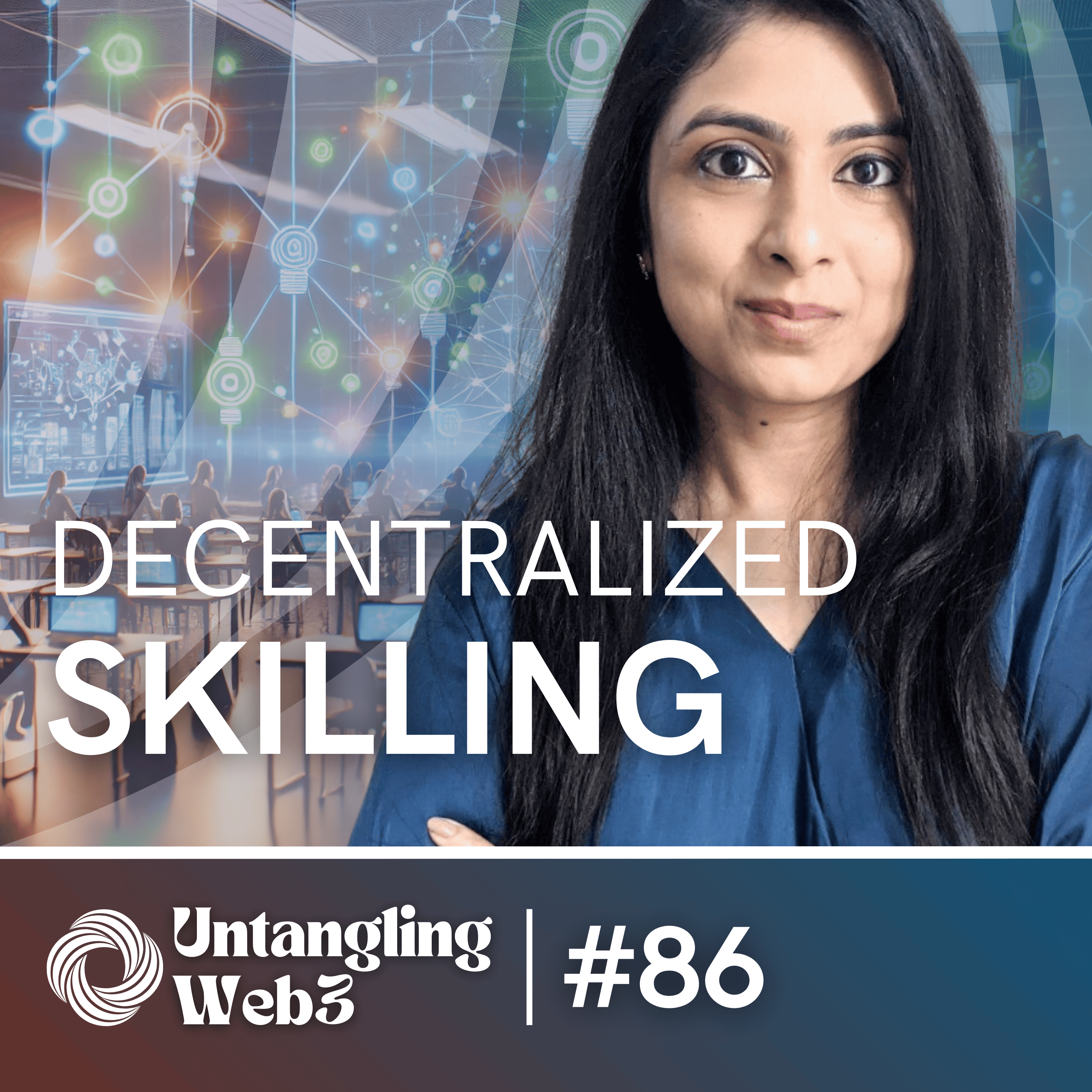
#86 Untangling: Decentralized Skilling with Priyanka Kamath
Jan 15, 202500:36:53Tap to summarizeIn this week's episode of Untangling Web3, we explore the merging paths of decentralized technologies and skill development with Priyanka Kamath. Priyanka, founder of 100 Girls in Gen AI, is a trailblazer in applying AI and blockchain to enhance educational accessibility and equity, particularly through her innovative projects in India that focus on skill-building in underprivileged communities..Key highlights:Decentralization and Skilling: Priyanka introduces the concept of decentralizing education and skill acquisition, explaining how leveraging blockchain and AI can break down traditional barriers and democratize access to learning resources.AI's Role in Education: The discussion covers how artificial intelligence is integrated to personalize learning experiences and improve engagement, ensuring that educational content is accessible and relevant to diverse learners.Blockchain for Credentialing: Priyanka details the use of blockchain for secure and verifiable credentials, which helps bridge the gap between educational achievements and job market requirements, enhancing transparency and trust in qualifications.Priyanka Kamath’s work exemplifies the profound impact of integrating Web3 technologies with educational initiatives, offering a blueprint for how decentralized systems can transform skill development globally. Her approach not only enhances educational outreach but also ensures that learning and development are adapted to the digital age, driven by inclusivity and innovation.--This episode is sponsored by the VeChain foundation. Learn more about VeBetterDAO here:https://vebetterdao.org/--Learn more about Web3 at:https://untanglingweb3.com/--Untangling Web3 is brought to you by hosts Jack Davies and Alec Burns, with music by Daniel Paigge. Got a question or topic suggestion? Send us an email at theuntanglingweb3podcast@gmail.com.Love what you're hearing? Show your support by becoming a subscriber and don't forget to leave us a stellar review.The views we express here are our own, and do not represent the views of our employers. Nothing discussed or stated in the show should be considered advice.
Transcribe →
#85 Untangling: Digital ID for the Real World with Evin McMullen & Diego Fernández
Jan 8, 202500:49:55Tap to summarizeThis week's episode of Untangling Web3, features Evin McMullen and Diego Fernández, experts pioneering the intersection of Web3, digital identity, and blockchain technology. Our discussion together focuses on the transformative potential of digital identity systems and their deployment on a broad scale.Key highlights:Foundations of Digital Identity: Evin and Diego explain the concept and significance of Decentralized Identifiers (DIDs) and how these digital IDs underpin secure and verifiable identities across various applications.Real-World Implementations: Insights into Diego’s project, Quark ID, which aims to bring government-issued digital identity to millions in Buenos Aires, showcasing the integration of digital IDs with governmental services to streamline processes and enhance citizen interactions.Technological Enhancements: Discussion on the role of zero-knowledge proofs and other blockchain technologies in improving the security and privacy of digital identities, making these systems more efficient and trustable.This episode highlights the crucial role of innovative Web3 technologies in reshaping how digital identities are created, managed, and utilized, driving forward the notion of self-sovereign identity. Evin and Diego’s insights underscore the impact of these systems not just technologically but also socio-economically, presenting a future where digital identity solutions foster greater efficiency, inclusivity, and privacy.--This episode is sponsored by the VeChain foundation. Learn more about VeBetterDAO here:https://vebetterdao.org/--Learn more about Web3 at:https://untanglingweb3.com/--Untangling Web3 is brought to you by hosts Jack Davies and Alec Burns, with music by Daniel Paigge. Got a question or topic suggestion? Send us an email at theuntanglingweb3podcast@gmail.com.Love what you're hearing? Show your support by becoming a subscriber and don't forget to leave us a stellar review.The views we express here are our own, and do not represent the views of our employers. Nothing discussed or stated in the show should be considered advice.
Transcribe →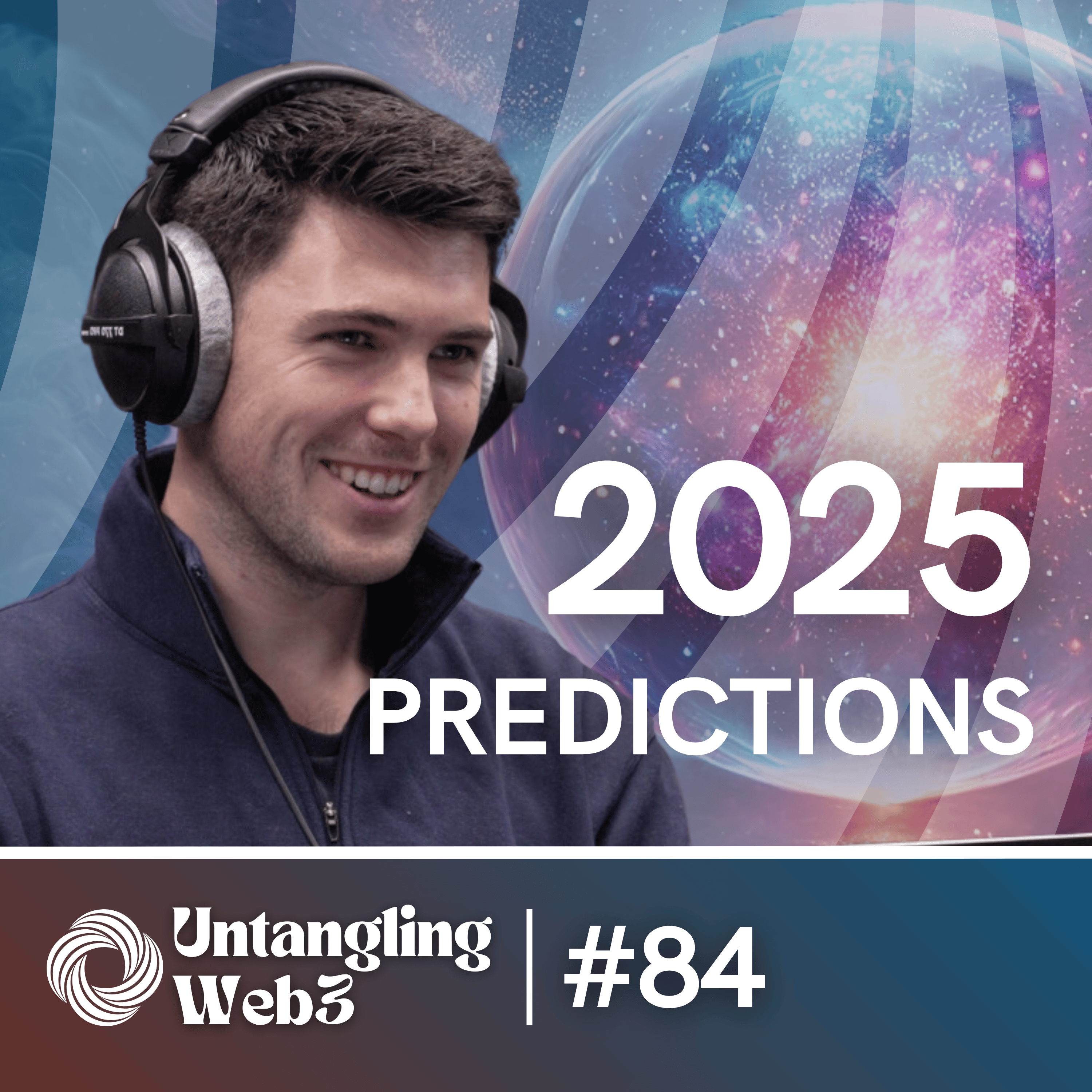
#84 Untangling: Predictions for 2025
Jan 1, 202500:51:19Tap to summarizeWelcome to a very special New Year’s episode of the Untangling Web 3 podcast! Kicking off 2025, we dive into our bold predictions for the year ahead in Bitcoin, Web3, and the crypto landscape. We reflect on the major events of 2024, including institutional adoption and Bitcoin ETFs, while casting a forward-looking lens on what 2025 could hold for the world of decentralized technologies and blockchain innovation.Key highlights:Institutional Adoption of Crypto: Building on the momentum from 2024, the podcast highlights the continued rise of institutional interest in Bitcoin and crypto. The approval of Bitcoin ETFs has ushered in a new wave of institutional investments, with significant implications for how these assets are perceived and traded. This shift could mark a turning point as large players drive long-term adoption and maturity in the market.Digital Identity and Blockchain: As deepfakes, AI, and misinformation become more pervasive, the need for robust digital identity solutions grows stronger. Blockchain emerges as a critical tool for decentralized identity systems, offering transparency, security, and self-sovereignty. The team discusses how digital identity solutions could tackle online fraud, streamline processes, and improve trust in the digital realm.Quantum Computing and Crypto Security: The rise of quantum computing sparks concerns about the security of cryptographic systems underpinning blockchain. While fears of quantum threats breaking Bitcoin’s public key infrastructure may be overhyped for now, the podcast emphasizes the importance of preparing for a quantum-resistant future. Innovations in cryptography and the adoption of post-quantum standards are already underway to ensure blockchain resilience.As we embark on 2025, the convergence of Bitcoin, Web3, and cutting-edge technologies like AI and quantum computing is set to redefine the crypto space. With growing institutional adoption, the push for decentralized digital identities, and a proactive approach to quantum security, the industry is poised for transformative growth.--This episode is sponsored by the VeChain foundation. Learn more about VeBetterDAO here:https://vebetterdao.org/--Learn more about Web3 at:https://untanglingweb3.com/--Untangling Web3 is brought to you by hosts Jack Davies and Alec Burns, with music by Daniel Paigge. Got a question or topic suggestion? Send us an email at theuntanglingweb3podcast@gmail.com.Love what you're hearing? Show your support by becoming a subscriber and don't forget to leave us a stellar review.The views we express here are our own, and do not represent the views of our employers. Nothing discussed or stated in the show should be considered advice.
Transcribe →