Loading summary
Transcript50 lines
- [00:01]
A
NPR continues to follow the breaking news out of Iran. US And Israeli forces launched combat operations yesterday. President Trump announced the airstrikes were targeting regime change in the country. We'll bring you much more tomorrow morning on Up First. And you can also hear the latest coverage on our national security podcast, Sources and Methods with Mayor Louise Kelly, or in the NPR app, Aisha. I'm Aisha Roscoe, and this is the Sunday Story from Up first, where we go beyond the news of the day to bring you one big story. The recent super bowl was awash with betting. And while most people were betting on the game, TikTok user aidenbooth had other plans.
- [00:47]
B
I'm camping outside the super bowl stadium with this listening device for the next few days. Cause you can bet on how long the national anthem will be. So I'm gonna try to time them, rehearsing it and make Money.
- [00:54]
A
When the TikTok influencer showed up outside the stadium to the rehearsal, he expected lots of people to be there doing the same thing.
- [01:03]
B
I thought I was going to show up here and there would be 500 people sitting outside. Like, everyone's saying it's like, so genius, but I really thought there'd be 500 people in lawn chairs, all trying to make easy money.
- [01:14]
A
Booth used the information he got from timing the rehearsal to place a bet on the length of the national anthem performance. And he won. These kind of niche bets are growing in popularity, especially on apps known as prediction markets. And the bets being placed on these apps go far beyond sports. People can bet on things like who will be the 2028 Republican presidential nominee, the weather in a number of cities, or even how long a government shutdown will last. NPR correspondent Bobby Allen has been covering this new way to place bets, and he joins me now. Hey, Bobby.
- [01:53]
B
Hey, Aisha.
- [01:54]
A
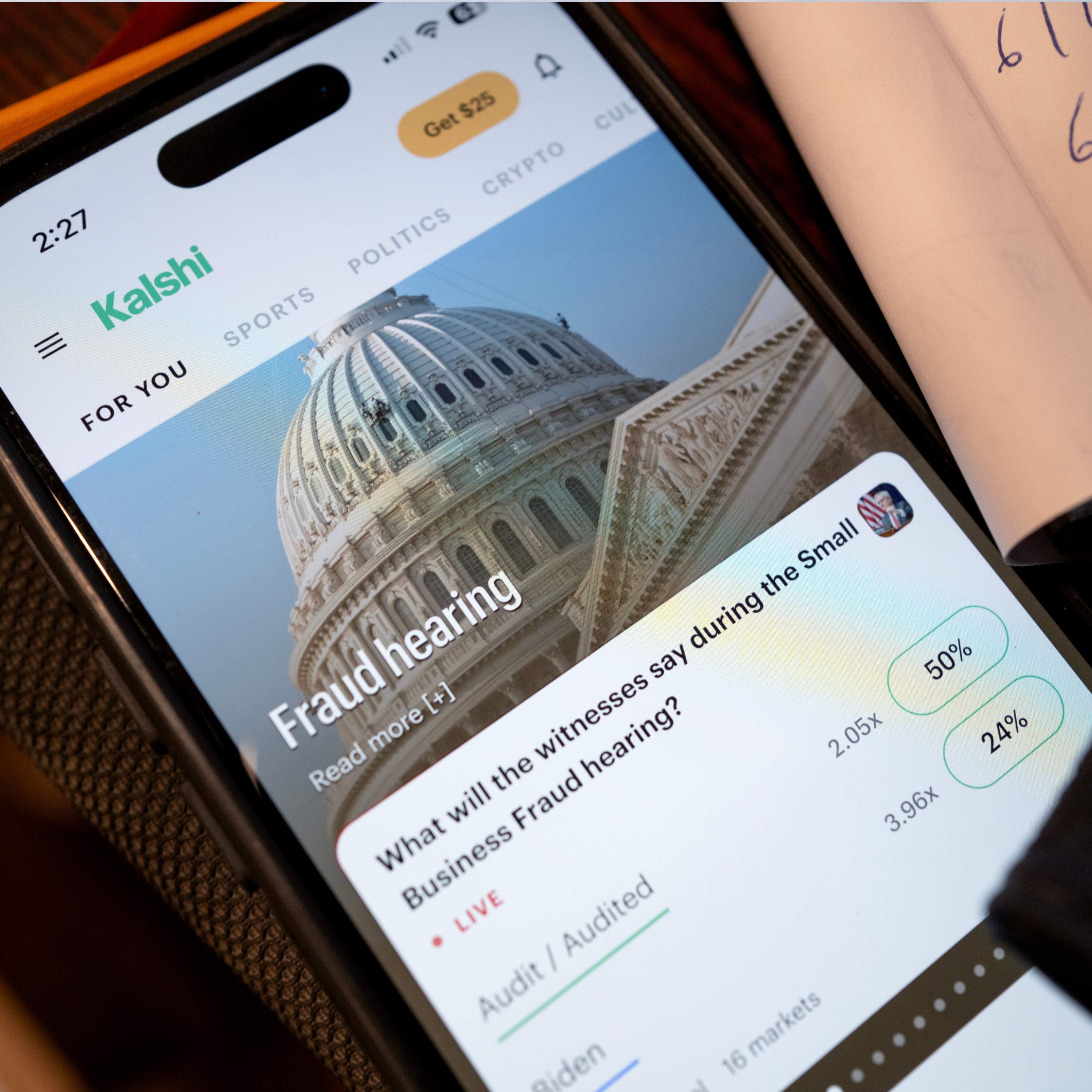
Okay, so, you know, look, I've. I've never placed a bet on these sites. I. I really don't like losing money, like, you know, unless I'm getting something in return. But I know the two most popular sites are Kalshe and Polymarket, and I've downloaded Kalshee. Can you walk me through how it works?
- [02:17]
B
Sure. So pull up the Kalshi app, and within, within a couple clicks, you can connect this to your checking account so you can directly put in money.
- [02:27]
A
Okay.
- [02:28]
B
Checking your savings account. And then you could start placing bets. You could see there's sports, there's mentions.
- [02:33]
A
I see elections. Who will be the 2028 Democratic nominee for president? Who will win the 2028 U.S. presidential election? Gavin Newsom is at 21%. J.D. vance at 24%. I see a lot of politics on his.
- [02:49]
B
So let's zoom in on, on just one. So the State of the Union happened earlier this weekend. People were going on these apps and making all kinds of bets, you know, on how long it would be down to like the second, you know, what words Trump would say. So would he say fake news? Would he, would he say windmill, drill, baby, drill? And you know, traders were placing money on whether he would or not say these things and then they'd stream the event live and then it becomes this kind of like high stakes edge of your seat, adrenaline propelled kind of situation where you're like, should I cash out now? Should I wait, should I cash out now? Is he going to say it? Isn't he going to say it? And the people who are into these, they're called mention markets on Kalshi and Poly Market, do this all day. They get up at like 10am and they do it till 3 in the morning. Going to press conferences around the world trying to cash in on whether people are going to say or not say things.
- [03:39]
A
So wait, so as you're watching the press conference, you could jump out or watching the State of the Union, you could jump out. If you're like, I don't think he's going to say it. Does that save you money?
- [03:50]
B
Exactly. So, so the odds are constantly moving depending on how the conversation is going. For instance, if President Trump starts talking about oil, the chance that he's gonna say drill baby drill is gonna go way up, right? Because it's related to that. So you see the odds move so your money increases so you can cash out there or you can hold your breath and hope that he says the word you put money on and get a big payday. I mean, it's just really a crazy situation.
- [04:15]
A
And so is NPR on these apps. Like, is there like, is there something about like the Sunday story or what? We're, there's no Sunday story market yet.
- [04:26]
B
But, but our CEO, there was many thousands of dollars being wagered on whether she would step down by the end of last year. People lost money on that who thought she would. And there is also a market about what tiny desk artists will be performing this year. And you know, Aisha, if you and I really wanted to make money on that, we could probably make a few calls and make that happen on that.
- [04:49]
A
We have inside information on that so we could make some money.
- [04:53]
B
Yeah, we really could. Now I'm not encouraging that since that would probably be a federal crime. But but yes, lots of to information that could certainly give them an edge.
- [05:03]
A
Today on THE Sunday story, we're going to do a deep dive into the world of prediction markets. What they are, where they came from and where they're taking us. And we hear about who's winning on these platforms and who's losing. Stay with us.
- [05:25]
C
Support for this podcast and the following message come from Alexa. Say hello to the all new Alexa. Chat naturally about anything and watch your to do list disappear. Planning date night. One conversation handles everything from dinner reservations to entertainment. Alexa learns your style, anticipates what's next and puts thousands of services at your fingertips. Experience AI that's all yours. And now Alexa is free with prime on your Amazon devices like echo and Fire TV. Amazon.com Alexa this message comes from Jerry. Most drivers overpay for car insurance because the system is needlessly complicated. Jerry fixes that by handling all the insurance shopping legwork for you. Compare 50 plus insurers side by side and purchase your policy directly in the app. No spam calls, no hidden fees. They'll even monitor price trends and can alert you to better rates. Drivers who save with Jerry could save over $1,300 a year. Download the Jerry app or visit Jerry AI, NPR today.
- [06:33]
A
We're back with the Sunday Story, and we're taking a dive into the origins and growing popularity of prediction markets. And joining me to make sense of all this is NPR correspondent Bobby Allen. So, Bobby, can you give us an idea of like, what these prediction markets are and where did they come from?
- [06:53]
B
Sure. So the idea of prediction markets, the first, you know, early instance of them was AN in the 1980s, during the 1988 presidential election, the George H.W. bush election. Because these political scientists thought, okay, we have punditry, we have traditional polls, we have the mainstream media, but what if people put their money where their mouth is and take wagers on the presidential election? And the result was so promising and it was more accurate than any poll at the time that this became a thing that political scientists have really been interested in and have tried to replicate the in a sort of academic, ivory tower kind of setting. And that's where it has remained until very, very recently. So jump ahead till right before the 2016 election. And Tarek Mansour, who at the time was a Goldman Sachs trader, was getting calls from wealthy clients who said, look, if Trump loses, this could be bad for my investment portfolio. If Trump wins, this could be bad for my investment portfolio. How do I get exposure to this? Like, how can I Short this or how can I make money on this? What can I do? And there was no way to really do it. Tarek Mansour likes talking about how there was ways to like invest in like a proxy so you could invest in like the whole S&P 500 or invest in other things that might go up or down if Trump wins or loses. But there was no way to directly bet on the outcome of is Trump going to win or lose. And that was his kind of light bulb moment where he thought, I think there is demand here to allow people to just bet on outcomes. And here we are today and he has one of the most popular apps doing exactly that. It's called Kalshi. Here's Tarek Mansour at a recent event talking about his vision for the company. The long term vision is to financialize everything and create a tradable asset out of any difference in opinion. So, so Kalshi, you know, they, they for years were at battle with regulators and regulators were really, really concerned that, you know, like we were just saying insider traders could manipulate these apps, that they could create really disturbing incentives. Like imagine if there was a market for, you know, a politician's assassination and then that politician is killed and someone makes money on it. There's all kind of situations.
- [09:07]
A
Sounds like a black mirror episode or something.
- [09:09]
B
It sounds like a black mirror episode. It totally does. So because of just how potentially alarming the consequences of these markets could be, they were essentially illegal until very, very recently. Poly Market is another one. And it' the Kalshi and Polymarket are basically the same thing. They allow you to bet on just about anything. Polymarket, the key distinction is it's mostly with cryptocurrency and it's overseas. So it's even more unregulated than Kalshi. You know, the Trump administration has cleared the lane for this industry to thrive and it's just really, really, really growing in popularity.
- [09:43]
A
Who's using these apps? Is it just, you know, your everyday person, like, who may hear this and go, I want to bet on what Trump may say or I want to bet on a tiny desk.
- [09:54]
B
It's a mix. There's people who, who, you know, maybe saw somebody on TikTok make a lot of money on one of these apps and they want to, you know, cash in on the latest get rich quick scheme. There's, you know, others who are former super sophisticated by the numbers, Wall street traders who are bringing a hyper specialized understanding of finance and applying it to these apps and they really have a lot of edge there's people who, you know, maybe lived in a state where sports gambling was illegal. And these apps, you know, give everyone now the opportunity to bet on sports. So there's like sports betting folks who are getting in on it and then you find people. Cause here's the thing. I mean, I talk to these traders all the time. Most of them are young, most of them are male, most of them are chronically online. And some of them even, you know, first got interested in trading assets and the financialization of everything through things like Roblox. Like one trader told me he got really good. Yeah, he got. This one guy told me he got really good at trading digital assets in Roblox and then he saw an ad for Kalshi and now it's his favorite thing and he has hundreds of thousands of dollars in his Kalshi portfolio. So people are coming from all over the place. But look, I don't, I want to caution here because it's not that every single person who uses one of these apps instantly becomes super rich. I mean, the most common experience is losing money.
- [11:21]
A
Well, that's what I want to ask you. Is this something where people can make a quick buck or is it like the casino where you probably gonna lose your bucks? You know, they lose your shirt and your shoes.
- [11:35]
B
Yeah, yeah, yeah. Again, it really, it really depends. And because both of these companies are private and don't exactly release like profits and losses platform wide, it's hard to have a complete sense. But outside analyses that have been done of polymarket and Kalashi do show that most people are losing money. I mean that, that's, that's just the way it is. So like that, it's no different than, you know, walking through the casino doors and, you know, plunging your quarters into a machine and then leaving the casino with less money. That's the experience I would say most people are having on these apps.
- [12:10]
A
So who are the winners? Like who are the people who's that slim minority that's that' making some money.
- [12:16]
B
It is a type of person who, you know, pops a lot of Zen drinks, a lot of monster energy drinks, stays up all night to do this. And it's just a like terminally online obsessive young male who has nothing else to do but trade on these apps. Like a guy I talked to, Logan Sudeth, he's a 25 year old who left his job as a financial risk analyst to do this full time. I trade probably like 100 hours a week now, so I'm sort of trading all the time. And Sometimes, you know, trading for like all night and stuff. And so I'm a little tired sometimes. I mean, those are the ones who are making the most money. And I've been hanging out in some of the online communities where they're sharing tips, sort of banding together and figuring out investment strategies, you know, suggesting markets to these apps that, and then the markets will be created and then they'll start trading on them. It's. Those are the ones who are, who are really making the biggest bucks. But look, there are other people I talk to all the time who have managed to make a few thousand here, a few thousand there, becoming like hyper specialized in one area. Whether they know a lot about music or sports or politics or the tech industry, whatever it may be, it's become kind of a way to make money on the side. It's become a kind of side hustle. But again, the pitfalls are real. People realize that, yeah, you may have made $1,000 just now, but your next bet, you might lose 2,000.
- [13:40]
A
Yeah, I mean it's, it's one thing to know a lot about a certain sport or, you know, we cover politics, we know a lot about politics. But as you mentioned earlier, a lot of people have actual inside information that can give them an edge. Are there rules against insider trading on these apps? Like is it illegal?
- [14:01]
B
Right. So by the letter of the law, yes, insider trading on Kalshi and polymarket would be illegal. But we are just in Aisha, some really uncharted waters here, here. So recently there was a case of insider trading where Kalshi discovered that Mr. Beast, you know, the huge YouTuber had a video editor who was watching his videos early, editing them and then betting on what Mr. Beast would do or say in the video. So directly profiting on insider information that he had. And this person was banned from the app and was fined and it was all done by Kalshee it itself. Right. It wasn't done by, by the federal government, by some kind of regulator. And that's because the way the Trump administration sees this industry is that it could kind of police itself that, that they're going to lean on self regulation. They have all sorts of surveillance tools and a staff of people who are monitoring markets for anomalous trades. Like, you know, if you see someone who, you know, 99% of the time correctly guesses what Google is going to announce before they announce, that's probably someone with, with insider information, it just looks suspiciously good. Right. And another incident that captured a lot of headlines was around Nicolas Maduro's capture. Right. Somebody bet well before it was publicly known that the Trump administration had a plan afoot. Somebody put down $32,000 that this was going to happen, which looked like a completely ridiculous bet in the moment. But then when the, you know, the Maduro operation happened, that bet turned into a $400,000 payday on Polymarket. And that started all sorts of conversations like, are there other members of militaries who are using classified information to make money on prediction markets? What can be done about it? You know, what does this signal to the enemy? Right, that if there's a bet that some, some kind of strike is going to happen, you're basically putting the target of that strike on notice. So there's not just the, you know, the ethical questions, but there's the concern that this could put lives at danger.
- [16:00]
A
When we come back, predicting the future of prediction markets. Stay with us.
- [16:09]
C
This message comes from NPR sponsor Mattress Firm. If you're waking up sore or unrested, it could be your mattress. Mattress Firm's sleep experts will help you find the perfect mattress like the Tempur Pedic Adapt. Its unique material delivers pressure relieving support designed to help alleviate aches and pains and promote deeper rest. For the great sleep you deserve, visit Mattress Firm and upgrade to a Tempur Pedic with next day delivery. They make sleep easy. Restrictions apply. Next day delivery available on select mattresses and subject to location. See store for details. This message comes from BetterHelp International Women's Day is this March, time to celebrate all women, the leaders, the caregivers, the hype, friends, the how do you do it? All types of women deserve to be reminded how much they matter and that therapy offers a space to care for themselves. BetterHelp makes it simple by matching you with a qualified therapist based on your needs and preferences. Visit betterhelp.com NPR for 10% off.
- [17:12]
A
We're back with the Sunday story and we're talking with NPR's Bobby Allen about the recent rise of prediction markets. So, Bobby, you mentioned that these markets have been around for a while, so why are they everywhere all of a sudden?
- [17:27]
B
Right. Well, when Kalsi first entered the scene, they were able to list markets on really niche, specialized questions like what will the Fed's interest rate be in three months or what, you know, how will sort of commodities futures like crude oil and soybeans, how will those prices move up and down? Right. And so they weren't regulated as a security like like the stock market is, but they were regulated as a commodity as a, as A type of derivative as a future contract. And so the CFTC regulates them. Right. And you know, they really wanted to allow people to wager on elections and to wager on sports, and the Biden administration fought them hard on this. But then what. What was the huge rocket booster for Kalshi was when they sued their regulator, they sued the CFTC and said, hey guys, we should be able to let people bet on elections. And in a really surprising decision, the federal appeals court agreed. And they said, look, right now, the concrete harm of letting people turn elections into a casino is just kind of speculative, like there's no actual proof this is going to interfere with elections. So the court said, for now it's fine, let's allow it. And that was in 2024. And since then, they have just really multiplied the number of markets and the type of market markets that are available. To give you a factoid, during the the Biden administration, there was around 15 to 20 of these markets available for people to bet on. And today there's more than 400,000. So that court case really opened the door to not just elections, but to being able to bet on absolutely anything. And the Trump administration got in and dropped investigations, made regulations much more lax, and, and installed someone, Michael Selig, to chair the cftc, who is a huge fan of the industry. And we do know from all available evidence that the Trump administration wants to see this industry thrive. In fact, there was a new White House advisory board that was comprised of, you know, leading figures from, from, from the crypto, fintech and prediction market industry who are going to be giving the White House sort of advice on how to ensure that this, that this industry continues to. Continues to prosper. Logan Suttus, the trader you heard from earlier, who spends like 100 hours a week on these apps, told me Trump has really cleared the lanes for these apps. I guess Trump winning was definitely beneficial for me, even though I didn't vote for him. Yeah, I guess even like regulatory, he's better, but also just like in general, sort of. But chaos makes more trading opportunities. And it's worth noting that the Trump family is directly invested in this industry. Donald Trump Jr. The president's son, is an advisor to both Kalshi and polymarket, and he's a partner of a venture capital firm that has invested $10 million in polymarket.
- [20:33]
A
So, Bobby, I mean, to me this looks a lot like gambling. You have markets on who's going to win Best Picture at the Oscars and who will win the NBA championship, but these apps make the argument that this isn't gambling. How do they make that argument and what are they saying?
- [20:55]
B
Yeah, they say there's no house. Right. That it's not like gambling. Here's Carl Lockhart, he's a law professor at DePaul University, explaining the logic. They're saying, oh, well, we're different from a sports book because for a sports book, you know, the sports book is taking the other side of the, the bets that the betters are making. We don't do that. You're betting against other users. Right. You're buying and selling these contracts between you and other users. Their argument essentially boils down to that. But they have a huge incentive to not be legally classified as gambling because that would subject them to state and tribe Gaming Commission regulations and all sorts of rules and paying lots and lots of taxes to states. It would be a total sort of regulatory headache and a business headache for them to be considered gambling because gambling is much more regulated than prediction markets are.
- [21:44]
A
Okay, so then how are they regulated? You mentioned the, the cftc, the Commodities Future Trading Commission, which I used to cover back in the day, but will make your eyes glaze. Yeah, I mean, but it will make your eyes glaze over really, really fast. So like, how are they regulating this? Or it sounds like maybe they're not regulating these apps very much at all.
- [22:09]
B
Right. Well, the chair of the CFTC released a video on X recently saying that they want to back all of the legal challenges nationwide where states are suing and saying, you guys are nothing more than gambling, an unlicensed gambling operation. We want to kick you out of the state. So the CFTC's official position right now is that yes, they are fine to be in this legal category as a type of derivative, as a futures contract and not gambling. And again, if, even if the CFTC had a more adversarial position here, had had a position of really being an aggressive watchdog. I talked to several former CFTC chairs who said they are so under resourced for this. They do not have the capacity to be checking in on and vetting hundreds of thousands of markets every single year from just one app. Right. I mean, they, in the best of times, one former chair told me they have like a sixth of the staff of the sec. So even if there was a different political environment and the CFTC really did want to be super hard on this industry and play, play hardball, they wouldn't have the capacity to do it.
- [23:28]
A
You mentioned earlier that some states have filed lawsuits against these betting sites, these prediction apps, and Saying that they, that they're basically just gambling. Tell me more about that. Like where do those lawsuits stand and what can states do if they want to step in and they want to do more regulation of this?
- [23:51]
B
Yeah. The fight against these apps on the state level has been bipartisan. Governors who are both Republican and Democrat have been coming after these companies. There's more than 20 pending lawsuits against just Kalshee over its continued legal status in the US and essentially what a lot of these states are saying is they made the apps, made an end run around gambling laws and are allowing teenagers. Right. Because the age to get on these apps is 18, not 21 like it is gambling. Allowing teenagers to become addicted to gambling with, with virtually no help. You know, in states where, where there is legal gambling, there's all sorts of rules about hey, if I'm addicted to gambling and I want to like self ban myself from this app, you have to let me do that. That doesn't apply to Kelshi and polymarka. There's all sorts of mitigation and gambling addiction sort of resources that, that are not present when, when in states where these apps are, are really thriving. But the status of, of the lawsuits, the short version is they're all pending and there's a couple cases that are in federal appeals courts and most legal watchers say eventually there's going to be an appeal that the Supreme Court will consider. Now, the Trump administration maintains states have no authority to regulate these markets. Here's CFTC chair Michael Selig in a recent interview with cnbc. It's not the state's authority to get into regulating our swaps markets, which are a 500 plus trillion notional market. These are significant markets that we don't have a role for the states in regulating. And I think it's going to take either an act of Congress or the Supreme Court taking a case to finally clarify what's going on here. Because right now it is just a total patchwork of chaos.
- [25:39]
A
Well, you know, you have made some trades on these platforms and you kind of have a sense of what the experience is like. If you were going to place a bet on the future of prediction markets, what would be your bet?
- [25:55]
B
I'd say for the next three years at least, that they're only going to become more and more popular. I think there's a chance, regardless of what the next administration is, that there's a different political and legal approach to this industry. But then the question comes, is it too late? It's going to be really hard to Put this genie back in the bottle. I mean, it's, it's. Some people may not have heard of these apps because they're not, like, super, super recognizable, but they definitely are becoming more mainstream. I mean, you see CNBC and CNN now incorporating, you know, prediction market odds into their news coverage. During the Golden Globes recently, they were telling the audience to check out poly market odds before they threw to every commercial break. And Grammy host Trevor Noah even made a joke about it during the awards show. Welcome back to the Grammys. Potato. If you had me saying potato on polymarket, you just made a ton of money. So congratulations, Noah. Underscore 22, whoever that is. I think more and more institutions are saying, we think there's something here. We think people are into these. And interestingly, Aisha, that they're seen as a way to get people engaged in sports, entertainment, the news. Because if you can make money on the Golden Globes, you're more likely to watch. So. So that's why there's all of these partnerships. If you can make money on what happens tomorrow in the White House, you're more likely to tune in to a White House press conference. Right? So the more mainstream and the more sort of a foothold these apps get in American culture, the more difficult I think it's gonna be to just flip the switch and turn them off if that's what the next administration wants to do. But at least in Trump 2.0, I think they're gonna be sticking around.
- [27:41]
A
Well, Bobby, this has been quite the ride, and it's just beginning. I'm gonna keep an eye out on this, but I will be. This all plays out. Thank you so much for sharing all this reporting today.
- [27:55]
B
Thanks, Aisha. This was fun. Thanks for having me.
- [28:00]
A
That was NPR correspondent Bobby Allen. You can find more of Bobby's reporting on prediction markets@npr.org this episode of the Sunday Story was produced by Andrew Mambo. Liana Simstrom and Brett Neely. Edited this episode fact checking by Barclay Walsh and Susie Cummings. The engineer was Robert Rodriguez. The Sunday Story team includes Justine Yan and Jenny Schmidt. Our executive producer is Irene Noguchi. I'm Aisha Roscoe. And up first is back tomorrow with all the news you need to start your week. Until then, have a great rest of your weekend.
- [28:42]
C
Foreign.
- [28:49]
A
This message comes from Midi Health Co founders Joanna Strober and Dr. Kathleen Jordan discuss why they started a virtual care platform to empower and educate women in perimenopause and menopause. Historically, perimenopause and menopause have been very stigmatizing. So people haven't wanted to admit that they're in perimenopause and menopause as though it was like embarrassing, which is insane. It's just something happening to your body. So one of the things that we're trying to do is destigmatize these topics. Perimenopause and menopause are just women's health. So we try to educate women all the time. Maybe it's your hormones and we would like to help you. Yeah. And I find women actually want to talk about it. It's one of the things they always comment at MIDI is that they finally feel heard. One of the ways that that women find MIDI is actually from other women and I think it's meaningful. Midi Health committed to helping women in midlife with perimenopause and menopause care Accessible via telehealth visits@join MIDI.com this message comes from Cachava.
- [29:55]
C
That wellness goal you set at the start of the year. It's not too late to stick with it and make your future self proud. Especially with the all in One Nutrition Shake from Cachava. With 25 grams of protein, 6 grams of fiber, greens, adaptogens and more. No fillers, no nonsense, just the highest quality ingredients. Stick with your wellness goals. Go to kachava.com and use code NPR for 15% off. That's K A C H A V A COM code NPR.