Loading summary
Transcript145 lines
- [00:00]
Aisha Rascoe
Aisha. I'm Aisha Rascoe and you're listening to the Sunday Story from Up First.
- [00:07]
Shabani Matani
So we've come in through the back now. Security guards stopped us. They didn't allow me to take any photos.
- [00:14]
Aisha Rascoe
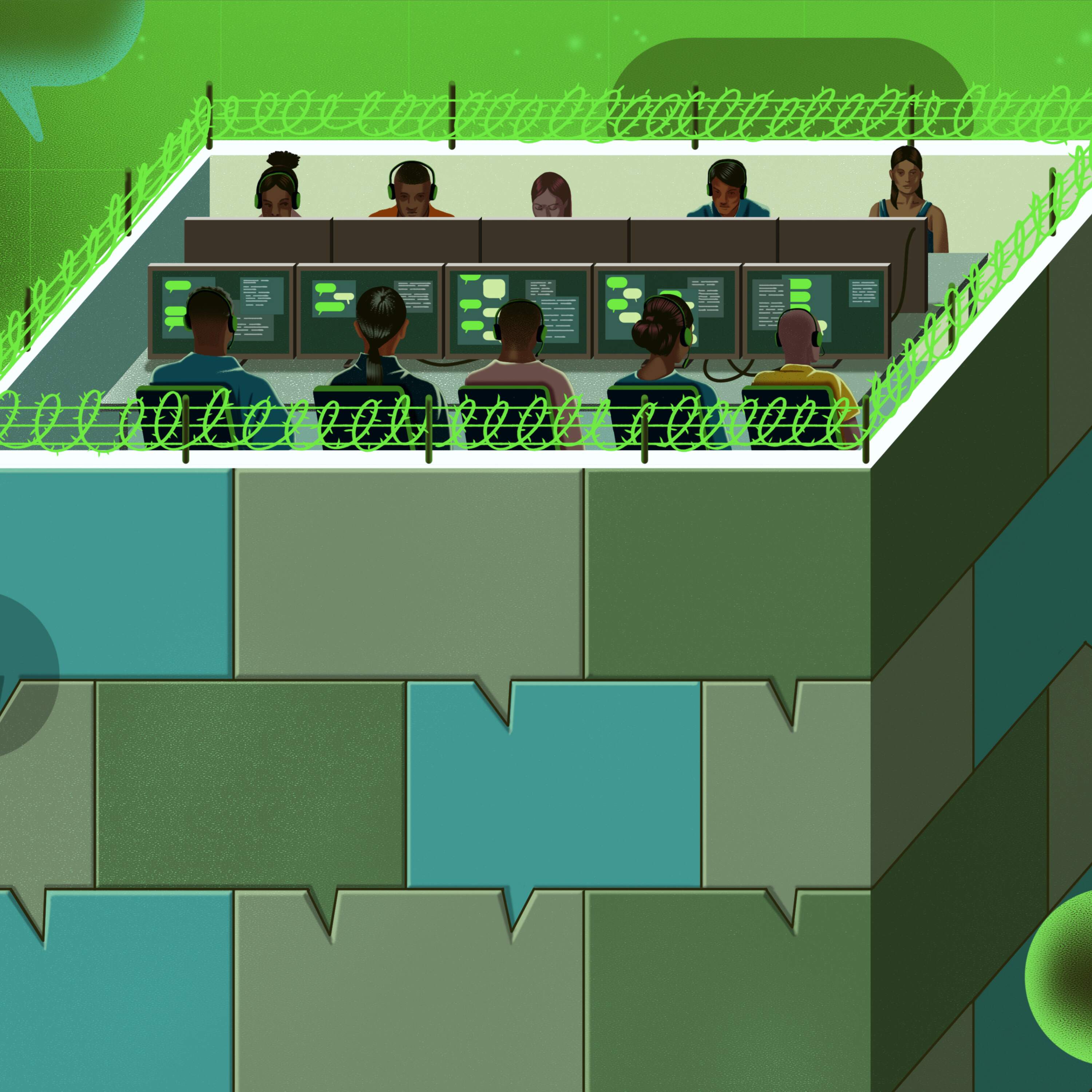
Earlier this year, investigative reporter Shabani Mattani visited a massive industrial complex outside of Cambodia's capital, Phnom Penh. It's set up like an office park, but it's fortified against the outside world.
- [00:31]
Shabani Matani
There's Bob DW around CCTVs. You can see lookout posts as well on the top of the buildings.
- [00:41]
Aisha Rascoe
People once lived here, about 20,000 of them.
- [00:45]
Shabani Matani
Looks like dormitories, sort of white buildings with black rails and with bars on the windows.
- [00:53]
Aisha Rascoe
And it's clear that it was abruptly abandoned.
- [00:57]
Shabani Matani
So much trash. It's a whole little city. I mean, Times Square could fit in this. So all of these are hallmarks of a scam compound.
- [01:05]
Aisha Rascoe
This cyber scam compound is among dozens in Cambodia that operated with impunity for years. Migrants were brought to these places from throughout Asia and Africa and put to work scamming people on the other side of the world. According to the FBI's Internet Crime Complaint center, the cyber scam industry managed to defraud Americans of more than $20 billion last year. And in 2024, experts estimated that profits from the cyber scamming industry were equivalent to roughly half of Cambodia's formal gdp. But in the last several months, under international pressure, the Cambodian government has accelerated a sweeping crackdown on the industry. Scam operations have been raided and shut down and more than 200,000 scam workers have been released. With this ongoing effort, reporters have gained unprecedented access to a previously hidden world. Today on the Sunday story, we have an exclusive two part series on the global cyberscam industry. We're going to take a deeper look, not from the perspective of people who were scammed, but from the people who once took part in the scamming. Shibani Matani is based in Singapore. She's been covering Southeast Asia for more than 15 years and she's been following the cyber scam industry for the past three. When we come back, Shebani Matani takes us to Cambodia.
- [02:52]
NPR Sponsor Announcer
This message comes from NPR sponsor Shopify. No idea where to sell? Shopify puts you in control of every sales channel. It is the commerce platform revolutionizing millions of businesses worldwide. Whether you're a garage entrepreneur or IPO ready, Shopify is the only tool you need to start, run and grow your business without the struggle. Once you've reached your audience, Shopify has the Internet's best converting checkout to help you turn them from browsers to buyers. Go to Shopify.com NPR to take your business to the next level today. This message comes from Schwab. At Schwab, you can get everything from self directed investing to full service wealth management all in one place. No matter your investing goal, life stage, amount to invest or know how to, you can invest your way with Schwab. This message comes from ixl. Providing an online learning environment intended to keep students skills sharp over summer vacation. The platform covers core subjects and adapts to each child's pace. Receive 20% off@ixl.com NPR
- [03:55]
Aisha Rascoe
we're back with a Sunday story. Here's investigative reporter Shibani Mattani.
- [04:02]
Shabani Matani
Since January, the Cambodian government has ramped up its raids on scam compounds across the country. And as a result, some 200,000 scam workers have poured into the streets of Phnom Penh. These people are from all over the world, at least 35 countries. And I saw reports of people streaming to the embassy gates, literally waiting outside, banging on the door, asking for help to be repatriated home. And even today, many of them are still unable to get home. So this spring, I decided to go to Phnom Penh and try to speak to some of them. I wanted to know what was their first hand experience of the scam industry. How did they end up in Cambodia? I thought they could give an unfiltered view of the inner workings of this industry. I spoke to dozens of people on that trip. Most of the scam workers were from China and also from Indonesia. But it surprised me how many of them came from Africa.
- [05:03]
Schwaib
My name is Ismail. My name is Oscar.
- [05:07]
NPR Sponsor Announcer
My name is Ama.
- [05:08]
Shabani Matani
And all the stories were actually remarkably similar.
- [05:11]
Schwaib
I was trafficked in Cambodia for like a fake promise of a job.
- [05:17]
Shabani Matani
The job was offering $1,200. So I was like, wow, this is a good opportunity. So I texted them and in a week or two, I was able to travel and come. In recent years, crime syndicates have focused on scamming Westerners. So they've heavily recruited workers from English speaking countries in Africa like Ghana, Nigeria, Sierra Leone. On this trip, the majority of the Africans I spoke to were from Uganda. Sometimes, you know, it was difficult to get deep into conversation. You know, some of them were also obviously very cautious because they didn't want to expose the inner workings of scam compounds that they believed were still so powerful. But I did manage to sit down and get to know one man really, really well. And that was through A friend of mine who introduced me to him, my friend, his name is Mej Dara. He's a Cambodian journalist based in Phnom Penh. And Dara and I, we spent the week together zooming around in his little tuk tuk. He's also a tuk tuk driver, sometimes to earn extra money. And it was through Dara that I got introduced to one Ugandan man in particular. His name is shwaib and he's 24. We would come to know each other pretty well over the next few weeks. Schweib and I ended up meeting in person for the first time at a Cambodian burger chain called Lucky Burgers. I saw him from the back first. I could see even from the door when I went in that he was pretty tall, but mostly really lanky. He was wearing sort of dark gray baseball cap and acid wash jeans and a grayish black T shirt. When we sat down, he had his phone out and he was taking little notes on his phone and he seemed kind of nervous. Then once he starts speaking, I had to sort of figure out times that I could interrupt him because once he started talking, he really opened up about his story and just got really into it and kept going. Schwaib asked me to identify him by just his first name for his security, because what he shares about the inner workings of these criminal syndicates which continue to operate today in his own role could put him at risk. Risk. Schweib told me his story from the beginning, before he even arrived in Cambodia. And, you know, I think it's important because it reveals the long and really the truly global reach of the scam industry. So Schwaib is from Kampala, the capital of Uganda. One day In January of 2025, he was sick in bed, scrolling TikTok. When he saw something that made him stop for a little bit.
- [08:05]
Schwaib
First it was on TikTok. You know, on TikTok there are some kind of ads.
- [08:08]
Shabani Matani
It was a targeted job ad on his for your page, promising somewhere between 800 to $1,000 for a month's work
- [08:16]
Schwaib
in Cambodia, visa free air ticket. Then I was like, these are scammers. Then I left it.
- [08:22]
Shabani Matani
So at first he actually dismissed it and he kept scrolling.
- [08:25]
Schwaib
Then after scrolling some couple of days also, I saw it again and I was like, it doesn't cost me anything to send a message. Why shouldn't I? I sent a message on TikTok and
- [08:39]
Shabani Matani
right away he was sent a WhatsApp number to continue the conversation with a recruiter. The recruiter told him that there were a few different positions available, that there was a lot of work. He could be a supermarket attendant, a delivery driver, or a warehouse worker. And on top of that, they would even cover his visa and his travel expenses and food and accommodation once he got there. It was a pretty big deal, because in Kampala, someone like Schwaipe could only earn about 150, $200 a month. The person on the other end of the phone was offering him up to $1,000 a month.
- [09:12]
Schwaib
I was like, ah, that's a big income. I can go there maybe like two years. I can get some source of income. And I said, okay, it is okay. I don't care which work I will be doing, as long as I get paid.
- [09:26]
Shabani Matani
Schweib had always relied on himself. He has 10 siblings, and both his parents passed away by the time he was 18, so he had to drop out of school and get a job. He worked in kitchens for a few years, eventually getting promoted to a chef.
- [09:44]
Schwaib
Everything was going so, so well. Then I became sick.
- [09:49]
Shabani Matani
Schwaib struggled for years with debilitating stomach ulcers. The stress of his work sometimes made them worse, and eventually he was forced to take bed rest.
- [09:59]
Schwaib
Then I had to first take a break.
- [10:01]
Shabani Matani
After those initial messages, the recruiter told Tribe what they needed from him, and it actually wasn't much.
- [10:07]
Schwaib
I told me, do you have a passport? Then I filled up the papers, everything they asked me for.
- [10:13]
Shabani Matani
He sent them his passport information and filled out all his personal details.
- [10:17]
Schwaib
I did everything they asked me to,
- [10:19]
Shabani Matani
and everything was just moving so quickly that it didn't seem real by the
- [10:24]
Schwaib
time I took it serious. It was when they asked me, when are you going to travel? Then I told them, two weeks. Can you travel in one week? Then I was like, okay. Then after like, two days, they sent me a visa. The visa. The visa of Cambodia. Then after, like, two days, that's when they sent me a ticket. This is a miracle. I never spent in any coin. Everything came in so smooth, but I was like, it was too good to be true.
- [11:03]
Shabani Matani
Schwaib had to leave in a hurry. When he got to the airport in Kampala, he met a group of 10 others, all guys who were also headed to Cambodia. They showed their passports and were quickly ushered through.
- [11:14]
Schwaib
The guy was like, kind of was so friendly. The guy asked me, is this your first time to travel? And I was like, yes, this is my first time to travel. He went, okay, good luck. Then he stamped in. Then he proceeded.
- [11:29]
Shabani Matani
Schreibert never stepped foot on a plane before so as he boarded, he felt such a rush of emotion.
- [11:35]
Schwaib
And I was sorry. I was so happy. I took some pictures. Then when the plane left off, that's when I knew that now this is real. I'm out of home. Let me go. And do what? Let me go and search for. Get some money. Then I come back home.
- [11:53]
Shabani Matani
Schwaipe landed in the Phnom Penh Airport on February 10, 2025. His new employers had sent a driver to pick him up outside the terminal.
- [12:01]
Schwaib
The car, it was. It was Lexus.
- [12:04]
Shabani Matani
It was Lexus.
- [12:05]
Schwaib
Yeah, it was Lexus. Oh, wow.
- [12:07]
Shabani Matani
And the driver even helped him with his bags.
- [12:09]
Schwaib
We were like the bosses by the time the guy took our bags. Then he told us that, you follow me, you follow me. Then he went to the car. Even the guy opened the doors for us.
- [12:19]
Shabani Matani
It felt like VIP treatment. The group of 10 Ugandans split up into different cars. So it was just Schwaib and one other guy who got into the Lexus, bound for the same location. And then they drove and drove and they kept driving.
- [12:37]
Schwaib
We traveled for five hours.
- [12:38]
Shabani Matani
They drove at night. And he really couldn't get his bearings.
- [12:41]
Schwaib
So we were so silent in the car.
- [12:44]
Shabani Matani
It was totally pitch dark. And the main thing that was illuminating the streets were just the lights of the cars on the road with him. Beyond that, there wasn't much to see. And after they drove for such a long time through these potholed roads and deserted roads, suddenly he saw a city come into view. And suddenly he felt a totally different pulse. He started to hear music.
- [13:12]
Schwaib
A lot of people there. Lot of music.
- [13:14]
Shabani Matani
Almost like a party.
- [13:15]
Schwaib
It was like a festival.
- [13:17]
Shabani Matani
It's like 10pm and somehow everyone was awake. He thought it was like a rave, actually, because they're playing this music. And it was music that. That he liked.
- [13:26]
Schwaib
It is good music. It is edm.
- [13:29]
Shabani Matani
EDM music with heavy beats. And he stepped out of the car and he thinks, oh, my gosh. Like, wow, where. Where have I landed? This is gonna be. This is gonna be good. Like, people here seem to really be enjoying themselves.
- [13:41]
Schwaib
They are partying, they are working. Yeah, we are going to enjoy our life here.
- [13:49]
Shabani Matani
A straight entered the compound. The illuminated sign said Bavette Business Center. He noticed how multinational it was. He saw Chinese people, he saw Filipinos, he saw Vietnamese people. He heard a lot of different languages.
- [14:03]
Schwaib
There were Pakistan, Nepali, the Ghanaians, Nigerians, Ugandans, Kenyans, Tanzanians. There were a lot of people there and different tribes.
- [14:13]
Shabani Matani
When the driver dropped him off, he left and there was another guy who Brought him in. This guy was Chinese and he introduced himself as the boss of the company. He greeted him and asked him to hand over his passport. So Shrib gave him his passport.
- [14:29]
Schwaib
They took our passport. That's the number one.
- [14:31]
Shabani Matani
Someone showed him a room and told him that was the room that he would be staying in and that he was going to share that room with a number of other guys too.
- [14:39]
Schwaib
Now you have to rest. We will get back to you tomorrow since you are tired. Then we slept.
- [14:49]
Shabani Matani
The next day he signed his contract.
- [14:51]
Schwaib
We are called in the office. We had to sign the contract. The contract was in Chinese. Then there were also some part of English.
- [15:00]
Shabani Matani
And the contract stipulated that he would be paid US$850 a month. They would provide him three meals a day and accommodation.
- [15:09]
Schwaib
Then they gave us their computers.
- [15:12]
Shabani Matani
Schweib says they walked him to his station and to help him get set up, they told him what to download a VPN, Telegram, WhatsApp, Instagram, TikTok and basically described it to him as sort of remote online work.
- [15:28]
Schwaib
I'm just going to enjoy working on your computer. That is my hobby.
- [15:32]
Shabani Matani
I can do this. Yeah, no problem.
- [15:34]
Schwaib
Me, I was even on YouTube enjoying the music because I even had some earpods. I was enjoying the music.
- [15:40]
Shabani Matani
Shrib told me that he was given several days to acclimate, but right away certain things felt a little off. After he'd signed the contract with the bosses, he was taken to a separate administrative building where Cambodian guards took his photograph and gave him an ID card to use for entering and leaving the main gates of Bavet Business Center. But Schweib said the Chinese bosses then took their ID card away.
- [16:06]
Schwaib
When we went back to the office, they removed the IDs from us.
- [16:09]
Shabani Matani
Now he couldn't freely leave the complex.
- [16:12]
Schwaib
We went outside, we made some tour around the park to see what is going on. There were a lot of buildings. What I can say it is like a small town, a small developed town. Bars, shops, there was a hospital, there are supermarkets, some loans. There's nothing that you need outside.
- [16:35]
Shabani Matani
So when did you start realizing, wait a minute, this is like.
- [16:41]
Schwaib
At first I never knew the job that I was going to be doing. That's what I can say. Then after like, after like a week they added me funds without anything. They just used to give me funds. Now I had like 40 phones.
- [16:56]
Shabani Matani
They gave him dozens of SIM cards and all of them were for us numbers.
- [17:00]
Schwaib
After like a week I started seeing things.
- [17:03]
Shabani Matani
If they were just doing remote work, why were they in possession of all this stuff like why did they have hundreds of computers, thousands of SIM cards? What was all of it for?
- [17:17]
Aisha Rascoe
You're listening to the Sunday Story. We'll be right back.
- [17:23]
NPR Sponsor Announcer
This message comes from NPR's sponsor, Shopify. No idea where to sell? Shopify puts you in control of every sales channel. It is the commerce platform revolutionizing millions of businesses worldwide. Whether you're a garage entrepreneur or IPO ready, Shopify is the only tool you need to start, run and grow your business without the struggle. Once you've reached your audience, Shopify has the Internet's best converting checkout to help you turn them from browsers to buyers. Go to Shopify.com NPR to take your business to the next level today. This message comes from Schwab. At Schwab, you can get everything from self directed investing to full service wealth management all in one place. No matter your investing goal, life stage, amount to invest, or know how you can invest your way with Schwab.
- [18:10]
Shabani Matani
By the end of that first week, it all started to click. Schwaib realized that he'd been brought to Cambodia to work as a scammer. And Schwaib, like many of the other Africans there, would be working at the lowest level of the operation.
- [18:23]
Schwaib
We are specialized in three categories. They were the developers, they were the receptionists, and they were the killers.
- [18:32]
Shabani Matani
First there were the developers, they were IT technicians and they buy stolen data off the Internet. They get access to troves of phone numbers, Instagram accounts and other data. Then there were the receptionists, like Schwaipe. So were you a receptionist?
- [18:47]
Schwaib
Yes, I was a receptionist.
- [18:49]
Shabani Matani
So what does a receptionist do? Schweib explained to me that as a receptionist, he was the first person that a client would be in contact with. That's what the victims were called, by the way, clients. His job was to be that first human touch via text message to introduce clients to basically a profitable scheme. He would lure them bit by bit with real cash rewards.
- [19:17]
Schwaib
They gave me a script.
- [19:18]
Shabani Matani
Can you give me an example of what the script will say?
- [19:22]
Schwaib
First message like, hello, how are you doing? Like a spamming message.
- [19:26]
Shabani Matani
And then Maybe out of 10 numbers, one person would reply, who is this one?
- [19:31]
Schwaib
No, that's when I get back to the script. I'm Sarah, as I mentioned earlier, I just copy all of it, then I paste it, then I send.
- [19:40]
NPR Sponsor Announcer
This is a remote job opportunity. Your main task will be to help improve how products are seen and ranked
- [19:46]
Schwaib
on big shopping platforms. Copying, pasting. Copying, pasting, following the scripts.
- [19:50]
Shabani Matani
Yeah, the best part, you don't need Any technical skills or prior experience. So Shuai was in charge of hooking clients into what's called a task scam. And others who I interviewed in Cambodia described how this worked to me as well. As a client, you're convinced that you've signed up for a remote marketing job and that you just have to, like a few YouTube pages, Amazon products. But to get sort of further in and to be given more things to do, you have to deposit money into an account. So you deposit money, you get paid out, you deposit more, they give you more work, you get paid out more and earn commission that way. And this commission structure was sort of deliberately complex. Maybe it was a way to make it seem more real. In the script that Schweib used, there was a section included in it called Personal Conversation. Small tidbits of information that would make someone trust a stranger that they were speaking to, you know, on a social networking platform. In one script, he was Antonella Camboni, an Italian living in California who deeply valued her financial security. In another, he was a 34 year old with a dog named Toby. The tone was never pushy. So I guess most of your clients were American.
- [21:12]
Schwaib
That was the market that we are in. But some market in the USA market, some it is Canada, some it is Indian, some it is uk, some it is South Africa.
- [21:22]
Shabani Matani
After Schreib convinced his client to sign up, his goal was to get them to withdraw their money. That was his goal, to get them to withdraw. The client had to see that the scheme was working. They had to gain something from it, you know, so that they would come back and then once they did, once they put in a deposit, withdrew it. Shuai would hand the client up the chain until eventually that client interacted with the killer.
- [21:46]
Schwaib
But the killers were on with those Chinese. We used to call them killers because what they were doing, they were killing.
- [21:56]
Shabani Matani
This killer would convince the client to make their very last deposit before emptying out the whole wallet. Schweib said that after each kill, the killers would celebrate.
- [22:06]
Schwaib
They used to beat the drum like 10 times. Sorry.
- [22:12]
Shabani Matani
They would beat the drum when somebody get a lot of money.
- [22:15]
Schwaib
Yeah, yeah, yeah, yeah, yeah. They could be like a drum. Yes, like the Chinese drum. Yeah.
- [22:21]
Shabani Matani
Schweib said he heard some of the killers boast about how they made a huge kill from a client with a hospitalized kid. He had killers talk about targeting entire communities of retirees.
- [22:32]
Schwaib
Somebody can say that, I'm so sick, I don't have anything to eat. I've sold my house, I've sold my Car. I don't have anything left. I'm done. I'm done. Then after one week, you hear the same killer is eating the drum. Then you'd be like, what's happening? Maybe those guys, maybe they have some witchcraft.
- [22:55]
Shabani Matani
Schreib said he considered telling clients he spoke to that this was a scam so they could get out of it. Did you ever think like,
- [23:03]
Schwaib
did you
- [23:04]
Shabani Matani
ever feel very, like, emotional or very upset?
- [23:06]
Schwaib
A lot of times. A lot of times.
- [23:08]
Shabani Matani
But he and the other workers, they were under constant surveillance.
- [23:12]
Schwaib
They used to check our phones and they used to do it randomly. If they find out, like you sent anyone a picture of what is going on here. If you send any message concerning about what is going on here, that means it was going to be bad for you.
- [23:32]
Shabani Matani
Schweib told me there was an isolation room on the fifth floor of the building. And he said everyone knew what happened there.
- [23:40]
Schwaib
They had some room where they used to torture some guys. It was a small room that was
- [23:46]
Shabani Matani
where they'd bring in people who did not comply, who tried to escape, who tried to contact NGOs and rescuers who tipped off clients to this being a scam.
- [23:55]
Schwaib
I never went there, to the isolation, but one of my friends went there like in the deep night, they punish him. After that, they leave him. They could, they could tie him on the bed. Then they come, they beat, they go. The next time they come, they beat again. Now when, when, by the time the guy came back, the guy came back with a face where a lot of wounds. When I saw him, I knew that I was up. That's. That's what I, that's what, that's what came in my head. I said, I'm up and I don't have any way back. Then I was like, ah man, me, I have to go back home.
- [24:38]
Shabani Matani
These stories of torture, they're consistent with what I'd heard from others who got out of similar compounds. And it's been well documented over the years in NGO reports and US Government reports. Schweib thought he still had his original return ticket, which was for a month after his arrival on that month long tourist visa. But then someone in the compound told him, just forget about that. If you don't finish your contract, you'll owe the bosses about $4,000.
- [25:06]
Schwaib
I was like, ah man, all my life I never had that money. And he was like, now you have to do everything they tell you.
- [25:12]
Shabani Matani
He felt trapped.
- [25:14]
Schwaib
And I knew that. Now this is me. I have only two options is to work and pray so that I can get back home safe.
- [25:23]
Shabani Matani
Every day he worried about quotas. He'd pray to God for clients.
- [25:28]
Schwaib
When you can't sleep, you can't eat. When you don't have the clients because you know what is coming.
- [25:32]
Shabani Matani
If they didn't get clients, they'd have to work longer hours or his monthly salary would be deducted. Bosses, they deducted money for everything. They called them fines. I'd heard from people who worked in other compounds that there were fines for being on the phone for too long, for briefly clicking out of the scam chat window during their 12 hour workday. One rescuer told me that someone she helped was fined because they wanted to sit close to a window. Shuaib was often fined for not getting enough clients. And there were daily expenses to account for too. Schweib is Muslim and he doesn't eat pork. But the cafeteria often served pork. So he went to the company run supermarket to buy snacks. And month after month his wages were whittled down to almost nothing. Schweib worked at night from 10pm to 10am it was a nocturnal schedule because of the time zones. He said the bosses regulated how long he could talk on the phone. Sometimes they took his phone away and gave it back only for a few hours. And they told him he had to keep his phone call short. Just quickly check in with your family, but don't tell them anything about what you do. But if you called your family and told them like, hey, something is wrong.
- [26:50]
Schwaib
I couldn't tell them because I didn't want them to worry about anything. Because even if I told them, there was nothing they were going to do about it.
- [26:56]
Shabani Matani
So you didn't tell anybody anything?
- [27:00]
Schwaib
They never knew anything.
- [27:02]
Shabani Matani
The guilt ate away at Shreib slowly.
- [27:05]
Schwaib
I used to get some sleeping pills. I used to purchase them. I used to take two pills. Two pills, two pills, two pills, two pills. Till after some time the two pills were no longer working. I used to sleep for only two hours.
- [27:18]
Shabani Matani
His prayers started to change. When he'd left Kampala. He brought a Quran with him. But rather than just praying for himself and his escape, when he said his daily prayers, he started praying that the clients who withdrew their profits wouldn't come back. But Schreib said that he gradually came to think it wasn't just the killers who were greedy. He believed the clients themselves were also pulled in by greed.
- [27:50]
Schwaib
They are greedy. Anyone who is coming is just greedy
- [27:54]
Shabani Matani
because they should have known the arrangement.
- [27:57]
Schwaib
It is too good to be true.
- [28:02]
Aisha Rascoe
This is the Sunday story. Stay with us.
- [28:09]
NPR Sponsor Announcer
This message comes from NPR sponsor Shopify. No idea where to Sell? Shopify puts you in control of every sales channel. It is the commerce platform revolutionizing millions of businesses worldwide. Whether you're a garage entrepreneur or IPO ready, Shopify is the only tool you need to start, run and grow your business without the struggle. Once you've reached your audience, Shopify has the Internet's best converting checkout to help you turn them from browsers to buyers. Go to Shopify to take your business to the next level. Today this message comes from Schwab. Self Directed Investing, Trading, Full Service Wealth Management Automated Investing, Financial Planning, Thematic Investing, Retirement Planning and to think that's just a small taste of what Schwab offers. Because Schwab knows that when it comes to your finances, choice matters. No matter your goals, investing style, life, stage or experience, Schwab has everything you need all in one place so you can invest your way. Visit schwab.com to learn more.
- [29:11]
Shabani Matani
So when we say scam company, the word company, it's entirely apt. You can't think of these as sort of scrappy little criminal enterprises or mafia in the jungle. They run like a business. Frontline scammers like Schweib. They're managed by their team leaders who are their direct bosses. Then they have to report up to managers who in turn report to the head of a department. Then there's an HR department which handles recruitment, PR division that handles ads. Those are just the departments inside the compound itself. Outside there's a whole infrastructure to protect and serve the criminal enterprise. There are drivers who bring migrants like Schweib over to the compound, fruit vendors and drink sellers who move to the streets around the compound. So hoping to cash in, there are the security guards who keep watch. And then the land itself that is owned and controlled by tycoons close to the Cambodian government. They profit off the compounds on their land. My sources on the ground, they told me that it's the landlords who maintain a relationship with the police, who tip them off to raids and who keep them protected. In July of 2025, about five months after Schweib arrived in the scam compound, Thailand started attacking Cambodia. The two countries do have long standing border disputes, but later Thai officials claimed they were targeting centers of human trafficking and the scam industry itself. Thais on social media even coined a new term, scambodia. But Cambodia said Thailand's claim that it was waging a war against this quote, scam army was just a pretext to gain control of their territory. Tensions have continued to simmer, though there's a tentative peace deal now. Though Shuai was far from Thailand, his bosses were getting nervous because these clashes near the border prompted Cambodia to announce they were cracking down on the industry. So Schwaib's bosses started shifting him and the other workers around, moving them to new, more isolated compounds. But then in January of this year, a Chinese Cambodian kingpin named Chen TZE was extradited back to China following a criminal indictment in the U.S. the indictment accused Chen of operating forced labor scam compounds in Cambodia. He was arrested in Cambodia, put on a plane with a bag over his head. Chenza operated one of the biggest conglomerates in Cambodia and was allegedly using that as a front for his scam operations. But he was also an advisor to the Cambodian prime minister. Everyone believed he was untouchable. When he went down, scam bosses everywhere started panicking. So Shuai was moved again, this time to a compound called Park 8. But this time, Schwaib and the other traffic migrants, they knew what was going on. They saw it on social media, on their phones. They knew their bosses were in a vulnerable place.
- [32:26]
Schwaib
And also the rumors that I heard about outside, they are ready. I know that anytime from now.
- [32:33]
Shabani Matani
And so in late January, roughly two weeks after Schweib arrived in Park 8, a number of workers started to take things into their own hands.
- [32:42]
Schwaib
We knew that this is our only chance to escape from here.
- [32:45]
Shabani Matani
They revolted. Schweib says a crowd of people surrounded the Chinese bosses accommodations. Some had sticks and stones.
- [32:52]
Schwaib
They wanted to beat the bosses badly.
- [32:54]
Shabani Matani
They demanded to leave.
- [32:56]
Schwaib
We just want our passports to go.
- [32:58]
Shabani Matani
The bosses, they were cornered and they gave workers a choice. You can leave or you can come with us to the next scam compound. But if you leave, you'll be out there on your own, on the streets of Cambodia, In a country now hostile to the work that you were brought here to do. Is it worth the risk? Schweib decided he would take his chance.
- [33:22]
Schwaib
So we were called one by one. One by one, we are given the passports.
- [33:26]
Shabani Matani
He went outside and quickly flagged down a car. He found a driver willing to take him. He paid about $150 to get to Phnom Penh. On February 1st of this year, Shuai drove away again in the darkness, unclear where he was going and what he would do.
- [33:54]
Aisha Rascoe
In part two, Shibani Matani picks up Schwaib's story on the streets of Phnom Penh. It was easy to get into Cambodia, but getting out would be much harder. Listen now to part two.
- [34:19]
Schwaib
Foreign.
- [34:27]
NPR Sponsor Announcer
This message comes from NPR sponsor Shopify. No idea where to sell? Shopify puts you in control of every sales channel. It is the commerce platform revolutionizing millions of businesses worldwide. Whether you're a garage entrepreneur or IPO ready, Shopify is the only tool you need to start, run and grow your business without the struggle. Once you've reached your audience, Shopify has the Internet's best converting checkout to help you turn them from browsers to buyers. Go to Shopify.com NPR to take your business to the next level today. This message comes from Bombas. Your feet hit the ground an average of 2,000 times in a mile. Bombas sports socks are designed to support you every step. Sprint to bombus.com NPR and use code NPR for 20% off your first purchase.