← Up First from NPR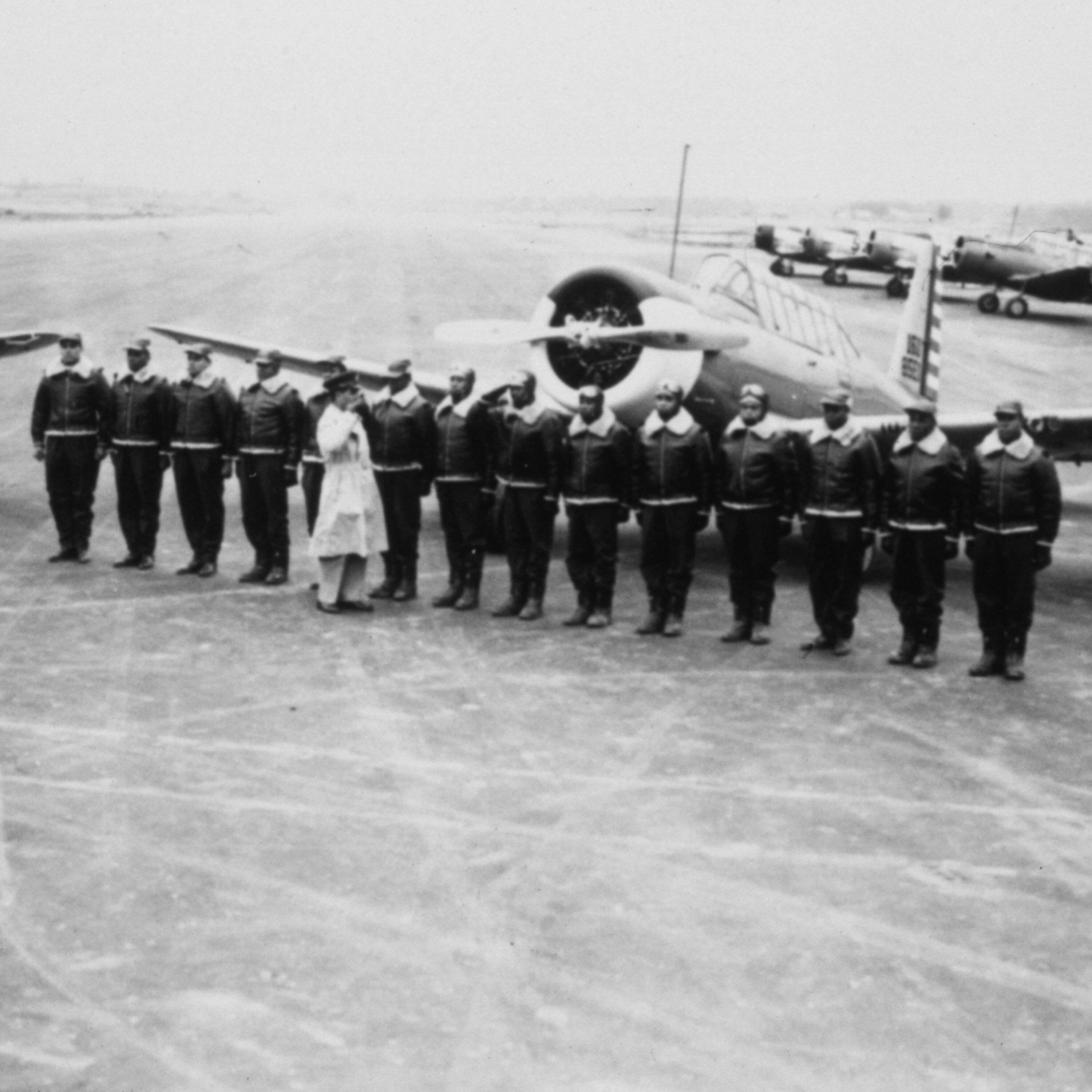
Up First from NPR
Dozens of Black pilots disappeared during WWII. Who are the men still lost?
00:17:26
Loading summary
Transcript51 lines
- [00:00]
Cheryl W. Thompson
Aisha.
- [00:00]
Ayesha Rascoe
I'm Ayesha Rascoe, and you're listening to THE Sunday STORY from Up first, where we go beyond the news of the day to bring you one big story. Today, the Tuskegee Airmen are celebrated as American heroes, black men who fought in World War II for a country that was still brutally segregated. Eventually, these men who shattered the color line as combat pilots would be awarded some of the nation's Highest honors. In 2007, the Tuskegee Airmen were awarded the Congressional Gold Medal by President George W. Bush.
- [00:37]
Cheryl W. Thompson
The Tuskegee Airmen helped win a war, and you helped change our nation for the better. Yours is the story of the human
- [00:47]
Ayesha Rascoe
spirit, and it ends like all great
- [00:50]
Cheryl W. Thompson
stories do, with wisdom and lessons and hope for tomorrow.
- [00:58]
Ayesha Rascoe
But some never got to see those tributes because they never made it home and their families felt they were forgotten by the US Government.
- [01:08]
Cheryl W. Thompson
The families I got to know, I think would be happy with someone knocking on their door, picking up the phone, saying, you know what? We haven't forgotten about your dad. We haven't forgotten about your brother. We haven't forgotten about your uncle something. But to have crickets, you know, is probably the most hurtful thing for them.
- [01:29]
Ayesha Rascoe
NPR investigative correspondent Cheryl W. Thompson is the author of a book that published earlier this year. It's called Forgotten the Search for the Lost Tuskegee Airmen. It tells the stories of 27 black airmen who went missing during flights overseas, leaving their families forever changed and still looking for answers. When we come back, I sit down with Cheryl to talk about her personal connection to the airmen and what she learned over years of research about who these men were. We'll be right back.
- [02:19]
Progressive Insurance Announcer
This message comes from Progressive Insurance. Insurance isn't one size fits all. That's why drivers have enjoyed Progressive's name your price tool for years. Now, with the name your price tool, you tell them what you want to pay and they'll show you options that fit your budget. So whether you're picking out your first policy or just looking for something that works better for you and your family, they make it easy to see your options. Visit progressive.com, progressive Casualty Insurance Company and affiliates. Price and coverage match limited by state law.
- [02:48]
Warby Parker Announcer
This message comes from Warpe Parker prescription eyewear that's expertly crafted and unexpectedly affordable. Glasses designed in house from premium materials starting at just $95, including prescription lenses. Stop by a Warby Parker store near you.
- [03:03]
Progressive Insurance Announcer
This message comes from feeling heavy and depleted. Prolon's five day fasting mimicking diet aims to make it easy to reset your Body habits and energy developed at USC's Longevity Institute. The goal of Prolon's nutrition program is to rejuvenate you from within by working at the cellular level to support fat loss, glowing skin and shar. Get 15% off, plus a bonus gift when you subscribe@prolonlife.com NPR
- [03:36]
Ayesha Rascoe
we're back with the Sunday Story. I'm here with Cheryl W. Thompson. Cheryl, welcome to the show and thank you for being here.
- [03:44]
Cheryl W. Thompson
Hi, Aisha. Thanks for having me.
- [03:46]
Ayesha Rascoe
I know that you have a personal connection to the Tuskegee Airmen. Tell me about that. And is that why you decided to write the book?
- [03:55]
Cheryl W. Thompson
So, yeah, my dad was a Tuskegee Airmen. You know, there were actually Tuskegee Airmen were more than pilots. There were like 14,000 of them who did all kinds of things. But he was actually in the flying school. And I write about how he didn't quite make it to the plane. Cause he had a little trouble landing. Okay. And when you're in the middle of a war, you gotta be able to land. You gotta be able to land. But it also explains a lot about why I drive the way I do. Because he taught me to drive.
- [04:25]
Ayesha Rascoe
Okay. Okay. So. But is that why? Because you have this personal connection? I mean, he was one of the Tuskegee Airmen, even though he wasn't a pilot. Is that why you wanted to do this book? Is this how you got interested in it?
- [04:39]
Cheryl W. Thompson
So actually, how I got interested in it. Cause he used to tell the stories he used to talk about. And the guys used to come to the house, you know, when I was a kid growing up. And I always think, gosh, I should have paid closer attention when I was a kid to the stories that he told the men who would come to the house. And he was in the cadet class with some really well known pilots, General McGee and the guy who is actually on the COVID of the book, William F. Williams. They were all in the same cadet class. But I digress. So how this came about was when, before I came to NPR, I spent 22 years at the Washington Post. And one day I was talking with a colleague who had done this amazing story on the remains of someone they thought was an airman, a Tuskegee airman they found over in Austria. And I said to him, I said, do you think there were others? And he says, oh, yeah, there were others. And so he knew about my dad, or I'm sure I had talked about it at NAJM at some point during my time there. And I said to him, I said, this is Your book. And he said, no, Cheryl, this is your book. And so a couple years passed. I thought about it and thought about it, and you know, as a reporter, I can write a news story, I can write a feature story. Writing a book is a whole nother. That's a whole nother level. And so it took me a few years to sort of get up the, the, the courage to go, okay, can I do this? Can I really pull this off? And then I decided, okay, let me see what I can do and pitch it and see if somebody will buy into it.
- [06:10]
Ayesha Rascoe
Well, well, I mean, we're so glad that you did take this on. And, you know, I mean, we'll get into, obviously, because you're talking about people who went missing in action, so there's loss. And we'll get into that. But first I want to talk to you about how this book, it really shines a light on the lives of these men. Was there anything that surprised you about their personal lives when you started doing this research?
- [06:36]
Cheryl W. Thompson
I think the one thing that surprised me most was really how young they were. But in their letters and in their conversations with relatives, they seemed so much older because they had to grow up so quickly. But most of them were fresh out of college. The oldest one was 28. The youngest one, I believe was 20. And it just, they were just starting out and they had their whole lives to look forward to. That was one of the things that surprised me. The other was just the kind of lives they led before they went off to war. I don't think any of them were wealthy. They didn't come from wealthy backgrounds. They came from all over the country, you know, from the south, from your home state, North Carolina. And you know, my dad was born in Dallas but raised in Chicago. So they just, you know, they were just these typical sort of starry eyed men who just wanted to serve this country and do something good. And there was this chance to do this. And, you know, a lot had been written about the airmen. Lots of things had been written about him, but nobody had ever really delved into their lives. And that's the angle I chose to take because it was so fascinating to me. It's like, who are these men who disappeared? Who are they?
- [07:50]
Ayesha Rascoe
Yeah. And I mean, I found it so powerful to hear from some of these pilots in their own words through their letters to their loved ones. And could you read a letter from John Henry Chavis? He was writing to his mother about his soon to be bride, who he called Cookie.
- [08:08]
Cheryl W. Thompson
Okay. I'm still a very lucky Guy, look at the nice letter I got from her mother. The next time you talk to Cookie, be sure to welcome her to the Chavis family. But by the way, when are you gonna congratulate me? I'm sure you're happy over my having such a perfect girlfriend. Who writes like that now, right?
- [08:33]
Ayesha Rascoe
No, and that's the other thing is reading those letters, I was like, what have we lost in the fact that people don't send, they don't communicate like that anymore. But from this, like, he's so like, you know, starry eyed and like, you know, and just like got the perfect girlfriend, which, you know, everybody feels like at that, you know, at that first age, like, how did you feel going through these personal effects? And like, how did you get this letter?
- [08:59]
Cheryl W. Thompson
So I got this letter from Chavis nephew and niece. You know, I got lucky. You know, journalism is a lot about luck. But writing this book was a lot about luck too. Because so many of these relatives actually kept or were handed letters were handed down from other relatives to them and they just, they kept to their credit. They kept them. And I got, you know, other letters were just as sort of endearing.
- [09:26]
Ayesha Rascoe
Yes, yes, endearing.
- [09:28]
Cheryl W. Thompson
Very heartwarming. Very heartwarming. Very endearing. Very real, very from the heart kind of letters. Yeah, yeah.
- [09:34]
Ayesha Rascoe
And you know, reading that letter from Chavis filled with all of this hope and joy. The other part of the book is that it makes it really sad when you learn of the tragedy of his disappearance. On a mission in February 1945, the military blamed engine trouble for Chavis plane going down. But as the book shows, like, there is often like just a lack of clarity about what happened when these pilots went missing. Was that just a feature or like just the nature of war at that time? Were these type of crashes common?
- [10:13]
Cheryl W. Thompson
Well, you know, there was a lot going on. Cause there was a war going on. But I think that the black pilots were ignored more than others. Right. You know, when war was over or even during the war when some of these men disappeared, some of the guys they were with over in Italy, which is where they were, that's where they were based, they went looking for them. Their fellow pilots went circling for them or looking for them. And the government certainly was aware that they disappeared because they always had to file. If somebody went missing, you had to file a report. But oftentimes, you know, if they went down in enemy territory, the government say, well, it was, you know, it was too dangerous for us to go and search for them. Okay, fine. But then there's after the war. And, you know, sometimes it took two, three, four, five years. I'm not sure what they hoped to find after all that time. After all that time. And sometimes they didn't search at all.
- [11:10]
Ayesha Rascoe
Yeah. I mean. And so do you attribute that lack of urgency to the fact that this was a segregated military at that time and that these were black men and that they were not valued as much at that moment?
- [11:20]
Cheryl W. Thompson
Oh, I absolutely think that plays a role for sure. I mean, talking to, you know, not only learning about the 27, but also the Tuskegee Airmen pilots who flew over in the 332nd Fighter Group who were still living when I started this book four years ago now, going on five, having conversations with them and meeting with them. The stories they told me about how they were treated was just unimaginable, that they did not want you there, period. They didn't want them flying the planes. They didn't want them there. You don't forget things like that, and you don't forget when people treat you badly.
- [12:02]
Ayesha Rascoe
When we come back, Cheryl W. Thompson will tell us about her conversations with the family members of missing Airmen. Stay with us.
- [12:14]
Warby Parker Announcer
This message comes from Schwab. Self directed investing, Trading, full service wealth management, Automated investing, financial planning, Thematic investing, retirement planning. And to think that's just a small taste of what Schwab offers, because Schwab knows that when it comes to your finances, choice matters. No matter your goals, investing style, life stage or experience, Schwab has everything you need all in one place so you can invest your way. Visit schwab.com to learn more. This message comes from Jerry. Many people are overpaying on car insurance. Why Switching providers can be a pain. Jerry helps make the process painless. Jerry is the only app that compares rates from over 50 insurers in minutes and helps you switch fast. With no spam calls or hidden fees, drivers who save with Jerry could save over $1,300 a year. Before you renew your car insurance policy, download the Jerry app or head to Jerry AI, npr.
- [13:17]
Ayesha Rascoe
We're back with the Sunday story. I've been talking with my NPR colleague Cheryl W. Thompson about her new book, forgotten the Search for the Lost Tuskegee Airmen. Talk to me about the impact on the families because it sounds like, you know, they would get the telegram that their loved ones were MIA and a year later they would be declared dead. And how did the families move forward and how did they deal with just the not knowing?
- [13:46]
Cheryl W. Thompson
I don't think, and I think I'm safe in saying this for the families I met with and talked to repeatedly, they never got over it. Right. They never got over. Some of them still have siblings, and they're in their 90s now. And so it destroyed their parents, not only moms, but dads as well, who just, you know, there was one father who just want his son that was.
- [14:10]
Ayesha Rascoe
Yeah.
- [14:10]
Cheryl W. Thompson
To be in the. And to go off to war.
- [14:12]
Ayesha Rascoe
He didn't want him to go.
- [14:13]
Cheryl W. Thompson
He didn't want him to go because he knew he didn't want to lose him. He didn't want to lose him, and he lost him. And for the children. Right. Because some of them had children. The oldest one I found at the time her dad disappeared was 3, and she's now 84. And she has said to me, and I talked to her just the other day because I keep in touch with these families because it's sort of like, you know, when you spend time with these people over years, you just have a relationship, you develop some kind of relationship with them. And she says, you know, I'm still waiting. I'm hoping that one day, you know, somebody will knock on my door and say, we found your dad.
- [14:57]
Ayesha Rascoe
Well, is the government looking like, did you find any evidence of that? Are they looking. Are these families getting any type of support?
- [15:05]
Cheryl W. Thompson
So none of the families, with the exception of two that they found in the last, you know, eight years, know, the families told me they have never heard from the government. The government has just totally ignored them.
- [15:18]
Ayesha Rascoe
Why do you think this hasn't been talked about more? I mean, I feel like we hear. Not saying that we could ever hear enough about the Tuskegee Airmen, but we. We hear about the honors. We, you know, they, you know, in the State of the Union, they're getting the honor at the White House. But why haven't we talked more about those that were lost and their remains were not found? Why have we not talked about that?
- [15:39]
Cheryl W. Thompson
That's a good question. That's a question you should pose to the government and ask them, like, what are you guys doing? Why hasn't this come up? Because, I mean, they were honored, you know, back in. I want to say it was 2007 by the Bush, George W. Bush White House when they got the Congressional Medal of Honor. Actually, it was on my birthday. And so those who were still around, of course, went to the White House and they were very touched it and honored by it. And then President Obama, in the homes I visited with families, there was some kind of proclamation from President Obama on the walls of these homes, right?
- [16:14]
Ayesha Rascoe
Yes.
- [16:15]
Cheryl W. Thompson
Yes, there were and then, you know, that's a question. That's a really good question. Why?
- [16:21]
Ayesha Rascoe
What do the families that you talk to, what do they want from the government? Do they want they obviously they want their loved ones found, but do they want even just an acknowledgement?
- [16:32]
Cheryl W. Thompson
The families I got to know, I think would be happy with someone knocking on their door, picking up the phone, saying, you know what? We haven't forgotten about your dad. We haven't forgotten about your brother. We haven't forgotten about your uncle something. But to have crickets, you know, is probably the most hurtful thing for them is to just because in their mind it says nobody cares.
- [17:00]
Ayesha Rascoe
Well, what do you think? What do you want the public to learn from this book because you've now, you know, set this record and borne witness to the lives of these men and put it in black and white so we can all see the honor that they served with and lost their lives. Like, what do you want the public to take from this?
- [17:22]
Cheryl W. Thompson
You know, I want I would love it if people really, like, realized how amazing these men were, not just as soldiers, not just as patriots, but they had lives before this war. They were like uni, right? They were, you know, they were most of them were college educated or had been to college, and they were just starting out. And they had girlfriends, right, like John Chavis. And they had wives and they had children and they had families who loved them. And I don't want people to forget that, you know, because we know that the Tuskegee Airmen existed, right? We know that. But what do we really know about who these men were? They had people who loved them, who cared about them, who never, ever forgot them. And now, you know, they have no closure. And most all, you know, of course, all the parents are gone. They never got closure. They never had a body to bury. You know, it was just they were left hate the government. You know, at some point kind of left them hanging by not keeping in touch with them.
- [18:31]
Ayesha Rascoe
Cheryl, thank you so much.
- [18:32]
Cheryl W. Thompson
Thank you, Aisha, for having me.
- [18:37]
Ayesha Rascoe
That was NPR investigative correspondent Cheryl W. Thompson. You can find more of her work@npr.org her new book is Forgotten the Search for the Lost Tuskegee Air. This episode of the Sunday Story was produced by Rennie Swernowski and edited by Justine Yan. The engineer was Jimmy Keeley. Special thanks to Ryan bank and Ed McNulty, who produced and edited the original interview. The Sunday Story team includes Andrew Mambo, Jenny Schmidt, and our senior supervising producer, Liana Simstrom. Our executive producer producer is Irene Noguchi. I'm Aisha Rascoe up first is back tomorrow with all the news you need to start your week. Until then, have a great rest of your weekend.
- [19:44]
Warby Parker Announcer
This message comes from Schwab. At Schwab you can get everything from self directed investing to full service wealth management all in one place. No matter your investing goal, life stage, amount to invest, or know how you can invest your way with Schwab. This message comes from Mint Mobile. If you're tired of spending hundreds on big wireless bills, bogus fees and free perks, Mint Mobile is for you. Shop plans@mintmobile.com Switch taxes and fees extra. See Mint Mobile for details. This message comes from Bombas. Your feet hit the ground an average of 2,000 times in a mile. Bombas sports socks are designed to support you every step. Sprint to bombus.com NPR and use code NPR for 20% off your first purchase.