Loading summary
Transcript68 lines
- [00:00]
A
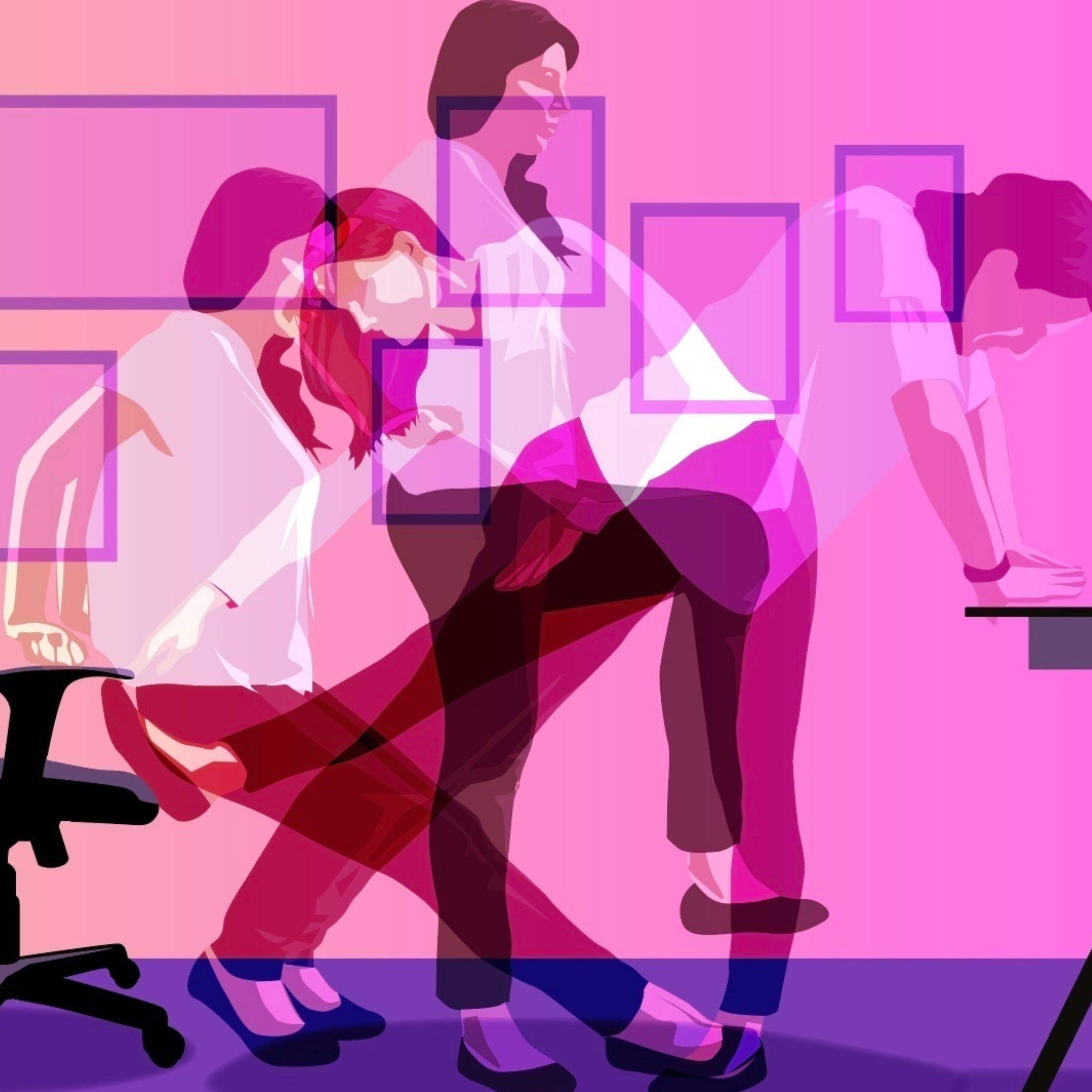
Aisha I'm Aisha Roscoe and you're listening to the Sunday Story from Up First. Now, I'm guessing that a lot of you listening are like me. You spend a lot of time searching, scrolling and tapping on your devices. And a lot of times you're sitting kind of like a little shrimp. You're hunched over you're screen with your shoulders all up around your ears. And by the end of the day you feel stiff, your neck hurts, your eyes burn, your mind is foggy, you feel like you need to touch grass. At least that's how I'm feeling. But maybe not after today, because today I'm talking with someone who's going to pitch me on a challenge.
- [00:47]
B
The point is to feel good in your body, Aisha, to reconnect your body to your brain, to feel feel like a human who is in the world, not just like a brain popped on top of a bag of flesh.
- [01:04]
A
You might recognize that as the voice of Minouche Zamorodi. She hosts the TED Radio Hour and we've had her on the Sunday Story before to talk about how technology has shaped us.
- [01:15]
B
We all feel awful at the end of a long day sitting attached to our devices. But why? What exactly is happening to us physically when we use our technology? And what can we do about it?
- [01:28]
A
Since we last spoke, Minouche has spent three years combing through the results of a massive study with thousands of NPR listeners in partnership with Columbia University Medical center, and the results are at the heart of her new book, Body the Hidden Health Cost of the Digital Age and New Science to Reclaim youm well Being. Today she's back to explain how we can reclaim our humanity in a world that's designed to keep us sitting and glued to our screens.
- [01:59]
B
We're talking about like some pretty fun, positive ways of just having more joy and energy in your life.
- [02:09]
A
We'll be right back.
- [02:21]
C
This message comes from Midi Health CEO Joanna Strober shares the personal experience that led her to start a virtual care platform for women in perimenopause and menopause.
- [02:31]
D
I was having anxiety, I had gained weight, I wasn't sleeping. And my primary care doctor never once said that perhaps I was in perimenopause and that all these things could be related to my hormones. So I had a really tough time for quite a while and a friend recommended that I try a concierge doctor. She prescribed hormones for me, a combination of estrogen, progesterone and testosterone. And I felt very relieved that I had this care. And I also had a lot of sadness that I had spent such a long period of time going through this and not getting the right care. And so essentially what we really want to do at MITI is democratize access to this type of care.
- [03:09]
C
MIDI Health committed to helping women in midlife with perimenopause and menopause care, accessible via telehealth visits@join MIDI.com this message comes from Saatva, voted best luxury mattress by Sleep Foundation. Saatva's handcrafted mattresses are designed for restorative sleep at prices below traditional retail. Save up to $625@saatva.com NPR this message comes from Equip Health. Eating disorders don't just show up in a doctor's office, they show up in everyday life. That's why EQIP's virtual eating disorder treatment program is designed to treat people where real life happens. Patients get a dedicated care team, including a therapist, dietitian, medical provider and peer mentor. EQIP is covered by many commercial insurance plans and available nationwide for all ages. Learn more equip health. NPR.
- [04:12]
A
We're back with the Sunday story. Minouche, welcome.
- [04:16]
B
It's great to be back. Ayesha, thank you for having me.
- [04:20]
A
So you have a new book out this month. It's called Body Electric, and that's a great title. Thank you. And it's based on research you started back in 2023. So kind of set the scene what's been going on and the zeitgeist around tech use since we first spoke.
- [04:40]
B
Yeah. So when we first spoke, I described feeling like crap, like you described in your introduction. At the end of the day, feeling totally exhausted from spending so much time looking at a screen and wanting to understand why I felt so tired. And in the last few years, not only have we done this big step study, but I've come to understand that as much as we have talked about the mental health effects of too much time online or social media, I think we are missing the biological, the body part of this conversation.
- [05:15]
A
So. So tell me more about that. Like the physical effects on our bodies of this rise in our reliance on technology, like what's happening to us as we treat our devices as kind of extra extensions of our limbs, you know, basically another part of our hand and, you know, give in to all of the conveniences they offer. And they do. They offer a lot of entertainment. What's wrong with that?
- [05:45]
B
Okay, so we're gonna go sort of twofold. First of all, there's the fact that when you are on A screen. You are mostly sitting, and that has the effect of sort of kinking your body in two places, like. Like a garden hose at your torso and your knees. You're kinked. Pressure backs up. Your blood flow sort of gets limited. And also, your leg muscles are not stimulated. You need your leg muscles to be stimulated in order to suck the glucose and the lipids out of your bloodstream and to process them and to push oxygen up to your brain. If you don't do those things over weeks, months, years, chronic conditions like diabetes, obesity, cardiovascular issues can start to creep in. Three out of four Americans right now have one of those chronic conditions, and many of them are preventable. And then there's the screens. Right? So every time we're looking at a screen, we often get sucked in to the point that we're not paying attention to what our body needs. We. Our body might be screaming for a break. We might be feeling so anxious and our back is killing us, but something called interoception is interrupted. This is the conversation between the body telling the brain what we need, and we just don't hear it.
- [07:05]
A
Okay. I mean, you know, look, I. I hear you. That. That sounds. Well, that doesn't sound good. Sounds bad. Um, and I get the concerns about the glucose and all of that. As I get older, I'm thinking about that stuff, too. So. So what have you learned about how to address those physical issues that we're all facing?
- [07:27]
B
Yeah. So back in 2023, when I was wondering what we could do to feel better, I heard about the research of a physiologist at Columbia University Medical center named Keith Diaz. And here's what Keith wanted to figure out.
- [07:42]
A
If people are going to change their behaviors and tackle this sitting problem that we have, they need targets to shoot for. They need guidance on what do I do. And so really, the goal of my lab is to try to figure out a prescription. And in particular, what we're really interested in is what's the least amount of movement that you can do to offset the harms of sitting?
- [08:10]
B
So in Keith's lab, they found that five minutes of movement every 30 minutes. And we're talking gentle movement. Aisha. Walking, two miles per hour, a stroll that radically improved blood sugar, blood pressure, people's focus, and it reduced fatigue.
- [08:29]
A
Really? Okay, but. But every 30 minutes. So every 30 minutes.
- [08:35]
B
Well, that was the gold standard, and that was what we wanted to test. Did it need to be 30 minutes to feel better? But we. In his lab, if you wanted to slash your glucose and blood pressure, that was the way to do it.
- [08:53]
A
So. So how does that compare to going to the gym once a day? Which that would be great. Or the other things we're. We're told to do to try to stay healthy, like using a standing desk.
- [09:04]
B
Yeah, well, those were my questions too. And I was so sad to hear the answer that unfortunately, it is not enough to go to the gym in the morning or evening if you sit for the rest of the day. I think we think of exercise as something you check off your list a couple times a that kind of exercise. Don't get me wrong, it's still really important. You can build muscle strength, cardiovascular capacity, but if you sit for the majority of your waking hours, you are still going to have the health harms of doing that. You need consistent movement throughout the day, interstitial movement. And unfortunately, a standing desk isn't enough either. In fact, they have found that if you stand for over two hours a day, you run the risk of getting blood clots and varicose veins. So to get the blood flowing to get oxygen, you need these little breaks throughout the day.
- [10:00]
A
Okay, so then you posed a challenge to your listeners.
- [10:05]
B
Yeah, so Keith was kind of depressed. He's like, I have found this formula, but I don't think people can do it. And we were like, well, let's ask them. Let's see if they can. So NPR and Columbia combined forces, and more than 20,000 listeners signed up to join the study. They could move for five minutes every half hour, five minutes every hour, or five minutes every two hours. And we wanted to test, you know, was it feasible? Could people get these little movement breaks into their lives? And what happened if they did?
- [10:38]
A
And, and how did it go for them?
- [10:41]
B
Well, it was fascinating. So 80% who committed to doing it were able to stick with it for two weeks. 82% actually liked it. We. We saw up to 28% less fatigue in our participants. And actually, all those interruptions didn't reduce productivity. It actually made productivity rise slightly, 4%. Here I wanna play you some voices of people who took part. My energy went way up. So when you get home from work, you don't feel like cooking dinner, you don't feel like doing anything. I didn't really get any of that while I was doing the study. I feel so much better, have more energy, can focus better, and I'm happier. I felt as if I could go for longer, and I really felt like the cloud in my brain kind of dissipated. Okay, so those were voices from a man named Jordan Smith, Roger Eastman, and A woman named Dana Lopez Miley. And I want to tell you a little bit more about Dana Aisha because we have stayed in touch. So Dana actually had serious health issues when she began the study. And she was working out in the morning and it wasn't really making much of a difference. So with her doctor's permission, she joined the study. And within a couple weeks, she started seeing her blood pressure drop by 40 points, which was crazy. Within six months, she was able to start tapering her insulin. I texted with her last week. She is no longer diabetic. She's not even pre diabetic. Her cholesterol is great, her blood pressure is just fine. And she actually went on sort of a health kick. She took care of her sleep issues, she started eating properly and she got certified as a health coach. So now she were in her job. She works in HR for a large hotel company. She also is going to be a health coach. So she really saw that all these little changes added up to being a big life change for her.
- [12:44]
A
I mean, that's huge. Like, that's a really big change for Dana. Like, was that true for a lot of people in the study that they like experience these wide ranging impacts on their health?
- [12:58]
B
Yeah, I think for her, she told me just feeling good in her body again, regained her confidence. She was feeling like there was nothing she could do to improve her health. And we heard that from so many people that just adding a few of these interruptions per day, they didn't have to go crazy and have 16 interruptions or movement breaks. Maybe that just adding four to five on average. People started to feel like they could focus again. Like their optimism came back at the end of the day. Like they weren't as anxious that they felt like they could sort of go home and be present for their family. They had enough energy to clean up around the house. They didn't feel like they just had to lie on the couch. So little tiny steps can add up to be a lot.
- [13:48]
A
But at the same time, is, is this a little too good to be true? Like, does this really work this well for everybody?
- [13:57]
B
Yeah. I think the thing that we're saying is even just adding a little bit of movement to your life can make a profound difference. It is a low lift thing you can try. Maybe it has huge results. Maybe you just feel a little bit better that day.
- [14:14]
A
Okay, so it's my understanding that you are trying to put me to the challenge. Yes, but I gotta understand this challenge. So these people are walking around for what are we doing? Are we moving our legs? Are we walking in place? I'm trying to understand, Zach. What does this movement look like?
- [14:35]
B
Okay, so we found that the most feasible cadence was walking for five minutes every hour. But when I say walking, I just mean moving your legs, Aisha. So you can do what I call the zoom and shuffle. If you're listening to a presentation on zoom or you're in a conference call, you can turn off your camera, shuffle back and forth side to side. You can march in place. Try to take some of your phone calls with your earbuds in and walk while you're on a phone call. If you need. Wanna take a break and get off your screen. Great. Walk around the house. Pick up all the dirty laundry and gather it all together. You can vacuum. You could just take a la around the block. Anything that gets your body movement, and it doesn't. You don't have to go crazy. We don't need you to sprint or do burpees or anything. Remember, the Standard was walking 2 mph. That is really just not that fast. It's a stroll. Have a dance party, Aisha, with your kids.
- [15:35]
A
Okay. So you can have a dance party. You can also walk in place. I kind of like that. You can walk in place or just kind of stroll around the office. So I got an office, so I could just walk back and forth a little bit. That, like, just walking back and forth for, like, five minutes. That's. That's okay. I'll start today. I'm gonna start today.
- [15:57]
B
Okay. And, you know, I'm. Give it to us straight, Aisha. We want to hear, like, when it goes wrong. And, you know, this is science.
- [16:07]
A
All right, well, I'm gonna head off and do the challenge, and Minouche will talk when I get back. Okay.
- [16:14]
B
I'm psyched.
- [16:22]
C
This message comes from Midi Health co founders Joanna Strober and Dr. Kathleen Jordan discuss why they started a virtual care platform to empower and educate women in perimenopause and menopause.
- [16:34]
D
Historically, perimenopause and menopause have been very stigmatizing. So people haven't wanted to admit that they are in perimenopause and menopause as though it was, like, embarrassing, which is insane. It's just something happening to your body. So one of the things that we're trying to do is destigmatize these topics. Perimenopause and menopause are just women's health, so we try to educate women all the time. Maybe it's your hormones, and we would
- [16:59]
B
like to help you.
- [17:00]
A
Yeah. And I find women actually want to talk about it. It's one of the things they always comment at MIDI is that they finally feel heard. One of the ways that women find MIDI is actually from other women. And I think it's meaningful.
- [17:15]
C
MIDI Health committed to helping women in midlife with perimenopause and menopause care. Accessible via telehealth visits@joinmidi.com this message comes from Equip Health. Eating disorders don't just show up in a doctor's office. They show up in everyday life. That's why EQIP's virtual eating disorder treatment program is designed to treat people where real life happens. Patients get a dedicated care team, including a therapist, dietitian, medical provider, and peer mentor. EQIP is covered by many commercial insurance plans and available nationwide for all ages. Learn more Equip Health NPR.
- [17:56]
A
We're back with the Sunday Story. It's a few days later and I'm sitting back down with Manousa Morodi after trying her approach to shaking up the screen, living inside my head and just getting more active.
- [18:10]
B
Aisha, I have been thinking about you all week.
- [18:15]
A
Oh, my goodness.
- [18:17]
B
I am dying to know. I am dying to know how did it go?
- [18:22]
A
But, well, you know, I always love some good audio. So I recorded myself doing these walking breaks.
- [18:32]
B
I love it.
- [18:33]
A
So these are. Let me, let me play you some of my inner thoughts. I'm doing a lot today because this is the first, the first day. I try not to do so many. But it is harder after you eat because I just ate. I just had some nando, some chicken. It's grilled chicken. It's not fried. It's a potatoes. Five minutes is a long time. At one point I thought that the timer must have went off and I missed it. And I was like, oh, I don't, I must not have heard it. And because clearly I've been walking along in five minutes and baby. Okay, so I am doing. I think this is my third thing today.
- [19:23]
B
I forgot.
- [19:25]
A
So I got off track. I was supposed to already missed an hour, but I remembered it again and so I'm doing it again. But I've told, I told Evie, my boss, that if she sees me pacing, it's not because I'm losing my mind just yet. Also, I think I'm gonna have to walk not just in my office cause I get a little dizzy.
- [19:51]
B
I love hearing you muttering to yourself.
- [19:57]
A
Yes, yes, I was I muttering to myself. You know, I think the first day was the best I was really, really on it. I did notice that five minutes is a long time. It's longer than you think, like. Cause you think, oh, just getting up five minutes. But it's like, it's a good little walk, right? Like, it's a good little walk. It did get harder as time went on. I felt like my days got complicated. You know, it's like, I'm running here and there. I'm behind. I'm late. I gotta get here. And so. And I was walking. Cause I was trying to move more in general. Like this. This coincided with me also trying to move more in general and the weather being good. So I was, like, really doing these walks, like, longer walks. Like, in the morning, I mean, go to the park by my house and just walk. Walk the track and then come back. And then it. So it made me also start going out with my kids a little more. Like. And then, like, my. My youngest, she really wants to ride her bike. So we would get. She would get her bike, and then the other girls, they. They would get their scooters. And. And so it. It did become like a family thing of us all, like, getting out and walking. Right? And then, you know, I. Like, I was, you know, grilling earlier this week, and so I was like, you know, I'm walking around, but I could also make this a dance break. I got, you know, So I was like, we could do we. And I don't know if it was five minutes of dancing, but I was like, this could be dancing now. They were like, stop dancing. We don't want to see that. But I was. They didn't want to. Yes. But there were days where I did, like, I think Saturday. I don't think I did any of it. I think it was a lot going on. And then, you know, and then.
- [21:50]
B
Okay, okay, so wait. I have a question. First of all, tell me about. You're talking about what you did, but tell me about how you felt.
- [21:58]
A
I think I felt so. I think the first day I was like, I don't really feel anything. Second day. I think by the second day, I started feeling like. I think I felt better with the movement. It made me feel better, and I think that's why I was seeking it out.
- [22:16]
B
So, okay, so here's what I hear you saying, which is that it was hard to stick to. It was a little annoying. That it's definitely what we heard from our study participants, but that it also just made you think about moving generally more and integrating it into your life. And so, you know, maybe you're one of those people, Aisha, who doesn't need to have one more thing on your list to tick off. But if this jump starts, just moving more on a daily basis with your kids, and maybe you feel a little more positive, but you also listen to your body when you really need to rest. I mean, that seems like pretty exciting here. We're not talking about an intense new exercise regimen, and we're not talking about, you know, wagging your finger at your kids and yelling them to get off their screens and get outside. We're talking about, like, some pretty fun, positive ways of just having more joy and energy in your life.
- [23:18]
A
Well, so you gave me advice for how to approach this, and I'm gonna keep trying at it. But how else can movement breaks maybe look different for people in different situations? Like people of different ages, different work setups, or people, like, may have mobility issues?
- [23:36]
B
Yep, yep, Absolutely. So, you know, some of the things that we heard and what I continue to hear from different people is, for example, students, this idea that, like, rethinking that time between classes as not just a moment to check your phone or scroll on TikTok, but maybe go for a quick walk around the quad because you know that that's the way you're not going to fall asleep in class the next time around. Right? Like, so linking behaviors and times that are already in your schedule and linking it to what you want to feel going forward. Right. You wanna be able to. To pay attention in class. Great. This is a great way to do it. You have those five minutes between class. Take advantage of them or people who work in offices. I just talked to somebody yesterday. He's like, I don't want more gadgets or digital gadgets. He bought himself an egg timer. Another person, his colleague uses the Pomodoro method, which has been around for a long time, which is this idea that you work for 25 minutes and then you take five minutes off. But, you know, instead of again rewarding yourself with texting or with a friend, stand up and go. You and your colleague can go walk to get. Fill your water bottles and walk back. Another person tells me that she just goes up the stairs to the next level of the office and then comes back down. And that works for her. And if walking is not an option or using your legs is not an option, there is research that shows that pumping your arms, moving your torso around, getting up your heart rate that way also has great, great benefits. And then, you know, for older people, some of them said, you know, I'm busy all day I am moving, I'm gardening during the day, I'm looking after my grandchildren. It's the evenings, those long evenings. So some people make a date with the neighbor. We meet at 7 o' clock every evening. We walk down the block, we check out the birds that are nesting there and we walk. So trying to link it to something that you also need in your life, which maybe is socializing or being in nature, however that works for you. So I think the idea is like this is not punishment. It is not an exercise regime. It is a way to be out in the world, which we know. Nature makes us feel better, socializing makes us feel better, moving our bodies makes us feel better. And those are things that are hard to get when we are sitting and looking at screens. It's not to say screens are the enemy. We've heard that a lot. This is to just say, let's remember all the other things that you need in your life too.
- [26:19]
A
Well, thank you for this and bringing this to me. And you know, it seems like it's making a real difference. I have to. I'll let you know if I see you around the office or something, how it's going to be.
- [26:31]
B
Aisha, thank you for being game. I appreciate your enthusiasm and willing to experiment.
- [26:39]
A
That was Minusa Morodi, host of NPR's TED Radio Hour podcast. Her new book is called Body Electric the Hidden Health Cost of the Digital Age and New Science to Reclaim youm well Being. This episode of the Sunday Story was produced by Rennie Svernach. Leanna Simstrom edited this episode with help from Sanaz Mesh Campore. The engineer was Jimmy Keeley. The Sunday Story team includes Andrew Mambo, Jenny Schmidt and Justine Yan. Our executive producer is Irene Noguchi. I'm Aisha Roscoe. Up first is back tomorrow with all the news you need to start your week. Until then, have a great rest of your weekend.
- [27:31]
C
This message comes from Midi Health co founders Joanna Strober and Dr. Kathleen Jordan discuss why they started a virtual care platform to empower and educate women in perimenopause and menopause.
- [27:43]
D
Historically, perimenopause and menopause have been very stigmatizing. So people haven't wanted to admit that they are in perimenopause and menopause as though it was like embarrassing, which is insane. It's just something happening to your body. So one of the things that we're trying to do is destigmatize these topics. Perimenopause and menopause are just women's Health. So we try to educate women all the time. Maybe it's your hormones and we would
- [28:08]
B
like to help you.
- [28:09]
A
Yeah, and I find women actually want to talk about it. It's one of the things they always comment at MIDI is that they finally feel heard. One of the ways that that women find MIDI is actually from other women and I think it's meaningful.
- [28:24]
C
Midi Health committed to helping women in midlife with perimenopause and menopause care Accessible via telehealth visits@joinmidi.com this message comes from Mint Mobile. If you're tired of spending hundreds on big wireless bills, bogus fees and free perks, Mint Mobile is for you. Shop plans@mintmobile.com Switch taxes and fees extra. See Mint Mobile for details.
- [28:52]
B
This message comes from the International Rescue Committee. Right now, in places like Gaza, Sudan and Ukraine, conflict and disaster have forced millions of families into temporary shelters without basic supplies and in urgent need of aid. With your help, the International Rescue Committee is on the ground in more than 40 countries, delivering food, clean water, shelter and medical care where it's needed most. Donate today by visiting rescue.org rebuild.