← Up First from NPR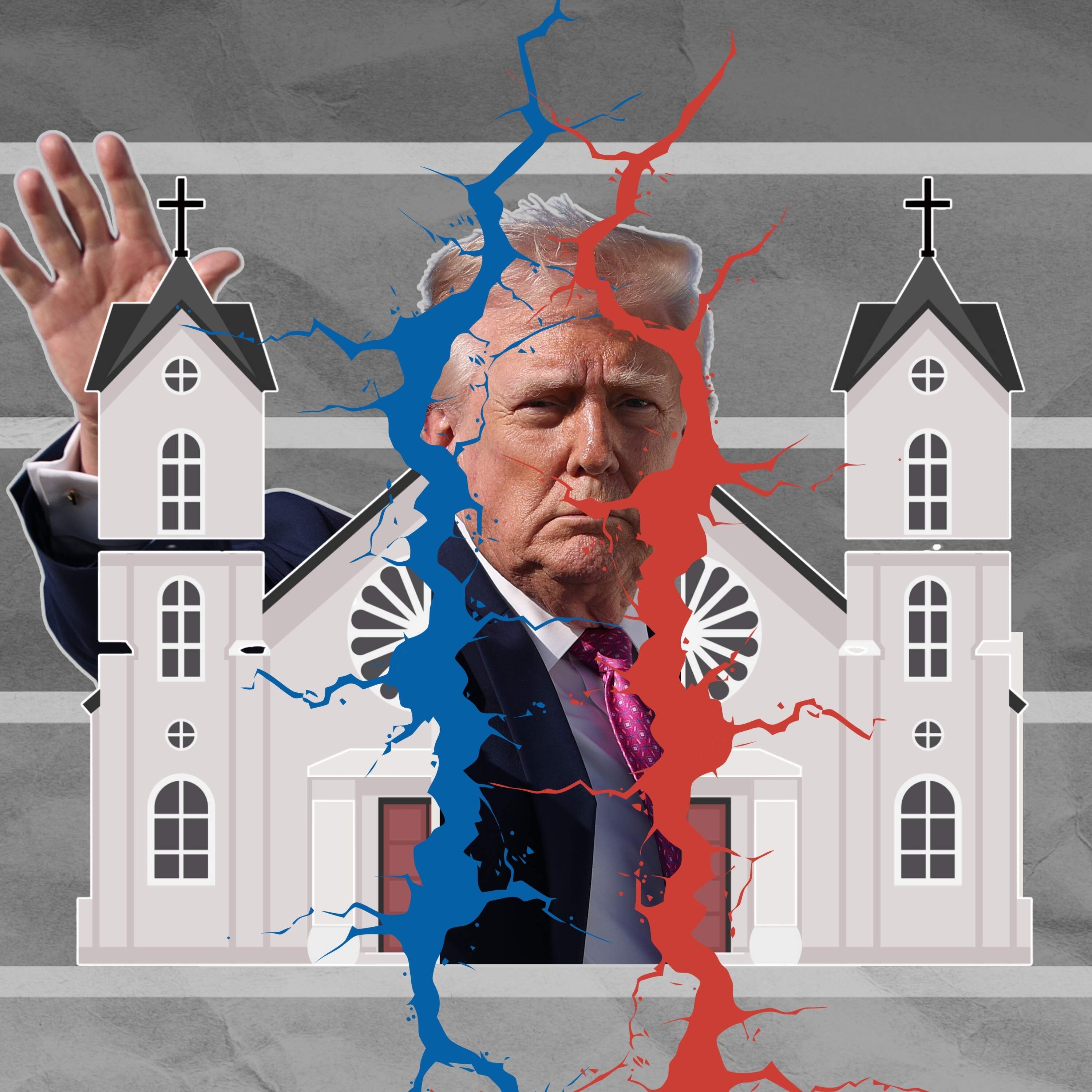
Up First from NPR
'The Bible is not a policy manual’: Christians reckon with immigration under Trump
00:24:23
Loading summary
Transcript58 lines
- [00:00]
A
Aisha I'm Aisha Rascoe, and this is the Sunday Story from Up First. I often think about my faith and how it affects the way I carry myself as a journalist and as a journalist who is a Christian, I have obviously been noticing the Trump administration use biblical language and imagery online on on social media to justify foreign and domestic policy decisions. And I'm always curious and interested to hear from people who have studied the Bible and studied Christianity and religion who can talk about the biblical context that these ideas are being pulled from and what that says about the faith that this administration is portraying. I guess that's why I was really, really interested when I heard a recent interview by Brittany Luce, who hosts NPR's it's been a Minute podcast. She sat down with two people who think a lot about the separation of church and state and also about what happens when religion is mixed with policy in America. Jason DeRose is NPR's religion correspondent.
- [01:34]
B
Part of the rhetoric of conservative white evangelicals is that they are the oppressed minority in the United States.
- [01:43]
A
Reverend Dr. Gabriel Salgueiro is the president and founder of the National Latino Evangelical Coalition. He's also the pastor of the Gathering Place, an Assemblies of God congregation in Orlando, Florida.
- [01:57]
C
Look, I think like in any community, evangelicals are not a monolith. And oftentimes when headlines say evangelicals say they mostly mean white evangelicals.
- [02:08]
A
What I think makes this conversation special is how both guests engage with the idea of welcoming the stranger in Christian thought and how those values come to bear on current debates in the US about immigration and war. Brittany's insightful conversation with Jason DeRose and Reverend Doctor Gabriel Salgueiro after the break.
- [02:39]
D
This message comes from Capital One with the Venture X card. Earn unlimited double miles, a $300 annual capital one travel credit, and access to airport lounges. Capital One what's in your wallet? Terms apply details@capitalone.com support for NPR and
- [02:56]
E
the following message comes from Rippling. Tired of using HR systems that feel fragmented and manual? Rippling unifies hr, IT and finance into a single platform to run your business. In as little as 90 seconds, rippling can onboard a new employee, automatically setting up payroll, benefits, devices and corporate cards all from one place. It's a simpler way to run your business. Head to rippling.com first and sign up today. That's R-I P P L-I-N G.com first.
- [03:29]
D
This message comes from Mint Mobile. If you're tired of spending hundreds on big wireless bills, bogus fees and free perks, Mint Mobile might be right for you. With plans starting from 15 bucks a month. Shop plans today@mintmobile.com Switch upfront payment of $45 for 3 month 5 gigabyte plan required, new customer offer for first 3 months only. Then full price plan options available, taxes and fees extra. See Mint Mobile for details.
- [03:56]
A
We're back with a Sunday story. Here's Brittney Luce, host of NPR's It's Been a Minute podcast with NPR's Jason DeRose and Reverend Doctor Gabriel Salguero.
- [04:08]
F
Gabriel? Jason, thank you so much.
- [04:09]
C
Hi, Good to be here.
- [04:10]
B
Hello.
- [04:11]
F
To start us off, how are you both seeing churches respond to the presence of ICE in their communities across the country? Gabriel, we'll start with you.
- [04:20]
C
Look, I think that at least in the Latino evangelical community, there's a deep sense of anxiety and disillusionment. People are severely disappointed with these indiscriminate enforcement actions that in many cases are contributing to 25, 30% decrease in worship attendance, parents being detained and deported, and children either in the foster care system or in care of somebody they trust. So the churches are really, really I think the word is righteous indignation around these indiscriminate enforcement actions.
- [04:56]
F
And Jason, what are you saying?
- [04:58]
B
Well, I've reported largely around the Los Angeles area where I'm located, and also from Minneapolis, and I've talked to many people elsewhere, Texas, Florida, where these enforcement actions have been taking place. And I would say that it depends on the kind of church. You know, if it is, say, a white progressive church in Minneapolis, I found a lot of people very much out in the streets following DHS agents around blowing whistles to alert people. And these were organized by faith leaders in the Twin Cities area. If it's a predominantly Latino church I've been talking to for months now, a predominantly Latino Catholic congregation here in Los Angeles that, you know, they're responding by bringing food to members who are too afraid to come to church. So they're organizing grocery distribution to their members. So there's really a range of responses depending on the specifics of the congregation. If they feel less endangered, they might be willing to maybe go out into the streets in ways that congregations where the population feels more in the crosshairs of DHS might feel less inclined to go out into the streets. Right now.
- [06:11]
F
I wonder what about, like, when churches support the US Government's current immigration enforcement tactics, because I imagine that they're must be some.
- [06:19]
B
Well, that's right. I mean, look at, you know, any of the polling that's looked at who supports Donald Trump it tends to be white evangelicals, white conservative evangelicals by huge, huge numbers. And so in those congregations, I think there's a lot of focus on rule of law and the importance of paying attention to what the government wants and understanding that the government is doing something for the good of the people. But I think that sometimes that is thought of as the only way that churches are talking about this.
- [06:55]
F
I just want to note in thinking about the range of sort of responses that we've seen in churches across the country, thinking right now of what happened back in January at city's church in St. Paul, Minnesota, protesters interrupted service alleging that one of the pastors named David Easterwood was the head of the local ICE field office. It seems like there's kind of, like a wide variety of response. Have you seen that kind of reflected in some ways as well, Gabriel?
- [07:22]
C
I have. Look, I think, like in any community, evangelicals are not a monolith. And oftentimes when headlines say evangelicals say, they mostly mean white evangelicals. They're not predominantly interviewing the close to 10 million Latino evangelicals, the Asian evangelicals, the African evangelicals, the Haitian evangelicals, the Somali evangelicals. And so there has to be a little more nuance when people say evangelicals say. And so the truth is that for the close to 10 million Latino evangelicals, of which I am one, we are deeply indignant about what's going on, and there's gonna be a reckoning around this issue, particularly around evangelicals of color.
- [08:08]
F
I wanna jump in. I mean, Jason, you're in the midst of reporting a piece about the ways that SCRI is showing up in government communications about immigration and war. It's one thing to talk about what's happening with priests in their congregations. It's quite another thing to see some of this, like, very Christian rhetoric coming up in government communications. What's standing out to you about the ways the government is using the language of the Bible?
- [08:38]
B
Well, I think it's not uncommon for, say, a president to make a reference to scripture in, say, a State of the Union address or in a speech, especially if president is speaking at some sort of memorial service or something like that. But what I'm looking at is in sort of official or quasi official capacity. So the Department of Homeland Security has produced a number of videos that it tweets or puts on Instagram that quote scripture. There's famous one that came out early this year that begins with Blessed are the peacemakers, and then with the song Everybody Wants to Rule the World, covered by Lord from the Hunger Games. Plays while video is shown of DHS agents and DHS helicopters going in to arrest people. So, you know, here you have this quotation from the Sermon on the Mount, the Beatitudes, blessed are the peacemakers, for they shall be called the children of God, contrasted with law enforcement and military style helicopters. There's another instance that I found very interesting. There is a lengthy, lengthy tweet from speaker of the House Mike Johnson. It's more than 1300 word tweet in which he lays out a biblical justification for the Trump administration's immigration policies, where he takes to task what he calls liberal people of faith who say that caring for the stranger is an important biblical value. And he sort of does a lot of biblical proof texting to say, well, here are the good biblical reasons that the government should have strong borders and should enforce immigration policies. And then the other instance, I would say that the person within the Trump administration who speaks most frequently using the Bible is probably Pete Hegseth, the Secretary of Defense. And I'm very interested in a speech he gave at the National Prayer Breakfast a few months ago.
- [10:39]
G
So to that end, here is a reading from the Holy Gospel according to Mark, chapter 8, verses 28 to 38, the word of the Lord.
- [10:50]
B
And he uses that to describe why people should go into military action and should fight for their country.
- [10:59]
G
For whoever would save his life will lose it. But whoever loses his life for my sake and the gospels will save save it. This is the gospel of the Lord Jesus Christ, the word of the Lord,
- [11:12]
B
sort of equating the idea that, you know, if you lay down your life for your neighbors, which is what Jesus is saying to do in, to arch their back against the empire that was oppressing them. Hagseth is more or less saying, well, if you lay down your life for your country, you will get into heaven.
- [11:30]
G
The warrior is willing to lay down his life for his unit, his country, and his creator. That warrior finds eternal life. His legacy will not be one of loss, but of glory for a cause greater than himself. All power, all honor and all glory belongs to our Lord and Savior, Jesus Christ.
- [11:53]
F
I'll say this, I was raised going to church. I'm sure my parents are listening right now and they're like, girls, you should remember some of this stuff. Like, you should really remember some of this. I'm wondering, like Gabriel, how, how do these examples that Jason has brought up of how different government officials are sort of interpreting biblical text, how does that square with your own understanding of the Bible?
- [12:13]
C
Well, Brittany, before I was a pastor, I was a seminary professor. And so I'm trained in theological ethics. And one of the first things they tell you in seminary is when you take a text out of a context, it becomes a pretext to defend your opinion. And so that happens all the time in history. Many people use scripture to defend slavery. Scripture was used to defend apartheid in South Africa. Scripture was used to defend segregation in the United States of America. And as a theologian, I have often seen that you have to take the whole volume of scripture. So Matthew 25, this is Jesus speaking. Jesus who for Christians, is the maximum authority. I was a stranger, and you welcomed me. I was hungry, and you fed me. I was naked, and you clothed me in prison, and you visited me. And people will say, when did I do this to you, Jesus? And Jesus says, when you did this to the least of these my sisters and my brothers. Hebrews 13 says, Remember hospitality, because many of you have entertained angels unaware. The word for hospitality in Greek is xenophilia. Literally, remember love of the stranger. In the book of Leviticus, God tells the nation over and over, treat the stranger like a citizen, because you were once a stranger in the land of Egypt. And a bunch of evangelicals. Brittany used Romans 13. Be subject to those in authority over you because they do not. And I'm paraphrasing, not quoting, yield the sword in vain. But they Forget that Romans 13 comes after Romans 12.
- [14:00]
F
Oh, my gosh. I know that one.
- [14:02]
C
Yeah, that says, do not be conformed
- [14:04]
F
to this world, but be. But. But.
- [14:06]
C
Yeah.
- [14:07]
F
Be transformed by the renewing of your mind.
- [14:09]
C
Oh. See, your parents did a good job. Your parents did a good job. And. And so here's what I want to say is you can take any text out of its context to make it say whatever you want, but overwhelmingly, the gospel is for the immigrant, the orphan, the stranger, and the widow and the poor. Overwhelmingly, everybody's trying to get God on their side. Everybody. But Abraham Lincoln was right. It's not. Is God on my side? Am I doing what God wants me to do? Am I on God's side?
- [14:42]
A
You're listening to the Sunday Story. We'll be right back.
- [14:51]
E
This message comes from Capital One. With the Capital One Saver card. Earn unlimited 3% cash back on dining and entertainment. Capital One, what's in your wallet? Terms apply details@capital1.com this message comes from Amazon. Business. Streamlining workflows is key to keeping any organization running smoothly. That's why smart leaders turn to AI powered procurement. With smart business buying, you can simplify workflows. Automate repetitive tasks and keep your team aligned. Equip your organization with intelligent tools, unmatched selection, and fast, reliable delivery so you can focus on what matters most. Learn how to transform purchasing@amazonbusiness.com we're back
- [15:35]
A
with more of Brittney Luce's conversation with NPR's Jason DeRose and Reverend Dr. Gabriel Salguero about religion and policy.
- [15:45]
F
You know, you've brought up so many different examples, Gabriel, of how scripture has been used throughout history to justify certain political actions. But I wonder if there are any specific examples of the US Government using scripture in support of their actions or agenda. Jason, is that something that has come up in your reporting?
- [16:03]
B
Well, it's pretty unusual for, you know, in a pluralistic society for people to say like the Bible says this here is the legislative agenda laid out by the Bible. I think that, you know, many biblical scholars and historians of Christianity would, would argue that the Bible does not offer a legislative agenda. There isn't a one to one, you know, correlation. Like you can't look at ancient Israel or ancient Greece and say this is how legislation should happen here. However, I would say that during the last year or so in the Trump administration, we are seeing more and more of that, again, not necessarily from President Trump himself, but from those in his circle, like the speaker of the House, Mike Johnson, like Pete Hegseth, I think just recently to the birthright citizenship case that was argued in the Supreme Court. There were a number of religious groups who filed friend of the court briefs. And one in particular was a very broad ranging one that included Catholics and Protestants and Jews and Muslims and Hindus and Buddhists that made broad appeal to many world religions, understanding of the value of welcoming the stranger. To say this is why the Supreme Court should find this way, that's very different from saying this one religious tradition says this one thing, therefore we should do it. In the United States, the Bible says this, therefore we should pass this law or that law.
- [17:41]
F
You know, one of the things that's been kind of on my mind about this really prominently is like technically, technically, America is a secular nation. In 1983, did Ronald Reagan declare it the year of the Bible? Yes. But technically, America is a secular nation. So I wonder why is the government leaning into religion in its messaging?
- [18:06]
C
Look, I think I want to say a few things about this.
- [18:08]
F
Go for it.
- [18:09]
C
Number one, I agree with Jason that the Bible is not a public policy manual. It is a book that forms faith and Christian character and from which we draw moral and ethics for our living in this society. Number two, it is Thomas Jefferson, who argued in a letter to a Baptist church for separation of church and stated, that phrase is not in the Constitution. What is in the Constitution, you're quite right, Brittany, is that the government shall not establish any religion as the religion of the state, nor prohibit the free exercise thereof. So it can't establish nor can it limit it. So I believe that people of faith enter into the public space from their biblical worldview, if they're Christians, from their Jewish worldview, if they're Jewish, from their Muslim worldview. I don't believe that there's really a separation of church and state. What I do believe is that the state cannot impose religion, but people bring their worldview. If they're deist, if they're some kind of moralist, they bring that worldview to how they interpret public policy, to how they interpret laws, whether they're for or against laws. But I think that our democracy is rich enough to allow people to come from a religious or non religious worldview without imposing it strictly from the government.
- [19:35]
B
Hmm. You said that this is a secular nation. The government is secular, but the nation itself is actually very religious for a Western democracy. The United States is one of the most religiously identified countries on the planet. Part of why I think scholars who study this say that is the case, is that there is that idea of both free exercise and disestablishment, that you can come here and practice the faith that you choose to practice, or no faith at all, and the government will not tell you that you cannot do that, that it is disestablished. America was founded away from European countries that had national state churches. The pilgrims were trying to get away from religious oppression. So I would say this is not a secular nation. This is a very religious nation, especially compared to other Western democracies. But it is not a nation that has an established religion by the government.
- [20:43]
F
I wonder, though, why do you think then the government is leaning so hard into religion in its messaging?
- [20:50]
B
Well, I mean, I think part of what's going on in the Trump administration is that the Trump administration knows who their base is and they are playing to that base. The question, I think, from a political point of view is, is that percentage enough to continue in power, or are there enough of the other groups that say, no, we are Christians of a different sort, or we are Muslims or Jews or Buddhists of a different sort, or Hindus of a different sort and do not agree with those policies and that a minority group, which white evangelicals, are a minority group in the United States, the question is, do they get to set the legislative and political agenda for the United States.
- [21:36]
C
Jason, I agree with you in that there's some political advantage because as soon as you read the scripture, people say, oh, this politician believes like I do. It's kind of the utilitarian version of scripture to say, hey, I'll use scripture to defend a policy. And that identifies me with a certain base. So there's that. That's a very powerful tool to say God thinks this way. And if you don't think this way, you don't think like God. You're not on the right side.
- [22:06]
F
Okay, this last question is going to. It's going to shake the table a little bit. I'm wondering oftentimes when Americans see other countries, governments using scripture or religious messaging to enforce policy, we don't like that America tends to get up in arms. So I want to know why is America so quick to criticize when other governments use this approach, even when America has this same approach, this same tactic of using religious messaging to govern in its arsenal?
- [22:35]
B
I mean, I think it is interesting to me that part of the rhetoric of conservative white evangelicals is that they are the oppressed minority in the United States that they say we live in this, you know, this godless secular society and we are this small group of people, you know, fighting for God and country. What I find interesting about that is that they are a minority, but they don't seem to be oppressed in part because they tend to be straight white people. But part of the self understanding is that they are under attack from secular society. And so using the Bible and their understanding of the Christian faith to describe how America should be, I think is in part wanting to claim, or they might say, reclaim what had been a majority in the United States. You know, it's still a majority. And this is the part that I'm always trying to remind people of that like almost 2/3 of America is Christian. The actual biggest group after that 2/3 Christian is about a quarter of the US that's nothing in particular. They don't identify. They're either atheists, agnostic, or nothing in particular. So they're called the nones, the N O N E S. Yeah.
- [23:51]
C
I think it's important that we unpack this because this has a lot of texture and nuance. When people start saying Christianity is under siege in America, I say, how many Christian radio stations are there in America? How many Christian television channels are there in America? You see them on TV all the time. How many churches are free to worship in America? I think we have to have a real honest look, look at this perceived under siege. Yes, there are cultural conflicts around a whole host of values that I'm willing to debate at any time. But that's not the same as saying we don't have religious freedom. There are people in other countries who are saying, my goodness, you have no sense of what real persecution is. Other Christians and other religious minority groups who are hiding, who are in prison. There was a report by World Relief that came out recently that overwhelmingly the people detained are either evangelical or Catholic. So out of one side, the administration is saying we stand with faith leaders, with evangelicals and Catholics and Christians, and at the other side, the majority of the people who are being detained are Christians. This is the inconsistency that we're trying to highlight.
- [25:14]
F
My gosh, I really appreciate being able to have this conversation with the two of you. Jason Gabriel, thank you both so much.
- [25:23]
B
You're welcome.
- [25:23]
C
Thank you.
- [25:26]
A
That was Brittney Luce, host of NPR's It's Been a Minute podcast, speaking with NPR religion correspondent Jason DeRose and Rev. Dr. Gabriel Salgueiro. Listen to more of It's Been a Minute with Brittany Luce wherever you get your podcast. This episode was produced for the Sunday Story by Justine Yan and edited by Liana Simstrom. The original episode of It's Been a Minute was produced by Cory Antonio Rose and edited by Nina Patak. The Sunday Story team includes Andrew Mambo and Jenny Schmidt. Irene Noguchi is our executive producer. Producer. I'm Ayesha Rascoe. Up first is back tomorrow with all the news you need to start your week. Until then, have a great rest of your weekend.
- [26:24]
D
This message comes from Mint Mobile. If you're tired of spending hundreds on big wireless bills, bogus fees and free perks, Mint Mobile is for you. Shop plans@mintmobile.com Switch taxes and fees extra. See Mint Mobile for details.
- [26:41]
E
This message comes from Sleep Number Life changes. Your body changes and so does your sleep. It's time your mattress changes with you. Sleep Number introduces new mattress collections designed for personalized comfort. Sleep Number beds are made to adapt to your changing needs for just right comfort that lasts. And you can adjust your comfort and support whenever you like. Every bed and base is on sale at the Everything on Sale Memorial Day event from Sleep Number. Visit a Sleep Number store near you or learn more@sleepnumber.com this message comes from BetterHelp.
- [27:15]
D
May is mental Health Awareness Month, a reminder that you don't have to do this life alone. From loneliness to anxiety to financial stress, right now, people everywhere are struggling. But having a licensed therapist with you by video phone or chat can make a difference. And BetterHelp makes it easy. Sign up now and get 10% off@betterhelp.com. nPR that's better. H E L P.com NPR.