Podcast
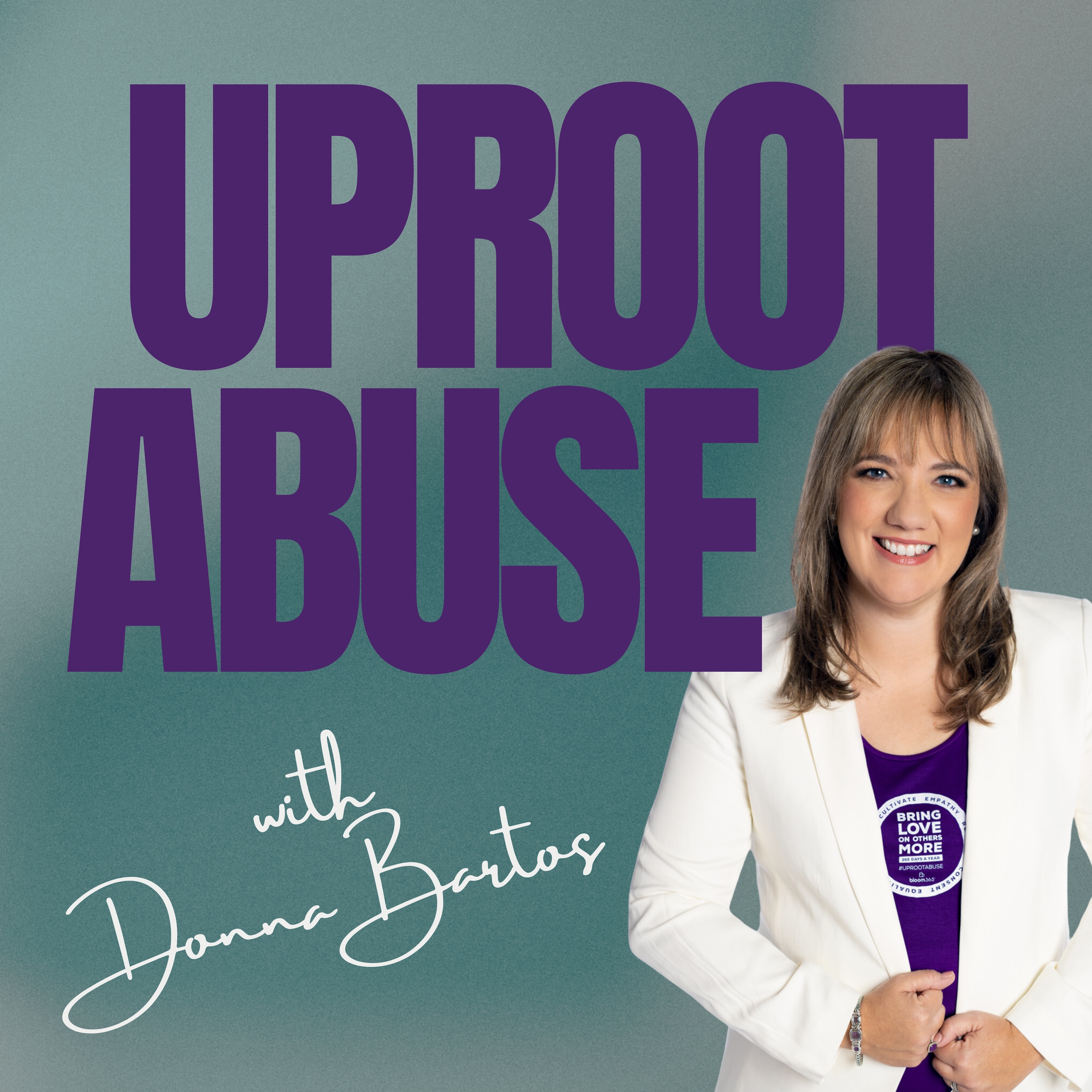
Uproot Abuse
Hosted by Donna Bartos · EN
'Uproot Abuse' is a groundbreaking podcast dedicated to confronting the pervasive epidemic of interpersonal violence in America. Host Donna Bartos, author of 'Are You Blooming or Wilting?' and founder of Bloom 365, draws from her own experiences with abuse to spark meaningful conversations and inspire change. Each episode dives deep into the root causes of violence, examining red flags, risk factors, and the path toward healthier relationships. With insights from trusted peer influencers, subject matter experts, and special guests, the show empowers communities to educate, intervene, and disrupt the cycle of abuse before it begins. Join us on a mission to challenge the status quo and help create safer, more compassionate communities for future generations.
21episodes
Episodes
Newest firstAll episodes
Ep 42 The Heart of Mentorship: How Empathy Counters Youth Loneliness
Mar 1100:39:53Tap to summarizeIn this episode of Uproot Abuse, Donna sits down with Laura Capello, former CEO of Big Brothers Big Sisters of Central AZ and current Regional Director at Cohere Life, to examine the silent drivers of youth harm: loneliness and insecurity. With hundreds of children waiting for mentors and the "noise" of AI and social media reaching a fever pitch, Laura discusses why the "Trusted Adult" model is more critical than ever. We explore empathy as a superpower and how we can uproot abusive behaviors by teaching the next generation that vulnerability is a strength, not a weakness. It’s time to trade digital algorithms for human connection and provide our youth with the role models they deserve.
Transcribe →
Ep 41 The Empathy Gap: Defending and Supporting LGBTQ+ Youth in a Climate of Extreme Bias
Mar 1100:42:47Tap to summarizeIn this episode of Uproot Abuse we dig into the systemic roots of bias and rejection with Nate Rhoton, CEO of one·n·ten. We explore the empathy gap and the urgent need for sensitivity in a climate where 38% of LGBTQ+ youth aren't safe enough to come out to their own families. From the funding crises sparked by political rhetoric to the "terrorist" labeling of trans individuals by extremist groups, Nate and Donna discuss how misinformation fuels abuse and strips away safe spaces in schools and communities. This conversation is a call to uproot judgment and replace it with the compassion necessary to ensure every young person can celebrate their true self.
Transcribe →
Ep 40 “Power To, Not Power Over:” Gloria Feldt on Reclaiming Autonomy
Mar 1100:48:16Tap to summarizeWhat if the key to ending domestic violence isn't just funding more shelters, but fundamentally redefining power? In this episode of UPA, host Donna Bartos sits down with the legendary Gloria Feldt—former President and CEO of Planned Parenthood Federation of America and current CEO of Take The Lead. With a career spanning from Head Start classrooms in West Texas to the national political stage, Gloria brings a lifetime of fierce advocacy to a candid discussion on the "Prevention Gap."We dive deep into the "Elephant in the Room:" why society finds it easier to fund crisis intervention for victims than to invest in preventing interpersonal and domestic violence at the root. Gloria challenges the 2025 McKinsey report’s findings on the "ambition gap," arguing that women don’t lack ambition—they lack the corporate and societal support systems that men take for granted.Through the lens of her books, No Excuses and Intentioning Gloria explains her transformative shift from "Power Over" (oppression) to "Power To" (creation and energy). We tackle the sexual double standards that shame women’s autonomy, the urgent need for male accountability in reproductive rights, and why we must stop normalizing the objectification of women. This isn't just a conversation about the steps backward in a post-Title IX world; it’s a masterclass in using controversy as an opportunity for radical societal change.
Transcribe →
Ep 39 The Thin Line Between "Breaking News" and Empathetic Storytelling
Feb 2300:46:38Tap to summarizeWhat happens to the reporters who cover our darkest days? Veteran news director and industry leader, Bob Sullivan joins Donna to discuss the emotional toll of reporting on domestic violence and mass shootings. He reveals his philosophy on protecting staff from burnout, the industry’s past failures in sensitive reporting, and managing trauma and bias in the newsroom.
Transcribe →
Ep 38 When the System Protects the Predator Instead of the Prey
Feb 500:37:28Tap to summarizeWhat happens to a community when empathy is systematically erased? Investigative legend Mike Watkiss joins Donna to deconstruct the chilling "pillars of control" used by the FLDS to maintain absolute power. Moving beyond theology, Mike reveals how leaders like Warren Jeffs built a patriarchal machine designed to treat women as resources and children as property.In this deep dive, we explore the calculated cruelty of the "Lost Boys"—the strategic exile of young men to eliminate competition for the marriage pool. Mike explains how this wasn't just a demographic fluke, but a deliberate move to ensure the "Prophet" and his inner circle had unfettered access to underage girls. We discuss the "Making of the Patriarchy," looking at how boys are socialized to suppress their conscience and view dominance as a God-given right.From the geographic isolation of Colorado City to the mid-level enforcers who kept the system running, we examine why it’s so difficult to prosecute the men who executed these orders. It’s a raw conversation about the cost of manhood in a cult, the struggle to deconstruct harmful lessons, and what it truly takes to break the cycle of systemic abuse.
Transcribe →
Ep 37 Denise Brown: 30 Years Later, The Fight Continues
Jan 1400:44:17Tap to summarizeIt has been over three decades since the world was shaken by the domestic violence murder of Nicole Brown Simpson. In this powerful and deeply personal episode of Uproot Abuse, host Donna Bartos sits down with Denise Brown, a woman who transformed her family’s unimaginable tragedy into a lifelong mission of advocacy.Denise opens up about who she was on June 11, 1994, versus the outspoken activist she became the very next day. She reflects on thirty years in the trenches—from testifying in the "Trial of the Century" to working with Congress on the Violence Against Women Act (VAWA). Together, Donna and Denise discuss the "elephants in the room" that still plague our society today: the lethal nature of strangulation, the dangers of putting celebrities on pedestals, and the critical need to get "good men" involved in the movement.
Transcribe →
Ep 36 Rock, Recovery, and Resilience: Healing Through the Arts with Jane Gordon
Jan 1400:41:55Tap to summarizeIn this episode of Uproot Abuse, Donna Bartos sits down with Jane Gordon—founder of Rock Recovery Charities, podcaster, and longtime board member for Alice Cooper’s Solid Rock Teen Centers. Together, they explore the powerful intersection of creative arts, addiction recovery, and violence prevention.Jane shares the inspiring history of Solid Rock, a "no-judgment" sanctuary where teens ages 12–20 can access free vocational training in music, dance, and video production. The conversation dives deep into how the arts serve as a critical "protective factor" for youth who feel like outcasts, providing a safe space for those who don't fit the traditional "jock or cheerleader" stereotypes.
Transcribe →
Ep 35 The Power of Mentorship: How Judge Lynn Toler Helped Accelerate Root Cause Prevention
Jan 1400:58:26Tap to summarizeIn this powerful episode of Uproot Abuse, host Donna Bartos welcomes a very special guest who played a pivotal role in the foundation of BLOOM365: the honorable Judge Lynn Toler. Beyond her iconic presence on Divorce Court, Judge Toler is a mentor and dear friend who helped Donna find the courage and strategic vision to pick up the mantle and start an organization dedicated to preventing and responding to domestic violence. Together, they pull back the curtain on the early days of the movement, addressing the "elephants in the room" regarding interpersonal violence and exploring how the guidance of a strong mentor can catalyze systemic change. Join them for an intimate look at the leadership, friendship, and relentless advocacy required to uproot abuse in a generation.
Transcribe →
Ep 34- A Reminder to Breathe & Laugh
Dec 1100:48:39Tap to summarizeDonna takes a break from the heavy work of trauma and abuse awareness to celebrate a milestone: 23 years of marriage to her husband, Peter Bartos! Get ready for some serious laughs as this candid, long-term couple faces off in a hilarious, competitive round of The Newlywed Game.Will Peter remember what Donna wore on their first date? Does Donna know his celebrity crush is Dianne Sawyer (who once touched his shoulder!)? You'll hear the real secret to their healthy, enduring partnership, the infamous parking garage incident, Peter's "romantic regurgitation," and why General Hospital is his guilty pleasure.Tune in for a much-needed dose of joy and a heartwarming reminder that even when life is challenging, a supportive relationship filled with love and laughter is the ultimate form of self-care.
Transcribe →
Ep 33- Beyond the Bruises: November is Strangulation Awareness Month
Nov 2900:42:11Tap to summarizeDr. Hirsch Handmaker, founder and CEO of The CACTIS Foundation, joins us to reveal a crisis hiding in plain sight: the shocking prevalence of Traumatic Brain Injury (TBI)—or concussion—in survivors of domestic violence.Dr. Handmaker shares groundbreaking research identifying the high correlation between strangulation and objective neurological damage. Learn why common symptoms like dizziness, memory loss, and double vision are signs of a brain injury, not just emotional distress. We discuss simple diagnostic tests used by police to confirm TBI at the point of incident, and the importance of shifting the focus from victim-blaming to understanding neurological injury for both successful prosecution and healing. Discover the foundation's "Return to Society" program that is bringing vital treatment and hope to survivors.
Transcribe →