Loading summary
Transcript224 lines
- [00:00]
Odoo Advertiser
When you buy business software from lots of vendors, the costs add up and it gets complicated and confusing. Odoo solves this. It's a single company that sells a suite of enterprise apps that handles everything from accounting to inventory to sales. Odoo is all connected on a single platform in a simple and affordable way. You can save money without missing out on the features you need. Check out odoo@odoo.com that's o d o.
- [00:29]
Amica Insurance Representative
O.Com they say if you want to go fast, go alone, but if you want to go far, go together. At Amica Insurance, we know what matters most to you, and we work even harder to protect it together. As a mutual insurance company, we're built for our customers and prioritize your needs. Amica empathy is our best policy. Visit amica.com and get a quote.
- [01:00]
Dr. Maya Shankar
There are moments in each of our lives that seem to change everything. An unexpected diagnosis. The sudden end of a relationship. The loss of a job. As our lives veer off course, it can feel like time is dividing into a before and an after. I'm Dr. Maya Shankar, a cognitive scientist, and my new book, the Other side of who We Become When Life Makes Other Plans, is all about how we navigate these inflection points. The Other side of Change pairs singular real life stories with scientific insights to help us find meaning in the tumult of change. What if we saw the hardest moments in our lives not simply as something to endure, but as an opportunity to reimagine who we can be? I'm thrilled to share that booklist gave the Other side of Change one of its coveted starred reviews, saying, it's impossible not to be moved. The Other side of Change is out now. Get your copy today, wherever you like to buy Books.
- [02:06]
Haley Fox
Pushkin subscribe to Pushkin to hear the entire season of Valley of Shadows ad free starting January 12th. You'll also get bonus episodes, full audiobooks and early ad free listening from your favorite Pushkin hosts and authors. Find Pushkin plus on the Valley of Shadows show page on Apple Podcast or at Pushkin FM plus and thanks for your support. This series includes content that may not be suitable for all listeners. Listener discretion is advised. Previously on Valley of Shadows.
- [02:45]
Mike Bauer
This was assigned a Homicide Bureau Missing Persons unit. They were the ones who had to make the decision that this was a suicide. They said, well, we think he might have sat on the edge of one of those mines and blown himself into the mine. I'm thinking, okay, we are really stretching now for an explanation as to why we can't Find him.
- [03:09]
Haley Fox
I would hope the sheriff's department would investigate this. I just still want John to be found or his remains.
- [03:19]
Mike Bauer
They told our search teams on day one, John may have stumbled into a meth lab by accident. What happened to that idea? Let's see. Batuu Biker's coffee. Black Beauty Blade Chalk. I made this list from the Internet of all the names that were used to describe crystal meth, Chicken feed Crank Christie.
- [03:57]
Betsy Shepherd
The list is lengthy and handwritten by Mike Bauer.
- [04:00]
Mike Bauer
Go fast. Meth Lease quick. Methleys. Methleys quick. That's cute. TikTok fan.
- [04:08]
Betsy Shepherd
There's a reason this almost 80 year old retired cop is trying to think expand his drug vocabulary.
- [04:15]
Mike Bauer
I began to understand that the world of trying to find John Ajay involved crystal meth. That's why I made this list.
- [04:24]
Betsy Shepherd
Because Bauer keeps hearing whispers of foul play.
- [04:28]
Chris Turk
The rumor around the drug scene was that a deputy stumbled onto something he shouldn't have.
- [04:35]
Larry Brandenburg
The first thing I had heard was he had was running in the punch bowl and came upon a meth lab.
- [04:42]
Betsy Shepherd
A meth lab.
- [04:44]
Larry Brandenburg
A meth lab.
- [04:45]
Chris Turk
Then it was said he tried to be a hero. And that's when he was taken care of.
- [04:54]
Betsy Shepherd
When Deputy John auge disappeared in 1998, there was a meth epidemic ravaging the Antelope Valley. It was a vortex of addiction and crime. I think meth has destroyed this community. I think they need to take a.
- [05:08]
Chris Turk
Bomb and blow it all up.
- [05:10]
Betsy Shepherd
It's that bad. Meth is a powerful stimulant that hijacks the central nervous system and causes people to stay awake for days on end. After the euphoria, experts say longtime users suffer mind twisting crashes, jagged nerves, desperation to sleep, a spooky paranoia, and too often unpredictable rage.
- [05:34]
Chris Turk
Often homicidal, the drug can trick the.
- [05:38]
Betsy Shepherd
Brain into thinking there's a boogeyman around every corner.
- [05:42]
Chris Turk
I've had a patient come back to me after two years of not using it, saying that he was sorry that.
- [05:47]
Betsy Shepherd
He hit his wife so hard, but he's still convinced that she was having.
- [05:51]
Chris Turk
An affair with the extraterrestrials.
- [05:54]
Betsy Shepherd
Maybe that's how the meth lab rumors got started. As a drug fueled conspiracy theory. And there were a lot of conspiracy theories following Ajay's disappearance. That he was kidnapped by the CIA and another, that he'd started a new life in Alaska. Well, the Los Angeles County Sheriff's department dismisses the leads as rumors spread by a hopped up game of telephone. But we discover a small detail buried in the missing persons report. That suggests the rumors have more weight than that. Following Ajay's disappearance, multiple informants came forward with information about a deputy who was murdered while jogging in the Devil's Punch Bowl. Missing persons detectives said these informants can't be trusted, and they opted not to follow up on the leads because the meth lab story was just smoke and mirrors. But where there's smoke, there is sometimes fire. Bauer tells us about a homicide detective who followed the rumors to their source to find out if there was anything to them. And he says, we need to hear this story straight from the horse's mouth.
- [07:01]
Mike Bauer
You should go have a drink with Larry Brandenburg at his bar and ask him, what do you think, Larry, I have a few questions for you and.
- [07:10]
Betsy Shepherd
See what he says. And that's exactly what we do. We don't often get to do interviews in people's home bars. Such a cool space. And we ask him, what do you think, Larry, about those tips that came in from local drug informants.
- [07:29]
Larry Brandenburg
You're not going to get a Boy Scout or a Girl Scout that's going to have information about the murder of a deputy sheriff. How would they know? So you got to talk to these people, and then it's your job to figure out who's telling the truth, who's lying.
- [07:42]
Betsy Shepherd
So we try to figure out who is telling the truth and who's lying. I'm Betsy Shepherd.
- [07:49]
Haley Fox
I'm Haley Fox. And this is Valley of Shadows. Episode three, Tweaker Talk.
- [08:08]
Betsy Shepherd
Okay, let's see what you got here, Mr. Brandenburg. Do you go by Detective?
- [08:12]
Larry Brandenburg
No, Larry's Brandon.
- [08:14]
Dr. Maya Shankar
Okay.
- [08:14]
Betsy Shepherd
Can you come show us some of your sheriff's memorabilia?
- [08:19]
Haley Fox
Betsy and I are at the home of retired LASD homicide detective Larry Brandenburg, poking around his basement bar that doubles as a type of trophy room.
- [08:30]
Larry Brandenburg
That was the badge one of my old partners got me.
- [08:33]
Betsy Shepherd
What does it say on there?
- [08:34]
Larry Brandenburg
I think it says, the best partner a cop could have, or something like that.
- [08:39]
Haley Fox
Brandenburg's humility stands in contrast to his career. Highlights displayed on the wall. There's his Marine Corps uniform, a photo from an appearance on the TV show 48 Hours, an LASD service award, and nearby, there's a jukebox, a big screen tv, and a pool table with the giant logo of his sheriff's badge on it.
- [09:00]
Betsy Shepherd
Do you have a name for this room?
- [09:03]
Larry Brandenburg
We just call it in the Brandenburg Family Game room. I try to get the kids going for games, and we're all Dodger fans, so we watch the Dodgers.
- [09:13]
Haley Fox
Brandenburg is a grandpa now, goes by Papa, and he has A shock of gray hair to prove it. But he still looks a bit like a detective with his slicked back hair and steely gaze. For more than 20 years, Brandenburg was a bulldog. That was the nickname given to investigators at the LASD Homicide Bureau.
- [09:33]
Larry Brandenburg
It was an LA Times reporter said. Yeah, the sheriff's homicide detectives are like bulldogs. Once they put their teeth into something, they never let go. Name stuck.
- [09:43]
Haley Fox
The Los Angeles County Sheriff's Department oversees crime in the unincorporated areas of LA County. It's a massive space, 4,000 square miles, which is about the size of Connecticut. Covering that much ground requires a huge workforce. With its 18,000 employees, LASD is the largest sheriff's department in the country. Homicide cops like Larry Brandenburg work out of a bureau located near downtown la. So when they catch a case, they hoof it to whatever part of the county the homicide occurred in. The Antelope Valley, or av, as it's sometimes called, was a particularly distant outpost. That's because it's cut off from the city by a mountain range. And Brandenburg thinks that's part of why the Ajay case was handled so poorly.
- [10:34]
Larry Brandenburg
I think some of it was lack of interest, motivation. I can't explain any other way, because.
- [10:42]
Haley Fox
The AV was quite the haul from the Homicide Bureau. Hour and a half drive time.
- [10:47]
Larry Brandenburg
Nobody from down in LA wanted to come up here and work because they didn't live up here. You see why the drive sucks?
- [10:55]
Haley Fox
LA deputies didn't want to move to the desert either, so the department had to recruit locals to run their AV stations. And that created a schism within the lasd.
- [11:06]
Larry Brandenburg
They felt they could do their own thing and they didn't need anybody from down in LA telling them what to do. Hey, this is our valley. We know everybody up here. We grew up here, we live here. We'll handle this. But at the same time, the department never dedicated the resources to this valley that they should have.
- [11:24]
Haley Fox
Brandenburg has two sons who are now LASD deputies in the Antelope Valley. And it's become a running joke in the family.
- [11:32]
Larry Brandenburg
You know, I'd say, ah, you freaking deputies work up here. You guys are stupid. THEY LAUGH. You guys from down below are a bunch of assholes. You come up here and think you know everything. But that was, for a long time, kind of the feeling.
- [11:47]
Betsy Shepherd
Brandenburg had heard that Ajay went missing, but he didn't know him or the specifics of what happened. And it wasn't a murder investigation, it was a missing persons case, so it was outside his domain. But then a colleague from the Antelope Valley reaches out with an especially persuasive tip.
- [12:05]
Larry Brandenburg
He said, hey, Larry, I'm hearing shit on the street, man, that Ajay wasn't. He didn't commit suicide. He was murdered. He came across a meth lab and, you know, he tried to be a hero. He goes, I'm here for more than one person.
- [12:16]
Betsy Shepherd
And there are other details about the Ajay case that don't sit right with him. How many years were you a homicide detective?
- [12:24]
Larry Brandenburg
A little over 20.
- [12:26]
Betsy Shepherd
In that 20 years, did you ever have a case like this where nobody.
- [12:31]
Larry Brandenburg
A suicide, never think about it. How would you do that?
- [12:37]
Betsy Shepherd
So Brandenburg asks to review the Ajay case file.
- [12:41]
Larry Brandenburg
I went to the captain, Frank Merriman, who was the lieutenant in charge of missing persons, who handled the initial investigation. And I said, hey, Frank, I'm getting some information about Ajay that, you know, we need to follow up on. He goes, what do you. He goes, that's a suicide. You're wasting your time.
- [12:58]
Betsy Shepherd
But Brandenburg continues to press his captain. He's a bulldog, after all. And his persistence pays off. In early 2000, he gets permission to look through the missing persons report and finds out new details about the deputy's disappearance from a year and a half earlier. He discovers that the department had received numerous tips that Ajay was murdered and that some of those tips came in just three days after the deputy went missing, while searchers were still out looking for him and potential evidence was still fresh. If there is some suggestion of possible foul play, multiple people are claiming there's a murder. What typically would happen?
- [13:40]
Larry Brandenburg
It would be assigned to a murder team, people that are on call for new murders.
- [13:45]
Betsy Shepherd
But that didn't happen because the missing persons team dismissed the tips. What would you say is the main difference between a missing persons investigator and a murder team or homicide detective?
- [13:59]
Larry Brandenburg
Well, missing persons, they handle a large volume. I mean, there's so many people reported missing LA county every day, let alone every month, every year. So they're making phone calls, trying to find relatives, so they're busy doing that stuff. But a lot of it is handled at their desk on the phone. Well, you don't handle a murder like that. At least I hope not.
- [14:23]
Betsy Shepherd
Brandenburg thinks these detectives dropped the ball big time. And he's not the only one. Internal documents from the LASD show that one lieutenant discussed the Auge case in terms of Murphy's Law, which basically means anything that can go wrong will go wrong. We reached out to the missing persons team, but they declined to talk to us. So all we know about their decision to not refer the case to a homicide detective is the one sentence explanation in their report. It reads, due to inconsistencies in their statements, it was determined they were not credible and other leads were pursued.
- [15:02]
Larry Brandenburg
Well, shouldn't you have maybe looked into that a little more? I mean, that's just my thought, and that's why I started looking at it.
- [15:10]
Betsy Shepherd
Brandenburg does what he thinks should have happened back in 1998. He treats Ajay's disappearance like a homicide case. And he starts by tracking down two of the names in the missing persons report so he can re interview the informants to protect their identities. We're going to call them sue and Mike. At the time, sue was in custody on burglary charges. So Brandenburg and his partner head to the jail where she's being held. Sue tells them that after Audrey disappeared, her boyfriend Mike went to score drugs from a guy living near the Devil's Punch Bowl, a local dealer named Tom Hinkle. What was he known for in the area?
- [15:52]
Larry Brandenburg
Meth.
- [15:52]
Betsy Shepherd
Doing it or he did it, he.
- [15:54]
Larry Brandenburg
Sold it, he cooked it, he did all of it.
- [15:59]
Betsy Shepherd
Everyone in the area knew Hinkle. He was the Kevin Bacon and his community's six degrees of separation. He was only in his 50s when Ajay disappeared, but Hinkle was already known around town as Old Man. He had wild gray facial hair and was described by a local sheriff's deputy as bearded methaclaus. He lived in a large a frame house up on a hill six miles from the Punch bowl. And his property was a hive of drug activity. Sue, the informant, tells Brandenburg that when Mike arrived at Hinkle's home, he led him into a back room where Hinkle kept his knife collection.
- [16:36]
Sue (Informant)
Hinkle was showing his knife collection to my old beyond, kind of like showing off a little bit, you know?
- [16:43]
Betsy Shepherd
This is an actual recording of Sue's conversation with Brandenburg.
- [16:47]
Sue (Informant)
All of a sudden he brings up the cops.
- [16:50]
Larry Brandenburg
Yeah.
- [16:52]
Betsy Shepherd
Yeah, okay.
- [16:53]
Sue (Informant)
Tom Hinkle brings it up to my boyfriend, tells him basically what happened to the man, that RJ Was on a jog, ran across something he shouldn't have ran across, and he had to be taken care of. Care of, meaning he was killed.
- [17:10]
Betsy Shepherd
Sue goes on to say that according to Hinkle, Ajay stumbled on a meth lab and tried to be a hero. With slight variations, the story is repeated by Mike in a separate interview and then in secondhand accounts from a handful of other informants that Hinkle and or one of his associates had Ajay taken care of. According to sue, and Mike Hinkle pantomimed what he meant by taking care of.
- [17:35]
Sue (Informant)
He made the motion like this.
- [17:39]
Larry Brandenburg
He made a hand gesture, like a gun with his finger out, and then opened his hand like he was dropped.
- [17:46]
Betsy Shepherd
The moment plays like a movie scene in my head. Methoclaus is surrounded by a plume of meth smoke and sharp, shiny knives. He mentions the missing deputy with a knowing look. He draws his hand into a finger gun and then releases his fingers, splaying them out. And just like that, John Ajay disappears down a mineshaft or some other hole out in the desert where people go to bury their secrets.
- [18:39]
LinkedIn Jobs Advertiser
If you've ever hired for your small business, you know how important it is to find the right person. That's why LinkedIn Jobs is stepping things up with your new AI assistant, so you can feel confident you're finding top talent that you can't find anywhere else. The best part is these great candidates are already on LinkedIn. In fact, employees hired through LinkedIn are 30% more likely to stick around for at least a year compared to those hired through the leading competitor. Given that every hire counts, 30% is a big deal. This is a subject that's pretty close to the heart here at Pushkin. We're a small business. We do really complicated, collaborative, creative work, and making sure that anyone we bring in suits our culture and can fit in with our teams is really, really crucial. With LinkedIn Jobs AI Assistant, you can skip the confusing steps and recruiting jargon. It filters through applicants based on criteria you've set for your role and surfaces only the best matches so you're not stuck sorting through a mountain of resumes. When you have a business to run, you don't have hours to spend on hiring, and you don't want to just wait around hoping the right person stumbles upon your job. That's why LinkedIn Jobs AI assistant suggests 25 great fit candidates daily, so you can invite them to apply and keep things moving. Hire right the first time, post your job for free@LinkedIn.com Pushkin. Then promote it to use LinkedIn Jobs new AI assistant, making it easier and faster to find top candidates. That's LinkedIn.com Pushkin to post your job for free. Terms and conditions apply.
- [20:25]
Betsy Shepherd
Can you grab one more thing?
- [20:26]
Mike Bauer
I'll come back up for you.
- [20:27]
Amica Insurance Representative
At Amica Insurance, we know you'll always find ways to look out for the people you love. And with Amica Life Insurance, we'll help build a plan to make sure you always can. We're here to help protect the life you've built.
- [20:42]
Betsy Shepherd
Really.
- [20:45]
Amica Insurance Representative
Amika? Empathy is our best policy. Visit ameca.com and get a quote. Today.
- [20:55]
Dr. Maya Shankar
There are moments in each of our lives that seem to change everything. An unexpected diagnosis, the sudden end of a relationship, the loss of a job. As our lives veer off course, it can feel like time is dividing into a before and and an after. I'm Dr. Maya Shankar, a cognitive scientist, and my new book, the Other side of who We Become When Life Makes Other Plans is all about how we navigate these inflection points. The Other side of Change pairs singular real life stories with scientific insights to help us find meaning in the tumult of change. What if we saw the hardest moments in our lives not simply as something to endure, but as an opportunity to reimagine who we can be? I'm thrilled to share that Booklist gave the Other side of Change one of its coveted starred reviews, saying it's impossible not to be moved. The Other side of Change is out now. Get your copy today, wherever you like to buy books.
- [22:02]
Haley Fox
We're back at the Devil's Punch bowl, and this time we've come for a hike. Oh, I love these. This is where you write your name and the time that you leave so that in case you go missing.
- [22:14]
Betsy Shepherd
People know we should do that.
- [22:17]
Haley Fox
Betsy and I write our names down on a sign in sheet at the main trailhead and enter the park.
- [22:23]
Dr. Maya Shankar
Why?
- [22:24]
Betsy Shepherd
Why are we. Why are we doing this again?
- [22:27]
Haley Fox
I honestly, I just really had to get eyes on the Punch bowl. I am having a really hard time seeing how someone could set up a meth lab in LA County Park.
- [22:37]
Betsy Shepherd
It just feels implausible to you?
- [22:40]
Haley Fox
Yeah, I mean, it just seems like you would be kind of asking to get caught.
- [22:44]
Betsy Shepherd
Not to mention, like, meth labs are, like, not discreet discreet. Yeah. All right, let's check it out.
- [22:51]
Haley Fox
Check it out. As we start to descend down into the center of the punch bowl, Betsy loses her footing on the steep, dusty trail.
- [23:03]
Betsy Shepherd
Okay, that's not working.
- [23:04]
Haley Fox
Do you want me to go in front of you or hold your backpack.
- [23:06]
Betsy Shepherd
So you can break my fall? Yeah, holding my backpack like I'm a child. Method is working pretty good.
- [23:13]
Haley Fox
Yeah. Here, I got you. But we keep moving, snaking through the switchbacks in a slow zigzag motion.
- [23:22]
Betsy Shepherd
How hot do you think it is right now? Is it 100? Did it break 100 today?
- [23:26]
Larry Brandenburg
I don't know.
- [23:26]
Haley Fox
It's definitely close. It's pushing 100 for sure. Being out here, we realize this public park is much less public. Than most.
- [23:39]
Betsy Shepherd
It feels like we are on another planet and we are like the last living human beings. So I mean in terms of discreetness, like it's open, but it's also like out in the middle of nowhere. It's on the fringes.
- [23:58]
Haley Fox
We don't see any other hikers or rangers. And I find myself playing out the lab scenario in my head. We know that Jonathan O.J. saw a class of kids on a field trip here. But then we also know that he went totally off trail and off roading. And to me, that would be the place where he could stumble upon the meth lab. Because there is all this land that is not accessible by trail. As we wind our way down the gorge with our phones on SOS mode, the idea of shady things happening out here seems like a real possibility. Hey, dude, I think. I feel like maybe we should hit it. It's. We're getting like pretty far out in the middle of nowhere here and no one knows we're out here.
- [24:50]
Betsy Shepherd
I was thinking the same thing. I didn't want to say anything. I didn't want to be the weenie of the group.
- [24:56]
Haley Fox
Let's go, let's go.
- [24:58]
Betsy Shepherd
Let's not beat around the bush. Let's get out of the bush. The second Hailey gives me an out, I pretty much take off running because I'm always thinking of worst case scenarios. Falling off a cliff, getting attacked by a bear. Now I have to worry about stumbling on a meth lab. I don't have to, but I will. Because that's just who I am. A firm believer in Murphy's Law. That's why I didn't have any trouble buying into the whole meth lab scenario. What I want to know is how this area became a meth hotspot in the first place. We don't have stats specific to the Antelope Valley, but here in the early 2000s, a large scale drug syndicate was busted. Nearly 300 people were arrested, most classified as career criminals. I grew up in a rural area where there was a lot of drug activity hiding in plain sight. So I know the AV's remoteness is a factor. But it turns out, so are its big open skies. Since the 1930s, the US government and military contractors have been testing planes, rockets and explosives over the Antelope Valley. The Edwards Air Force Base was built, defense plants moved in, and it turned the area into an aeronautical frontier.
- [26:24]
Mike Bauer
In October 1947, at Muroc Desert Test.
- [26:27]
Larry Brandenburg
Center in California, history is made by this aircraft and its pilot, Captain Yeager.
- [26:34]
Betsy Shepherd
And it was over this part of the Antelope Valley, where Air Force pilot Chuck Yeager pushed his plane up to 700 mph and broke the sound barrier. For the first time, a man has.
- [26:47]
Mike Bauer
Flown an airplane faster than the speed of sound.
- [26:52]
Betsy Shepherd
These military experiments over the AV are actually where the principle of Murphy's Law comes from. Because these space cowboys got so banged up while pushing their bodies to the limit, resisting the forces of gravity and physics, that an engineer on the project, a guy named Edward Murphy, said something along the lines of, anything that can go wrong will go wrong. And it wouldn't be long before things would start to go wrong. Across the Antelope Valley, the AV had a legacy of record breaking speed. And its residents developed an appetite for the drug version of rocket fuel, methamphetamine. Meth just made life easier out there. Factory workers took the drug to power through long shifts at defense contractor plants. Construction workers used it to keep up with the area's housing boom. And commuters relied on meth to stay awake during the brutal drive to and from Los Angeles. But moderate meth use turned into a full blown epidemic in the early 90s as the cold war came to an abrupt end.
- [27:59]
Mike Bauer
The aerospace cutback soon created a domino effect across the Antelope Valley and the once thriving economy began to evaporate like so much water in the hot desert sun.
- [28:10]
Betsy Shepherd
The meth trade became an easy option for unemployed residents to make some cash.
- [28:16]
Chris Turk
At the time, the Antelope Valley was a cesspool. It was a desert. It was known for manufacturing methamphetamine, so people were getting busted left and right.
- [28:25]
Betsy Shepherd
This is Chris Turk.
- [28:27]
Chris Turk
My dad calls me Christine when I'm in trouble, but most people call me Chris.
- [28:32]
Betsy Shepherd
Chris Turk is originally from Massachusetts, but she got stationed in the Antelope Valley while working for the US Army. She left the military after a few years, had a family, and then found work with a local attorney. Because when meth use skyrocketed, so did the need for criminal defense. What was your position with him?
- [28:51]
Chris Turk
At first it was just a paralegal, and then it was investigative. I would go out on the streets and I would talk to the people. I would talk to some cops, I would do whatever to defend the client.
- [29:02]
Betsy Shepherd
Turk discovered she had a real knack for it.
- [29:05]
Chris Turk
Other lawyers started asking my boss if I could work on some of their cases.
- [29:11]
Betsy Shepherd
She was good at getting people to open up.
- [29:13]
Chris Turk
Me, I was more on their level. They would all talk to me. My ex husband, he's the half brother of these other two guys. That were involved in a lot of the drug scene.
- [29:25]
Betsy Shepherd
And she had a last name that carried weight with drug users, even though.
- [29:29]
Chris Turk
It was through marriage. A lot of them would just assume I was part of that family. They were really easy to get information. Sometimes too easy.
- [29:37]
Betsy Shepherd
The attorney Turk worked for had a meth habit of his own. So his law firm was well connected with the drug scene. And over time, Turk learned a lot about the criminal ecosystem in the valley. Who the big dealers were, where their labs were located, and which cops were making the busts. And she started to notice a trend, that it was just the low level offenders who were getting picked up over and over again, but none of the heavyweights who were supplying the drugs. People like Tom Hinkle. Hinkle spent decades working at a manufacturing and testing site for explosives. Just a few years before Ajay went missing, a woman was killed in the desert by a homemade bomb near Hinkle's house. According to LASD reports, tire tracks led directly from the explosion to Hinkle's place. Yet he was never arrested or charged in the case. This would become a theme for Hinkle. He seemed untouchable.
- [30:36]
Chris Turk
He would have been one of the first people I invested. Yet he never was.
- [30:40]
Betsy Shepherd
Never.
- [30:41]
Chris Turk
That one's never even touched.
- [30:43]
Betsy Shepherd
By the late 90s, Hinkle had a day job working at a gas station. A long pear blossom highway near the Punch Bowl. That's where he'd meet with a range of characters, including local sheriff's deputies.
- [30:56]
Chris Turk
He became the guy on the hill and he became idolized.
- [31:01]
Betsy Shepherd
And then something seemed to elevate Hinkle from a dealer to something more mythic.
- [31:08]
Chris Turk
Everybody would call him God because he had that power. Before RJ he was just sinful. After rj, he was God.
- [31:18]
Betsy Shepherd
He didn't start calling himself God until after the Ajay disappearance.
- [31:24]
Chris Turk
Yep, Yep.
- [31:29]
Betsy Shepherd
There are plenty of people with a God complex, but few are so brazen to actually call themselves God. So when Hinkle takes on the title, Turk is floored. And then she hears about Hinkle's possible connection to Ajay's disappearance. She hears it from sue and Mike, who were clients of the lawyer she worked for.
- [31:51]
Sue (Informant)
Tom Hinkle is the one who told all the information about the cop who ran across something he shouldn't have. Everybody calls him Scott. He's untouchable.
- [32:02]
Haley Fox
Turk notifies the authorities because this isn't a low level drug offense. This is a possible homicide. And she goes straight to the top. The Federal Bureau of Investigation, which has a field office in the area.
- [32:16]
Chris Turk
So I went and I talked to these two federal agents about what was going on.
- [32:23]
Haley Fox
Turk offers to introduce the FBI agents to Mike, but she says the meeting didn't go so well because when she and one of the agents show up to talk to Mike, he's hitting a meth pipe.
- [32:35]
Chris Turk
I mean, I'm talking clouded smoke. When we opened the door and the FBI agent and I just looked at each other.
- [32:42]
Haley Fox
We reached out to the FBI to ask about their involvement in the Auge case, but they give us their standard line that they can neither confirm nor deny the existence of an investigation. So we don't know what came of Turk's tip to the feds. But the info eventually makes its way to homicide detective Larry Brandenburg, who does follow up on it.
- [33:04]
Larry Brandenburg
Chris Turk was involved in that whole meth drug culture world, so I'd talk to her. If I could get information from her. I'll take it, you know, and if it's bullcrap, I just discard it.
- [33:16]
Haley Fox
Determining the credibility of informant statements is a complicated art. There are plenty of reasons that sue and Mike and others related to the Ajay case may be untrustworthy. Informants are often longtime drug users with fuzzy memories, lengthy criminal histories, and ulterior motives. So Brandenburg says you have to listen to them and suss out their claims accordingly.
- [33:40]
Larry Brandenburg
If you just discredit everybody and you don't follow up on none of it, you know we're gonna find anything out.
- [33:47]
Haley Fox
Brandenburg was skeptical going into his interviews with sue and Mike, but by the end he believed the couple because they had little to gain. Sue already had a release date for her burglary charge and a lot to lose. Brandenburg says it would be incredibly short sighted for them to lie about a man who had a reputation for being a cold hearted killer.
- [34:09]
Larry Brandenburg
That's a pretty dangerous thing to do if you're just making up stories. I mean, that's really dumb. I sure wouldn't consider doing it because if it gets back that you're snitching or even if you're making this shit up, you're gonna pay for it.
- [34:26]
Haley Fox
He also says that sue and Mike and others would go on to tell the story many times, and the stories were similar and remained largely consistent.
- [34:35]
Larry Brandenburg
The little details might change, but the main theme of it shouldn't if you're telling the truth.
- [34:42]
Haley Fox
And one hyper specific detail that never varied was the description of Hinkle's hand gesture, the one where he made a finger gun. That detail sticks with Brandenburg because there'd been talk of a Gunshot from another source. In June 1998, a witness reported to Missing Persons detectives that he heard the sound of a firearm discharged around sunset the night Ajay disappeared.
- [35:08]
Larry Brandenburg
We had talked about someone saying they heard a gunshot.
- [35:11]
Haley Fox
Devil's Punchbowl. Park ranger Jack Farley remembers hearing this detail during the search for Ajay.
- [35:18]
Mike Bauer
You can't see the house from here.
- [35:20]
Larry Brandenburg
But it's like a half mile below the trail up there where the people live that said they heard that.
- [35:27]
Haley Fox
And paralegal Chris Turk says the gunshot was discussed around town.
- [35:32]
Chris Turk
There was one shot like that, one witness said, because that's when I heard on the streets.
- [35:36]
Haley Fox
Brandenburg tries to track down the witness using the name listed in the Missing Persons book.
- [35:42]
Larry Brandenburg
That guy wouldn't talk to me. I tried more than once to go talk to him. I think he worked at the Punch bowl or he lived right by it. So the gunshots heard near the Punch Bowl, a single gunshot.
- [35:55]
Haley Fox
These details keep adding up, and Brandenburg starts to see how this scenario might have played. Played out. Ajay was running past one of Hinkle's meth labs.
- [36:05]
Larry Brandenburg
We saw a bunch of Treakers hanging out there, and then they're all sitting there with their hands in the cookie jar going, what the fuck do we do now? Gee, we can't let this guy leave. He never left.
- [36:17]
Haley Fox
Brandenburg decides it's time to send the information up the flagpole to the homicide captain, tell him what he's hearing from informants. But the captain blows him off.
- [36:28]
Larry Brandenburg
Oh, that's just tweaker talk. Tweaker talk. That's all it is.
- [36:34]
Haley Fox
Brandenburg says that term tweaker talk was used to discredit informants like sue and Mike and undermine the theory that Ajay was murdered.
- [36:44]
Larry Brandenburg
Well, tweakers do talk, especially when they get high. They talk amongst each other. And yeah, some of it's embellished, some of it's changed, but if you had a main theme that keeps getting repeated, there could be something to that.
- [36:57]
Haley Fox
Tweaker talk is a term Chris Turk is also familiar with because it was used to discredit many of the clients she worked with. She doesn't deny that meth users are often sleep deprived and paranoid. But that doesn't mean they don't have valuable information, especially when it comes to a subject they know.
- [37:16]
Chris Turk
These same tweakers that they said were not reliable, you couldn't get information from them, were the same ones that they used information for to bust other people. So you can't listen to them on one hand and not listen to Them. On the other hand, when an informant.
- [37:30]
Haley Fox
Provides leads that pan out for law enforcement, their status changes to a confidential, reliable informant. And one of the best ways for investigators to determine if these leads are legit is to keep investigating, see if the intel can be corroborated.
- [37:48]
Larry Brandenburg
To me, that needs to be looked at real hard and seriously not, oh, she's a fricking tweaker. I don't believe the things she says, especially when it's already coming from some other sources.
- [37:58]
Haley Fox
But Brandenburg says he couldn't really do that because his captain undermined him at every turn, called him names and tried to strong arm him into folding his investigation.
- [38:10]
Larry Brandenburg
I told him that is bullshit. I don't agree with it.
- [38:13]
Haley Fox
We heard from you why you're so passionate about it. Why do you think he had such a strong reaction?
- [38:17]
Larry Brandenburg
I don't know. That's the question I can't answer.
- [38:22]
Haley Fox
Brandenburg is taken aback by Homicide Captain Frank Merriman's aggressive attempts to put the Ajay matter to bed. Especially after he finds a note in the missing persons file from Merryman which shows the captain may have had his own doubts about the case.
- [38:39]
Larry Brandenburg
I found a little post it when I was looking through the original file when I first got it yellow posted and it was Frank's handwriting and his initials and it said should this go to a murder team?
- [38:52]
Haley Fox
To me this feels like a no brainer. It should have gone to a murder team to thoroughly vet the tips to prove or disprove them. That should have happened three days after Ajay went missing when the tips first started coming in. If not, then it should have happened as more and more informants came forward, forward. And it definitely should have been investigated in May of 1999 when a large scale meth lab was discovered near the punch bowl where Ajay disappeared.
- [39:43]
LinkedIn Jobs Advertiser
If you've ever hired for your small business, you know how important it is to find the right person. That's why LinkedIn Jobs is stepping things up with your new AI assistant. So you can feel confident you're finding top talent that you can't find anywhere else. The best part is these great candidates are already on LinkedIn. In fact, if you employees hired through LinkedIn are 30% more likely to stick around for at least a year compared to those hired through the leading competitor. Given that every hire counts, 30% is a big deal. This is a subject that's pretty close to the heart. Here at Pushkin. We're a small business. We do really complicated collaborative creative work. I'm making sure that anyone we bring in suits our culture and can fit in with our teams is really, really crucial. With LinkedIn Jobs AI Assistant, you can skip the confusing steps and recruiting jargon. It filters through applicants based on criteria you've set for your role and surfaces only the best matches so you're not stuck sorting through a mountain of resumes. When you have a business to run, you don't have hours to spend on hiring, and you don't want to just wait around hoping the right person stumbles upon your job. That's why LinkedIn Jobs AI assistant suggests 25 great fit candidates daily so you can invite them to apply and keep things moving. Hire right the first time. Post your job for free@LinkedIn.com Pushkin then promote it to use LinkedIn Jobs new AI assistant, making it easier and faster to find top candidates. That's LinkedIn.com Pushkin to post your job for free. Terms and conditions apply.
- [41:29]
Amica Insurance Representative
At Amica Insurance, we know it's not just what's inside your home that matters. It's who you share it with. That's why we work even harder to protect it. And as a mutual insurance company, we're built for our customers. We prioritize your needs and are here for you when you need us. Amica Empathy is our best policy. Visit amica.com and get a quote. Today.
- [41:59]
Dr. Maya Shankar
There are moments in each of our lives that seem to change everything. An unexpected diagnosis, the sudden end of a relationship. The loss of a job. As our lives veer off course, it can feel like time is dividing into a before and an after. I'm Dr. Maya Shankar, a cognitive scientist, and my new book, the Other side of who We Become When Life Makes Other Plans, is all about how we navigate these inflection points. The Other side of Change pairs singular real life stories with scientific insights to help us find meaning in the tumult of change. What if we saw the hardest moments in our lives not simply as something to endure, but as an opportunity to reimagine who we can be. I'm thrilled to share that Booklist gave the Other side of Change one of its coveted starred reviews, saying, quote, it's impossible not to be moved. The Other side of Change is out now. Get your copy today, wherever you like to buy books.
- [43:01]
Betsy Shepherd
A few weeks into Detective Brandenburg's investigation, he gets a new lead from an LASD sergeant working narcotics in the Antelope Valley. He tells Brandenburg about a property they searched the year before, a meth lab that was located right down the road from the Devil's Punch Bowl.
- [43:19]
Larry Brandenburg
Okay, Let me get my bearings here on this map. Here's the punch bowl right here. This is how close it was. And Hinkle lived right over here too.
- [43:30]
Betsy Shepherd
There was a meth lab near where Ajay disappeared. It wasn't in the punch bowl technically, but. But it was close by. Just two miles up the road that leads to the Punchbowl parking lot.
- [43:41]
Larry Brandenburg
The search warrant was served at Devil's Punch Bowl Road, Pear Blossom, California, a 40 acre parcel of land located immediately northwest of Devil's Punch Bowl County Park. During the search warrant, a major methamphetamine lab was discovered.
- [43:57]
Betsy Shepherd
Brandenburg's reading the search warrant from May of 1999. That's when the LASD and other law enforcement agencies busted the laboratory. Brandenburg connects it to the Audj case in early 2000. And so were you the first person to make the connection between what some of these informants were reporting and the lab that was found near the punch bowl?
- [44:23]
Larry Brandenburg
I think so, because I don't read any of it in these reports earlier about that.
- [44:30]
Betsy Shepherd
For Brandenburg, this was outside confirmation that the informant's statements were weren't just tweaker talk. The lab was located down the road from the Devil's Punch Bowl, a straight shot from the park. But that's not all. It was owned by a good friend of Tom Hankle's, a guy named Rick Carroll. Carroll operated the lab on his property and he let other people cook there. It was a kind of meth making co op and hangout spot for all sorts of of local drug users. The lab had already been dismantled by the time Brandenburg enters the scene, but he sets out to learn everything he can from reports. The day of the lab bust, about two dozen law enforcement officers fan out across the property. They're led by an LA county sheriff's deputy who lives and works in Pear Blossom, where the punch bowl and the lab are located.
- [45:25]
Larry Brandenburg
Rick Ingalls, he was a resident deputy. I'm going to show you the area he lived in. He knew this area probably better than anybody.
- [45:32]
Betsy Shepherd
Deputy Engels also knows the players in the drug scene and how to navigate the desert terrain. So as he and others search the Carroll property, they discover an assortment of trailers, cars and storage containers. Law enforcement uses a steel probe to check the ground for buried objects because meth users are known to get creative when hiding their stash. In this case, searchers find something much bigger. The probe strikes metal and law enforcement uncovers a hatch that opens up into an underground room.
- [46:08]
Larry Brandenburg
It was extensive. They had underground tunnels, they had underground rooms. They had all the hardware, the glassware. This is a pretty big operation.
- [46:17]
Betsy Shepherd
There is all sorts of stuff down there. A propane stove, flasks. And telltale blood like stains created by red phosphorus. One of the major chemicals used to make meth, something deputies didn't find was meth. It appears to have been cleared out before the raid, but the lab likely would have been active in 1998 when Auge disappeared.
- [46:39]
Larry Brandenburg
The lab equipment recovered was capable of producing hundreds of pounds of methamphetamine. In addition, there was an operational backhole in the property, also recovered with one shotgun, along with hundreds of additional pieces of evidence.
- [46:52]
Betsy Shepherd
And there was another notable discovery at the compound.
- [46:56]
Larry Brandenburg
The southeast portion of the meth lab, which would been on this side of it, drops right down into the punch bowl. And that's where the shooting range was that they had. And they had silhouettes of cops at that shooting range.
- [47:09]
Betsy Shepherd
Can you say that again? There were silhouettes of. Of cops that the people that were at this meth lab would take shots at?
- [47:17]
Larry Brandenburg
Yeah, target practice. So these guys don't like cops too much.
- [47:24]
Haley Fox
Brandenburg wants to better understand the proximity of the lab to the punch bowl, something best seen from an aerial view. So he calls up a colleague who flies helicopters for the sheriff's department. He's a pilot from the Special Enforcement Bureau, the same bureau Ajay worked for. They take off and circle over the Carroll property.
- [47:45]
Larry Brandenburg
You can see right over here is this property, and you can see the outbuildings and the trailers where the meth lab was and all these trails.
- [47:54]
Haley Fox
Then the pilot makes an offhand comment about Ajay that causes things to click into place for Brandenburg.
- [48:00]
Larry Brandenburg
He goes, yeah, I used to run some of those trails right there with Ajay.
- [48:04]
Betsy Shepherd
Oh, wow. So he knew some of the routes that he would take.
- [48:11]
Haley Fox
So this lab was located right next to a trail that Ajay had run before. And it was just two miles from where Ajay's truck was discovered, which is almost the finish line in ultramarathon terms. At this point, a lot begins to gel for Brandenburg. He's more convinced than ever by what the informants have told him.
- [48:33]
Larry Brandenburg
All that stuff just started adding up all the time. I've been an investigator, I tell people this. Even younger guys, this cop stuff is not like tv. You go with what makes common sense. Everything looks like this. Well, usually if it looks like that, that's what it is.
- [48:53]
Haley Fox
So we go to see what it looks like for ourselves as we approach the property where the Carroll lab was located. It looks a lot like I imagined it did back in 1999. It's sprawling, dotted with structures and shipping containers, and has a fence around the perimeter.
- [49:10]
Betsy Shepherd
Seeing how close we are to where Ajay's truck was found and that there is, like, a little road here that leads up to the mountains, it certainly seems possible that he could have stumbled on this, like, as he was trying to return to the park.
- [49:25]
Haley Fox
Yeah, that theory seems starting to hold more water to me. It's after we leave the property that we discover a new detail about the Carroll lab that it's close to another key location in this case. Driving away from the Carroll property, we just happened to spot a mailbox with an address of someone we've been trying to reach for months. It turns out the witness who reported hearing a gunshot at sunset the day Ajay went missing was Rick Carroll's closest neighbor. After coming forward with the information, this witness stopped cooperating with law enforcement. He won't return any of our calls either. And we can't door knock him because his house is behind a large security fence. But just seeing where he lived is helpful because his home is just about a half mile from the Carroll lab in the direction of the punch bowl. And that would be well within earshot of. Of a gun going off.
- [50:21]
Betsy Shepherd
We just. Perry Mason this.
- [50:23]
Haley Fox
This changes my whole way of thinking about that theory.
- [50:28]
Betsy Shepherd
How had the sheriff's department not made any of these connections before? Why, when the Carol lab was raided in 1999, didn't someone think, huh, this seems like a pretty big coincidence, given all the rumors we've heard about Ajay being killed. And that brings us back to Murphy's Law, which has come to mean that anything that can go wrong will. But it's important to note that's a slight mischaracterization of what space engineer Edward Murphy actually said about the flight tests over the Antelope Valley. What he said was, if there's anything they can do wrong, they will. It's a small but important difference. The engineer wasn't saying the world is powerless against the forces of chaos and disaster. He was saying that humans are error prone. And he said it as a way of explaining why organizations need to have rigorous safeguards to catch their mistakes. Due diligence, oversight, quality control. So that the things that can go wrong don't. In the sheriff's department's handling of the Auge case, it seems like a lot went wrong. A series of system wide failures and a breakdown of accountability.
- [51:46]
Chris Turk
With the RJ thing, there was too much of the same thing being said.
- [51:51]
Betsy Shepherd
Mm.
- [51:52]
Chris Turk
How Many times do you have to hear it and not investigate when there's something more going on here?
- [52:00]
Betsy Shepherd
Brandenburg keeps investigating, but it's hard working in a vacuum and the sheriff's department isn't making things any easier for him. The detective pushes on though, and he discovers Ajay's disappearance may be connected to a bigger criminal enterprise. And as the scope of his investigation expands, so does the pool of suspects.
- [52:26]
Larry Brandenburg
So the more I looked, you know, the more I started documented and it in a short time it started snowballing and then the DEA got involved to try to tackle this massive methamphetamine problem in Antelope Valley. And it was mostly white bikers that were cooking this stuff.
- [52:52]
Betsy Shepherd
Next time on Valley of Shadows.
- [52:55]
Larry Brandenburg
The outlaw bikers were big out there.
- [52:58]
Betsy Shepherd
If you crossed them, there was a.
- [52:59]
Larry Brandenburg
Guaranteed death, there was going to be murder. She said that there was a guy in the bottles motorcycle gang and she said he was involved in this murder of the deputy and she had been shown where he was buried.
- [53:13]
Mike Bauer
A body was found out in the remote area, duct taped, bloodied. You could see it like that in.
- [53:20]
Betsy Shepherd
Of front print of a boot, a.
- [53:22]
Mike Bauer
Motorcycle boot on his face.
- [53:50]
Haley Fox
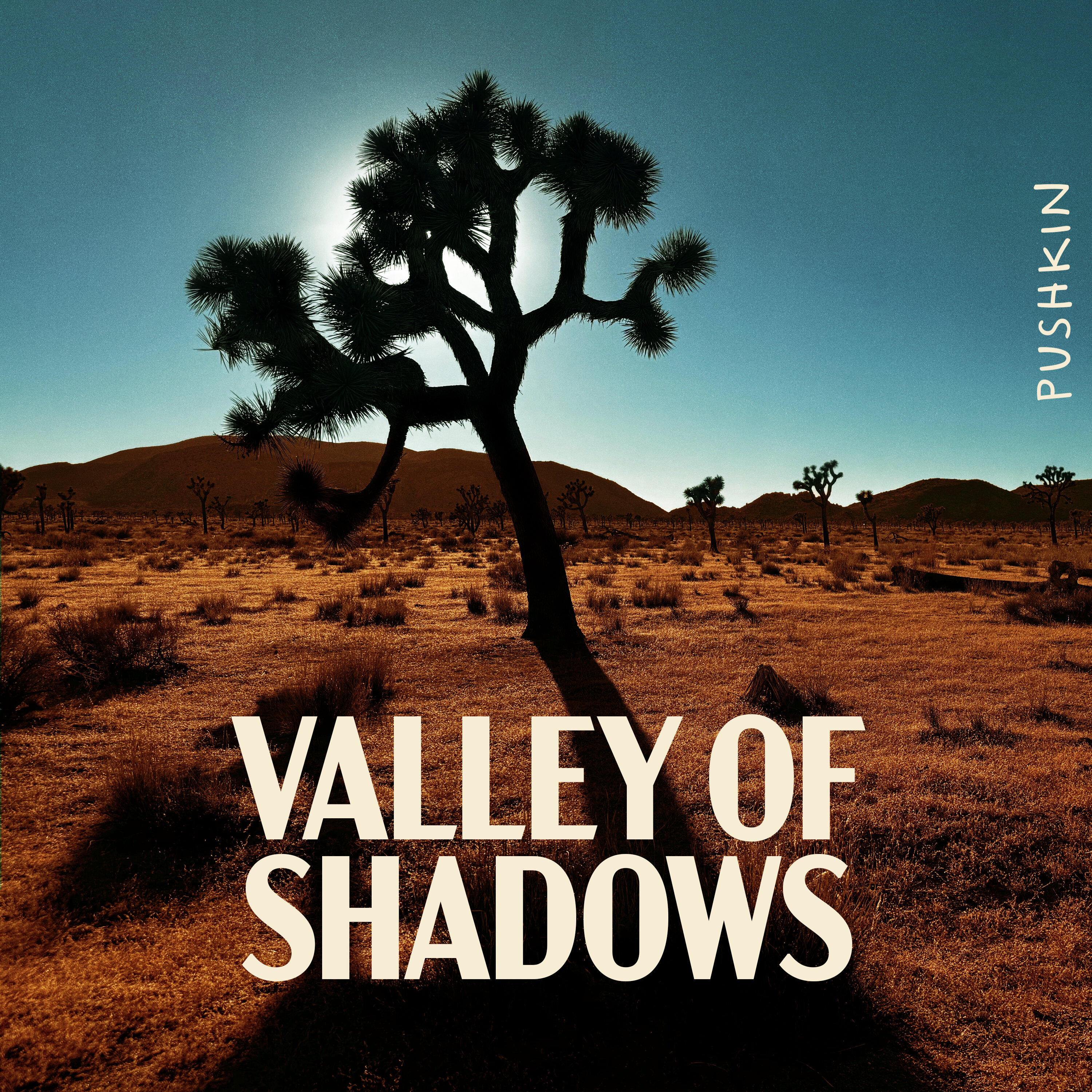
If you have any information or tips related to the disappearance of John auge, please call 213-262-9889 or email Shadowsoushkin FM. Valley of Shadows is reported, written and produced by us, Haley Fox and Betsy Shepard. Our editor is Diane Hodson. Our executive producers are Jacob Smith and Alexandra Garriton. Original music by Jake Gorski, Ray Lynch, Mike Jersich and Hayden Gardner. Sound design by Jake Gorski. Fact checking by Annika Robbins. Additional production support by Sonya Gerwitt. And our show art was designed by Sean Carney and Betsy Shepherd. Special thanks thanks to Nick White for show Art Photography. Valley of Shadows is a production of Pushkin Industries. To find more Pushkin podcasts, listen on the iHeartRadio app, Apple Podcasts or wherever you listen to podcasts from. Type 2 fun. We're Hailey and Betsy. See you next week.
- [55:20]
Dr. Maya Shankar
There are moments in each of our lives that seem to change everything. An unexpected diagnosis, the sudden end of a relationship, the loss of a job. As our lives off course, it can feel like time is dividing into a before and an after. I'm Dr. Maya Shankar, a cognitive scientist and my new book, the Other side of who We Become When Life Makes Other Plans is all about how we navigate these inflection points. The Other side of Change pairs singular real life stories with scientific insights to help us find meaning in the tumult of change. What if we saw the hardest moment, moments in our lives not simply as something to endure, but as an opportunity to reimagine who we can be? I'm thrilled to share that Booklist gave the Other side of Change one of its coveted starred reviews, saying it's impossible not to be moved. The Other side of Change is out now. Get your copy today, wherever you like. To buy books.