Loading summary
Transcript118 lines
- [00:00]
A
This world is dying.
- [00:02]
B
I've done a ton of research on this and discovered you. You know this is crazy, right?
- [00:07]
A
Focus Features presents Begonia.
- [00:09]
B
You're in an echo chamber.
- [00:11]
A
I know what you are. Alien fell off this fall. We have four days to save Earth.
- [00:17]
B
When the clock runs out. If you let me go, I have information you need.
- [00:20]
A
The truth will be revealed.
- [00:22]
B
You're not in control anymore.
- [00:24]
A
We are. Begonia Matedor under 17 not admitted without a parent. Now playing in select theaters, in theaters everywhere. October 31st.
- [00:33]
B
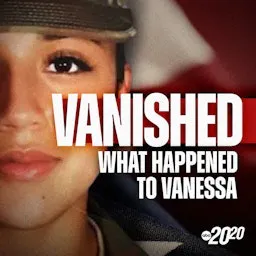
Hey, I'm Brad Milkey. I host ABC's Daily News podcast. Start here. Like you, I've been listening to what happened to Vanessa. And today we got something special for you. In a bonus episode, we're going to be talking to our host, ABC's own John Quinones, about what it was like behind the scenes of this reporting this story about a missing soldier and how the name Vanessa Guillen turned into a rallying cry for reform in the military. I'm super excited for this conversation because John does not know I'm about to say this, but the first time I met him was back in the summer of 2006. I was a college student. I was doing a summer internship at ABC News in Los Angeles, where I was working on 2020, and one day I get to attend my first real live interview, taping with a professional broadcaster. We've been spending the morning setting up a shot, and in walks John Quinones. Everyone's calling him.
- [01:27]
A
Q.
- [01:27]
B
It's immediately clear that he is this living legend within abc. He's kind, he's smart, he's probing with his questions, and importantly, you can feel his empathy for others. And it just comes across so clearly in his interviews and his work. And that's why I am so proud and excited to introduce John. Now. John, that empathy I was describing is, I think, what also made your coverage of the Vanessa Guillen story shine then and now. So thank you for being here.
- [01:53]
A
Well, thank you so much, Brad. It's a pleasure to be with you again on this podcast. It's a story that's very close to my heart. And I've been at ABC a long time. So, yeah, this is what I still love doing, is telling stories well.
- [02:08]
B
And we're going to get into your history as well with abc. But first off, let's talk about this show because it's all about finding out what happened to Vanessa Guillen. The family, of course, Vanessa's family is so central to this story. As a reporter, how do you approach these conversations with the family members of a victim in a story this tragic.
- [02:28]
A
I'm always, Brad, thinking about this when I'm working on stories for 2020, and I do so many of these true crime stories now and before that, investigative stories. I'm always thinking about how to approach families who have been affected by tragedy or loss like this. And you got to remember what these folks have been through and put yourself in their shoes as a reporter. So you do it very gently when you go into these interviews with the understanding that they may not want to talk right away. So it's really important to initially just listen and wait for them to open up when they're willing and ready. And too often, as journalists, we're under the gun. We're under pressure to deliver the story right away. We have to remind ourselves that we have to only start asking questions when the subjects of our interviews are ready to give an answer and remind ourselves that there's a greater good that ultimately is going to come out of all this. And the greater good is that when they finally do talk and the listeners, the viewers finally hear the story, maybe change will come, right? Maybe someone in Washington is going to be listening, maybe the military, maybe at the Pentagon, people will be listening. You know, the world is going to hear about this, and maybe change will come.
- [03:49]
B
John, does that involve also coming back to the family? Like you said, sometimes they're not ready.
- [03:55]
A
Absolutely. If they're not ready to talk, you know, I give them my phone number and I'll say, call me, please, when you are ready, and I'll come back. You know, we did that in Uvalde for the school shootings there a few years ago. We stayed a whole year of the ABC News team, producers and cameramen, and we committed ourselves to that because we knew that families, having suffered such a horrendous tragedy, weren't ready right away. So we said, we're going to have an office here. Here's our phone number, and when you are ready, you know, call us. And ultimately, eventually they did.
- [04:34]
B
And I mean, you've covered many, many stories, many crime stories with 2020 in this podcast. You said it was your nephew who first told you about Vanessa's disappearance when it was really just still a local story in Texas. So I guess what made you connect with this at first? What made you put in the call to ABC in New York and say, hey, we got to cover this and I'm the guy to do it?
- [04:55]
A
You know, we do a lot of true crime stories on 2020. I've done more than My share. But this one was also different in the sense that it was a Latino victim who had disappeared. 20 year old Vanessa Guillen suddenly disappears from a military base. That's strange. How, how could that happen? And what also attracted me to the story was that weeks into it, no one seemed to be paying enough attention. And the family was desperate. And my heart went out to Gloria Guillen and Myra and her little sister Lupe and their father Rogelio, who were pleading for answers. And they would be out there marching in front of those gates at Fort Hood. And let's face it, the fact that Vanessa is Mexican American, just like I am, I was born in San Antonio, just a few hours south of Killeen, Texas. These stories you seldom hear of women of color, you know, disappearing, getting the coverage that they deserve. So I felt it was, you know, it was a no brainer. We had to give attention to this story.
- [06:01]
B
And this family, the Guillen family is really the heart of the story. But the other thing that felt so maddening as this story is kind of unwinding was Aaron Robinson. Right. He's one of the last people to see Vanessa. And you're describing the origins of the case. Quickly it becomes clear he's the prime suspect. But it takes investigators a couple months to try to make an arrest.
- [06:19]
A
Yeah, this other soldier, Aaron Robinson, was working with her in that arms room on the base. He was the last one to see her. But he was able to not be a primary suspect early on because he had an alibi. He said he had gone home and had been with his girlfriend all night and he willingly was cooperating with authorities. He was even there there when Vanessa's sister got to the base the morning after she disappeared and started asking questions. They put her in a meeting with the authorities and Robinson was there with these other authorities. Can you imagine that the man who killed your sister is, you know, little does she know at that point, but he was there talking to them. And she said he kept smiling and laughing, which to Myra, Vanessa's sister, seemed really, really strange. But at the beginning of the investigation, Brad, the Criminal Investigation Division spent a lot of time, valuable time, chasing a tip from three soldiers who claimed they initially anyway, had seen Vanessa walking across a parking lot in the afternoon. That kind of steered them away from Robinson. And as it turns out, those soldiers really had not seen Vanessa. They were mistaken. And many of the officers working at Fort Hood were also inexperienced. Only three agents had more than two years of experience. We spoke to Chris Swecker, who's a former FBI agent and he led the independent review into Fort Hood's culture. He told us that CID was a training ground, that agents were constantly being transferred in and out of the base. But we have to point out that Fort Hood ncid, they stand by their investigation of Vanessa's case to this day. According to their internal report, they acknowledge that there are things that they could have done better, but overall, they thought their search was, to quote their report, immediate and well coordinated. Of course, Vanessa's family disagrees.
- [08:32]
B
Well, and that's the investigation. If they say, we're standing by how we pursued him, you can't really stand by the idea of him then escaping confinement. Right. Authorities described him getting out, then shooting himself, dying by suicide, and then that kind of subverts the whole judicial process. The family had been begging for this whole time. Now, when 2020 first reported the story, police were hesitant to release body camera footage of that incident. They still are. Your team was actually able to obtain dash camera footage of that night. What did we learn from this new footage?
- [09:01]
A
Yes, this is something that we've been chasing for months. Like you said, Killeen had been hesitant to release any footage regarding Robinson Stando with police. And now, five years later, right as we're wrapping up this final episode of the podcast, we finally get some dash camera footage of that night, and we're going to share the audio of it for the very first time. Now, the video we have is from just two of the police vehicles that responded the night Aaron Robinson died. They both start after his standoff with police. And one of the videos that the officer pulls up to the scene just moments after Aaron Robinson takes his own life. So soon that you can see one of his legs slowly fall to the ground.
- [09:50]
B
I got you. I got you.
- [09:51]
A
Got your cover. Got your cover.
- [09:56]
B
I do not see the gun. Hey, stand right here. Gun right here.
- [10:00]
A
Gun right here. A group of police immediately they rush to Robinson's body. Many of them are in plain clothes. Remember, it's the middle of the night. The video is time stamped around 12:30am on July 1. A lot of the officers are dispatched to look for Robinson after he had escaped. They even call the FBI for reinforcement. The officers don't see Robinson's gun at first, but they quickly find it. One officer announces on his radio that they've secured the weapon and Robinson's gunshot wound was self inflicted right here underneath his right leg. Center roll for self inflicted. We're securing the weapons. An officer asks if anyone has a mask to start cpr, but they note that it doesn't look like Robinson is moving at all.
- [10:55]
B
Yeah, we're just checking for a pulse.
- [10:56]
A
Now, an officer bends over Robinson and places his hand on his neck. And we know from the police report that he does not feel a pulse. And so this incident quickly becomes a crime scene. And then more police arrive.
- [11:13]
B
34, 37. Can we get crime scene tape started?
- [11:17]
A
Hey.
- [11:18]
B
So we're gonna go about 20 boards down, come out, and we're gonna go back up, replace the carpool, my Tahoe power pole.
- [11:27]
A
As this is happening, as police are trying to close off the area, as you can see them in the video collecting evidence from Robinson's person, you can very faintly hear the conversation of two officers. And one of them is talking about the moment Robinson pulled the gun on himself.
- [11:47]
B
I heard was the pop and then.
- [11:51]
A
Fire. He said. All I heard was a pop. And then I called the shots fired. I thought he was going to run. Huh?
- [12:01]
B
I thought he was going to run.
- [12:02]
A
I thought he had to thought he was in Jimmy were like.
- [12:07]
B
He thought run. You know what, though, right?
- [12:11]
A
He did it himself. He didn't make it. That's the same thing I told counting.
- [12:15]
B
When all boy did it. Get his pinch off in front of us.
- [12:24]
A
You can hear the officer say, I'm glad he did it to himself.
- [12:29]
B
Wow.
- [12:29]
A
Now, remember, according to the police report, Robinson pulls a gun on the officer that finds him. That officer even yells out gun. Before Robinson points the gun on himself.
- [12:41]
B
And then there's also this crowd that starts forming around that moment.
- [12:45]
A
Right.
- [12:45]
B
Because Vanessa's disappearance is. Had become kind of rallying cry in the community already. So now you got like this whole scene unfolding around this.
- [12:52]
A
Yeah, there's a large crowd that forms around the scene. And, you know, according to the police report, officers say this crowd was being very hostile, heckling them. They said some people were even live streaming the event. So more units are called to the scene. One officer said the crowd was very anti police. Interesting to note is that this incident would have been about a month after George Floyd's death. So tensions all over the country between police and the public was boiling high.
- [13:26]
B
And suspicions about police actions toward people of color. Hey, when you first reported on this story Back in 2020, 2021, no one had been sentenced for the crime, for any crime. So the podcast kind of takes us back to that timeline. Well, Cecily Aguilar pleaded guilty to being an accessory to murder and lying to investigators. Sentenced to 30 years in federal prison. In the podcast, you talk about how during her sentencing hearing, new details about the case are being brought to light. You interviewed Vanessa's older sister, Myra Guillen. She talks about watching Cecily go through the sentencing process, sitting through that hearing. What stood out to you in that sentencing?
- [14:03]
A
Well, for the first time, we learn more about the crime itself, like the necrophilia that Robinson allegedly abused Vanessa's body after he killed her. We also learned about Cecily Aguilar's apology to the family, the one she gave in court. But what struck me the most was from our conversation with Myra, she told us that her mother, Gloria, requested a private meeting with Cecily after the hearing. And she winds up forgiving Cecily, maybe because of her religion, you know, she's very, very Catholic. But she ends up forgiving the woman who was convicted of being an accessory to her daughter's death. And Myra says that in that private meeting, Brad, Cecily told Gloria that she wish she had had a mom like her, like Gloria.
- [14:58]
B
And again, these are all the things that then did not happen with Aaron Robinson because he was able to escape, because he was able to take his own life. And yet you look at these kind of moments between the family and Cecily, it's so powerful. We're going to take a quick break right here. When we come back, we're going to ask John about some of the biggest moments, the most interesting pieces of his reporting that you haven't heard before. That's after the break. This episode is brought to you by Progressive Insurance. Fiscally responsible financial geniuses, monetary magicians. These are things people say about drivers who switch their car insurance to Progressive and save hundreds. Visit progressive.com to see if you could save Progressive Casualty Insurance Company and affiliates. Potential savings will vary. Not of available in all states or situations.
- [15:45]
A
Introducing the new ESPN Fox one Bundle. Unlock all of ESPN and all of.
- [15:49]
B
Fox one with one unbeatable price. Catch the biggest games College football, NBA, NHL and more on espn.
- [15:56]
A
Stream your faves big Noon Saturday.
- [15:58]
B
The World Series and NASCAR on Fox.
- [16:00]
A
1 offer just 39.99amonth.
- [16:02]
B
That's 20 off the ESPN Fox 1 bundle offer. Violet for eligible subscribers only. Access content from each service separately. Savings compared to purchasing both plans separately. See stream.espn.com for complete terms and conditions. This episode is brought to you by Progressive Insurance. Fiscally responsible financial geniuses, monetary magicians. These are things people say about drivers who switch their car insurance to Progressive and save hundreds. Visit progressive.com to see if you could save Progressive Casualty Insurance Company and affiliates. Potential savings will vary. Not available in all states or situation.
- [16:40]
A
All Right.
- [16:40]
B
We are back with John Quinones as we describe the stuff that you might not have known as you were listening to vanished. So, John, I'm curious about your perspective. I guess what was some of the most interesting or memorable parts of reporting this story for you as a journalist?
- [16:54]
A
Oh, it's just the tragedy, the loss that this family was suffering through the passion that the family brought in, trying to get attention, how they were, you know, doing everything in their power, particularly these three women, the mom and the two sisters, pushing for justice. They started organizing rallies and marches all over Texas and Even in Washington, D.C. they were amazing to me. And Gloria, the mother in particular, you know, the media started referring to her as Mama Guillen or Mama Gloria, because she. She took on this role as a fierce protector, not only Vanessa, but for all soldiers who were suffering through this kind of harassment or abuse in the military. I don't think that this story would have gotten the attention that it did without this amazing family behind her.
- [17:50]
B
Well, and you're with them as this is unfolding in real time. So you're with them at the height of their trauma, really, and you're trying to gain their trust so they feel comfortable speaking to you, right? As a reporter, what are you trying to do, like, build a relationship with them? What is that like?
- [18:06]
A
Of course, you know, I mean, for me, it's easy because I grew up, you know, with a mom who always opened the front door to people in trouble, whether they were abused women or, you know, runaway cats and dogs, whatever it was. She was also very religious. So, I mean, I was always brought up to put myself in the shoes of the victim. You know, we were migrant farm workers, and I know what it feels like to be neglected. So I spoke Spanish, and I was able to identify with this family. I understood the culture dynamics, you know, starting with when I covered the border stories. And in Central America, I understand Latinos can be very humble, certainly Mexican Americans in South Texas, very humble. And you have to know when to stop asking questions, right? When to step away, when to continue asking questions. And I was able to do that with them. And I also worked with some great producers, you know, because we don't work alone in this. Producers like Janice Johnston, Denise Martinez, Raimundo, Natalie Cardenas, they spoke Spanish, and they were on the phone with the family often when I wasn't there in person. So that made it a bit easier. And I think that gave us an edge that we had as a network team covering the story because local stations were covering it, as you mentioned. But the networks, not so much.
- [19:37]
B
And so then the family feels like they can trust you to tell the story from their perspective and continue coming back, I guess. What are the moments like in their household that kind of let you know, yes, we're all in familiar space here. Yes, we can all trust each other.
- [19:51]
A
From the very moment I knocked on their door on the east side of Houston, I was welcomed because I again, I spoke to the mom in Spanish. Gloria was right there at the door. Their home reminded me of my home when I walked in. There's the smell of tortillas. They invited me to lunch. They had a little altar in the living room with the Virgin of Guadalupe, which is the patron saint of Mexico. And my mom had the same altar with candles lit up with our pictures, praying that when I was off covering a war where my sisters were off working, that we would be kept safe. So it felt again, again, so, so familiar. And a moment, Brad, that did not make it into the podcast was a reunion that 2020 organized between the Guillen family and Tim Miller, the founder of Equisearch, the team that helped search for Vanessa. We also got to see the Guillenne's also meet Kim Wheedle for the first time now. She's the mother of Gregory Morales, the Fort Hood soldier who also went missing. His remains were found in thanks to the search for Vanessa. Why was this meeting important for you, Kim? I needed to thank him in person. Saying it on Facebook and on the news, it's really not enough. They needed to understand how much I appreciate what they did and how hard they've been fighting.
- [21:22]
B
Right. That was wild. But as they're looking for Vanessa, they also find the remains of another missing soldier, Gregory Morales, whose family is also worried about him. And you mentioned a couple times now that things land on the cutting room floor for various reasons. Are there other moments with the family and throughout their journey here that we haven't heard so far?
- [21:41]
A
Yeah. You know, the family, initially, Brad withheld details about Vanessa's murder. For example, the sisters Myra and Lupe, they knew about the dismemberment of Vanessa's body, but they didn't tell their mother, Gloria, because they wanted to protect her. It hurts me the most because I see her every day knowing that I know the truth. But she doesn't ask her mother if she's supposed to know, not me, but she doesn't know. And so it hurts me the most because I shouldn't be a liar. I shouldn't be telling her. No, no, that's not how it happened. But I mean, one thing we have to tell her. They tell her a few months later when she visits the site where the remains were found by the Leon river, you know, miles away from Fort Hood. For the first time, she realizes that the daughter had been dismembered because there were three separate grave sites where her body had been buried and she didn't know this.
- [22:49]
B
Wow. The idea that, like, sometimes there's things the audience doesn't need to hear. For whatever reason, I hear we've got the family almost protecting their mother for some of those reasons.
- [22:58]
A
Yeah, they didn't want to hurt her anymore.
- [23:00]
B
Yeah. Which is completely understandable. But it also lends so much more light to how horrific this all was. All right, we're going to take another quick break now, but when we come back, we will have more with John. This episode is brought to you by cars.com on cars.com you can shop over 2 million cars. That means over 2 million new car possibilities. Like making space for your growing family, becoming the type of person who takes spontaneous weekend camping trips or upgrading your commute.
- [23:32]
A
Wherever life takes you next, or whoever.
- [23:33]
B
You'Re looking to be, there's a car.
- [23:35]
A
For that on cars.com visit cars.com to.
- [23:37]
B
Discover your next possibility. This episode is brought to you by Rakuten. If you're shopping while working, eating, or even listening to this podcast, then you know and love the thrill of a deal.
- [23:50]
A
But are you getting the deal and cash back? Rakuten shoppers, do they get the brands.
- [23:55]
B
They love, savings and cash back. And you can get it too.
- [23:59]
A
Stack sales on top of cash back.
- [24:00]
B
And feel what it's like to know you're maximizing savings. It's easy to use and you get cash back sent to you through PayPal or check. The idea is simple. The brands you love pay Rakuten for sending them shoppers. And Rakuten shares the money with you as cash back. Download the free Rakuten app or go to rakuten.com to start saving today. It's the most rewarding way to shop.
- [24:21]
A
That's R A K U t e.
- [24:23]
B
N rakuten.com 20th Century Studios presents Springsteen.
- [24:33]
A
When we were Born Witness a true.
- [24:35]
B
Story of risking it. All these new songs, they're the only thing making sense to me right now.
- [24:40]
A
To fight for what you believe in.
- [24:42]
B
This is not any good for Bruce. I don't need to be perfect. I just want it to feel right.
- [24:48]
A
Springsteen ready?
- [24:50]
B
PG13 parental guidance suggested for children under 13.
- [24:53]
A
Now playing only in Peters. All Right.
- [25:00]
B
We are back with John Quinones. And John, I feel like people get to know your voice so well during this podcast and throughout all of your work. You got this amazing voice, like if Mufasa got his press credentials, but they don't necessarily know the guy behind the voice. So I've always been curious, how did you get your start at abc?
- [25:16]
A
I always wanted to be a reporter. You know, when I was a kid, I would re watch the news and all the stories on television and the newspaper were so negative about people who lived on the west side of San Antonio, the Latino community. There were all stories about crime and violence and drug dealing and illegal immigration. And I knew there were positive stories there. You know, I knew heroes in that community, but no one was telling their stories. So it really angered me, even as a 13 year old boy writing for my high school newspaper. So my interest in journalism sprouted when I was growing up as a kid. And then I worked in radio broadcasting. So it's interesting that I'm now doing podcasts because I started doing radio broadcasts as a news reporter in Texas. I couldn't get a job in Texas in television. No one would hire me. They all had their one Hispanic reporter. And it's like, we already have one, we don't need another one. And it broke my heart and I was depressed and I was gonna give up journalism and go to law school maybe, but we didn't have money, we were very poor. I was lucky to go to college and get a degree thanks to a program called Upward Bound. And I couldn't get a job. I worked as a radio reporter and I wanted more. And I met someone who had gone to Columbia University and they said, don't go to law school, you'll be bored to death. If you're gonna continue your education, go to the Graduate School of Journalism at Columbia University, New York, this Ivy League school. Well, I'd never, I'd never heard of it. The only time I'd been out of Texas was to pick tomatoes in Ohio and cherries in Michig. But I applied and I was accepted. And not only that, I got a fellowship to study. It paid for my whole ride at Columbia University, this amazing school. I got a master's in journalism. And from there, finally I was hired as a local TV reporter in Chicago. I did a story in Chicago back in the late 70s, early 80s where I swam across the Rio Grande going undercover as a Mexican immigrant trying to get to the. Yeah, yeah, it was wild. My news director let me go undercover and found A coyote, a smuggler, who, for $300, put me on an inner tube and I floated across the Rio Grande. All captured on hidden camera. And I didn't stop there, Brad. I went to Chicago because this was for the station in Chicago, right? So I got a job at a restaurant where we had heard that the owner of this restaurant had undocumented workers working for him.
- [27:52]
B
So you're, like, charting the whole sort of experience and lives in the country, right?
- [27:56]
A
You swim across the Rio Grande and then get a job and worked as a dishwasher, where we had heard the owner of this restaurant hadn't paid his workers in 17 weeks. And every time the workers would complain, he would say, hey, guys, you get to sleep here in the basement. You get to eat all the food you want. You keep complaining, we'll call Immigration and have you deported. So I went there. I got a job as a busboy, and by day I'm washing dishes, and at night, I went down and slept with the other guys in the basement. And I still wonder what they must have thought, because my fellow workers, these Mexican guys who had not been paid in 17 weeks through tears, told me about their story and how they were being held against their will in that restaurant. Well, the next day I came back to work, and I got, you know, this time wearing a suit, speaking fluent English, because obviously I was speaking only Spanish when I did the undercover stuff. And I remember we had to chase the owner of the restaurant through the parking lot because he didn't want to talk to me about what he was doing to those workers. But the day after my story aired, me swimming across the Rio Grande, working at that restaurant, the US Government moved in. They shut down the restaurant, and they got the Mexican workers the money they were owed and temporary visas to remain here while they worked on their residency. And I knew then that those are the kinds of stories that I could tell, perhaps better than anyone, because of the world that I grew up in and that other language that I speak. That story won an Emmy award, my first Emmy award in Chicago. And Peter Jennings and the ABC folks in New York were watching, and they offered me a job to go to Miami and be based in Miami, but to cover Latin America, precisely because I spoke Spanish, I could go to Nicaragua, El Salvador, Panama.
- [29:38]
B
Well, and in fact, guess what, John, we have a clip of you back from 1984 reporting from Honduras.
- [29:43]
A
Wow.
- [29:43]
B
Actually, let's just listen to that really quickly.
- [29:45]
A
Yeah. U.S. military officials here in Tegucigalpa say the Light Observation army helicopter was on a Routine administrative flight near the Nicaraguan border when it was forced to land because of navigational problems. Tonight, sporadic gunfire is reported from both the Nicaraguan and Honduran sides of the border. U.S. officials say the 5,000American troops on military exercises here have been told to stay away from the tense border. John Quinones, ABC News, Digna, Sigalpa, Honduras.
- [30:16]
B
So, John, that's audio reporting right there, baby. You had the Latin American beat early on. What goes through your, I'm always curious what goes through your mind as you hear some of your early work.
- [30:24]
A
It's pretty. I hear myself being a little nervous in my delivery because first of all, I, you know, it was intimidating to be down there in war zones. And also I was working for my hero, Peter Jennings and, you know, Barbara Walters and Diane. I just wanted so badly to do my best and make sure I got the story right. And, you know, back then, people had a lot of faith in what we were reporting. Times have changed, haven't they? You know, but our credibility was so important and I just wanted to make sure to get it right. That's what I think about it. I hear that young man's voice and in it I hear a little bit of nervousness and trying to get it right.
- [31:03]
B
Are there dots to be connected then from all of that work to then how you covered the Vanessa Guillen story? Like, I'm kind of curious if you think, you know, any reporter worth his salt would cover it the same way or if. No, like I'm gonna cover it a different way because of who I am and my prior experience. What are your thoughts?
- [31:22]
A
You know, we're all products of our upbringing. So I can't get away with the man I am and the little boy I was and what I saw and what I experienced and the sentiments I feel for people who are not so fortunate, you know, because I was one of those people. And I'll never forget, and I'll leave you with this thought what Peter Jennings, these great anchormen at ABC News once told me. I was in Central America and I was going to get an interview with the president of Nicaragua, a man named Daniel Ortega. Daniel Ortega is president again today, Brad, if you can believe it, all these years later. But back then, then he was a young revolutionary and it was a big deal to try to get an exclusive interview with him. And I got it. So I called New York from Nicaragua and I got Peter Jennings on the line and it was a brand new reporter, you know, rookie reporter. And I said, I'm about to do an Interview with the president of Nicaragua. And he said, great young man. I don't think Peter knew my name. He said, great, young man. I'll have you on World News Tonight. You're on the show. So I hang up with the phone with Peter Jennings and the phone rings again and it's the president's office in Nicaragua canceling my interview. So now I'm all nervous and shaking in my boots and I gotta call Peter Jennings again and tell him that the story that I was gonna do ain't gonna happen. Right? They've backed out. And I thought I was gonna be yelled at by Peter Jennings, who was really intimidating. He looked like James Bond, you know, And I thought I might get fired. I didn't know. But instead, Peter Jennings gave me some words of advice that I car to this very day. He said, john, young man, this is going to happen again in your career where someone promises you something and they don't deliver. He said, listen to me. Don't worry so much about talking to the movers and shakers of the world. You know, the presidents of countries, politicians in this country, the presidents of corporations or universities. Don't worry so much about giving them a voice. Concentrate on talking to the move, moved and the shaken. In other words, talk to the real people down there. You know, as a Latino reporter, he said, you, John Quinones, you can go into these communities and talk to the real victims of war and natural disasters and, you know, because you understand the culture, you can talk to folks that even I, Peter Jennings, can't. So concentrate on that. Give a voice to people who don't have a voice and you'll be a better reporter. So that's what I've tried to do, is to give a voice to the moved and the shaken. Not so much, you know, to the high profile movers and shakers of the world.
- [34:09]
B
Really amazing perspective there. And it comes through so much as you did this reporting with the family of Vanessa Guillen. So much at stake, by the way, not just for Vanessa's family, but for so many families in so many different ways. So, John Quinones.
- [34:23]
A
Q.
- [34:24]
B
Thank you so much for the time.
- [34:27]
A
Of course, Brad. Thank you. Anytime.
- [34:30]
B
Hey, if you liked John on the mic, make sure to check out his next podcast from ABC Audio in 2020. It's called the Hand in the Window. It's the story of how a 911 call looks led to a desperate effort to find a kidnapped woman who stole her captor's phone to try to save her life. John hosts a brand new series which launches on November 4. What happened to Vanessa? Is a production of ABC Audio in 2020. The series was hosted by John Quinones. This bonus episode was produced by Sabrina Fan with the help of Shane McKeon. It was edited by Tracy Samuelson. Our supervising producer is Sasha Azlanian. Music and mixing by Evan Viola. The Vanished podcast team includes Nancy Rosenbaum, Nora Richie, Audrey Mostek, Annalisa Linder and Michelle Margulis. Special thanks to Katie Dendos and Our colleagues at 2020 Janice Johnston, Denise Martinez, Raimundo, Natalie Cardenas and Brian Mazursky. Josh Cohan is our director of podcast programming. Laura Mayer is our executive producer. I'm Brad Milke. Thanks for listening.
- [35:46]
A
Morning Zoe.
- [35:47]
B
Got donuts?
- [35:48]
A
Jeff Bridges why are you still living above our garage?
- [35:51]
B
Well, I dig the mattress and I want to be in a T Mobile commercial like you teach me. So then I oh no, I'm not really prepared.
- [36:00]
A
I couldn't possibly AT T Mobile get the new iPhone 17 Pro on them. It's designed to be the most powerful iPhone yet and has the ultimate pro camera system.
- [36:09]
B
Wow, impressive. Let me try. T Mobile is the best place to get iPhone 17 Pro because they've got the best network. Nice.
- [36:17]
A
Jeffrey, you heard them.
- [36:19]
B
T Mobile is the best place to get the new iPhone 17 Pro on iPhone plus with eligible traded in any condition. So what are we having for launch?
- [36:27]
A
Dude, my work here is done.
- [36:29]
B
The 24 month bill credit is on experience beyond for well qualified customers + tax and 35 device connection charge credit sending balance due to payoff earlier. Cancel Finance Agreement. IPhone 17 Pro 256 gigs 1099.99 A new line minimum 100 plus a month plan without a pay plus taxes and fees required. Best mobile network in the US based on analysis by Ooklab Speed Test Intelligence Data 1H 2025 Visit t mobile.com from 20th Century Studios and the director of.
- [36:49]
A
Prey Fresh Predator Badlands welcome to the.
- [36:53]
B
Most dangerous planet in the universe on November 7th. Everything in this world is trying to kill you.
- [37:00]
A
You are prey until you become the predator.
- [37:05]
B
Experience it in 3D and IMAX.
- [37:08]
A
We might not be alone in this hunt.
- [37:12]
B
Predator Badlands may be inappropriate for children November 7th. Get tickets now.