Podcast
Vermont Public Docs
Hosted by Vermont Public · EN
Special series and audio documentaries from Vermont's public media source.
10episodes
Episodes
Newest firstAll episodes
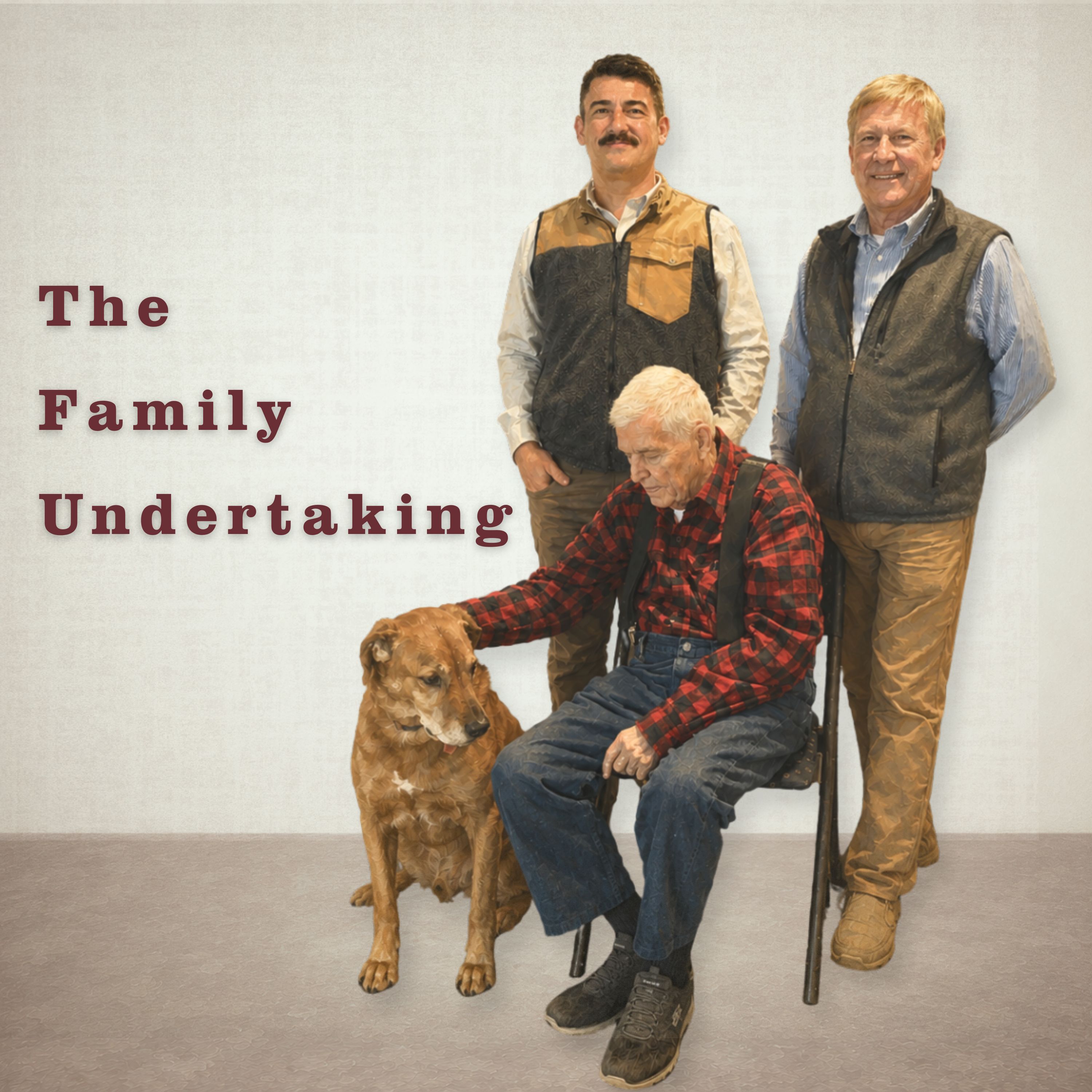
The Family Undertaking
Jun 1200:57:14Tap to summarizeGreg and Jordan Camp are the fourth and fifth generations running the Cabot Funeral Home in Woodstock, Vermont, which has been in business for more than a century.Funeral homes can seem so mysterious, like they're in their own world. But at the same time, they're almost unavoidable. They're the place most people go to when there's a death in the family. What is that like to be the person who's helping, to be the person everyone else is turning to?In this story, Greg and Jordan talk about their job, which is pretty much the same job that all small funeral homes do, not only in Vermont but across the country. The work is practical, but also delicate; full of logistical details, but also big, complicated emotions.What’s it like to be the person who’s caring for community members when they’re at their most vulnerable, feeling grief, confusion, and loss? This story is produced by Elissa Pine and Jennifer Sutton of Two Daughters Productions.
Transcribe →
Coming of age — and coming out — in the time of civil unions
Jun 30, 202500:26:25Tap to summarizeJuly 1st, 2025 marks the 25th anniversary of civil unions in Vermont. This legal alternative to marriage was the first of its kind in the United States. In the Vermont Supreme Court case Baker v. Vermont, the court ruled that the state had no legal basis to discriminate against same-sex couples. If the legislature would not allow same-sex couples to get marriage licenses, lawmakers would have to figure out a legal alternative. The result: civil unions.Vermont Public's Andrea Laurion spoke with LGBTQ+ Vermonters who were coming of age — and coming out — when civil unions became legal. They were likely too young at the time to be thinking about marriage for themselves, but old enough to know what was going on and how it might affect them one day.See photos and learn more at vermontpublic.org.Support Vermont Public's longform audio storytelling with a donation.
Transcribe →
The Arts that Shape Us #2: Tibetan Music and Dance
Jun 18, 202500:34:09Tap to summarizeFor Tibetan-American artist Migmar Tsering, music and dance are inextricably linked to being Tibetan.Migmar first learned traditional dance in the village of Langkor in the county of Tingri. He was born there almost 3 decades after the invasion of Tibet by communist China in 1950.Since the 1950s, the Tibetan diaspora has expanded, with multiple groups of Tibetans relocating to India and later the U.S., Canada, Australia, and some European countries. Under the United States 1990 Immigration Act, 1,000 Tibetans living in exile in India, Nepal, and Bhutan were chosen via lottery to receive U.S. visas.In 1993, Vermont became one of 25 resettlement sites in the U.S. Migmar arrived to Vermont in 2011 and soon began teaching traditional music and dance to kids in Vermont's Tibetan American community.The Arts that Shape Us is a podcast by Vermont Folklife, produced with support from Vermont Public's Made Here Fund. Hosted by Mary Wesley, it’s devoted to exploring the state’s cultural heritage and what different local artforms say about the past and present of Vermont.
Transcribe →
The Arts that Shape Us #1: Barre Stone Carvers
Jun 18, 202500:35:39Tap to summarizeSince at least the 1870s, people in central Vermont have cut, chiseled, hoisted, polished, and carved local granite, creating monuments, statues, and especially memorial grave markers. The granite industry brought Italian, French, Canadian, Scots, Scandinavian, Irish, Greek, and Spanish workers to the city of Barre, each bringing their own stone carving traditions.Over time, these artisans and the manufacturers they worked for shaped an enduring identity: The Barre stone carver.The Arts that Shape Us is a podcast by Vermont Folklife, produced with support from Vermont Public's Made Here Fund. Hosted by Mary Wesley, it’s devoted to exploring the state’s cultural heritage and what different local artforms say about the past and present of Vermont.
Transcribe →
The Afghan Women of Brattleboro #6: Tremendous Journey
May 12, 202500:37:04Tap to summarize“There is a lot of change from the beginning up to now, and we are still learning every day.”The experience of resettling in Brattleboro has changed not only the Afghan women who had to rebuild their lives, but also the people and the town that helped them do it. There are many challenges—a housing shortage, the loss of federal funding that supports refugee programs, pockets of resentment among local residents. But in the words of one longtime Brattleboro citizen, the town has learned a lot “about resiliency, support, and what really matters.”The Afghan Women of Brattleboro was produced by Two Daughters Productions with support from Vermont Public's Made Here Fund.
Transcribe →
The Afghan Women of Brattleboro #5: Home Lives
May 12, 202500:25:03Tap to summarize“My daughters will be raised in America, so their lives will be different from mine.”Some Afghan women in Brattleboro left their country because their husbands had jobs connected to the Afghan military or to the U.S. government evacuation in 2021, which put them in danger. Coming from traditional families, these women focus on the same things in Brattleboro as they did at home: raising their children, practicing their faith, and preserving their culture. But they’re also doing new things, like learning how to drive.The Afghan Women of Brattleboro was produced by Two Daughters Productions with support from Vermont Public's Made Here Fund.
Transcribe →
The Afghan Women of Brattleboro #4: Like a Stone
May 12, 202500:25:51Tap to summarize“Many of us who are here in Brattleboro ... we had a good life in Afghanistan.”Afghan women in their 40s and 50s grew up surrounded by war. They went to school off and on, depending on how much violence was happening in their neighborhoods. They raised children. Many built careers. But those careers put them in danger when the Taliban returned in 2021. Today these women face the double burden of supporting themselves and their families in Brattleboro and also their families back home. The Afghan Women of Brattleboro was produced by Two Daughters Productions with support from Vermont Public's Made Here Fund.
Transcribe →
The Afghan Women of Brattleboro #3: Another Page
May 12, 202500:24:54Tap to summarize“I grew up with all these stories, all this history. How can I accept in one night, everything is changed?”Many young women who came of age during Afghanistan’s 20 years of democracy went to high school and university and were charting their futures when the Taliban took power. Their lives were in danger so they fled. In Afghanistan, they had been academic powerhouses, artists, educators, rising business managers. In Brattleboro, they started over. The Afghan Women of Brattleboro was produced by Two Daughters Productions with support from Vermont Public's Made Here Fund.
Transcribe →
The Afghan Women of Brattleboro #2: Arrival
May 12, 202500:22:46Tap to summarize“Is any place in the United States of America called Vermont?”As Afghan women left their country and embarked on a journey halfway around the world, they mourned their losses: family, homes, careers, comfort. They mourned their loss of Afghanistan. They landed in Vermont, a place they’d never heard of before. A brand new resettlement agency and a cadre of volunteers were waiting for them.The Afghan Women of Brattleboro was produced by Two Daughters Productions with support from Vermont Public's Made Here Fund.
Transcribe →
The Afghan Women of Brattleboro #1: One Backpack
May 12, 202500:19:23Tap to summarize“The day the Taliban took control of our country, how much we cried no one can imagine.”When the fundamentalist Taliban seized power in 2021, Afghan citizens were shocked and terrified. They fled the country for different reasons: their education, jobs, or activism put them in danger; they were connected to the Afghan military or a western government; or all of the above. The U.S. evacuated close to 80,000 Afghans. Some were destined for Brattleboro, Vermont.The Afghan Women of Brattleboro was produced by Two Daughters Productions with support from Vermont Public's Made Here Fund.
Transcribe →