
Podcast
Vladimir Putin - Biography Flash
Hosted by Inception Point AI · EN
The Putin Files is a podcast that explores the life and career of Vladimir Putin, the President of Russia. Each episode will take a deep dive into a different aspect of Putin's story, from his childhood in Leningrad to his rise to power in the Kremlin. The podcast will feature interviews with experts on Putin, as well as personal stories from people who have met him or been affected by his policies.The goal of the podcast is to provide a comprehensive and unbiased look at Putin, to help listeners understand who he is and how he came to be one of the most powerful men in the world. The podcast will be hosted by a journalist or historian who is knowledgeable about Putin and who can present his story in a clear and engaging way.
This content was created in partnership and with the help of Artificial Intelligence AI.
43episodes
Episodes
Newest firstAll episodes
Biography Flash Vladimir Putin Pivots to Asia at Kazan ASEAN Summit Signaling a Multipolar Vision
Jun 2000:04:35Tap to summarizeVladimir Putin Biography Flash a weekly Biography. Vladimir Putin has spent the past few days turning Kazan into his personal geopolitical stage, using the Russia ASEAN summit to signal that, in his narrative, Russia is not isolated but pivoting confidently to Asia. Russian and ASEAN state media report that Putin is chairing the anniversary Russia ASEAN summit in Kazan, marking 35 years of relations, and using his plenary remarks to pitch Russia as a reliable partner in energy, agriculture, digitalization, and defense cooperation with Southeast Asia. Russian coverage of the summit shows him emphasizing a multipolar world and deeper economic and security ties with ASEAN, clearly designed to position this Asian vector as a long term pillar of his legacy rather than a short term workaround to Western sanctions. On the sidelines, Vietnamese outlet Vietnam Plus reports that Putin held talks with Vietnams Prime Minister Le Minh Hung, where they discussed reviving and expanding strategic energy projects, including nuclear energy cooperation at the Ninh Thuan 1 plant, oil and gas, and an ambitious goal to push bilateral trade toward 15 billion dollars. That kind of high tech, long timeline cooperation suggests Putin is still betting that Russia can lock in deep structural ties in Asia that will matter decades from now, long after todays battlefield headlines. Meanwhile, Voice of the Philippines and other regional coverage show Putin sitting alongside Philippine President Ferdinand Marcos Jr at the Kazan forum, with Marcos delivering a keynote while Putin co chairs. In their joint appearances, Putin underscores foreign policy coordination, trade, and stabilization of global energy and food markets, trying to portray himself as a responsible global manager rather than an embattled wartime leader. For optics at home and abroad, Russian and international broadcasters like CGTN Europe and local Kazan outlets have shown Putin touring the historic center of Kazan, walking through the Kazan Kremlin, the Annunciation Cathedral, and the Kul Sharif Mosque, chatting casually with tourists and locals. These images are classic Putin stagecraft, reinforcing a biographical through line of the pious, culturally rooted, accessible national leader who can glide from mosque to cathedral to summit hall without missing a beat. On social media, Philippine and ASEAN focused pages, along with regional news accounts, have pushed clips of Putin declaring that he stands with ASEAN in promoting a just world order and defending state sovereignty, language highlighted by outlets such as ABS CBN News. Supporters amplify these lines as proof that he remains a central architect of an alternative global system, while Western oriented commentary notes the irony of sovereignty talk from a leader still waging war in Ukraine. PBS NewsHour and PBS social accounts, for example, continue to frame his position at home as increasingly contested, reporting that some Russians are quietly breaking with Putin as the Ukraine war drags on, chipping away at the once monolithic image of unchallenged authority. In the security arena, Ukrainian drone strikes on Russian energy infrastructure, including a major Moscow area refinery fire reported by PBS NewsHour and other international outlets, have again embarrassed the Kremlin. While Putin has not offered extended public comment on this specific incident in the last day, these attacks feed an emerging biographical chapter: the strongman who built his reputation on stability finds key assets inside Russia repeatedly hit, forcing him to juggle war management with his global statesman campaign. There are also recurring, though not newly verified, claims circulating on platforms like Instagram from former Russian state TV journalists that entire news programs are recorded solely for Putin, showing him only flattering content about himself and Russia. These reports have been aired previously by Western media and are treated as credible by many analysts but remain impossible to independently verify in full; they add a gossip worthy but important psychological layer to the image of a leader in an increasingly curated information bubble. Speculation among some commentators that the intensified Asia outreach in Kazan is a sign of panic inside the Kremlin is not backed by hard evidence in the past few days; what is firmly documented is a deliberate, sustained pivot, with Putin investing personal time and political capital into long range economic, nuclear, and cultural projects with Southeast Asian partners. That is your Vladimir Putin Biography Flash for this episode. Thank you for listening, and be sure to subscribe to never miss an update on Vladimir Putin, and search the term Biography Flash for more great biographies. Thanks for listening. This has been a Quiet Please production. Get the best deals https://amzn.to/3ODvOta
Transcribe →Biography Flash Vladimir Putin Pivots to Asia Weathers Drones and Defies the West
Jun 1800:04:06Tap to summarizeVladimir Putin Biography Flash a weekly Biography. Vladimir Putin has spent the past few days doing what he does best on the world stage: projecting resilience at home while courting new partners abroad, all against the steady drumbeat of war and sanctions. According to coverage from Deutsche Welle, Putin has publicly acknowledged that Ukrainian drone attacks on Russian territory are hitting the economy, especially oil infrastructure, and even forcing the scaling down of public events. In biographical terms, that is a rare admission of vulnerability from a leader who usually insists everything is “under control,” and it underlines how the Ukraine war is now reshaping both his security posture and his public calendar. Commentators note that despite economic strain and pressures on domestic support, he continues to hold power through a mix of propaganda and repression, reinforcing his image as a long‑term survivalist rather than a peacetime manager. On the diplomatic front, the cameras have been focused on Kazan. The Philippine government and Philippine media report that President Ferdinand Marcos Jr. met with Putin on the sidelines of the ASEAN‑Russia Commemorative Summit, marking 50 years of diplomatic relations. In their televised opening statements, Putin highlighted long‑standing “friendship and mutual respect” and pushed for more cooperation in trade, agriculture, and especially energy. Marcos, for his part, stressed food and energy security. For Putin’s biography, this is part of the continuing pivot to Asia narrative: as relations with the West deteriorate, he visibly doubles down on partners in Southeast Asia, trying to prove that Russia is not isolated. Regional outlets also show Putin meeting Brunei’s Sultan Hassanal Bolkiah ahead of the same summit, praising him as “one of the most experienced leaders.” This kind of flattery is classic Putin diplomacy: reinforcing personal ties with long‑standing monarchs and projecting himself as a peer among veteran rulers, which plays well with his cultivated image of staying power. On the rhetorical front, Russian and international clips from his recent public appearances show Putin again framing Russia as standing almost alone against the “collective West” led by NATO, insisting that no one has ever delivered a decisive defeat to Russia and warning outsiders “do not fight Russia.” That line feeds directly into his long‑running biographical arc as the defender of a besieged fortress, and it will likely be quoted in future histories of his rule. Online, the social media chatter is more reflective than revelatory. A widely shared Instagram reel revisits Putin’s past comments to foreign media about the Ukraine war, keeping older confrontational soundbites circulating. Another popular short video shows Donald Trump thanking Xi Jinping and Putin for staying “very neutral” during the Iran conflict, which, while not new policy, keeps Putin’s name in the same breath as other big‑power leaders and reinforces his image as an indispensable geopolitical actor. These pieces are more about narrative maintenance than new moves, but they shape how his persona travels on global feeds. There are also recurring reports from various YouTube and regional news channels about an “emergency briefing” from Putin warning the West against military intervention in Iran. Those segments rely heavily on commentary channels and partial clips; until the Kremlin or major outlets confirm a specific new directive, those dramatic labels should be treated as amplified rhetoric rather than a clearly documented turning point. Finally, Russian and European outlets continue to cover Putin’s irritation with fresh Western sanctions, including those touching even children’s summer camps, which he has dismissed as “nonsense.” It is a small quote with long‑term significance, showing how he weaves sanctions into a broader grievance narrative aimed at rallying domestic sympathy and portraying Russia as unfairly targeted at every level of life. That is the latest chapter in the living biography of Vladimir Putin: still embattled, still performing strength, and still working the phones and photo‑ops to prove he has more friends than enemies. Thank you for listening, and be sure to subscribe so you never miss an update on Vladimir Putin, and search the term Biography Flash for more great biographies. Thanks for listening. This has been a Quiet Please production. Get the best deals https://amzn.to/3ODvOta
Transcribe →Biography Flash Vladimir Putin War Leader Image Repair and Falling Approval Ratings
Jun 1600:03:34Tap to summarizeVladimir Putin Biography Flash a weekly Biography. Vladimir Putin’s past few days have been a careful blend of war leader, domestic manager, and image repair project, all playing out under the shadow of slipping approval ratings and a grinding war in Ukraine. According to the Kremlin’s official readout, he recently chaired a videoconference meeting of Russia’s Security Council, focused on ensuring what he called public safety and control during the upcoming State Duma elections in September, with Interior Minister Vladimir Kolokoltsev briefing him on security measures. Kremlin records show the full power vertical on screen: Prime Minister Mikhail Mishustin, Valentina Matviyenko, Vyacheslav Volodin, Dmitry Medvedev, Sergei Shoigu’s successor Andrei Belousov, and security hawks Nikolai Patrushev and Sergei Naryshkin all in attendance, underlining Putin’s continuing grip over the security apparatus and electoral process. In another officially publicized event, Putin held a working meeting with Transport Minister Andrei Nikitin, where he emphasized expansion of Russia’s river and sea transport fleet, highlighting plans for more than 40 new vessels for Moscow alone and new cruise ships under construction. The technocratic tone of that meeting is classic late‑Putin: talking infrastructure and modernization while the country is on a war footing, reinforcing his preferred image as hands‑on manager of a besieged but functioning state. On the war front, Al Arabiya and other outlets report that Putin has been boasting that Russian forces now hold a strategic advantage in the conflict with Ukraine, claiming they have seized the initiative after ousting Ukrainian troops from parts of Russia’s Kursk region earlier in the spring and accusing Kyiv of resorting to “terrorist methods.” This rhetorical line fits with broader analysis from Western think tanks and outlets such as the Atlantic Council and ABC News, which note both intensified Ukrainian attacks inside Russia and growing internal pressure as the war increasingly reaches ordinary Russians. Perhaps the most biographically telling trend is not a single headline but a pattern. Novaya Gazeta Europe, citing the independent Russian newsletter Faridaily, reports that Putin significantly increased his public activity in April and May, taking part in about 60 public events in those two months compared with 55 in the entire first quarter of the year. Ukrainian and independent Russian media both argue this spike is aimed at compensating for falling approval and trust ratings, suggesting that even the Kremlin’s own pollsters recorded trust in Putin dipping below 30 percent before they stopped publishing that metric. At the same time, these reports say he still rarely leaves Moscow, with most events tightly controlled, underscoring a leader projecting hyper‑visibility while physically staying behind a protective bubble. These accounts of his motives remain partially speculative, but the underlying numbers, drawn from the Kremlin press service’s own event logs, are documented. There have been no credible new social‑media‑style personal moments from Putin himself in the past day or so; instead, the social talk has centered on analyses and clips of his Security Council session and war comments, shared by outlets like ABC News and independent Russian channels, often framing him as a ruler under mounting but still contained pressure. That is your Vladimir Putin Biography Flash for this episode. Thank you for listening, and be sure to subscribe so you never miss an update on Vladimir Putin, and search the term Biography Flash for more great biographies. Thanks for listening. This has been a Quiet Please production. Get the best deals https://amzn.to/3ODvOta
Transcribe →Biography Flash Vladimir Putin War Medals Satellites and a Sanctions Proof Empire
Jun 1300:03:14Tap to summarizeVladimir Putin Biography Flash a weekly Biography. Vladimir Putin has spent the past few days weaving together war messaging, economic showmanship, and carefully curated symbolism, all of it aimed at projecting staying power at home and relevance abroad. According to coverage of the St. Petersburg International Economic Forum on outlets like Euronews and Bloomberg, he used the gathering to court non‑Western partners and pitch Russia as a sanctions‑proof economy, stressing new energy deals and investment projects that he claims will anchor Russia’s long‑term pivot away from the West. Bloomberg also reports that he boasted about expanding a domestically produced satellite constellation and vowed to intensify strikes on Ukraine, a pairing that signals how space tech and precision weapons are now central to his power persona, not just military talking points. Russian and Western television coverage of his recent Kremlin ceremony, highlighted by Firstpost footage shared on social media, showed Putin toasting with champagne as he handed out Hero of Labour medals and state prizes. The optics here matter biographically: it is the leader positioning himself as patron‑in‑chief of a wartime elite, reassuring loyalists that the state still has money, medals, and glamour even as the war drags into yet another season. On the battlefield narrative, ABC News and CNN analysis emphasize that Ukrainian drones and new missiles are hitting deep inside Russia, including attacks on military plants supplying components for drones and missiles, even as the Kremlin insists its forces are holding or advancing. Euronews cites Ukrainian President Volodymyr Zelenskyy saying Kyiv used domestically produced Flamingo missiles to hit a plant in Cheboksary, underscoring the pressure on Putin’s defense‑industrial base. Analysts on Western networks suggest these trends could shape Putin’s legacy as the president who led Russia into a grinding, costly war with increasingly constrained options, though any talk of imminent political vulnerability remains speculative and is not backed by hard evidence inside Russia. On the soft‑power and image‑management front, NBC News and other outlets have noted the Kremlin’s recent efforts to woo Western‑aligned influencers visiting Russia, which Russian officials tout as a sign of a “thaw.” This looks less like genuine diplomacy and more like reputation rehab, a detail future biographers will file under the late‑career information war. Meanwhile, reports from Australia’s 7NEWS about giant mobile billboards featuring Putin’s face rolling through Sydney show how his image is being deployed far beyond Moscow, though the campaign has been widely described as part propaganda, part stunt. There are no credible reports in the past day of dramatic health revelations, succession maneuvers, or surprise diplomatic U‑turns; any rumors circulating on fringe social media about Putin’s imminent downfall remain unconfirmed and should be treated as speculation, not fact. That is your Vladimir Putin Biography Flash for this week. Thank you for listening, and be sure to subscribe so you never miss an update on Vladimir Putin. And if you enjoyed this, search the term Biography Flash for more great biographies. Thanks for listening. This has been a Quiet Please production. Get the best deals https://amzn.to/3ODvOta
Transcribe →Biography Flash Vladimir Putin Stagecraft Survival and the Strongman Image Cracking in 2025
Jun 1100:03:42Tap to summarizeVladimir Putin Biography Flash a weekly Biography. Vladimir Putin has spent the past few days trying to look unshakable at home and indispensable abroad, even as cracks in his long-cultivated strongman image quietly widen. According to reporting by Meduza and Novaya Gazeta Europe, independent outlets tracking Kremlin schedules, Putin has markedly stepped up his public appearances this spring, with about 60 events in April and May versus 55 in the entire first quarter, a clear signal that the Kremlin is fighting sliding approval ratings by flooding the airwaves with Putin the tireless manager rather than Putin the distant wartime recluse. That strategy was on full display at the St. Petersburg International Economic Forum, where he used a marquee speech and Q and A sessions to project confidence to foreign investors and friendly governments. Russian and international coverage of the forum highlighted Putin’s insistence that the Russian economy is stable under sanctions and his broader message that Moscow is open for business, at least to the non Western world. In a widely replayed exchange with an Indian journalist at the forum, Russian state media and Indian outlets showed Putin calibrating his language on Asian geopolitics, stressing that Russia has no problem with China Pakistan ties while flattering India as a special strategic partner, a reminder that his biography is increasingly about pivoting away from the West and toward a patchwork of non Western partners. On the military front, the Associated Press reports that in a recent appearance in St. Petersburg, Putin vowed to strengthen Russian air defenses to counter Ukrainian drone and missile attacks, framing the war as a long haul confrontation in which Russia will adapt and endure. That promise fits into his now yearslong effort to present himself as the commander in chief personally guiding a defensive struggle against a hostile West, a theme that will loom large in any later chapter of his life story. Meanwhile, Russian and Western commentary has noted the Kremlin’s eagerness to welcome visiting American conservative influencers and a U.S. administration official to Moscow, a made for television soft power moment cast by Russian outlets as evidence of a thaw with parts of the American right. This is less about policy than optics, but biographically it underlines Putin’s growing bet that his real audience in the West is no longer governments but sympathetic factions. There are also murkier notes. Firstpost, citing the Financial Times, recently amplified claims that Putin at one point had parts of his own surveillance camera network switched off amid internal security intrigue. Those reports remain difficult to verify independently and should be treated as unconfirmed, but they feed into a persistent narrative of paranoia and tightening inner circle control around the Russian leader. Socially, Kremlin friendly Instagram accounts and Russian media have continued to circulate recent clips of Putin praising Russia’s relationship with India as trust based and brotherly, reinforcing his carefully crafted image as an elder statesman of the Global South, even as domestic critics point to economic strain and battlefield losses. Taken together, the past few days show a leader leaning heavily on stagecraft: more cameras, more carefully choreographed encounters, more declarations that Russia will adapt and prevail, even while reliable independent outlets track a quiet erosion of public support and growing concern within the elite. For the long arc of his biography, these are the years where survival, not glory, seems to be the central project. Thank you for listening, and be sure to subscribe so you never miss an update on Vladimir Putin, and search the term Biography Flash for more great biographies. Thanks for listening. This has been a Quiet Please production. Get the best deals https://amzn.to/3ODvOta
Transcribe →Biography Flash Vladimir Putin War Fortress Economy and Rejected Peace 2026
Jun 900:03:06Tap to summarizeVladimir Putin Biography Flash a weekly Biography. I am Vladimir Putin, and in the past few days my biography has been quietly but decisively updated on several fronts, with the spotlight squarely on war, the economy, and my tightening grip at home. According to ABC News citing the Associated Press, I used a visit to St. Petersburg to announce that Russia will **strengthen its air defenses** in response to escalating long range Ukrainian drone attacks deep inside Russian territory, including oil and military infrastructure. This may look tactical, but biographically it underlines a long term shift: from the confident invader of 2022 to a leader fortifying the home front against strikes that now reach symbolically and strategically sensitive sites. My most important stage this week has been the St. Petersburg International Economic Forum, SPIEF 2026. Russian and international outlets, including DW News and Russian state media, carried my keynote address and extended Q and A, where I cast Russia as a resilient fortress economy, dismissing Western sanctions and touting new trade corridors with Asia and the Global South. That performance matters for the long arc of my story: it is my bid to recast isolation as “multipolar leadership,” showing domestic elites and foreign partners that I still set the agenda. The Kremlin’s own readout records a working meeting with Andrei Puchkov, the CEO of United Shipbuilding Corporation, where I pressed for faster delivery of warships and modernization of naval facilities. This was not just routine bureaucracy; it signals continued militarization of Russian industry and my personal involvement in building a sanctions proof defense complex. On the diplomatic front, BBC and other broadcasters report that I publicly **rejected** Ukrainian President Volodymyr Zelenskyy’s open letter proposing a face to face peace meeting, insisting that Russian military operations will continue until Moscow’s objectives are achieved. That rejection locks into my biography another clear refusal of compromise, reinforcing the image of a leader betting his legacy on a drawn out war. Social media clips of my SPIEF appearances and soundbites about air defenses have been amplified across Russian platforms like VKontakte and Odnoklassniki via state broadcasters, projecting calm control at home even as independent analysis from the Associated Press notes mounting economic pressure and a rare dip in my approval ratings. Speculation about internal elite discontent and succession remains unconfirmed, circulating mostly among analysts and exile media rather than backed by hard evidence. You have been listening to Vladimir Putin Biography Flash. Thank you for listening, and be sure to subscribe so you never miss an update on Vladimir Putin and search the term Biography Flash for more great biographies. Thanks for listening. This has been a Quiet Please production. Get the best deals https://amzn.to/3ODvOta
Transcribe →Biography Flash Putin Rules St Petersburg Forum Rejects Peace Talks and Vows Stronger Air Defense
Jun 600:02:50Tap to summarizeVladimir Putin Biography Flash a weekly Biography. Vladimir Putin has spent the past few days turning St. Petersburg into his personal geopolitical stage, and the world has been taking notes. At the St. Petersburg International Economic Forum, he delivered a lengthy keynote positioning Russia as open for business despite sanctions, stressing new trade corridors to Asia, the Middle East, and Africa, according to coverage of the forum by Russia’s official Kremlin readout and international broadcasters. He framed Western sanctions as a catalyst for Russia’s economic “sovereignty” and deeper ties with so‑called friendly states, a recurring biographical theme of defiance and economic reorientation. In a closely watched Q and A with global media executives in St. Petersburg, documented on the Kremlin’s own transcript of his meeting with heads of international news agencies, Putin fielded questions on Ukraine, relations with China, and Russia’s place in the world. His tone was confident, sometimes dismissive, underscoring his long-running image as a leader who enjoys sparring with the press and signaling that he remains firmly in command of both narrative and policy. According to the Associated Press, Putin also announced that Russia will strengthen its air defenses after a series of Ukrainian drone attacks reaching deep into Russian territory, some coinciding with the economic forum. He acknowledged that some drones are breaking through and vowed improvements to the air defense system. That decision carries long-term biographical weight: it ties his late‑career legacy even more tightly to a war footing and a security-first state. On the diplomatic and public-relations front, Russian and international channels covering the forum highlighted Putin’s interactions with visiting foreign leaders, including talks in St. Petersburg with African partners reported by Russian state outlets. These appearances fit his broader strategy of presenting himself as a leader of a multipolar world, cultivating ties beyond the West. On Ukraine diplomacy, multiple international outlets, including ABC News and CBS News, report that Putin has rejected Ukrainian President Volodymyr Zelenskyy’s latest call for direct talks, dismissing the approach as pointless. This keeps his personal story aligned with confrontation over compromise, reinforcing the image of a leader betting his place in history on outlasting both Kyiv and the West. There are ongoing social media claims speculating about his health and internal Kremlin intrigue, but these remain unconfirmed and are not supported by major, verifiable news organizations at this time. Thank you for listening, and be sure to subscribe so you never miss an update on Vladimir Putin, and search the term Biography Flash for more great biographies. Thanks for listening. This has been a Quiet Please production. Get the best deals https://amzn.to/3ODvOta
Transcribe →Biography Flash Putin Hosts Africa Drone Strikes Hit Forum and War Costs Mount
Jun 400:03:24Tap to summarizeVladimir Putin Biography Flash a weekly Biography. Vladimir Putin’s last few days have been a blend of hard geopolitics, choreographed pageantry, and some awkwardly timed symbolism that biographers will not ignore. According to Kremlin readouts and Russian state television, he has been prominently hosting Tanzanian President Samia Suluhu Hassan in Moscow on what both sides are calling a historic first state visit, with full Kremlin ceremony, red carpets, and extended talks stressing energy, mining, and education ties between Russia and Africa. Russian coverage highlights his line that this visit is “a very good signal,” framing him as a long-game player rebuilding Soviet-style influence on the continent even as the war in Ukraine drags on. At almost the same moment, his flagship St Petersburg International Economic Forum, often billed as “Russia’s Davos,” is being undercut both economically and visually. The Straits Times reports that this year’s forum is haunted by war, sanctions, and stagnation, even as the Kremlin flies in a right-wing U.S. influencer, at least one serving U.S. official, and a German retail billionaire to show he is not isolated. Meanwhile, ABC News and other outlets say Ukrainian drones have struck one of Russia’s largest oil terminals near St Petersburg and targeted military facilities just as Putin’s showcase forum opens, sending smoke over the city and undermining the image of control that the forum is designed to project. Commentators on Western networks are openly calling it a propaganda disaster for the Kremlin, though Russian officials downplay the damage. On the domestic front, Bloomberg reports that senior Russian officials have privately warned Putin that current and projected war spending is on an unsustainable path and risks a budget crisis, the starkest sign of internal concern about the economic toll of the Ukraine campaign since the full-scale invasion began. There is no public confirmation of a direct clash between Putin and his economic team, but Bloomberg’s reporting, based on unnamed officials, suggests growing tension inside the system over guns versus butter. That remains partly speculative regarding his personal reactions, but the fiscal pressure itself is well documented. In parallel, Russia’s new defense minister Andrei Belousov has been publicly outlining fresh plans for the Moscow-led Collective Security Treaty Organization after a meeting near Moscow, stressing joint drills, modernization, drones, and cyber capabilities. While Putin did not headline that appearance, state media frame it as part of his push to adapt Russia’s alliance structures and military machine to long war. On the softer side of power, Russian television has shown him presiding over Kremlin ceremonies honoring large families and Mother Heroine awardees, tying his image again to traditional values, demographics, and a besieged-but-moral Russia. Social media discussion of Putin in the past 48 hours, especially on X and Telegram, has fixated on the combination of drone strikes near his economic forum and his red-carpet treatment of African partners, often contrasting his grand staging with clear signs of strain at home. Thank you for listening, and make sure you subscribe so you never miss an update on Vladimir Putin, and search the term Biography Flash for more great biographies. Thanks for listening. This has been a Quiet Please production. Get the best deals https://amzn.to/3ODvOta
Transcribe →Biography Flash Vladimir Putin Stages a Comeback Week of Power Moves and Nuclear Signals
May 1900:03:38Tap to summarizeVladimir Putin Biography Flash a weekly Biography. Vladimir Putin has been unusually visible in the last several days, and the pattern is raising eyebrows in Moscow and beyond. After months of what Russian outlet Agentstvo describes as a roughly 25 percent drop in public events compared with a year earlier, Putin suddenly embarked on a five day streak of in person appearances, his most sustained run since February. United24 Media, summarizing Agentstvo’s tracking, notes that from Monday through Friday he appeared in public every day, a notable break from his recent low profile. The week began with a highly choreographed, almost sentimental moment. Kremlin footage and multiple outlets, including United24 Media and The Independent in London, report that Putin personally drove through Moscow to pick up his former schoolteacher, Vera Gurevich, from a hotel. He escorted her around the city and to cultural events after inviting her to the May 9 Victory Day parade. Russian state media pushed the images of a casually dressed, relaxed president behind the wheel, clearly designed to counter rumors about his security fears and health. But investigative outlet Agency, cited by The Independent, quickly punctured the spontaneity: the supposedly random man Putin chatted with in the hotel lobby was identified as Alexander Bazarny, a former security guard linked to companies managing properties tied to Putin and the family of his longtime partner. So while the optics screamed “man of the people,” the casting looks carefully controlled. According to United24 Media, the rest of Putin’s week was all business and power projection. On Tuesday he received a report on a test of the nuclear capable Sarmat intercontinental ballistic missile, reinforcing his nuclear deterrence narrative. On Wednesday he toured the Moscow Institute of Thermal Engineering and met Dilma Rousseff, head of the BRICS affiliated New Development Bank, signaling his continued pivot toward non Western financial structures. Thursday he addressed a congress of the Union of Mechanical Engineers, part of his ongoing emphasis on Russia’s defense industrial base. Friday he chaired a government meeting on the economy, as sanctions bite and the war in Ukraine grinds on. Meanwhile, the Atlantic Council’s UkraineAlert project notes that Putin’s broader strategy is hardening: an attritional war against Ukraine, intensified repression at home, and a surge in hybrid operations across Europe, from suspected Russian cyberattacks on Polish and Swedish infrastructure to drone activity near sensitive sites. In biographical terms, this past week reinforces the late Putin portrait: an aging but still active autocrat using emotional stagecraft at home while doubling down on militarization, nuclear signaling, and confrontation with the West. That is your Vladimir Putin Biography Flash for today. Thank you for listening, and be sure to subscribe so you never miss an update on Vladimir Putin. And if you are hungry for more remarkable life stories, search the term Biography Flash for more great biographies. Thanks for listening. This has been a Quiet Please production. Get the best deals https://amzn.to/3ODvOta
Transcribe →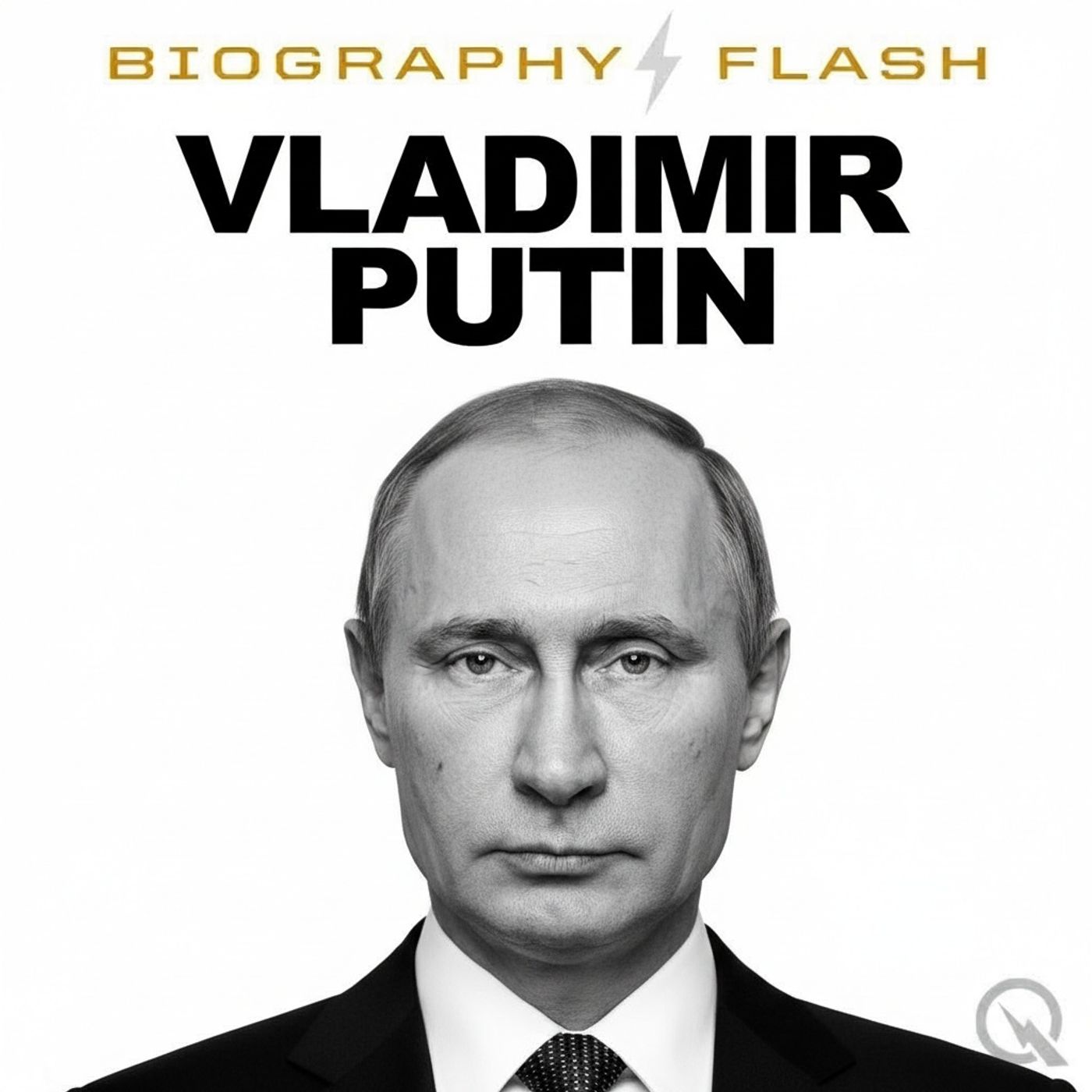
Biography Flash Putin Bunkers Drones and Diplomatic Power Plays Defining His Iron Reign
May 500:02:30Tap to summarizeVladimir Putin Biography Flash a weekly Biography.Vladimir Putin, the ever-elusive Russian strongman, has been hunkered down in bunkers amid drone threats and assassination fears, according to the Financial Times and European intelligence sources, drastically cutting public outings to just two this year versus 17 last. The Chosun Ilbo reports he's directing the Ukraine war micromanaging from fortified spots like Krasnodar, spending 70 percent of his time on conflict ops while sidelining domestic chit-chat. His last splashy appearance? April 27 at a Saint Petersburg sports center, where Le Monde caught him planting a tender forehead kiss on a 10-year-old ballerinaa ritual insiders like exiled analyst Farida Rustamova call a panic button for his slipping 65.6 percent approval rating per VCIOM polls, the lowest since the 2022 mobilization mess, fueled by price hikes, botched livestock culls, and internet blackouts sparking viral citizen rants.In a blockbuster diplomatic pivot with potential to reshape his legacy, Putin held a marathon 90-minute call with US President Donald Trump, as covered by YouTube news channels tracking Kremlin aides, hashing out the Iran war ceasefire, Ukraine root causes, a possible May Victory Day truce, and even energy dealsTrump nixed NATO for Kyiv, sources whisper. Putin also chatted with Chinas Xi Jinping, per Russian Foreign Ministry spokeswoman Maria Zakharova, slamming Israeli strikes on Iran and warning Washington off intervention. Meanwhile, Hindustan Times notes Putin scoring big as Russias oil floods Asia amid Hormuz chaos, boosting his war chest.No fresh social media buzz or business moves popped in the last 48 hours, but Kremlins ramped securityno public transit for his inner circle, river dog patrols for dronesahead of toning down the May 9 Victory Day parade over attack jitters, CNN and Michael Bociurkiw report. Speculation swirls hes hiding from magnicide, but thats unconfirmed YouTube chatter. With parliamentary polls looming, this bunker boss balancing war wins and homefront gripes could define his iron-fisted reign.Thanks listener, subscribe to never miss an update on Vladimir Putin and search Biography Flash for more great biographies. Thanks for listening. This has been a Quiet Please production.Get the best deals https://amzn.to/3ODvOtaThis content was created in partnership and with the help of Artificial Intelligence AIThis episode includes AI-generated content.
Transcribe →