
Podcast
Voices from the Field
Hosted by NCCIH-CCNSA · EN
The National Collaborating Centre for Indigenous Health (NCCIH) is one of six National Collaborating Centres across the country, each focusing on a different area of public health, that were established in 2005 by the Government of Canada and funded through the Public Health Agency of Canada.
The NCCIH supports a renewed public health system in Canada that is inclusive and respectful of First Nations, Inuit and Métis peoples. Through a holistic, co-ordinated and strengths-based approach to health, the NCCIH fosters links between evidence, knowledge, practice and policy while advancing self-determination and Indigenous knowledge in support of optimal health and well-being.
_________________________________________________
Le Centre de collaboration nationale de la santé autochtone (CCNSA) est une l'un des six Centres nationale de collaboration à travers le pays, chacun se concentrant sur un sujet distinct en santé publique, qui ont été établie en 2005 par le gouvernement du Canada et financée par l’Agence de la santé publique du Canada.
Le CCNSA favorise un renouvellement du réseau de santé publique du Canada inclusif et respectueux des diverses populations de Premières Nations, Inuites et Métisses. En ayant recours à une approche holistique et coordonnée de la santé, axée sur les forces, le CCNSA consolide les liens entre les faits, le savoir, la pratique et les politiques tout en appuyant l'autodétermination et le savoir indigène vers l'optimisation de la santé et du mieux-être.
23episodes
Episodes
Newest firstAll episodes
Hearing the stories of our health - Destiny Henyu-Rinsma
Dec 300:16:25Tap to summarizeLe français suit l'anglais. Hearing the stories of our health: Perspectives of First Nations, Inuit and Métis youth - Destiny Henyu-Rinsma The NCCIH undertook a national digital storytelling project, "Hearing the stories of our health: Perspectives of First Nations, Inuit, and Métis youth" to better understand what health and well-being mean to Indigenous young people. Nine of the digital storytellers participated in this podcast series where they could further reflect on their lives, their communities, and what health really means to them in a world that often forgets to ask them. My name is Destiny Henyu-Rinsma. I am originally from Telegraph Creek but I was born and raised in Prince George (BC). I am sixteen years old. I am aiming and working towards becoming a doctor. Learn more about the project: https://www.nccih.ca/485/NCCIH_in_the_News.nccih?id=583 Read or download a transcript (PDF): https://www.nccih.ca/docs/general/2025-12-11-POD-Destiny-BC-Transcript-EN.pdf Listen to more episodes: https://soundcloud.com/nccih-ccnsa/sets/digital-youth-stories Subscribe to our mailing list to receive notifications of new podcasts: https://visitor.r20.constantcontact.com/manage/optin?v=001I2RsqMRJGm_0Y2v9dqhXqVu9hYFvAXlmD_7m-Clfm5-n2Ge5jnQuPVVhrfpINGv7emTyFg-0ZIhl6_ZgishJu_H_PqAiKkhqTjvrgkrQpecozF510Ni_w1nxr-UF-zQDPQWgIl1dVE9kufW33x8h3Q== To join the #NCCIHPodcast conversation on BlueSky follow us @TheNCCIH. ___________________________________ Entendre les récits de notre santé : perspectives des jeunes des Premières Nations, inuits et métis - Destiny Henyu-Rinsma Le CCNSA a entrepris un projet national de narration numérique, « Entendre les récits de notre santé : perspectives des jeunes des Premières Nations, inuits et métis » (en anglais), afin de mieux comprendre ce que signifient la santé et le bien-être pour les jeunes autochtones. Neuf des narratrices et narrateurs ont participé à ces balados, dans le cadre desquels ils ont pu réfléchir encore plus à leur vie, à leurs communautés et à la signification réelle de la santé pour eux dans un monde qui oublie souvent de leur poser la question. Je m’appelle Destiny Henyu-Rinsma. Je suis originaire de Telegraph Creek, mais je suis née et j’ai grandi à Prince George, en Colombie-Britannique. J’ai 16 ans, et je veux devenir médecin. En savoir plus sur le projet : https://www.ccnsa.ca/543/Nouvelles_du_CCNSA.nccih?id=582 Lire ou télécharger une transcription en français : https://www.ccnsa.ca/docs/general/2025-12-12-POD-Destiny-BC-Transcript-FR.pdf Écoutez plus d'épisodes : https://soundcloud.com/nccih-ccnsa/sets/digital-youth-stories Abonnez-vous à notre liste de diffusion pour recevoir des notifications de nouveaux balados : https://visitor.r20.constantcontact.com/manage/optin?v=001I2RsqMRJGm_0Y2v9dqhXqVu9hYFvAXlmD_7m-Clfm5-n2Ge5jnQuPVVhrfpINGv7emTyFg-0ZIhl6_ZgishJu_H_PqAiKkhqTjvrgkrQpecozF510Ni_w1nxr-UF-zQDPQWgIl1dVE9kufW33x8h3Q== Suivez la discussion #BaladoDuCCNSA sur BlueSky @LeCCNSA.
Transcribe →
Hearing the stories of our health - Halil Ibrahim Napatchie Noah Sundu
Dec 300:06:00Tap to summarizeLe français suit l'anglais. Hearing the stories of our health: Perspectives of First Nations, Inuit and Métis youth - Halil Ibrahim Napatchie Noah Sundu The NCCIH undertook a national digital storytelling project, "Hearing the stories of our health: Perspectives of First Nations, Inuit, and Métis youth" to better understand what health and well-being mean to Indigenous young people. Nine of the digital storytellers participated in this podcast series where they could further reflect on their lives, their communities, and what health really means to them in a world that often forgets to ask them. My name is Halil Ibrahim Napatchie Noah Sundu. My mom is from Iqaluit (NU) and I was born in Ottawa. I’m twenty years old and I am half Inuit and half Turkish. My main goal right now is to work towards working in heavy equipment operation. Learn more about the project: https://www.nccih.ca/485/NCCIH_in_the_News.nccih?id=583 Read or download a transcript (PDF): https://www.nccih.ca/docs/general/2025-12-11-POD-Napatchie-ON-Transcript-EN.pdf Listen to more episodes: https://soundcloud.com/nccih-ccnsa/sets/digital-youth-stories Subscribe to our mailing list to receive notifications of new podcasts: https://visitor.r20.constantcontact.com/manage/optin?v=001I2RsqMRJGm_0Y2v9dqhXqVu9hYFvAXlmD_7m-Clfm5-n2Ge5jnQuPVVhrfpINGv7emTyFg-0ZIhl6_ZgishJu_H_PqAiKkhqTjvrgkrQpecozF510Ni_w1nxr-UF-zQDPQWgIl1dVE9kufW33x8h3Q== To join the #NCCIHPodcast conversation on BlueSky follow us @TheNCCIH. ___________________________________ Entendre les récits de notre santé : perspectives des jeunes des Premières Nations, inuits et métis - Halil Ibrahim Napatchie Noah Sundu Le CCNSA a entrepris un projet national de narration numérique, « Entendre les récits de notre santé : perspectives des jeunes des Premières Nations, inuits et métis » (en anglais), afin de mieux comprendre ce que signifient la santé et le bien-être pour les jeunes autochtones. Neuf des narratrices et narrateurs ont participé à ces balados, dans le cadre desquels ils ont pu réfléchir encore plus à leur vie, à leurs communautés et à la signification réelle de la santé pour eux dans un monde qui oublie souvent de leur poser la question. Je m’appelle Halil Ibrahim Napatchie Noah Sundu. Ma mère est d’Iqaluit, au Nunavut, et je suis né à Ottawa. J’ai 20 ans, et je suis à moitié Inuit et à moitié Turc. En ce moment, mon objectif principal est de travailler pour devenir conducteur d’équipement lourd. En savoir plus sur le projet : https://www.ccnsa.ca/543/Nouvelles_du_CCNSA.nccih?id=582 Lire ou télécharger une transcription en français : https://www.ccnsa.ca/docs/general/2025-12-12-POD-Napatchie-ON-Transcript-FR.pdf Écoutez plus d'épisodes : https://soundcloud.com/nccih-ccnsa/sets/digital-youth-stories Abonnez-vous à notre liste de diffusion pour recevoir des notifications de nouveaux balados : https://visitor.r20.constantcontact.com/manage/optin?v=001I2RsqMRJGm_0Y2v9dqhXqVu9hYFvAXlmD_7m-Clfm5-n2Ge5jnQuPVVhrfpINGv7emTyFg-0ZIhl6_ZgishJu_H_PqAiKkhqTjvrgkrQpecozF510Ni_w1nxr-UF-zQDPQWgIl1dVE9kufW33x8h3Q== Suivez la discussion #BaladoDuCCNSA sur BlueSky @LeCCNSA.
Transcribe →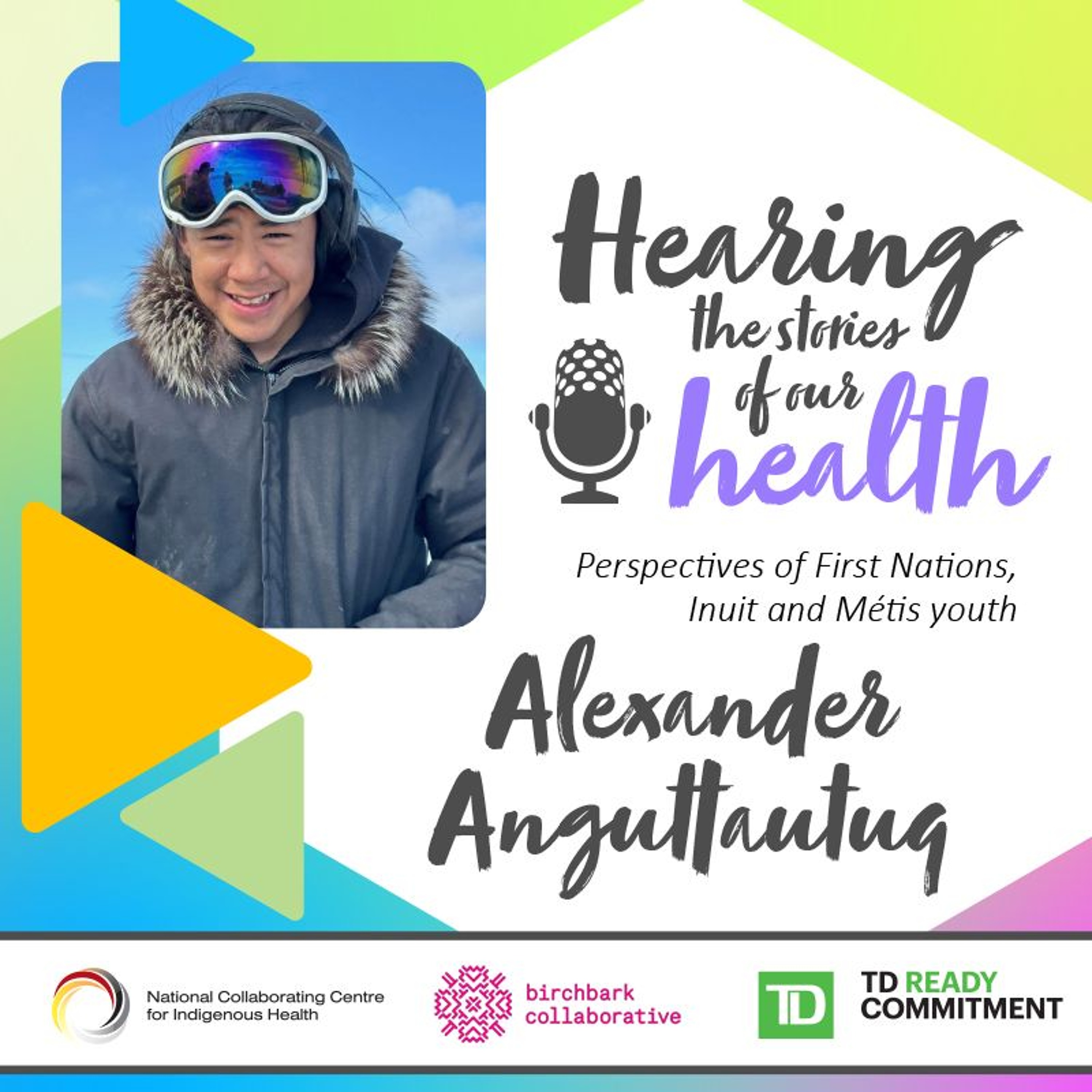
Hearing the stories of our health - Alexander Anguttautuq
Dec 300:05:57Tap to summarizeLe français suit l'anglais. Hearing the stories of our health: Perspectives of First Nations, Inuit and Métis youth - Alexander Anguttautuq The NCCIH undertook a national digital storytelling project, "Hearing the stories of our health: Perspectives of First Nations, Inuit, and Métis youth" to better understand what health and well-being mean to Indigenous young people. Nine of the digital storytellers participated in this podcast series where they could further reflect on their lives, their communities, and what health really means to them in a world that often forgets to ask them. My name is Alexander Anguttautuq. I am from Sanirajak and Igloolik (NU). I am nineteen years old. I just graduated from an electrician program. My goal now is to work in a construction job to have more of an understanding of how things are made. Learn more about the project: https://www.nccih.ca/485/NCCIH_in_the_News.nccih?id=583 Read or download a transcript (PDF): https://www.nccih.ca/docs/general/2025-12-09-POD-Alex-ON-Transcript-EN.pdf Listen to more episodes: https://soundcloud.com/nccih-ccnsa/sets/digital-youth-stories Subscribe to our mailing list to receive notifications of new podcasts: https://visitor.r20.constantcontact.com/manage/optin?v=001I2RsqMRJGm_0Y2v9dqhXqVu9hYFvAXlmD_7m-Clfm5-n2Ge5jnQuPVVhrfpINGv7emTyFg-0ZIhl6_ZgishJu_H_PqAiKkhqTjvrgkrQpecozF510Ni_w1nxr-UF-zQDPQWgIl1dVE9kufW33x8h3Q== To join the #NCCIHPodcast conversation on BlueSky follow us @TheNCCIH. ___________________________________ Entendre les récits de notre santé : perspectives des jeunes des Premières Nations, inuits et métis - Alexander Anguttautuq Le CCNSA a entrepris un projet national de narration numérique, « Entendre les récits de notre santé : perspectives des jeunes des Premières Nations, inuits et métis » (en anglais), afin de mieux comprendre ce que signifient la santé et le bien-être pour les jeunes autochtones. Neuf des narratrices et narrateurs ont participé à ces balados, dans le cadre desquels ils ont pu réfléchir encore plus à leur vie, à leurs communautés et à la signification réelle de la santé pour eux dans un monde qui oublie souvent de leur poser la question. Je m’appelle Alexander Anguttautuq. Je suis de Sanirajak et d’Igloolik, au Nunavut. J’ai 19 ans. Je viens d’obtenir mon diplôme d’un programme d’apprentissage en électricité. Maintenant, mon objectif est de travailler en construction pour mieux comprendre comment on fabrique les choses. En savoir plus sur le projet : https://www.ccnsa.ca/543/Nouvelles_du_CCNSA.nccih?id=582 Lire ou télécharger une transcription en français : https://www.ccnsa.ca/docs/general/2025-12-12-POD-Alex-ON-Transcript-FR.pdf Écoutez plus d'épisodes : https://soundcloud.com/nccih-ccnsa/sets/digital-youth-stories Abonnez-vous à notre liste de diffusion pour recevoir des notifications de nouveaux balados : https://visitor.r20.constantcontact.com/manage/optin?v=001I2RsqMRJGm_0Y2v9dqhXqVu9hYFvAXlmD_7m-Clfm5-n2Ge5jnQuPVVhrfpINGv7emTyFg-0ZIhl6_ZgishJu_H_PqAiKkhqTjvrgkrQpecozF510Ni_w1nxr-UF-zQDPQWgIl1dVE9kufW33x8h3Q== Suivez la discussion #BaladoDuCCNSA sur BlueSky @LeCCNSA.
Transcribe →
Hearing the stories of our health - Anzel Labatch-Patrick
Dec 300:10:50Tap to summarizeLe français suit l'anglais. Hearing the stories of our health: Perspectives of First Nations, Inuit and Métis youth - Anzel Labatch-Patrick The NCCIH undertook a national digital storytelling project, "Hearing the stories of our health: Perspectives of First Nations, Inuit, and Métis youth" to better understand what health and well-being mean to Indigenous young people. Nine of the digital storytellers participated in this podcast series where they could further reflect on their lives, their communities, and what health really means to them in a world that often forgets to ask them. My name is Anzel Labatch-Patrick, I am from Saik’uz traditional territory and I am sixteen. When I was seven years old my auntie graduated from her university law program and I thought “that’s the direction I want to go in!”. So I am going to pursue being a lawyer. Learn more about the project: https://www.nccih.ca/485/NCCIH_in_the_News.nccih?id=583 Read or download a transcript (PDF): https://www.nccih.ca/docs/general/2025-12-11-POD-Anzel-BC-Transcript-EN.pdf Listen to more episodes: https://soundcloud.com/nccih-ccnsa/sets/digital-youth-stories Subscribe to our mailing list to receive notifications of new podcasts: https://visitor.r20.constantcontact.com/manage/optin?v=001I2RsqMRJGm_0Y2v9dqhXqVu9hYFvAXlmD_7m-Clfm5-n2Ge5jnQuPVVhrfpINGv7emTyFg-0ZIhl6_ZgishJu_H_PqAiKkhqTjvrgkrQpecozF510Ni_w1nxr-UF-zQDPQWgIl1dVE9kufW33x8h3Q== To join the #NCCIHPodcast conversation on BlueSky follow us @TheNCCIH. ___________________________________ Entendre les récits de notre santé : perspectives des jeunes des Premières Nations, inuits et métis - Anzel Labatch-Patrick Le CCNSA a entrepris un projet national de narration numérique, « Entendre les récits de notre santé : perspectives des jeunes des Premières Nations, inuits et métis » (en anglais), afin de mieux comprendre ce que signifient la santé et le bien-être pour les jeunes autochtones. Neuf des narratrices et narrateurs ont participé à ces balados, dans le cadre desquels ils ont pu réfléchir encore plus à leur vie, à leurs communautés et à la signification réelle de la santé pour eux dans un monde qui oublie souvent de leur poser la question. Je m’appelle Anzel Labatch-Patrick, je suis du territoire traditionnel Saik’uz, et j’ai 16 ans. Quand j’avais 7 ans, ma tante a obtenu son diplôme en droit de l’université, et je me suis dit « c’est ça que je veux faire! ». Je vais donc faire des études pour devenir avocate. En savoir plus sur le projet : https://www.ccnsa.ca/543/Nouvelles_du_CCNSA.nccih?id=582 Lire ou télécharger une transcription en français : https://www.ccnsa.ca/docs/general/2025-12-12-POD-Anzel-BC-Transcript-FR.pdf Écoutez plus d'épisodes : https://soundcloud.com/nccih-ccnsa/sets/digital-youth-stories Abonnez-vous à notre liste de diffusion pour recevoir des notifications de nouveaux balados : https://visitor.r20.constantcontact.com/manage/optin?v=001I2RsqMRJGm_0Y2v9dqhXqVu9hYFvAXlmD_7m-Clfm5-n2Ge5jnQuPVVhrfpINGv7emTyFg-0ZIhl6_ZgishJu_H_PqAiKkhqTjvrgkrQpecozF510Ni_w1nxr-UF-zQDPQWgIl1dVE9kufW33x8h3Q== Suivez la discussion #BaladoDuCCNSA sur BlueSky @LeCCNSA.
Transcribe →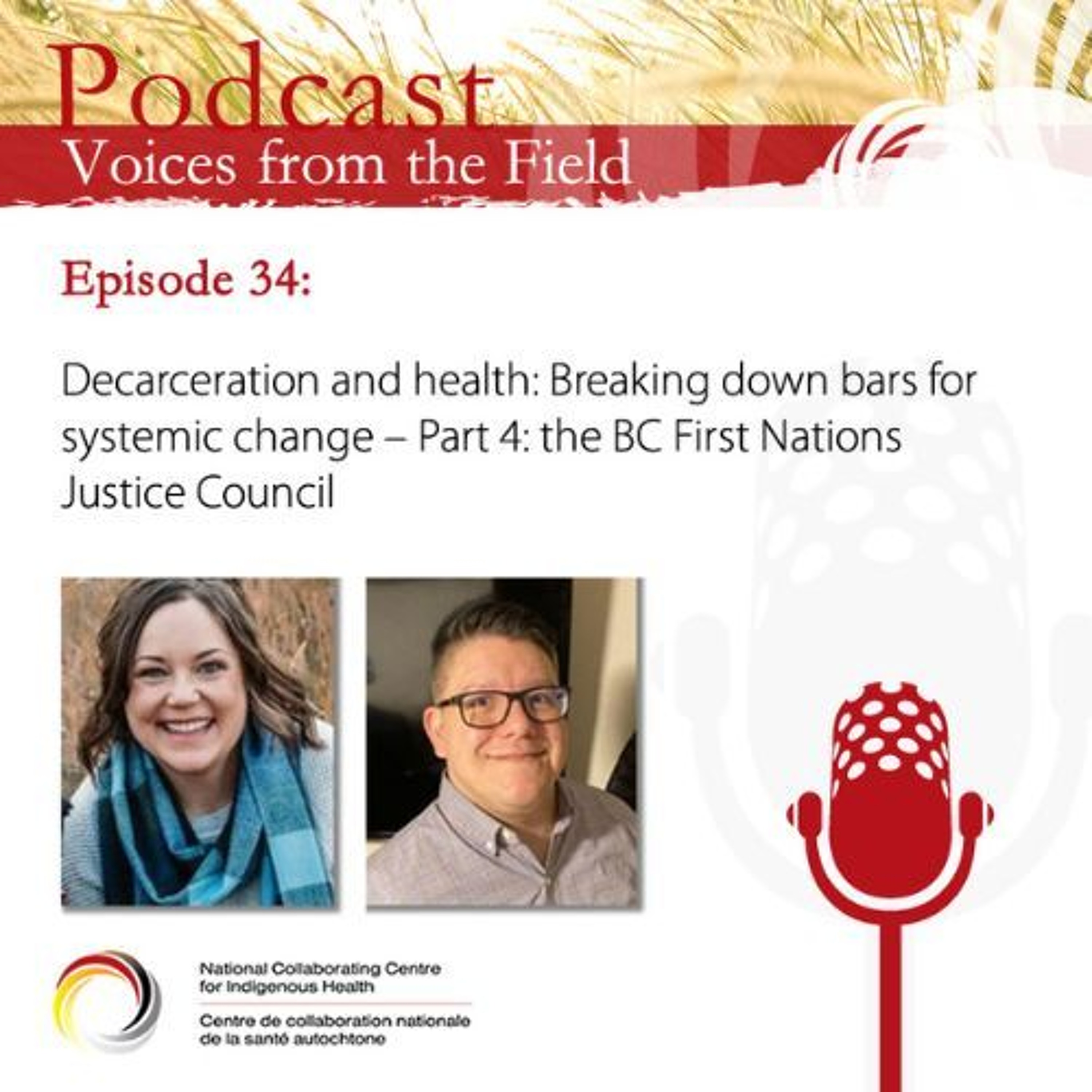
Voices from the Field 34 - Decarceration and health - Part 4: the BC First Nations Justice Council
Dec 15, 202401:34:26Tap to summarizeLe français suit l'anglais. Voices from the Field - 33 - Decarceration and health - Part 3: the wîyasôw iskweêw restorative justice project "Decarceration and health: Breaking down bars for systemic change – Part 3: the wîyasôw iskweêw restorative justice project". In this episode, we speak with Justice Anna Loparco of the King’s Bench of Alberta, Deputy Chief Justice Joanne Durant and Justice Michelle Christopher of the Alberta Court of Justice, and our co-host Andrea Menard about the development of the wîyasôw iskweêw court-annexed restorative justice program. We learn about the program’s vast connections to empowering offenders and victims’ health, well-being, and healing, as well as aspirations for the program’s future and what is needed to spark change and uplift Indigenous laws and legal practices in the criminal legal system. Decarceration and health: Breaking down bars for systemic change – Part 4: the BC First Nations Justice Council. In this episode, we speak with Miranda Seymour, Mark Connelly, and Dr. Jason Webb from the BC First Nations Justice Council (BCFNJC). We explore the new BCFNJC pre-charge diversion pilot project in Prince George, BC, and its foundations in promoting healing, safety, and a sense of belonging among participants, through trauma-informed practices. We also review additional initiatives at the BCFNJC, and how communities can get involved to promote and restore health and justice in their community. Read or download a transcript: nccih.ca/docs/podcasts/2024-VoicesField-BCFNJC-Linklist-EN.pdf Download a list of links related to the podcast (PDF): https://www.nccih.ca/docs/podcasts/2024-VoicesField-BCFNJC-Linklist-EN.pdf Subscribe to our mailing list to receive notifications of new podcasts: visitor.r20.constantcontact.com/d.jsp?llr…2355710ad To join the #NCCIHPodcast conversation on X (Twitter) follow us @TheNCCIH. ___________________________________ Description en français à suivre.
Transcribe →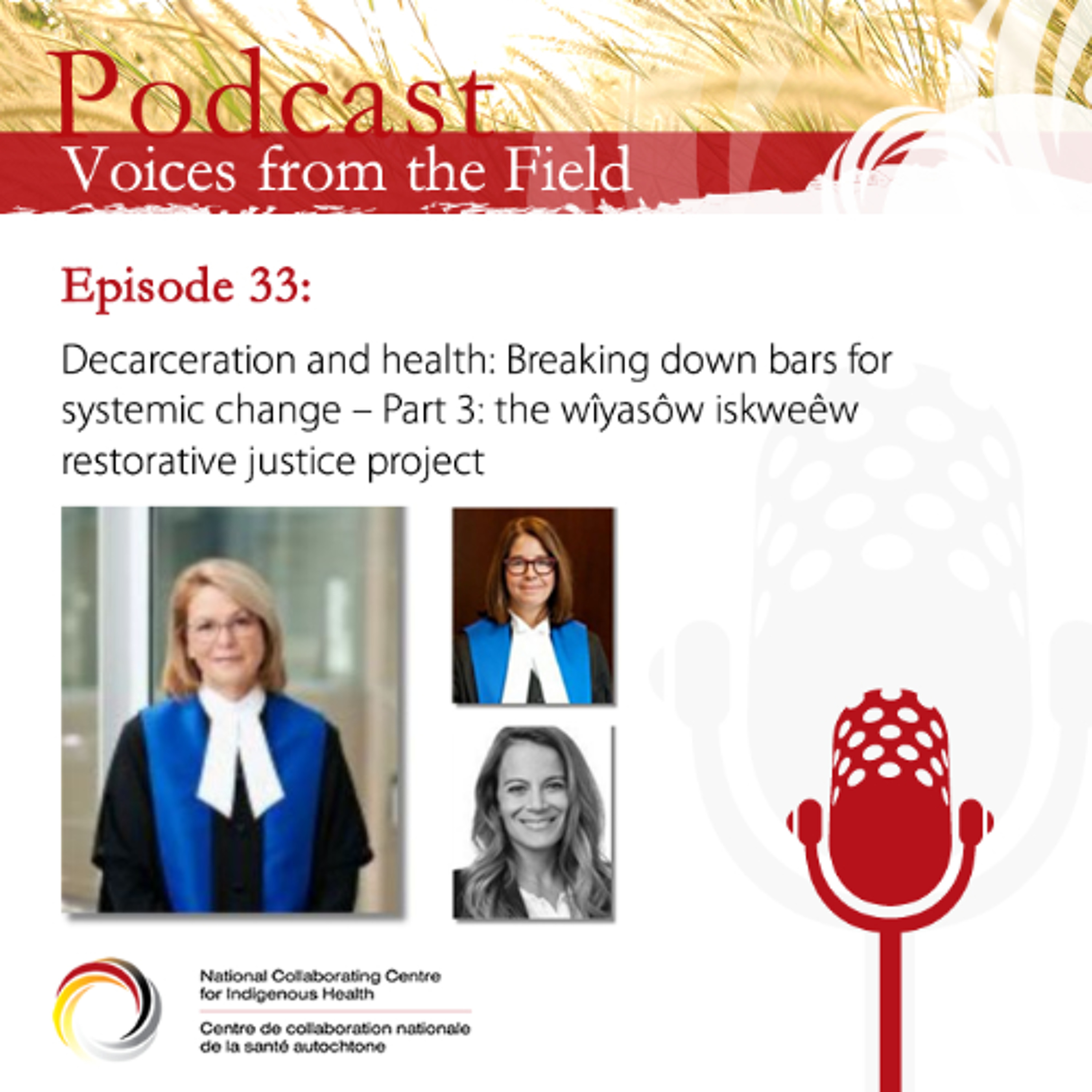
Voices from the Field 33 - Decarceration and health - Part 3: wîyasôw iskweêw
Dec 10, 202401:02:37Tap to summarizeLe français suit l'anglais. Voices from the Field - 33 - Decarceration and health - Part 3: the wîyasôw iskweêw restorative justice project "Decarceration and health: Breaking down bars for systemic change – Part 3: the wîyasôw iskweêw restorative justice project". In this episode, we speak with Justice Anna Loparco of the King’s Bench of Alberta, Deputy Chief Justice Joanne Durant and Justice Michelle Christopher of the Alberta Court of Justice, and our co-host Andrea Menard about the development of the wîyasôw iskweêw court-annexed restorative justice program. We learn about the program’s vast connections to empowering offenders and victims’ health, well-being, and healing, as well as aspirations for the program’s future and what is needed to spark change and uplift Indigenous laws and legal practices in the criminal legal system. "Decarceration and health: Breaking down bars for systemic change" is a mini-series within Voices from the Field. It explores the realities and impact of community-based justice alternatives, their connection to health, and what is needed to affect and inspire change and address the current injustices reflected in the over-incarceration of First Nations people, Inuit, and Métis people across the country. Read or download a transcript: https://nccih.ca/docs/podcasts/2024-VoicesField-Justices-transcript-PDF-EN.pdf Subscribe to our mailing list to receive notifications of new podcasts: https://visitor.r20.constantcontact.com/d.jsp?llr=tbzeivcab&p=oi&m=1102372299827&sit=deidvdzdb&f=f1c9c236-a2c6-44eb-8c95-4582355710ad To join the #NCCIHPodcast conversation on X (Twitter) follow us @TheNCCIH. ______________________________ Balado : les Voix du terrain 33 - Désincarcération et santé - Partie 3 : le projet de justice réparatrice wîyasôw iskweêw « Désincarcération et santé : éliminer les barreaux pour un changement systémique – 3e partie : le projet de justice réparatrice wîyasôw iskweêw. ». Dans cet épisode, nous nous entretenons avec la juge Anna Loparco de la Cour du Banc du Roi de l’Alberta, et avec la juge en chef adjointe Joanne Durant et la juge Michelle Christopher, toutes deux de la Cour de justice de l’Alberta et avec notre coanimatrice Andrea Menard, avec qui nous aborderons la mise sur pied du programme de justice réparatrice wîyasôw iskweêw, annexé au tribunal. Nous nous renseignerons sur les liens importants du programme avec la responsabilisation des contrevenants et avec la santé, le mieux-être et la guérison des victimes et nous discuterons aussi des aspirations pour l’avenir de ce programme et des éléments nécessaires pour susciter le changement et prioriser le recours aux lois et aux pratiques juridiques autochtones dans le système de droit pénal. « Désincarcération et santé : éliminer les barreaux pour un changement systémique » est une minisérie dans le cadre des Voix du terrain. On y examine les réalités et les bienfaits des solutions de rechange qu’apporte la justice communautaire, leur lien avec la santé et ce qui serait nécessaire pour amener des changements systémiques et remédier aux injustices actuelles, qui se traduisent par une surincarcération des membres des Premières Nations, des Inuits et des Métis à travers le pays. Lire ou télécharger la transcription en français de l'épisode : https://ccnsa.ca/docs/podcasts/2024-Voices-32-Decarceration-Tetrault-transcript-FR.pdf Abonnez-vous à notre liste de diffusion pour recevoir des notifications de nouveaux balados : https://visitor.r20.constantcontact.com/d.jsp?llr=tbzeivcab&p=oi&m=1102372299827&sit=deidvdzdb&f=f1c9c236-a2c6-44eb-8c95-4582355710ad Suivez la discussion #BaladoDuCCNSA sur X (Twitter) @LeCCNSA.
Transcribe →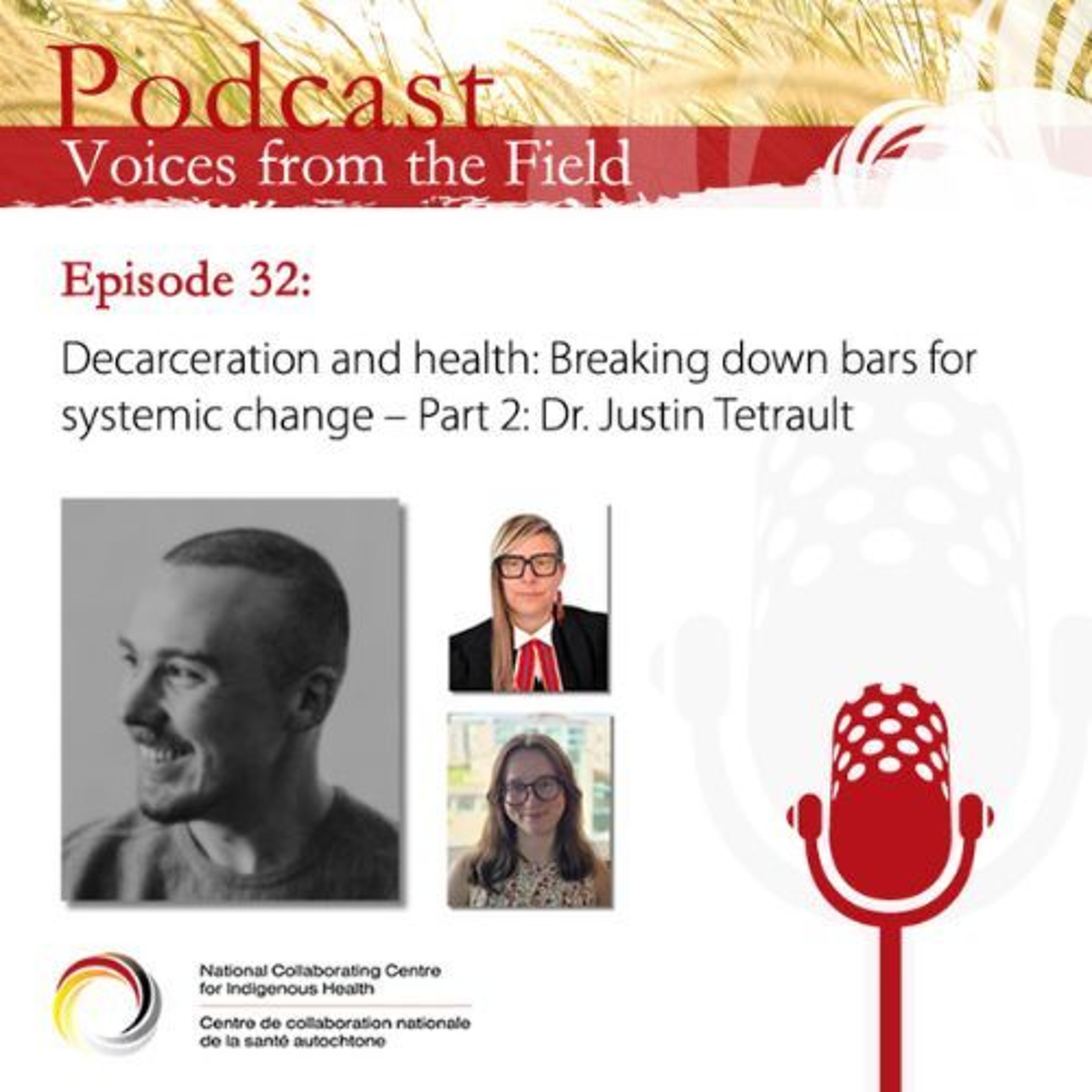
Voices from the Field 32 - Decarceration and health - Part 2: Dr. Justin Tetrault
Sep 14, 202401:16:22Tap to summarizeLe français suit l'anglais. Voices from the Field - 32 - Decarceration and health - Part 2: Dr. Justin Tetrault "Decarceration and health: Breaking down bars for systemic change" is a mini-series within Voices from the Field. It explores the realities and impact of community-based justice alternatives, their connection to health, and what is needed to affect and inspire change and address the current injustices reflected in the over-incarceration of First Nations people, Inuit, and Métis people across the country. "Decarceration and health: Breaking down bars for systemic change - Part 2: Dr. Justin Tetrault." In this episode, we hear from Dr. Justin Tetrault, a Métis criminologist and Assistant Professor of Sociology at the University of Alberta. We learn about Dr. Tetrault’s research in prison environments and the importance of Indigenous programming in prisons; as well as the critical issues affecting health and well-being for Indigenous people in prison. We also learn about what is needed and being done to spark policy change and support Indigenous people’s self-determination over justice and healing. Read or download a transcript: https://nccih.ca/images/webpages/2024-VoicesfromField-Tetrault-transcript-PDF-EN.pdf Read or download a list of resources related to this podcast: https://nccih.ca//images/webpages/2024-08-19-POD-Resource-List-Voices-32-EN.pdf Subscribe to our mailing list to receive notifications of new podcasts: https://visitor.r20.constantcontact.com/d.jsp?llr=tbzeivcab&p=oi&m=1102372299827&sit=deidvdzdb&f=f1c9c236-a2c6-44eb-8c95-4582355710ad To join the #NCCIHPodcast conversation on X (Twitter) follow us @TheNCCIH. *************************** Les Voix du terrain – 32 – Désincarcération et santé - Partie 2 : Justin Tetrault, Ph. D. « Désincarcération et santé : éliminer les barreaux pour un changement systémique » est une minisérie dans le cadre des Voix du terrain. On y examine les réalités et les bienfaits des solutions de rechange qu’apporte la justice communautaire, leur lien avec la santé et ce qui serait nécessaire pour amener des changements systémiques et remédier aux injustices actuelles, qui se traduisent par une surincarcération des membres des Premières Nations, des Inuits et des Métis à travers le pays. « Désincarcération et santé : éliminer les barreaux pour un changement systémique – Partie 2 : Justin Tetrault, Ph. D. ». Dans cet épisode, nous entendons Justin Tetrault, docteur en sociologie, criminologue métis et professeur adjoint de sociologie à l’Université de l’Alberta. Nous découvrons les recherches de Justin Tetrault en milieu carcéral et l’importance des programmes autochtones dans les prisons et pénitenciers, ainsi que les enjeux sérieux touchant la santé et le bien-être des Autochtones en prison. Nous en apprenons également davantage sur ce qui est nécessaire et ce qui est fait pour susciter un changement de politique et soutenir l’autodétermination des peuples autochtones en matière de justice et de guérison. Lire ou télécharger une transcription en français : https://ccnsa.ca/images/webpages/2024-VoicesfromField-Tetrault-transcript-PDF-FR.pdf Lire ou télécharger une liste de ressources liées au webinaire : https://ccnsa.ca//images/webpages/2024-08-19-POD-Resource-List-Voices-32-FR.pdf Abonnez-vous à notre liste de diffusion pour recevoir des notifications de nouveaux balados : https://visitor.r20.constantcontact.com/d.jsp?llr=tbzeivcab&p=oi&m=1102372299827&sit=deidvdzdb&f=f1c9c236-a2c6-44eb-8c95-4582355710ad Suivez la discussion #BaladoDuCCNSA sur X (Twitter) @LeCCNSA.
Transcribe →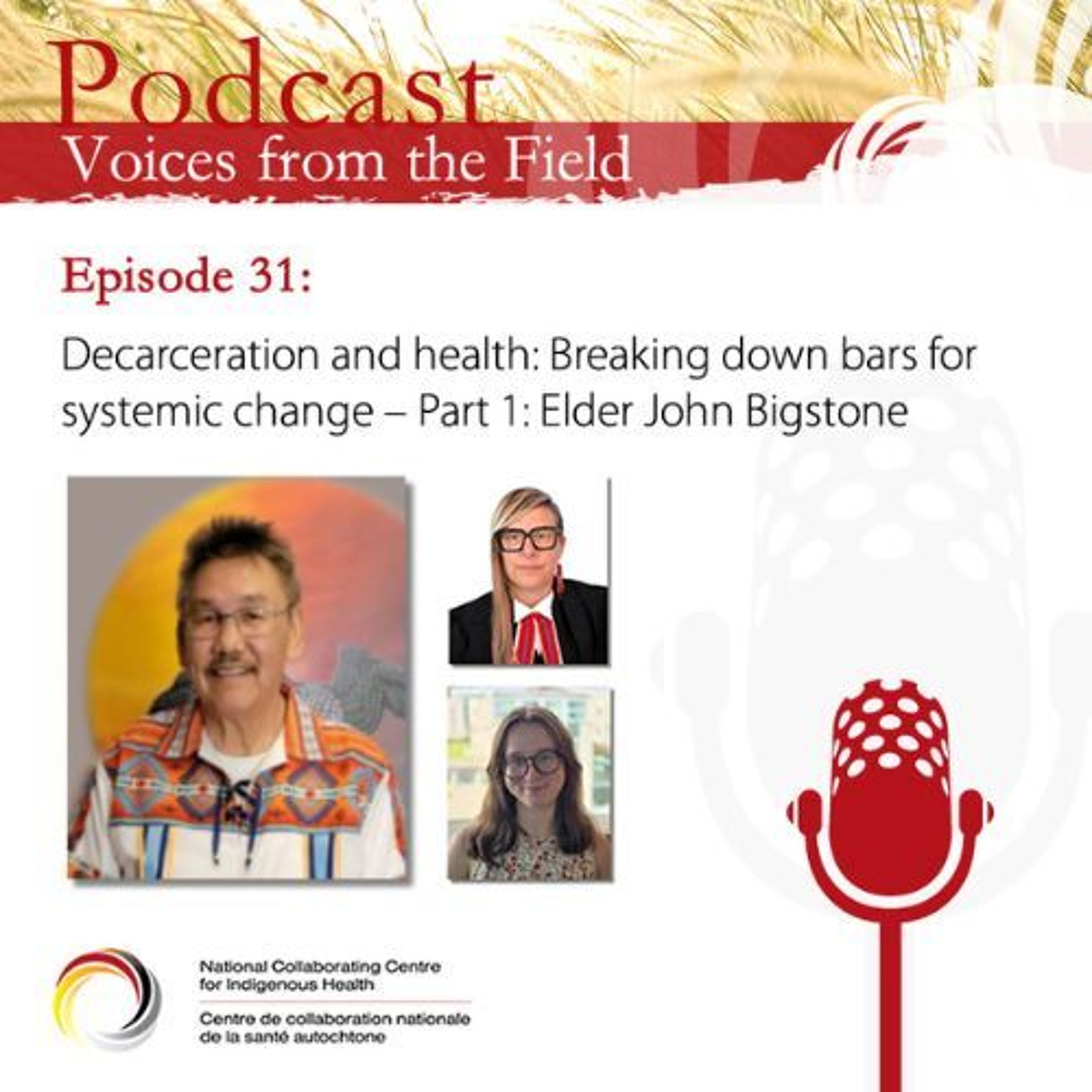
Voices from the Field 31 - Decarceration and health - Part 1: Elder John Bigstone
Aug 16, 202400:53:39Tap to summarizeLe français suit l'anglais. Voices from the Field 31 - Decarceration and health - Part 1: Elder John Bigstone "Decarceration and health: Breaking down bars for systemic change" is a mini-series within Voices from the Field. It explores the realities and impact of community-based justice alternatives, their connection to health, and what is needed to affect and inspire change and address the current injustices reflected in the over-incarceration of First Nations people, Inuit, and Métis people across the country. "Decarceration and health: Breaking down bars for systemic change – Part 1: Elder John Bigstone." In this episode, we learn about the Bigstone Cree Nation Restorative Justice Program on Treaties 6 and 8 in Northern Alberta. We interviewed Elder John Bigstone who has been a part of the program and the lead Elder since its inception in 1990. Read or download a transcript: https://nccih.ca/images/webpages/2024-VoicesfromField-Bigstone-transcript-PDF-EN.pdf Visit our website for all related resources including biographies of podcast participants: https://www.nccih.ca/495/.nccih?id=10466 Subscribe to our mailing list to receive notifications of new podcasts: https://visitor.r20.constantcontact.com/d.jsp?llr=tbzeivcab&p=oi&m=1102372299827&sit=deidvdzdb&f=f1c9c236-a2c6-44eb-8c95-4582355710ad To join the #NCCIHPodcast conversation on X (Twitter) follow us @TheNCCIH. _____________________ Les Voix du terrain – 31 – Désincarcération et santé - Partie 1 : l’aîné John Bigstone « Désincarcération et santé : éliminer les barreaux pour un changement systémique » est une minisérie dans le cadre des Voix du terrain. On y examine les réalités et les bienfaits des solutions de rechange qu’apporte la justice communautaire, leur lien avec la santé et ce qui serait nécessaire pour amener des changements systémiques et remédier aux injustices actuelles, qui se traduisent par une surincarcération des membres des Premières Nations, des Inuits et des Métis à travers le pays. « Désincarcération et santé : éliminer les barreaux pour un changement systémique – Partie 1 : l’aîné John Bigstone ». Dans cet épisode, nous en saurons plus sur le programme de justice réparatrice de la nation crie Bigstone, vivant sur les territoires des traités 6 et 8, au nord de l’Alberta. Nous avons réalisé une entrevue avec l’aîné John Bigstone qui fait partie du programme et en est l’aîné dirigeant depuis sa mise en place, en 1990. Lire ou télécharger une transcription en français : https://www.ccnsa.ca/images/webpages/2024-VoicesfromField-Bigstone-transcript-PDF-FR.pdf. Rendez-vous sur notre site web pour voir l'ensemble des ressources liées à ce balado, y compris les biographies des participants : https://www.nccih.ca/495/.nccih?id=10466. Abonnez-vous à notre liste de diffusion pour recevoir des notifications de nouveaux balados : https://visitor.r20.constantcontact.com/d.jsp?llr=tbzeivcab&p=oi&m=1102372299827&sit=deidvdzdb&f=f1c9c236-a2c6-44eb-8c95-4582355710ad Suivez la discussion #BaladoDuCCNSA sur X (Twitter) @LeCCNSA.
Transcribe →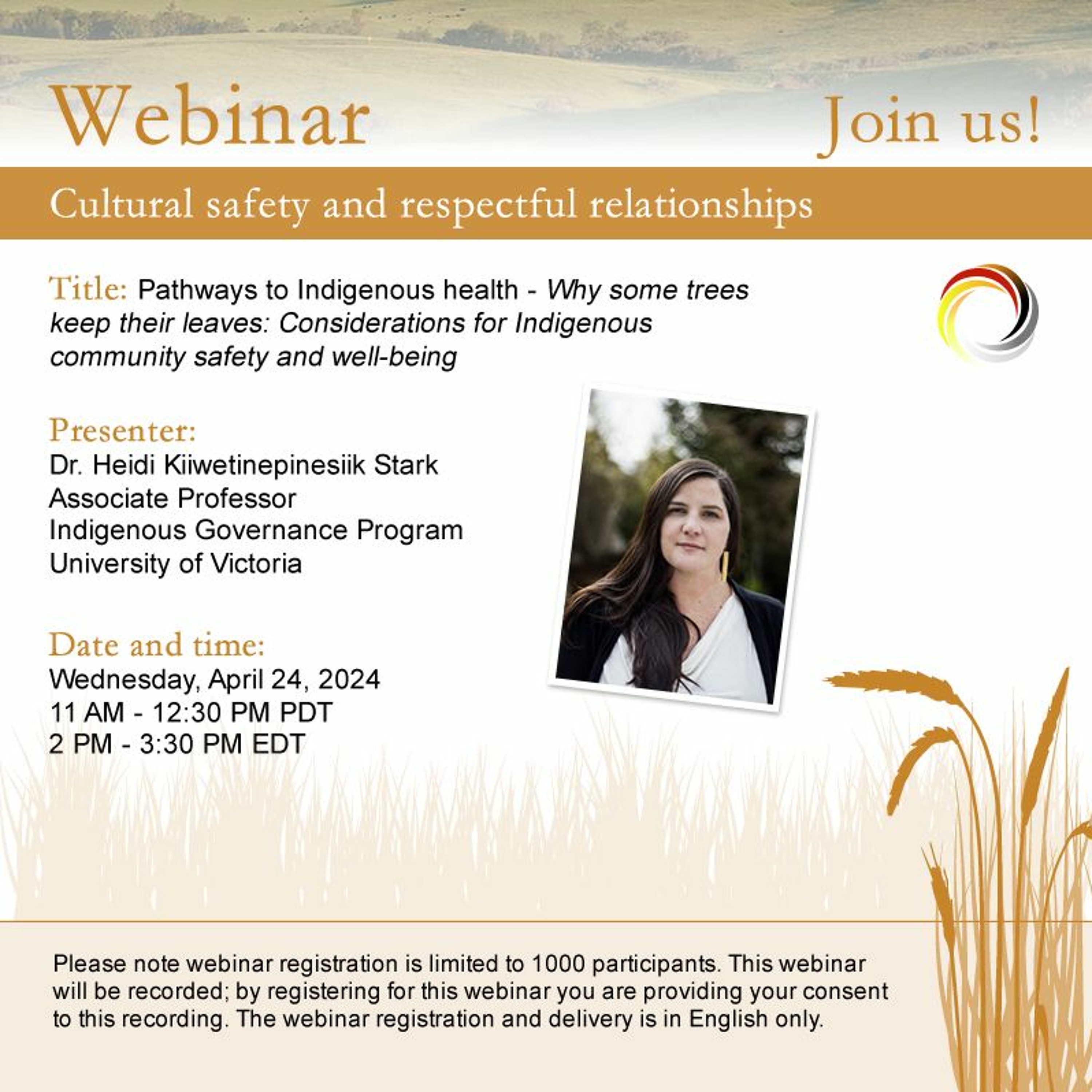
NCCIH Webinar - Pathways to Indigenous Health - Indigenous community safety and well-being
Apr 17, 202401:25:25Tap to summarizeLe français suit l'anglais. This webinar examines two key aspects of community well-being - housing and community safety. Dr. Stark considers housing as a human right and treaty right examining Indigenous legal orders in relation to housing and discussing Indigenous jurisdiction regarding housing, encampments, and policy making. In calling for a move towards ontologies of care, Dr. Stark then turns her focus to Indigenous law and responses to concerns about community safety, with a focus on using Band Council Resolutions to carry out the banishment of members and non-members who are threatening community well-being. She asks what it means to take up ontologies of care and obligations in these complicated contexts. Pathways to Indigenous health is a series of webinars hosted by the NCCIH. The series intends to strengthen the links between knowledge, policy, and practice, by supporting the educational journeys of healthcare workers, public health audiences, and beyond. Watch on YouTube: https://youtu.be/22wntpa92RM Read or download a transcript of the webinar (PDF): https://www.nccih.ca/Publications/lists/Publications/2024-Stark-webinar-transcript-PDF-EN.pdf Subscribe to our mailing list to receive webinar notifications: https://visitor.r20.constantcontact.com/manage/optin?v=001I2RsqMRJGm_0Y2v9dqhXqVu9hYFvAXlmD_7m-Clfm59p4IXil5RWbmLz7_f7O1KgKci1kn-3UDTu9BQN_qcZxr8WbbrK2kGe6Ng3Wu6AGWWOHWenP6dmS5phOWaRRzRCsj8dgzEYfjrK5Q_RkchwBXK8AWrWbcvd To join the #NCCIHWebinar conversation on x (Twitter) follow us @TheNCCIH. ------------------------------------------------- Webinaire du CCNSA – Voies de la santé autochtone : Pourquoi certains arbres conservent leurs feuilles : considérations liées à la sécurité et au bien-être communautaires autochtones Dans cet enregistrement audio du CCNSA webinaire « Pourquoi certains arbres conservent leurs feuilles : considérations liées à la sécurité et au bien-être communautaires autochtones » , Heidi Kiiwetinepinesiik Stark, Ph. D., Ce webinaire se penchera sur deux aspects clés du bien-être communautaire – le logement et la sécurité communautaire. Dans la première partie de la présentation, la présentatrice Heidi Kiiwetinepinesiik Stark considère le logement comme un droit de la personne et un droit issu de traité. Ce faisant, elle examine les ordres juridiques autochtones en matière de logement et discute de la compétence autochtone quant au logement, aux campements et à l’élaboration de politiques. Heidi Kiiwetinepinesiik Stark plaide en faveur de l’élargissement de la compétence autochtone au-delà du devoir de consulter pour accommoder des ontologies de soins et respecter des obligations. En réclamant une transition vers des ontologies de soins, la présentatrice se concentre ensuite sur le droit autochtone et les réponses autochtones aux préoccupations à l’égard de la sécurité communautaire, en mettant l’accent sur l’utilisation des résolutions des conseils de bande pour bannir les membres et les non-membres qui menacent le bien-être communautaire. Visionner sur YouTube (en anglais avec sous-titres en français) : https://youtu.be/22wntpa92RM Télécharger ou lire une transcription française du webinaire (PDF) : https://www.ccnsa.ca/Publications/lists/Publications/2024-Stark-webinar-transcript-PDF-FR.pdf Abonnez-vous à notre liste de diffusion pour recevoir des notifications webinaire : https://visitor.r20.constantcontact.com/manage/optin?v=001I2RsqMRJGm_0Y2v9dqhXqVu9hYFvAXlmD_7m-Clfm59p4IXil5RWbmLz7_f7O1KgKci1kn-3UDTu9BQN_qcZxr8WbbrK2kGe6Ng3Wu6AGWWOHWenP6dmS5phOWaRRzRCsj8dgzEYfjrK5Q_RkchwBXK8AWrWbcvd Joignez-vous à la conversation #WebinaireDuCCNSA sur x (Twitter) et suivez-nous @LeCCNSA.
Transcribe →
NCCIH Webinar - Pathways to Indigenous Health - Uranium mining impact on Anishinaabe wellness:
Feb 28, 202401:21:25Tap to summarizeLe français suit l'anglais. In this audio recording of the NCCIH Webinar "Cold war uranium mining and its impact on land, water, and Anishinaabe wellness", Dr. Lianne Leddy shares her research on the ways in which settler extractive forces compromised Anishinaabe land and water in the Cold War period. Using archival and oral history methods, Leddy also emphasizes how Indigenous political leaders contended with uranium mining and its legacies over a forty-year period. Pathways to Indigenous health is a series of webinars hosted by the NCCIH. Between September 2023 and April 2024, this series of webinars will explore a variety of topics related to the health and well-being of First Nations, Inuit, and Métis Peoples. The series intends to strengthen the links between knowledge, policy, and practice, by supporting the educational journeys of healthcare workers, public health audiences, and beyond. Watch on YouTube: https://youtu.be/4d-G0lCcgw8 Read or download a transcript of the webinar (PDF): https://www.nccih.ca/docs/podcasts/Webinar-Leddy-Transcript-EN.pdf Subscribe to our mailing list to receive podcast notifications: https://visitor.r20.constantcontact.com/manage/optin?v=001I2RsqMRJGm_0Y2v9dqhXqVu9hYFvAXlmD_7m-Clfm59p4IXil5RWbmLz7_f7O1KgKci1kn-3UDTu9BQN_qcZxr8WbbrK2kGe6Ng3Wu6AGWWOHWenP6dmS5phOWaRRzRCsj8dgzEYfjrK5Q_RkchwBXK8AWrWbcvd To join the #NCCIHWebinar conversation on x (Twitter) follow us @TheNCCIH. ------------------------------------------------- Webinaire du CCNSA – Voies de la santé autochtone : L’exploitation des gisements d’uranium pendant la guerre froide et son incidence sur le territoire, les cours d’eau et le mieux-être des Anichinabés Dans cet enregistrement audio du CCNSA webinaire « les relations découlant des traités et les politiques de la vie » , Lianne Leddy, Ph. D., fera part de ses recherches sur les façons dont les forces d’extraction coloniales ont compromis les terres et les cours d’eau des Anichinabés pendant la période de la guerre froide. Misant sur les méthodes de recherche en archives et de l’histoire orale, Lianne Leddy mettra aussi l’accent sur la manière dont les leaders politiques autochtones ont fait face à l’exploitation des gisements d’uranium et à son héritage sur une période de 40 ans. Voies de la santé autochtone est une série de webinaires organisée par le CCNSA. Entre septembre 2023 et avril 2024, cette série de webinaires explorera une variété de sujets ayant trait à la santé et au bien-être des membres des Premières Nations, des Inuits et des Métis. La série vise à resserrer les liens entre connaissances, politiques et pratiques en étoffant le parcours éducatif des travailleurs de la santé, des auditoires de la santé publique, et plus encore. Visionner sur YouTube (en anglais avec sous-titres en français) : https://youtu.be/4d-G0lCcgw8 Télécharger ou lire une transcription française du webinaire (PDF) : https://visitor.r20.constantcontact.com/manage/optin?v=001I2RsqMRJGm_0Y2v9dqhXqVu9hYFvAXlmD_7m-Clfm59p4IXil5RWbmLz7_f7O1KgKci1kn-3UDTu9BQN_qcZxr8WbbrK2kGe6Ng3Wu6AGWWOHWenP6dmS5phOWaRRzRCsj8dgzEYfjrK5Q_RkchwBXK8AWrWbcvd Abonnez-vous à notre liste de diffusion pour recevoir des notifications de webinaire : https://visitor.r20.constantcontact.com/d.jsp?llr=tbzeivcab&p=oi&m=1102372299827&sit=deidvdzdb&f=f1c9c236-a2c6-44eb-8c95-4582355710ad Joignez-vous à la conversation #WebinaireDuCCNSA sur x (Twitter) et suivez-nous @LeCCNSA.
Transcribe →