
Podcast
Wavelengths
Hosted by Amphenol Broadband Solutions · EN
Welcome to Wavelengths, a podcast with Amphenol Broadband Solutions.
12episodes
Episodes
Newest firstAll episodes
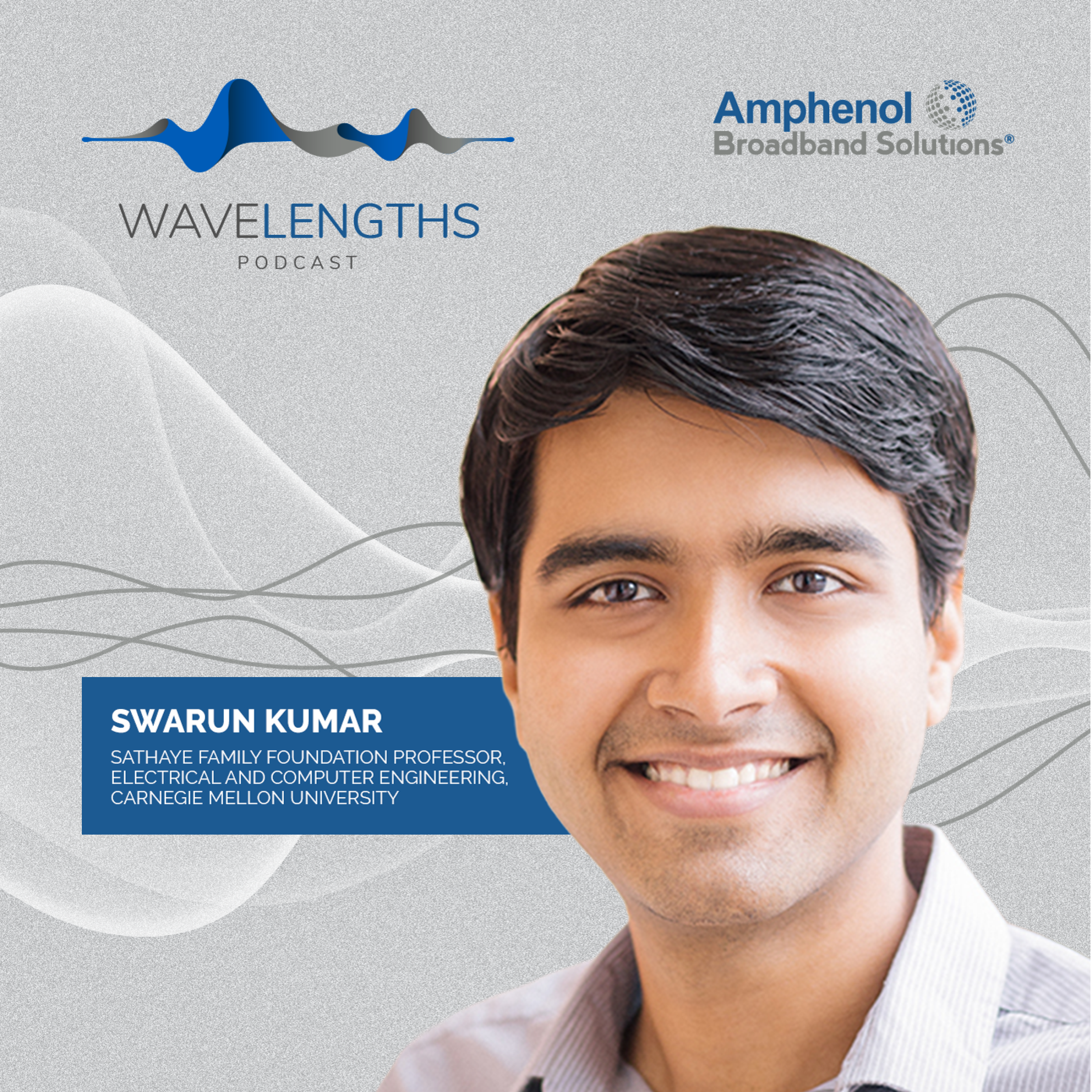
Building the Wireless Future: Low-Power IoT, Edge Computing, and the End of the Gs
Jun 19, 202500:47:32Tap to summarizeAs the global race to 6G heats up, telecom providers, governments, and tech companies are investing billions to advance the next generation of hyperconnected infrastructure. European operators urge regulators to release more spectrum to stay competitive, while U.S. programs like the USDA's ReConnect have funneled over $1 billion into rural fiber backhaul. Meanwhile, companies like NVIDIA, T-Mobile, and Cisco are developing AI-native 6G stacks, embedding intelligence into every layer of the network. The stakes are enormous: success could enable real-time autonomous vehicles, remote surgeries, and city-scale sensor networks.But with so many threads to weave together—from fiber backhaul to AI-driven edge compute—the critical question emerges: How do we build a wireless ecosystem capable of supporting the demands of tomorrow's hyperconnected world?On this episode of Wavelengths by Amphenol Broadband Solutions, host Daniel Litwin sits down with Swarun Kumar, the Sathaye Family Foundation Professor of Electrical and Computer Engineering at Carnegie Mellon University and Director of the WiTech Lab. Their conversation explores the cutting-edge research reshaping wireless protocols, powering low-energy IoT devices, and bridging the long-standing gaps between infrastructure and application development.Key discussion points include:The future of low-power IoT: enabling decade-long battery life for tiny, inexpensive sensors across industries from smart homes to healthcare.Why the industry's obsession with "Gs" may soon end, as software-driven networks evolve continuously rather than in rigid generational jumps.The urgent need for tighter integration between fiber and wireless infrastructure, plus how AI-driven edge compute will transform aggregation points into intelligent network hubs.Swarun Kumar is the Sathaye Family Foundation Professor at Carnegie Mellon University and leads the WiTech Lab, which pioneers next-gen wireless protocols, resilient edge architectures, and AI-powered resource orchestration. Prior to CMU, Kumar earned his PhD from MIT, specializing in Wi-Fi, cellular, and IoT communications. His interdisciplinary work is helping industries across healthcare, transportation, and manufacturing push wireless innovation from academic research into real-world deployment.
Transcribe →
The Future of Fiber: Strategies and Collaboration
May 14, 202500:48:52Tap to summarizeAs next-generation broadband continues to transform digital experiences across the U.S., Internet Service Providers (ISPs) are reshaping how we think about infrastructure, speed, and scalability. The industry is no longer just about faster speeds—it’s about smarter service, tailored rollouts, and future-ready networks that can meet the evolving needs of homes, businesses, and communities. In this episode of “Wavelengths,” the Amphenol Broadband Solutions podcast, host Daniel Litwin, the voice of B2B, sits down with expert guest Pragash Pillai, Chief Technology Officer at Hotwire Communications. Their in-depth conversation explores how Hotwire and similar providers approach deploying 25G and 50G Passive Optical Network (PON) trials. Key Topics from the Episode: Next-gen fiber technologies like 25G and 50G PON are proving scalable using networks already in the ground—cutting deployment costs and time. Whether it’s high-traffic student housing or senior living facilities, use-case-specific broadband design ensures seamless, always-on experiences. From predictive maintenance to self-healing networks, AI-powered tools are redefining service reliability and fiber network management. Pillai brings more than two decades of telecom experience, having held leadership roles at Cablevision, Charter, and now Hotwire Communications. His focus on merging operational excellence with visionary thinking makes him a driving force behind Hotwire’s innovation-led service model.
Transcribe →