← We Fixed It, You're Welcome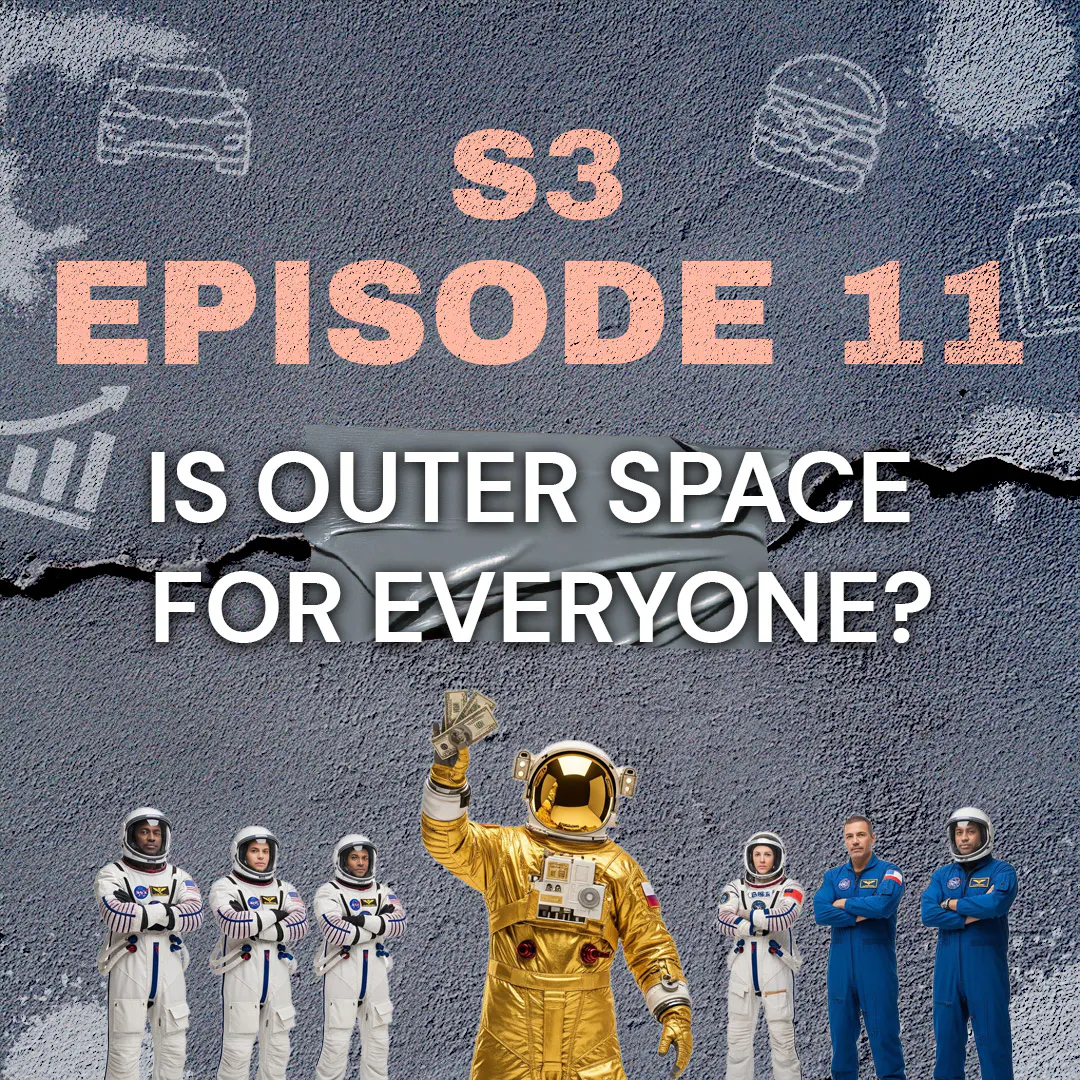
We Fixed It, You're Welcome
Is Outer Space for Everyone?
00:45:53
Space exploration used to be reserved for governments and elite astronauts only. Today, commercial launches, private space stations, and civilian missions are raising questions about opening up space travel and making access more widely available. In this episode, global space policy executive Christopher Hearsey joins the conversation to explore the future of commercial spaceflight, the role of private companies, and whether humanity is entering a new era where space truly becomes accessible to everyone. From billionaire tourism headlines to satellite infrastructure that powers everyday life on Earth, this discussion separates myth from reality and explains what space tourism and space commercialization actually means for society. What You’ll Learn in This EpisodeWhy space is no longer just for astronauts and governmentsHow private companies like SpaceX and Blue Origin are accelerating the push for space travelThe legal reality behind the Outer Space Treaty and ownership in spa...
Loading summary
Transcript37 lines
- [00:01]
Aaron
Welcome to We Fixed It. You're welcome. The show where we take over companies, you come along for the ride and
- [00:08]
Christopher Hersey
we try to put them back better
- [00:09]
Aaron
than we found them. Today we're talking about something that used to be science fiction and now feels like a check mark on a billionaire's bucket list. Space travel. It's not just for astronauts and cosmonauts anymore. These days it seems anyone who can write a big check can take a joyride into the unknown. And if you've seen the resulting photos and videos, a space voyage looks like summer camp for the uber wealthy. The ultimate experience. And what do you get for the price of admission? Right now we're talking about three to five minutes in zero gravity and then back to the mansion. But this is just getting started. The push to commercialize space travel is escalating and an increasing number of for profit companies want to go to space for their own purposes. It's not too far fetched to think about private space stations, moon bases, maybe even luxury hotels in cities somewhere other than Earth. These are real conversations that are happening and plans are in the works. We're going to figure this all out and ask the question, who does space belong to? Is it governments, corporations that can outspend governments? Should we all go full speed ahead into space for the sake of progress? Or are we collectively pushing the limits of something we don't truly understand yet? Well, Chino, Melissa, I don't claim to be an expert on any of this. Today we're joined by Christopher Hersey. Christopher is a global space executive and the founder and CEO of OSA Consulting where he focuses on expanding access to the space sector for entrepreneurs, startups and organizations around the world. He spent his career at the intersection of space policy and business, advising aerospace companies, working in regulatory and government affairs, and helping shape how commercial space evolves both in the US and globally. Christopher, please tell us more about yourself and also tell us about your nonprofit.
- [01:57]
Christopher Hersey
Yeah, well, thank you. It was wonderful to be here. Aaron joined by Gino and Melissa to talk about space, my career. I've been in it for almost 20 years and I've worked in a variety of different roles. I've worked at the State Department during the Obama administration and was part of an interagency team running the national space policy. I've worked as both corporate counsel and a director for a company called Bigelow Aerospace, which sent the first expandable commercial habitation module to the International space station in 2015. But also, as you mentioned, I co founded a global nonprofit called the Space Court Foundation. There's a little bit of an irony because there's no courts in space. So we created a foundation ahead of time so that people understand that the rule of law applies to space. And what we do is we promote space law education in the rule of law. We have a global internship program. We take about 30 students a year. We do original research. And you can check us out on our website at www.spacecourtfoundation.org and at Space Court foundation on YouTube, where we have some content directed at getting the general public to understand what actually is space law and regulation and how that works in your daily life. And our flagship pilot that we have there is called Stella Decisis, where we invited three notable professionals in space law to adjudicate a fake space law case that we presented by actual2space lawyers who were actually husband and wife. Well, both of them are very good friends of mine, but one of them was my roommate in law school. So one thing about the space community is while it may seem it's filled with billionaires and multimillionaires, it's filled with a lot of average people who just have a passion for space and want to see space developed in an economical and safe and inclusive way.
- [03:47]
Aaron
Well, thanks, Christopher. I'm really glad to have you here with us. And I think Space Lawyer is probably the coolest business card there could ever be. You know this stuff more than any of us. I'm going to try to get the rest of us up to speed in about a minute. So modern space exploration really begins with Sputnik in 1957 and the space race with the Soviet Union. Within 12 years, we were walking on the moon. One small step for man. Yay. The the US and and Soviet space initiatives were each backed by different governments, but they were both government funded projects. So, in fact, for most of modern history, space exploration has been the result of efforts by one government or another. In over six decades, roughly only 360 NASA astronauts have gone to space. That's a small group of people. If you went to space, it was because you were a trained astronaut selected by NASA or another national program. But now here comes private companies like Blue Origin and SpaceX with a focus on passengers who are civilians, rich civilians, important researchers, pop stars. You've seen the headlines. Since 2021, Blue Origin alone has taken over 80 individuals into space on short suborbital missions. That may not sound like a lot, and the flights are short, but compared to the elite class of astronauts in the past, it's clear things are changing. The door is cracking open. And it gets more interesting. NASA plans to retire the International space station after 2030 instead of replacing it with another government owned station. NASA is encouraging private companies to build the next generation of space stations as commercial destinations. And since space is governed by agreements like the Outer Space Treaty, which says no nation can claim ownership of the moon or other celestial bodies, we're entering a complicated situation. No one country can own space, but companies can build, operate and profit there under national laws. So here's what we're going to fix. Since it's already happening, should we all get on board with space tourism? Are private companies equipped to take the lead on space exploration and development? And just because all of this is possible doesn't mean it should be happening at the speed it's happening. That's our conversation. Christopher, you want to kick us off?
- [05:55]
Christopher Hersey
Sure. I mean, my position is we got to get the F off this planet. You know, in my career, we, or I have, and working with different colleagues, worked to send people and things to space. You know, I've worked with companies like SpaceX and others, Virgin Galactic. I'm mostly on the human spaceflight side in my career, but we're also moving to satellite operations. And you see a lot of robust changes there. I think what the average person needs to understand is that most of what you understand is state of the air, state of the art technology here on earth has not actually moved into space. We have not tested a lot of things. So you probably hear about things like putting data centers. Well, when you start hearing about all these different things you can do in space, it raises a lot of questions. So you mentioned the Outer Space Treaty. The Outer Space treaty in Article 1 actually says that outer space is the common regime of humanity. Right. I'm paraphrasing, there's a different word for that, but it's a little controversial and I want to go down that rabbit hole. But the whole point is, is that everyone is supposed to have access to space. Over the last, I would say 20, 25 years, there's been a huge uptick in the number of companies that have both successfully gone to space and also unsuccessfully gone to space. I think that's a good thing. We have to try out how we do things and we have to see what works. Now that's not to say that there aren't serious policy issues associated with that. And for me, you know, my career has been trying to get larger commercialization efforts so that anyone, whether it's Aaron, Chino, Melissa, or your kids, your Grandkids, your great grandchildren, anyone you know, well, they want to go to space, they can't go to space. And I think that's a. There's a. There is a fundamental, at least philosophical reason for me, which was I don't think that as a species, we're in a suicide pact with each other to stay on this planet. Now, how we go about that is the central question. And lots of people have different ideas about settling the moon or going to Mars. And that's all great. But what you have to keep in mind is the slow roll of this technology into space. And utilized by space is what keeps this podcast actually to be recorded, to be distributed. It allows you to move money around through bank accounts. It allows you to make your phone calls wherever you are on this Earth. And it also helps you figure out where the hell you are when you don't have a Thomas Guide anymore and you have to rely on gps. So our society has evolved to the point where we depend on space technology for everyday life. And if it all went away tomorrow, we'd all have to go back to the way the things used to be in the 70s and 80s and rely on paper things, on institutional knowledge. I mean, how many people even remember phone numbers anymore? So, you know, it's, it's, it's part of our society now, and how we adapt to it, I think is really the important bit. And you first start with who has access to going to space.
- [08:48]
Aaron
I think it's interesting when you talk about the democratization, because it's, it's not just, I have a right to live in a time where something exciting like this is happening and I'm watching the progress happen and the technology catch up, but I have a right to participate.
- [09:01]
Melissa
Yeah, I understand theoretically what you're saying, Chris, that yes, it's open to us, but in reality it's not. I would just say that it's still an exclusive opportunity. You know, it's costly. Like, you know, all of the people you've mentioned who've gone to space have had to pay a great deal. And the average citizen of the world doesn't have that kind of money to be able to pay to go up to space. So I think, you know, to focus the conversation. And I don't know how we want to do that, Chris or Aaron, but, like, I do think that there are multitudes of components before we get to the point where we can really say space is an opportunity that all of us have a right to, that we can actually participate in, because I get it theoretically, we've already got the space station, we've already done some of these things. We've had SpaceX, we've had Blue Origin go up. But again, it's a very limited population group that's getting that opportunity. And so the thought is really understanding what is the client value proposition. So the person who chooses to pay to go up. Right. And also what is the business value proposition. So to your point, Chris, like you're, we're looking to expand into space and have the opportunities. So it's about business, it's about like, what are we going to be doing and how are we going to be building structures and processes and operations and you know, the research missions and all the things that are currently up there, you know, and you know, do we really even want to duplicate what's on Earth to some places? Probably don't.
- [10:48]
Chino
I don't know.
- [10:49]
Asana Ad
Working across teams is tough, but Asana helps you handle it. Asana AI can spot roadblocks and assign work to keep everything on track. That's how work gets handled. Visit us@asana.com
- [11:04]
Aaron
well, it's interesting because you think of these open marketplaces like, like eBay or YouTube or Etsy where it starts off with everyone's invited and everyone's, it's diplomatic and you can come on and have a representation there. But then it builds into this. Well, some know how to do it better than others and some are more structured and some sell better and then those rise to the top and that everyone egalitarian model kind of falls away. And yeah, you can still be there, but you, you don't really have much of a presence or much of a voice and you don't do as well as others that are now suddenly at the top.
- [11:38]
Chino
I gotta jump in. I gotta jump in. This is so Chris, I'm so excited to have you here. I've actually worked with the Planetary Society before and their mission is all about empowering the world's citizens to advance space science and exploration, which I 1000% stand beside. I, I believe deeply that we need to be doing more in terms of space research. I agree with your first statement too, Chris, about, you know, we need to get the hell out of here. We need to figure out a different way. And as you were talking too about like how it impacts human physically to, to go into space. That's all science. And what I want to kind of fragment this conversation because there's two aspects to this. There's the like, utilitarian need to figure something better because as humans We've not done that great with our planet. Right. There's a finite time, it's a long time, but it's finite. What other ways to explore but to do that? It's all based on science.
- [12:36]
Melissa
Right?
- [12:37]
Chino
For me personally, when I'm looking at these multibillion dollar companies who've invested into space travel, my challenge here, like, similar to the Titanic exploration, you're having people do this for their own ego. And I don't want this to be, excuse my French, a dick measuring contest to see who's there first. And yes, I appreciate Tom Cruise going there and Russia coming into doing a scene. We as humans need to figure out and have the science there to back it. I want to touch on the planetary side a little bit because they had a day of action last year to help. They went to Congress to negotiated, hopefully rebut their claim to want to cut down their funding 50%. Right. Last year they were able to take that. There's going to be another day of action April 19th to the 20th of this year and go on their website to check out how you can be a part of that. But I, I think that yes, there needs to be space lawyers, but we need to make sure that this is grounded on bringing back information in science versus just sending celebrities up and it becoming your next holiday vacation spot. Because there is a need to, to do, to explore space and to bring that science back. And I think again, when we talked about, you mentioned Chris, you know, right now it's. No one's, no one's owning anything, right. As a nation, I'm not American, I'm Canadian. Right, so Canadian here. When we talk about threat actors and you know, with the current political climate of going on, sometimes you gotta ask, yes, obviously there's certain things, but who's controlling that radar? Because a threat actor to you and me can look differently depending on what that is. And I'm sure I would have loved to sit in the room when the, you know, the husband and wife space lawyers are going back and forth forth on that. But that is something we need to be able to tackle. And I do think we need space exploration. I would love to see that backed by billionaires. Elon, give NASA some more money. I know that you wanted to help tsa. You just, you know, put out a statement on, on X saying that you would help the tsa, you know, providing income for the people that are losing their income while there is the strike. Can we add your billion dollars, more than a couple billion dollars to NASA and other aspects so that the everyday person who is excited and who wants to be about it, who, who understands the need for space exploration to become their own scientists to help bring back something. If we're going to do space exploration and tours, there should be something that we're bringing back from a research perspective outside of just how this impacts the human body. And I think that's where I'm finding the myths here as an everyday citizen, where it's just another luxury for the billionaires, where I'm not seeing it as how are we trying to help the human race essentially to explore space. And so Chris, I'm curious because I know a lot of people have the same sentiment. I am not intimately in this world. I completely back the planetary society. I love what they stand for as well. And I know that you're not for profit and what you do is exactly this. But how would you tell our listeners who say that this is just for billionaires and what would be the win to, to do that?
- [16:15]
Christopher Hersey
Yeah, yeah, I, I'd start with the floor and a ceiling. So the floor is for 5 to $10,000, you can go to Southampton, Pennsylvania right now and figure out if you're medically cleared to go to space. And you could get cleared to go with work with SpaceX or Blue or Virgin or whomever else comes online for human spaceflight. They train for all that. That is no different than doing anything that would be an extreme environment. So you want to climb the top of Mount Everest, you want to go to the, to the bottom of the ocean. The difference is, is that when it comes to space flight, human space flight, like this stuff is taken very seriously. Everyone involved takes safety very seriously. What you have to understand is that all human spaceflight activities is designated legally as ultra hazardous. And the same thing that you do if you want to do paragliding or parachuting or whatever it is, stunt flying, it's all the same legal regime. Now the ceiling on this is, and the sort of the pushback on the billionaires taking vacations, that's actually not accurate. It is a reflection because Bezos and Richard Branson had to demonstrate for themselves and their constituencies that their spacecraft works. The person that's not on that list, Elon has never flown to space. Elon's never been on a Dragon and he is never going to get on a vehicle unless he is ready to go die on Mars. Like that's, he said that publicly. But that's not taking a vacation. That's a one way trip for him. You don't hear the same rhetoric out of Richard Branson or Bezos or very few others. So that's an exception. But having done this for clients who've tried to get A listers to space, I can tell you it's not that simple. And the perfect example actually is Bezos. So think of any celebrity that you'd like to see in space, okay? And I'll put just one asterisk on Tom Cruise because he's the exception in all of Hollywood. All of the A listers because he can self fund. If you are an A lister or extremely high wealth individual like Jeff Bezos, if you want to go to space, all of your lawyers and all of your insurers will say, sure, but you need to do X, Y and Z things to do that. What did Bezos have to do? He had to cancel all his insurance for a day and he had to resign from a bunch of boards. All his boards he's on. Because the risk if he dies means everything goes into probate or whatever trust that he's got set up. And you don't want to deal with that. But if you're an actor, you can't take two years off of not making movies. I mean, look at some of the A list actors. Timothee, Chalamet or whatever, right? They're doing two, three, four movies in a two, three year period. So it's an opportunity cost. Do I go and make $120 million and maybe win an Academy Award or do I just hang out with a bunch of people for two years and train for space? Now the training time for space has significantly been diminished, but it depends on what you want to do there and how long you want to be there. For example, Jared Isaacman, the current NASA administrator, he's still the only real, let's say, wealthy person that's gone to SpaceX to be their guinea pig. And one of the consequences of him being their guinea pig is that he demonstrated an eva, an extra vehicular activity. So that's basically putting on a pressurized spacesuit, depressurizing the capsule, with all your friends inside walking outside, doing an EVA for a certain period of time, usually like 30 seconds and coming back in. But I could easily see Tom Cruise wanting not to have any tether and have some sort of proportion propulsion system with the satellites as cameras showing him do some Mission Impossible 15 stunt. Right? I mean, so it's interesting in who actually can go to space and what we would expect to go to space. So all of these things are opening up.
- [20:16]
Aaron
Yeah, Chris you were talking about firsts and you know, you're talking about it too. And there's the, there's like a pissing match going on and there's a premium. You know, whoever's going to be first to do anything in this sector is going to pay multiples like the first VCR is to market back in the day were $1,200 or $1,500. When they hit economies of scale and product adoption, that dropped quite a bit. So the first one in the door is going to pay that 60 million or whatever it is, 2nd, 3rd, 28th, you know, as the line goes longer. Yeah, they're booked out for the next five, 10 years and now maybe no end in sight. And the more that they can command a premium for, for these elite experiences, more power to them. But at some point, if you really want to turn this into a viable enterprise beyond just the ultra elite that get bankrolled or can write the check, you got to figure out how do you make this, you know, make it accessible to more, more players and let, let the doors open.
- [21:20]
Chino
And I think just on that note too, because I again agree, I do think people should be going up, I think we should be exploring space. We need to, for humanity. But when we look at it from like a people and culture lens of like, what does this mean? Right. Again, being first is great, but I do think if you're a business that says, I want to do it like again with the, you know, for poor Kate, not poor Katy Perry, very rich Katy Perry and Gail King and Lauren Sanchez who went up on the Blue Origin flight, right, for International Women's Day think I was, was that last year, which is insane to think about, but when they came back, it was an insane blowback. It didn't read well. Katy Perry kind of had to, you know, go under underground a little bit dating my former prime Minister, but it just wasn't, it didn't read well. And so if you're a brand who's saying, okay, great, I want to bring Katy Perry, I want to bring Gayle King, I want to bring Aaron and Melissa and Chris to space. There needs to be a messaging there too. Because I think at the end of the day this all goes back to like, what is the greater good? I believe, like, you're right, Chris. If you, you know, something happened to all the people who have made their careers in space exploration, who've worked at NASA. There's not that many, there's not that many pool. But are there a thousand millions of people who are interested. Looking at the Planetary Society's membership, I know that that's a. It's a fact and I think it's going to cost millions. But what I don't want to happen is it just become a ego trip to go up there. I would love to see that money being donated back. We have in kind, you know, donations to NASA or other private sectors. Chris, that you work with. You're not for profit. That actually was. Will help bring more people into the space community because it should be accessible. Right now the barrier to entry is money. And if you're a billionaire that has no problem doing these little ego trips, I would really hope that you would add something to and give back as part of your trip to A, optically it looks good on you, but B, you're allowing for more of this space exploration and the science because it can't just be a trip, you know, that 10 minute concert is cool. For who? Not me, not you. It's not doing anything. Like what are you. If you're going to go up there, what are the, what's the data you're gathering outside of just what the effects are on humans? We have a larger data set on that. You talked about the degree of, you know, safety that we do know and like there's opportunities to train. So that's great. Obviously more data is important, but what else, what else is out there that we're not touching on because we're so focused on being the first versus looking at it from a space exploration? I think as a business you can't do a. Without that critical piece without looking like an asshole, to be frank. And I think that if you're going to do that as a business, that's they need to go together almost.
- [24:32]
Aaron
If we put companies in charge instead of governments and make companies the gatekeepers, does that solve anything? Does that make. Make it better? Does that to start to open things up and have companies be the decide. Be the decision makers of other companies that get to play along as opposed to governments. Does that help to democratize the situation or is it just add complexity?
- [24:53]
Melissa
I think it adds complexity, but I also think that what you're saying is a proven thing. So when different companies are involved in operations and scaling or transforming, innovating, growing a business, it's really important that they learn from their past. And so I think, Chris, you've talked about this a little bit about, you know, what do we want out there in space and what are the types of industries that are going to be relevant, are going to continue to, you know, bring resources in there, are going to bring travel there, are going to be part of a critical mission. Geno, that's both culturally and scientifically and, you know, life changingly important. And so that's one of the things that I was asking around, value proposition, because I think the value proposition for, I'm going to call them space explorers or space travelers, which would be more the citizen type of person or, you know, or the worker going up to space is different than what the value proposition would be for a business. Right. And so when you're seeing that perspective, I would hope that business leaders are, you're getting the most innovative minds, Chris, like yourself, to help to kind of create that roadmap. You know, whenever you think about startups, whenever you think about corporations as they scale and grow, they look to the data to inform them of how to do that effectively. You know, space is still, you know, the, the unknown frontier, so to speak, in a lot of way. And even though I know you were aligning it, Chris, with airlines or trains, we've all used different modes of transportation to get where we need to go. There's still a sense of like, do I trust that this is a safe thing for myself to do? Right. And it's the same manner is, do I trust as these operations grow out in space and do I understand, is there opaqueness or is it transparent or what their mission is, what their critical mission is? And how can I best understand that and align myself with that? Because I do think it is the answer. We know we need to look further than our small planet. And I do believe, Aaron, to your point, that we need to be very thoughtful and intentional how we build that out. And I know that there are plenty of smarter people doing that right now. But again, I, I don't see that transparency that will help me as an individual say, okay, I'm willing to put my money where my mouth is. I want to do this, I want to be part of it. I'm kind of sitting back and saying I'd like to see who actually ends up there and what businesses end up there. Because in, in relation to, you know, and again, I know that we're talking about it, you know, and in a different way, but it really, again, to me it doesn't make sense. Like, you know, you're not going to have a sociologist go up there right now, like that doesn't have the means and sponsorship and backing and then has that personal mission to understand what their purpose is to do so. So I think all of that needs to be clearly defined. And I, you know, and again, I'm not aware of all the different things
- [28:35]
Chino
that are going on.
- [28:35]
Melissa
I know there's, there's a multitude of countries, there's a multitude of corporations, there's a multitude of societies that are trying to push this to the forefront. But I do feel like it needs to have a common thread between. To ensure that we are building with intention as we go to space.
- [28:55]
Aaron
Seems like the companies that there, that are there have first mover advantage. So, you know, if I, let's say I wanted to start a cell phone company and I had to apply through the government and work through the bureaucracy and raise all the funding, like, that's a lot of work and there's a clear path to it. If I wanted to start a cell phone company and I was late to the game and I had to apply to Verizon and T Mobile, they're gonna have competing incentives of whether or not they let me in and let me play. So are we creating this barrier already of whoever's been, you know, been proven, passed some safety regulations and they're already, you know, locked and loaded. They're building the space stations, they're. They're getting the funding and all the money and all, you know, like, marketplaces that I mentioned, like Etsy and those. Are they locking out others that want in and just can't play along because they're too far behind?
- [29:47]
Melissa
I think those companies are limiting themselves, to be honest. So what I mean by that, Aaron, is everyone has that same opportunity that the to. To what Chris was saying, you know, it's the democratization of space. Who's going to prioritize that? So, like, if we're just talking, you know, satellites or cell phones, whatever, all of those companies have the same opportunity to prioritize that that's what they want to invest in, that maybe only a small one will actually do it. And then to your point, Aaron, they're the first ones there.
- [30:21]
Chino
Do you see what I'm saying?
- [30:22]
Melissa
I feel like, I think part of it is people not really putting. Not people. Companies may be not prioritizing that because they don't have a Chris on their board to help them understand what that vast opportunity looks like.
- [30:40]
Aaron
Yeah, yeah, Chris, should we, should it be an open marketplace? Whatever companies can survive and thrive, we'll just let them at it.
- [30:47]
Christopher Hersey
Well, here's the thing. Like, you're talking about exactly what I've been fighting in my entire career to do. You know, before 2000, everything was just, are you Boeing, Are You Lockheed? Are you Northrop Grumman? Are you Ball? Are you a Defense prime contractor doing X, Y and Z on a cost plus contract? Because that's what all of my shareholders are demanding that I charge the government. In the last five, six, seven years, we've had an explosion of companies where you had all kinds of investment dollars from all over the place, from private equity to venture capitalists and everything in between. Mom and pops starting some of these great space companies. Some of them get bought up, some of them fail, some of them succeed. But everyone is trying to take their space in the vertical where they're still looking around. There are only other couple of competitors or other partners. And the thing is, when it comes to space, it's all integrated. You can't have a rocket without a payload, and you can't have a payload without a rocket. You can't have humans going to space without a payload and a rocket. And if you can't come back, you're never flying at all. That's where all these other secondary and tertiary economies are important. Because once you establish these platforms, you can get into recycling, you can get into smelting. You can now take all this crap, put it in a bin, melt it, turn it into an extruder element, and now you can 3D print in space and you don't have to bring up any material from Earth. And that's the biggest economic driver. And so trying to create these closed loop economic systems is what experts like myself and others have been trying and working in our career at. So that you can not only have an economic justification, but you're going to have, as you said, the public policy rationale. What are you getting out of it? Right? And so for some people, it's being able to drive to work. For other people it's to be able to move money to my bank account and pay someone through my Venmo. And for other people, it's to prevent a nuclear thermonuclear war.
- [32:46]
Aaron
Yeah, well, we're not trying to start any wars here. We, we only want to do good. Which means we, we've got to fix what we set out to fix. And you know, it's hard to wrap up in a bullet point, but we'll just say that commercial space travel that we have, we've all seen the, the celebrities and, and the billionaires, what equates in the public's imagination. That's, that's the, that's the tip of it. That's the very public piece of it. But there's a Lot more to it. And there's a lot more room for companies and even small companies and even startup companies that aren't as well funded to play along. And what we would just hope is everyone who's there and there to play along is doing it for the right reasons. So let's, let's, let's just drill it down to two points in our fix. Let's just say space tourism. Are we, are we for it? Are we for expanding it? Should we be doing it? And then that's number one. And number two, who leads the charge when it's tourism and exploration and commercialization? Governments or private companies or a mix of both. So tourism, yay or nay? And then who, who's in charge? Governments, private sector, Some of each. Melissa, what do you think?
- [34:00]
Melissa
Well, definitely, I am for the tourism. I think that's an exciting and, you know, it's the wave of the future. That's what we're, what we're headed towards. But I do think there are some caveats to that and that includes, you know, building clear safety regulatory frameworks so that I feel safe. Then there's transparency and understanding the data, you know, standardizing. And I think this has already been said. Chris has done a really good job of explaining the customer consent, you know, the client consent, the screening, the training and all of that that goes into being able to particip in spaceflight. I also would love to see in my mind from an operational perspective that we're really focusing on strategically positioning ourselves in this post international space station world. And what that would mean is, Chris, you just mentioned there's so many people that are in the space, but they need to partner together to understand how they can make sure that everything that they're focused on and their mission is, is really fundamentally being supported by all the different aspects and actors. I mean, it's very interesting. I loved how you said, like, you could get up there, but then where are you? Like, do you have a place to stay? Do you have, you know, how, what, what if you, you know, is there help? You know, what happens if there's a medical emergency? You know, like those are all the ancillary areas of support that need to happen when you, when you think about space travel.
- [35:42]
Aaron
Thanks, Melissa Gino. Space tourism. Thumbs up, thumbs down. And who do we trust to take the charge? Government or company?
- [35:50]
Chino
I hope our listeners walk away from this conversation understanding that space literally is for everybody. It is interconnected. We can bring a sociologist up to space one day because as Chris and Melissa and Erin and We've shared in this conversation. It's interconnected. You need to be able to learn from each other. So yes to space exploration is what I would call it. I think with that exploration there, it needs to be tied, as Melissa shared, to an intention, an intention for good. And I would love to see every single company, regardless of what, what country you're coming from, has a pledge to do good, whether do good for space and for Earth. So whether that is helping others who again, that barrier for entry is money. If you can put some dollars down so that we can allow space to be for everybody. Because eventually you're going to need some psychologists up there and you know, someone to help cook and all of this too, like that's what we want to get to. But space is R and D. It's the same way you look at it for any business. You need to invest in it so that you can go out there. You need to work with the Chris's of the world so that we can get to that point. We need this, we've established that. Does it need to be run by the government? I don't think so, but I think the government can definitely help bring wider accessibility outside of it just being within a company. So there's a need for both government and for private sectors. And I think yes, there's always going to be a first for someone. But if that's your main position is just being the first without any of that intention behind it, I think you'll fall flat as a business looking to do that. So just keep that in mind as you're, you know, exploring what that can look like.
- [37:44]
Aaron
Thank you, Chino. Chris, take us home. Space tourism and exploration, just keep, keep it going.
- [37:50]
Christopher Hersey
Yeah, yeah, I think it'll evolve. I think space tourism will continue to evolve. I think what's exciting about the future of space tourism, as I mentioned, is that we could be getting more movies, we could getting, you know, you could probably do an episode of this podcast on an Axiom station in the future. So, you know, the cost is slowly coming down. I mean, it may not seem it when you're still talking tens of millions of dollars, but from where it started, oh, that is, that is, that's actually kind of cheap. You know, dreams do come true and a lot of it is, it's just you have to ask, don't expect people to give it to you. If you want to be part of the space community, go and do it. You want to be a sociologist, there's tons of, I can connect you with tons of Sociologists in space, they all do analog missions. They go up to Canada. They go to the Badlands of South Dakota. They go to Antarctica. Like, there's so much activity going on. And if there's a way that we can put it together, I know it's going to start from this podcast.
- [38:52]
Aaron
Okay, we're up for it. So between Chris and marketing and operations and talent, we'll get you to space. That's our promise to you. That's going to close out our episode. Our mission is over. But before we go, I'd like to give another thanks to Christopher Hearsey for spending the time with us. Chris, how can everyone keep up with OSA Consulting? And again, and then your nonprofit.
- [39:14]
Christopher Hersey
Yeah, with OSA Consulting, probably the best way to contact me is on LinkedIn. I do have a website, but I mostly just do everything through LinkedIn. But I really would direct your audience to the YouTube channel that we have for Space Court foundation and our website. Everything's there. We've got a pilot podcast called the Spacebar Show. We've got a pilot animated series, Moot Court series called Stellar Decisis. We've got fake space commercials. But we also have actual hard research. We have our big books of national space law, which is a compendium of all the country's space laws and regulations. And we have an online database where you can search that. We've got partnerships, we've got internships. So if you're an undergrad or a law student or a graduate student, master's, PhD, you can go to our website, spacecourtfoundation.org, fill out application. And we are an interdisciplinary, multidisciplinary group. Not everyone's a lawyer. Everyone has different parts of this. This is what's so great about space, is it's so broad and inclusive. You can't just silo engineers and the lawyers off. And so this is what we do. We promote space education, the rule of law and the rule of law. Bid is the most important bit here, because none of these activities will be sustainable if we don't agree on the rules moving forward. And you want to limit conflict in space. And that's what I spend a lot of my time talking with people about, is how do we not fight and get in a war, let alone get arrested by the space cops. So these are all things that students today can think about and check out. There's tons of stuff you can Google. And finally, I guess I'll just end and say thank you. Aaron Chino. Melissa, it's been great being a part of this conversation today, and I hope we can have more in the future.
- [41:01]
Aaron
Thank you Chris, and thank you Melissa and Chino. And for all of you listening, thank you. Mark my words, there will be hotels on the moon. So if you've been everywhere else, start saving up now. If you want to underwrite us as the first podcast taping in space, we're up for it. We'll do it. Until then, stay grounded and we will see you next time. We hope you enjoyed this episode of We Fixed It. You're welcome. We go into every episode somewhat cold and and nothing we say should be construed as legal advice, financial advice, or anything that would get us in trouble. All trademarks, IP and brand elements remain property of their respective owners.
- [41:38]
Asana Ad
Working across teams is tough, but Asana helps you handle it. That's because Asana is where humans and AI coordinate work together. AI can spot roadblocks and assign work in a snap. So every day and everyone stays on track, that's how work gets handled. That's Asana. Visit us@asana.com that's a S a n a dot com.