← What A Day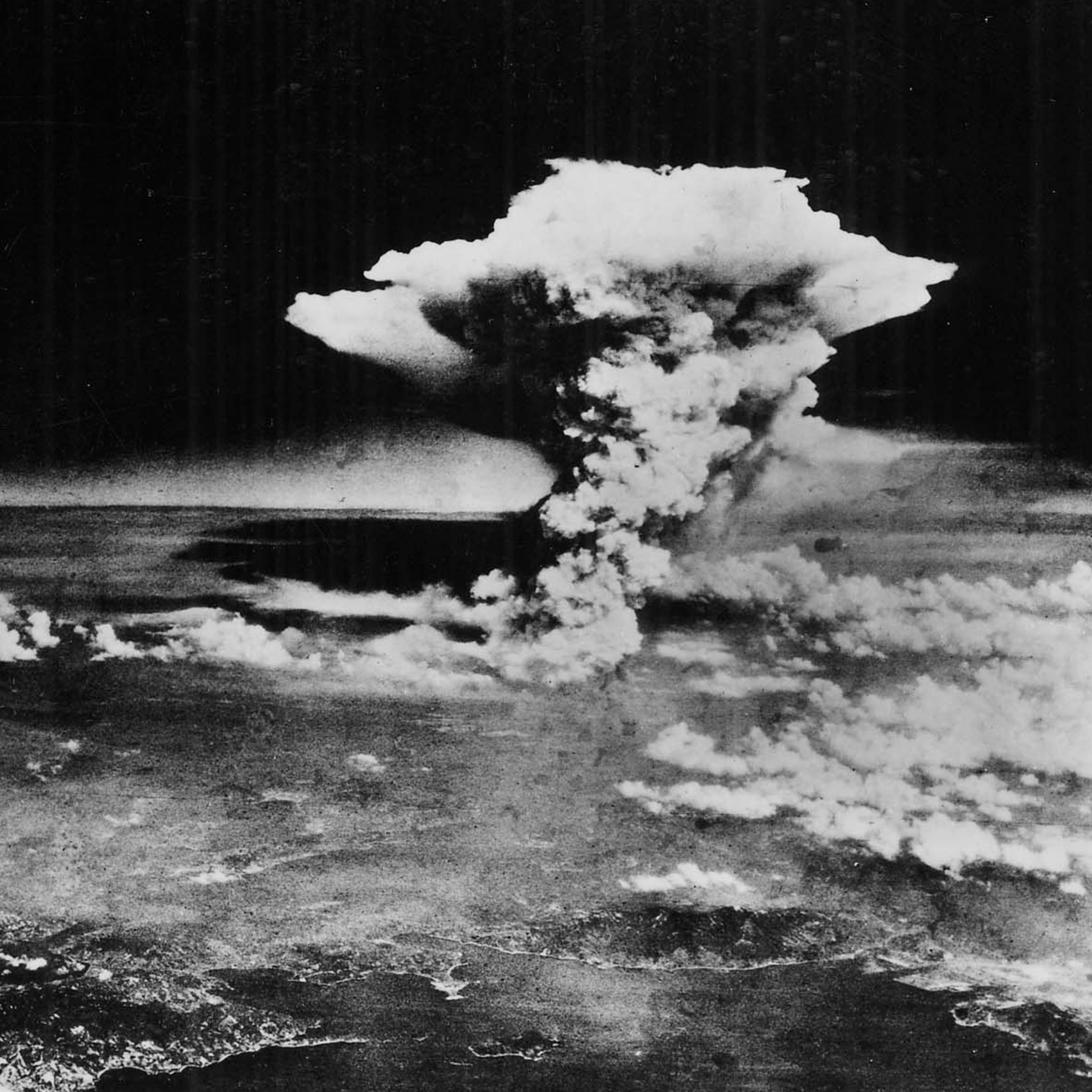
What A Day
80 Years After Hiroshima and Nagasaki, New Nuclear Threats Emerge
00:22:37
President Donald Trump is set to meet with Russian President Vladimir Putin in Alaska this week to discuss a potential end to the war in Ukraine (which Russia started.) To call the meeting ‘high stakes’ would be an understatement — already critics are warning of the potential for a ‘1938 Munich Moment,’ when Britain and France allowed Nazi Germany to take control over a swath then-Czechoslovakia in a bid to preserve peace on the continent. But the parallels to WWII don’t end there. Earlier this month, Trump said nuclear submarines were ‘in the region’ ahead of special envoy Steve Witkoff’s meeting with Putin in Moscow. As we mark 80 years this month since the U.S. dropped atomic bombs on Hiroshima and Nagasaki, historian Garrett Graff, author of the new book ‘The Devil Reached Toward the Sky,’ joins us to talk about what we learned — and we didn’t learn — in the decades since the U.S. dropped those bombs. And in headlines: Thousands of people in Israel demonstrated against Prime M...
Loading summary
Transcript40 lines
- [00:03]
Jane Coston
It's Monday, August 11th. I'm Jane Coston, and this is Whataday, the show that thinks it might know where Venezuela's President Nicolas Maduro might be. On Friday, the Department of justice announced that there's a $50 million bounty for the president of Venezuela, accusing him of being a narco trafficker. Is there a chance that the president of Venezuela is located in Venezuela? On today's show, thousands of in Israel demonstrate against Prime Minister Benjamin Netanyahu's plan to escalate the war in Gaza. And the redistricting fight in Texas rages on. But let's start with nuclear weapons. Yes, nuclear weapons. President Donald Trump is set to meet with Russian President Vladimir Putin in Alaska this week to discuss a potential end of the war in Ukraine, which Russia started. NATO Secretary General mark Rutte told CBS's Face the Nation Sunday the meeting is an important step, but not the final one.
- [01:01]
Mark Rutte
What will happen on Friday is testing Putin by President Trump and I commend him for the fact that he organized this meeting. I think it is important. And obviously when it comes to peace talks, the ceasefire and what happens after that on territories, on security guarantees for Ukraine. Ukraine will have to be and will be involved.
- [01:22]
Jane Coston
We'll tell you more about this week's planned meeting later in the show. But to say it's high stakes would be putting it mildly. Critics are already warning of the potential for a 1938 Munich moment when Britain and France allowed Nazi Germany to take control over a swath of what was then Czechoslovakia in a bid to preserve peace on the continent. World War II started less than a year later. The parallels to the Second World War don't end there. The threat of nuclear weapons has hung over the conflict in Ukraine since the beginning. Last week, President Trump announced that nuclear submarines were in the region ahead of special envoy Steve Witkoff's arrival in Moscow to meet with Putin. It was in response to saber rattling from former Russian President Dmitry Medvedev. He posted on Telegram that the US should remember Russia's ability to respond with nuclear weapons if something should happen to a Russian leader. Russia has the world's largest nuclear arsenal, but if you're my age or younger, you didn't grow up with a shadow of nuclear war constantly hovering over you like our parents did in the midst of the Cold War. But nuclear weapons never went away. And I think it's worth going back to the two times in history when these bombs were used. The destruction of the Japanese cities of Hiroshima and Nagasaki in 1945, 80 years ago this month. So to talk about what we learned and what we didn't. I spoke to historian Garrett Graff. He's the author of the new book the Devil Reached Toward the An Oral History of the Making and Unleashing of the Atomic Bomb. Garrett, welcome back to what a Day.
- [02:48]
Garrett Graff
Thanks so much for having me.
- [02:50]
Jane Coston
So the dropping of the atomic bombs on Hiroshima and Nagasaki are well told stories in history, I think, for most people. So what were you hoping to add to that story by writing this book?
- [03:02]
Garrett Graff
So this book pulls together the voices of about 500 participants. It's an oral history, so it's all in their own words, first person memories, first person letters, testimony, so on and so forth. And I think that there's a unique power that comes from oral history because it helps put you back in a historical moment before people knew the outcome, I think. So often in narrative history, there's a tendency to make events seem neater, cleaner, simpler, and more preordained than they felt to anyone else.
- [03:39]
Jane Coston
This led to that. This led to that. But you don't know that in the time, right?
- [03:43]
Garrett Graff
And you don't know that at the time. And, you know, look at our current moment right now. You know, the challenge of this whole thing that we are living through right now is we don't know how this story ends. And so, to me, the power of this story is going back to a moment when the people working on the Manhattan Project didn't know who was going to win World War II. They didn't know whether Adolf Hitler was going to get the bomb first, and they didn't know whether an atom bomb would work at all. And so my goal was to try to tell these stories with all of the uncertainty and messiness that they were for the people who lived them at a moment that they are slipping in our life from living memory into permanent history.
- [04:33]
Jane Coston
While the bomb, for a good reason, is associated with the war in the Pacific and Japan, something that often gets overlooked is the fact that the bomb's roots come from the war in Europe, specifically with Jewish physicists who fled Nazi Germany. Can you talk a little bit about that? And the influence that had on the Manhattan Project to develop the atomic bomb.
- [04:50]
Garrett Graff
Yeah, I often joke that I write history that unfortunately gets filed under Current Events. And the part of this book that I found most chilling was the chapter about the memories of, as you said, mostly Jewish refugee scientists fleeing the enveloping cloak of Hitler's fascism in Europe in the 1930s, and the way that they watched institutions that were supposed to stand for democracy and freedom crumble. The way that they saw their colleagues sort of go along to get along with Adolf Hitler and the Nazi party because they thought it was going to be good for their careers. And that they, you know, there are these incredible quotes of these physicists saying, you know, none of my friends thought Adolf Hitler would actually do any of the things that he said that he was going to do. You know, how bad could he actually be? Like, most politicians make these big promises and don't actually do any of the things. So, like, how bad could Hitler actually be? And of course, over the 1930s, it becomes clear that it's quite bad and that they flee to the United states. And from 1939, 1940, 1941, are pushing the US government and the US military to engage in this crash program to build the atomic bomb because they are afraid that Adolf Hitler is going to get the bomb first. And it's actually only on Saturday, Dec. 6, 1941, that the U.S. government embarks on a sort of full scale Manhattan Project effort to develop the atomic bomb. And of course, the next day is Pearl Harbor, Sunday, December 7th, and, you know, the US is at war.
- [06:43]
Jane Coston
Yeah. Do you see, not necessarily parallels in leadership, but do you see parallels to today and the rise of fashion here in the United States where people keep saying this person isn't going to do what he says he's going to do, but also, I voted for him to do those things.
- [06:59]
Garrett Graff
Yes. And I think you also see in Hitler's rise something that has befuddled the Republican Party for the last decade, which is all of these sort of, you know, quote, unquote wise power brokers who have turned to support Trump, thinking that they can control him, thinking that, you know, once he gets into power, like, I'm going to be in a position or the party's going to be in a position to control him. And of course, what we have seen is that they are not and that Trump is in control of the Republican Party and not vice versa. And to me, actually, the parallels are very chilling, with the added warning that what saves the world and freedom and Democracy in the 1930s and 40s is the United States is there to fight for it and turn around and rescue Europe. And it's not clear to me now in this moment, if authoritarianism takes root here, who is the person, who is the country, who is the world leader that is going to stand up and be able to fight for the United States?
- [08:17]
Jane Coston
You also, in your book, gathered some firsthand accounts of survivors of the bombings. How did their stories change Your understanding of what happened on those days, the.
- [08:27]
Garrett Graff
Reading, the testimony of the Haibakusa, the bomb affected survivors in Hiroshima and Nagasaki, I think stands as some of the most searing reading of any human experience I have ever come across. To me, it's an important reminder that nuclear weapons are not just any other weapon, that these are community destroying, civilization, killing people, destroying weapons unlike anything else in the human arsenal. And at this moment, I think many people don't appropriately realize that we are probably closer to nuclear danger today in 2025 than we have for much of the intervening 80 years. We've already seen conflict this year between India and Pakistan, the two largest nuclear arsenals to ever come into open conflict. We've seen the US And Israeli raids on the Iranian nuclear program. You know, before Donald Trump decided that he actually wanted to have a summit with Putin, he was saying that he was moving nuclear submarines into a more threatening position with Russia. And we are watching the rising instability of the US in geopolitical alliances lead to conversations around the world about new nuclear proliferation in the Middle east, in Europe and in Asia, such that over the next decade, I think we are probably going to see more countries join the nuclear club than there have ever been before. And the weapons that we have today dwarf even the terror of the weapons that were used in Hiroshima and Nagasaki. So to put that in very concrete terms, the two nuclear submarines that Donald Trump moved into a more threatening position with Russia in the last two weeks are Ohio class ballistic missile submarines. They carry 20 missiles apiece, Trident missiles. Each Trident missile has four warheads, and those warheads range from 100 kilotons, that's thousand tons of TNT, to 475 kilotons. 475 is 30 times larger than the weapons that were used in Hiroshima. And a single US Submarine can use those weapons to destroy every city in Russia larger than 250,000 people, which is just an incredible amount of firepower that would take about 17 minutes from the time that the missiles are launched.
- [11:29]
Jane Coston
Wow. Okay. I'm never going to stop thinking about that for the rest of my natural life. But I want to ask you, as the final survivors of Hiroshima and Nagasaki pass on, where does that leave us? How can future generations carry their mantle to ensure nuclear weapons are never used again?
- [11:48]
Garrett Graff
So what I hope at this moment, as we watch this generation pass, as a new generation, I hope commits to the idea that we should continue to never use these weapons again, we can have a serious conversation about both building better safeguards around their use. You know, for instance, requiring a congressional resolution to back a presidential use of nuclear weapons or sort of anyone other than the president doing it by himself. And by the way, I believe that is a, that would be a smart measure whether the President was Democratic or Republican, male or female. That's we just shouldn't have that world ending power in a single person in a democracy. And I think we should have serious conversations about the size and scale of our nuclear arsenal. You know, we have thousands of nuclear weapons still today, and I have spent years of my life working uncovering nuclear weapons and written at this point two books about the nuclear arsenal of the United States. And it remains completely unconvincing to me that we need anything more than an incredibly small arsenal of weapons. You know, maybe a few dozen, if we keep those weapons at all, which I think should be part of that debate.
- [13:17]
Jane Coston
Garrett, thank you so much for taking the time to talk to me.
- [13:20]
Garrett Graff
Thanks so much. It's an important subject to talk about, even though it's not necessarily a pleasant one.
- [13:26]
Jane Coston
That was my conversation with historian Garrett Graf. His new book is called the Devil Reached Toward the An Oral History of the Making and Unleashing of the Atomic Bomb. We'll link to it in our show notes. We'll get to more of the news in a moment, but if you like the show, make sure to subscribe. Leave a five star review on Apple Podcasts, watch us on YouTube and share with your friends. More to come after some ads foreignay is brought to you by Lola Blankets. I did not know I could be as excited about a blanket as I am about my Lola blanket, which I sleep under every single night. Lola is the world's number one blanket. Crafted with ultra soft luxury vegan faux fur and a signature four way stretch that sets it apart. It's machine washable, double hemmed for durability, and stays flawless. No pilling, no shedding. Even after repeated washes, one Lola instantly elevates your space. It's unbelievably soft. Seriously, unbelievably soft. It's beautifully designed and it makes your home feel cozy and curated. Lola has over 10,000 5 star reviews and once you feel it, you'll know why. There's a reason it's called the world's number one blanket. This thing is next level. For a limited time, our listeners are getting a huge 35% off their entire order at lolablankets.com by using code WATT at checkout. Just head to lolablankets.com and use code WAD for 35% off. After you purchase. They'll ask you where you heard about them. Please support our show and tell them we sent you Wrap yourself in luxury.
- [15:00]
J.D. Vance
With Lola Blankets A real Etsy buyer.
- [15:04]
Jane Coston
Review for handmade home decor by a real Etsy seller. I could not be happier about the.
- [15:09]
Benjamin Netanyahu
Quality or the wonderful personal message supplied.
- [15:12]
Jane Coston
With it describing its journey into existence.
- [15:14]
J.D. Vance
Discover original items created by real people and loved by real people just like you.
- [15:20]
Jane Coston
Special starts on Etsy Shop the Etsy app.
- [15:26]
J.B. Pritzker
They say if you want to go fast, go alone. But if you want to go far, go together. At Amica Insurance, we know what matters most to you and we work even harder to protect it together. As a mutual insurance company, we're built for our customers and prioritize your needs. Amica empathy is our best policy. Visit amica.com and get a quote today.
- [15:58]
Jane Coston
Here's what else we're following today. Head of Lines.
- [16:04]
Benjamin Netanyahu
We of course condemn the invasion that happened. We don't like that this is where things are. But you've got to make peace here. And the only way to make peace is to sit down and talk. You can't finger point. You can't, you know, wag your finger at somebody and say, you're wrong, we're right. The way to peace is to have a decisive leader sit down and force people to come together.
- [16:25]
Jane Coston
Vice president and not very convincing person JD Vance appeared on Fox News Sunday Morning Futures, where host Maria Bartiromo allowed him to read directly from his talking points. I mean, where Vance spoke eloquently about the U.S. s role in a peace process between Russia and Ukraine. The conversation came days after President Trump announced that he'd be meeting with Russian President Vladimir Putin in Alaska this coming Friday. Trump noted that land swaps between Russia and Ukraine would likely be part of their conversation. Ukrainian President Volodymyr Zelenskyy responded Saturday that his country would not cede any land to Russia. In his interview on Fox, Vance seemed to address Zelenskyy's rejection of a potential land swap.
- [17:05]
Benjamin Netanyahu
We're going to try to find some negotiated settlement that the Ukrainians and the Russians can live with, where they can live in relative peace, where the killing stops. It's not going to make anybody super happy. Both the Russians and the Ukrainians probably at the end of the day are going to be unhappy with it.
- [17:21]
Jane Coston
A solution nobody's happy with. Is that the art of the deal? J.D. vance went on to say that the U.S. was, quote, done with funding the conflict between Russia and Ukraine. However, the US Would be happy to sell weapons to any European nations that wish to get involved on behalf of Ukraine, which is kind of funding the conflict. It's possible that Zelenskyy will join the meeting in Alaska, though at the time of our taping Sunday evening Pacific time, it's unclear if he'd even been invited.
- [17:51]
Greg Abbott
Donald Trump is a cheater. He cheats on his wives, he cheats at golf, and now he's trying to cheat the American people out of their votes.
- [17:59]
Jane Coston
Illinois Democratic Governor J.B. pritzker did not hold back his feelings about President Trump. During an interview that aired Sunday with NBC's Meet the Press. Pritzker criticized Texas for its effort to find five more congressional seats for its lord and savior Donald Trump in next year's midterms. Illinois and other Democratic led states are currently housing a slew of Texas state House Democrats who fled Texas to prevent Republican legislators from moving forward with redistricting plans. On Friday, Texas Attorney General Ken Paxton filed a lawsuit to the all Republican state Supreme Court. He's seeking to have 13 of the Democratic lawmakers immediately removed from office or at least given a 48 hour warning that they must return or have their offices declared vacated. Democrats in the Texas House have thus far prevented lawmakers from doing business by staying out of the state. But Texas Republican governor Greg Abbott said on Fox News Sunday this fight could go on for a long time because.
- [18:53]
Greg Abbott
In Texas I'm authorized to call a special session every 30 days. It lasts 30 days and as soon as this one is over, I'm going to call another one, then another one, then another one, then another one. If they show back up in the state of Texas, they will be arrested and taken to the Capitol. If they want to evade that arrest, they're going to have to stay outside of the state of Texas for literally years.
- [19:15]
Jane Coston
Great Hundreds of thousands of people took to the streets in Israel over the weekend to express their opposition to Prime Minister Benjamin Netanyahu's plan to expand the occupation of Gaza. Demonstrations were held in Tel Aviv and Jerusalem, where protesters demanded an immediate end to the conflict and the release of all remaining hostages. Netanyahu told a Fox News reporter Thursday that he planned to expand Israel's offensive in Gaza.
- [19:48]
Benjamin Netanyahu
Will Israel take control of all of Gaza?
- [19:51]
Mark Rutte
We intend to, in order to assure our security, remove Hamas there, enable the population to be free of Gaza and to pass it to civilian governance that is not Hamas and not anyone advocating the destruction of Israel.
- [20:08]
Jane Coston
Hours later, Netanyahu's office confirmed that Israel's Security Council approved a plan to take Gaza City. That approval stops Short of taking total control of Gaza, the news still sparked outrage around the world. The plan was condemned by United Kingdom Prime Minister Keir Starmer, who said it would only bring more bloodshed. Netanyahu's plan has also raised concerns from the family members of Israeli hostages in Gaza. They fear that their loved ones might be killed in further attacks. On Sunday, they called for a general strike next week to stop the occupation of Gaza. The priority is to show force in an American city. We know he can do that here, but it, it won't be because there's a spike in crime. D.C. mayor Muriel Bowser appeared on MSNBC Sunday. She commented on President Trump's recent order to increase federal law enforcement in our nation's capital. Trump's interest in addressing crime in D.C. came after a former Department of Government Efficiency employee was injured in an attempted carjacking earlier this month. Following the incident, Trump ordered an increased presence of federal law enforcement in the city. He also went so far as to threaten a federal takeover of DC for now. The surge in federal policing is reportedly expected to last seven days, but could be extended. Trump announced on Truth Social that he would be holding a press conference today in order to, quote, stop violent crime in D.C. as mayor Bowser pointed out on Sunday, though, violent crime in D.C. has been decreasing over the last two years. City data shows a 26% drop in violent crime this year compared to last, a fact which Trump's biggest allies credited him with just a few months ago. On Sunday, the Washington Post reported that Trump authorized the deployment of 120 FBI agents to D.C. make it make sense. And that's the news. That's all for today. If you like the show, make sure you subscribe, leave a review, hoard some Arizona iced tea and tell your friends to listen. And if you're into reading and not just about how because of Trump's tariffs on metal, Arizona's 99 cent iced tea might soon cost more than 99 cents. Like me quot a day is also a nightly newsletter. Check it out and subscribe@qriket.com subscribe I'm Jane Coastin and tariffs are a tax on consumers. That's you. What a Day is a production of Crooked Media. It's recorded and mixed by Desmond Taylor. Our associate producer is Emily Foer. Our producer is Michelle Aloy. Our video editor is Joseph Dutra. Our video producer is Johanna Case. We had production help today from Greg Walters, Matt Berg, Gina Pollack, and Laura Newcombe. Our senior producer is Erica Morrison and our senior vice president of news and politics is Adrienne Hill. We had help with the headlines the Associated Press Our theme music is by Colin Gilliard and Kashaka. Our production staff is proudly unionized with the Writers Guild of America. East.
- [23:35]
J.D. Vance
The 2026 Chevy Equinox is more than an SUV. It's your Sunday tailgate and your parking lot, snack bar. Your lucky jersey, your chairs and your big cooler fit perfectly in your even bigger cargo space. And when it's go time, your 11.3-inch diagonal touchscreen's got the playbook, the playlist and the tech to stay a step ahead. It's more than an SUV. It's your Equinox Chevrolet. Together, let's drive.
- [24:03]
Muriel Bowser
Did you know 39% of teen drivers admit to texting while driving? Even scarier, those who text are more likely to speed and run red lights. Shockingly, 94% know it's dangerous, but do it anyway. As a parent, you can't always be in the car, but you can stay connected to their safety with Greenlight Infinity's driving reports. Monitor their driving habits, see if they're using their phone, speeding and more. These reports provide real data for meaningful conversations about safety. Plus, with weekly updates, you can track their progress over time. Help keep your teen safe. Sign up for Greenlight infinity@Greenlight.com podcast.