Loading summary
Transcript28 lines
- [00:00]
Jane Coston
Foreign It's Tuesday, February 3rd. I'm Jane Coston, and this is Whataday, the show welcoming former Georgia Republican Representative Marjorie Taylor Greene to reality. Here's what she told YouTuber Kim Iverson on Wednesday. So no, MAGA is, I think people are realizing it was all a lie. It was a big lie for the people. What MAGA is really serving in this administration, who they're serving is their big donors. What? No. No way. I am learning this for the first time. On today's show. It's another rough week to be at Clinton, as Bill and Hillary both agree to testify before a House committee over their ties to convicted sex offender Jeffrey Epstein. And the Rafah crossing between Gaza and Egypt reopens, potentially offering hope for thousands of Palestinians. But let's start with Minneapolis Department of Homeland Security Secretary Kristi Noem posted on Twitter Monday that all federal officers in Minneapolis will now wear body cameras. She also said, quote, as funding is available, the body camera program will be expanded nationwide. We will rapidly acquire and deploy body cameras to DHS law enforcement across the country. President Donald Trump was asked about the move while speaking to reporters at a press conference in the Oval Office Monday. Kristi Noem just announced that you're deploying body cameras to Minneapolis. What's your thinking behind this decision? And do you want to see this?
- [01:33]
Robert F. Kennedy Jr.
Well, it wasn't my decision. I would have, you know, I leave it to her.
- [01:37]
Jane Coston
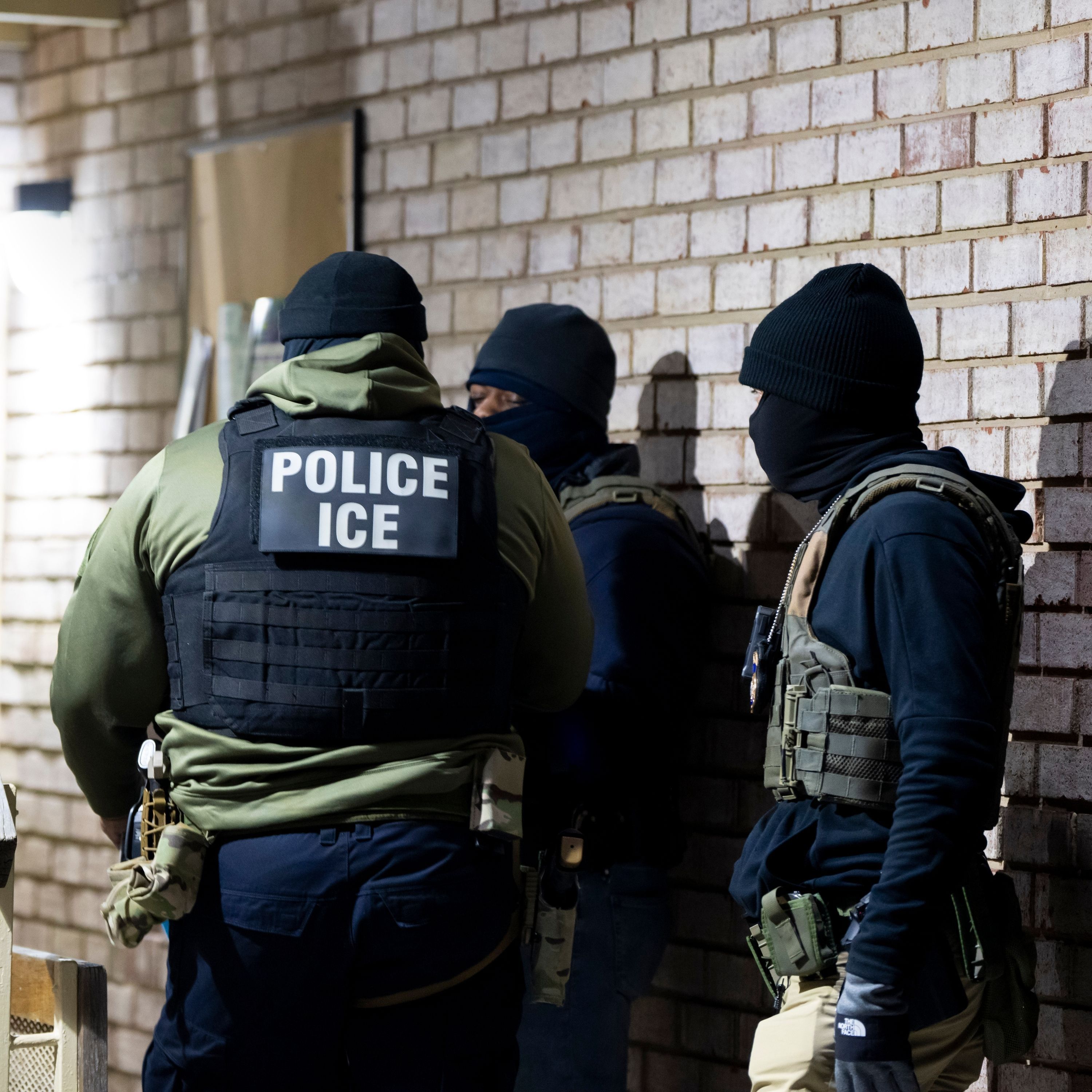
Sure. The drive towards body cameras is a key demand of Democrats in order to end the partial government shutdown. It also comes on the heels of major concerns over DHS immigration tactics. In January alone, two US Citizens were shot and killed by federal immigration agents in Minnesota. And we've all seen what feel like countless examples of DHS agents going rogue, captured by members of the public and with the seeming encouragement of the federal government. And honestly, that's why I'm not hopeful that body cameras will do very much to change the behavior of federal immigration officers. I mean, they're still masked. And really, it's not just about what DHS agents are doing. It's not just about DHS agents reportedly shooting into cars or using racial profiling or illegal chokeholds. The problem is that they are doing all of this knowing that there is a very solid chance that the Department of Homeland Security will lie on their behalf, describe an unarmed woman whose car was rammed by a Customs and Border Protection agent as a, quote, domestic terrorist, for example, or deem Alex Preddy, a legally permitted gun owner, filming immigration operations on a cell phone and shot 10 times by federal agents, as a quote, would be assassin. DHS agents are operating lawlessly and they seemingly have permission to do so. Radley Balco has been covering law enforcement misconduct for decades, and he wrote for the New York Times about how what federal immigration enforcement is doing feels very different. I spoke to Balco about what he's seeing and what worries him most. Radley, welcome to what a Day.
- [03:05]
Radley Balko
Thanks. Thanks for having me. It's good to be here.
- [03:08]
Jane Coston
You wrote that the Department of Homeland Security's response to the killing of Renee Goode in Minneapolis was something else entirely other than what we've seen from police before. And they aren't police. But how is this administration's response to the killings of both Good and Alex Preddy in Minnesota different from what you've seen before in your experience?
- [03:28]
Radley Balko
So normally when a police officer kills someone, the police agency will put out a statement or they'll have a press conference, or they'll give an interview with media and they'll say things like, you know, this is going to be thoroughly investigated. You can trust our internal affairs to investigate this. The local prosecutor maybe will promise an investigation. They'll promise to be impart. They'll promise to enforce the law, to enforce policy. And a lot of times they don't turn out that way. A lot of times it's not transparent enough. And a lot of times these investigations are predetermined to clear officers. But I think there is value in even merely paying lip service to the idea of impartiality and due process and justice, because that means that that police agency still knows that they need the public's trust and they still need the public to have some sort of faith in them. What we've seen after these police killings in Minneapolis is a government and government agencies that are doing what I would call performative lying. They are lying just for the sake of lying. The lies that they've told after these killings are wildly exaggerated. They're easily refuted by just a little bit of reading or watching of videos. They are prejudging these cases before they could possibly have enough evidence to make those kinds of determinations. And so what they're doing is they aren't lying to cover something up. They're lying to demonstrate to us that they can get away with whatever they want. And that is a whole different sort of mentality from a government agency that is a government agency that is flexing right in our faces and telling us, you know, we can do whatever we want.
- [05:13]
Jane Coston
You talk about how the administration has resurrected tactics that professional policing groups have said are dangerous and counterproductive. Can you talk about some of those tactics that federal immigration officers are using on the ground?
- [05:25]
Radley Balko
Sure. So the masking, I think, was the first one we've seen. And it's not that police never masked before. Now, I've written critically of police agencies, particularly during SWAT raids to serve drug warrants, where they would wear balaclavas and cover up their faces, which I think is a scare and intimidation tactic. I wrote about a case out of Detroit, this is probably about 15 years ago now, where a joint federal local task force conducted a series of drug raids around Detroit. And one of them raided the wrong house and terrorized these two women and roughed them up a little bit. But they were all masked, and the women, the officers, did not leave their names or badge numbers. The women knew they were dea, but they didn't know the specific officers. And so they filed a lawsuit and it bounced around the courts, and it finally got to the federal appeals court that includes Michigan, which I'm not going to know the number off the top of my head, but the court ruled two things. One, they ruled that the women's lawsuit could not go forward because they couldn't name the officers. And two, the court also said it wasn't going to force the DEA to turn over the names of the officers. And, you know, I found that decision really, really alarming because it seemed to me that it was an incentive for police to start masking themselves all the time, because then you can get away with whatever you want and no one can hold you accountable. The interesting thing is that isn't what happened, though. Police still didn't mask in this country. They didn't wear mask. And I think that's because we've had long had a norm in this country, a sort of democratic, voluntarily applied principle that free societies don't have secret police, that that's something we associate with authoritarian states. It's something we associate with fascist states, and we just don't do that here. And it's pretty alarming how quickly that norm went out the window. Speaking of windows, there's also shattering windows, which is not necessarily an unheard of police tactic, but it's generally used in very limited circumstances. So when someone presents an eminent threat to somebody else, or police have, say, a fugitive who they think might be dangerous, then, yes, maybe you shatter the window to get to them if they don't want to get out of the car. This idea of breaking windows as a routine police action to apprehend somebody who's guilty of a low level crime, or in the case of undocumented people, a civil violation is just unheard of. In fact, I interviewed the former head of Border Patrol under Biden, Charles Mangus, who's the former police chief in Tucson, and he said he was absolutely mortified by what he was seeing. So I think it's safe to say that these tactics, there's a reason why law enforcement, professional organizations have been so critical of them. Because they don't have any real purpose other than to scare the hell out of people. And that seems to be what the primary function of these surges and occupations of these cities is. It's to scare people. It's to terrify these communities.
- [08:23]
Jane Coston
We've talked about how they are intimidating American citizens and immigrants alike. Can you detail the ways in which immigration officials have actually been breaking the law? Cause you talk about that in your piece.
- [08:33]
Radley Balko
They are routinely stopping people and asking them to prove their citizenship on the spot. That's not allowed. That's a violation of the Constitution. They're specifically claiming that people who record them are domestic terrorists. That is false. That in itself is telling these officers that the people who are trying to hold them accountable by exercising their First Amendment right to record them are, are people that they can use violence against. If you're calling somebody a domestic terrorist and the person they're interacting with is the person they're allegedly committing that terror against, that agent is gonna see them as a threat. And so that's why we're seeing a lot of the violence we're seeing. I mean, multiple times we've seen them arrest someone for assaulting federal law enforcement officers, making the claim that the person assaulted them with their vehicles. And then we see from video or eyes, eyewitness accounts later that it was actually the federal agents who rammed the person with their vehicle and then dragged them out of the car and beat them and arrested them for assaulting them. I mean, this is an administration that has told them, flat out told them that they have absolute immunity from criminal liability. That's not true. I think you could make an argument that merely telling them that also should make these administration officials liable, but they can be charged criminally. This administration has just made it clear that they don't intend to do it. And they've been fighting local and state officials when they've even entertained the thought of doing it. They've threatened to arrest Gavin Newsom, J.B. pritzker, Walt Jacob Fry, Mary Moriarty, the DA in Hennepin County. I mean, they've all been served with subpoenas at this point. And one of the charges the administration has made against them is that by threatening to hold officers accountable when they break the law, they are impeding federal immigration.
- [10:23]
Jane Coston
You wrote in your piece that in DHS's view, quote, people are either criminal immigrants or radical leftists who deserve what happens to them, or they are heroic, patriotic federal cops incapable of mistakes. There is no humanity for the civilians and no humility for the officers. How is this impacting on the ground actions, this kind of rhetoric we're seeing?
- [10:44]
Radley Balko
Well, I mean, let's look at how someone finds themselves on the ground working for the federal government, doing immigration enforcement, right? Let's say you signed up in June because you saw these explicit appeals to white nationalism that DHS was making. So you signed up for ICE or Border Patrol. So now you're working for this agency, dhs, whose head, Kristi Noem, has explicitly said that you are immune from any possible prosecution. You're working for a president who has said that the people you're supposed to be apprehending poison the blood of the country, who said they're something less than human, who's also said that any citizens who try to hold you accountable are domestic terrorists, which means you should see them as a potential threat to your life. And then you've been told that you can never be held accountable if you go too far in what you're doing day to day. Is it any wonder why we're seeing the images that we're seeing, why we're seeing the videos we're seeing? I mean, that is an absolute recipe for violence and destruction and death. And we shouldn't be at all surprised. In fact, the only thing I'm really surprised about is that we haven't seen more people killed than we have already.
- [11:57]
Jane Coston
You ended your piece by writing that this isn't even really about law enforcement anymore. What is this conversation really about?
- [12:04]
Radley Balko
This is about authoritarianism. Donald Trump has, since even before he went into politics, he gave an infamous interview with Playboy, I think was in the 80s or maybe the early 90s, where he praised the Tiananmen Square crackdown. Right? I mean, this is somebody who has always admired force, always admired strong men. And this is a guy who wanted to invoke the Insurrection act during his first term, who wanted to shoot protesters in the legs. He's made it abundantly clear that what he wants is the kind of paramilitary force, the secret police muscle, the authoritarians and other countries he admires can use to just sort of drop in on Any, you know, protest his political enemies, you know, anybody he has deemed a threat to his power, he can drop them in and they can, you know, do his dirty work for him. You know, this was not widely commented on at the time, but the administration announced that Border Patrol was going to be overseeing the mass deportations, taking control away from ice. And I think that was really important because Border Patrol, their job is to apprehend people as they're crossing the border. These are people who are not U.S. citizens. And so they use much, much different tactics than ICE uses. You know, ICE is bound by or supposed to be anyway, policies that were written understanding that they would be working in the interior of the country and going after people who have, you know, been here for a while. Putting Border Patrol in is taking the most aggressive kind of violent immigration enforcement body and putting them in charge of immigration all over the country. And it was a signal that this administration wants to be as aggressive and violent as they can possibly get away with in enforcing these laws.
- [13:48]
Jane Coston
Radley, thank you so much for taking the time to join me.
- [13:52]
Radley Balko
My pleasure. Thanks for having me.
- [13:54]
Jane Coston
That was my conversation with Radley Balco, author of Rise of the Warrior, the Militarization of America's Police Forces. He and the criminal justice newsletter the Watch. We'll link to his New York Times piece in the show Notes. There's more news incoming, but if you're enjoying what you're hearing, subscribe, leave a 5 star review on Spotify and Apple podcasts. And hey, Watch us on YouTube. More to come after some ads. What a Day is brought to you by bookshop.org where you shop for Books Matters. When you purchase from bookshop.org, you're supporting more than 2,500 local independent bookstores across the country. Independent bookstores do more than sell books. They take care of and pour back into their communities, creating safe spaces that foster culture, curiosity and a love of reading. Right now I'm reading A Fever in the Heartland about the rise of the Ku Klux Klan in the 1920s and the woman who stopped them. And I got it from bookshop.org use code WAD to get 10% off your next order at bookshop.org water day is brought to you by Smalls. Cats don't care about politics or podcasts, but they do care about having the tastiest possible food. That's why cats love Smalls. For a limited time, get 60% off your first order, plus free shipping. When you head to smalls.com wad smalls Cat food is protein packed recipes made with preservative free ingredients you'd find in your fridge and it's delivered right to your door. That's why cats.com named Smalls their best overall cat food Starting with Smalls is easy. Just share info about your cat's diet, health and food preferences. Then Smalls puts together a personalized sampler for your cat. No more picking between random brands at the store. Smalls has the right food to satisfy any cat's cravings. After switching to smalls, 88% of cat owners reported overall health improvements. That's a big deal and the team at Smalls is so confident your cat will love their product that you can try it risk free. That means they will refund you if your cat won't eat their food. Make 2026 your cat's healthiest year yet. Take advantage of their New Year's special and get 60% off your first order plus free shipping when you head to smalls.com wad one last time. That's 60% off your first order plus Free shipping when you head to smalls dot com wad want to feel more.
- [16:09]
Rocket Money Advertiser
Confident with your finances this year? If you have 60 seconds, I can show you how quick and easy it is to start building healthy money habits that could last you the entire year just by using Rocket. Step 1 Download Rocket Money. Step 2 Link all your accounts and see your entire spending picture your subscriptions, your upcoming bills, your due dates, everything. Step 3 Tap a subscription you don't use and cancel it. Boom. That's money back every single month. Step 4 Create a financial goal for something you want to save for, whether it be a vacation, a retirement account, or a pet's birthday. We don't judge now. Let the app automatically move small amounts of cash towards your goal. In a month, you'll see real dollars piling up. In a year, you'll be shocked at how much money you saved, similar to the over 10 million members on the app that have saved up to $740 a year when using all of the app's premium features. Use the Savings Challenge as one step closer to feeling better about your finances. Today@rocketmoney.com Cancel that's RocketMoney.com Cancel one more time, it's RocketMoney.com Cancel.
- [17:15]
Jane Coston
Here's what else we're following. Today.
- [17:22]
Radley Balko
I need serious surgery that is not available in Gaza, but it can be performed abroad. I can get a prosthetic limb, get my life back and support my family.
- [17:32]
Jane Coston
Thousands of sick and injured Gazans in need of medical treatment like Mohammed Nasir are now able to enter Egypt after the Rafah crossing reopened on Monday. Nasir spoke with France 24 after a nearly two year closure. The reopening marks a small step in the Israel Hamas ceasefire. For now, very few people will be allowed to cross, but even the limited crossings offer hope to Gazans who fled the war of finally returning home. Still, local health officials report Israeli airstrikes in Gaza on Saturday killed at least 26 people, including children. Nobody likes hearing what lies in the newest tranche of Epstein files. That's particularly true if your name is former President Bill Clinton, but for a very different reason. The latest batch contained some not so PG exchanges between former President Bill Clinton's staff and the convicted sex offender. On Monday, the Clintons agreed to testify before the House Oversight Committee for its investigation into Epstein. This came just days before the committee was set to vote on holding both Bill and former Secretary of State Hillary Clinton in contempt of Congress. For months the Clintons have said they're not playing ball with a GOP led committee they call illegitimate and politically motivated. But then some Democrats on the House committee joined Republicans in recommending contempt and the Clintons changed their tune. That's when the Clintons lawyers said they would appear before the committee and asked that the House yank the contempt vote slated against them.
- [18:58]
Robert F. Kennedy Jr.
Today I'm announcing a comprehensive plan to strengthen prevention, expand treatment, all in accordance with the executive order President Trump signed last week to ignite the Great American recovery.
- [19:11]
Jane Coston
Health and Human Services Secretary Robert F. Kennedy Jr. Spoke Monday at an annual Prevention Day event for the Substance Abuse and Mental Health Services Administration. During his speech, RFK Jr. Announced an initiative devoted to addressing homelessness and substance abuse in eight unspecified cities. The program is called Streets Safety Through Recovery, Engagement and Evidence Based treatment and.
- [19:33]
Robert F. Kennedy Jr.
Supports Streets will invest $100 million in pilot programs in aid communities that are prepared to lead to solve long term homelessness issues, fight opioid addiction and improve public safety by expanding treatment that emphasize recovery and self sufficiency, RFK Jr said.
- [19:54]
Jane Coston
These communities will build care systems that help people move from crisis to to treatment, housing, jobs and stability. Given that RFK Jr suggested folks struggling with addiction be moved to quote, Wellness Farms to be quote reparented during the 2024 presidential campaign. Let's just say I have many more questions. RFK Jr also announced the $10 million assisted outpatient treatment Grant program to support adults with serious mental illness. The program's piggyback off President Trump's executive order last week aimed at prioritizing addiction treatment and recovery. And in positive immigration news for the second time, a federal judge has temporarily put the brakes on a new Department of Homeland Security rule that would force lawmakers to give a week's notice before visiting immigration detention facilities. Basically, dhs said, we're definitely not doing anything wrong, but also don't show up to check unannounced, you know, like a normal agency. Last year, 13 Democrats filed a lawsuit over DHS limits on congressional visits to those facilities. The ruling also follows an incident in Minneapolis in recent weeks where three lawmakers were turned away while trying to inspect conditions amid mass deportations. Colorado Democratic Representative Joe Negus said of the ruling, the court's decision today to grant a temporary restraining order against ICE's unlawful effort to obstruct congressional oversight is a victory for the American people. We will keep fighting to ensure the rule of law prevails. The judges pause lasts two weeks as she decides whether to shut the policy down for good. And that's the news. Before we go. In case you missed it, Crooked Media's newest book, Hated by All the Right People, Tucker Carlson and the Unraveling of the Conservative Mind is out now. In Hated by All the Right People, Jason Zengerly gives a fascinating, informative look at Tucker's political evolution and how his rise traces the rise of the MAGA movement. Here's a glowing review in the Washington Post from critic Becca Mordant. Insightful, vigorously reported, and yes, deliciously entertaining, hated by all the Right People is as much a work of media criticism as it is a professional biography of Carlson. And Zengerly chronicles how first television, then the Internet started to reward extremes, privileging provocation and punditry over somber fact finding. It's also featured in the New Yorker, in print and online, where Jason is now a staff writer. Get your copy and check out Jason's book signing tour dates now by heading to crooked.com books. That's all for today. If you like the show, make sure you subscribe, leave a review, enjoy six more weeks of icy weather and tell your friends to listen. And if you're into reading and not just about how Punxsutawney Phil emerged from his burrow in Pennsylvania on Monday and predicted that winter would go on for another six weeks. Like me, what a Day is also a nightly newsletter. Check it out and subscribe@cricket.com subscribe I'm Jane Kostin, and good news. Phil is only the 17th most accurate meteorological groundhog. The most accurate meteorological groundhog stuck Staten island chalk also predicted six more weeks of winter. Fascinating news. Did you know that there are more than 70 meteorological groundhogs? What a Day is a production of Crooked Media. It's recorded and mixed by Desmond Taylor. Our associate producers are Emily Foer and Chris Allport. Our producer is Kaitlyn Plummer. Our video editor is Joseph Tutra. Our video producer is Johanna Case. We had production help today from Ethan Oberman, Greg Walters and Matt Burke. Our senior producer is Erika Morrison and our senior vice president of news and politics is Adrienne Hill. Our theme music is by Kyle Murdoch and Jordan Kanter. We had help today from the Associated Press. Our production staff is proudly unionized with the Writers Guild of America East.
- [24:12]
Grainger Advertiser 1
If you're the purchasing manager at a manufacturing plant, you know having a trusted partner makes all the difference. That's why hands down, you count on Grainger for auto reordering. With on time restocks, your team will have the cut resistant gloves they need at the start of their shift and you can end your day knowing they've got safety well in hand. Call 1-800-GRAINGER Click grainger.com or just stop by Grainger for the ones who get it done.
- [24:42]
Grainger Advertiser 2
If you're an H vac technician and a call comes in, Grainger knows that you need a partner that helps you find the right product fast and hassle free. And you know that when the first problem of the day is a clanking blower motor, there's no need to break a sweat. With Grainger's easy to use website and product details, you're confident you'll soon have everything humming right along. Call 1-800-GRAINGER clickgrainger.com or just stop by Grainger for the ones who get it done.
- [25:12]
Cox Internet Advertiser
Quieres mejor Internet Cox Internet de tresintas megas tiene las velocidades rapidas y com fiable es que buscas perfecto para streaming y gaming y TRA bajar des de casa todo por solo cuar entico Dolores Almes con do gregas coffee mobile include yaquipo de wifi y guarantia deprecio de dos sanyos entu plan nues cambia te hoy a cox the Kira cops mobile gig unlimited guaranteed.