← What A Day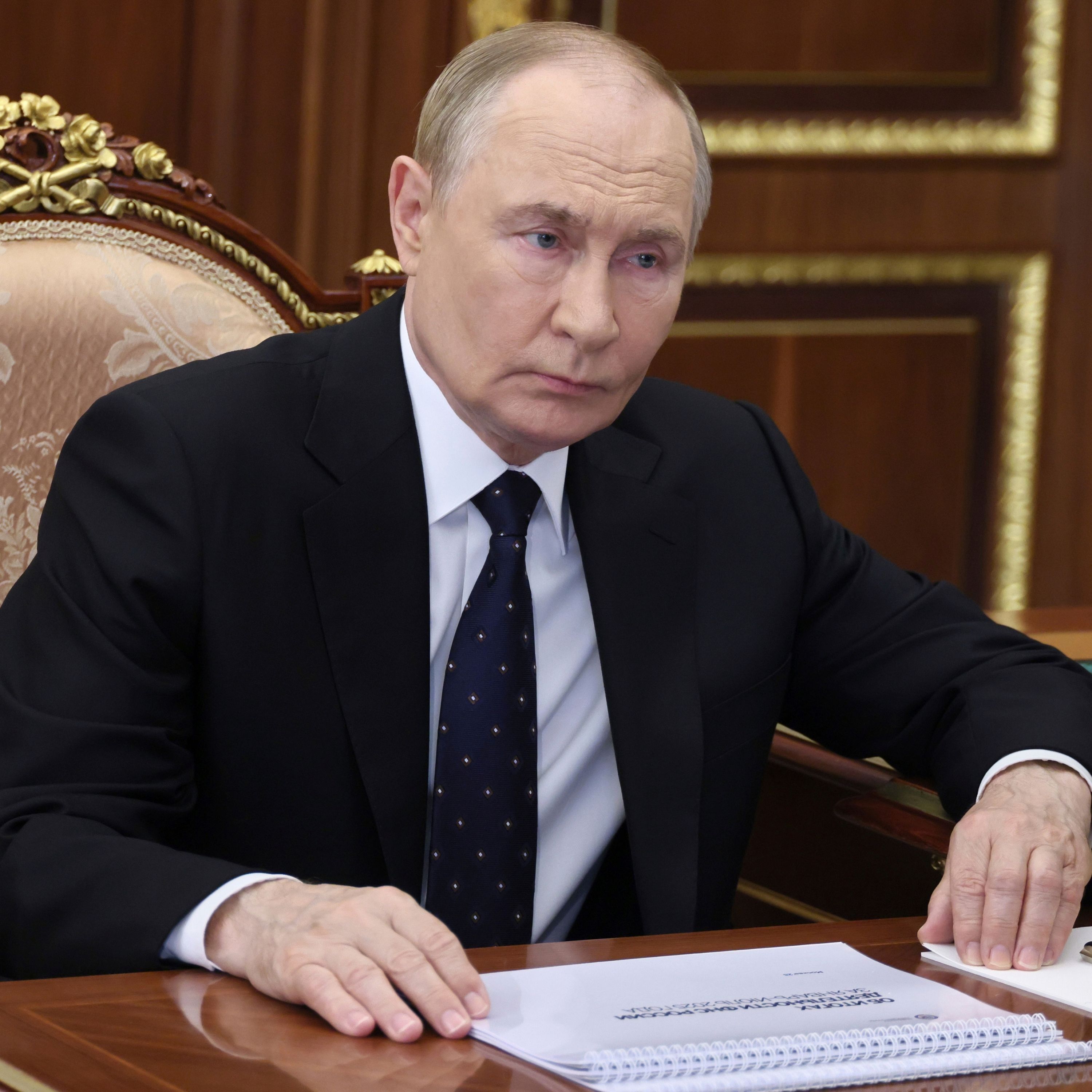
What A Day
Can Trump Broker Peace With Putin?
00:20:44
President Donald Trump is scheduled to meet with Russian President Vladimir Putin on Friday in Anchorage, Alaska, to discuss the future of the war in Ukraine (which Putin started). While Trump insisted Wednesday there would be “very severe consequences” if Putin doesn’t agree to some kind of ceasefire, the Russian president has given no indication he plans to give up his goal of eventually taking over all of Ukraine. And Ukraine continues to insist it will not cede any of its territory to Russia. In short: The war is still at a stalemate, and the president of the United States wants to move the needle by hosting the aggressor — an international pariah who faces an arrest warrant on war crimes from the Hague – right here on American soil. Julia Ioffe, a founding member of Puck News and a long-time Russian politics expert, joins us to talk about the Alaska summit and what could come out of it. And in headlines: Trump suggested he may extend federal control of the Washington D.C. Met...
Loading summary
Transcript44 lines
- [00:03]
Jane Coston
It's Thursday, August 14th. I'm Jane Coston, and this is what a Day. A show that is. Standing with the good people of India who are reacting with outrage to a government advisory stating that samosas, the delicious fried treat stuffed with spicy potato, might not be very good for your health. Stand tall, India. Stand with tasty, tasty samosas. On today's show, the chairman of the John F. Kennedy Kennedy center for the Performing Arts. I mean, President Donald Trump announces he's going to host this year's Kennedy center honors because ruining things is his favorite pastime. Also, musicals. And a federal appeals court panel clears the path for the Trump administration to terminate foreign aid spending. But let's start with the war in Ukraine. Trump is scheduled to meet with Russian President Vladimir Putin on Friday in Anchorage, Alaska. Ahead of his big meeting, he spoke with European leaders and Ukrainian President Volodymyr Zelensky Wednesday to come up with a collective game plan. Later that morning, during a press conference at the Kennedy Center, Trump reiterated his desire for Russia to agree to some kind of ceasefire. And he said if Putin didn't agree to end the war, there would be, quote, very severe consequences of some kind.
- [01:18]
Donald Trump
Will Russia face any consequences if Vladimir Putin does not agree to stop the war after your meeting on Friday?
- [01:26]
Press Secretary
Yes, they will.
- [01:27]
Jane Coston
Yeah.
- [01:27]
Donald Trump
What will? They will be consequent tariffs.
- [01:30]
Press Secretary
There will be, I don't have to say there will be very severe consequences.
- [01:34]
Jane Coston
Sure. As we've mentioned on the show, this is a high stakes meeting at every level. Russia continues to bombard Ukraine three years into the war. And Moscow is demanding more Ukrainian territory in exchange for peace, to which the Ukrainian government has said, no dice. In short, the Russia Ukraine war is still at a stalemate and our president is trying to figure out how to get them to agree by hosting Putin, the aggressor and an international pariah who faces an arrest warrant on war crimes from the Hague right here on US Soil. Fantastic. So to talk more about the Alaska summit, I spoke with Julia Ioffi. She's the co founder of Puck News and a longtime Russian politics expert. Julia, welcome back to Water Day.
- [02:17]
Julia Ioffi
Ah, thanks for having me, Jane.
- [02:19]
Jane Coston
So to start, can you lay out the stakes for this meeting between Putin and Trump?
- [02:24]
Julia Ioffi
Well, on one hand, the stakes are really high because this is the first meeting that Vladimir Putin will have with an American president since he launched the full scale invasion of Ukraine in February 2022, at which point the west united against him and put him into deep isolation. And this meeting could be the end of that isolation. And that's what a lot of people in Moscow are hoping. On the other hand, I have a feeling that not much of anything will come of this meeting at all.
- [03:05]
Jane Coston
So what do you look at as the point of this meeting, then?
- [03:10]
Julia Ioffi
Well, I think one of the problems is that the two presidents have two different goals for this meeting. President Trump wants this meeting so that he can finally say that he ended the war in Ukraine. He's been touting resolving these kind of smaller conflicts like Armenia and Azerbaijan, DRC In Rwanda. And he really wants the Nobel Peace Prize to mix metaphors. He wants the feather in his cap. He wants the points on the board. He just wants this deal done. The Russian leader, on the other hand, wants a way out of the isolation. He wants to be back at the table with the big boys at the west, and not just on his terms, but to be recognized as the victor and a kind of like, you know, vladimir, we're so sorry. You were right all along.
- [04:12]
Jane Coston
How is this meeting being portrayed in Russia and by Russian media? Because Russian media has had this weird relationship with Trump for a long time, a relationship that has been shifting over the last couple of months as Trump has become more outwardly opposed to Putin. So what. What have people been saying in Moscow?
- [04:32]
Julia Ioffi
So, first of all, they are noting, correctly, that Trump wants this more than Putin does, that Trump needs this meeting, wants this meeting so badly, whereas Putin doesn't necessarily need it. He's winning on the battlefield as far as they see it, but will go if Trump really wants it. Right. Which is already kind of posturing from a position of strength. Like, they basically see it as the west coming back and groveling.
- [05:01]
Jane Coston
I'm curious as to how that conflicts or doesn't conflict with the Russian experience of the war, because so many Russians have died in this conflict. You know, there's the metaphorical meat grinder. So you have, on the one hand, this idea that the west should come to Russia and grovel, but also, so many people have died in this war. Does that conflict? Is it confusing for people? You are shaking your head.
- [05:26]
Julia Ioffi
I'm shaking my head because it doesn't conflict. If anything, one reinforces the other. The fact that Russians don't really care about the lives and the people they throw into the meat grinder, which is, at this point, not really metaphorical. It's quite literal. And, like, that is a point of pride for them. And that is seen as a strength that, you know, you effete, cowardly, soft Westerners have these grand aims, but you will never sacrifice. You are not ready to sacrifice to actually achieve them. Whereas we will. We will out suffer you, we will out die you, and we will get what we want in the end and still be the most powerful country in the world that you'll fear because we are just so ruthless and so unafraid of death.
- [06:23]
Jane Coston
Trump seems so committed to the idea of a land swap between Russia and Ukraine. Putting aside that Ukraine doesn't really have that much land to swap in exchange for their own. What would the trickle down effects be of the president unilaterally sidelining Ukraine and handing over a swath of the country's land to Putin?
- [06:41]
Julia Ioffi
Well, I don't think it'll actually happen is. I think what I keep coming back to, I think what's going to happen is more of the same, that they'll have a crazy meeting, some crazy details will come out of it, Putin will keep fighting in Ukraine. I mean, the Russians are also making no secret of the fact that they don't intend to end this war at this conference, at this meeting in Anchorage, that they might agree to a ceasefire for maybe a few weeks or a few months, but that won't be the end of the war. They're very clear about that, that they won't stop until all of Ukraine is theirs. So I think all this will do is postpone what Trump doesn't want to do anyway, which is impose a penalty on Russia for not giving him this win.
- [07:35]
Jane Coston
To your point, Trump said Wednesday Russia will face, quote, severe consequences if Putin doesn't agree to stop the war after Friday's summit. He didn't elaborate, but realistically, what options does the Trump administration have to actually hurt Russia? Like, we don't do that much trade with Russia anyway. What do we have?
- [07:56]
Julia Ioffi
That's kind of the problem with sanctions when you're no longer the only game in town. And the more that Trump sees that territory and says, you know, we need to turn inwards more, the less things like sanctions, which were not super effective when we were the only game in town, the less effective they become because Russia can turn to China, to India. Trump slapped sanctions on India for buying Russian oil, but India is not going to do that. If anything, it's just driving India further into the arms of the Chinese. I think what the sanctions do is they just make things harder and slow things down because the Russian economy isn't doing great. Like, inflation's out of control, interest rates are above 20%, and despite all the money that the Kremlin is spending on this war, the economy is only growing at like 1.4, 1.8%. But look, Trump gave Putin a meeting, a bilateral meeting on US Soil. Putin didn't even have to promise anything, and that's already a big win. So even if he slaps sanctions on him later, he already got a big win from this.
- [09:14]
Jane Coston
Now, I don't mean to tell you how you're feeling, but you seem a little skeptical of this whole meeting and its potential to change anything. Yeah. And I think, you know, critics have warned that this meeting has the potential to turn into a 1938 Munich moment. You know, that's a reference to the Munich Agreement, one of the stupider moments in foreign policy in which the British and the French essentially just agreed to hand over the rump of Czechoslovakia to the Nazis to stop a wider war, which didn't work. Before we leave, I wonder if you could reflect on the parallels you see to that historic error on the part of Western leaders in the buildup to World War II and what's happening now with someone who all Trump wants is to come out with a deal that does something, even if it doesn't do anything at all.
- [09:59]
Julia Ioffi
Right. And it's funny that you mentioned Munich, because I was watching Russian propaganda TV and they were talking about the Molotov Ribbentrop Pact.
- [10:07]
Jane Coston
Oh, you mean the pact that the Nazis broke and then invaded the Soviet Union and here we are.
- [10:12]
Julia Ioffi
Yeah, right. It was all these short term deals with a fundamentally bad actor who wasn't going to stop. And Trump is kind of the king of short term thinking. Right. He wants to juice the American economy by lowering interest rates. And if that fucks things up down the road, then whatever. But at least, at least you'll get this short term boost and everyone will love him and we'll get there when we get there. In some ways, Putin is like that as well. Yes, he wants to seize all of Ukraine, but then in the short term, he just knows that he has to get through this day or this month or this year, and then something else will shake out and he'll figure it out. He just has to outlast other people and something, some kind of force majeure, will happen and get him through to the next, the next level of this game. And I think that's what you're seeing here. Right. In the spring of 2022, it looked like he had made a terrible error and his government and economy were going to collapse. They didn't. Then it looked like in the fall of 22, that they were going to lose all this territory and they were on the verge of losing the war and he just held on a little longer. And now look, he is the President of the United States is inviting him for a bilateral one on one meeting, not just on US Soil, but on US Soil that was once Russian soil, which again, Russian media has not tired of pointing out.
- [11:40]
Jane Coston
Julia, as always, thank you so much for joining me.
- [11:44]
Julia Ioffi
My pleasure. Thanks for having me, Jane.
- [11:46]
Jane Coston
That was my conversation with Julia Iafi, a founding member of the online news site Puck News and a longtime Russian politics expert. And hey, Julia has a new book coming out. It's called A Feminist History of Modern Russia From Revolution to Autocracy. We'll link to it in our show Notes. We'll get to more than it is in a moment, but if you like the show, make sure to subscribe. Leave a five star review on Apple Podcasts, watch us on YouTube and share with your friends. More to come after some Ads this is an ad for BetterHelp. These days, it feels like there's advice for everything. Cold plunges, gratitude journals, screen detoxes. But how do you know what actually works for you? With the Internet and information overload about mental health and wellness, it can be a struggle to know what's true and what actions to take. These days. Using trusted resources and talking to live therapists can get you personalized recommendations and help you break through the noise. With over 30,000 therapists, BetterHelp is the world's largest online therapy platform, having served over 5 million people globally. And it works with an average rating of 4.9 out of 5 for a live session based on over 1.7 million client reviews. It's convenient too. You can join a session with a therapist at the click of a button, helping you fit therapy into your busy life. Plus switch therapists at any time. As the largest online therapy provider in the world, BetterHelp can provide access to mental health professionals with a diverse variety of expertise. Talk it out with better help our listeners get 10% off their first month with betterhelp.com wad that's better. H E L p.com wad.
- [13:30]
Donald Trump
Hi, I'm Dalvik Quince. One way to help manage type 2 diabetes is to regularly exercise. My exercise program can help get you into a routine that works for you. Keep in mind, managing blood sugar also takes the right diet. Hi, I'm celebrity chef Franklin Becker. Ever since I was diagnosed with type 2 diabetes, I've adapted my cooking style without sacrificing flavor. If you want to learn more tips about diet and exercise, visit mytype2transformation.com.
- [14:01]
Franklin Becker
Whenever I need to send roses that are guaranteed to make someone's day, the only place I trust is 1-800-flowers.com with 1-800-flowers. My friends and family always receive stunning, high quality bouquets that they absolutely love. Right now, when you buy a dozen multicolored roses, 1-800-flowers will double your bouquet to two dozen roses. To claim this special double roses offer, go to 1-800-flowers.com Pandora that's 1-800-flowers.Com Pandora.
- [14:32]
Jane Coston
Here'S what else we're following today. Head of lines.
- [14:38]
Press Secretary
We'Re going to be asking for extensions on that long term extensions because you can't have 30 days. 30 days is that's by the time you do it. Are we going to have this in good shape?
- [14:49]
Jane Coston
It's only been a few days since President Trump put the Washington, D.C. metropolitan Police Department under federal control, and already he's floating the idea of extending his reign. The president's remarks came at a press conference during a visit at the Kennedy Center Wednesday. In order to put DC's police under federal control, Trump had to invoke something called the city's Home Rule Act. That's why he can do it in the nation's capital but not other US Cities. However, if he wants to extend that control to combat record low crime beyond 30 days, he'll need a joint resolution from Congress, at least that's what the law says. Trump said he's in talks with congressional Republicans about passing an extension, but also suggested he won't be bothered by the fine print of laws.
- [15:32]
Press Secretary
Well, if it's a national emergency, we can do it without Congress, but we expect to be to Congress before Congress very quickly. And again, we think the Democrats will not do anything to stop crime, but we think the Republicans will do it almost unanimously.
- [15:46]
Jane Coston
Trump said he doesn't want to call a national emergency in D.C. but said, if I have to, I will, because of course he will. He loves national emergencies. Trump has also called in hundreds of National Guard troops to the city, on top of federalizing the police force. The White House says federal officers will be out on the streets around the clock. A divided panel of appeals court judges Wednesday opened the door for the Trump administration to suspend or terminate billions of dollars of congressionally appropriated funding for foreign aid, as in money that has already been budgeted. The money included nearly $4 billion for the U.S. agency for International Development to spend on global health programs and more than $6 billion for HIV and AIDS programs. But I guess saving lives isn't in line with President Trump's policy goals. Let's recall in January, on day one of the return to this hell called the 47th presidency, Trump issued an executive order to pause foreign aid spending. Groups of grant recipients sued to challenge that directive. A judge then ordered the administration to release foreign assistance Congress had appropriated for the 2024 budget year. The appeals court's majority Wednesday partially vacated that order. Attorney General Pam Bondi said in a Twitter post, the victory means Trump won't have to, quote, spend hard earned taxpayer dollars on wasteful foreign aid projects. You know, like saving babies from death.
- [17:13]
Press Secretary
I've been asked to host. I said, I'm the President of the United States. Are you fools asking me to do that? Sir, you'll get much higher ratings. I said, I don't care. I'm president of the United States. I won't do it. They said, please. And then Susie Wiles said to me, sir, I'd like you to host. I said, okay, Susie, I'll do it.
- [17:34]
Jane Coston
I don't think that's what Susie Wiles sounds like. In yet another unprecedented move, President and Kennedy center for the Performing Arts chairman, remember how he did that? Earlier this year, Trump announced that he'll host the Kennedy center honors and present awards because his chief of staff told him to. Trump made his hosting gig announcement on Wednesday along with a list of honorees, something that is typically reserved for a press release. But nothing is too flashy for this made for tv. President Trump will present his virtually hand picked awards to actor Sylvester Stallone, rock band Kiss, singer Gloria Gaynor, country music star George Strait and actor singer Michael Crawford.
- [18:12]
Press Secretary
I wanted one. I was never able to get one this year. It's true, actually. I would have taken it if they would have called me. I waited and waited and waited and I said, the hell with it. I'll become chairman and I'll give myself an honor. Maybe I'm going to honor next year. We'll honor Trump, okay?
- [18:29]
Jane Coston
The ways Trump continues to desecrate the Kennedy center will never cease to amaze and horrify. And finally, fewer Americans are reporting that they drink alcohol and those who do drink are drinking less. That's according to a Gallup poll released Wednesday. One reason is the growing belief that even moderate alcohol consumption is a health risk. The survey was conducted in July and finds that 54% of U.S. adults say they drink alcohol. That's the lowest in Gallup's nearly 90 year run. Nearly 90 years, a record high. 53% of adults say moderate drinking is bad for their health. That's up from 28% in 2018. And it's mostly young adults who are driving up those concerns, though older adults appear to be coming around to the same conclusions. We've all heard that a glass of red wine with dinner is good for your heart. But in recent years, health professionals have pointed to overwhelming evidence that alcohol can result in negative health outcomes and is a leading cause of cancer. And that's the news. Before we go, in case you missed it, the crooked store's big summer sale is here and everything is 20% off. So if you want a new friend of the pod tee or the redesigned Call Congress merch, it's all on sale for a limited time. Merch is a great way to show you support the pod without having to buy a meme coin or a golden phone with our faces etched on it. And right now, it's all on sale. Today is the last day. Shop 20% off everything now@cricut.com store. That's all for today. If you like the show, make sure you subscribe, leave a review, contemplate how we now face a new rabbits with horns and tell your friends to listen. And if you're into reading and not just about how cottontail rabbits with quote horn like growths on their heads are showing up in Colorado as the rain result of a skin virus like Me. What a Day is also a nightly newsletter. Check it out and subscribe@cricut.com subscribe I'm Jane Coastin and according to experts, the growths pose no risk to the rabbits, but a lot of risks to people who see a rabbit with horns and run away in tear. Because yeah, what a Day is a production of Crooked Me Media. It's recorded and mixed by Desmond Taylor. Our associate producer is Emily Foer. Our producer is Michelle Aloy. Our video editor is Joseph Dutra. Our video producer is Johanna Case. We had production help today from Greg Walters, Matt Berg, Gina Pollack and Laura Newcomb. Our senior producer is Erica Morrison and our senior vice president of news and politics is Adrienne Hill. We had help with the headlines from the Associated Press. Our theme music is by Colin Gilliard and Kashaka. Our production staff is proudly unionized with the Writers Guild of America East.
- [21:50]
Press Secretary
Did my card go through? Oh, no.
- [21:52]
Dalvik Quince
Your small business depends on its Internet. So switch to Verizon business and you could get LTE business Internet starting at $39 a month when paired with select business mobile plans. That's unlimited data for unlimited business.
- [22:05]
Julia Ioffi
There we go.
- [22:05]
Dalvik Quince
Get the Internet you need at the price you want. Verizon Business Starting Price for LTE Business Internet 25 Mbps Unlimited Data Plan with select Verizon Business Smartphone plan Savings terms apply Sometimes an identity threat is a ring of professional hackers, and sometimes it's an overworked accountant who forgot to encrypt their connection while sending bank details.
- [22:27]
Jane Coston
I need a coffee.
- [22:28]
Dalvik Quince
And you need Lifelock. Because your info is in endless places, it only takes one mistake to expose you to identity theft. Lifelock monitors hundreds of millions of data points a second. If your identity is stolen, we'll fix it, guaranteed, or your money back. Save up to 40% your first year@lifelock.com specialoffer terms apply.