← What A Day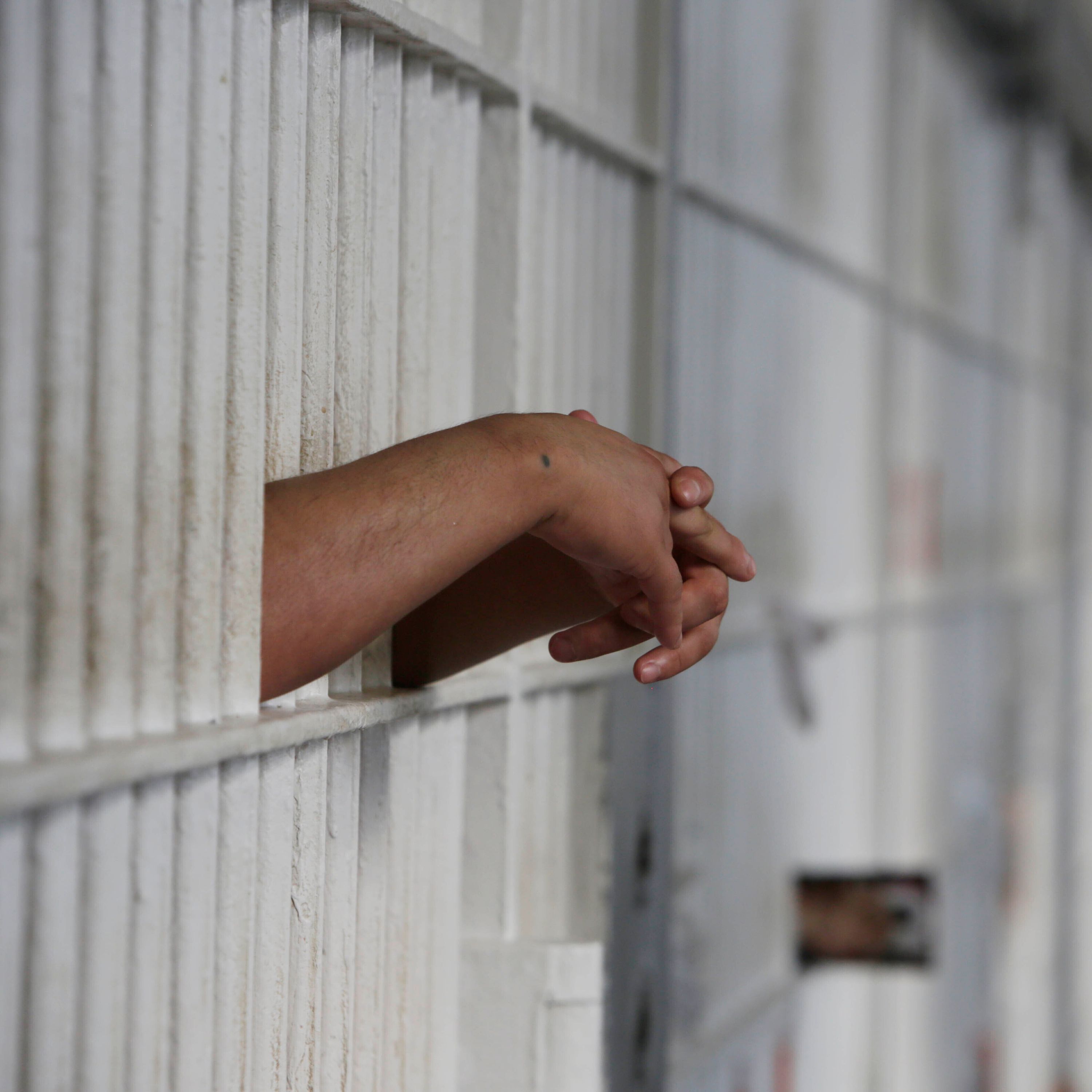
What A Day
Cash Bail Keeps People In Jail
00:24:07
This week, President Donald Trump signed an executive order aimed at ending cash bail in Washington D.C. and other jurisdictions around the country. He summarized the largely successful criminal justice reform policy like this: "They kill people and they get out." Well, it may come as a surprise (to no one) that this statement is… not accurate. All it means is that a person's release, before they stand trial, is NOT determined by how much money is in their wallet. But despite the data showing the policy works, Trump and his MAGA buddies want to end it. To gain a better understanding of all this, we spoke with Rena Karefa-Johnson, Vice President of National Initiatives at FWD.U.S.
Loading summary
Transcript42 lines
- [00:00]
Josie Duffy Rice
Foreign It's Friday, August 29th. I'm Josie Duffy Rice in for Jane Coston. And this is what a Day. The show listening to the new John Baptiste song Petrichor, which he described as a climate change warning, set to a dance beat appropriate given that it is the 20th anniversary of Hurricane Katrina. On today's show, the Centers for Disease Control and Prevention has a major staffing shakeup, and the Air Force offers military funeral Honors for a 1-6-Rioter 4 and a half years after she was killed by an officer at the insurrection. But let's start with cash bail. This week, Trump signed an executive order aimed at ending cash bail in Washington, D.C. and other jurisdictions around the country. The order instructs his administration to withhold federal funds from the District unless they change their bail policy, which eliminates cash bail in most cases and has been in effect for over 30 years. He also ordered Attorney General Pam Bondi to provide a list of states and localities that have ended cash bail for certain crimes and instructed agencies to identify the federal grants and contracts and funds that could be withheld from those jurisdictions unless they bring back cash bail. Here's what Trump, as well spoken as ever, had to say about the executive order.
- [01:20]
Donald Trump
One of the executive orders has to do with cashless bail. That was when the big crime in this country started, and I can tell you who did it when, but I don't want to do that because others followed pretty quickly. But that was when it happened. Somebody kills somebody, they go in, don't worry about it, no cash, come back in a couple of months, we'll give you a trial, you never see the person again. And I mean, they kill people and they get out.
- [01:47]
Josie Duffy Rice
As you may not be surprised to hear, this is not accurate. Eliminating cash bail does not mean that people accused of serious crimes like murder can't be detained before trial. All it means is that their release will not be determined by how much money is in their wallet. Because in a cash bail system, people who can pay bail are released and people who can't are stuck in jail. And over the past 10 years, an increasing number of jurisdictions have eliminated cash bail entirely. But although bail reform has been largely successful, Trump and his conservative buddies want to end it. And this is just the latest in Trump's criminal justice related executive order spree. It's yet another concerning example of him expanding federal power and bending local and state law to his will. And it may result in the reversal of strong evidence based policy reform at a time when crime in many places is at historic lows so, for more on bail reform and Trump's executive order, I spoke to Rena Kharifa Johnson. She is the vice president of national initiatives at Fora Us, an organization working on immigration and criminal justice reform. Rena, welcome to what a day.
- [02:55]
Rena Kharifa Johnson
Thank you. I'm so happy to be here.
- [02:58]
Josie Duffy Rice
So, as we said earlier, Trump's executive order on Monday threatened to withhold federal funding from D.C. if the city does not bring back cash bail. So you are an expert on criminal justice policy. Can you just explain, kind of on a big picture level, how cash bail works and why there's been a shift away from it over the last few years?
- [03:19]
Rena Kharifa Johnson
Yeah, that's a great question. Basically, when you get arrested or accused of a crime, for the most part, you go in front of a judge pretty shortly after, and the judge has three options. The judge can be like, go home, come to your next court date at this time. Another thing a judge can do is say, can you give us this amount of money, cash bail, to ensure that you come back to court? That's what cash bail was supposed to be about at its core. Right. It was about collateral to ensure people came back to court. Your bail is set at X. That's what cash bail is. The other option is a judge can detain you with no bail. So just say, you know what, you actually have to be in jail while we're waiting your trial. And those are the three options of what can happen.
- [04:00]
Josie Duffy Rice
Right. And why do you think we've seen such a shift away from cash bail over the past, I would say, 10 years? Right. It's been kind of a inflection point in the criminal justice reform movement.
- [04:12]
Rena Kharifa Johnson
I think over the last kind of 30 years, we saw this leaning into kind of this idea of toughness. So harsher policies, harsher sentences, and like I said, a distortion of this idea of bail as something that's supposed to be collateral to make sure you come back to court to something that's just another mechanism to keep more people in jail? So there was a response to that because of the extraordinary amount of harm, harm that those policies were wreaking in communities and cities. We had a situation on the tight where half a million people any given day were kind of languishing in jail having not been convicted of a crime. And what that meant for people is they got arrested for any range of things, protesting, shoplifting, jumping the turnstile. And because they weren't able to pay the amount of cash bail that was set on their case, their entire life was upended. They were incarcerated. And Subject to the enormous violence of incarceration, they lose their jobs. Because of course, if you can't show up to your job, you won't keep your job. They lose their housing. For many people, their children get taken away from them. Because if you get arrested and your kid come home to school, no one's there, then you have a child welfare system case and can lose rights of your children. So basically we had this system that says you're innocent until you're presumed guilty. But in practice, what we had was a system where white and rich people were afforded that kind of constitutional presumption. And poor folks, black folks, brown folks, immigrant folks, were basically having their lives ravaged before one thing had been proved against them. A big kind of story that folks in this audience or anywhere might remember is Cleef Browder's story, who was a 16 year old kid who was arrested on allegations of stealing a backpack, had $3,000 bail set on his case, was not able to make that bail, was on Rikers is for three years and endured so much hor horrific trauma and violence that he ultimately took his own life. After he was released and his case was dismissed entirely, he was found not guilty. So stories like Kali Friedler and the organizing of communities created a larger consensus that criminalizing poverty isn't cool, it's not fair. Let's switch our policies so that that's not how we're deciding who gets to be free and who doesn't.
- [06:29]
Josie Duffy Rice
Yeah, I mean, something that you brought up is this idea of where we draw the line. Basically. You know, poor people kind of get one system and people with resources get another. And when we hear Trump and kind of his, his little MAGA friends talk about this, they kind of keep framing it like we're just letting people walk right out. They've committed violent crimes, These are criminals, they're endangering us. So can you talk a little bit about what you would say in response to these comments? Because they kind of do seem to work on people. I mean, people believe this narrative on some level.
- [07:05]
Rena Kharifa Johnson
I mean, like, first and foremost, I would say shut up. But no, in all seriousness, I think what we're struggling with in this moment is an era where people are hearing things that are factually inaccurate, but they've heard it over and over and over again. And it's kind of hard to combat this strategically created narrative that serves Republicans with the data. You know, there was a big study recently that just looked at 33 cities, 22 which had bail reform, 11 that didn't and did A very comprehensive analysis on whether or not bail reform and letting folks out more pretrial increased crime definitively found it did not increase crime. There's also been studies that have looked to see whether or not states that have pushed the legislation to free more people pretrial and let them fight their cases at home impacted how many people showed up to court. It did not. So this idea that kind of being tough in this regard makes us safer or brings crime down or brings violence down is just not true. It's not accurate. And I think that that makes sense, because I think if we thought that, like, toughness and police and incarceration were the things that made us safer, than we should unequivocally be the safest country in the world. And we're not. We know that, like, addressing some of the root causes of these problems decreases crime. And I. We're almost in a. A political setting where I don't even want to say that because I see the people rolling their eyes. But it's just like, I don't know what to tell you. It's true. Like, Medicaid expansion gave people access to behavioral health care that reduced felony arrest from 20 to 32%. Access to SNAP reduced folks recidivating, so being rearrested after they came home from prison significantly, like getting people what they need. Those are the most successful programs.
- [09:04]
Josie Duffy Rice
Yeah.
- [09:05]
Rena Kharifa Johnson
Money. Those are the most successful crime reduction strategies that we've seen in this country.
- [09:12]
Josie Duffy Rice
Right.
- [09:12]
Rena Kharifa Johnson
But because what we're actually talking about isn't safety, we can have this conversation about tough and soft on crime and eschew the conversation entirely about the solutions that work.
- [09:24]
Josie Duffy Rice
Right. So, Reno, you were part of the effort that led to New York abolishing cash bail a few years ago. And now Trump is kind of making all these threats that he's going to try to enact these same policies that he's doing in D.C. and other places. And so is there a world in which he could override the policies in other places about cash bail?
- [09:50]
Rena Kharifa Johnson
Yeah.
- [09:51]
Josie Duffy Rice
What kind of power does he actually have?
- [09:53]
Rena Kharifa Johnson
I mean, I think when it comes to this administration, it's slightly less instructive of a question of, like, what can or can't he do? And I think more productive to ask, like, how much are local leaders willing to resist kind of threats and intimidation? So I think it will be up to governors to stand by the legislation and say, you know, despite the threats, we're not going to change those things, especially given so much of our criminal legal system happens on a state level. Very Very little of it happens on a federal level. So it would be a massively consequential shift to start staking all of our state level policies based on what the President thinks folks should or shouldn't do. And it would have extraordinary impacts on the number of people who are incarcerated pretrial.
- [10:54]
Josie Duffy Rice
So obviously both of our work focuses on criminal justice and there has been a real bipartisan push for harsh and frankly, stupid criminal justice policy over the years. And a lot of it has only exacerbated the incarceration crisis that we face while also, again, not really addressing crime. So how do you think that Democrats should be responding right now? And what do you think they should be doing differently?
- [11:19]
Rena Kharifa Johnson
Oh my gosh, everything.
- [11:22]
Josie Duffy Rice
How much time do we have?
- [11:27]
Rena Kharifa Johnson
That's such an excellent question. And what I would encourage Democrats to do is like not take the bait. The crime conversation is a trap. If you're in a tough on crime, soft on crime paradigm, I understand why that's extremely hard to get out of politically. That being said, I think that the reason why why the conversation is on those terms is because Democrats historically have been better at the actual solutions that make people safe. Americans will get down with this crime conversation, but like actually what they care about is safety. Actually what they care about is living in a city and a community where people have access to housing, where people have access to mental health care, where people are not struggling on the streets. That's kind of what folks want. And I think redirecting the conversation to the solutions that we talked about that definitively, like quickly and in ways that are much cheaper than incarceration and police make people safer is where this conversation should be. The crime conversation is trash. It's like, it's just vibes. It's not database, it's not fact based. It's not actually something that you can win with. Don't walk into kind of the trap about crime, which in my opinion is literally just being used as a pretext to erode all of our civil rights and erode due process protections and just make it easier to lock all of us up with less process and for longer.
- [12:58]
Josie Duffy Rice
Thank you so much, Rina for joining us.
- [13:01]
Rena Kharifa Johnson
Thank you.
- [13:02]
Josie Duffy Rice
That was my conversation with Rena Kharifa Johnson, Vice President of National Initiatives at Ford us. We'll get to more of the news in a moment, but if you like the show, make sure to subscribe, leave a five star review on Apple Podcasts, watch us on YouTube and share with your friends. More to come after some ads.
- [13:31]
Zebiotics Ad Narrator
What a day is brought to you by Zebiotics Pre Alcohol let's face it, after a night with drinks, I don't bounce back the next day like I used to. I have to make a choice. I can either have a great night or a great next day. That is, until I found Pre Alcohol Zebiotics Pre Alcohol Probiotic Drink is the world's first genetically engineered probiotic. It was invented by PhD scientists to tackle rough mornings after drinking. Here's how it when you drink, alcohol gets converted into a toxic byproduct in the gut. It's a buildup of this byproduct, not dehydration, that's to blame for rough days after drinking. Pre alcohol produces an enzyme to break this byproduct down. Just remember to make pre alcohol your first drink of the night. Drink responsibly and you'll feel your best tomorrow. Every time I have pre alcohol before I have drinks, I do notice a difference the next day. Even after a night out, I can confidently plan on getting in my workout without worry. The final days of summer are here for you to enjoy. Whether you're heading to the beach, camping in the woods, or squeezing in one last vacation road trip, don't forget to bring Zbiotics Pre Alcohol Probiotic Drink. Drink a pre alcohol before drinking and enjoy every day of summer to the fullest. Go to zebiotics.com wad to learn more and get 15% off your first order when you use code WAD at checkout. Zebiotics is backed with a 100% money back guarantee, so if you're unsatisfied for any reason, they'll refund your money, no questions asked. Remember to head to zebiotics.com wad and use the code WAD at checkout for 15% off.
- [14:57]
Andy Richter
Hi there, it's Andy Richter and I'm here to tell you about my podcast, the three Questions with Andy Richter. Each week I invite friends, comedians, actors and musicians to discuss these three where do you come from, where are you going, and what have you learned? New episodes are out every Tuesday with guests like Julie Bow and Ted Danson, Tig Notaro, Will Arnett, Phoebe Bridgers, and more. You can also tune in for my weekly Andy Richter Call in show episodes and where me and a special guest invite callers to weigh in on topics like dating, disasters, bad teachers, and lots more. Listen to the three Questions with Andy Richter wherever you get your podcasts.
- [15:38]
OnDeck Ad Narrator
Cash Flow Crunch on Deck's Small Business line of credit gives your business immediate access to funds up to $100,000 right when you need it. Cover seasonal dips, manage payroll, restock inventory or tackle unexpected expenses without missing a beat. With flexible draws, transparent pricing and control over repay get funded quickly and confidently. Apply today@ondeck.com funds could be available as soon as tomorrow. Depending on certain loan attributes. Your business loan may be issued by Ondeck or Celtic Bank. Ondeck does not lend in North Dakota. All loans and amounts subject to lender approval.
- [16:10]
Josie Duffy Rice
Here's what else we're following today. Header Lines.
- [16:17]
Vice President J.D. Vance
This happens too much in our country. And if you look, we really do have, I think, a mental health crisis in the United States of America. We take way more psychiatric medication than any other nation on earth, and I think it's time for us to start asking some very hard questions about the root causes of this violence.
- [16:34]
Josie Duffy Rice
This is Vice President J.D. vance weighing in on the why behind Wednesday's mass shooting at a school in Minneapolis. Blaming the mental health crisis and ignoring actual guns is a well worn tactic of Vance's. During the vice presidential debate, he said that a big factor in American gun violence is, quote, mental health, substance abuse, which is not a thing. Those words don't go together. He also suggested building, quote, stronger doors at schools, ones that, quote, lock better. Two students were killed and more than a dozen were injured at Annunciation Catholic Church, where students of the parish school attended Mass. The shooter was identified yesterday as an Annunciation alum. Their motive isn't totally clear, but authorities are examining a trove of writings and online videos that they left behind. Minneapolis Mayor Jacob Fry spoke to Good Morning America on Thursday, where he shared a different perspective from the vice president's people who say that this is not about guns. You gotta be kidding me.
- [17:36]
Vice President J.D. Vance
This is about guns.
- [17:40]
White House Press Secretary Caroline Levitt
The secretary asked her to resign. She said she would and then she said she wouldn't. So the president fired her, which he has every right to do. It was President Trump who was overwhelmingly reelected on November 5th. This woman has never received a vote in her life, and the president has the authority to fire those who are not aligned with his mission.
- [17:58]
Josie Duffy Rice
On Thursday, White House Press Secretary Caroline Levitt said that Trump had fired center for Disease Control and Prevention Director Susan Minarez after less than a month on the job. Classic Trump. Old school Trump. Four other senior CDC officials resigned in response to her departure. Manera's had refused to resign this week amid pressure to change the CDC's vaccine policy because she believes in science. Imagine that. So on Wednesday, the Department of Health and Human Services tweeted that she was no longer with the agency and Manerz's lawyer said a member of the White House's Office of Personnel had given her the boot, but Trump has not, and her lawyer argues that Manera is a Senate confirmed appointee so only the president himself can fire her. On Thursday afternoon, the White House reportedly moved forward with the ouster anyway, selecting current HHS Deputy Secretary Jim o' Neill as the acting CDC director. Louisiana Republican Senator Bill Cassidy called for Senate Health Committee oversight of the agency and said the CDC's next vaccine advisory meeting should be canceled. Vermont independent Senator Bernie Sanders also called for a bipartisan investigation into Meneris dismissal.
- [19:15]
Donald Trump
I'm a big fan of Ashley Babbitt, okay? And Ashley Babbitt was a really good person who was a big MAGA fan, Trump fan, and she was innocently standing there, they even say, trying to sort of hold back the crowd, and a man did something to her that was unthinkable when he shot her. And I think it's a disgrace. I'm going to look into that.
- [19:39]
Josie Duffy Rice
That was President Trump earlier this year singing the praises of alleged Capitol rioter Ashley Babbitt, who was killed by law enforcement on January 6, 2021. This week, the conservative legal group Judicial Watch posted a letter that indicates that the Air Force will give military funeral honors to Babbitt. She was an Air Force veteran and her family requested military honors after her death. The Biden administration declined to offer them due to the circumstances preceding her death. And those circumstances, you May ask? On January 6, Babbitt stormed the US Capitol building along with thousands of MAGA loyalists, allegedly to stop the certification of the 2020 presidential election, and a Capitol Police officer fatally shot her while she attempted to enter a hallway that leads directly to the chamber of the U.S. house. And that's according to the D.C. u.S. Attorney Office's report. The Air Force says the offer of military funeral honors was in response to Trump offering clemency to everyone accused and convicted of offenses on January 6. It also claimed that Babbitt would have only been accused of misdemeanor trespassing. The letter even extends a personal invitation for her family to visit the Pentagon. In May, the Trump administration agreed to pay Babbitt's family nearly $5 million to settle a wrongful death suit filed by her estate in 2024. Things are getting a little weird in D.C. most of the National Guard troops that Trump deployed are now fully armed with pistols and rifles to handle the so called crime emergency. But rather than crime emergencies, they've been spotted picking up trash in the park by the White House They've been spotted raking leaves and calmly mulching cherry trees. This is all happening in full camo, by the way. So basically, the government is paying roughly $1 million a day for gardening and custodial services. If only there was a government agency that addressed government overspending, wouldn't that be interesting? Or maybe one that handled park cleanup, like, say, the National Park Service, which would normally be doing this if they hadn't lost nearly 2,000 workers after Trump just completely decimated their budget. So this is going great. Also, as it turns out, sending troops all over the city is not great for the restaurant business. The number of people dining out dropped 31% last week, despite Trump saying the complete opposite this week.
- [22:00]
Donald Trump
I am so proud of what these people, every one of them, what they've done in D.C. because to literally stop crime on a button, I'd walk down that street right now. Friends of mine are going out to dinner now. They haven't gone out to dinner in four years. They were afraid. They were petrified. Half the restaurants closed because nobody could go, because they're afraid to go outside. Now those restaurants are open and new restaurants are opening up. It's like a boom town.
- [22:27]
Josie Duffy Rice
So how is D.C. mayor Muriel Bowser responding?
- [22:30]
D.C. Mayor Muriel Bowser
This is what we think in just a couple of weeks of experience has worked. Having more federal law enforcement officers on the street. We think having more stops that got to illegal guns has helped. We think that there is more accountability in the system, or at least perceived accountability in the system that is driving down illegal behavior.
- [22:57]
Josie Duffy Rice
So basically she's like, this is great. What's the problem? What could go wrong? Bowser also added that she will support Trump's $2 billion request to improve infrastructure, including the federal takeover of Union Station. And that is the before we go, the 2026 Senate map will decide the balance of power and Dan Pfeiffer's breaking it all down on Polar Coaster. He also unpacks how skewed polls are inflating Trump's approval and what Governor Gavin Newsom's latest power plays in California mean for Democrats in 2026 and beyond. To hear the full conversation, subscribe to our Crooked subscription on Substack, YouTube, Supercast or Apple Podcasts, or visit crooked.com friends to learn more. We are everywhere, so choose the platform that works best for you. That is all for today. If you like the show, make sure you subscribe, leave a review, listen to the Floodlines podcast for the 20th anniversary of Hurricane Katrina and tell your friends to listen. And if you are into reading and not just about the newly released episode of Floodlines. Like me, what a Day is also a nightly newsletter, so check it out and subscribe@crooked.com subscribe I'm Josie Duffy Rice, and make sure to say Happy Labor Day to the National Guard members picking up trash on Monday. What a Day is a production of Crooked Media. It's recorded and mixed by Desmond Taylor. Our associate producer is Emily Foer. Our video editor is Joseph Dutra. Our video producer is Johanna Case. We had production help today from Greg Walters, Matt Berg, Sean Ali, Jayna Pollock, and Lauren Newcomb. Our senior producer is Erica Morrison and our Senior Vice President of News and Politics is Adrienne Hill. Our theme music is by Colin Gilliard in Kashaka. We had help from the Associated Press. Our production staff has proudly unionized with the Writers Guild of America east.
- [25:20]
Andy Richter
Hi there, it's Andy Richter, and I'm here to tell you about my podcast, the three Questions with Andy Richter. Each week I invite friends, comedians, actors and musicians to discuss these three where do you come from, where are you going, and what have you learned? New episodes are out every Tuesday with guests like Julie Bow and Ted Danson, Tig Notaro, Will Arnett, Phoebe Bridgers, and more. You can also tune in for my weekly Andy Richter Call in Show episodes, where me and a special guest invite callers to weigh in on topics like dating, disasters, bad teachers and lots more. Listen to the three Questions with Andy Richter. Wherever you get your podcasts.
- [26:03]
DSW Ad Narrator
This season, let your shoes do the talking. Designer Shoe Warehouse is packed with fresh styles that speak to your whole vibe without saying a word. From cool sneakers that look good with everything to easy sandals you'll want to wear on repeat, ESW has you covered. Find a shoe for every heel from the brands you love like Birkenstock, Nike, Adidas, New Balance, and more. Head to your DSW store or visit dsw.com today.