← What A Day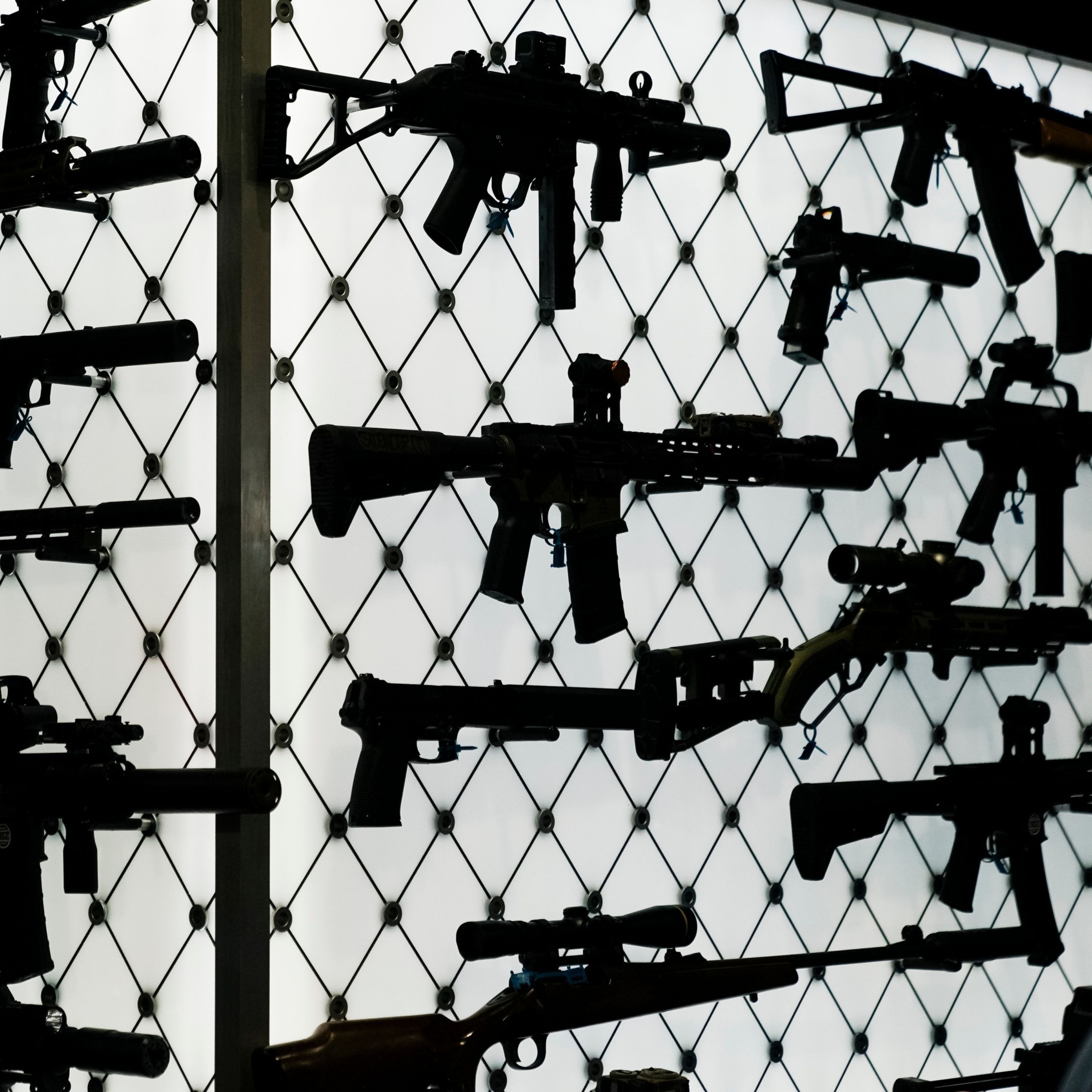
What A Day
Decoding Recent Supreme Court Gun Rulings
00:22:37
The Supreme Court has been busy releasing opinions. Last week, it ruled against a ten billion dollar lawsuit from Mexico against American gun manufacturers. The Mexican government had alleged that US gun companies were fueling cartel violence south of the border. But in a unanimous opinion, liberal Justice Elena Kagan wrote that the lawsuit didn’t reach the burden required by a 2005 law. The court declined to take up two other gun cases: one challenging Maryland’s ban on semi-automatic weapons and the other challenging Rhode Island’s ban on high-capacity magazines. To talk more about the Supreme Court’s decisions (and lack of decisions) and what this means for gun policy, we spoke to Stephen Gutowski. He runs The Reload, a news outlet dedicated to firearms and the gun debate. And in headlines: The US and China (kinda) reach a trade agreement, Director of National Intelligence Tulsi Gabbard warns of a nuclear holocaust, and the White House Rose Garden gets a makeover.
Loading summary
Transcript33 lines
- [00:03]
Jane Coston
It's Thursday, June 12th. I'm Jane Costen, and this is what a Day. The show that sends its best to Beach Boys great Brian Wilson, who has passed away at the age of 82. If you listen to God Only knows on high quality headphones, you will ascend to a higher plane of existence. On today's show, President Donald Trump says he's restoring the names of Confederate generals to military bases. He's not. And Director of National Intelligence Tulsi Gabbard warns of a nuclear holocaust. But let's start with guns. A lot has been happening pretty much everywhere. So you may have missed the Supreme Court making three very important decisions on gun policy. Well, technically, the court made one very important decision, but decided not to make two more. Let me explain. Last week, the Supreme Court ruled against a $10 billion lawsuit from Mexico against American gun manufacturers. The Mexican government had alleged that US Gun companies were fueling cartel violence south of the border. But in a unanimous opinion, liberal Justice Elena Kagan wrote that the lawsuit didn't reach the burden required by a 2005 law. The Protection of Lawful Commerce and Arms act protects gun manufacturers from lawsuits brought because of misuse of their products. But the court declined to take up two other gun cases. One challenging Maryland's ban on semiautomatic weapons, the other challenging Rhode Island's ban on high capacity magazines. This is all happening in the context of President Trump's return to the Oval Office. And back in 2017, gun rights advocates were thrilled to see him in the White House. But then and now, Trump's gun policy bona fides are complicated. See, no one was more excited to go and speak at the National Rifle Association's annual convention than Trump. Except for this year, for some reason. And his administration has lifted a bunch of Biden era gun control measures. But after the Las Vegas mass shooting in 2017, Trump ordered a ban on bump stocks. Bump stocks allow semi automatic weapons to fire faster. The ban was ruled unconstitutional by the Supreme Court last year. And after mass shootings in 2019, he voiced support for background check legislation. All of this has made both gun control advocates and gun rights supporters very cautious when it comes to dealing with Trump. So to talk more about the Supreme Court's decisions and lack of decisions and what this means for gun policy, I had to talk to Stephen Gutowski. He runs the Reload, a news outlet dedicated to firearms and the gun debate. Stephen, welcome to Water Day.
- [02:36]
Stephen Gutowski
Hey, thank you for having me.
- [02:37]
Jane Coston
So tell me about the Supreme Court case filed by the Mexican government. What were the arguments on both sides. And what did the court decide with its ruling?
- [02:45]
Stephen Gutowski
Sure, this is a case over Mexico's claim that Smith and Wesson and other American gun manufacturers ought to be held liable for the criminal use of their products by cartels and other criminals in Mexico. And so they wanted to try and hold them accountable for about $10 billion of. Of liability claims. Whereas the American gun companies argued that the connections Mexico had tried to draw between the violence in Mexico and their business practices were too far disconnected, certainly from the claimed harm. And that they weren't allowed to file this sort of lawsuit under American federal law because Congress passed a bill called the Protection of lawful commerce and Arms act back in 2005 that doesn't allow lawsuits over the criminal misuse of firearms against firearms companies unless you can find some sort of violation by the gun companies that connect them to that crime. And in the end, the supreme court ruled that Mexico had not found that underlying offense by the gun companies here to make the connection to hold the companies liable for these murders that happen in Mexico.
- [04:09]
Jane Coston
So it's interesting because you pointed out that there is that 2005 law, but there was a more recent $73 million settlement in Connecticut from Remington Arms, which made the rifle used in the Sandy Hook elementary school shooting. The victim's families sued Remington, saying it irresponsibly marketed their guns in violation of state consumer laws. The families get a big settlement. And I think a lot of people thought that that might be a road map to future cases. So what's the disconnect there?
- [04:38]
Stephen Gutowski
Yeah, and I would say that that that settlement helped inspire a raft of new cases under the same concept of trying to pierce this veil of protection from that federal law. Because there are ways to still sue gun companies under this law, even though, you know, obviously critics of the law think it's too protective. And the big difference here is that the Supreme Court, first of all, it's the first time they ruled on it, and they simply didn't see enough specific evidence of aiding and abetting. That's what makes Mexico tried to claim the gun companies were doing for cartel members or illicit firearms traffickers, for instance. They targeted what they called military style firearms, specifically AR15s. And then also certain models that had what Mexico claimed were particularly attractive features for cartel members. They claimed that cult made a gun that had, you know, Mexican icons on it, like historical figures that they said were attractive to cartel members. And they're perhaps they're doing it on purpose to try and boost sales in that way. But there was Never any sort of specific evidence of breaking any of the American firearms laws. And the Supreme Court just didn't think that there was enough there there. I suppose they didn't say, oh, this kind of lawsuit could never succeed. They said Mexico's attempt at it didn't work.
- [06:06]
Jane Coston
We also saw the high court turn away two cases regarding state gun laws. One was about Maryland's ban on assault rifles and semiautomatic rifles like AR15s. The other was about Rhode Island's restrictions on high capacity magazines. So what does this tell us about where the court stands on the issue of assault style or so called assault weapons bans?
- [06:26]
Stephen Gutowski
You know, it is interesting to think what exactly tells us because you had three justices who wanted to take up this case. They relisted this case 15 times, which is very unusual. It means they, they reconsidered it 15 weeks in a row and ultimately denied it. And the most interesting thing that happened was Justice Brett Kavanaugh wrote this statement that said he strongly believes that the lower court was wrong to uphold this assaultman's ban and that the Sullivan's bans generally are not allowed under Second Amendment. But he had a nod towards, there are other cases going through the court and that'll give, if we let the lower courts percolate a little bit longer, maybe it'll better inform our ultimate decision on this. And then he gave a very specific time frame, saying that in one or two terms that they, he expects that they will take up a case. So they very easily could have addressed this and didn't. And so there's a lot of little clues you could look at and maybe say they're tipping their hand and eventually they will strike down an AR15 ban. But there's still some open questions.
- [07:33]
Jane Coston
Now, we've talked about this before. President Trump during his first term was very weird on gun issues. Just giving an example. After the horrifying Las Vegas mass shooting, he decided that we were going to ban bump stocks. And even ATF was saying, I don't know if we can do that. And that actually went to the Supreme Court, where it turns out you could not do that. So beyond these recent Supreme Court decisions and knowing what we saw in the first term of President Trump, how can we expect gun policy to change under Trump's second term?
- [08:09]
Stephen Gutowski
If you look at his history on gun policy, a lot of his first term was marked by some movement that gun rights activists would like, but not a lot. And there wasn't that much administrative movement on it either. But he was rhetorically rather pro gun until you saw major mass shootings happening. The aftermath of major mass shootings are when Donald Trump has a tendency to at least flirt with support for more restrictive gun policies, whether through legislation or as in the bump stock ban case, through administrative action. We haven't had a major mass shooting since he's been president, thankfully to this point. Certainly nothing like, you know, Sandy Hook or the Las Vegas shooting. And so it'll be interesting to see how he reacts to that. But this time around, I would say that at least the people he's put in place lower down the chain who have, who oversee, you know, the administrative side of gun policy are being a bit more aggressive to meet the goals of a lot of the gun rights groups that had supported Donald Trump during the campaign. So, you know, you've seen things like the ATF reverse itself on a number of Biden era policies, like the zero tolerance policy for gun dealers. You've seen them institute a new rights restoration process that's kind of also included Trump's prominent supporters and friends. Mel Gibson getting his gun rights back for a domestic violence incident was among the first there. But they've started to change their positions in different court cases as well to try and match what gun rights activists have been arguing. So there's, I think there's been a bit more actual policy movement this time around than there was the first time. But he hasn't come to that test of what he does in the aftermath of a major mass shooting.
- [10:00]
Jane Coston
Stephen, thank you so much for joining me.
- [10:03]
Stephen Gutowski
Absolutely. Thank you for having me.
- [10:05]
Jane Coston
That was my conversation with Stephen Gutowski. He he runs the Reload, a news outlet dedicated to firearms and the gun debate. We'll link to his work in the show. Notes we'll get to more of the news in a moment, but if you like the show, make sure to subscribe. Leave a five star review on Apple Podcasts, watch us on YouTube and share with your friends. More to come after some ads Whataday is brought to you by Zebiotics Pre Alcohol. Let's face it, after a night with drinks, I don't bounce back the next day the way I did like 10 years ago. I have to make a choice. I can either have a great night or a great next day. That is until I found Pre alcohol Zebiotics. Pre Alcohol Probiotic drink is the world's first genetically engineered probiotic. It was invented by PhD scientists to tackle rough mornings after drinking. Here's how it when you drink, alcohol gets converted into a toxic byproduct in the gut. It's a buildup of this byproduct, not dehydration, that's to blame for rough days after drinking. Pre alcohol produces an enzyme to break this byproduct down. Just remember to make pre alcohol your first drink of the night. Drink responsibly and you'll feel your best tomorrow. I won't lie, I was a little on the fence with pre alcohol initially, but then after trying it and being able to go for a run the next day and feel totally normal, I'm a believer. Summer is here, which means more opportunities to celebrate the warm weather before that backyard barbecue, brew, glass of Pinot, watching the sunset at the beach, or a cocktail by the campfire. Don't forget your Zebiotics Pre alcohol. Drink one before drinking and wake up feeling great and ready to take on the next day and all that summer has to offer. Go to zebiotics.com wad to learn more and get 15% off your first order when you use code WAD at checkout. Zebiotics is backed with a 100% money back guaranteed, so if you're unsatisfied for any reason, they'll refund your money, no questions asked. Remember to head to zbiotics.com wad and use the code WAD at checkout for.
- [12:04]
Dr. Horton
15% off your new beginning starts now. Dr. Horton has new construction homes available in Ellensburg and throughout the greater Seattle area. With spacious floor plans, flexible living spaces and home technology packages, you can enjoy more cozy moments and sweet memories in your beautiful new home. With new home communities opening in Ellensburg and throughout the Seattle area, Dr. Horton has the ideal home for you. Learn more at Dr. Horton.com Dr. Horton, America's Builder and Equal Housing Opportunity Builder.
- [12:37]
Robert F. Kennedy Jr.
At 1800-Flowers.com we know that connections are at the heart of being human. Whether celebrating life's joys or comforting during tough times, 1-800-Flowers helps you express what words can't for nearly 50 years, millions have trusted 1-800-Flowers to deliver thoughtful gifts that help create lasting bonds. Because it's more than just a gift. It's your way of showing you care. Visit 1-800-flowers.com pandora and connect today. That's 1-800flowers.com pandora.
- [13:09]
Jane Coston
Here's what else we're following today.
- [13:12]
Stephen Gutowski
Head of Lines so this was the first step of the framework by which we will then approach and discuss growing trade. But first we had to get sort of the negativity out, and now we can go forward to try to do positive trade, growing trade and beneficial to both China and to the United States of America.
- [13:35]
Jane Coston
Commerce Secretary Howard Lutnick told reporters late Tuesday evening that the US And China reached a trade agreement. From the outside, it sounds pretty similar to one both countries outlined back in May. President Trump was more definitive, writing on Truth Social Wednesday morning that the deal was done, but key detail it needs final approval from both Trump and Chinese President Xi Jinping. Since reaching a trade truce in May, both countries have accused each other of straying from its terms. China continued to restrict rare earth, mineral and magnet exports to the US And Trump announced a crackdown on Chinese student visas. The latest details are still scant, but we do know that the US would still impose a 55% tariff on Chinese imports, while China would maintain a 10% tariff on US goods. President Trump's true social post noted that the US will continue to allow Chinese students to study at American colleges and universities. He added that Chinese students in American universities have always been good with me. Sure.
- [14:38]
Tulsi Gabbard
A single nuclear weapon today could kill millions in just minutes. Just one of these nuclear bombs would vaporize everything at its core, people, buildings, life itself.
- [14:51]
Jane Coston
Fun. Director of National Intelligence Tulsi Gabbard posted an alarming video on Twitter Tuesday warning Americans about the threat of a nuclear holocaust. The three minute video shows footage of Gabbard and Hiroshima and Nagasaki, the Japanese cities the US dropped bombs on during World War II. The timing for Gabbard's short form cinema Drop is complex. The Trump administration is in the midst of negotiating a nuclear weapons deal with Iran. In late March, President Trump threatened to attack Iran if a deal can't be made. On Wednesday, Iranian Defense Minister Aziz Nasrzadeh said that if the US attacked, Iran would retaliate by striking US Military bases. By the look of it, Gabbard's video takes that threat seriously. It shows the Golden Gate Bridge blown apart during a hypothetical nuclear attack.
- [15:39]
Tulsi Gabbard
This isn't some made up science fiction story. This is the reality of what's at stake, what we are facing now. Because as we stand here today, closer to the brink of nuclear annihilation than ever before, political elite and warmongers are carelessly fomenting fear and tensions between between nuclear powers.
- [16:00]
Jane Coston
Okay, as Director of National Intelligence, I'm pretty sure you are a political elite, Tulsi, but like, whatever. Anyway, in response to the video, Republican Senator John Kennedy of Louisiana told Jewish Insider that Gabbard, quote, obviously needed to change her meds. And this is from the senator who confirmed her for her position as National Intelligence Director. By the way.
- [16:25]
Robert F. Kennedy Jr.
Hundreds of CDC employees learned that they are being reinstated. That's according to a union representing workers, which says notices went out to around 460 laid off workers at the Atlanta based agency Today.
- [16:39]
Jane Coston
That's NBC affiliate WXIA in Atlanta reporting that Health and Human Services Secretary Robert F. Kennedy Jr. Is walking back some of the staff cuts he's made since he was sworn in this February. If you don't recall, those cuts to the department were big. Around 10,000 employees were given layoff notices in April 2000. 400 of those were from the Centers for Disease control and prevention. RFK Jr did say, though, that they'd hire some folks back. Well, on Wednesday, he was true to his word on this one singular topic for 460 employees of the CDC. An HHS spokesperson confirmed that more than 200 of the reinstated employees work in the national center for HIV, viral hepatitis, sexually transmitted disease and tuberculosis prevention. Another 158 came from the national center for Environmental Health, places where you totally would have wanted fewer people around to fight disease. To be fair, RFK Jr. S agency has been rehiring some employees over the past few months, but Wednesday's binge was the biggest at just 460 out of 10,000. The White House this week broke ground, literally. I'm talking about the president zhuzhing up the north and south lawns and revamping the Rose Garden by paving over some of it. Hey, we knew this was coming, didn't we? Here's President Trump back in March talking to FOX News. Are you paving over the grass here?
- [18:02]
Donald Trump
What was happening is it's supposed to have events. Every event you have, it's soaking wet. It's soaking wet. And people can. And the women with the high heels just too.
- [18:12]
Jane Coston
That's who did the Kavanaugh.
- [18:13]
Donald Trump
That's what I did. That's right. Amy coney, Barrett, Grass just, it doesn't work. And we have a gorgeous stone and everything else okay. But you know, we use it for press conferences and it doesn't work because the people fall into the, you know, into the wet.
- [18:27]
Jane Coston
The roses stay. Gotta make sure the ladies can wear heels on the White House lawn. Top priority. Write that down. Anyway. On Monday, reporters snapped pics of President Trump back in his element overlooking a construction project in the garden. Some grass looked dug up and there are some portions missing along a limestone border. First Lady Melania Trump had the border put in in 2020. A White House official who spoke to the Associated Press on the condition of anonymity said National Park Service employees started the project Monday. It's set to be completed in about two months. And that's the news. One more thing, in case you missed it. President Trump went to Fort Bragg in North Carolina this week for a little pep rally that seemed less about celebrating the 250th anniversary of the founding of the army and more about yelling about Joe Biden and how terrible Los Angeles is. But he did say something interesting that was actually about the Army. It was about military bases.
- [19:39]
Donald Trump
Every inch of this base is steeped in the legacy of those warriors who have said with pride, sir, I trained at Fort Bragg, sir. That was pretty cool. And that is why we restored the historic name of this very, very special place. I don't know if it could be the same place Fort Bragg is in. That's the name. And Fort Bragg it shall always remain. That's never going to be happening again.
- [20:09]
Jane Coston
Yes, Donald Trump has decided that we are renaming a bunch of military bases again, but to bring back the names of Confederate military figures who fought against the United States in the service of slavery and lost. Don't forget that part. But funnily enough, that's not what's actually happening. Because while the names might be the same or similar, the people aren't. And it's Trump's own fault. Sort of. See, back in 2020, Congress overrode a veto from then President Trump to pass a military budget that included a little provision that banned the use of Confederate names for American military installations. So, yes, Fort Bragg will be named Fort Bragg again, but it won't be for Braxton Bragg, Confederate General. It'll be for Private First Class Roland L. Bragg, who stole a German ambulance to save a fellow soldier's life during the Second World War and won a Silver Star and Purple Heart. And Fort Lee won't be named for Confederate general and noted loser Robert E. Lee. Rather, it'll be named for Private Fitz Lee, a black soldier who won a Medal of Honor for his bravery rescuing his fellow soldiers during the Spanish American War. In fact, all of the bases Trump thinks he's returning to, names honoring Confederate military figures are going to be named after people who had nothing to do with the Confederacy and just happened to have the same last names. Flawless victory, Mr. Trump. As a noted lib, I have never enjoyed being owned by the President of the United States. More before we go, join the Friends of the Pod community today to unlock subscriber only shows like Inside 2025, plus other exclusive perks. In the latest episode, the hosts of Strict Scrutiny pull back the curtain on the Supreme Court. Kate Shaw, Leah Littman, and Melissa Murray reveal what it's really like to clerk for a justice, how clerks are chosen, and just how insider y the whole process gets. They also unpack what's happening behind the scenes ahead of major decisions. And Melissa explains why it doesn't actually matter if the justices are friends. Subscribe now to unlock inside 2025 and so much more@crooked.com friends. That's all for today. If you like the show, make sure you subscribe, leave a review, contemplate Donald Trump's intense love of the musical Cats and tell your friends to listen. And if you're into reading, I'm not just about how Donald Trump is an elderly Manhattanite who loves Andrew Lloyd Webber musicals. You know, the non woke kind of musical and gold crown molding on everything like me. What a Day is also a nightly newsletter. Check it out and subscribe@cricket.com subscribe I'm Jane Coston and someone asked the president his thoughts on Starlight Express. What a Day is a production of Crooked Media. It's recorded and mixed by Desmond Taylor. Our associate producers are Raven Yamamoto and Emily Foer. Our producer is Michelle Aloy. We had production help today from Johanna, Kate Case, Joseph Dutra, Greg Walters and Julia Claire. Our senior producer is Erica Morrison and our executive producer is Adrian Hill. Our theme music is by Colin Gilliard and Kashaka. Our production staff is proudly unionized with the Writers Guild of America east how many discounts does USAA auto insurance offer? Too many to say here.
- [23:44]
Dr. Horton
Multi vehicle discount, Safe driver discount, New vehicle discount, Storage discount.
- [23:49]
Robert F. Kennedy Jr.
How many discounts will you stack up?
- [23:51]
Tulsi Gabbard
Tap the banner or visit usaa.com autodiscounts restrictions apply did you know that parents rank financial literacy as the number one most difficult life skill to teach? Meet Greenlight, the debit card and money app for families with Greenlight. You can set up chores, automate allowance and keep an eye on your kids. Spending with real time, not kids. Learn to earn, save and spend wisely and parents can rest easy knowing their kids are learning about money with guardrails in place. Sign up for Greenlight today@Greenlight.com podcast.