← What A Day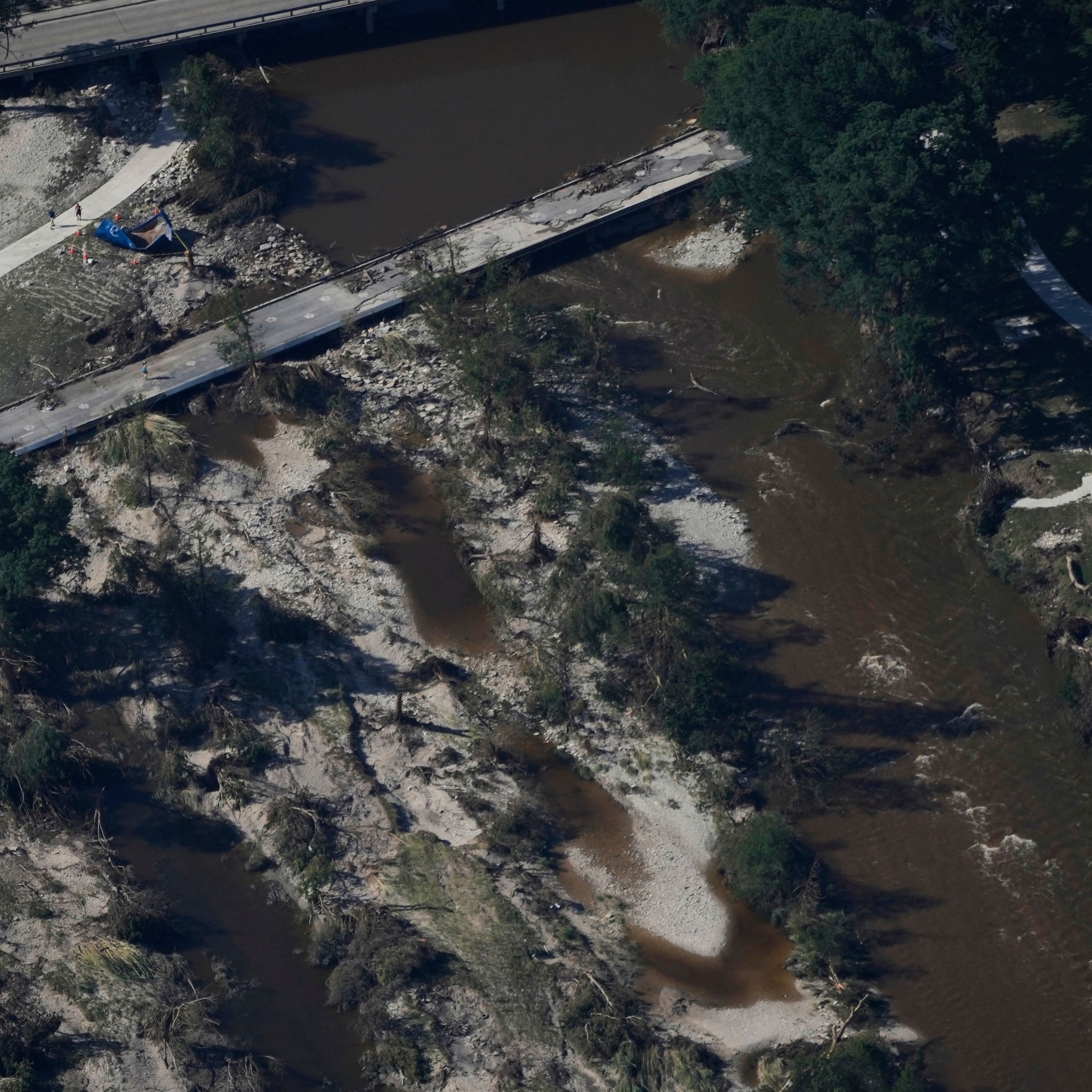
What A Day
Ex-NOAA Administrator On Trump's Staffing Cuts
00:22:37
President Donald Trump is scheduled to travel to central Texas today to tour damage of the devastating July 4th weekend floods. More than 100 people have been confirmed dead, and nearly 200 are still missing a week later. As people in the region continue to mourn their loved ones and assess the destruction, there has been a lot of finger-pointing over whether more could have been done to alert people about the flood risks. If staffing cuts at the National Weather Service played a role, and who’s to blame for the mounting death toll? Richard Spinrad, the former administrator of the National Oceanic and Atmospheric Administration, talks about how staffing cuts make the agency’s job harder. And in headlines: A federal judge in New Hampshire blocked the Trump Administration’s order ending birthright citizenship after a class-action challenge, retiring Republican North Carolina Sen. Thom Tills unloads during a CNN exclusive interview, and former Columbia grad student Mahmoud Khalil fil...
Loading summary
Transcript37 lines
- [00:04]
Jane Coston
It's Friday, July 11th. I'm Jane Coston, and this is what a day. The show wishing Department of Transportation Secretary Sean Duffy the best as he takes on also being the interim administrator of NASA. Of course, he's no Marco Rubio, who is Secretary of state, supposed acting administrator of the U.S. agency for International Development, acting archivist for the National Archives, interim National Security advisor, and also should really finish picking up my dry cleaning. On today's show, a federal judge in New Hampshire blocked President Donald Trump's efforts to end birthright citizenship after a class action challenge. And retiring Republican North Carolina Senator Thom Tillis unloads during a CNN exclusive interview. But let's start with the massive floods in Central Texas that have so far killed at least 120 people. President Trump is scheduled to arrive today to offer thoughts and prayers and hopefully not reflexively sort of blame the flood damage on former President Joe Biden again. But I'm not counting on it because we've gotten to my least favorite part of any horrible disaster, the blame game. And honestly, with some good reason. From the National Weather Service to the Federal Emergency Management Agency, many of the institutions tasked with every step of disaster mitigation have faced massive staffing cuts under the Trump administration. So sorry, Texas Governor Greg Abbott, but using a football metaphor isn't really going to help you here.
- [01:28]
Greg Abbott
Who's to blame? Know this. That's the word choice of losers. Let me explain one thing about Texas, and that is Texas. Every square inch of our state cares about football. You could be in Hunt, Texas, Huntsville, Texas, Houston, Texas, any size community. They care about football, high school, Friday Night Lights, college football or pro. And know this, every football team makes mistakes. The losing teams are the ones that try to point out who's to blame. The championship teams are the ones that say, don't worry about it, man, we got this.
- [02:08]
Jane Coston
Don't worry about it. More than 100 people don't die after a football game. People's kids, spouses, grandparents and friends don't die after a football game. And nearly 200 people are still missing in Kerr county alone, which experienced the brunt of the floods over the Fourth of July weekend. Texans care about them, too. The stories of those who died in the flooding are truly horrifying. At Camp Mystic, a camp for girls located alongside the Guadalupe river, The floodwaters rose 26ft in just 40 minutes overnight, sweeping away entire cabins and killing more than two dozen children. Camp staff and the director of the camp, he died trying to rescue campers. So what did happen? What role did Massive staffing cuts, play or not play in preventing folks in Texas from getting out of harm's? Way to find out. I spoke to Richard Spinrad. He's the former administrator of the national oceanic and Atmospheric Administration, which includes the National Weather Service. Administrator Spinrad, welcome to Whataday.
- [03:06]
Richard Spinrad
Thanks for having me. Glad to be here.
- [03:09]
Jane Coston
There's been a lot of finger pointing about what systems broke down to notify those in Texas about the devastating flash floods that hit over the Fourth of July weekend. But to start off, what are the biggest challenges weather scientists face when it comes to predicting the potential danger of any given storm, given our climate is changing, and then conveying that danger down the chain to people in the storm's path? Like, what are the challenges when everything's working perfectly?
- [03:33]
Richard Spinrad
I would say the two challenges are resolution and probability. And what I mean by that is the resolution, you're not going to get a forecast that says, here's what's going to happen in your backyard. It will tell you that you're going to have a flash flood in this river. The forecast will tell you that you can expect line winds. The forecast for bigger events may tell you you're going to get a hurricane, and it's expected to hit within 20 miles of this spot on the coast. So that resolution issue is a real challenge for forecasters, but we're getting better and better and better. The probability issue is probably the tougher one from the standpoint of, if you will, social sciences and behavioral sciences. In the same way that we don't say it's going to rain at 4:37, what we'll say is there is an 80% chance of rain at 4:30 or so. How do you, as the public or a safety officer or a traffic control person, determine what to do based on a probabilistic forecast, 80% chance of flooding. And that's where there's a lot of coordination between the weather service and the emergency management community. And in fact, the weather forecast offices around the country have a position called warning coordination meteorologist, whose job it is to interpret, hey, what does 90% chance or 60% chance of a flash flood in an hour really mean for emergency management?
- [05:16]
Jane Coston
So looking at the Texas flood specifically, local officials in Texas are pointing fingers at the National Weather Service saying that the weather service didn't accurately predict the severity of the storm. You ran the national oceanic and Atmospheric Administration, which oversees the weather service. What's your take on what happened here?
- [05:32]
Richard Spinrad
I'd start by saying a flash flood warning is a flash flood warning. And at 1:14 in the morning of Friday, July 4th, the weather service issued a flash flood warning. And I would point out they used words like considerable and catastrophic impact. The fact that the earlier forecast predicted something like 8 inches of rain and there was more like 12, indicates we still have work to do on the forecast. But nevertheless, the 8 inches of rain forecast was enough to trigger a flash flood warning. So saying, well, gee, you know, you didn't get the exact amount of rainfall right, I believe is not necessarily relevant since the warning did go out. And had people received and been able to act on the warning, perhaps we wouldn't have seen the kind of death and devastation that we did in this case.
- [06:31]
Jane Coston
Democrats are also pointing to staffing shortages brought by the Trump administration in the last few months. You have said that this also played a role. Why do you think that that's the more likely culprit? And if you could draw a line between staffing shortages and a lack of.
- [06:44]
Richard Spinrad
Preparedness, it's probably too soon to give a definitive analysis. And there will be a lot of assessments done by the state by the emergency managers. Weather service will guarantee do an assessment on this. But because of staffing cuts, the fellow who was serving as the warning coordination meteorologist in the San Antonio Weather Forecast Office, which is the office that issued this flash flood warning at 1:14 in the morning, retired at the end of April. And that position was vacant on Friday, July 4th. The way that position works is that when the warning goes out, it's not sufficient. If I send you an email, Jane, I can't assume you got it. And that's the problem. The warning goes out, how do you know they got it? And so the warning coordination meteorologist's job is to make sure they got it and to be on the line, be there to receive the questions from emergency managers. I have heard in the media that some emergency managers got the warning at 1 o', clock, 1:14 in the morning. Some did not. We're going to have to find out why that happened. But it's clear to me that staff cuts had to have been a contributing factor to the inability of the emergency managers to respond.
- [08:06]
Jane Coston
Going to your point, the Washington Post reported that Since January, around 2000, NOAA scientists and meteorologists have left the agency, either through firings, buyouts, or, to your point, retirements. And the Supreme Court just gave the Trump administration the green light to lay off tens of thousands more federal workers across the government. But we're also about to head into hurricane season along the east coast, fire season along the West Coast. We've seen multiple instances of flash flooding just in the last week in Texas, North Carolina and New Mexico. So what risks do you see on the horizon?
- [08:37]
Richard Spinrad
This is the real confounding issue, and one that is keeping a lot of people up, is that these hazards don't happen one after the next. A lot of times they're happening at the same time. So, yeah, you're right. And one of the interesting things is part of the reason the San Antonio and San Angelo weather flooding forecast offices in Texas were able to do so well in getting the forecast out is that they surged staff to those offices to make up for some of the shortfalls in staffing in those offices. You can't do that. You end up playing musical chairs with staffing. If you're trying to deal with hurricanes, floods, droughts, fires, heat waves, the answer, obviously, is to hire into those positions. Now, there has been some move afoot in the last couple of weeks to allow positions that are being identified as critical to be filled. And I think the weather service is going to be filling 100 or so of those jobs. But that doesn't happen overnight either in the federal government. So we're going to see, I would say, several months of continued short staffing. My concern is that what we saw in Texas is just the start, and we're going to see hazards throughout the year. Will we have the same consequences as we did in Texas?
- [09:50]
Jane Coston
Speaking on that point, President Trump's pick to lead Noah Neil Jacobs had a Senate hearing Wednesday. He held the role during Trump's first term in an acting capacity, and he told senators during his hearing that filling some of those empty staffing positions at the weather service would be a top priority for him. But he also defended the administration's cuts to weather and climate research. What are the problems with that?
- [10:10]
Richard Spinrad
Hey, I don't know how you do that. The president's budget cuts, NOAA, which is nominally a $7 billion agency, by a couple billion dollars. And Neil testified that he wanted to do a lot of things. He wanted to hire more people. He wanted to build more capacity for artificial intelligence, cloud computing. Okay, all of those are good. What are you going to take off the table? What are you not going to do in order to do those things? Now, I will point out that the weather service component of the president's budget does not suffer the same degree of reduction as the rest of the agency, but it certainly isn't showing the kind of growth that's needed to build everything that I heard he was talking about.
- [10:55]
Jane Coston
Building a buzzword that keeps coming up. That makes me very anxious. Related to the weather service is privatization. We've seen reports that some of Trump's appointees would benefit if government weather forecasting were privatized. And I've been hearing arguments about privatizing the weather service for a long time. What's your read? How worried are you that this could happen?
- [11:14]
Richard Spinrad
So privatization to a certain extent is already happening. The weather service and the commercial weather enterprise. When I say commercial weather enterprise, I mean AccuWeather, the Weather Channel, all of those private weather services take advantage of the weather service products and then add additional services that you can buy, you can pay for. That works reasonably well. But now let's talk about what seems to be on some people's minds, and that is a much more expanded private weather service responsibility, perhaps even at the expense of the public national Weather Service. Well, the first thing is the weather service is a capitally intensive effort. At NOAA, we operated 16 satellites, 15 ships, nine aircraft. Think about the hurricane hunters. Those are assets that the government owns and operates that contribute to weather forecasts. Are we really saying the private sector is ready for that kind of capital expense? I have not heard them say that. The other is the liability. Are the private sector. Is the private sector really ready to take on the liability of the consequences of a blown forecast or even a forecast? That's not quite right. That's an expensive undertaking. And private sector is not going to be indemnified for consequences and damages as a result of a bad forecast. The final issue, and probably the most insidious with respect to privatization, is that it's highly regressive. So think right now about something like a streaming service. You may decide to subscribe for one. I may choose not to because I can't afford it. That's basically what a privatized weather service would be. It would be weather forecasts for those who can afford it. And that's just not the way it should be done. Weather forecasting, in my opinion, is an inherently governmental function and should be provided by taxpayer dollars.
- [13:19]
Jane Coston
Administrator Spinrad, thank you so much for joining me.
- [13:22]
Richard Spinrad
It's been my pleasure. Thank you for having me.
- [13:25]
Jane Coston
That was my conversation with Richard Spinrad, former administrator of the national oceanic and Atmospheric Administration. We'll get to more of the news in a moment, but if you like the show, make sure to subscribe. Leave a five star review on Apple Podcasts and share with your friends. More to come after some ads. This is an ad by BetterHelp. Workplace stress is now one of the top causes of declining mental health, with 61% of the global workforce experiencing higher than normal levels of stress and a holiday is great, but it's not a long term solution to stress. Don't forget that therapy can help you navigate whatever challenges the workday or any day might bring. With over 30,000 therapists, BetterHelp is the world's largest online therapy platform, having served over 5 million people globally. And it works with an App store rating of 4.9 out of 5 based on over 1.7 million client reviews. As the largest online therapy provider in the world, BetterHelp can provide access to mental health professionals with a diverse variety of expertise. Our listeners get 10% off their first month@betterhelp.com wad that's betterhelphelp.com wade my favorite.
- [14:39]
Mahmoud Khalil
Part about having us cellular home Internet is all the things it lets me do. Its quick connection lets me enjoy things like streaming my shows, keeping up with my friends online, taking work calls without lagging, and not having to stress about cost. Switch to US Cellular and do the things you love with the Internet. You love just $39.99 a month when bundled with a wireless plan. And if you don't love it, you have 15 days to let us know. Terms apply. Visit uscellular.com for details.
- [15:05]
Tricia McLaughlin
Wait, you're not a Hotels.com member, so you're choosing to pay full price? Did you not hear the song.
- [15:15]
Jane Coston
How could you not be a member and save up to 20%? That's less than 50%, but it's more than 0%. You're welcome.
- [15:27]
Tricia McLaughlin
See, the math is mathing. Save up to 20% on hundreds of thousands of hotels. With Hotels.com.
- [15:37]
Jane Coston
Here'S what else we're following today. Head of Lines.
- [15:43]
Chesa Latifi
I'm initiating a process to seek accountability from the Trump administration for false imprisonment, for warrantless arrest, for emotional distress. All of these things that I had to go through for over 100 days.
- [16:04]
Jane Coston
Weeks after his release from federal immigration detention in Louisiana, Mahmoud Khalil is filing a claim against the Trump administration for what he calls his abduction. Khalil was detained by immigration officials in March for his role in pro Palestinian protests at Columbia University last year. He was not charged with a crime during his detention, which was for more than 100 days. His case is ongoing in immigration court. On Thursday, Halil's lawyers filed a claim for $20 million in damages. They allege false imprisonment, malicious prosecution and abusive process, among other things. The Department of Homeland Security, Immigration and Customs Enforcement and the State Department are named in the filing. Tricia McLaughlin, a spokesperson for DHS, said in an emailed statement to the Associated Press that Halil's claim is absurd. In a recent interview with the Apartment, Halil recounted missing the birth of his son Dean while in detention.
- [16:56]
Chesa Latifi
I can't describe the pain of that night when I was on the phone 1400 miles away from my wife, that the government had actually used this to punish me, me use this moment to punish me, not to allow me to be present with my wife during this moment. And this is something I will never forgive.
- [17:30]
Jane Coston
However, he did say that he would accept an apology and changes to the Trump administration's deportation policies instead of the $20 million settlement, not only for what the administration did to him, but also for what it has done to others. Halil says unless the administration is held accountable, its power will continue to go unchecked. Project Hope, a D.C. based aid organization's clinic in central Gaza, was struck by an Israeli missile Thursday morning. The strike killed more than a dozen people waiting for aid outside of the clinic, which was not yet open. According to Project Hope, most of the victims were women and children. By mid morning, an additional 30 people, 19 of those children, had been reported injured. Chesa Latifi works for the organization and spoke with what a Day Newsletter writer Matt Berg on Thursday.
- [18:14]
Tricia McLaughlin
Those parents brought them in to see if they could get them some sort of support, right? And if they weren't there because they were starving, they were probably there for an upper respiratory illness or some kind of gastrointestinal problem or maybe a chronic issue. So like who were these people? They were parents, just like anywhere across the world, trying to get health care for their kids in a really terrible environment.
- [18:47]
Jane Coston
The Israel Defense Forces claimed that the intended target of their missile was a Hamas operative who was involved in the October 7, 2023 attack on Israel. They said they regretted, quote, any harm to uninvolved individuals. The news from Gaza comes after Israeli Prime Minister Benjamin Netanyahu spent days meeting with the Trump administration and members of Congress. So far, neither Israel nor Hamas have announced major progress towards a ceasefire in the Middle East. On Thursday, a federal judge in New Hampshire blocked President Trump's executive order ending birthright citizenship from going into effect nationwide. The decision stems from a class action lawsuit brought by the ACLU and other immigrants rights groups on behalf of three non citizen parents and their children. The group filed it suit just hours after the United States Supreme Court issued a decision limiting the ability of lower courts to issue nationwide injunctions against executive orders. Last month. The justices said lawyers had to file class action suits to achieve the same effect. We're confused, too. But the justices did not address the constitutionality of ending birthright citizenship itself. Trump's executive order sought to deny automatic citizenship to future children of undocumented immigrants and those with temporary legal status. Judge Joseph LaPlante issued a seven day stay on the ruling to allow for appeals.
- [20:03]
Greg Abbott
Now, with the passing of Tom, I think it's clear he's out of his depth as a manager of a large, complex organization.
- [20:09]
Jane Coston
That's retiring North Carolina Republican Senator Thom Tillis talking about how Secretary of Defense Pete Hegseth doesn't have the management chops for his current gig. You know, the gig Tillis voted in favor of Hegseth getting back in January. The comment came during an interview with CNN's Jake Tapper that aired Wednesday. The senator also told Tapper that he would not support any future nominees of President Trump's who do not condemn the January 6, 2021 attacks on the US Capitol, but the January 6 fanboys and girls appointed before you announced your retirement. Cool and fine. Tellis was one of three Republicans in the Senate who voted against President Trump's big, beautiful bill in part because of its proposed cuts to Medicaid. Here he is on the Senate floor before the passage of the bill.
- [20:53]
Greg Abbott
So what do I tell 663,000 people in two years or three years when President Trump breaks his promise by pushing them off of Medicaid?
- [21:04]
Jane Coston
Trump retaliated by threatening to support challengers to Tillis in the 2026 Senate primary. And just one day later, Tillis announced that he wouldn't be seeking reelection after this term. Another day, another powerful demonstration in Washington that you should only wait to be brave until it is in your own self interest. And that's the news. Before we go, Peter Thiel says God is dead, but New York Times columnist Ross Douthat says maybe religion isn't the problem. He joins Offline to explain why the belief in God is a rational choice and to dissect what the right's turn against Christianity says about power politics and the soul of Silicon Valley. Tune into this week's episode of offline on YouTube or wherever you get your podcasts. That's all for today. If you like the show, make sure you subscribe, leave a review, shout out to the 31 workers who narrowly escaped being trapped hundreds of feet underground in a tunnel under a Los Angeles neighborhood, and tell your friends to listen. And if you're into reading, and not just about how I have a deep, deep fear of being trapped underground or deep underwater. And these workers had to run for miles underground in order to reach the only exit. And they did it. Like me. What a Day is also a nightly newsletter. Check it out and subscribe@crooked.com subscribe I'm Jane Coastin and a spokesperson for the LA County Sanitation District said the workers were, quote, shaken up by what happened. I'm shaken up sitting here telling you about it. What a Day is a production of Crooked Media. It's recorded and mixed by Desmond Taylor. Our associate producer is Emily Foer. Our producer is Michelle Aloy. Our video editor is Joseph Dutra. Our video producer is Johanna Case. We had production help today from Greg Walters, Matt Berg, Tyler Hill and Laura Newcombe. Our senior producer is Erika Marson and our senior Vice president of news and politics is Adrienne Hill. Our theme music is by Colin Gilliard and Kashaka. Our production staff is proudly unionized with the Writers Guild of America east did.
- [23:35]
Unknown
You know that parents rank financial literacy as the number one most difficult life skill to teach? Meet Greenlight, the debit card and money app for families. With Greenlight, you can set up chores, automate allowance and keep an eye on your kids spending with real time notifications. Kids learn to earn, save and spend wisely. And parents can rest easy knowing their kids are learning about money with guardrails in place. Sign up for Greenlight today@Greenlight.com podcast.
- [24:03]
Jane Coston
What does possibility mean to you? Um, that's a hard question. Something that you can strive for. I'm able to do anything I set my mind to. You're confident in yourself and you believe in yourself. Stuff that you could achieve. I feel at Sarah anything is possible when you're more confident. Shoes are a huge part of that. They are the most important part of my style. You can like express yourself in the right shoes. Anything is possible.
- [24:28]
Tricia McLaughlin
DSW countless shoes at bragworthy prices. Imagine the possibilities.