← What A Day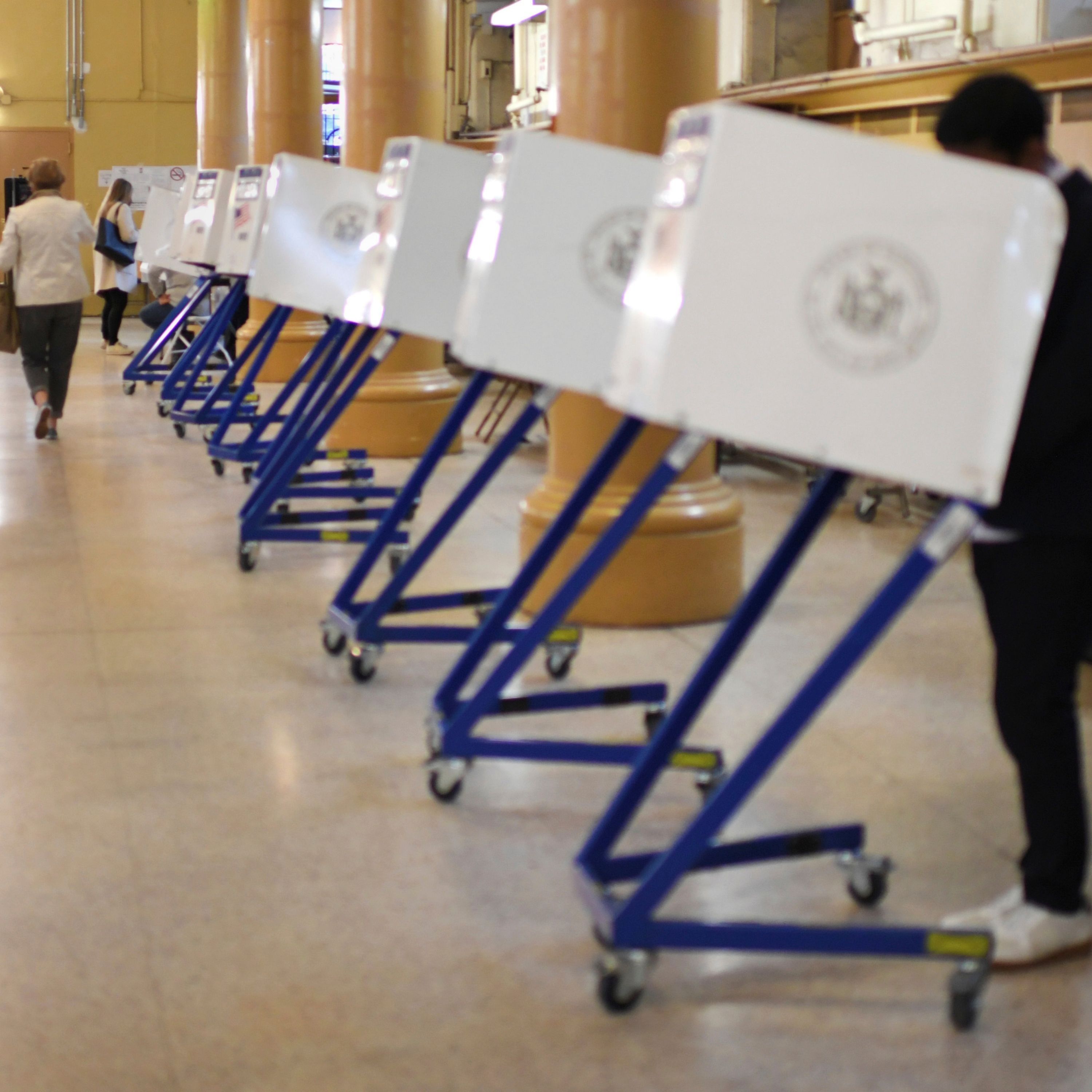
What A Day
Georgia To Vote On Energy Costs
00:23:38
A crucial race for Georgia's Public Service Commission is coming up in November. And though the name sounds boring, it's a race that really matters. That's because the commission is in charge of regulating public utilities in the state, including electric, gas, and telecommunications. Right now, all five commissioners are Republicans…but two of them are up for election this fall. And the Democratic challengers are strong. To learn more about the importance of this race, we spoke with John Taylor, Executive Director of the Black Male Initiative, a nonprofit focused on civic engagement in Georgia. And in headlines, President Donald Trump continues to threaten Chicago…but this time with war, Russia attacks Ukraine in its latest aerial strike, and Treasury Secretary Scott Bessent says the U.S. might have to refund some money it's collected from Trump's infamous tariffs.
Loading summary
Transcript30 lines
- [00:02]
A
It is Monday, September 8th. I'm Josie Duffy Rice in Virgin Coaston, and this is what a day. The show that wonders if you watched the MTV Video Music Awards last night, because we didn't even really know that those were still a thing. Is MTV even still a thing? Who knows? On today's show, we discuss Chipocalypse now. And Russia continues to escalate attacks against Ukraine. But let's start with some regional politics and why one seemingly small election matters. Here in Georgia, where I live, there is a crucial statewide race coming up this November for the Public Service Commission. The name sounds pretty boring, but this race actually really matters. The commissioners are in charge of regulating public utilities in the state, including electricity, gas, and telecommunications, which basically means that they regulate how much Georgia families and residents have to pay for these utilities, which means that their job affects pretty much each and every resident in the state. And currently, all five commissioners are Republicans. In the past three years, the commission has raised the cost of electricity six times, which amounts to an average monthly increase of $43 per household. It's a pretty big deal in a state that ranks cost of living as the most critical issue. And meanwhile, data centers in Georgia have gotten a tax break. Yes, those big warehouses full of energy guzzling servers and equipment that are used to power AI and crypto are pushing our electrical grid to the brim and wasting our drinking water, too. And Georgia's data center market is one of the biggest in the country. Now, two of the five commissioners are up for election this fall, and if you can believe this, these two seats are the only statewide election on the ballot this year, the only ones. Republicans have a major advantage in these races because while each commissioner has their own district, they are all elected statewide. But this year, there are two strong Democratic challengers in District 2, which covers the eastern part of the state from outside of Atlanta all the way down to the city of Savannah. Democrat Alicia Johnson is challenging Republican incumbent Tim Echols. And in District 3, which basically covers the metro Atlanta region, Democrat Peter Hubbard is running against Republican Fitz Johnson. So here to talk to us more about this race is John Taylor, executive director of Blackmail Initiative, a nonprofit focused on civic engagement here in Georgia. John Taylor, welcome to what a day.
- [02:45]
B
Thank you for having me.
- [02:47]
A
So tell us a little bit about the backdrop here. What's been going on with energy prices here in Georgia, and what role has the Public Service Commission played in in that?
- [02:59]
B
So when it comes to the increases in energy prices and the craziness that we're seeing in Georgia, the reality Is that the Public Service Commission has voted six times to increase rates for the cost of energy, and that's been hitting Georgia residents directly. Simultaneously, they also voted to give an 80% cut to the data centers. So in one hand, we're giving tax rebates to data centers, and we're passing those costs right on to Georgia residents who are also struggling to make ends meet.
- [03:38]
A
I was going to ask you about this. Like, I'm in Atlanta, I'm in Fulton county, and obviously we're in an off year. There are a lot of kind of municipal elections happening, but this is the main statewide election happening. So how are you really kind of engaging with people about why they need to pay attention to the Public Service Commission and why it's important to vote on this, especially people who might not have municipal elections, given that there also are no federal elections this year.
- [04:06]
B
I mean, the reality is we're doing a lot of door knocking. We're having a lot of phone calls, we're sending out text messages to folks, and we're doing everything we can on social media to pump the importance of this moment. I think this is more so than anything a David versus Goliath moment. We're looking at two incumbents who are Republican who have been able to keep their seats and move conversations rooted in commerce and business. And we're talking about candidates that are running as Democrats who are going to public commission meetings every day or every session and asking hard questions about renewable energy, asking questions about rate hikes, asking the commission to stand up for the citizens that it's supposed to represent and protect. And so for us, it's super important to get the word out and educate folks in every platform we can.
- [05:09]
A
So tell us what's really at stake if in this election we don't elect the representatives who are concerned with cutting costs.
- [05:17]
B
I mean, unfortunately, our lives are at stake. That's the right way to put it. We are dealing with a circumstance where not only our livelihood and our ability to survive and pay bills is at stake. Six times they've raised the rates on residents. That's preposterous. But beyond that, the use of water, the use of electricity, the way that we're allowing data centers to come into our state and expand the compounding health impacts for methane gas, for dioxide, for an expanded use of a water table that was not designed to handle the rigor or the load. The truth of the matter is, if we don't get folks in these Public Service Commission seats to care about the people in Georgia, our lives are on the line.
- [06:11]
A
So obviously, Georgia has faced some challenges, too, when it comes to voting rights, voter access. Right. What are the biggest hurdles right now in terms of actually making sure that people can get to the polls, that their votes count, that they have access?
- [06:30]
B
So there's a few. We're dealing with hundreds of thousands of voters being purged from the roll. We're dealing with compounding and ongoing lawsuits due to the implementation of SB202 and the changes in legislation that make it harder for good Samaritans and everyday volunteers to go out and help register Georgia voters. We're dealing with a secretary of state that has, in many ways, just missed the boat and does not care about the voting rights for folks in this state. And most importantly, we're dealing with a board of elections that has 159 counties and allows them to operate independently. So even though we have guidelines, we're still battling 159 fights every election cycle. And we're doing it with less and less resource every cycle. Because when we're off cycle and when we're dealing with municipals, we get nowhere near the amount of resource we need to mount a credible fight.
- [07:37]
A
When you mention resources like you just did, you mentioned there's a lack of resources, are we just talking about money? What are the resources that we need kind of consistently to make sure that we see the kind of voter turnout and voter interests that we want in these elections?
- [07:54]
B
So there's three things that we really need. We define resources, time, money, and people. So we need tmp. We need enough time to educate our community and make sure that they get the value of these elections. Whether it's Public Service Commission or it's senator or it's state congressional seats. They're all very important. City council, mayor. These are the folks that are making the decisions about how we live our lives every day. And so time is important, and we're short on time because it feels like these elections pop up on us. But because of the way we're structured, again, they're always there as far as the money is concerned. Of course, money is a great aggregate that helps us defend against not having enough time. Imagine all the things we could do with all the money in the world. But money is really only useful if we can use it to do the third thing, which is activate, educate, and mobilize the people. Because we're not interested in having transactional voting. I want folks who come out and vote, and then they hold the elected official accountable. We oftentimes say that the biggest thing we dislike about politics is, is when candidates tell us what they're going to do when they get in office. We would much prefer have individuals give us their track record of proven action, that they're servant leaders already and that they're telling us how they're going to expand what they've already been doing once they're in office.
- [09:34]
A
Absolutely. I want to ask about the role of the commission when it comes to public services and what else needs to be done. So clearly, in order for anything to be done to lower costs to, you know, average families and improve infrastructure for public services, we have to have a good public service commission. But what else needs to happen to ensure that Georgians are able to keep getting the kind of public utilities that they need effectively?
- [10:03]
B
So there's the things that the Public Service Commission does, which we've talked about. They regulate rates. They help to make sure that we have access. They really vote for what we can and cannot do. But they also vote to increase the number of Watts megawatts that the companies can produce. And so this essentially says this is how much power you can bring into or you can generate each year. This is what it's going to cost. This is what it requires of you. They allow that scale to exist. But beyond that, we need legislators to put moratoriums on utility heights. We need legislators to start pushing back on these costs and be clear about the fact that we are in a place where the cost of utility, the cost of housing, the cost for wraparound services and household expenses is outpacing the economics of household. We grew up in an era where the cost of living the Cola increase was 2.5%. Most of the folks in Georgia are not getting a 2.5% raise. But when you vote six times to raise the cost of utilities, you're blowing that out of the water. You're making it impossible for people's pocketbooks and purses to keep up with your hikes. We need that to stop.
- [11:36]
A
Can I ask you the kind of challenges you're seeing with this election, both in terms of what's at stake, who's on the ballot. Right. And making sure that voters care and show up? Do you think that they're reflective of what's happening across the country, or do you see this as sort of Georgia specific?
- [12:00]
B
I really wish this was Georgia specific, because if it was, then we'd be able to have a much different conversation. We'd be able to identify a way to build back a different dynamic. But we're seeing this everywhere. You're seeing this in New York with Mamdani. We're seeing this in Texas, we're seeing this in Alabama. There are so many candidates that are pushing against the status quo. They're trying to create what most people are calling socialist answers or socialist democratic answers. But what they're really doing is advocating for true democracy. They're advocating for constituents, not for big business, not for corporations. They're advocating for citizens to have a voice and to actually be listened to. If we're not clear about the fact that whether it's the Public Service Commission or we're talking about militarized engagement and states rights, what we're seeing is a rise of authoritarianism. What we're seeing is a rise of the oligarchs. Right? And so that's ultimately what we're saying. And we don't believe that utility costs, that the power, that the energy, the very lifeblood of a community should be randomized and set at the pace of corporate profiteers. That stuff has to be first and foremost regulated for what the community wants.
- [13:35]
A
Thank you, John, so much for joining us.
- [13:38]
B
My pleasure.
- [13:40]
A
That was my conversation with John Taylor, executive Director of Blackmail Initiative. We'll get to more of the news in a moment, but if you like the show, make sure to subscribe. Leave a five star review on Apple Podcasts, watch us on YouTube and share with your friends. More to come after some ads Foreign.
- [14:08]
C
What a day is Brought to you by Bombas Fall's here, Kids are back in school, vacations are over, and cozy season is officially on. You know what that means. Bombas season is also on. Bombas makes the most comfortable socks and slippers, all crafted from premium materials, perfect for this time of year. What's to love about Bombas? Absurdly comfortable materials like merino wool to keep you warm or cool Supima cotton that's soft and strong and classic ragwool for that cozy fall vibe. Bombas is also now known for their slides and slippers from Sherpa lined Sunday slippers for staying in to do it all Eva Friday slides on the go. Bombas has it all. And the best part. Every item you buy means one donated to someone experiencing homelessness. Over 150 million items so far. And with their happiness guarantee, if you're not 100% into what you got, they'll make it right. No risk, all reward. I just have to say that Bombas makes the best socks, period. So head over to bombas.comday and use the code day for 20% off your first purchase. That's B O M B-A-S.com day code day at checkout.
- [15:15]
A
Here's what else we're following today. Head of lines.
- [15:22]
B
So should we expect.
- [15:23]
A
Action in Chicago this week?
- [15:26]
D
Absolutely. You can expect action in most sanctuary cities across the country. President Trump's prioritized sanctuary cities because sanctuary cities knowingly release illegal alien public safety threats to the streets every day. That's where the problem is. We don't have that problem in Florida where every sheriff and chief works for us. Right. Or Texas. So we gotta send additional resources to the problem of marriage, which are sanctuary cities.
- [15:49]
A
Texas and Florida, notoriously two of the best behaved states in America. White House border czar Tom Homan spoke to CNN's Jake Tapper on State of the Union on Sunday. He's referring to Trump's threat to send Immigration and Customs Enforcement and potentially the National Guard into Chicago. On Saturday, Trump posted an absolutely batshit meme on Truth Social showing helicopters flying over the Chicago skyline with a fiery explosion and the words Chipocalypse now. And it included a photoshopped or maybe AI image of Trump dressed as Lt. Kilgore, a character from the movie Apocalypse now who is a psychopath obsessed with blowing up civilians in Vietnam. In his post, Trump replaces Kilgore's famous line, I love the smell of napalm in the morning with, quote, I love the smell of deportations in the morning, adding, chicago is about to find out why it's called the Department of War. It's actually not called the Department of War, but he's referencing the executive order that he signed on Friday to change the name of the Department of Defense to the Department of War. It won't be official until Congress approves it. In response, Illinois Democratic Governor J.B. pritzker called Trump a quote, wannabe dictator who is threatening to go to war with an American city. In the CNN interview, Homan defended the president, saying his words were being taken out of context. Despite the fact that I cannot stress this enough, Trump was the one who literally posted the meme on his own account. And the president himself seemed a little sensitive about the situation when a reporter asked him about it at the White House on Sunday. We're not going to war. We're going to clean up our city. We're going to clean them up so they don't kill five people every weekend. That's not war. That's common sense. So to recap, Trump threatened war on an American city and is now angrily claiming that the media made it up. More than 300 South Korean workers detained in a massive US immigration raid at a Hyundai plant in Georgia will be released and sent to South Korea. Kang Hoon Sik, the chief of staff for South Korea's president, said Sunday that they had finalized negotiations with the US on their release. Kang said that after administrative details are worked out, South Korea will send over a charter plane to bring its workers home. Meanwhile, South Korean media reported that the foreign minister is headed to the US Today for related talks. US Immigration authorities said last week that they had detained more than 470 people, most of them South Korean nationals, when federal agents raided the manufacturing site in Georgia. This is part of Trump's administration's need to prove powerful in its mass deportation agenda. But the move took many by surprise given that the Hyundai plant has been held up as an example of economic development in the state. The lead agent of Homeland Security investigations in Georgia said during a press conference on Friday that while none of those detained had been charged with any crimes, some of the workers had entered the US Illegally and others had expired visas. Russia attacked Ukraine with drones and missiles on Sunday, hitting multiple cities, which makes it the largest aerial strike since the war began. It's yet another record breaking move by Russia despite Trump's repeated efforts to broker a peace deal between the two countries. The strike killed four people, including a mother and her three year old child, and injured 44. It also hit two residential buildings and a government headquarters in Kyiv. It was unclear if the government building was a direct target or just had been hit by debris, according to the Associated Press. But if it was intentional, the attack would mark an escalation in Russia's air campaign, which has so far spared government buildings in the city center. The Russian Defense Ministry said that it only targeted military sites. Ukrainian President Volodymyr Zelensky said he is working with France as an ally to strengthen his army's defense, and in a post on Twitter he said, quote, such killings now, when real diplomacy could have already begun long ago, are a deliberate crime and a prolongation of the war. Other European leaders expressed solidarity with Ukraine as well. British Prime Minister Keir Starmer said in a statement, quote, these cowardly strikes show that Putin believes he can act with impunity. He is not serious about peace. Would you offer rebates, though?
- [20:22]
C
Are you prepared to offer rebates?
- [20:23]
B
So we would have to give a refund on about half the tariffs, which, which would be terrible for the Treasury.
- [20:30]
A
You're prepared to give those refunds?
- [20:32]
B
Well, I mean, there's no be prepared. If the court says it, we'd have.
- [20:35]
A
To do it, treasury Secretary Scott Besant told NBC's Meet the Press host Kristen Welker on Sunday that the US May have to refund some money they've collected from Trump's tariffs. That is, if the Supreme Court decides that they are illegal. We are talking tens of billions of dollars in refunds to American corporations that paid extra for imports. Two courts have already ruled that Trump's tariffs on foreign imports are illegal because it was a unilateral decision by the president when only Congress has the power to set tariff rates. The rulings prompted the Trump administration to appeal to the Supreme Court, and the hearing could happen as early as November. Besson says he is confident that they won't lose the case, and they probably will not given who is on the Supreme Court. But if they do, it would be a financial disaster. Trump recently said on Truth Social that it would, quote, literally destroy the United States of America. Besson also said he isn't fazed by the Labor Department's report last week showing the highest unemployment rates since 2021. And that's the news. Before we go Nothing says welcome home like a daily reminder of Trump's dirtiest little secret. And boy, do we have the doorstep accessory for you. Release the Epstein files. Doormats are available for pre order now in the Cricut store. You can make sure that no one steps foot in your home without a reminder of the one thing that Trump wants us to forget. Shop now@cricket.com store. That is all for today. If you like the show, make sure you subscribe, leave a review, think about what you would do with $1.8 billion and tell your friends to listen. If you're into reading and not just about how two Powerball players beat the lottery's terrible odds of 1 in 292 million and will split the second largest jackpot in history. Like me, what a Day is also a nightly newsletter, so check it out and subscribe@cricket.com subscribe I'm Josieduffy Rice and I did not win the lottery. What a Day is a projection of crooked media. It's recorded and mixed by Desmond Taylor. Our associate producer is Emily Foer. Our video editor is Joseph Dutra. Our video producer is Johanna Case. We had production help today from Greg Walters, Matt Berg, Sean Ali, Jayna Pollock and Laura Newcomb. Our senior producer is Erica Morrison and our senior vice president of news and politics is Adrienne Hill. Our theme music is by Colin Gilliard and Kashaka. We had help from the Associated Press. Our production staff is proudly unionized with the Writers Guild of America East.