← What A Day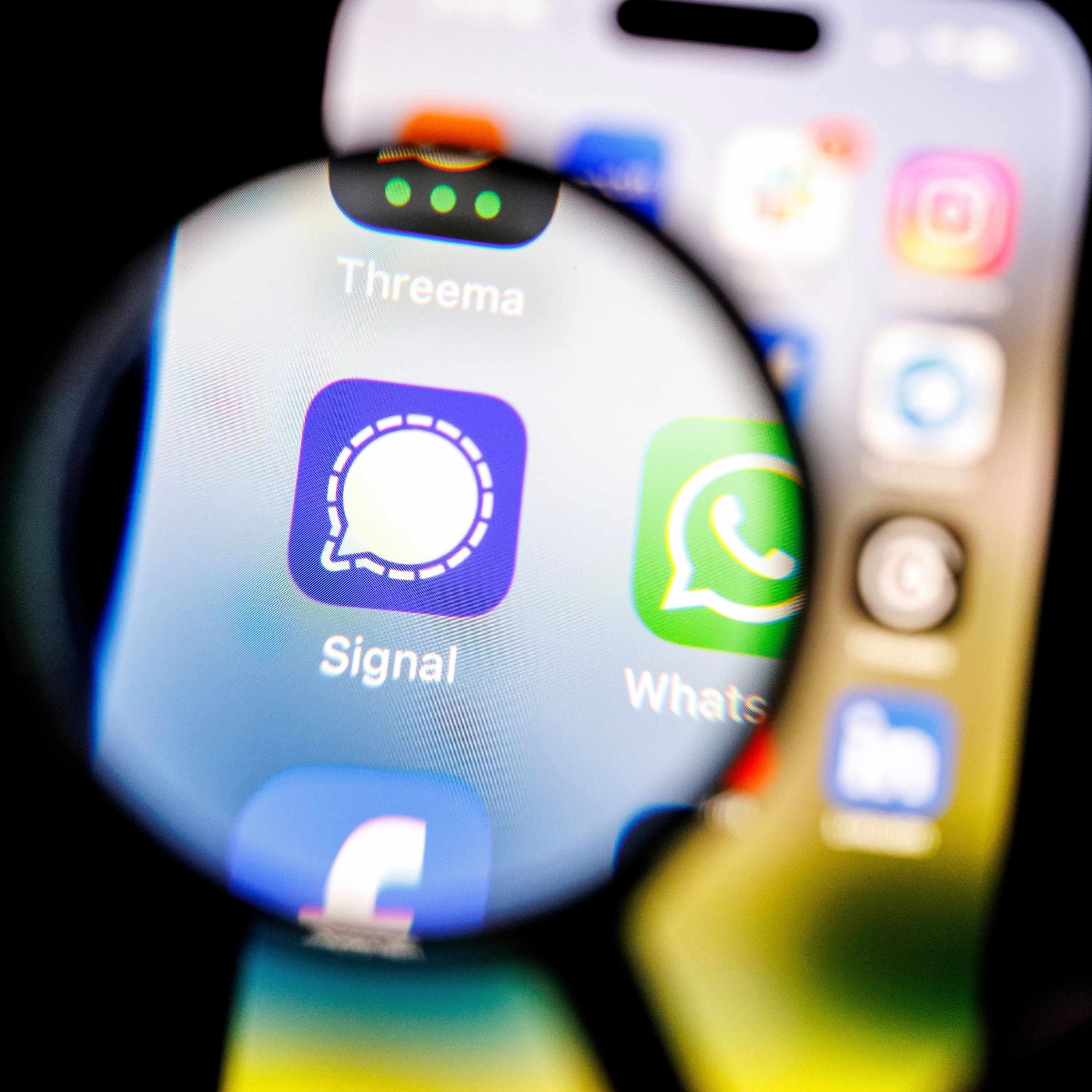
What A Day
How AI Is Weaponizing Voicemail
00:20:24
As artificial intelligence programs become more widely accessible, so too do increasingly sophisticated deepfake scams that take advantage of the technology. Earlier this month, the State Department confirmed reports that an imposter pretending to be Secretary of State Marco Rubio reached out to at least five high-ranking government officials. It wasn’t the first time a member of the Trump administration had been impersonated by AI; in May, the White House confirmed a similar incident involving Chief of Staff Susie Wiles. But these days, you don’t even have to be a big-name politician to end up on the wrong side of a deepfake scam. If your image and voice exist on the internet, enterprising bad actors might be able to use them against you. Reporter David Gilbert, who covers disinformation and online extremism for Wired, joins us to talk about the risks deepfakes pose to the public and how all of us can protect ourselves. And in headlines: President Donald Trump sued The Wall Stree...
Loading summary
Transcript55 lines
- [00:03]
Jane Costen
It's Monday, July 21st. I'm Jane Costen, and this is what a day. The show that is not feeling great about new research showing that ChatGPT can.
- [00:10]
Unknown Host
Induce mental health crises.
- [00:13]
Jane Costen
Not feeling great about that at all. On today's show, President Donald Trump sues the Wall Street Journal for at least $10 billion over an article claiming he sent a lewd birthday card to convicted sex offender Jeffrey Epstein. And CBS pulls the plug on the Late show with Stephen Colbert. But first, let's talk about artificial intelligence, not the weird AI Facebook slop in which Trump single handedly rescues a dog from a flood. No, today we're talking about deepfakes. This month the State Department confirmed reports that an imposter reached out to at least five high ranking government officials claiming to be Secretary of State Marco Rubio. The contacts included a US Senator, a governor, and a handful of foreign ministers. And the imposter used texts, signal messages, and most concerningly, voicemail. And it's not the first time a member of the Trump administration has been impersonated by AI. Here's Fox News. Back in May, federal authorities are investigating.
- [01:13]
Susie Wiles
Efforts to impersonate White House Chief of Staff Susie Wiles. The Wall Street Journal reporting that an unknown suspect was acting as Wiles over calls and texts to big time Republicans and business executives. The impersonator reportedly was asking for cash and pardon advice. Reports also say AI may have been.
- [01:35]
Stephen Colbert
Involved to imitate her voice.
- [01:37]
Jane Costen
The pardon advice reference one unnamed lawmaker says the Wiles impersonator asked him to make a list of people for the president to pardon. Which knowing the actual people Trump has already actually pardoned is worrying. In fact, all of this is worrying because yes, deepfakes are very bad for our politics. But many of us, like me for example, have used our real voices and our real images online for years. And that makes it incredibly easy for bad actors to use them against us. And not even for political purposes, but for even simpler, stupider reasons, like to get money out of a colleague or relative who thinks they're talking to you but are actually talking to not you. You don't even have to be a public figure like me. If you're posting videos of yourself on social media, you're voice and pictures can be used too. So for more on the risks deepfakes pose to us all, I spoke to David Gilbert. He covers disinformation and online extremism for Wired magazine. David, welcome to Whataday.
- [02:34]
David Gilbert
Thanks for having me. It's good to be here.
- [02:36]
Unknown Host
So, as I'm sure you saw The Washington Post reported recently that someone posed as Secretary of State Marco Rubio using AI to send messages via voicemail, text and everyone's favorite app signal to members of the United States government as well as foreign governments. What's your take on all of this?
- [02:53]
David Gilbert
I guess my take is that I'm very unsurprised that it's happening. I think it's probably happening a lot more than we know about. It's just that we found out about this, as you say, because of the Washington Post reporting. I think that this type of use of AI to impersonate people is just going to be happening more and more. And the fact that it's happening to someone in Marco Rubio's position is unsurprising given how sensitive the information that he has access to. And the fact that we already know as a result of signalgate, that the OPSEC of the US government or the administration right now is not exactly the best.
- [03:38]
Unknown Host
Can you talk specifically about the voicemail part? Because I think that for many of us we've gotten weird scammy text messages. But why is a voicemail, or using the voice such an effective and potent way to use AI to scam people?
- [03:53]
David Gilbert
It's probably because at the moment, AI voice cloning is probably the part of AI that works the best. It's incredibly efficient. You only need a couple of seconds of someone's voice in order to replicate it. And it is very hard to detect. A lot of the deep fake detectors out there can't detect a fake version from the real version. And I guess when you get a voicemail from someone and it sounds like them, you're much less likely to think that it's a scam because it's. I guess it's much more personal than a text message. We've kind of been trained over the years to kind of second guess text messages, maybe because there's been so many scams. Whereas voicemails, when you do get one and it sounds like you know someone from your friend or your family, you just don't tend to even consider that it might be a scam.
- [04:45]
Jane Costen
Right.
- [04:45]
Unknown Host
Especially because it's not like you're having an interaction with that voice like you'd have on a phone call. It's just someone leaving you a voicemail. And given how easily accessible government officials voices are, I mean, I hear Donald Trump's voice every day.
- [04:58]
Jane Costen
Do you think that there will be.
- [05:00]
Unknown Host
More instances of these deepfakes?
- [05:02]
David Gilbert
Without a doubt. I think they're happening across the board at the moment. The apps that you use to do this are everywhere. There are so many of them now, and they are free. And. And while some of them have steps in place to prevent you from recreating the voices of celebrities or famous people, all it is really is a checkbox. And once you do that, you can do whatever you want. And so we'll see it more with celebrities and politicians and notable figures being impersonated. But I think what is probably even more scary is that we'll also see it with highly targeted scams where people's families and friends will be impersonated, because, as you say, you might hear Donald Trump's voice everywhere at the moment. But lots of people post videos of themselves online, you know, people who aren't famous. And it's very easy for someone who's a bad actor to grab that video, take a couple of seconds of the voice, create a clone of it, and again, it's that deeply personal connection when you think you're hearing from someone's voice, a person, a friend or a family who, you know, that's. That's worrying.
- [06:07]
Unknown Host
So what can average people do to defend themselves? I'll give you an example. My husband and I, we have come up up with kind of like catchphrases or specific things that only we have ever said to each other. Where if this were to happen, you know, I have not talked about this online. I haven't talked about it on social media. So if this were to happen, even if someone with my husband's voice called me, if I said this and they did not respond in that way, I would know theoretically, this isn't real.
- [06:36]
Jane Costen
Is that a good idea?
- [06:38]
David Gilbert
That's a really good idea. I'm just thinking I need to do that with my wife if that's an incredibly good idea. It. I don't think many people do us. The thing I say over and over again about social media is whether you're sharing stuff that isn't real or you're potentially getting cotton scams is just slow down. Yes, it might seem like it's an emergency at the time, but if you take 10, 20, 30 seconds just to just call the person back, just very quickly give them a call, because that's something you might do anyway. Always take a beat. Don't necessarily give in to your emotions, which is what the scammers want you to do. And it's hugely effective because that's how people react. They don't want to wait. They want to give that money, they want to send that money, help someone out. And that's how people get caught. So, yes, the idea of having a catchphrase or a code that only you and your partner know is incredibly smart and a good idea. But. But I think generally for everyone, when you get these messages, just slow down a little bit. Just take 10 seconds to think, can I verify this some other way? By just calling the person you know and seeing if it's them that is actually sending you these messages.
- [07:52]
Unknown Host
So back to kind of bigger picture stuff. Trump's been very friendly with the tech broligarchy that's running headfirst into AI tech. He dove into crypto, and then, you know, his first buddy was none other than Elon Musk. But the provision and his shitty spending bill that would have banned states from regulating AI didn't make it to the final draft and actually made a lot.
- [08:12]
Jane Costen
Of people very upset. Do you think this means that there.
- [08:15]
Unknown Host
Could be meaningful legislation to regulate the.
- [08:18]
Jane Costen
AI Wild west at the state level?
- [08:22]
David Gilbert
I'm not optimistic. Having spent a decade covering the inability of the US Government at all levels to regulate Facebook or Twitter or any social media platform, I have serious doubts that they will be able to do anything about the AI platforms that are out there at the moment. The figures like Sam Altman and Mark Zuckerberg are so closely aligned with the Trump administration right now that you feel that if any state did stick its head above the parapet and decide that it was going to clamp down on AI to make sure that it's done in a proper and controlled manner, he may be able to persuade those state legislators to change their minds. Because Zuckerberg and Alton seem to have Trump's ear and he seems to be willing to listen to them as long as they keep funneling money into his campaigns. So I'm not terribly optimistic that any of the efforts that are going to be made are going to have any meaningful impact on these companies.
- [09:20]
Unknown Host
So is anyone trying to rein this in? Because we keep hearing either AI is going to mean all of us are happy forever, or it's going to kill us all. But is there anyone who's meaningfully trying to regulate how AI is used?
- [09:37]
David Gilbert
The European Union is, again, probably leading the way into this in terms of how it did so with social media platforms over the last decade or 15 years. And it looks like it's. It may impose some regulations on how AI is deployed and. But it's a very difficult thing to do because AI doesn't respect borders. And the impetus now seems to be more on who is going to be leader, world leader in AI. It's a race between China and the us and at the moment China is winning because it's kind of leaped ahead of the US in a lot of ways. But the fact that this is a race suggests that neither of those two countries at least are going to put any restrictions on AI development or AI use because they don't want to lose out in this war, which both governments seem to believe. You know, whoever wins that race will control the world for the next century or whatever they believe that AI is going to bring about. So the fact that that seems to be the entire focus right now suggests to me that no one is going to regulate it to any meaningful extent in the next few years.
- [10:51]
Unknown Host
Fantastic.
- [10:52]
David Gilbert
David, I'm sorry about this.
- [10:54]
Unknown Host
David, thank you so much for joining me.
- [10:57]
David Gilbert
No problem. Thanks for having me.
- [10:59]
Jane Costen
That was my conversation with David Gilbert. He covers disinformation and online extremism for Wired Magazine. We'll link to his work in our show notes. We'll get to more of the news in a moment, but if you like the show, make sure to subscribe, leave a 5 star review on Apple Podcasts and share with your friends. More to come after some ads why today is brought to you by honeylove A bra that feels good, looks good.
- [11:33]
Unknown Host
And doesn't make you want to fling.
- [11:34]
Jane Costen
It across the room when you get home at the end of the day. Sold. That's why I love honeylove. Honeylove is an independent female founded brand. All honeylove products are intelligently designed by women who actually wear them, including the founder Betsy, who's highly involved in the.
- [11:49]
Unknown Host
Development of each product.
- [11:50]
Jane Costen
HoneyLove bras are supportive and wire free thanks to bonding technology that lifts without underwire. You deserve a bra that's lightweight and comfortable without sacrificing support. Treat yourself to the most advanced bras and shapewear on the market. Save 20% off honeylove@honeylove.com wade use our exclusive link to get 20% off honeylove.com wad to find your perfect fit. After you purchase, they'll ask you where you heard about them. Please support our show and tell them we sent you. Experience the new standard in bras and shapewear with HoneyLove. Amazon One Medical presents Painful Thoughts I've been on hold to make a doctor's appointment for 23 minutes now. The automated voice has told me 47 times that my call is very important to them. Hmm, I'm starting to think that they don't think my call is important at all.
- [12:42]
Unknown Advertiser
With Amazon One Medical 24 7. Virtual care. You'll get help fast without having to.
- [12:47]
Jane Costen
Remain on the line to make an appointment. Amazon one Medical healthcare just got less.
- [12:52]
Unknown Advertiser
Painful with a variety of options. US Cellular prepaid makes finding the right wireless plan for you easy. That means you can get what you need at a price you can afford, all while staying connected. Like two lines of unlimited data for just $60 a month and a free device like the Samsung Galaxy A16.5G. US cellular prepaid terms apply. See uscellular.com for details.
- [13:15]
Jane Costen
Here's what else we're following today. Head of Lines.
- [13:21]
Susie Wiles
None of the National Guard needs to be here. There is nothing happening in our city now. There's no protests going on. And when they were assigned here, their mission was to guard two buildings. Why do you need 4,000 troops for two buildings? They've had to leave their families, their jobs, their education. For what? So that they could participate in performance art?
- [13:47]
Jane Costen
Los Angeles Mayor Karen bass spoke to ABC's this Week on Sunday about the ongoing presence of National Guard troops in the city. The Trump administration stationed a total of 4,000 of them there in June. Bass said recent Immigration and Customs Enforcement raids spread fear throughout the city, which is roughly 50% Latino. She called out the use of masks by ICE agents, as well as their lack of identification. She said people have no way of knowing the difference between an arrest and a kidnapping.
- [14:14]
Susie Wiles
You enter a profession like policing, like law enforcement, I'm sorry, I don't think you have a right to have a mask and snatch people off the street.
- [14:24]
Jane Costen
Bass said the threat of mass deportations has hurt LA's economy, and fear of ICE raids is causing people to stay home. About half of the National Guard troops have already been called back from Los Angeles, though it's unclear why the other 2000 are still there even after the protests have subsided. President Trump sued the Wall Street Journal on Friday over an article claiming he once wrote a lewd birthday letter to Jeffrey Epstein. That's the financier and sex offender who killed himself six years ago before his federal sex trafficking trial. Trump's court filing calls the Journal article, quote, false, defamatory, unsubstantiated and disparaging. The lawsuit seeks at least $10 billion in damages. The paper's parent company says it's confident the article will stand up to the legal challenge. The Journal says the alleged birthday letter was part of an album of birthday wishes compiled by Epstein co conspirator Ghislaine Maxwell in 2003. Reporters describe a sexually explicit doodle with a bizarre note from Trump Epstein reading in part may every day be another wonderful secret. Trump denies this, saying, quote, I never wrote a picture in my life, despite the fact that he's drawn multiple sketches for auction in the past and mentions doing so in his own 2008 book. If only someone would have encouraged his art career earlier in life, maybe we wouldn't be dealing with all of this. The Wall Street Journal article has, ironically, united the MAGA movement against the press. It's a brief respite from infighting over how the administration's handled any alleged Epstein files. You know, the ones that simultaneously exist and don't exist, depending on what's convenient for Trump's acolytes at any given moment, at least 85 Palestinians seeking aid across Gaza were killed Sunday, according to the Gaza Health ministry. More than 150 were wounded. The United nations says nearly 900 people seeking aid have been killed in recent weeks. The Associated Press spoke to an eyewitness. He's saying, there we were waiting for flour because of hunger. We wanted to eat and drink. Suddenly the tanks came out surrounding us. They started shooting at us and we were unable to move. We could not get the flower and we remained surrounded for about an hour and a half to two hours. The Israeli military claimed they shot at the gathering of people because they posed a threat. It also disputed the casualty numbers reported by health officials in Gaza, though it hasn't released its own victim count. The Israeli military also issued evacuation orders for parts of the region after Israel and Hamas hit another snag during ceasefire negotiations last week. Mediators say they're hopeful that recent concessions by Israel might open the door for a deal. But a Hamas video released Friday claims Israel rejected an offer that included the release of all Israeli hostages held in Gaza.
- [17:16]
Stephen Colbert
Next year will be our last season. The network will be ending the Late show in May.
- [17:23]
Unknown Advertiser
And.
- [17:31]
Stephen Colbert
Yeah, I share your feelings. It's not just the end of our show, but it's the end of the Late show on cbs. I'm not being replaced. This is all just going away.
- [17:42]
Jane Costen
Stephen Colbert announced the cancellation of the Late show to his audience at New York's Ed Sullivan Theater late last week. CBS will axe the program after Colbert's contract expires in May. The Late show has been on the air since 1993, with Colbert in the host seat for the last decade or so. The decision removes one of President Trump's most prominent and persistent critics from late night tv. CBS claims it's purely for financial reasons, but this is where things get dicey. Just days before the decision, Colbert used his monologue to call out the parent company of CBS for its $16 million settlement with Trump. Over a 60 Minutes interview with former Vice President Kamala Harris, Colbert called the settlement a, quote, big fat bribe.
- [18:23]
Stephen Colbert
As someone who has always been a proud employee of this network, I am offended and I don't know if anything will ever repair my trust in this company. But just taking a stab at it, I'd say $16 million would help.
- [18:36]
Jane Costen
The settlement comes as Paramount wants the Trump administration to approve its sale to Skydance Media. Hmm, something smells a little fishy. Trump, of course, was thrilled by the news he posted on Truth Social Friday. Quote, I absolutely love that Colbert got fired. His talent was even less than his ratings. To be clear, the Late show with Stephen Colbert is the most watched network show in late night. And that's the news. Before we go great news. What a Day has new merch, a new Whataday T shirt and bottle opener just dropped. Wearing a soft T shirt and cracking open a cold drink are two of the things that make even the roughest days better. And we're all about that at wad. The designs are really colorful and fun, and I know the WAD squad is going to love them. Grab them now@cricut.com store. That's all for today. If you like the show, make sure you subscrib Leave a review Contemplate the fact that the moon has its own time zone and tell your friends to listen. And if you're into reading and not just about how seriously NASA and other agencies are working on creating a coordinated Lunar Time, or clt, to determine what time it is on the moon. Like me, what a Day is also a nightly newsletter. Check it out and subscribe@cricket.com subscribe I'm Jane Coston, and if living on Pacific Time but operating on an Eastern Standard Time news cycle is any indication, this new lunar time zone is going to be very complicated for lunar podcasters. What a Day is a production of Crooked Media. It's recorded and mixed by Desmond Taylor. Our associate producer is Emily Foer. Our producer is Michelle Aloy. Our video editor is Joseph Dutra. Our video producer is Johanna Case. We had production help today from Greg Walters, Matt Berg, Tyler Hill and Laura Newcombe. Our senior producer is Erica Morrison and our senior Vice president of news and.
- [20:51]
Unknown Host
Politics is Adrienne Hill.
- [20:52]
Jane Costen
Our theme music is by Colin Gilliard and Kashaka.
- [20:55]
Unknown Host
We had help with the headlines today.
- [20:57]
Jane Costen
From the Associated Press. Our production staff is proudly unionized with the Writers Guild of America eas.
- [21:16]
Shankar Vedantam
Are you on the right track? What do you want to be remembered for? Is this really all there is? Asking big questions about your life can feel overwhelming, but the Hidden Brain podcast, hosted by me, Shankar Vedantam, is here to help you get started. All through the month of July, Hidden Brain will bring you our you 2.0 series with a special focus on purpose, passion and meaning. If you're feeling adrift, alone or burned out, this series is for you.
- [21:47]
Unknown Advertiser
Join us with a variety of options. US Cellular Prepaid makes finding the right wireless plan for you easy. That means you can get what you need at a price you can afford, all while staying connected. Like two lines of unlimited data for just $60 a month and a free device like the Samsung Galaxy A16.5G. US Cellular Prepaid Terms apply. See uscellular.com for details.