← What A Day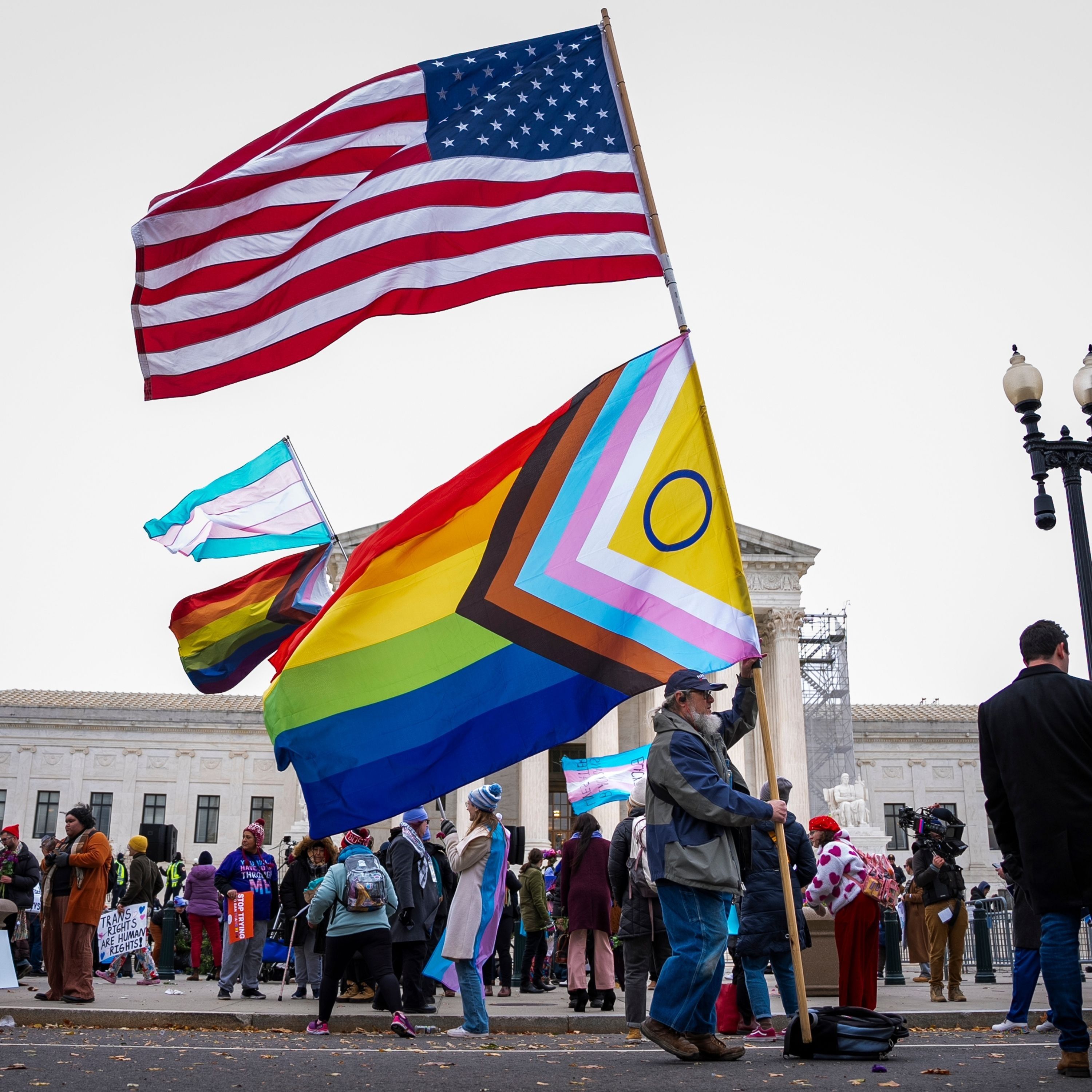
What A Day
How The Supreme Court Just Failed Trans Youth
00:22:39
The Supreme Court is staying busy with decisions. The High Court issued a 6-3 ruling on Wednesday in United States v. Skrmetti, upholding a Tennessee law that banned gender-affirming care for transgender minors. Leah Litman joins us to unpack what affect the court's ruling will have on Tennessee and a slew of other states across the country. Litman is the author of the recent NYT Best Seller "LAWLESS: How the Supreme Court Runs on Conservative Grievance, Fringe Theories, & Bad Vibes" and a host of Crooked Media's "Strict Scrutiny". And in headlines: Democrats refused to participate in a Senate Judiciary Committee hearing that looked into the mental fitness of former President Joe Biden, Medicare and Social Security's trust funds are running out of money, and President Trump is still deciding if the US will insert itself into the Israel-Iran conflict.
Loading summary
Transcript47 lines
- [00:02]
Erin Ryan
It's Thursday, June 19th. Happy Juneteenth. I'm Erin Ryan in for Jane Coston. And this is what a Day, the show that saves you time by restricting its Karen Reid murder trial acquittal coverage to this episode's introduction and conclusion only. On today's show, Senate Republicans are focusing on the most pressing issue, what happened when Joe Biden was president. Meanwhile, President Donald Trump is keeping America guessing about where his head is when it comes to possible US Involvement in Israel's military action against Iran.
- [00:46]
Donald Trump
I mean, you don't know that I'm going to even do it. You don't know. I may do it, I may not do it. I mean, nobody knows what I'm going to do. I can tell you this, that.
- [00:55]
Erin Ryan
That'S where we're at as a country. Our president is trying to get cute with war teasers. But let's start with the Supreme Court. On Wednesday morning, the Supreme Court handed down a ruling in the United States versus Scremetti. The six to three rulings, split along ideological lines, upheld a Tennessee law that banned gender affirming care for transgender minors. Here's NBC reporting on the news when it broke.
- [01:19]
Leah Littman
Good morning. We are coming on the air with breaking news from the U.S. supreme Court.
- [01:23]
Jane Coston
A decision on the fate of a.
- [01:24]
Leah Littman
Law that restricts access to hormone therapy.
- [01:27]
Jane Coston
And other health care for minors going.
- [01:30]
Leah Littman
Through a gender transition. The high just now allowing a Tennessee law that bar such gender affirming care to stand.
- [01:38]
Erin Ryan
Justice Sonia Sotomayor issued her dissent on the ruling from the bench, a rare move, and expressed sorrow for the implications of this case on the lives of trans kids and their families. By upholding the Tennessee law, the court also implicitly upheld similar bans in 24 other states. Joining me to parse what all this means is Leah Littman. Leah is the author of the New York Times bestseller How the Supreme Court Runs on Conservative Grievance, Fringe Theories and Bad Vibes, and is a host of the crooked media podcast Strict Scrutiny. Leah Littman, welcome back to what a day.
- [02:14]
Leah Littman
Thank you for having me.
- [02:15]
Erin Ryan
So the case that we are going to talk about was the US Versus Scarmetti. Who brought it and at its core, what was at issue?
- [02:23]
Leah Littman
So the case was filed by the parents of transgender minors challenging a Tennessee law that prohibited individual from accessing certain treatment to treat gender dysphoria. It's captioned as United States vs. Scormetti because during the Biden administration, the federal government intervened in the case to participate on the side of the parents of the transgender minor. So Agreeing that this Tennessee law was unconstitutional, the Supreme Court decided whether laws like Tennessee's that ban gender affirming care trigger what's called heightened scrutiny. Basically. Do they require courts to look carefully at the scrutinize its purposes and its effects, or whether instead courts should basically just defer to the legislature and kind of say anything goes as long as you have a remotely plausible reason for this law? And unfortunately, they decided this law falls into the second category of just straight deference.
- [03:26]
Erin Ryan
And Tennessee's law punished providers as well. Can you walk us through what was at stake for them? Yeah.
- [03:33]
Leah Littman
So like many healthcare bans, it imposes penalties on the doctors and providers to deter the provision of care. You know, this is, of course, similar to the abortion restrictions that target doctors, nurses, and providers. And I think that the specter of penalties has a real chilling effect, both in the context of gender affirming care as well as in the context of abortion restrictions. Because given the extent to which these states are kind of foaming at the mouth to go after individuals who are providing care for the LGBT community or women who do not want to be pregnant or who cannot be pregnant, there are real concerns that, again, states would push the limits of these laws and target providers if they come even close to running afoul of the restrictions.
- [04:22]
Erin Ryan
So let's talk about the reasoning that the justices deployed here. So even a quick reading. Great. All right, end of interview. Even a quick reading of the decision shows the court was circling around questions of sexual identity and whether the state of Tennessee could restrict medications and procedures to that help with gender affirming care that was allowed for other purposes. Like, what did they say about that ultimately?
- [04:46]
Leah Littman
So the court said two things. One, they said this law does not discriminate on the basis of sex. That doesn't make any sense. This law literally mentions sex 19 times, and still the Roberts majority said, well, that doesn't make it a sex classification. Also, the law allows, you know, CIS youth to obtain some healthcare treatments that trans youth couldn't. That is, it distinguishes based on sex assigned at birth. That also didn't seem to matter. And then I think in some ways, even more outlandishly, the court said this law does not even discriminate on the basis of gender identity. That is, it doesn't even discriminate against trans trans kids. Because even though the group that is negatively impacted by the law includes only trans kids, it's still the case that trans kids and CIS kids can access hormones and puberty blockers for other reasons besides treating gender dysphoria. And that somehow makes it not discrimination on the basis of gender identity. It's super tortured and convoluted logic that basically threatens a lot of the legal protections against discrimination. But that was their explanation.
- [06:05]
Erin Ryan
Hmm, okay, that sounds troubling. Beyond that, what struck you most? Beyond that, what struck you about Chief Justice Roberts majority opinion? Is there anything else that immediately set off alarm bells for you?
- [06:18]
Leah Littman
Well, other than that, Mrs. Lincoln, no. You know, I think that the only thing else I would say about the majority opinion is in order to reach these really wild conclusions, the Roberts majority opinion had to revive these very archaic and outdated cases on sex discrimination that had upheld laws that discriminated on the basis of pregnancy, reasoning that that wasn't sex discrimination, and in any case, it reflected biological differences and biological realities. And that hearkens back to a time and a kind of logic that just excused and justified sex discrimination on the basis of biological differences. And so by bringing back those cases and logic, I think the Court has signaled the legal protections against sex discrimination are in real jeopardy.
- [07:09]
Erin Ryan
The three dissenting Justices were Justice Sonia Sotomayor, Justice Ketanji Brown Jackson, and Justice Elena Kagan. What issues did they raise?
- [07:17]
Leah Littman
Basically everything. You know, Justice Sotomayor said, this is an easy case. The law explicitly mentions sex that is a sex classification. Also, obviously, this law discriminates on the basis of gender identity. It literally prohibits treatments for gender dysphoria and other conditions that are so inextricably bound up with what it means to be transgender and to have your gender identity not aligned with your sex assigned at birth. So the concluding passages and opening passages of the dissent were really notable. She accused the majority of abandoning judicial review exactly where it was needed and leaving trans kids and their families to political. And yeah, it was just a powerful dissent on a very sad day.
- [08:07]
Erin Ryan
Leah, it sounded like you could see this being a Trojan horse for taking on other protections against discrimination. Can you go into that a little bit more?
- [08:18]
Leah Littman
When the Court is citing these old cases that upheld laws that discriminated against pregnant people, what the Court is saying is, look, there are certain biological differences between men and women that allow states, maybe the federal government and legislatures to treat men and women differently. The Court had until recently, basically abandoned that kind of logic. So in an earlier sex discrimination case, United States vs. Virginia, Justice Ginsburg wrote an opinion that rejected virginius argument that the biological differences between men and women allowed the state to adopt a flat out ban on women matriculating at the Virginia Military Institute vmi. And so I think the concern is if you revive this idea that there are these inherent biological differences between men and women and that is somehow distinct from sex, or it justifies sex discrimination, you are providing a real blueprint for all kinds of laws that treat men and women differently. And it's not gonna be surprising to everyone that when you treat men and women differently, it's usually the women who are faring less well.
- [09:37]
Erin Ryan
Okay, so now what. What is gonna change for the families seeking trans care in Tennessee for their kids? And what's gonna happen in other states that have similar bans and punishments for providers on the books?
- [09:49]
Leah Littman
So I think the unfortunate reality is in Tennessee and in states with laws similar to Tennessee, these bans on gender affirming care are going to go into effect, and that is catastrophic for families with transgender individuals who are part of them, because you are depriving individuals of care that has been described as life saving, health saving, you know, that preserves their ability to go out in society as they are. You know, if you're looking for an upside, I would say two things. One is the majority opinion did not reason as broadly as it could have. In particular, it did not decide the question of if a legislature adopted a law that singled out transgender individuals as such, would that law trigger heightened scrutiny and require more careful review? Now, the concerning thing is Justice Barrett, together with Justices Thomas and Alito, wrote that even if a law did that, even if it specifically targeted trans individuals, they too would give that considerable deference and not subject it to meaningful scrutiny. So that's not especially heartening for what the Court would say in the event that issue came to them in the future. Also, put down those Amy Coney Barrett is a secret moderate liberal. Who's going to save us takes, please. You know, the. The second thing I would say is it is clear that the justices are heavily influenced by the cultural milieu and society they are a part of. And I think that should give us all agency to shape the narrative around transgender rights and fight back against the bad faith attacks on them and efforts to depict, you know, transgender rights as somehow illegitimate or problematic. And so I think we should all recognize that and fight back against some of these false narratives about the fight for transgender rights.
- [11:51]
Erin Ryan
So let's talk about how this will kind of have a practical application moving forward. If we look at the abortion issue, for example, the Dobbs v. Jackson decision led to a patchwork of regulations where women can't get abortions in some states, and lawmakers have attempted but have so far not succeeded in restricting their travel to other states. And then there's other states that allow abortion and even assist non residents who seek it and try to block the prosecution of those people. Like it's a it's a big old mess. Will this case about gender care for minors lead to a similar situation for trans youth and their families?
- [12:24]
Leah Littman
Yes, absolutely. And honestly, states have been even more aggressive at trying to limit families ability to cross state lines to obtain gender affirming care. Some states have attempted to label that child trafficking or trafficking, which is just outlandish and horrifying. But yes, this is absolutely going to create a patchwork of protections where not all states are going to ban gender affirming care. Some will, and some will even go a step further and try to prohibit residents of their own state from obtaining care elsewhere.
- [12:55]
Erin Ryan
Well, that is. That is a bleak note to end on. But alas, we are out of time. Leah Littman, thank you so much for joining us.
- [13:03]
Leah Littman
Thanks for having me.
- [13:04]
Erin Ryan
That was my conversation with Leah Littman, author of how the Supreme Court Runs on Conservative Grievance, Fringe Theories and Bad Vibes, and a host of the Crooked Media podcast Strict Scrutiny. We'll get to more of the news in a moment, but if you like the show, make sure to subscribe, leave a five star review on Apple Podcasts, watch us on YouTube and share with your friends. More to come after some ads.
- [13:38]
Jane Coston
What a day is brought to you by Zebiotics Pre Alcohol let's face it, after a night with drinks, I don't bounce back the next day like I used to. I have to make a choice. I can either have a great night or a great next day. That is, until I found pre alcohol Zebiotics. Pre Alcohol Probiotic Drink is the world's first genetically engineered probiotic. It was invented by PhD scientists to tackle rough mornings after drinking. Here's how it when you drink, alcohol gets converted into a toxic byproduct in the gut. It's a buildup of this byproduct, not dehydration, that's to blame for rough days after drinking. Pre alcohol produces an enzyme to break this byproduct down. Just remember to make pre alcohol your first drink of the night. Drink responsibly and you'll feel your best tomorrow. Every time I have pre alcohol before drinks, I notice a difference the next day. Even after a night out, I can confidently plan on getting in my workout without worrying. Summer is here, which means more opportunities to celebrate the warm weather before that backyard barbecue brew, glass of Pinot, watching the sunset at the beach, or cocktail by the campfire. Don't forget your Zebiotics pre alcohol. Drink one before drinking and wake up feeling great and ready to take on the next day and all that summer has to offer. Go to zbiotics.com wad to learn more and get 15% off your first order when you use code WAD at checkout. Zebiotics is backed with a 100% money back guarantee, so if you're unsatisfied for any reason, they'll refund your money, no questions asked. Remember to head to zbiotics.com wad and use the code WATT at checkout for 15% off.
- [15:04]
Dick Durbin
Jen's the mother of two teens. Her online shopping cart is always full of amps and auxiliary cables, so you might think she's funding her kid's garageband. But what you don't know is she's actually the one shredding on stage. With TransUnion's 360 degree view of consumer identity, you can get a clear picture of your marketing audience and reach people like Jen with messages that are more headbanger, less homebody. See how TransUnion is bringing clarity to marketing chaos through deeper insights, smarter reach and Precise measurement@transunion.com clarity when a cold.
- [15:36]
Ted Cruz
Has you down, it's the little comforts that lift you up. A warm blanket, a cup of tea and a tissue that actually feels good on your skin. Infused with aloe Kleenex Cooling plus Aloe provides a hint of cooling freshness to help your skin feel restored. So whether your skin is feeling dry, chafed or irritated, you're only one wipe away from helping it feel relieved. The next time you have a cold, get a hint of instant cooling relief with new Kleenex Cooling plus Aloe for whatever happens next, grab Kleenex.
- [16:08]
Erin Ryan
Here's what else we're following today.
- [16:10]
Jane Coston
Header lines.
- [16:15]
Erin Ryan
You've been answering questions about whether you are moving closer.
- [16:19]
Leah Littman
You believe the US Is moving closer to striking Iranian nuclear facilities. Where's your mindset on that?
- [16:24]
Donald Trump
Can't say that, right? You don't seriously think I'm going to answer that question? Will you strike the Iranian nuclear component and what time exactly, sir? Sir, would you strike it? Would you please inform us so we can be there and watch?
- [16:39]
Erin Ryan
There you have it. The Commander in Chief of the United States of America playing a will he or won't he Game on the White House lawn with the possibility of striking Iran's nuclear sites. And President Trump kept at it all day Wednesday as Israel and Iran continued to fight, he told reporters in the Oval office. I like to make a final decision one second before. He has that in common with my three year old. He also said this about Iran and.
- [17:05]
Donald Trump
They want to meet, but it's, you know, it's late to meet, but they want to meet and they want to come to the White House. They'll even come to the White House. So we'll see. I may, I may do that.
- [17:13]
Erin Ryan
If you feel uneasy, you are not alone. Iran's supreme leader on Wednesday rejected Trump's calls for an unconditional surrender. He also warned that any US Military intervention would be met with, quote, irreparable damage. Oh, boy. Israel started attacks last week, claiming an effort to wipe out Iran's nuclear program. Iran retaliated and hundreds of people have been killed in the back and forth. In an urgent notice, U.S. ambassador to Israel Mike Huckabee said the U.S. is working to evacuate American citizens who want to leave Israel. This is where we are at 5pm Pacific on Wednesday. Where we'll be tomorrow morning, we don't know. Democrats refused to participate in a Senate Judiciary Committee hearing Wednesday called Unfit to Serve. Ooh, who's unfit to serve? The hearing looked into an alleged cover up of former President Joe Biden's mental decline during his time in office. The only Democratic senators who attended were Dick Durbin of Illinois and Peter Welch of Vermont. Durbin chastised committee Republicans for neglecting to investigate other issues. He cited the assassination of a Minnesota state lawmaker, President Trump's deployment of the military against protesters in Los Angeles, and the recent handcuffing of a US Senator during a Homeland Security press conference.
- [18:30]
Dick Durbin
But instead of exercising this constitutional oversight duty, my Republican colleagues are holding this hearing. Apparently, armchair diagnosing former President Biden is more important than the issues of grave concern, which I have mentioned.
- [18:46]
Erin Ryan
After that, Durbin headed for the door. Senator Welch also left, saying the hearing wasn't relevant to his constituents. As for the Republicans, Texas Senator and world's worst Bill Pullman impersonator Ted Cruz tried calling out Democrats for standing behind Biden during a, quote, Potemkin presidency.
- [19:05]
Dick Durbin
For all of their strutting about protesting that they support democracy, not a one of them gave a damn about democracy when they pulled Biden off the ballot and dropped Kamala Harris in without a single Democrat primary voter voting for him. And you know what? Not a single Democrat is here today because not a single one of them gives a damn about the fact that they lied to the American people for four years.
- [19:32]
Erin Ryan
All that Ivy League pontificating can't hide the fact that Cruz got absolutely wrecked By Tucker Carlson this week. Israeli forces killed dozens of Palestinians in Gaza on Wednesday, including at least 11 who were seeking aid, which brings the number of Palestinians killed while seeking aid to nearly 400 since late May. That's when the Israel and U S backed Gaza Humanitarian foundation opened its first distribution center. The controversial group distributes aid using U S based private security contractors. Other humanitarian groups in the region have refused to work with the foundation. The United Nations High Commissioner for Human Rights has asked for an investigation into the group, and the head of the UN Agency for Palestine Refugees, or unrwa, also weighed in. He wrote on Twitter, quote, inviting starving people to their death is a war crime. Those responsible of this system must be held accountable. Humanitarian organizations say that the aid currently being allowed into Gaza is only a fraction of what's needed, and the UN Says the region is approaching a potential famine. Medicare and Social Security's trust funds are running out faster than anticipated, according to a Wednesday report from the program's trustees. Medicare is expected to be unable to pay full benefits by 2033 and Social Security will have to stop paying full benefits in 2034. Both projections are at least a year sooner than last year's estimate. The trustees point to declining wages and birth rates and the fact that baby boomers are in retirement. Millennials and younger workers will have to pay for boomers care, and they might not make enough to do that. The trustees say Congress needs to act fast or the benefits of more than 60 million Americans could be affected. I'm sure something in Trump's big, beautiful bill will help though, right? Actually, the biggest, darndest, best bill doesn't say too much about the program, but it might let older seniors pay less taxes on Social Security income. Budget hawks say that will hurt Social Security in the long run. And that's the news. Before we go. It's the final week of New York City's mayoral primary, and on the latest episode of Pod, Save the People host and activist Deray McKesson talks to Brad Lander, the city's controller and a candidate for mayor. Lander was the New York elected official who was handcuffed while trying to steer a man away from ICE officers this week, a moment that speaks to the rising political tensions across the country. Check out their full conversation on Pod Save the People. Wherever you get your podcasts. That's all for today. If you like the show, make sure you subscribe, leave a review, distract yourself from the horrors of the world by closely following a Boston area murder trial and tell your friends to listen. And if you're into reading and not just about how the Dallas Cowboys cheerleaders are getting a 400% raise like me, what a Day is also a nightly newsletter. Check it out and subscribe@crooked.com subscribe I'm Erin Ryan and stay off the roads in Camden, Massachusetts.
- [22:59]
Jane Coston
What a Day is a production of Crooked Media. It's recorded and mixed by Desmond Taylor. Our associate producer is Emily Foer. Our video editor is Joseph Dutra. Our video producer is Johanna Case. We had production help today from Greg Walters, Matt Berg, Sean Ali, Tyler Hill, and Laura Newcombe. Our senior producer is Erika Morrison and our Senior Vice President of News and Politics is Adrienne Hill. Our theme music is by Colin Gilliard and Kashaka. Our production staff is proudly unionized with the Writers Guild of America. EAS.
- [23:42]
Mike Huckabee
Greg's car shopping and since he lives in Florida, your marketing's probably pushing something a little sporty. Too bad you don't know he's planning a move to Alaska. Turns out marketing without a clear picture of your customer is like driving a convertible in the Arctic. A bad idea. Learn how TransUnion's 360 degree view of customer identity is bringing clarity to marketing chaos through deeper insights, smarter reach, and Precise measurement@transunion.com clarity when a cold has.
- [24:15]
Ted Cruz
You down, it's the little comforts that lift you up. A warm blanket, a cup of tea, and a tissue that actually feels good on your skin. Infused with aloe Kleenex Cooling plus Aloe provides a hint of cooling freshness to help your skin feel restored. So whether your skin is feeling dry, chafed or irritated, you're only one wipe away from helping it feel relieved. The next time you have a cold, get a hint of instant cooling relief with new Cleanx Cooling plus Aloe for whatever happens next, grab Kleenex.