Loading summary
Transcript32 lines
- [00:00]
A
Foreign. February 11th. I'm Jane Coston, and this is what a Day. The show that stands with the left leaning magazine the Nation, which has formally nominated the city of Minneapolis and its people for the 2026 Nobel Peace Prize. As the editors of the magazine write, quote, the people of Minneapolis and their elected leaders have demonstrated an extraordinary and sustained commitment to human dignity and to the protection of vulnerable communities. Indeed, On today's show, Commerce Secretary Howard Lutnick admits to lunching with his kids on Epstein island, but says he doesn't recall why. And Department of Homeland Security officials testified before Congress about the agency's unprecedented wave of immigration enforcement. Will they take responsibility for their officers violence against American citizens? Of course not. But let's start with the environment. President Donald Trump isn't a fan of the environment, I mean, or anything that would potentially help us not destroy it. Case in point, Trump is doing everything he can to stymie wind energy because he hates windmills. Like, really hates windmills. Here he is at the National Prayer Breakfast last week ranting about them. We haven't approved anything in wind, right, Doug?
- [01:19]
B
Nothing. Because it's, you know, just, it's a quick way to losing money, losing beauty, losing your fields, killing your birds. And other than that, it doesn't work.
- [01:29]
A
He really covered a lot of ground at the National Prayer Breakfast. Do we even need the State of the Union? What else could there be to say? But the Trump administration is not just against windmills. Over the past year, it's been eliminating policies aimed at stopping or even just slowing down climate change. And now it may go even further. This week, the Environmental Protection Agency plans to repeal the endangerment finding that has been the basis of rules limiting greenhouse gas emissions since 2009. According to the Wall Street Journal, that repeal will largely eliminate compliance programs and reporting obligations for industries that formerly had to abide by greenhouse gas emission standards. So to talk more about this endangerment finding and where the fight against climate change goes from here, I spoke to Leah Stokes. She's an associate professor at UC Santa Barbara, where she works on climate and clean energy policy. She's also co host of the climate podcast A Matter of Degrees. Leah, welcome to Water Day.
- [02:23]
C
Oh, thanks so much for having me.
- [02:25]
A
On this thing that Trump is taking on. It's called an endangerment finding. The EPA issued it back in 2009 during the Obama administration. What does it say and what role does it play in US Climate policy right now?
- [02:39]
C
Yeah, so it's a bit of a complicated story way back in the early 60s, the United States passed the Clean Air act, and then it was, you know, expanded over time. And eventually Massachusetts decided to sue the EPA and say, hey, greenhouse gases are also an air pollutant, and you should regulate them under the Clean Air act as a pollutant. Uh, the Supreme Court agreed with Massachusetts. And so when Obama was president in his first term, he issued an endangerment finding. It basically says, yes, greenhouse gases are an air pollutant that endangers Americans lives. And they've used that as the basis of doing a bunch of different regulations over time. Of course, every time Trump becomes president, which is hopefully the last time, now he repeals all of those policies. And, and so what he's doing now is getting rid of the underlying ability to set those regulations in the first place.
- [03:31]
A
The endangerment finding was based on a study. What did that science say?
- [03:36]
C
Well, the science said what you would expect it to say, that pollution, greenhouse gas pollution, is bad. It causes climate change, which does all sorts of terrible things like fires and droughts. It's terrible for humanity. It's certainly terrible for everyday Americans.
- [03:50]
A
The Trump administration has been dismantling a ton of the country's environmental protections for reasons. And you mentioned this, his taking on of the endangerment finding is a little bit different because it's not a policy, it's the legal grounds used to make the policy. So what does it mean in practice if this is repealed as expected?
- [04:09]
C
Yeah, so it's basically taking on the science. And you've seen that Trump has appointed these bunk scientists to question all sorts of climate science. And it's been sort of amazing to watch the outside scientists, line by line, critique all their BS that they try to put out. So this is just another way of saying climate change is. Isn't real, it doesn't endanger Americans. And I think most Americans have seen the fires in la, they've seen heat waves killing people, they've seen flooding and drought, and they know that the climate crisis is happening. So whether or not he believes in the science or has a bunch of climate deniers in key offices, climate change is happening now. And I think most Americans can see it.
- [04:48]
A
How do these plans to repeal the endangerment finding fit into the Trump administration's overall push to basically repeal all of climate policy?
- [04:55]
C
Yeah, I don't want to get people bummed out, because I'm not that bummed out, but Trump is terrible for the planet. He's terrible for the American people. This is just one in a large series of steps that they've taken over the last year to roll back climate policy. So of course the one big beautiful Bill act got rid of a bunch of incentives for heat pumps and solar and electric vehicles. Trump is having an all out war on any solar or wind project across the country, trying to block it in a thousand different ways. You know, he's been rolling back car standards, so. So this is just yet another move in the direction of big polluters because they profit on every year that we delay action. The more time that we have to keep burning fossil fuels, the more fossil fuel executives make money. And you can see this really clearly in Michigan where he is keeping open a coal plant that nobody needs to remain open. It's of course poisoning the community and it costs $600,000 a day to keep open. He doesn't need to keep this open. So who is profiting off of that? Who benefits? It's certainly not ratepayers watching their electricity bills go up and it's not everyday people breathing in dirty air. So this is really The Trump administration's M.O. in my opinion. It's a very corrupt administration. That's a sort of pay to play. And the fossil fuel industry is sort of the number one player when it comes to quid pro quo with the Trump admin.
- [06:16]
A
To that point. We know this move is not great for humans, climate policy, the world. But what would repealing this endangerment finding mean for US businesses? Because obviously fossil fuel companies would be thrilled about this. But something I've noticed is how there's been some reticence actually from a lot of corporations to say, start drilling in the Arctic or using a lot of the open doors the Trump administration is trying to give because they also want to look good to us. And people in general are not a huge fan of pollution.
- [06:49]
C
Yeah, look, I think the fossil fuel industry's days are numbered. So they're not drilling just because Trump has been giving them a green light, because the economics aren't necessarily there. The fossil fuel industry is not having a great time. Oil prices are not that high. It's not really economic. And as we move more towards electric vehicles and heat pumps and renewable energy like solar and wind, we don't need as much of these fossil fuels. And so they are really just trying to hang on for dear life here. And I think what the endangerment finding repeal does is it sends a signal across all of society that like, hey, you don't need to worry about this very much. You don't need to start moving in the right direction. And that's what really concerns me. It's that when we have a signal from our federal government like this is the direction we are going in, then a lot of people can, you know, follow along with that. And unfortunately, with Trump, he has no directionality. He's just like up and down and sideways and all over the place. And so we just don't have that kind of clear message to say it's time to move away from fossil fuels.
- [07:47]
A
Here's a question for you. Is there any climate policy the Trump administration has not touched?
- [07:52]
C
Yeah. So there are still solar and battery incentives. They're more on the corporate side than for everyday Americans. And so especially with big growth in data centers and AI, we are going to have to keep building solar and batteries. I think that's some good news. They also didn't repeal the everyday rebates to help people get a heat pump in their home. So there's still all these programs in the states to help people do that. So I think there's still some things happening. It's easy to kind of say everything is terrible. And certainly, you know, this is not a good administration for the planet or for everyday people's pocketbooks. But there are still signs of progress happening on climate policy to what you were just saying.
- [08:31]
A
We've got this moment in which clearly Trump hates wind because he has a thing about windmills. You've got fossil fuel executives who are lining their pockets, but you also have an American populace that is very interested still in solar, very interested in electric vehicles. You even kind of have that weird Maha crossover where they're very interested in environmentally friendly practices while also supporting this administration. Look, I don't get that, but where do you expect the Trump administration to go from here on these issues?
- [09:04]
C
Yeah, I have a neighbor who's really into the birds and is a big Trumper, and I'm like, you know, he's not good for the birds. I don't know if she missed that memoir. Look, I think that everyday people can continue to make action here. I'm in a house right now that's running on clean solar energy. I've got heat pumps, electric vehicles, electric bikes. The future is here now, and we're seeing so many countries around the world continue to make progress. If you're feeling sad, go look at the price of solar panels in Pakistan because they're cheaper than wood. Go look at the deployment rate of electric mopeds in Nepal. The world is really moving in this direction. And you've seen, for example, Canada, with all these horrible tariffs and economic warfare that Trump is doing. They decided to partner with South Korea to start making electric vehicles in Canada. So this is the movement, and there's still so many Americans, you know, hundreds of millions of Americans who get it, who are buying electric cars, who are putting solar on their roof, and we can still keep making progress.
- [10:03]
A
Leah, thank you so much for joining me.
- [10:07]
C
Oh, thank you so much for having me on.
- [10:09]
A
That was my conversation with Leah Stokes, associate professor at UC Santa Barbara and co host of the climate podcast A Matter of Degrees. We'll link to her podcast in the show. Notes it's nice to remember that we all play an important role in saving the country and, oh, I don't know, the world from bad climate policies. And if you like the show, you can play an important role for us too. Please subscribe, Leave us a review on Spotify or Apple Podcasts, watch us on YouTube, and most importantly, share with your friends. It helps us find passionate, thoughtful listeners like you. We'll be back after some ads. Foreignay is brought to you by ZBiotics. Let's face it, after a night with drinks, I don't bounce back the next day like I used to. I have to make a choice. I can either have a great night or a great next day. That is, until I found Pre Alcohol Zebiotics. Pre Alcohol Probiotic drink is the world's first genetically engineered probiotic. It was invented by PhD scientists to tackle rough mornings after drinking. Here's how it when you drink, alcohol gets converted into a toxic byproduct in the gut. It's a buildup of this byproduct, not dehydration, that's to blame for rough days after drinking. Pre alcohol produces an enzyme to break this byproduct down. Just remember to make pre alcohol your first drink of the night. Drink responsibly and you'll feel your best tomorrow. Every time I have pre alcohol before drinks, I notice a difference the next day. Even after a night out, I can confidently plan on working out without worrying. Ready to try it? Go to zbiotics.com wad now. You'll get 15% off your first order when you use WAD at checkout. Plus, it's backed by a 100% money back guarantee, so there's no risk. Subscriptions are also available for maximum consistency. Remember to head to zebatdicts.com wad and use the code WAD at checkout for 15% off. Wadaday is brought to you by Mill Food Waste is one of those problems that feels huge and impossible to fix. But here's the wild Most food waste comes from our homes, and that means we can actually do something about it. Mill is the odorless, effortless, fully automated food recycler. Potato peels, avocado pits, chicken bones, even dairy. Mill takes almost anything while you sleep. Mill quietly transforms those scraps into nutrient rich, shelf, stable grounds. No mess, no smells, no fruit flies. Mill can process up to 10 pounds overnight, and it can work for weeks before you even have to think about emptying it. You can use the grounds in your garden, add them to curbside compost, or Mill can even pick them up and get them to a small farm for you. We have a mill on our office kitchen and it's made a huge difference. Less food waste going to well waste and no smell. Try Mill risk free for 90 days and get $75 off at mill.com wad and use code wad at checkout. That's $75 off at mill.com Wad and use code wad mail.com waad and use.
- [13:01]
D
Code waad let's do the 60 Second Savings Challenge Step 1 Download Rocket Money. Step 2 Link your accounts and see every subscription you're paying for. Tap one you don't use and cancel it. That's money back every month. Step 3 Create a financial goal $50 every paycheck, or let the app automatically move small amounts of cash. When you can afford it. In a week, you'll forget you set it up. In a month, you'll see real dollars piling up. In a year, you'll be shocked at how much money you've saved. Bonus Challenge Upload an Internet or phone bill and let Rocket Money try to lower it. You only pay if they find you savings. On average, Rocket Money members can save up to $740 a year when using all of the app's premium features. Users love the app with over 186,000 five star ratings. Make saving money the resolution you actually keep. Start the 60 second savings challenge@rocketmoney.com cancel. That's rocketmoney.com cancel rocketmoney.com cancel.
- [14:03]
A
Here'S what else we're following today. Head of Lines.
- [14:09]
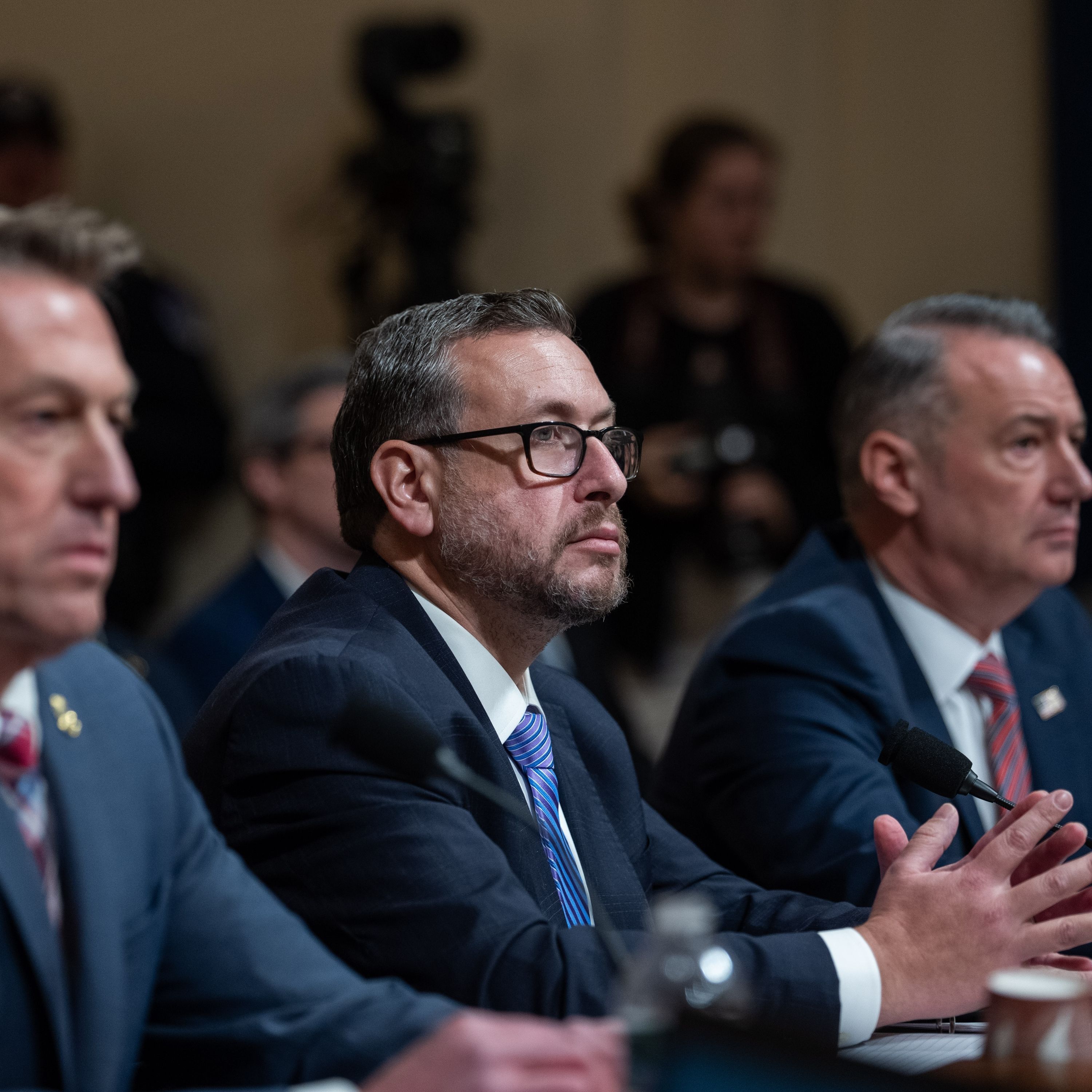
B
Will you commit yes or no to immediately unmasking every agent conducting immigration enforcement and requiring them to wear standard uniforms with identifiable badges? No. Well, it's a sad response. Your answer is completely unacceptable. People who are proud of what they do aren't hiding their identity.
- [14:33]
A
New York Democratic Representative Timothy Kennedy asked Acting Director of Immigration and Customs Enforcement Todd Lyons a fairly basic question during a House Homeland Security hearing on Tuesday and got. Well, you heard his response. The oversight hearing was the first held since the shooting deaths of Alex Preddy and Renee Goode by federal immigration officers in Minnesota last month. And while Democrats had a lot of questions for Lyons and other top brass from dhs, they didn't get very many answers. Instead, Lyons emphasized during his opening remarks that the real problem was the rhetoric of protesters and elected officials who oppose ICE's violent and aggressive tactics. He said, quote, let me send a message to anyone who thinks they can't intimidate us. You will fail, adding, we are only getting started. Ominous. The hearing comes as Democrats and Republicans are at loggerheads on funding for the Department of Homeland Security. Democrats continue to demand reforms to federal immigration enforcement. If Congress doesn't reach a deal this week, funding for the department, which also includes FEMA and the Coast Guard, will lapse on Saturday. The Trump administration has stopped flying a rainbow flag at the Stonewall National Monument in New York City. The monument is across the street from the Stonewall Inn, the gay bar where patron's rebellion against a police raid helped catalyze the modern LGBTQ rights movement. The flag was quietly removed in recent days from a flagpole at the site, which is run by the National Park Service. That last bit's a key detail in the flag's disappearance. Why? Because the agency issued a memo last month that largely restricts the agency to flag the flags of the United States, the Department of the Interior, and the POW MIA flag. The Park Service says it's just complying with recent guidance. But LGBTQ activists aren't having it. They see the change as a symbolic swipe at the country's first national monument to their history, because it is.
- [16:28]
B
Did you, in fact, make the visit to Jeffrey Epstein's private island? I did have lunch with him as I was on a boat going across on a family vacation. My wife was with me, as were my four children and nannies I had another couple with. They were there as well, with their children. And we had lunch on the island, that is true, for an hour. And we left with all of my children, with my nannies and my wife all together.
- [17:01]
A
As opposed to what? Leaving them there? Commerce Secretary Howard Lutnick testified before a Senate Appropriations subcommittee on Tuesday. And guess what? Lutnick acknowledged that he had met with Jeffrey Epstein After 2008, when the late financier had been convicted for soliciting prostitution from a child. That's despite Lutnick's previous claim that he had cut ties with Epstein after 2005. During the hearing, Lutnick tried to downplay his relationship with Epstein. At one point, he said he had, quote, nothing to hide, despite, you know, the hiding. The secretary described his contact with Epstein as a handful of emails and a pair of meetings that were years apart, including that boat lunch with the nannies. Democrats and some Republicans are directing more and more scrutiny at Lutnick, but the White House has his back. Here's White House Press Secretary Caroline Levitt at a briefing Tuesday.
- [17:53]
C
So does the White House stand behind Secretary Lutnick right now? Or given what he has said today, has there been any shift in how the White House is viewing Secretary Lutnick's performance? Ms. No. Secretary Lutnick remains a very important member of President Trump's team, and the president fully supports the secretary.
- [18:11]
A
One thing is guys who yacht together stand together. An affidavit unsealed on Tuesday provides the first public justification for an FBI search at election offices in Fulton County, Georgia. Last month, the FBI seized boxes of voter ballots collected from the 2020 presidential election. You know, the one President Trump famously lost. The controversial search is part of a criminal investigation that basically circles around years old claims of fraud and irregularities that didn't convince state authorities or courts to side with Trump. Here's the the affidavit reveals the criminal investigation originated from a referral by Kurt Olson. That's the very same Kurt Olson who served as Trump's 2020 campaign lawyer. And the very same Olson who lost a Supreme Court case that challenged the election outcome. Huh? That didn't stop Trump from making Olson a temporary administration official overseeing the attempt to investigate Trump's loss. Can't blame Trump for trying. I mean, Olson's got plenty of experience, just not a lot of it on the winning side, at least so far. And that's the news. Before we go, it's time to warm up for the midterms with sweatshirts from the Cricut store. There are styles for everyone. Crew necks and hoodies, zip ups and all black options for people who spill coffee on everything they wear. If you're looking for your election year emotional support sweatshirt, I particularly love the Call Congress crew neck, the America Wall supplies last zip up and the classic Crooked logo hoodie. Stop huddling around your overheating phone for warmth and pick up some cozy merch to help you get through this year. Head to crooked.com store to shop sweatshirts. That's all for today. If you like the show, make sure you subscribe, leave a review, celebrate the wonders of ski jumping and tell your friends to listen. And if you're into reading and not just about how we should honor the athletes who stare down the Italian ski jumps and say, sure, I'll leap off that. Like me, what a Day is also a nightly newsletter. Check it out and subscribe@cricut.com subscribe I'm Jane Kostin and German Olympic ski jumper Philipp Raimund won gold on Monday despite being afraid of heights. I am also afraid of heights and I will not be competing in ski jumping. What a Day is a production of Crooked Media. It's recorded and mixed by Desmond Taylor. Our associate producer is Emily Foer. Our producer is Kaitlyn Plummer. Our video editor is Joseph Dutra. Our video producer is Johanna Case. We had production help today from Greg Walters and Matt Berg. Our senior producer is Erika Morrison and our senior Vice president of news and Politics is Adrienne Hill. Our theme music is by Kyle Murdoch and Jordan Kanter. We had help today from the Associated Press. Our production staff is proudly unionized with the Writers Guild of America East.
- [21:27]
C
Ever see an idea so clearly in your head but struggle to find the time to get it all done? Wix helps you go from eh, I'll get to it to done. Build a full site just by describing your idea. Let an AI agent handle daily tasks, plan your next marketing campaign or help out customers so you can grow your business the way you want without it taking over your life. Try it out@wix.com if you're the purchasing.
- [21:55]
D
Manager at a manufacturing plant, you know having a trusted partner makes all the difference. That's why hands down, you count on Grainger for auto reordering with on time restock. Your team will have the cut resistant gloves they need at the start of their shift and you can end your day knowing they've got safety well in hand. Call 1-800-GRAINGER click granger.com or just stop by Grainger for the ones who get it done.
- [22:23]
A
Early Birds Always rise to the occasion for summer vacation planning because early gets you closer to the action. So don't be late. Book your next vacation early on VRBO and save over a hundred hundred and twenty dollars. Rise and shine. Average savings $141.00 select homes only.