← What A Day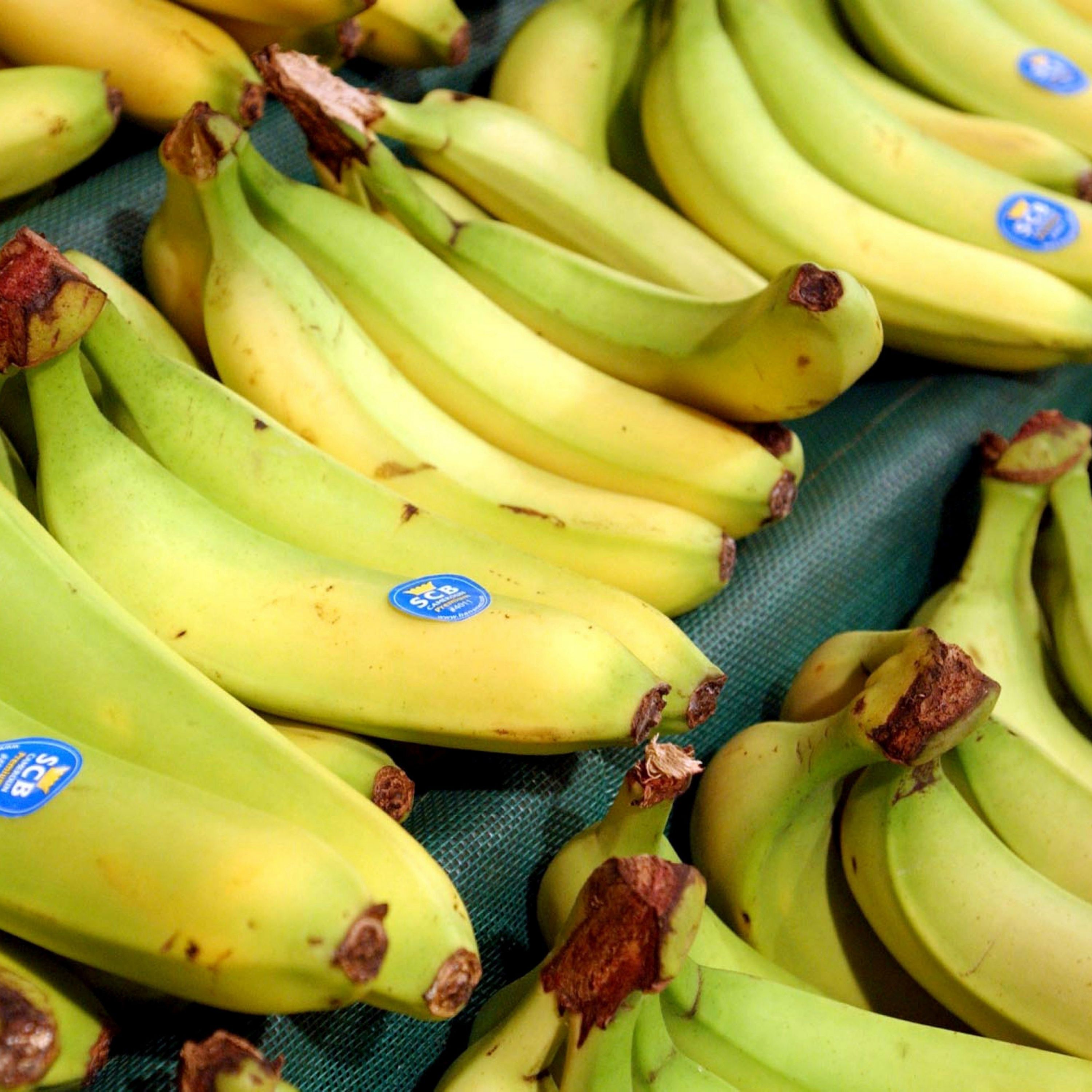
What A Day
If Tariffs Are So Great, Why Are There So Many Exemptions?
00:25:37
President Donald Trump loves tariffs. But according to a new analysis from Politico, more than half of US imports right now are not subjected to them. To find out why, we spoke to Paroma Soni. She's a data and graphics reporter at Politico, where she covers trade, immigration, agriculture and politics.And later in the show, two mass shootings occurred over the weekend — one in Sydney, Australia and another at Brown University in Rhode Island. We talk to Talib Reddick, president of Brown University's Undergraduate Council of Students. In headlines, peace discussions continue on how to end Russia's war in Ukraine, Republicans scramble to pass healthcare legislation before the end of the year, and some GOP members want to introduce new affordability legislation to save their seats in the midterms.
Loading summary
Transcript69 lines
- [00:03]
Jane Coaston
It's Monday, December 15th. I'm Jane Coston and this is what a day. The show asking President Donald Trump to MoveOn.org the election was rigged in 2020. We have all the ammunition, all the stuff, and you'll see it come out. It's coming out in truckloads. Look, we all have things we can't quite get over. The series finale of the Sopranos, the time we spent watching Cruel intentions, too. But Mr. President, it's been more than five years. There's a lot going on right now. Time to pack it. On. Today's show, Republicans scrambled to pass healthcare legislation before the end of the year. And two mass shootings occurred over the weekend, one in Sydney, Australia, and another at Brown University in Rhode Island. We talk to Brown University's student body president later in the show. But let's start with tariffs. Donald Trump loves tariff tariffs. He'd take a tariff on a date and he'd even pay. He loves tariffs so much that on Tuesday, he went on a loving tangent about them at a rally in Pennsylvania. Remember when I said tariff? My favorite word is tariff. True.
- [01:12]
Talib Reddick
But then I got a lot of.
- [01:13]
Jane Coaston
Heat from the fake news. Look at all of them back there. He is also very upset that apparently you don't love tariffs. You. In an interview with the Wall Street Journal on Friday, he told the paper that he didn't know voters would understand that all of his effort on the economy was good and awesome. He said, quote, I've created the greatest economy in history, but it may take people a while to figure all these things out. He went on to say, quote, all this money that's pouring into our country is building things right now, car, plants, AI, lots of stuff. I cannot tell you how that's going to equate to the voter. All I can do is do my job. His job, which apparently is making tariffs. But here's my question. If tariffs are so great, why are there so many exemptions? According to a new analysis from Politico, more than half of US Imports are not getting hit by the president's emergency tariffs, tariffs that Trump has said are the only thing standing between us in, quote, 1929 all over again, a great Depression. So why so many exemptions? To find out, I spoke to Paroma Soni. She's a data and graphics reporter at Politico, where she covers trade, immigration, agriculture, and politics. Paroma, welcome to Water Day.
- [02:27]
Paroma Soni
Thank you. I'm happy to be here.
- [02:29]
Jane Coaston
So President Trump first unveiled these widespread reciprocal tariffs back in April. What countries did they apply to And I think, more importantly, what were they supposed to do?
- [02:40]
Paroma Soni
So the reciprocal tariffs, they were called Liberation Day tariffs. They apply to almost every country in the world.
- [02:46]
Jane Coaston
Yes. And I believe a country that was just penguins.
- [02:50]
Paroma Soni
Correct. There were some small uninhabited islands that were facing tariffs around 50%, with the exception of four or five countries. All countries were tariffed at a baseline of 10%. And then about 60 countries had higher tariffs. And it was an effort by Donald Trump to sort of address the growing trade deficit that the US has with a lot of different countries. He declared this widening trade deficit as a national emergency. And he used this law from the 1970s called the International Emergency Economic Powers act, to impose these blanket tariffs on most of the world. And what they were supposed to do was essentially rebalance America's trade deficit. He said it would raise revenue, it would boost manufacturing, among other things.
- [03:37]
Jane Coaston
I noticed that you used air quotes when you said rebalance, because I'm gonna guess that you and I both understand that having a trade deficit isn't like a bad thing. Like, I have a trade deficit with my grocery store. I have never sold them anything.
- [03:52]
Paroma Soni
Right. And then partly the reason why you have trade deficits or the way that trade around the world works is that you have to import some things, especially things that you do not produce in your own country, and then you export the things that you have a surplus of. I mean, this is a simple way of explaining that trade relationship. But, you know, there are some things, like critical minerals that are largely found in countries like China, and so they dominate that market. And if you need those, which are materials that you use in everything from, like, computers to phones to missiles systems or, you know, TVs, you're going to need to import that from countries that do produce it. And you may or may not export the same amount of something else. But that's how a trade deficit works. And the idea of global trade starting in the 60s 70s is that system of reciprocity.
- [04:41]
Jane Coaston
Were there any products exempted from those tariffs at the time?
- [04:45]
Paroma Soni
When he initially announced the reciprocal tariffs, there was not a lot of guidance on what would and would not be included. It created a massive crash in the global stock market. And so the tariffs were subsequently paused for, I think, about three months, giving countries time to negotiate their rates. In that time, I think he negotiated eight trade deals with eight countries. They had outlined some exemptions. Not all of them went into effect, but for the most part, they were blanket tariffs applied to all goods coming from all countries except for, like, North Korea, Cuba, Russia, and Belarus. And Canada and Mexico.
- [05:22]
Jane Coaston
So how quickly did the rules around these tariffs start to change? Because I've been really interested in how now there's more than a trillion dollars of exemptions to these tariffs.
- [05:33]
Paroma Soni
So Trump first announced exemptions in September, and on that list were a number of, like, industrial materials and some critical minerals and infrastructure stuff that totaled about 280 billion. That was our Politico's analysis estimate based on import levels from 2024. And then in November, they exempted another $250 billion of goods that were mostly agricultural, including things like bananas, coffee, beef, some of which are not widely produced in the US Was that kind of.
- [06:07]
Jane Coaston
The main reason for that? Because I could imagine that, like, putting tariffs on coffee so that you're going to help American coffee growers is going to be tough when coffee hasn't really grown that much in America.
- [06:18]
Paroma Soni
Right. And that's exactly what it was. You know, a lot of economists already had that criticism as soon as these tariffs were announced. And I think bit by bit, the Trump administration had implemented these broad tariffs and then realized that it was not actually benefiting American consumers or like the cost of tariffs was not being borne by foreign exporters, which is something that the Trump administration has said again and again. And as grocery prices and food prices keep going up, they started adding these carve outs for things that either don't grow here or that are hard to manufacture without a certain import from another country.
- [06:55]
Jane Coaston
So these tariffs are technically still in place. They haven't been repealed, but their scope has been continuously modified and shifted over the course of the past eight months. As we head into the new year, how many products are still subject to Trump's universal 10% tariffs?
- [07:11]
Paroma Soni
Our analysis found that about $1.7 trillion are excluded from the IPA tariffs, the emergency law that I was mentioning earlier, and about 1.6 trillion are still subject to them. But I will note that those tariffs that I'm talking about are not just the reciprocal tariffs. Trump also used this law to implement emergency tariffs on Canada and Mexico. So Canada and Mexico don't face the reciprocal tariffs, but they face another tariff over what Trump calls, you know, the fentanyl smuggling across the land borders of the US China also faces a fentanyl tariff, which is in addition to the 10% baseline. So all of those tariffs are included in Politico's analysis, and we found that in practice, about half of them are excluded.
- [07:57]
Jane Coaston
What do you think that means for Trump's overall economic message? Like, he loves tariffs. He thinks tariffs are great, but he also needs to put all these exemptions to tariffs because they're doing bad things to the American consumer. So are these tariffs doing what this administration wants them to do?
- [08:13]
Paroma Soni
That is the question, right? That is the big question to be asked. The Trump administration has repeatedly promised that these tariffs would do all these great things. And then when you find out that, you know, over time, about half of the imports of the US Are excluded from these tariffs, and so it does, in some sense, undercut these promises to raise revenue. It also undercuts his messaging that these are widespread, that they're gonna affect every single country, every single product. That's not true. And, you know, they are making more and more trade deals, but as you have more and more products exempted from it, it's sort of a retreat in principle, as one of our sources put it.
- [08:52]
Jane Coaston
These reciprocal tariffs are also the subject of a Supreme Court case weighing the president's use of that 1977 Emergency powers law you've referenced, a law that Trump believes can allow him to unilaterally impose tariffs. We are still waiting on the justices to make that decision. But if they rule against the Trump administration, is there a chance these reciprocal tariffs just go away?
- [09:15]
Paroma Soni
Yeah. I mean, if the Supreme Court rules that Trump exceeded his authority in using this law to enact these tariffs, they might strike down all of the reciprocal tariffs, as well as the fentanyl tariffs on Canada and Mexico, as well as these other tariffs that they've put on India over their purchase of Russian oil, and they've put tariffs on Brazil over the treatment of their former president, Bolsonaro. And then the Trump administration would owe refunds to all of the US Businesses that have been paying these tariffs over.
- [09:45]
Jane Coaston
The last few months, which would be very expensive. It would be very expensive going into 2026. How could Trump's tariff policies continue to change? Is there an end date for any of the trade agreements or the exemptions?
- [09:58]
Paroma Soni
You know, given the sheer amount of volatility in this last year? I don't know, and I don't know that anyone could really knows, because the policies have been changing sometimes two or three times in the same week. And so it has raised revenue. It has done to some extent what Trump said it would or that he wanted it to. And he has been also using it as a form of leverage to other governments to make more financial investments into the US or to come to the negotiating table. And so it largely seems like it's a negotiation tool more than it is an economic policy. But as far as an end date, I don't think that anyone can really know what the Trump administration is planning.
- [10:43]
Jane Coaston
Paroma, thank you so much for joining me.
- [10:46]
Paroma Soni
Absolutely. This was a real pleasure. Glad to have helped a little bit.
- [10:50]
Jane Coaston
That was my conversation with Paroma Soni, a data and graphics reporter at Politico. You can check out her article in the Show Notes. We'll get to more of the news in a moment, but if you like the show, make sure to subscribe. Leave a five star review on Apple Podcasts, watch us on YouTube and share with your friends. More to come after some ads. What a Day is brought to you by oriframes I can be a bad holiday procrastinator. I always have a hard time figuring out the right gift for people I'm close to, and I tend to end up giving up and getting them gift cards. But not this year. This year I've got Aura Frames. With Aura Frames, you get unlimited free photos and video. Just download the Aura app and connect to Wi Fi. You can preload photos before it ships and keep adding from anywhere, anytime. You can even personalize your gift and add a message before it arrives. You can't wrap togetherness, but you can frame it for a limited time. Save on the perfect gift by visiting auraframes.com to get $35 off Aura's best selling carbon mat frames named number one by Wirecutter by using promo code WAD at checkout. That's a U R A frames.com promo code WAD. This deal is exclusive to listeners and frames sell out fast, so order yours now to get it in time for the holidays. Support the show by mentioning us at checkout. Terms and conditions apply. Welcome to Walgreens. What can I help you with today? Hi, I need a last minute gift for a Secret Santa. Something thoughtful, impressive, not a fruitcake. We've got Ferrero chocolates, artisan coffees, even a spa kit. Any vibe you're going for. Whatever says wow, this guy's great at giving gifts. How about this premium skincare gift set? Just needs a bow. Will look like you planned it weeks ago. Well, Happy holidays gifts, holiday decor and more.
- [12:42]
Talib Reddick
The holiday road is long.
- [12:43]
Jane Coaston
We're with you all the way, Walgreens. Hey, Ryan Reynolds here for Mint Mobile. You know one of the perks about having four kids that you know about is actually getting a direct line to the big man up north. And this year he wants you to know the best gift that you can give someone is the gift of Mint Mobile's Unlimited Wireless for $15 a month. Now you don't even need to wrap it. Give it a try@mintmobile.com Switch upfront payment of $45 for three month plan equivalent to $15 per month required new customer offer for first three months only. Speed slow after 35 gigabytes if network's busy taxes and fees extra. See mintmobile.com here's what else we're following today. Header lines headline.
- [13:24]
Talib Reddick
What we saw yesterday.
- [13:25]
Jane Coaston
Was an act of pure evil, an.
- [13:28]
Talib Reddick
Act of anti Semitism, an act of terrorism on our shores in an iconic.
- [13:34]
Jane Coaston
Australian location, Bondi Beach Australian Prime Minister Anthony Albanese denounced Sunday's deadly shooting attack at a Hanukkah celebration on Sydney's Bondi Beach. The attack is the country's deadliest mass shooting in nearly three decades. The police confirmed that two gunmen opened fire Sunday evening during the Hanukkah by the Sea event. At the time of this recording, 15 people between the ages of 10 and 87 had died and more than 40 others were injured. One gunman, a 50 year old man, was fatally shot by police while the other attacker, his 24 year old son, was wounded and taken into custody. Authorities say one of the shooters was known to security services, though there was no prior indication of a planned attack. Police said two improvised explosive devices were discovered at the scene and Authorities later found six firearms at the property where the 50 year old gunman had been staying. Our problem is not with Republicans. Our problem has been with Democrats. But of course they may say that about us. So what I am kind of searching for is a deal in which both have their concerns addressed and I would like a pony. Louisiana Republican Senator Bill Cassidy told CBS's Face the Nation Sunday that Democrats and Republicans need to put their minds together and push for a deal that addresses the looming health care crisis. Cassidy reiterated his point on CNN's State of the Union Sunday. Busy guy by suggesting a compromise is possible. Republicans have pushed that we would put money in the patient's pocket so that she has something to pay the out of pocket. Democrats are saying let's do something about premiums. I think Dana, there is a deal that could be made. Why don't we do both? CBS's Margaret Brennan later asked Virginia Democratic Senator Mark Warner about Cassidy's idea, which could kick the can into next year. Would you be on board with that? We've got a crisis that hits as of Monday, tomorrow because that's when people have to sign up. It says retroactively you can do it. Well, listen, it's a mess once you've signed up or you've dropped out of the system. You know, the idea that you're retroactively going to fix it, fix it now so people don't go into Christmas thinking they're going to not know if they'll be able to afford health care. Today is December 15th, and for many states it's the last day of open enrollment for the Affordable Care act health care plans. The Senate rejected partisan proposals last week that were meant to make healthcare more affordable, as enhanced ACA subsidies are set to expire at the end of the year. After the failures in the Senate, Speaker Mike Johnson revealed a House GOP plan to tackle health care costs, which does not include an extension of the enhanced subsidies. Johnson says the House will vote on it this week. Ukrainian President Vladimir Zelenskyy will continue discussions today in Berlin on how to end Russia's war in Ukraine. Zelensky, President Trump's special envoy Steve Witkoff, and Trump's son in law Jared Kushner, met for hours on Sunday. Ahead of the meeting, Zelenskyy suggested he's ready to make compromises, including forgoing Ukraine's longtime bid to join NATO in exchange for security guarantees from allies like the United States. The concession would be a win for Russian President Vladimir Putin, who sees Ukraine's desire to join the alliance as a major threat to Moscow's security. But Zelenskyy has rejected a push by the US For Ukraine to cede territory to Russia. The US has been weighing both Russia's and Ukraine's demands. As Trump, who wants to be known as the peace president, presses for a swift end to the war, the search for possible compromises has run into major obstacles, including control of Ukraine's eastern Donetsk region, which is mostly occupied by Russian forces. Affordability is the ghost haunting the Republican Party, and it's not a friendly ghost. While Trump waves off affordability as a Democratic hoax, members of his own party are wondering whether they need to introduce new legislation to avoid getting clobbered in the midterms. Last week, Trump downplayed the need for another legislative package. He said Republicans, quote, got everything they needed from the big Republican spending law debacle disaster adventure passed earlier this year. But according to the Hill, some Republicans argue the party didn't sell its mega bill well enough, and others warned Democrats could gain popularity if the GOP doesn't fix the soaring cost of health care. Louisiana Republican Senator John Kennedy took to the House floor on Thursday to argue Republicans should pursue another budget reconciliation bill to tackle affordability. He was cool, calm, collected and very normal in his call for House leadership to bring such legislation to the floor. Pretty please. Sugar on top. I'll add a cherry. I've even got an old McDonald's McRibs coupon somewhere.
- [18:13]
Paroma Soni
I'll add.
- [18:13]
Jane Coaston
I'll throw that in the mix, too. Please bring another reconciliation bill. Two things. One, that man went to Oxford University. Two, nothing reassures voters struggling with rent and groceries quite like a legislative pitch anchored to a limited time McDonald's sandwich. And that's the news. One more thing. On Saturday evening, Brown University was subject to a tragedy we have become way, way, way too accustomed to in America. A mass shooting in a room on campus designated for an economics final exam review session. A gunman walked in and started shooting, killing two students and injuring nine. The entire campus was put under lockdown for 12 hours as students sheltered in place and tried to figure out what the hell happened. As of our recording time on Sunday, there's a lot of details we don't know. Talib Reddick is president of Brown's Undergraduate Council of Students. He was in his dorm room on campus when the shooting took place. I spoke to him on Sunday. Talib Reddick, welcome to what a day.
- [19:29]
Talib Reddick
Thank you.
- [19:30]
Jane Coaston
Thank you for being here first and foremost. How are you doing?
- [19:35]
Talib Reddick
Yeah, I'm okay. I'm honestly still registering everything that's been happening. A lot of sadness, a lot of stress, but also a lot of community on campus.
- [19:49]
Jane Coaston
If you're comfortable sharing. Can you talk about where you were when you first learned about what had happened and how you got to safety?
- [19:55]
Talib Reddick
Yes, I was here in my dorm room, actually. I was taking a nap after my final exam for Urban Politics. I was a little tired, so I took a nap. My mom wakes me up, calling me urgently, asking where I am, if I was safe, and she told me that there was an active shooter on campus.
- [20:15]
Jane Coaston
So you found out from your mom?
- [20:17]
Talib Reddick
Yeah, and I just checked my phone.
- [20:20]
Jane Coaston
And saw everything you mentioned that there's a lot of community on campus. What's the atmosphere like among students right now?
- [20:29]
Talib Reddick
Yeah, the atmosphere is like you just got the wind knocked out of you. I mean, it's very, very not the best. I can tell the students are really upset, very down. I say community because I do see that we're coming together. I mean, we're already a very tight knit community here on campus. But of course, you know, through such a traumatic experience, togetherness is really, really important.
- [20:53]
Jane Coaston
What has the university communicated so far? Have classes been canceled? What's expected in regards to, like, the end of the year? Like, what have you Learned from the university.
- [21:02]
Talib Reddick
The university has sent a lot of communications since this started. They have cancele finals. And so a lot of people are heading home now. A lot of. I saw a lot of people leaving out with suitcases. I was supposed to be here. Required to be here to the 21st as an RA on campus as well, to help close out the dorms. But they're saying that we're allowed to. To leave if we need to.
- [21:29]
Jane Coaston
I'm so sorry this happened.
- [21:32]
Talib Reddick
Yeah. Yeah.
- [21:35]
Jane Coaston
What do you want the university to do? Or how could the university make you and your classmates feel safer when they get back to campus?
- [21:43]
Talib Reddick
I'm not sure how much they can do to make us feel safer, given the situation. I mean, I was just sitting at lunch today with some friends, and some of them said, how do we go forward from here? Or it'll never be the same. So I'm not sure how much they can truly do. But I know that I will be making it very clear with the university on feedback that I'm hearing from students. I have heard a lot from students on what needs to be done.
- [22:18]
Jane Coaston
What are you hearing?
- [22:19]
Talib Reddick
Yeah, whether it comes to cameras, like, more surveillance, we couldn't see the shooter's face, which I thought was a big issue. I do really appreciate law enforcement's response on campus, but it was just very stressful sitting locked down, shelter in place for hours on end. And, I mean, I was in here in my dorm without any food, and it was just. It was sickening to hear all this stuff and not know whether we were safe or not. And also just hearing about the victims as well.
- [22:55]
Jane Coaston
What do you want people outside of the Brown community to understand about what you and other students are experiencing right now?
- [23:03]
Talib Reddick
This can happen to anyone. And it's really sad that that's the case here in America. This should not be the case. As someone who also studies politics, it has always confused me why this is a political discussion, why people get so enraged and upset after the shootings and then forget about it after a few weeks. Or it just leaves the political discussion that no legislation is passed. And also just hearing so many stories from students. I mean, one of my good friends was the teaching assistant in that class. He was in charge of this class that got shot up, and now he's back home. Thankfully, he's safe. But so many people have been impacted in so many ways. We've had students here. One survived the Parkland shooting. One also got shot herself years ago, and now she's involved in this. So, yeah, it's just. It's just all around. It's very sad.
- [24:07]
Jane Coaston
Talib, thank you so much for joining me. And take care of yourself, okay?
- [24:12]
Talib Reddick
Thank you so much. Have a good one.
- [24:14]
Jane Coaston
That was my conversation with Talib Reddick, president of Brown University's Undergraduate Council of Students. That's all for today. If you like the show, make sure you subscribe, leave a review correctly, toss a coin, and tell your friends to listen. And if you're into reading, I'm not just about how Donald Trump had the honor of performing the ceremonial coin toss at the annual Army Navy college football game this weekend and managed to do so without flipping the coin at all. So it just landed. It was very weird. Like me. What a Day is also a nightly newsletter. Check it out and subscribe@cricut.com subscribe I'm Jane Coaston, and I didn't even know it was possible to be bad at tossing a coin. Water Day is a production of Crooked Media. It's recorded and mixed by Desmond Taylor. Our producer is Caitlin Plummer. Our associate producers are Emily Foer and Chris Allport. Our video editor is Joseph Dutre. Our video producer is Johanna Case. We have production help today from Greg Walters and Matt Burke. Our senior producer is Erica Morrison, and our senior vice president of news and politics is Adrienne Hill. We had help from the Associated Press. Our theme music is by Colin Gilliard and Kashaka. Our production staff is proudly unionized with the Writers Guild of America East. Hey, y', all, it's Jane. If you're a regular what a Day listener, you're probably someone who keeps up with the news, a task that's been challenging lately, to say the least. Even I get overwhelmed by the headlines sometimes, and when I do, I listen to Make Me Smart, a podcast from Marketplace. Throughout the week, host Kimberly Adams breaks down the most important stories in tech culture and the economy, and her smart takes make it so easy to see how the headlines actually impact our daily lives. Give it a listen and I bet you'll find yourself quoting the show to your friends. You can find Make Me Smart on your favorite podcast app. Hey, this is Jeff Lewis from Radio.
- [26:41]
Talib Reddick
Andy live and uncensored.
- [26:42]
Jane Coaston
Catch me talking with my friends about my latest obsessions, relationship issues and bodily ailments.
- [26:47]
Talib Reddick
With that kind of drama that seems.
- [26:49]
Jane Coaston
To follow me, you never know what's going to happen.
- [26:51]
Paroma Soni
You can listen to Jeff Lewis live at home or anywhere you are. Download the SiriusXM app for over 425 channels of Fox ad, free music, sports, entertainment and more.
- [27:03]
Jane Coaston
Subscribe now and get 3 months free offer details apply. Hey, Riley herbst here with 23xi racing.
- [27:12]
Talib Reddick
Waiting for the bus, staring at traffic.
- [27:14]
Jane Coaston
Crawl hard pass I rev up Jumba Casino instead.
- [27:18]
Talib Reddick
Fast spins, blazing winds, all fun, no downloads needed.
- [27:23]
Jane Coaston
Why let the clock drag when you can let the reels spin?
- [27:26]
Talib Reddick
Next stop, jumbacasino.com let's Chumba.
- [27:30]
Jane Coaston
No purchase necessary. VGW Group voidware prohibited by law CTNC's 21+ sponsored by Jumba Casino.