← What A Day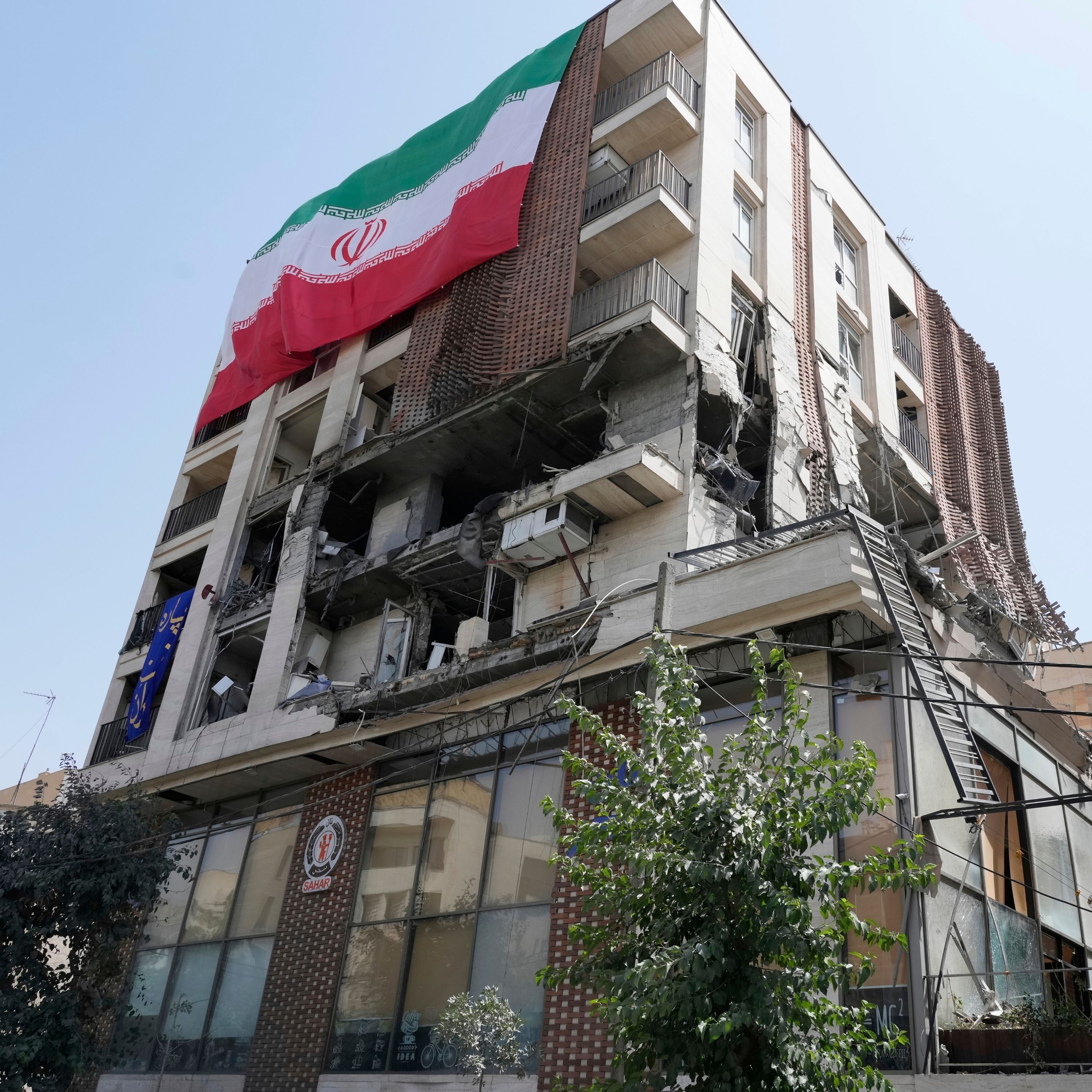
What A Day
Is This Trump's Idea of Isolationism?
00:23:29
President Donald Trump addressed leaders at a NATO summit in the Netherlands Wednesday as the tenuous ceasefire between Israel and Iran continued to hold for a second day. Trump said the U.S. would be holding talks with Iran sometime next week, though he added he didn’t think a new nuclear agreement was actually necessary because ‘the war’s done.’ While the administration continues to fight reports that Iran’s nuclear program remains anything short of “totally obliterated,’ there’s still an ongoing debate within the broader MAGA world about the wisdom of the strikes in the first place. Sohrab Ahmari, U.S. editor for the British news and opinion outlet UnHerd, talks about what the strikes ultimately say about the MAGA foreign policy doctrine. And in headlines: Attorney General Pam Bondi denied knowledge that federal agents were wearing masks during immigration raids, Trump appeared to inch closer to Ukrainian President Volodymyr Zelensky in its ongoing war with Russia, and former N...
Loading summary
Transcript37 lines
- [00:02]
Jane Coastin
It's Thursday, June 26th. I'm Jane Coastin. And this is what a day. The show that is standing up and saying, no, I do not think we need a sequel to the Social Network. We're good. On today's show, Ukraine's President Volodymyr Zelensky signs an agreement with the Council of Europe to create a special tribunal to try Russian officials for crimes against Ukraine. And Attorney General Pam Bondi tells lawmakers she had absolutely no idea federal agents were wearing masks during immigration raids. None whatsoever. She is shocked, shocked to hear it, folks. But let's start with Iran, Israel and the United States. As of our recording on Wednesday evening, Pacific time, the ceasefire between Iran and Israel is holding. At a NATO conference in the Netherlands, President Donald Trump said that the United States would be holding talks with Iran sometime next week, though he added that he didn't think an agreement was actually necessary.
- [01:01]
Saurabh Amari
The way I look at it, they fought, the war's done. And, you know, I could get a statement that they're not going to go nuclear. We're probably going to ask for that. But they're not going to be doing it. But they're not going to be doing it anyway. They've had it. They've had it.
- [01:16]
Jane Coastin
And besides, as Defense Secretary Pete Hegseth argued, like the Fox News Host he was 10 minutes ago, the Iranian nuclear program has been, quote, obliterated.
- [01:25]
Saurabh Amari
So if you want to make an assessment of what happened at Fordo, you better get a big shovel and go really deep. Because Iran's nuclear program is obliterated and somebody somewhere is trying to leak something to say, oh, with low confidence. We think maybe it's moderate. Those that drop the bombs precisely in the right place know exactly what happened when that exploded. And you know who else knows? Iran.
- [01:52]
Jane Coastin
Now, despite Hegseth's sudden enthusiasm for shovels, it is not clear that the Iranian nuclear program has been, quote, obliterated. As we mentioned on the show Wednesday, multiple outlets have reported on a preliminary analysis from the Defense Intelligence Agency. It showed Iran's nuclear capacity may not have been hit as hard as the Trump administration keeps saying and that it's only been set back a few months. Of course, the administration responded to this claim in the calm, measured style we have all come to expect from White House press Secretary Caroline Levitt.
- [02:24]
Saurabh Amari
No other president in history could have ever dreamed of such a success. And that's exactly why the fake news media is now trying to demean and undermine the president. And we've seen this playbook be run before. You have hostile actors within the intelligence community who illegally leak bits and pieces of an intelligence assessment to push a fake news narrative. And that's what the CNN story leaked was yesterday. And it's not a coincidence that it was written by the exact same CNN reporter who wrote the original story, falsely alleging that the Hunter Biden laptop was Russian disinformation.
- [02:59]
Jane Coastin
All right, Caroline, stop yelling. The administration says it's going to investigate the leak. And Axios reports it also plans to stop sharing information with Congress to avoid more leaks, which doesn't make me feel more inclined to believe the Trump administration. Kind of the opposite anyway. What's more interesting to me than the Trump administration's efforts to scream their way into higher approval ratings has been the response from the broader MAGA Sphere. Before the June 21st strikes, there were a number of right wing voices speaking out against strikes on Iran. They echoed a broader sentiment that I've been hearing for about a decade now that Donald Trump is an anti war isolationist. Remember his insistence that he opposed the Iraq war? He didn't. But it was notable that being against a war that had 93% support from Republicans in 2003 proved to be actually pretty effective. And yet now both the Trump administration and most of his biggest and loudest supporters are cheerleading his intervention in yet another conflict in the Middle East. So I wanted to talk to a conservative who has been outspoken in his opposition to war with Iran. Saurabh Amari is the US editor for UnHerd, a British news and opinion outlet. We talked on Wednesday afternoon. Saurabh, welcome to what a day.
- [04:13]
Saurabh Amari
Jane, thanks for having me.
- [04:15]
Jane Coastin
What's your impression of the right's reaction in the last few days to Trump's decision to strike Iran? Because to me, it felt real. 2003, like Invasion of Iraq and now I wouldn't say the Trump administration has quite rolled out the proverbial mission accomplished banner like the Bush administration literally did a few weeks after the invasion. But it certainly feels like they were trying to. What's your take?
- [04:37]
Saurabh Amari
Yeah, I think there are some big differences with 2003. In 2003, for the most part, the entire media establishment, left and right, was more or less on board with the invasion of Iraq. What's remarkable about this time around in 2025 is that you had a kind of rebellion of the MAGA sphere or the MAGA world against the United States directly getting involved. And for the most part, the dissidents, not just like the kind of foreign policy writers and intellectual people like myself. But, you know, the MAGA celebrities Steve Bannon, Tucker Carlson, Senator Hawley, Representative Marjorie Taylor Greene, the magazine the Federalists. These were very vocal. And as time went on, they became more so they became more strident in opposing the march to a direct US Entry. Ultimately, I think they failed to win the factional battle within the right over that. But it still was quite remarkable. It revealed real fissures on the right that I don't think will soon be papered over. But, you know, at the end of the day, like the boomer, media power won out.
- [05:54]
Jane Coastin
So the general consensus seems to be that the big winner in all of this is Israeli Prime Minister Benjamin Netanyahu and that Iran is the unquestionable loser. But you wrote a piece laying out why that may not be true. Can you walk us through your argument?
- [06:07]
Saurabh Amari
Yeah. Basically, I think from an Iranian point of view, you can't say they won. I mean, obviously there lots of military and civilian infrastructure assets were blown up. Lots of the leadership was killed in the early hours of the Israeli operation. I think they didn't lose, and that's significant enough. The Iranian regime's mentality, I think, are these three things we just know from its history. Number one is regime preservation. They endured. They withstood an attack by two nuclear powers. No one helped them, whereas much of the west helped Israel materially and in the case of the US by directly getting involved and they stood. Number two would be nuclear continuity. There's at least some consensus among various expert agencies and NGOs and so on that like, you can't kill know how. And the Iranians very likely moved much of their fissile material. And now, because diplomacy has been short circuited, like, we don't know what they're going to do with them. And number three is domestic consolidation. You know, for the most part, the people stood with the regime and there was no uprising. There's no, like, restoration of the monarchy or whatever. And that's pretty important to them as well.
- [07:18]
Jane Coastin
What gets me is that Trump ran on what was perceived to be a very isolationist America first platform, and this is not the first time. I'll never forget that New York Times headline, donald the Dove, Hillary the Hawk. But I don't think that that was ever exactly true. I think Trump loves winning, and his major objection to say, you know, the later years of the war in Iraq was not the entrance into the war in the first place, it's that we weren't obviously winning. So what does his decision to strike Iran tell us about the divide between the Trump foreign policy Doctrine in theory versus in practice.
- [07:51]
Saurabh Amari
Well, I mean, I once interviewed. Among the various times I interviewed Vice President J.D. vance was one. It was, like, two months before he was tapped to be Trump's running mate. And he described Trump's foreign policy as Jacksonian, inspired by Andrew Jackson. And it's this kind of middle ground between isolationism and full restraint on one hand and a kind of idealistic neoconservatism on the other. And the idea, as Vance put it to me then, was like, we don't throw punches. We don't get into things unless someone punches at us. And then in that case, then we will just fucking break them as the wiper. So I think on a. As a Trump Doctrine matter, it's not a grave violation of the kind of mentality that he brings to foreign policy. The question is just whether it was effective and to what extent it was forced on him by the Israelis running circles around him, rather than something that he really set out to do from the beginning.
- [08:44]
Jane Coastin
But what does it say that the Israelis were able to force him into this point in the first place? That's not very America. First, if another country can strike Iran and then be like, we need help, please help.
- [08:59]
Saurabh Amari
Yeah. I mean, and that's the thing that I think in the long term really casts doubt on the future shape of the US Israel relationship. I just think that, you know, if you look at what's happening on the Democratic side with foreign policy and where the energy is, and then you look at the young professionals coming up on the Republican side, I think the Israelis really are facing a generational vice grip where it was really only, say, Americans over 50 who are willing to just indulge Israeli maximalism in some cases, just like having a sense of total identification with the Jewish state where they don't see any difference between their interests sometimes. And I bet you there are lots of people who are now embittered by this and determined to not see a repeat.
- [09:40]
Jane Coastin
But what does that say about the MAGA movement more broadly? Because we're seeing polls come out. And let's keep in mind that polling on this kind of incident is always really wiggly because you'll see polling saying that Americans don't want Iran to have nuclear weapons, but also Americans in general were broadly opposed to these strikes. But shocker, a majority of Republicans support them. Is that kind of an age difference? Is that a. You know, we've always been kind of worried about Iran since 1979. What's going on there?
- [10:08]
Saurabh Amari
I would say all of the above. I think Partly it's the age factor. It's like the boomer effect. 1. It is partly that, like, look, a lot, especially older people will remember the fact that the Iranian regime was like, founded in anti Americanism. And then another one, which is kind of painful, is just this question of, like, what is America first or what is maga? And it seems to me what the, like, the deep MAGA voters are signaling is that there really is no principled answer to that, that it's a floating signifier. And basically Trump gets to define and redefine it at will. And the voters will be like, yeah, of course, that was always America first, you know, and then he might shift gears and they'll just kind of go along with him. That's his magnetic effect. I don't think his would be successors like JD or others have the ability to like, treat MAGA in such a free floating way.
- [11:01]
Jane Coastin
Trump sometimes seems almost immune to consequences or feeling the weight of what might be consequences. And the potential consequences of this intervention in Iran are enormous, as you and I both know. In your mind, what are the odds that his intervention here does play out exactly the way he wanted it? Because right now that doesn't seem totally out of the question.
- [11:22]
Saurabh Amari
You know, it might. But first of all, that goes back to the question you raised earlier about those reports that are coming out saying that, like, and I had heard, like I said, from Iranian state tv, I was watching the whole time where they said we had emptied out fordo, we'd removed all the fissile material. And so you have a lot of enriched uranium, not all of it maybe, but part of it, part of the stockpile that's like now been spirited away somewhere else in Iran and is maybe going to be much harder to inspect and enforce than it would have been if we'd stuck to the diplomatic track where you have, for example, US Inspectors being involved. So that's one. The second one that I think is very disturbing for me is the fact that the US Gave the impression that it uses diplomacy. It's not even bad faith diplomacy or tough diplomacy. It's the use of diplomacy as a kinetic ploy. Like, we're going to pretend, like we're going to talk to you, we're going to give you two weeks and. And then we're going to surprise you with various attacks, whether it's Israeli or US well, America first or lots of Americans want to make peace in other areas or at least try to make deals like Russia, Ukraine and other interlocutors of the United States. Other adversaries or rivals get this message that the US uses diplomacy as just like another military ploy to trick you. That's a big problem. And then lastly I think the one that's really also again disturbing is if I were like Turkey and any number of other middle powers so called. I watch that and I think, well, there's no way to be really sovereign unless I have nuclear weapons. So I'm gonna race to do it. But I'm gonna be smarter than the Iranian mullahs and I'm not gonna chant death to this and death to that. I'm just gonna quietly nuclearize and that's really bad for the non proliferation regime.
- [13:07]
Jane Coastin
Saurabh, thank you so much for taking the time to join me.
- [13:11]
Saurabh Amari
My pleasure. Thank you.
- [13:12]
Jane Coastin
That was my conversation with Saurabh Amari, US Editor for the British news and opinion outlet Unherd. We'll link to his work in our show notes. We'll get to more of the news in a moment, but if you like the show, make sure to subscribe, leave a 5 star review on Apple Podcasts and share with your friends. More to come after some ads.
- [13:36]
Saurabh Amari
Foreign.
- [13:41]
Jane Coastin
What a Day is Brought to you by Deleteme Deleteme makes it easy, quick and safe to remove your personal data online. At a time when surveillance and data breaches are common enough to make everyone vulnerable, Deleteme does all the hard work of wiping you and your family's personal information from data broker websites. Deleteme knows your privacy is worth protecting. Sign up and provide Deleteme with exactly what information you want deleted and their experts take it from there. And Delete Me isn't just a one time service. DeleteMe is always working for you, constantly monitoring and removing the personal information you don't want on the Internet. As someone with a very active online presence, privacy really matters to me. That's why I'm so glad Delete Me exists. Take control of your data and keep your private life private by signing up for Deleteme now at a special discount for our listeners. Get 20% off your Delete Me plan when you go to JoinDeleteMe.com wad and use promo code WAD at checkout. The only way to get 20% off is to go to JoinDeleteMe.com WAD and enter code WAD at checkout. That's JoinDeleteMe.com WAD codewad. Here's what else we're following today.
- [14:46]
Saurabh Amari
Head of Lines.
- [14:50]
Jane Coastin
We cannot afford internecine wars amongst Democrats where we're fighting each other it's great to have experiments to run primaries, to see what excites people and push forward and then remember ultimately it is we are in an existential crisis of our democracy and our enemy is Donald Trump and not each other. That was New York City Comptroller and candidate for mayor Brad Lander, talking to what a day. Newsletter writer Matt Berg Wednesday morning, Zoran Mamdani stunned New Yorkers by coming away from the Democratic primary with a decisive victory Tuesday over former New York Democratic governor Andrew Cuomo in the mayoral race. Landers and Mamdani cross endorsed each other in the contest. Cuomo conceded the election to Mamdani around 10:30pm Tuesday night, just about 90 minutes after polls closed. Cuomo said, quote, tonight was not our night and went on to praise Mamdani's inspirational campaign. Even though Mamdani is now the presumptive Democratic nominee, there's still a lot of room for Democratic infighting between now and November. On Wednesday, Cuomo said he was still considering whether to run against Mamdani again in the general election. In May, Cuomo formed his own political party, the Fight and Deliver Party, so that he could run for mayor both as a Democratic candidate in the primary and also as an independent in the general if necessary. If Cuomo does decide to go that route, he'll appear on the ballot alongside Mamdani and current New York City mayor Democrat Eric Adams. In April, Adams announced that he'd be running for reelection as an independent.
- [16:25]
Saurabh Amari
I think you just had a meeting with President Zelensky.
- [16:27]
Jane Coastin
Did you discuss any ceasefire in this? Russo Ukrainian no, no, I just.
- [16:32]
Saurabh Amari
I wanted to know how he's doing. He was very nice, actually. You know, we had little rough times sometimes. He was couldn't have been nicer. I think he'd like to see an end to this. I do.
- [16:43]
Jane Coastin
On Wednesday, President Trump held a press conference at the conclusion of the NATO summit in the Netherlands. After complimenting the Netherlands beautiful trees and attractive royal family, Trump spoke warmly of his meeting earlier that day with Ukrainian President Volodymyr Zelenskyy. While Trump said the pair didn't explicitly discuss a ceasefire, he said he would speak to Putin to, quote, see if we can get it ended. Trump also referred to Putin as the more difficult party in the war between Russia and Ukraine. Wild In a post to Twitter after the meeting, Zelenskyy thanked Trump but contradicted him slightly by saying they had discussed a ceasefire during their conversation. Zelenskyy also delivered a speech before the Council of Europe for the first time Wednesday. Your clear political positions calling Russia's actions.
- [17:28]
Saurabh Amari
A crime of aggression, supporting a just end to the war, and rejecting any attempt to legitimize the Russian occupation of our Ukrainian territories have helped shape the political response of all of Europe.
- [17:49]
Jane Coastin
Just before his remarks, Zelenskyy signed an agreement with the Council of Europe to create a special tribunal to try Russian officials for crimes against Ukraine. Russia struck Ukraine for nearly two straight days starting on Monday. The attacks killed dozens of civilians, including a 5 year old boy and 11 year old girl. Attorney General Pam Bondi testified before the Senate Appropriations Committee on Wednesday to talk about the Justice Department's fiscal 2026 budget. During the hearing, Bondi expressed what some would call blind ignorance when asked about federal officers wearing masks while trying to detain suspected immigrants. Here's part of the exchange between Bondi and Democratic Senator Gary Peters of Michigan.
- [18:30]
Saurabh Amari
My question for you, Attorney General Bondi is Given the number of DOJ employees currently conducting immigration enforcement activities in support of dhs, how are you going to ensure that the safety of the public and the officers if they continue to not follow required protocol to identify themselves as law enforcement?
- [18:51]
Jane Coastin
And Senator Peters, that's the first time that issue has come to me about them cover. You're saying that law enforcement officers, when they cover their faces, right? I do know they are being doxxed as you said, they're being threatened, their families are being threatened. You know, it's, it's. But Peters wasn't buying it. He pressed on.
- [19:09]
Saurabh Amari
People think here's a person coming up to me, not identified, covering themselves. They're kidnapping. They'll probably fight back. That endangers the officer as well. And that's a serious situation. People need to know that they're dealing with a federal law enforcement official.
- [19:24]
Jane Coastin
Senator, I would be happy to look at that issue with you and talk to all of our partner law enforcement agencies. But I can assure you that if they're covering their faces now, it's to protect themselves. But they also want to protect all citizens and that's something we can work together on. Bullshit, lady. Aside from the easily accessible widespread video evidence of federal officers covering their faces, top immigration officials have literally defended the practice. Need I remind you, Attorney General, that just earlier this month Acting Director of Immigration and Customs Enforcement Todd Lyons said, quote, I am sorry if people are offended by them wearing masks, but I'm not going to let my officers and agents go out there and put their lives on the line and their family on the line because people don't like what immigration enforcement is. Maybe he and Pam Bondi should meet sometime. On Tuesday, a court in Costa Rica ordered the release of foreign migrants being held in a shelter there after they were deported by the United States. That's according to the resolution seen by Agence France Press. In February, Costa rica accepted some 200 US deportees from countries including China, India and Nepal. It was part of an effort by the Trump administration to deport migrants to countries other than their homeland. In April, Costa Rica's immigration director said it would grant dozens of the migrants a pathway to move about freely. The New York Times reports that as of this week, a slew of the deportees sent to Costa Rica had returned to their countries of origin. Earlier in the year, an appeal was filed on behalf of the migrants deported to Costa Rica. The court in Costa Rica partially accepted the appeal Tuesday and gave officials 15 days to process the immigration status of the deportees as well as their release. The resolution came a day before Homeland Security Secretary Kristi Noem traveled to Costa Rica. She posted on Twitter Wednesday about her visit to a detention facility used by the Costa Rican immigration police to house and process criminal illegal aliens, including terrorists. Sure, and that's the news before we go When Supreme Court opinions are flying fast and furious, the hosts of Strict Scrutiny are here to play everyone's favorite game. Is this Legal? This week, Leah Littman kicks things off with international law expert Rebecca Ingber to unpack the rules around using military force. Yes, including bombing Iran. Then she's joined by former legal journalist Mike Sachs and Georgetown Law's Steve Laudek to break down the latest SCOTUS decisions, including Coach Kavanaugh's metaphors, Alito's angst, and a glimmer of hope from Justice Jackson. Listen to Strict Scrutiny wherever you get your podcasts or watch on YouTube. That's all for today. If you like the show, make sure you subscribe. Leave a review Shout out to New York Democratic Senator Chuck Schumer, who had to be hospitalized after a workout due to dehydration from DC's heat wave and still made it right back to work. And tell your friends to listen. And if you're into reading and not just about how dehydration in high heat can happen in just two hours and can have serious and potentially deadly health effects. Like me, what a Day is also a nightly newsletter. Check it out and subscribe@cricut.com subscribe I'm Jane Costanen. Stay hydrated. What a Day is a production of Crooked Media. It's recorded and mixed by Desmond Taylor, our associate producer is Emily Foer. Our producer is Michelle Aloy. Our video editor is Joseph Dutra. Our video producer is Johanna Case. We had production help today from Greg Walters, Matt Berg, Sean Ali, Tyler Hill and Laura Newcombe. Our senior producer is Erika Morrison and our senior vice president of news and politics is Adrienne Hill. Our theme music is by Colin Gilliard and Kashaka. Our production staff is proudly unionized with the Writers Guild of America East. It.