Loading summary
Transcript37 lines
- [00:04]
Jane Coaston
It's Thursday, April 23rd. I'm Jane Coston, and this is what a day. The show learning some new math via President Donald Trump. Here is Health and Human Services Secretary Robert F. Kennedy, Jr. Explaining this new math to Massachusetts Democratic Senator Elizabeth Warren on Wednesday.
- [00:21]
Robert F. Kennedy, Jr.
President Trump has a different way of calculating. If there's two ways of calculating percentage. If you have a $600 drug and you reduce it to 10, that's a 600% reduction.
- [00:32]
Jane Coaston
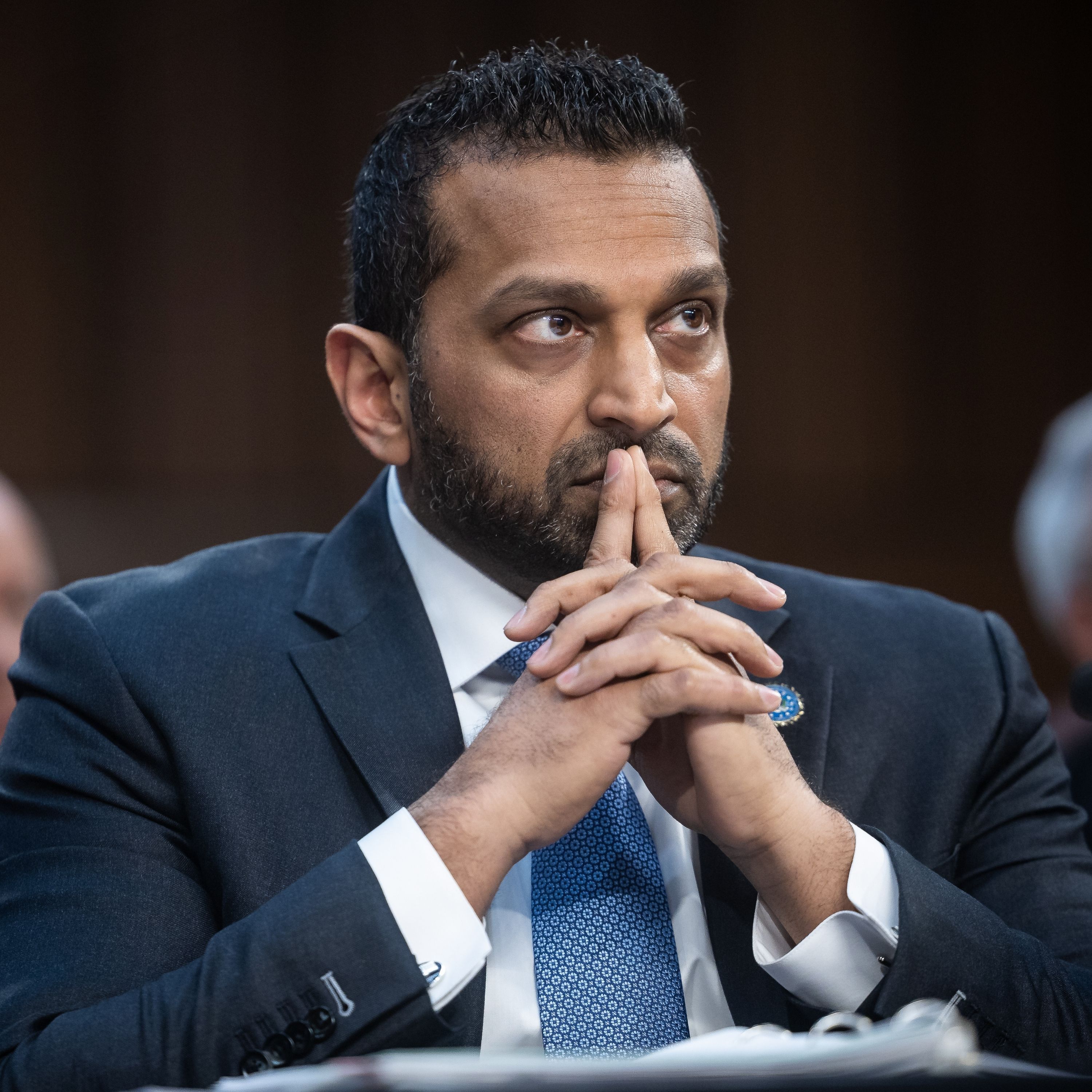
That is actually a 98.3% reduction. But what do I know? I didn't take math at Trump University. On today's show, Republicans redistricting agenda isn't exactly going to plan. And Medicare And Medicaid administrator Dr. Mehmetaz talks about Trump's testosterone. A sentence I never thought I'd say. So let's start with the media. FBI Director Kash Patel sued the Atlantic on Monday for $250 million. This is after the magazine published an article last week alleging that Patel is frequently drunk on the job and his security team has had difficulty waking him on multiple occasions. Something you definitely want in an FBI director. Patel made his case at a press conference on Tuesday.
- [01:20]
Robert F. Kennedy, Jr.
I'm on the job. I'm the first one in. I'm the last one out. I'm like an everyday American who loves his country, loves the sport of hockey, and champions my friends when they raise a gold medal and invite me in to celebrate. I've never been intoxicated on the job. And that is why we filed a $250 million defamation lawsuit. And any one of you that wants to participate, bring it on. I'll see you in court.
- [01:41]
Jane Coaston
Okay? But you're not like an everyday American. You run the FBI. There have been nine directors of the FBI in history. It's like the least everyday job ever. Also, what question is he even answering here?
- [01:55]
Caroline Levitt
Can you say definitively that you have not been intoxicated or absent during your tenure as FBI director?
- [02:02]
Robert F. Kennedy, Jr.
I can say unequivocally that I never listen to the fake news mafia. And as when they get louder, it just means I'm doing my job.
- [02:10]
Jane Coaston
Still not answering the question. Anyway, this is a standard Trump era strategy. Trump himself has sued media outlets for stories and polls he didn't like. So if a media outlet writes something about you, accuse the publication of lying and sue for some astronomical sum, even if you don't win, which Patel probably won't, Litigation is expensive, unpleasant, and intimidating. But the Atlantic isn't backing down. In a statement, the publication said, quote, we stand by our reporting on Kash Patel. And we will vigorously defend the Atlantic and our journalists against this meritless lawsuit. When ABC News settled with Trump in 2024 and CBS News was bought by one of the President's biggest allies, it felt like the entire was prepared to bend the knee to Trump. But as the President's approval rating has declined, has the media learned that maybe giving in isn't the best way forward? To find out, I spoke to Oliver Darcy. He's the founder of Status, a newsletter focused on the media. Oliver, welcome to. What a day.
- [03:10]
Oliver Darcy
I'm so excited to be here.
- [03:11]
Jane Coaston
The Atlantic dropped a bomb of an expose on FBI Director Kash Patel. So, of course, Patel sued the Atlantic for defamation to the tune of $250 million. Now, how does this suit, in your view, compare to similar suits that Trump officials or Trump himself have filed against media outlets?
- [03:29]
Oliver Darcy
I think that's very similar because it's all aimed at chilling free speech. It's all aimed at intimidating news organizations so they don't do this kind of reporting that exposes, you know, behavior that they want to keep hidden from public view. And so I don't think this lawsuit has any. I'm not. Look, I'm not a lawyer. I don't think this lawsuit has any chance in succeeding. Like, it just doesn't seem like there's a way that Cash Patel is going to prove that the Atlantic acted with actual malice or, you know, a reckless disregard with the truth, which is the high bar that he has to clear. The Atlantic has some of the highest standards in journalism, so it just seems there's no way this lawsuit's going anywhere. But I think the point of it is to say, you know, to other outlets, like, don't follow the supporting. I will sue you. And that can give some people some pause, especially if you're not at an outlet that is like the Atlantic that has lawyers that's going to take care of you. And then there's also reporting, as I'm sure you've seen in the New York Times, that says that when a New York Times reporter, Elizabeth Williamson, wrote a story on Kash Patel's girlfriend and some of the benefits that she was getting as being the girlfriend of the FBI director, that the FBI started investigating her. And so I think what you're seeing, again, is Cash Patel is using any tool in his disposal to try to chill the speech of journalists who are doing some really important reporting undercovering what appear to be significant abuses of power that, that are, you know, stemming from the FBI Director.
- [04:58]
Jane Coaston
Trump himself sued the Wall Street Journal and the New York Times. The Wall Street Journal over a letter they alleged to be written by Trump to Jeffrey Epstein. He sued over that. The New York Times has been sued and. But it seems like it actually hasn't stopped either of those outlets from continuing to do tough reporting on Trump and the Trump administration. And the Atlantic says, you know, we're going to fight this in court, we're okay with this. My first question to you as someone who I know has been very critical about how the media has in some cases kowtowed to Trump. Do you think the media is learning that readers don't want outlets to give in and bend the knee?
- [05:37]
Oliver Darcy
I think so. I mean, I think that they knew this from the beginning. I think that the outlets that have kowtowed before Donald Trump have had larger business interests at play. So it makes, from their point of view, business sense to kowtow to Trump. If you think about the Washington Post, Jeff Bezos has a lot of business before the federal government. If you think about Los Angeles Times, Patrick Sunchiang is trying to get all these drugs approved by the federal government. If you think about David Ellison and Paramount on cbs, they, they have this Warner Brother discovery deal before the federal government. And so the outlets that are controlled by people who have business before Donald Trump seem to be the ones who are kowtowing and bending the knee. And I think the business rationale they're using is the news organization is a very tiny part of my overall business portfolio. The outlets you mentioned that are not doing it like the New York Times, like the Sulzbergers who control the New York Times, their one thing is journalism, right? If you think about even Rupert Murdoch with the Wall Street Journal, like the one thing he's doing is journalism, at least in regards to the Wall Street Journal and at the Atlantic, Lorraine Powell Jobs has been a proven to be a very good owner and she is standing behind that magazine. So I think it kind of is case specific. But the people that own the outlets that have these larger interests, I don't really see them changing their behavior because I think their behavior is guided by these larger business interests.
- [07:05]
Jane Coaston
Winning these lawsuits is not actually the point. Litigation is hard and no one wants to go through it. But as a group, looking at all of the lawsuits against media outlets, what is the administration's actual track record of success or failure?
- [07:20]
Oliver Darcy
Very low when it goes to court. Right? I mean, they don't win these cases in court. I think the issue is also sometimes when these organizations don't want to be ensnared in, like, legal drama with the President of the United States for various reasons, usually because of larger business interests, they settle. And so we've seen abc, obviously, in Disney, settle a lawsuit that he filed against George Stephanopoulos. We saw CBS and Paramount settle that lawsuit against 60 Minutes, which they themselves called meritless, but they settled it. And I think so, you know, it's hard not to view that, to be honest, like, as a victory for Donald Trump in those cases, because, you know, those lawsuits probably would not have been successful had they gone to court. But these organizations didn't want to go to court. They wanted to settle out of court. And you saw Donald Trump also outside the media organizations file these lawsuits against tech organizations. Right? And they all settled those cases. So his track record in court is not good. He loses. You know, he went to court against Rupert Murdoch. He lost that case. I suspect he's going to lose some other cases. He's lost cases before against organizations like cnn. But sometimes these organizations, these companies, they decide they're just going to pay him money to go away. And I think he views those as victories.
- [08:39]
Jane Coaston
I want to go back to the lawsuit from Kash Patel and get at something that I think is kind of an overall media literacy issue. The Atlantic sticks by its reporting. The story in question, understandably, to me and to you and to people who have done this work has a lot of anonymous sources in this story. Do you think that we as people working in journalism need to do a better job of explaining, like, how do anonymous sources work and what does the fact checking process look like for a place like the Atlantic, the New York Times, the Wall Street Journal?
- [09:12]
Oliver Darcy
I think so. I mean, I do think I see that sometimes, too. Like, these are anonymous sources. These aren't anonymous people writing emails to the report, the atlant Atlantic that they just print. The reporter knows exactly who these sources are. I suspect her editors know who these sources are. At least maybe one or two of them do. And they vet them. I mean, these organizations, they make sure that even if you are in the FBI, that doesn't give you the right to just say something about Cash Patel. They want to know, how do you know that information right where you did you witness it firsthand? A lot of times organizations like the Atlantic or the New York Times only want to talk to people with direct knowledge of an incident, meaning that it's not secondhand, that the person they're talking to saw it with their own eyes or had information directly. And you think about the Atlantic. The Atlantic is One of the places in journalism that has the highest standards. So every single line that you read in an Atlantic story has been fact checked. Probably not once, but probably twice. Not by just the editors, but by a separate fact checking team. They want to review notes. So there is a lot of, lot of eyes on these stories. These stories aren't just casually published. And at the Atlantic, I suspect this story went through enormous legal review. And so that's why it seems preposterous that when you read this Kash Patel lawsuit, there's no way they were acting with reckless disregard for the truth. They do the opposite. Right? And there's no way they were acting with actual malice. And so Kash Patel's gonna have a very, very, very uphill battle. And like we both said, I don't think that him winning in court's really the point here.
- [10:47]
Jane Coaston
As the administration itself lessens in power, even perceived power, do you think that we will see fewer of these suits filed or see these suits kind of go even less of somewhere than they had before?
- [11:02]
Oliver Darcy
I think you might start seeing news organizations, media organizations, tech organizations be a little less likely to go along with Donald Trump, a little less likely to settle these lawsuits as he starts to lose his grip on power. And I think if, like Democrats, for instance, win back Congress, they're gonna have a lot of questions for people like David Ellison and they're gonna cause problems for him. I think they're gonna drag him before Congress. They wanna talk to him. He's not willfully going before Congress. They're gonna have subpoena power potentially. And so when the political winds change, I suspect that these business leaders who don't really have any principles themselves, they just wanna make some money, their principles might start to change. And I think that could happen sooner than later because the midterms are not too far away.
- [11:44]
Jane Coaston
Oliver, thank you so much again for joining me.
- [11:47]
Oliver Darcy
Thank you.
- [11:48]
Jane Coaston
That was my conversation with Oliver Darcy, founder of Status. We'll link to his newsletter in the show notes. Don't go anywhere. We'll be right back after the break with even more news. But in the meantime, if you like the show, make sure to subscribe. Leave a five star review on Spotify and Apple Podcasts, watch us on YouTube and share with your friends. More to come after some ads. What a day is brought to you by Nutrafol. Good hair days do more than we give them credit for. When your hair feels healthy, you show up differently. You're more confident, more relaxed, and you're not constantly checking mirrors or adjusting your hair. Your hair becomes one less thing competing for your attention throughout the day. Nutrafol supports hair health from within, working overtime to deliver results you can see and feel so your hair becomes something you enjoy, not something you stress about. Nutrafol is the number one dermatologist recommended hair growth supplement brand and it's the number one hair growth supplement brand personally used by dermatologists. Nutrafol's hair growth supplements are peer reviewed, NSF certified for sport and clinically tested. Let your hair be one less thing to worry about. See visibly thicker, stronger, faster Growing hair in three to six months with Nutrafol For a limited time, Nutrafol is offering our listeners $10 off your first month subscription and free shipping for free when you visit nutrafol.com and enter promo code DAYTEN. That's nutrafol.com, spelled N u t r-a f o l.com promo code DAY10 what a day is brought to you by Upwork. The fastest growing businesses aren't doing more, they're delegating smarter. Upwork helps you bring in expert freelance help fast so you can delegate and keep moving. Upwork is a one stop platform to find, hire and pay expert freelancers across web and software development, data and analytics, marketing, business operations and more. Upwork helps grow your business by giving you fast access to specialized talent across 125 plus categories so you can fill skill gaps, launch projects faster and scale support up or down without committing to full time headcount. You can browse profiles, review past work and get help scoping the role so you can hire with confidence and get started quickly. And with Business plus you can access the top 1% of talent on Upwork and with AI powered shortlisting you'll get matched to the right freelancer in under six hours. No endless searching required. Upwork also cuts down on operational hassle by handling things like contracts and payments in one place so you can spend more time running the business. Thousands of growing businesses already trust upwork to hire flexible, high quality freelance talent for everything from one off projects to ongoing support. It's free to sign up and posting a job is easy. Visit Upwork.com right now and post your job for free. That is Upwork.com to connect with top talent ready to help your business grow. That's u p w o r k.com upwork.com support is available 247 with VRBoCare. We're here day or night ready whenever you need help because a great trip starts with the right support,
- [14:47]
Oliver Darcy
a vacation rental shouldn't come with surprises. It should come with Verbocare and 24. 7 Life Support. If the hot tub's broken, that's a verbo care thing. If my teenager starts calling me Leslie, that's a family thing. Leslie. VRBO Care and 24. 7 Life Support. If you know you've ERBO terms apply. Seeverbo.com trust for details.
- [15:03]
Jane Coaston
Here's what else we're following today. Head of Lines. Joining me is Crooked's news editor, Greg Walters to talk about the big stories. Hey, Greg.
- [15:15]
Greg Walters
Hello, Jane.
- [15:16]
Jane Coaston
Greg, remember when we were like, where in the world is JD Vance and what's happening in Iran? If you wanted answers to those questions, sorry. Here's White House Press Secretary Caroline Levitt reciting talking points instead on Wednesday.
- [15:31]
Caroline Levitt
Look at where we are right now. The president chose to extend the ceasefire because it's Iran who needs to get their acts together. The United States and President Trump have been very clear in our demands and our red lines and what we need to see. You guys all see a lot of different messages, messaging coming out of Iran, a lot of different rhetoric and language from them. I would caution you to take anything that they say at face value. What we've seen is that what they say publicly is much different than what they concede to the United States and our negotiating team. Privately. The United States maintains control over this situation, leverage over the Iranian regime. Not only have they been significantly weakened and obliterated militarily, but they are losing economics economically and financially every single moment that passes with this blockade. So the president is going to continue to lead the free world, to run the United States of America as we await the Iranian response.
- [16:24]
Greg Walters
Right, as we await the Iranian response. So according to cnn, Trump extended the ceasefire in part because he and his team were getting, quote, virtual silence from the Iranians. It's like when you can't break up with someone because they blocked you. Or like Iran just left Trump on red. You know, honestly, this is all so chaotic. Your guess is as good as mine about where it all goes next. But meanwhile, Jane, is it finally time to say that the big redistricting war that Trump helped start last year has backfired?
- [16:57]
Jane Coaston
It really does seem to have hoisted the GOP on its own little petard.
- [17:03]
Greg Walters
Well, some folks out there are starting to say that Democrats now have the advantage. And don't take it from me. Check out what MAGA godfather Steve Bannon had to say after the big Democratic win in Virginia on Tuesday night, when voters passed a redistricting measure that could put four More House seats into Democratic hands in this year's midterms. Here's the man Trump called Sloppy Steve having a normal one. On his war room podcast Wednesday, Virginia
- [17:30]
Robert F. Kennedy, Jr.
had something that was so frickin winnable with the people putting Trump on their shoulder and say, we're not gonna let it happen. The consultants say, shh, shh. You got to be careful. You can't mention Trump's name. You can't mention. This is about the other thing. Are you kidding me? Do you not know where the country is right now? The foreign born, deep state folks up there infesting the entire commonwealth. That's their plan. And that's their plan everywhere because that's how they win. Did you not notice, Minnesota? You think we're playing by conventional rules? You think Donald Trump's in the White House because he's a conventional politician? I don't hold the present couple. Good God, man. He's trying. He's fighting wars. He's trying to. He's trying to bring world peace. He's trying to turn the economy. The whole weight of the world's on his shoulders. He shouldn't have to manage, micromanage a campaign that should just be done.
- [18:21]
Jane Coaston
Life is so hard for Trump. So how could you blame him for Republicans getting their asses beat on redistricting? It was only their idea that completely backfired because Americans are sick of Trump's senseless policies. And what was that again? Oh, yeah, his ego war with Iran. To be clear, this decision almost immediately got tied up in court, paused by a judge on Wednesday. We'll have to wait and see what they say. Speaking of Trump and ego, Medicaid and Medicare head Dr. Mehmet Oz went on Podforce One to share some insight into the president's health based on lab tests he ran in 2016. And just a warning, you will never be able to unhear this.
- [19:03]
Robert F. Kennedy, Jr.
I think President Trump is healthy as a bull. Yeah. And I think his success to longevity as well as good health is his incredible passion for what he's doing. And he pulled out a piece of paper that had a recent that week's doctor's note with all of his lab results. I was stunned, so I opened it up and I read the note. And I mean, his testosterone was great. You know, his regular blood tests were great. The one problem was his weight. Well, he defends his decisions about food and fast food by saying that when he's on the road, he doesn't want to get sick. So he eats at large brains because he knows they're not going to skimp on the quality of the food.
- [19:38]
Greg Walters
Okay, okay, first of all, if what we're seeing is high testosterone Trump, could we maybe try low testosterone Trump, like just for a few weeks or something? Because maybe a low T president doesn't turn the Strait of Hormuz into the shootout at OK Corral or run the country via late night all caps shitposting on social media. But you know, Jane, I'm also thinking that maybe, just maybe for a president who made 30,573 false or misleading claims in his first term, according to the Washington Post, maybe those weren't his real lab results.
- [20:17]
Jane Coaston
One I want to learn more about this high quality fast food, but actually, I have no questions as I never want to hear about any man's testosterone levels ever again. Though Harvard found that marriage lowers testosterone levels and Northwestern found that so does being an involved father, which would explain a lot about Trump. As always, thanks for hanging out, Greg.
- [20:42]
Greg Walters
Good to see you, Jane.
- [20:43]
Jane Coaston
And that's the news. Before we go, there's a new episode of Pod Save Only Friends with me and Hysteria's Erin Ryan out now. Only Friends is the Friends of the Pod subscription exclusive show where Pod Save America hosts and other contributors unpack the stories that didn't make it to the main pod. Subscribing to Friends of the Pod supports everything we do at Crooked and helps power independent progressive media. Hit pause and subscribe now@crooked.com friends. That's all for today. If you like the show, make sure you subscribe, leave a review, marvel at the Trump administration potentially bailing out Spirit Airlines, and tell your friends to listen. And if you're into reading a not just about how the government might loan the second worst airline in America, according to the Department of Transportation, roughly half a billion dollars in exchange for a massive management stake in the struggling company. Like me, Water Day is also a nightly newsletter. Check it out and subscribe@crooked.com subscribe I'm Jane Coasten and Spirit Airlines. You're bailing out Spirit Airlines? Really? What a Day is a production of Crooked Media. Our show is produced by Caitlin Plummer, Emily Foer, Erica Morrison and Adrian Hill. Our team includes Haley Jones, Greg Walters, Matt Berg, Joseph Dutra, Johanna Case and Desmond Taylor. Our music is by Kyle Murdoch and Jordan Kanter. We had help today from the Associated Press. Our production staff is proudly unionized with the Writers Guild of America East.