← What A Day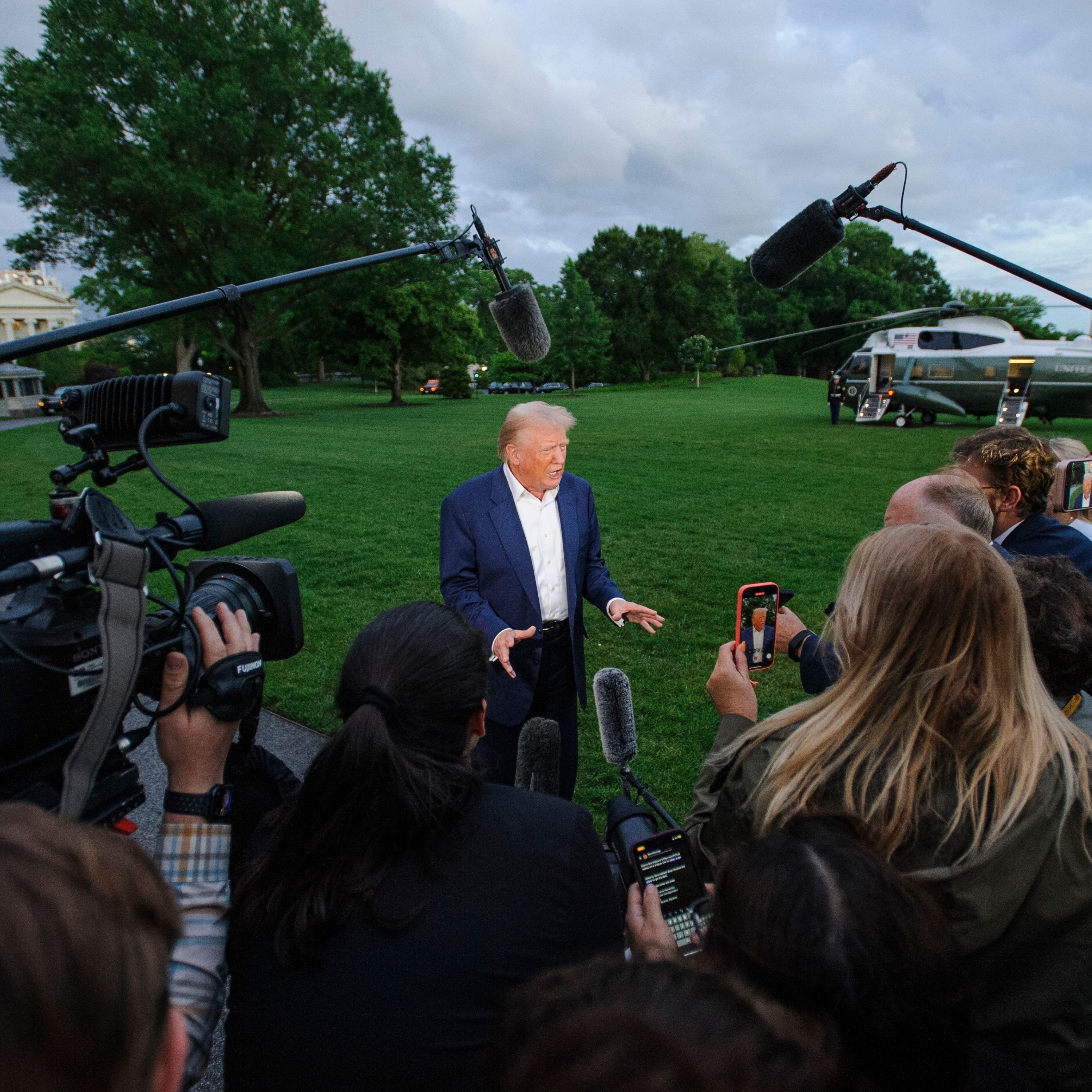
What A Day
MAGA Isolationists Sidelined in Iran Strike Debate
00:24:10
Iran fired missiles at a U.S. military base in Qatar Monday in retaliation for American strikes on three nuclear enrichment sites, marking another major escalation in the growing Middle East conflict. The Qatari government said U.S. forces were able to intercept those missiles. And President Donald Trump downplayed the strikes on Truth Social, writing Iran had alerted the government ahead of time and now "gotten it all out of their 'system.'" The situation is changing quickly, and each development is being chronicled by the media, from the traditional major news networks to MAGA influencers. Brian Stelter, chief media analyst for CNN, breaks down how the media is covering what could become another U.S. conflict in the Middle East. And in headlines: The Supreme Court gave the Trump administration the green light to quickly deport migrants wherever it wants, New York City starts the process of voting for its next mayor, and the U.S. government moves to keep a wrongfully deported man...
Loading summary
Transcript36 lines
- [00:03]
Jane Costen
It's Tuesday, June 24th. I'm Jane Costen, and this is Whataday, the show that salutes the Onion for mailing every member of Congress a very special message. In the wake of strikes in Iran, they should continue to be big cowards. Quote, this is the time to let the wave of apathy and indifference roll over you as you think about getting a really nice renovation to your house in Kalorama. On today's show, New York City starts the of voting for its next mayor. And the Supreme Court gives the Trump administration the green light to deport migrants wherever it wants for now. But let's start with the latest news from the Middle East. On Monday, Iran fired missiles at an American military base in Qatar in retaliation for American strikes on three Iranian nuclear enrichment sites. The Qatari government announced that US Forces were able to intercept those missiles. President Donald Trump said on Truth Social that the Iranian government gave advance notice before the strikes to avoid casualties, saying Iran had, quote, gotten it all out of their system. It's worth remembering that the United States and Iran have a lengthy history, most of it not great. My colleague Matt Berg spoke to Virginia Democratic Senator Tim Kaine on Monday. He's a member of the Senate Armed Services and Foreign Relations Committees, and he introduced a War Powers Resolution expressing concern about the escalating violence. And he gave a brief history lesson.
- [01:25]
Brian Stelter
The United States helped topple a democratically elected Iranian government in 1953 and then helped install this dictator, the Shah of Iran, who basically ruled in a brutal fashion over Iranian citizens for a quarter century. And Iran hasn't forgotten that. They haven't forgotten that the US military shot down an Iranian passenger jet in the 1980s. They haven't forgotten that the US gave Iraq, Saddam Hussein weapons to use against the Iranians in a war in the late 1980s. They haven't forgotten these things. And so when Donald Trump talks about regime change, it brings up a lot of bad memories.
- [02:03]
Jane Costen
Now, things might be calming down, maybe later in the evening. Trump posted on Truth Social that Israel and Iran have reached a ceasefire. But as of our recording late Monday Pacific time, we don't yet have confirmation from either Israel or Iran. Obviously, this situation is changing quickly, but I wanted to take a second to pull back and ask a bigger question. How are we learning about what's going on in Tehran, or for that matter, in Washington, D.C. how are the major networks in cable news covering what might turn into another US Conflict in the Middle East? This question matters more now than perhaps under any other presidency for one simple Trump watches an Absolutely obscene amount of cable news, particularly Fox News. In fact, Fox News apparently played a major role in his decision to strike Iran in the first place. As the New York Times reported on Sunday, Trump was deeply interested in how Israel's strikes on Iran last week were, quote, playing on social media and on television. The paper added, quote, the President was closely monitoring Fox News, which was airing wall to wall praise of Israel's military operation and featuring guests urging Mr. Trump to get more involved. Several Trump advisers lamented the fact that Mr. Carlson was no longer on Fox, which meant that Mr. Trump was not hearing much of the other side of the debate. That's former Fox News host Tucker Carlson, in case you didn't know. As Trump himself might say, sad. So to talk more about the role cable news is playing in Trump's decision making and also the divide playing out in the MAGA media sphere, I spoke to Brian Stelter, he's chief media analyst for cnn. Brian, welcome to what a day.
- [03:42]
Brian Stelter
Great to be here. Thank you.
- [03:44]
Jane Costen
So prior to the decision to launch strikes on Iran's nuclear facilities, the MAGA media world was weirdly divided over the wisdom of an attack and the risk of entering another middle EAs. What's the reaction been like in the wake of the strikes?
- [03:58]
Brian Stelter
Well, back up and say, what is MAGA media? You know, we're not talking about journalists, researchers, experts. We're talking about commentators, right? Armchair commentators, mostly paid pundits, people who are mostly known because their loyalty to Donald Trump. They're not bringing decades of experience and wisdom and knowledge about the region. So I just want to acknowledge that up front. Now we think about the MAGA media universe. You know, there is this dramatic divide right now, and Tucker Carlson's basically gone quiet. Unless I miss something in the past hour, Steve Bannon has tried to play this relatively cool in the wake of his meeting with the President last week. So there are these voices that are very clearly isolationist voices that say they represent tens of millions of Trump voters out there. But I would say they have been somewhat marginalized in the past few days. There are many others in the MAGA media universe that have rushed to the President's side, rushed to his defense, and I'm not seeing much of a divide at all. And on Fox, it has been pro war, pro Trump pretty much all the time.
- [05:05]
Jane Costen
Right. And I think that the key to this is that Donald Trump has an incredible ability to just bend his base to his will. So people who last week were saying this is a terrible idea are now like, all in. And you Know, to Trump, he's portraying these strikes as nothing short of an unmitigated success that ends the prospect of another Middle east war. To which I say, but, you know, on Sunday, he also floated the idea of regime change. So how are the strikes testing the loyalty of the media influencers who message to the base? Because you always, you know, I think that the regime change point was so interesting because you had all of these people From Vice President J.D. vance, Secretary of State Marco Rubio, but then just, you know, the influencers who get a lot of retweets saying no regime change. Who's even talking about regime change? Then Trump is like, I'm talking about regime change. Why not?
- [05:54]
Brian Stelter
Why not? Right? And then his own press secretary had to say, he was just musing, he was asking the question. But you're getting at this incredible tension that plays out whenever the story involves Trump versus his voters. It's what do these influencers who are in the middle, what do they say? How do they preserve their access and influence? And oftentimes you can hear them trying to talk to Trump directly, either through the television or, or through the podcast microphone or through the TikTok video. I think we're seeing some of that again right now with the Steve Bannons of the world basically saying, hey, I've always been with the president, no matter what, I always have his back. Yet at the same time, they might be trying to push him in one direction or another. And you can hear that. You can see that. And that does happen more in this digital media space than it does on Fox. Yes, the commentators are trying to get through to the president, but they're not expressing much hesitation, they're not expressing much doubt, despite the memories of 2003. Yeah.
- [06:48]
Jane Costen
So taking a broader look, you've mentioned Fox being very pro war, but what about the other networks? How are we seeing the various major news networks covering the story right now?
- [06:58]
Brian Stelter
I think when we look at all the networks not named Fox, all the major networks, we're seeing, number one, a lot of news coverage, very thorough coverage of this military action. You know, big special reports in primetime on the old school broadcast networks, wall to wall coverage on CNN and msnbc, as you would expect. So that means, number one, other stories being pushed out for the time being on television. And that's always interesting to pay attention to what's not being covered. And then I think, number two, who are the most prominent voices, and how much pushback is there going to be in the days to come to the administration's narrative Trump tried to own the narrative by announcing the strikes on truth social by using words like obliterated. Tried to make this sound like an open and shut situation. Of course, it's more complicated than that. And the news covers just reflected the gap between Trump's claims and the reality on the ground.
- [07:50]
Jane Costen
You're getting at something I've been wondering, which is in terms of how this is playing out on TV, could you reflect on the parallels you're seeing to 2002, 2003, and the United States invasion of Iraq and the toppling of Saddam Hussein? Because to me, I mean, maybe it's just the omnipresence of John Bolton, but it feels a little eerie in just how this is being covered and how it's being discussed and how, you know, you talked about, you know, what pushback are people from the administration getting, what questions are they getting, what questions are they not getting? What do you think?
- [08:22]
Brian Stelter
Well, I think you hit on the similarities. There are a couple of differences that stand out to me also. One is that there's very little video. We basically are not seeing anything that's happening on the ground. And quite frankly, I thought that the Trump administration would try to release whatever video it had of the strikes of these nuclear sites. Given Trump's focus on television as a medium. Contrast that to 2003, when American reporters were embedded with US troops crossing into Iraq. With those dramatic images, it made you feel like you were at war with the soldiers. So even in the TikTok age, so to speak, we're not seeing much of what's going on on the ground. And so I think that's a big difference that stands out to me. Another is that the Secretary of Defense used to be a Fox News star. This time last year, I was watching Fox and Friends over the weekend, and one of the anchors accidentally said Pete instead of Secretary Hegseth. Right. Because they're talking about their friend. And when they're talking about their friend, they're not just giving the benefit of the doubt. They're given something even bigger than that. And that's something I'm gonna be watching for. Because for all of the media missteps in 2003, the relationship between the Trump White House and Fox News is so much more tight knit than the Bush fox relationship in 2003.
- [09:40]
Jane Costen
And meanwhile, as all of this is unfolding, the administration has been gutting Voice of America, including Farsi language speakers covering Iran. There's been some reporting that some of those journalists have been called back because obviously, what could a robust voa provide right now in terms of programming into Iran.
- [10:00]
Brian Stelter
Ever since Israel launched its attacks into Iran, the amount of disinformation that's been in Farsi, that's been targeted to Iran or circulating in Iran has been off the charts. And Radio Free Europe, voa, these journalists would like to be debunking that disinformation, would like to be getting out accurate information, and they feel hamstrung by the Trump administration's attempts to shut them down. So it's this kind of very confusing, confounding dynamic within the US Government with employees who believe they are broadcasting real news into Iran, trying to counter the lies of the regime. And yet the Trump administration, on the one day says they are doing an important mission, on the next day says they are fired.
- [10:43]
Jane Costen
Now, I'm a journalist, but I work at crooked media, so I'm able to express my opinions on this program. But a lot of other people working in media don't have the same ability to talk about their views. For example, Terry Moran, a longtime, prestigious ABC journalist, criticized members of the Trump administration and was basically ousted from the network for it. As this conflict continues to play out, what kind of pressure are reporters and networks going to face on that front when it comes to covering this conflict? Should it expand?
- [11:12]
Brian Stelter
I think of the American media as a. Let me think of it as a garden, because I was just outside trying to help my wife with our garden. Okay, maybe this, maybe this won't work, but I'll try it as an attempt. There are all sorts of different plants and foods growing out there, and that's a good thing. And so here's my attempt at the tortured analogy. You want to have people like Terry Moran who leave ABC, go to substack, have much more of a clear point of view, are expressing where they're coming from, then that's a great thing. But then I also want ABC News to be thriving because I want a news brand that believes it's impartial, that it believes it's nonpartisan, it has the backing of a big company. That means it can send a crew into Iran if the Iranians are willing to allow access. You know, like, to me, the answer is all of the above.
- [12:00]
Jane Costen
I mean, but we've seen how litigious this administration is when it comes to the media, when it comes to reporting on a poll that Trump doesn't like or reporting on basically anything Trump doesn't like up and including what the Gulf of Mexico is called.
- [12:15]
Brian Stelter
Right.
- [12:16]
Jane Costen
And I imagine if this conflict expands, the administration could put a lot of pressure on those networks that are saying, we want to be impartial, we want to be able to get people into Tehran, we want to be able to do this work. And the administration is saying we would rather you did not do that.
- [12:32]
Brian Stelter
So I think what you're raising is an unanswerable question. We don't know what the administration could or would do in a scenario like that where this conflict goes on. But we have to be aware of the pressure points. And frankly, I think there's a lot more awareness than there was just a few months ago. I think the AP lawsuit over the Gulf was significant. I think that raised awareness. NPR and PBS are now suing Trump over the defunding threats. There are legal battles that are helping raise awareness. But as you know, Jane, here's the tension that always exists with Trump. One day he's on the phone with ABC's John Carl on Sunday talking about the strikes. The next day he's insulting John Carl on Truth Social with some nasty nickname. What do you do in that situation? All you can do is report. All you can try to do is report fairly and, and see what happens.
- [13:21]
Jane Costen
Brian, thank you so much for joining me.
- [13:23]
Brian Stelter
Thank you.
- [13:24]
Jane Costen
That was my conversation with Brian Stelter, chief media analyst for cnn. We'll get to more of the news in a moment, but if you like the show, make sure to subscribe, leave a 5 star review on Apple Podcasts and share with your friends. More to come after some ad.
- [13:49]
Advertisement
Your new beginning starts now. Dr. Horton has new construction homes available in Ellensburg and throughout the greater Seattle area. With spacious floor plans, flexible living spaces and home technology packages, you can enjoy more cozy moments and sweet memories in your beautiful new home. With new home communities opening in Ellensburg and throughout the Seattle area, Dr. Horton has the ideal home for you. Learn more at Dr. Horton.com Dr. Horton, America's Builder and Equal Housing Opportunity Builder.
- [14:20]
Brian Stelter
1-800-Flowers.Com knows that a gift is never just a gift. A gift is an expression of everything you feel and helps build more meaningful relationships. 1-800-FLowers takes the pressure off by helping you navigate life's important moments by making it simple to find the perfect gift. From flowers and cookies to cake and chocolate, 1-800-flowers helps guide you in finding the right gift to say how you feel. To learn more, visit 1-800-flowers.com Pandora that's 1-800-flowers. Com. Pandora.
- [14:52]
Jane Costen
Here's what else we're following today.
- [14:54]
Brian Stelter
Head of lines Kilmar was taken on March 12, and it was not until.
- [15:03]
Jane Costen
Yesterday that I was able to visit.
- [15:06]
Brian Stelter
Him for the first time.
- [15:09]
Jane Costen
That's Jennifer Vasquez Zura, the wife of Kilmar Abrego Garcia. He is the Maryland man who was wrongly deported to an El Salvador prison by the Trump administration in March. Abrego Garcia has been back in the US For a few weeks now, but the Trump administration continues to threaten his freedom. On Monday, Tricia McLaughlin, assistant secretary for the Department of Homeland Security, tweeted, quote, kilmar Abrego Garcia is a dangerous criminal illegal alien. We have said it for months and it remains true to this day. He will never go free on American soil. And Trisha McLaughlin is a nasty woman. Abrega Garcia is currently being held in Tennessee after he was charged by the Department of Justice with human smuggling related to a 2022 traffic stop. He's awaiting a federal trial. On Sunday, the judge in that trial, U.S. magistrate Judge Barbara Holmes, ordered his release. Holmes noted in her order that her ruling was mostly a theoretical one, given that Abrega Garcia would likely be detained by Immigration and Customs Enforcement if released by the doj. In other deflating DHS related news noted public intellectual and Homeland Security Secretary Kristi Noem made her debut in the pages of the Washington Post's opinion section on Monday. She used the opportunity to once again threaten Harvard with terminating its ability to enroll international students. On Monday, the Supreme Court allowed the Trump administration to move ahead with quickly deporting migrants to countries other than their own. In May, the government put a group of migrants on a plane reportedly headed to South Sudan, where most of the passengers were not from. The plane instead ended up landing at a US Naval base in Djibouti, and US District Judge Brian E. Murphy said the migrants deportations to South Sudan violated an earlier court order. That order required the administration to give immigrants a chance to challenge deportations to third countries over concerns for their safety. The Supreme Court's brief order Monday pauses Murphy's ruling. All three liberal justices dissented. ABC News says the court's conservative majority handed President Trump a significant win for his immigration policy.
- [17:05]
Brian Stelter
Justice Sonia Sotomayor, in a scathing dissent, said the majority was rewarding, quote, lawlessness by the Trump administration and acting in gross abuse of the court's powers.
- [17:17]
Jane Costen
Justice Sonia Sotomayor also wrote that the decision exposes, quote, thousands to the risk of torture or death. The High Court's order came after an emergency request by the administration. It will stay in place while legal challenges to the deportations continue.
- [17:35]
Brian Stelter
Zoran Mamdani is a 33 year old, dangerously inexperienced legislator who's passed just three bills with a staff you can fit inside a New York elevator. New York already has a crisis of affordability and safety. We need someone ready to roll. Andrew Cuomo's managed a state and managed.
- [17:51]
Jane Costen
Crises from COVID to Trump Managed crises? Sure. That's from the latest campaign ad for former New York Democratic governor Andrew Cuomo, who's running for mayor of New York City. The primary election for a Democratic nominee in that race is taking place today. It's expected to come down to Cuomo and New York State Democratic assembly member Zoran Mamdani. So far, Cuomo has four far outspent the field of Democratic candidates, with a little help from his super pac, of course, and has secured big endorsements like those from former President Bill Clinton and former New York City Mayor Michael Bloomberg. On Monday, however, Mamdani came out ahead of Cuomo in the final major poll before the election. Emerson College's poll simulated the ranked choice process and showed Mamdani with 52% of the vote to Cuomo's 48. Mamdani has earned endorsements from New York Democratic Representative Alexandria Ocasio Cortez and Vermont independent Senator Bernie Sanders. The New York ranked choice ballot system is complicated, but it's possible both candidates will appear on November's general election ballot. The city's current mayor, Eric Adams, will also be on that ballot since he's running for re election as an independent candidate, according to a memo sent by the House's chief administrative officer on Monday. Meta's messaging service has been banned from Stafford's government devices. In an email obtained by Axios, the CIO said the Office of CyberSecurity has deemed WhatsApp a high risk to users due to the lack of transparency in how it protects user data, absence of stored data encryption, and potential security risks involved with its use, the memo said. House staff are not allowed to have WhatsApp on any house device, Meta spokesperson Andy Stone said in a statement on Twitter the company disagrees with the band. He said that WhatsApp messages are end to end, encrypted by default, and that quote, this is a higher level of security than most of the apps on the CAO's approved lists that do not offer that protection. The CIO offered alternative messaging apps available for use, and Pete Hegseth can rest easy, according to the email. Those include Microsoft Teams, Apple's iMessage and Signal, and that's the news. One more thing Religious freedom. An unalloyed, actually awesome good thing. Now I know when you hear the words religious Freedom. There's a part of you that might hear some Fox News host railing against an alleged war on Christmas. A lot of people, generally Christians, have wielded the concept of religious freedom against pretty much anyone who doesn't share their particular religious faith, generally non Christians, as a cudgel. But the legal concept of religious freedom isn't made to defend majority religions, though, hey, it does that, too. It's to ensure that people who practice minority religions in the United States can live out their faith, even if you, me or an elected official think their faith is, well, weird. Case in point, the Supreme Court announced Monday that it would take up the case of a Louisiana man named Damon Landor. Landor is a practicing Rastafarian. Rastafari is an Abrahamic religion, as in a monotheistic faith that recognizes figures from the Bible that developed in Jamaica in the 1930s. Among other beliefs, Rastafarians often wear dreadlocks as a symbol of their faith and a rejection of Babylon or Western society. But when Landor, who had dreadlocks, was in prison in 2020, and even after he explained his religious beliefs to prison officials and gave a guard a copy of a 2017 5th Circuit decision that stated Louisiana's previous policy of cutting the hair of incarcerated Rastafarians was unconstitutional, prison officials quite literally handcuffed him to a chair and shaved his head. In a statement given in 2024, Landor said, quote, when I was strapped down and shaved, it felt like I was raped. And the guards, they just didn't care. They will treat you any kind of way. They knew better than to cut my hair, but they did it anyway. The funny thing, if you can call it that, is that no one denies that this happened or that forcibly shaving the head of a man whose religious beliefs expressly forbid doing so was wrong. In a brief to the Supreme Court asking the justices not to take up the case, Elizabeth Murrell, Louisiana's attorney general, wrote, quote, the allegations in petitioner's complaint are antithetical to religious freedom and fair treatment of state prisoners without equivocation. The state condemns them in the strongest possible terms because, well, yeah, but Landor wants to sue the state corrections department, the prison and the warden for what was done to him and be compensated. That's what the state is fighting. He will be far from the first person who practices a minority faith to ask the Supreme Court for redress from Muslim Americans placed on a no fly list because they wouldn't act as government informants to practitioners of Santeria who sued their city for prohibiting ritual animal sacrifices, their religion required to Jehovah's Witnesses, who are why you still today are not required to stand for the Pledge of Allegiance. Religious freedom in America has been protected and strengthened because of people who practice religions that you may know nothing about. In a 1981 case about a Jehovah's Witness who was fired from his job because of his religious beliefs, then Supreme Court Chief Justice Warrenberger wrote, quote, religious beliefs need not be acceptable, logical, consistent or comprehensible to others in order to merit First Amendment rejection. To which I say, hell yes. Before we go Iran has responded to Trump's bombing of its nuclear facilities and the world is on edge On Pod Save the World, Tommy and Ben cut through the noise to explain what's happening, what's at stake, and how US Foreign policy got us here. If you're trying to make sense of the latest US Iran escalation, tune in to this week's Pod Save the world on YouTube or listen wherever you get your podcasts. That's all for today. If you like the show, make sure you subscribe. Leave a review Let me tell you a nice story about a bear and tell your friends to listen. And if you're into reading and not just about how a bear in Michigan had its head stuck in a plastic lid for two years, but was rescued rescued by a team with the Michigan Department of Natural Resources and is now a free bear like me. What a Day is also a nightly newsletter. Check it out and subscribe@qriket.com subscribe I'm Jane Coastin and on occasion, something good does happen. What a Day is a production of Crooked Media. It's recorded and mixed by Desmond Taylor. Our associate producer is Emily Foley. Our producer is Michelle Aloy. Our video editor is Joseph Dutra. Our video producer is Johanna Case. We had production help today from Greg Walters, Matt Berg, Sean Ali, Tyler Hill and Laura Newcombe. Our senior producer is Erika Morrison and our senior Vice President of news and Politics is Adrienne Hill. Our theme music is by Colin Gilliard and Kashaka. Our production staff is proudly unionized with the Writers Guild of America East.
- [25:13]
Advertisement
Your new beginning starts now. Dr. Horton has new construction homes available in Ellensburg and throughout the greater Seattle area. With spacious floor plans, flexible living spaces and home technology packages, you can enjoy more cozy moments and sweet memories in your beautiful new home. With new home communities opening in Ellensburg and throughout the Seattle area, Dr. Horton has the ideal home for you. Learn more at Dr. Horton.com Dr. Horton, America's builder and equal Housing Opportunity Builder.
- [25:48]
Brian Stelter
My name is Lily and I've had Hydrodinitis Suprativa HS for years. I finally found some relief since taking Cosentyx. Relief means I can show up more. Cosentyx Secukinumab is prescribed for adults with moderate to severe Hidradenitis Suppurativa hs. Don't use if you're allergic to Cosentyx before starting, get checked for tuberculosis. An increased risk of infections and lowered ability to fight them may occur. Like tuberculosis or other serious bacterial, fungal or viral infections, some are fatal. Tell your doctor if you have an infection or symptoms like fevers, sweats, chills, muscle aches or cough had a vaccine or planned to. Or if inflammatory bowel disease symptoms develop or worsen, serious allergic reactions and severe eczema like skin reactions may occur. Learn more at 1-844-cosentyx or cosentyx.com Ask your dermatologist about Cosentyx.