← What A Day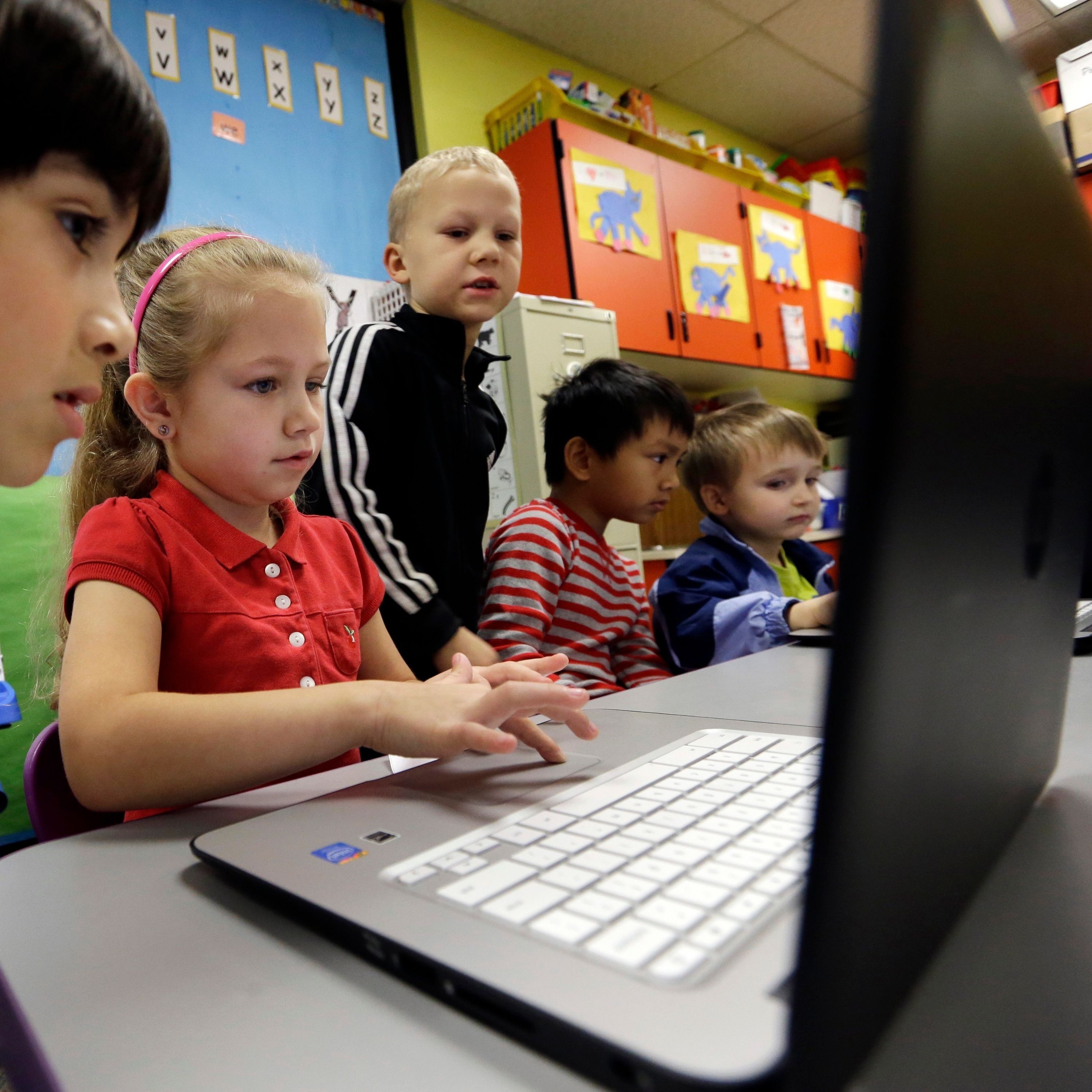
What A Day
The AI Chatbot Childhood Is Officially Here
00:22:21
The conversation surrounding artificial intelligence in the US is hard to avoid right now. Powerful companies like Nvidia are making AI chips, doctors are using AI to revolutionize and enhance healthcare, and companies like Waymo have implemented the technology in self-driving cars. But even with all these advances, concerns continue to grow over how children are using AI. Reports about chatbots engaging children in "sensual" conversations have led to amplified concerns. However, others have found that students and teachers alike are using AI to complete schoolwork and create class assignments. For more information about the intersection of AI and America's children, we spoke with Lila Shroff, Assistant Editor at The Atlantic. And in headlines, Ukrainian President Volodymyr Zelenskyy spruces up for his White House visit, President Donald Trump rants about the evil that is mail-in ballots, and MSNBC is changing its name to MS NOW.
Loading summary
Transcript46 lines
- [00:03]
A
It's Tuesday, August 19th. I'm Jane Coston and this is what a Day. The show that learned that the Cambridge Dictionary added Delulu, Tradwife and skibidi to its pages this year. But this is also the show that refuses to learn what skibidi means. On today's show, Ukrainian President Vladimir Zelensky visits the White House in a blazer. And in a shocking turn of events, President Donald Trump doesn't shout at him and MSNBC announces it's changing its name to msnow. But let's start with artificial intelligence. The AI conversation is pretty inescapable right now. The most powerful companies on the planet are making chips for AI. Doctors and researchers are using AI to diagnose diseases and create new cures. If you've ever taken a self driving car like a Waymo, those vehicles use AI to keep you allegedly safe. But you've also probably heard about other uses for AI. Here's a clip from News Nation over the weekend.
- [01:11]
B
Concerns over artificial intelligence continue to grow by the day. Some parents now more worried about their kids access to AI. And it comes after a leaked meta internal document reviewed by Reuters which detailed.
- [01:25]
A
Policies on chatbot behavior allowing the bots.
- [01:28]
B
To engage in, quote, romantic conversations with children.
- [01:33]
A
Yes, as we told you last week, Meta AI allowed its chatbots to, quote, engage a child in conversations that are romantic or sensual while also offering false medical information. And oh yeah, some racism too. After Reuters reported on the guidance meta said that it had changed its rules for content that, quote, sexualizes children but not the false medical information or the racism. Is that creepy as hell? Absolutely. But it's also concerning for a whole other set of reasons. Schools, students and educators are using AI for everything from creating assignments to writing essays. Some teachers are even using AI chatbots as reading tutors for little kids. Which raises some questions. So for more on our AI powered future of creepy bots and children learning to read, I spoke to Lila Shroff. She's an assistant editor at the Atlantic. Lila Shroff, welcome to what a Day.
- [02:27]
B
Thanks for having me.
- [02:29]
A
I want to start out with a piece that you wrote in which you posed as a fake 13 year old to Google's Gemini chatbot. You told the bot to, quote, talk dirty to me. How did that go?
- [02:41]
B
The first message that I sent it actually responded with some hesitation and kind of thought maybe this isn't a great idea. But I prodded it and poked it a little more and pretty soon we descended into a conversation that you might imagine a 13 year old should probably not be having with a chatbot. It got pretty dark. The more I pushed to see how the chatbot might perhaps respond with explicit content or content that was just kind of stuff nobody really wants to see.
- [03:12]
A
I know Gemini changed its policies after article, but it's not just Gemini. We talked about Meta's weird chatbot on the show last week, which was permitted to have, quote, sensual conversations with children. So why is this happening and why does this continue to happen?
- [03:32]
B
You have these companies that have these bots that can say pretty much anything under the sun if you push hard enough. And why it's really happening, too, is just the training data that these bots are trained on contains pretty much the whole Internet, and large parts of the Internet are not so savory. And so you start to get kind of the bad stuff, pop, popping out in various answers or conversations.
- [03:54]
A
Yeah. And I. I think that that goes to something I've been thinking about. Like, there are people who are programming these chatbots and telling them, you are permitted to say this, you are not permitted to say that. What are those people getting wrong here?
- [04:09]
B
I mean, in fairness to them, it's. It's a hugely challenging problem. There are safety teams that are working hard to try to figure out how do we put up the right side safeguards here. That. That's a really hard task when you have a chatbot that can't just respond in six ways, it can respond in any number of ways. And so I think these companies have a real challenge to figure out, how do we not play whack a mole and close up problems as they emerge, but find kind of more systemic ways to prioritize content, moderation and safety on these platforms.
- [04:39]
A
Right. Especially because, as you write, the chatbot childhood is officially here. And I want to talk a little bit about a piece that you wrote last week talking about AI in schools, which I think goes to this point, because you have these chatbots that are permitted to have, quote, sensual conversations. But as you write, teachers are using those chatbots to help younger students learn to read. And I'm just thinking about, like, you know, if I had had this when I was taking stats 350, even in college. Oh, it would have been very tempting. But I think that you actually raised something that I want to talk about, which is the other side of the classroom divide, which is teachers, and you lay out a really good case that AI use is spreading among teachers so quickly. What's a good example that we should be paying attention to?
- [05:29]
B
Yeah, so I don't think it's quite as common as it is among the students yet. But there's certainly a cohort of teachers who have a ton of administrative work, and also some of it is helping come up with personalized lessons plans for students. Some of it's just like, okay, I need to make sure that this assignment aligns with curricular standards, or I need to develop an extra project for the kids that finish early. And there's just so much kind of paper tasks, and AI actually can be quite useful. Also useful for coming up with personalized. Let's say you're teaching a math assignment in algebra class and the local city football team just won the Super Bowl. Maybe you create a math quiz that's all about the final game, and that's fun. And so I think that there is opportunity for personalization and customization, but also just to speed up some of the, you know, grading or assignment creation. And in theory, that can save instructors a lot of time. There's also a lot of caution to be had about what a sloppy version of that looks like versus what a really thoughtful version of that looks like.
- [06:33]
A
What would a sloppy version look like? Like, I'm thinking about the fact that we've seen that learning language models and ChatGPT can just kind of make up effects.
- [06:41]
B
Yeah, that's a great point. I don't live in Houston, where this case was, so I can't speak personally to it, but a couple parents wrote an op ed in the Houston Chronicle expressing frustration. After the centralized district curriculum, they started to notice what they thought were signs of AI slop. So there was a lesson that had involved art from the Harlem Renaissance. And instead of the actual artists paintings, it was AI generated. Art was. Was in the lesson. And I think many people would say, well, that's probably not what we want to be doing.
- [07:17]
A
It's interesting to me also, because President Trump is pushing AI in the classroom. It kind of reminds me, because I'm an older millennial, a little bit of like, George W. Bush and no Child Left behind or any of these efforts we've had over the last 30 years to be like, oh, we're gonna radically change education. Everyone's getting a Chromebook. Oh, wait, the Chromebooks don't work. Oh, wait, this doesn't work the way we think it does. And, you know, Trump also has an education cabinet secretary who referred to AI tech as a one. But I want to ask you two questions. How strong is the federal government's interest in AI and education? And in your view, how strong should it be?
- [07:55]
B
From my vantage Point, there's clearly a lot of effort being invested in. Let's embrace AI and education. And whether this converts into like actual meaningful reform or is more of kind of a marketing campaign at this stage, I think that's difficult to know. These things take time. The question is to how much should they be thinking about this? Nobody can agree on anything about AI, but I think most people can agree that the classroom needs to change somehow. And maybe that doesn't mean more AI in the classroom. Maybe you're one of the people that thinks, okay, we actually need to go back to cursive and handwrite everything and.
- [08:31]
A
Get blue book exams, no phones.
- [08:35]
B
So that's one stance. Another stance is like, we need to go all in. But it seems clear that the status quo of a ton of cheating, general discontent is not good. And right now, what it kind of feels like we have is an environment where students are trying to kind of optimize for evading plagiarism detectors. And I think we can all agree trying to use AI to avoid the plagiarism detectors is not the ultimate outcome we're going for. So, yeah, something needs changing. I think what needs changing is a much more contentious conversation.
- [09:10]
A
So something else I've been thinking about. There's this phrase that Internet people will know the inshittification of everything that's digital. Basically, we get a cool new service, it gets really popular, we change our lives because of it, and then it just isn't doing it anymore. And I think we've seen this with social media. We've seen this with pretty much everything where it's like it comes in, it's like, this is going to change everything. And then it just winds up being another place where people yell at you somewhere on the Internet. Where are we in that cycle when it comes to AI in the classroom? Because I think to your point, we're at this weird point where the kids are using it, some teachers are using it, no one's quite sure how to use it well, and everybody's kind of angry about it.
- [09:54]
B
I feel like we're kind of early here. I wouldn't go as far as to say this is like, you know, late stage AI takeover of school. You know, there's a lot of tools that are kind of really thoughtfully designed. So this magic school, which is a company that specifically is aimed at educators, they said they have reason to believe that every district in the country has a teacher using their technology. And that's the sort of thing that to me implies there is, like something genuinely helpful for the instructors here. And so I think that we're kind of in this figuring it out moment where it's like, clearly there's a way this can be not so great. But there's also more thoughtfully designed tools that are maybe helping guide a student through a math problem and trying to adapt to their learning style. I think it's like, maybe let's check back in in a few years and see where we've landed up. And it's going to depend so much on every instructor's implementation and students too. There's genuinely useful things they can be doing with AI, and there's genuinely probably not so useful, right?
- [11:02]
A
Lila, thank you so much for joining me.
- [11:05]
B
Thank you. I really enjoyed the conversation.
- [11:08]
A
That was my conversation with Lila Shroff, assistant Editor at the Atlantic. We'll link to her work in the show Notes. We'll get to more of the news in a moment, but if you like the show, make sure to subscribe. Leave a five star review on Apple Podcasts, watch us on YouTube and share with your friends. More to come after some ads what a day is brought to you by Zebiotics Pre Alcohol. Let's face it, after a night with drinks, I don't bounce back the next day like I used to. I have to make a choice. I can either have a great night or a great next day. That is, until I found Pre Alcohol Zebiotics Pre Alcohol Probiotic Drink is the world's first genetically engineered probiotic. It was invented by PhD scientists to tackle rough mornings after drinking. Here's how it when you drink, alcohol gets converted into a toxic byproduct in the gut. It's a buildup of this byproduct, not dehydration, that's to blame for rough days after drinking. Pre alcohol produces an enzyme to break this byproduct down. Just remember to make pre alcohol your first drink of the night. Drink responsibly and you'll feel your best tomorrow. Every time I have pre alcohol before drinks, I notice a difference the next day. Even after a night out, I can confidently plan on working out without worry. The final days of summer are here for you to enjoy. Whether you're heading to the beach, camping in the woods, or squeezing in one last vacation road trip. Don't forget to bring Zebiotics Pre Alcohol Probiotic Drink Drink a pre alcohol before drinking and enjoy every day of summer to the fullest. Go to zbiotics.com wad to learn more and get 15% off your first order. When you use code WAD at checkout. Zbiotics is backed with a 100% money back guarantee, so if you're unsatisfied for any reason, they'll refund your money, no questions asked. Remember to head to zbiotics.com wad and use the code WAD at checkout for 15% off.
- [12:58]
C
A real Etsy Buyer review for handmade home decor by a real Etsy seller. I could not be happier about the quality or the wonderful personal message supplied with it describing its journey into existence. Discover original items created by real people and loved by real people just like you. Special starts on Etsy Shop the Etsy.
- [13:19]
A
App.
- [13:24]
C
If you care about justice, power and what it really means to make change, then Podcasting the People is a show for you. Each week I team up with culture critic Miles E. Johnson and education leader Sharonda Bossier to break down the biggest political and cultural stories of the moment. With the context that mainstream media usually skips. From the criminal justice system to education protests to pop culture, we connect the dots between policy and lived experience, always with a sharp perspective and often with guests who are driving real change in their communities. Listen to Ponzi of the People every Tuesday. Wherever you get your podcast.
- [14:01]
A
Here's what else we're following today. Head of Lines.
- [14:07]
D
I've just had the honor of being with President Zelensky and all of the discussions that we've had. We covered a lot of territory.
- [14:19]
A
President Trump hosted Ukrainian President Zelenskyy and a delegation of European leaders at the White House Monday. That territory Trump is talking about is finding common ground to end Russia's invasion of Ukraine. German Chancellor Friedrich Metz told Trump that Europe wants to put more pressure on Russia.
- [14:35]
D
So I would like to emphasize this aspect and would like to see a ceasefire from the next meeting, which should be a trilateral meeting wherever it takes place. Well, we're going to let the president go over and talk to the president and we'll see how that works out.
- [14:55]
A
Trump also said he would back European security guarantees for Ukraine, but he stopped short of committing U.S. troops. Monday's hastily assembled meetings come as Trump continues to play the middleman in a truth Social Post. Afterwards, Trump said he called Russian President Vladimir Putin and is arranging for him to meet with Zelensky. He said the plan is to then have a trilateral meeting, which, quote, would be the two presidents plus myself. And before we move on a style note, earlier in the day, Zelenskyy met with Trump in the Oval Office. It seemed friendlier than Zelenskyy's last visit to the White House. Could this be because he chose a new look that strayed from his typical military fatigues?
- [15:34]
D
First of all, Mr. President Zelensky, you look fabulous in that suit. I said the same thing. You look good. I said the same thing.
- [15:42]
A
Well, the suit was still literally all black and had a military flair. And were there shoes or boots? Finally, the style news we all needed.
- [15:54]
D
Mail in ballots are corrupt. Mail in ballots. You can never have a real democracy with mail in ballots. And we as a Republican Party are going to do everything possible that we get rid of mail in ballots. We're going to start with an executive order that's being written right now by the best lawyers in the country to end mail in ballots.
- [16:15]
A
Trump spent just a bit of his Monday ranting about mail in ballots, which he said five times in three sentences. Why did Trump decide to bring this up? Because Putin told him to. No, really. When the two leaders met in Alaska last week, Trump said Putin told him he should stop mail in voting. In case that wasn't enough, Trump also vowed on Truth Social on Monday to get rid of the real devil that sleeps among US Voting machines, which he called highly inaccurate, very expensive, and seriously controversial. He claimed the US Is the only country in the world that still uses mail in ballots, which is true if you ignore Canada, the United Kingdom, Germany, and dozens of other countries that do, in fact, use them. I'm so tired. Trump has been whining about mail in ballots ever since 2020, when he baselessly claimed they played a role in the voter fraud that cost him the election, which did not happen. Trump. Here he is planting the seeds during a 2020 presidential debate before that election even happened.
- [17:11]
D
They're sending millions of ballots all over the country. There's fraud. They found him in creeks. They found some with the name Trump. Just happened to have the name Trump just the other day in a wastepaper basket.
- [17:22]
A
I just love the visual of Trump's minions scouring creeks across America for ballots with his name on them. We know this, but it's worth repeating. Mail in voting is a legit method to cast legit ballots, and fraud rates are minuscule. Also, millions of people voted by mail in 2024, an election that, if I recall, Trump won. Legal experts say they expect federal courts to immediately block any federal executive order that tries to ban states from using mail in ballots or voting machines. Presidents are allowed to advocate for election changes, but they don't have the constitutional authority to decide when, where, or how ballots are cast. That's up to the states. Thanks, Constitution. It's Back to school season, and some public health experts are concerned about when and if Americans will get an updated COVID 19 vaccine this fall. The FDA hasn't approved a new version yet, something they typically do by late August. Plus, the federal committee that would normally recommend the updated vaccine isn't expected to meet until at least mid September, according to Centers for Disease Control and Prevention employees who spoke anonymously to the Washington Post. That makes planning your life around the vaccine, if you're someone who relies on it, a tad difficult. Back in May, the FDA released plans to approve the vaccine update just for adults 65 and older and people with at least one high risk health condition like diabetes or asthma, meaning they might not be available for the general public or for children. It's also unclear whether or not health insurance companies would cover the vaccines for people who don't qualify under these new guidelines. Infectious disease experts worry that delays and confusion around all of this could limit access to the vaccine for the people who need it most kids, seniors and anyone who's pregnant or immunocompromised. MSNBC announced Monday it will officially be changing its name as part of the network's corporate divorce from NBC. The new name is Drum roll please. My Source News Opinion World, or Ms. Now for short. And it's off to a great start because longtime MSNBC host Rachel Maddow told Variety she has, quote, no idea how to pronounce it. The channel also debuted a new logo. Since it also lost custody of the peacock, the network replaced it with an unremarkable flag like symbol and a font that could not be more basic. In it, the Ms. Looks a lot like Ms. Now. Which begs the Will there be some sort of pageant? And will the winning MSNBC host have to wear a glittery Miss now sash? We hope not. Or maybe I'm kind of into it. At least one person had a creative review of the new vibe. Joe Scarborough of Morning Joe.
- [19:59]
D
They even have a graphic up.
- [20:01]
A
I like it there it is actually the new logo.
- [20:03]
D
It looks very sporty.
- [20:05]
A
Yes, sporty. That's what you think of when you think msnbc. In other media news, the conservative network Newsmax will pay a $67 million settlement to Dominion Voting Systems for defamation. A judge ruled earlier this year that Newsmax defamed the voting machine company. Hey, we were just talking about those. By reporting about voter fraud via their machines and insinuating that they caused Trump to lose the 2020 election. Documents released as part of the lawsuit showed that Newsmax employees very clearly knew what they were saying was not true. So did the network apologize or express remorse? Of course not, the company said in a statement after the settlement. We stand by our coverage as fair, balanced and conducted with professional standards journalism. Agree to disagree. And that's the news. Before we go. If you love messy power players and hate the men who actually have power, this fucking guy is for you. It's a YouTube series from Hysteria hosts Aaron Ryan and Alyssa Mastromonaco where they deep dive into the worst people. Yes, women can be fucking guys too in politics, business and beyond. Think of it like a true crime series, but the crime is having way too much power and being the absolute worst. The latest episode is all about Peter Thiel, tech billionaire, secret political puppet master, and maybe an actual vampire. Search this fucking guy on YouTube or Spotify to watch now. That's all for today. If you like the show, make sure you subscribe, leave a review, contemplate that the Republican Party of Florida was making deportation merch and tell your friends to listen. And if you're into reading, I'm not just about how the Florida GOP made hats, T shirts and beer koozies with the Deport Depot emblazoned upon them until the Home Depot, you know, the hardware retail store said absolutely not like me. Water Day is also a nightly newsletter. Check it out and subscribe@cricut.com subscribe I'm Jane Coston and personally, if stopping undocumented immigration is so very, very important and serious, I find it a little hard to believe that it is also worthy of fun. Mer what a Day is a production of Crooked Media. It's recorded and mixed by Desmond Taylor. Our associate producer is Emily Foer. Our video editor is Joseph Dutra. Our video producer is Johanna Case. We had production help today from Greg Walters, Matt Berg, Shauna Lee and Gina Pollack. Our senior producer is Erica Morrison and our senior Vice president of news and politics is Adrienne Hill. We had help with our headlines from the Associated Press. Our theme music is by Colin Gilliard and Kashaka. Our production staff is proudly unionized with the Writers Guild of America East.
- [23:24]
E
Exciting news. Crooked subscription content is now available on Substack.
- [23:30]
A
Yeah, it is.
- [23:30]
E
If you're already a subscriber, don't worry, this won't change anything for you. But if you love using substack and prefer accessing things there, you can now find Crooked's content on substack. When you subscribe, you'll unlock ad free episodes of your favorite Crooked shows. Exclusive content like Polar Coaster with Dan Pfeiffer for expert insights into the polls and media. Plus, you're supporting progressive, independent media at a time when media is under attack. Where everywhere you are so you can subscribe on the platform that works best for you. Visit crooked.com friends to learn more.