← What A Day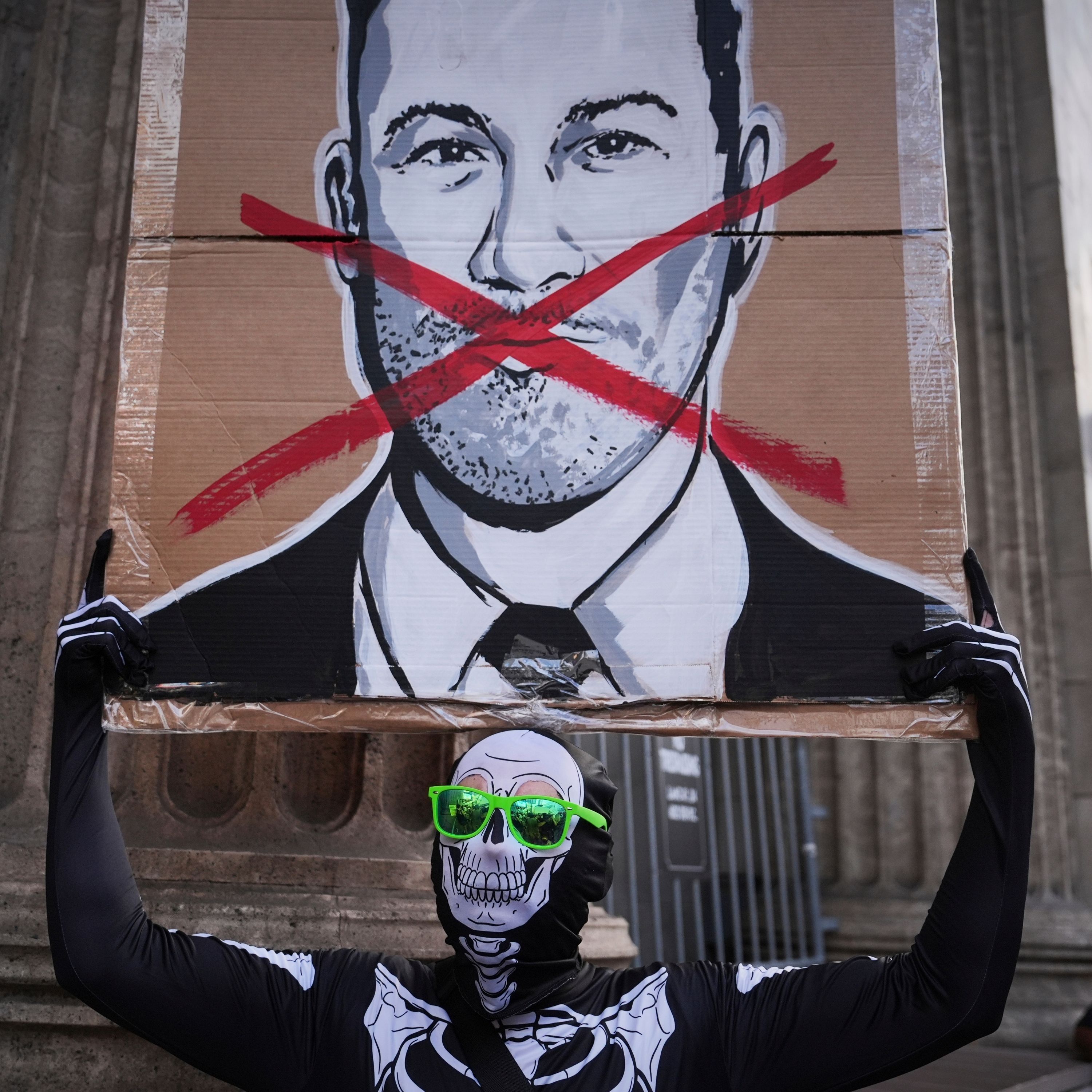
What A Day
The Big Business Behind The Kimmel Suspension
00:22:59
On Friday we learned that according to President Donald Trump, when coverage is negative, "It's no longer free speech." And it seems he's not alone. There's a growing sentiment within the Republican Party, which currently controls the White House and both Chambers of Congress, that actually, free speech doesn’t apply if you say mean things about Republicans. This is all in regards to ABC pulling “Jimmy Kimmel Live!” from its usual spot in the nightly lineup, after FCC Chairman Brendan Carr said that Kimmel should face repercussions for comments regarding the assassination of conservative activist Charlie Kirk. On this episode, we discuss why the suspension of a late-night talk show host isn’t just about a late-night talk show host. It’s about speech, and what you can, and apparently can’t, say on television. To talk more about the media machinations that got Jimmy Kimmel pushed off the air, and the chilling effect of the FCC’s implied threats, we spoke to Brian Stelter, media anal...
Loading summary
Transcript42 lines
- [00:03]
Jane Coaston
It's Monday, September 22nd. I'm Jane Coston, and this is what a Day. The show that learned on Friday that free speech has an entirely new meaning courtesy of President Donald Trump.
- [00:12]
Donald Trump
When somebody is given 97% of the stories are bad about a person, that's no longer free speech, that's no longer anything. That's just cheating. And they cheat.
- [00:23]
Jane Coaston
Content warning. There's gonna be a lot of cheating in this episode. On Today's A federal judge in Florida tosses out Trump's $15 billion defamation lawsuit against the New York Times due to it being written like a love letter to Trump. And the United Kingdom, Australia, Portugal and Canada formally recognize a Palestinian state. But let's start with Jimmy Kimmel. You've probably heard a ton about this story over the last few days. That's because the suspension of a late night talk show host isn't just about a late night talk show host. It's about speech and what you can and apparently can't say on television. Last week, ABC polled Jimmy Kimmel live from its usual spot in the nightly lineup after FCC Chairman Brendan Carr said that Kimmel should face repercussions for comments regarding the assassination of conservative activist Charlie Kirk. But there's a lot more to this story. First, there's the money. Nexstar, the largest owner of television stations in the country, desperately wants a merger and would need permission from the FCC to get it done. In fact, mergers have seemingly been in the background for multiple incidents of massive media companies capitulating to the Trump administration over the last few months. Take the cancellation of comedian Stephen Colbert's talk show by cbs, for example, in the shadow of the Paramount Skydance merger, a merger that got approved by the FCC right after Colbert's show got canceled. Hmm. But FCC Chairman Carr's remarks made the subtext of the suspension of Kimmel show into text so obvious that even Texas Republican Senator Ted Cruz could read it. Here he is discussing Carr on his podcast on Friday.
- [01:57]
Ted Cruz
Look, look, I like Brendan Carr. He's a good guy. He's the chairman of the fcc. I work closely with him. But what he said there, dangerous as hell. He says, we can do this the easy way or we can do this the hard way.
- [02:12]
Jane Coaston
Yeah.
- [02:12]
Ted Cruz
And I gotta say, that's right out of Goodfellows. That's right out of a Mafioso coming into a bar going, nice bar you have here. It'd be a shame if something happened to it.
- [02:24]
Jane Coaston
Yes, he did a weird A Bronx Tale impersonation there. We all heard it and we're dealing with it anyway. What's worrying me, however, is the bigger picture. A growing sentiment within the Republican Party, which if you recall, currently controls the White House and both chambers of Congress, that actually free speech doesn't apply. If you say mean things about Republicans. Here's Oklahoma Republican Senator Mark Wayne Mullen seemingly making that very point to CNN's Dana Bash on Sunday. Of course, first he says that he's a big fan of free speech.
- [02:55]
Mark Wayne Mullin
Absolutely. I believe in free speech. Without a question, I believe in free speech. But then when you start using words of that he's a Nazi and comparing him to Hitler, and I'm not saying you've done that. I'm saying this is the negative stories that have been played about him. There is a problem at some point and some people had to be held.
- [03:13]
Jane Coaston
Accountable, held accountable for mean words. Hmm. Wasn't it like January when we were told that this was an administration that cared about free speech? So to talk more about the media machinations that got Jimmy Kimmel pushed off the air and the chilling effect of the FCC's implied threats, I spoke to Brian Stelter. He's a media analyst for cnn. Brian Stelter, welcome back to Whataday.
- [03:36]
Brian Stelter
Thank you. I think.
- [03:38]
Jane Coaston
Have you learned anything more in the past few days about why ABC ultimately took Kimmel show off the air and how that decision was made? Because it happened so fast. You have the FCC commissioner saying we can do this the hard way or the easy way. You have these television owners preempting the show and then ABC pulling it within a couple of hours.
- [03:59]
Brian Stelter
Yes. I think we might think about this happening really slowly and then really suddenly. What happened last Wednesday was very sudden as you just described. But I do want to acknowledge that the pot was starting to warm up. Maybe the water was starting to boil over. You know, think back to July when Stephen Colbert show was canceled for what CBS claimed were financial reasons. President Trump immediately said he wanted Kimmel off the air. Next, Kimmel responded. He went to an anti Trump protest, one of those no Kings protests. He was even more outspoken than ever about President Trump. He took August off as he usually does. He's back on the air for the new season. And according to some of the reports we've been seeing in recent days, his team was fearing something like this might happen because of the political environment, because of Colbert's cancellation, because of all the Trump pressure. So I wanna recognize that there was a lot of boiling water maybe before Wednesday. And then all of a sudden this exploded.
- [04:55]
Jane Coaston
And it's interesting because Donald Trump watches television constantly and he constantly talks about television like he's watching it. And he said, oh, you know, bad ratings were responsible for Colbert getting canceled and for Kimmel being preempted. Like, is that true in any way?
- [05:12]
Brian Stelter
Look, yes, late night TV is shrinking in general. You think about a pie and yes, the entire pie is getting smaller, but Kimmel's slice of the pie was, was staying steady and in some ways even growing. In other words, Kimmel was holding his own. And ABC would not agree that the ratings were bad. ABC was proud of Kimmel's show. I think they still actually would like it to be back on the air if possible. But for, you know, reasons we can get into, it might not be possible tonight.
- [05:38]
Jane Coaston
ABC is owned by Disney. And you wrote about the no win situation that Disney CEO Bob Iger was in. He's caught between the President on one side and Kimmel and a bunch of furious Kimmel fans and people who are very concerned about this and the other. Why do you think Iger ultimately sided with the President and the FCC on this issue?
- [05:57]
Brian Stelter
Right. I know some people think this is a very simple decision for Iger. Simply stand for free speech rights, tell the President to hush about this and just defend Kimmel. I know that it might seem really easy, it might seem really simple, but I think it is a lot more complicated than that. Disney is a multinational corporation with lots of business before the government. It has a pending deal involving the NFL. It has a pending deal involving the sports streamer Fubo. It has all sorts of pending business before the government and so do its station partners. You know, for Iger, he has to think about Disney subscriptions. He has to think about Disneyland revenue. He has to think about his cruise ships. He has to think about all of it. And the biggest question I wish I could answer right now, that I don't have the answer to is what are the impacts to the subscriptions of Hulu and DIsney and, and ESPN? What has the bottom line impact been? And I really hope it leaks. So far, I've not succeeded getting that from any sources. Neither have any other reporters. We just don't know what the impact has been to Disney's bottom line.
- [06:57]
Jane Coaston
So mergers seem to be the biggest common thread in all of this. Mergers, acquisitions, name changes. And we have these huge companies that buy these massive properties. Can you just kind of lay down the media landscape when it comes to this kind of ownership and why it is so vulnerable to the Trump administration?
- [07:21]
Brian Stelter
Vulnerable is the best word for this. You know, these media companies look really big. They are really big, but they feel really small. If you were to ask someone like Iger, he would say, actually, the big fish out there are the tech giants. It's Amazon and Apple, you know, and Netflix. He would actually argue that Disney is relatively small compared to those, those giant tech players. And he has a legitimate argument to make. So that is why we see Paramount trying to get bigger, possibly trying to make a bid for CNN's parent company, where I work, Warner Bros. Discovery, we continue to see this acceleration of consolidation because these media companies think they need to get bigger to compete with the tech giants. Now, with that in mind, normally in the pre Trump era, government regulators would look at these deals independently, with scrutiny, with applying antitrust law, applying public interest standards. Now, flash forward to Trump 2.0. It is very clear that Trump sees the government as his own personal tool to punish his perceived enemies. And so when we look at the FCC's actions, when we look at the DOJ's actions, there's this assumption now that it's all transactional, that it's all about whether Trump is your friend or foe. And I just think we should acknowledge how aberrant that is. Yes, people believe it's the new normal, but it's never been like this before. And so it's a totally different environment for a CEO like Iger, a guy who, by the way, thought about running for president in 2020. He is not a MAGA Republican, he's a Democrat. He's a Democratic donor. But he finds himself in this position where he's supposed to be doing what's best for shareholders.
- [08:56]
Jane Coaston
So are you saying that these mergers make it so that fewer companies control broadcast television, and then does that make them more vulnerable to this kind of jawboning and, you know, these kind of actions by the government?
- [09:10]
Brian Stelter
Yes, because station licensing is not necessarily a vulnerable point. It might sound like a vulnerability because station licenses are renewed every eight years. And Trump has threatened owners he doesn't like and talked about revoking licenses. But in reality, that would be a lengthy legal battle. It's hard to do. It's unclear if the Trump administration would win. So it's really not the station license renewal process that's the vulnerability. It's the merger process. That's when the government has to approve or reject a deal. And the Paramount playbook is the one to look at. You know, it seemed like the FCC was taking an extra long time reviewing the Paramount merger. At the same time Trump had a lawsuit pending against the company. It seemed like the FCC approved that merger right after Paramount paid Trump's library. So if you're a media company CEO, you're looking at the Paramount example, and you're saying this is how business works now in America.
- [10:02]
Jane Coaston
Now, you mentioned that ABC would like Kimmel to get back on the air, especially now that you've had the obvious backlash to this decision. What do we know about what's been happening behind the scenes to come up with a solution there? Do you think Kimmel will be back?
- [10:16]
Brian Stelter
I think it's exceedingly unlikely that Kimmel will be back on ABC on his old platform. I wonder if there's a chance maybe he'll be back on Hulu or Disney. You know, I wonder if there's a clever way forward for ABC that involves taking the show off the broadcast airwaves, but putting it somewhere that's out of the FCC's reach. But the reason why I would be skeptical of even that possibility is because of the government vulnerabilities we just discussed, because Disney still has that pending business before the government. Disney does have to think about the larger implications of keeping Kimmel on the air, and that is a very chilling reality. You know, I used to say, Jane, that, you know, in March and April and May, as Trump ramped up his assault against his institutions, that, yes, there was a chill in the air, but it felt like the temperature only changed one or two degrees. You know, I think we're reaching the point now where we need to put on a coat or a jacket. You know, it is now actually getting much more frigid. It is getting much scarier for Hollywood creators and comedians, showrunners and writers. You can feel this to some degree in newsrooms as well. But I think the Kimmel case has really chilled Hollywood, and we don't know how it's gonna end. Do you think I'm crazy? By the way, have you been wearing a coat all year long?
- [11:31]
Jane Coaston
I think that I have become increasingly anxious. I am one of those people where I respond to everything with like, I'm sure it'll be fine. And I don't know why I do that, but it's kind of a coping mechanism.
- [11:42]
Brian Stelter
It feels good.
- [11:43]
Jane Coaston
But this is the moment where I was trying to think, and I wanted to ask you, have we ever experienced something like this, especially in broadcast television? I went back. We were talking about when Bill Maher's show got canceled. He made remarks after 9, 11, actually, on September 17, 2001. And you had Ari Fleischer, who at the time was a White House press secretary, Saying that, you know, basically people should watch what they say. You had advertisers pulling out. But Mar's show was canceled in June of 2002 and ABC @ the time said, oh, it's about ratings. And kind of ironically he got replaced by Jimmy Cavill Live. But even that, you don't have the FCC saying, you know, nice show you got there, nice merger you want? Wow. Sure would be terrible if somebody got involved here. Like, have we ever seen anything like this?
- [12:35]
Brian Stelter
I don't think there is a case in history quite like this. I think we might look at the Smothers brothers in the 60s, Vietnam War era anti war commentary on the show and the show was not being submitted to the government censors. It caused a big controversy. The show was canceled. You know, maybe there's some similarities to that episode. The Mar one also comes to mind post 9 11. But we don't look back at those moments with pride as Americans. We look back at those moments with shame. Those are shameful episodes in America's free speech history. To see someone like Marr sidelined, for example, of course he had a second and third and fourth life. And that's where we might go back to the more hopeful take on this. Marr was able to find a different platform, maybe a better platform, a platform further from the reach of the government because he's on cable and streaming now, not broadcast. And that's the thing about this, Jane. This might actually speed up the decline of broadcast TV. It might just push people toward YouTube and Substack and podcasts and all these new platforms. That may be the ultimate outcome of this situation right now.
- [13:40]
Jane Coaston
Well, at least there's good news for podcasters. Brian, as always, thank you so much for joining me.
- [13:47]
Brian Stelter
Thank you.
- [13:48]
Jane Coaston
That was my conversation with Brian Stelter, media analyst at cnn. We'll link to his work in the show notes. We'll get to more than it is in a moment, but if you like the show, make sure to subscribe. Leave a five star review on Apple Podcasts, watch us on YouTube and share with your friends. More to come after some ads. What a Day is brought to you by Deleteme. Deleteme makes it easy, quick and safe to remove your personal data online. At a time when surveillance and data breaches are common enough to make everyone vulnerable, it's easier than ever to find personal information about people online. Having your address, phone number and family members names hanging out on the Internet can have actual consequences in the actual real world. And it makes everyone vulnerable. And more and more online partisans and nefarious actors will find this data and use it to target political rivals, civil servants, and even outspoken citizen posting their opinions online. With Deleteme, you can protect your personal privacy or the privacy of your business from doxing attacks before sensitive information can be exploited. As someone with an active online presence, privacy is really important to me and Deleteme can help take control of your data and keep your private life private by signing up for Deleteme now at a special discount for our listeners. Get 20% off your DeleteMe plan when you go to JoinDeleteMe.com wad and use promo code WAD at checkout. The only way to get 20% off is to go to JoinDeleteMe.com wad and enter code wad at checkout. That's JoinDeleteMe.com wad code wad every bold.
- [15:21]
Land Rover Defender Advertisement
Journey starts with a decision to go, and if you're ready, the Defender is too. This is a vehicle built for more. Whether you're heading off the grid or just getting out of town for the weekend, Defender is a true icon reimagined for a new generation. Its rugged exterior is built from durable materials and tested in the toughest conditions. Inside, it's modern, functional and refined, with smart storage and premium touches that keep you comfortable wherever the road leads. It's packed with tech like 3D surround cameras, ClearSight, ground and rear views, driver assist features, and an intuitive infotainment system. With three models, the Defender 90, 110 and 130, there's a Defender for every kind of adventure. From city streets to remote trails, this is a vehicle that, like you, is capable of great things. Explore the full Defender lineup@land roverusa.com with.
- [16:15]
Comcast Business / JustWorks Advertisement
Leading networking and connectivity, advanced cybersecurity and expert partnership, Comcast business helps turn today's enterprises into engines of modern business. Powering the engine of modern business powering possibilities, restrictions apply.
- [16:31]
Jane Coaston
Here's what else we're following today.
- [16:34]
Brian Stelter
Head of Lines.
- [16:38]
Donald Trump
So today to revive.
- [16:40]
Brian Stelter
The hope of peace and a two state solution, I state clearly as Prime Minister of this great country that the United Kingdom formally recognises the state of Palestine.
- [16:57]
Jane Coaston
On Sunday, British Prime Minister Keir Starmer joined Canada and Australia to formally recognize the Palestinian state. Starmer first announced the UK's plan to recognize Palestine back in July unless Israel agreed to a ceasefire with Hamas, allowed humanitarian aid into Gaza and took steps toward long term peace in the region. Suffice it to say that these conditions have not been met and it doesn't look like they will be anytime soon. Israeli Prime Minister Benjamin Netanyahu responded in a video posted to social media that a Palestinian state, quote, will not happen. He also referenced Hamas October 7 attacks, saying that the UK Australia and Canada were giving a huge reward to terrorism. But his statement didn't deter Portugal, which also announced recognition of the Palestinian state on Sunday. France and Belgium are expected to follow this week during the United Nations General assembly taking place in New York. A lot has happened in the past week on the speech front, from Jimmy Kimmel's suspension to Pentagon restrictions on reporters. Lord and savior, I mean, President Trump is escalating moves to consolidate power in his second administration and root out those who have spoken out against him. And he's not even hiding it. In a post on Truth Social Saturday that even his administration reportedly wasn't sure was supposed to be public, Trump addressed Attorney General Pam Bondi, pushing her to pursue cases against his political foes. Trump wrote, quote, pam, I have reviewed over 30 statements and posts saying that. Essentially same old story as last time. All talk, no action, nothing is being done. What about Comey, Adam Shifty, Schiff, Letitia? They're all guilty as hell, but nothing is going to be done. In what the Associated Press generously describes as, quote, somewhat of an open letter, Trump appears to be particularly irate that the Department of Justice has yet to bring charges against former FBI Director James Comey, California Democratic Senator Adam Schiff, and New York Attorney General Letitia James, who is the target of a mortgage fraud investigation. Later Saturday night at the White House, the president doubled down when speaking to reporters.
- [18:55]
Donald Trump
I just want people to act. They have to act and we want to act fast. You know, they were ruthless and vicious. I was impeached twice. I was indicted five times. It turned out to be a fake deal. And we have to act fast. One way or the other, one way or the other, they're guilty, they're not guilty. We have to act fast. If they're not guilty, that fine. If they are guilty or if they should be charged, they should be judged.
- [19:22]
Jane Coaston
The remarks followed Friday's resignation of Eric Siebert, the federal prosecutor investigating the mortgage fraud allegation against Letitia James after Trump said he wanted him gone. Over the weekend, Trump nominated White House aide Lindsey Halligan as the top federal prosecutor to replace him, even though she does not have any prosecutorial experience.
- [19:43]
Donald Trump
So the whole idea is no more will these big tech companies or other big companies train foreign workers. They have to pay the government $100,000, then they have to pay the employee. So it's just not economic. If you're going to train somebody, you're going to train one of the recent graduates from one of the great universities across our land.
- [20:06]
Jane Coaston
That's Secretary of Commerce Howard Lutnick. With the president on Friday sending American companies and their international workers into a frenzy with the announcement that H1B visa applicants entering the country now need to pay a $100,000 yearly fee. Pretty soon after President Trump signed the proclamation, companies sent out a flurry of emails and memos advising their workers with H1B visas not to leave the country. They also recommended that any workers already abroad rush back before the rule took effect less than 48 hours later Sunday at 12:01am Eastern Time, obviously panic ensued. One flight from San Francisco to Dubai was reportedly delayed three hours after several passengers received those messages from their employers and demanded to be let off the plane. Then came the clarification. Late on Saturday, almost a full day after the initial announcement, the Trump administration said this new fee only applies to new visa applicants, not those who already have H1B visas or will be renewing them. Oh, and that $100,000 price tag is actually a one time fee contradicting what Commerce Secretary Lutnick said Friday. And the Secretary of Homeland Security can offer a $100,000 discount on H1B visas at their own discretion. And you know what that means. Time for flattery. Less than a week after Trump filed a $15 billion defamation lawsuit against the New York Times, a Florida judge tossed it out on Friday, calling it overly long and full of language that is, quote, tedious and burdensome. Been there, buddy. Been there. Trump filed the 85 page lawsuit last Monday, and apparently his lawyers used most of those pages to talk about how great he is. The judge, U.S. district Judge Stephen Merryday, said the lawsuit didn't even get to the first defamation count until page 80. Page 80 of 85 pages, folks. And Merriday's total evisceration of the complaint did not end there. He wrote in his order, as every lawyer knows or is presumed to know, a complaint is not a public form for vituperation and invective, not a protected platform to rage against an adversary. In laymen's parlance, this is what the fuck is all of this in judge speak, Merriday gave Trump's lawyers 28 days to basically rewrite the complaint and make sure it's not over 40 pages this time. And that's the news. That's all for today. If you like the show, make sure you subscribe, leave a review, celebrate the first sanctioned swim of the Chicago river in 98 years and tell your friends to listen. And if you're into reading, and not just about how on Sunday hundreds of people swam in the Chicago river, which is now clear, clean enough to attract river otters and bald eagles like me, Water Day is also a nightly newsletter. Check it out and subscribe@cricut.com subscribe I'm Jane Coasten and swimming in the Chicago river, that's a thing you could actually do now. What a Day is a production of Crooked Media. It's recorded and mixed by Desmond Taylor. Our associate producer is Emily Foer. Our video editor is Joseph Dutra. Our video producer is Johanna Case. We have production help today from Greg Walters, Matt Berg, Megan Larson, Gina Pollack and Jonah Eatman. Our senior producer is Erica Morrison and our senior Vice president of news and Politics is Adrienne Hill. We had help today from the Associated Press. Our theme music is by Colin Gilliard and Kashaka. Our production staff is proudly unionized with the Writers Guild of America. East.
- [24:10]
Comcast Business / JustWorks Advertisement
JustWorks is the HR platform that helps small businesses take care of their teams. Whether you're hiring, automating payroll, expanding globally or tackling compliance, JustWorks offers 247 support, hire and manage international talent without additional platforms and licensing fees. Access premium benefits for your employees like health insurance, 401k and commuter perks. Plus with transparent pricing, you know what you're paying for. Go to justworks.com to learn more. They do your human resources right so you can do right by your people. Justworks for your people.
- [24:40]
Jane Coaston
The Pumpkin Spice Latte is back at Starbucks, crafted with our signature espresso and real pumpkin sauce, then topped with whipped cream, cinnamon and nutmeg. The psl get it while it's hot or iced only at Starbucks.