Loading summary
Transcript37 lines
- [00:00]
A
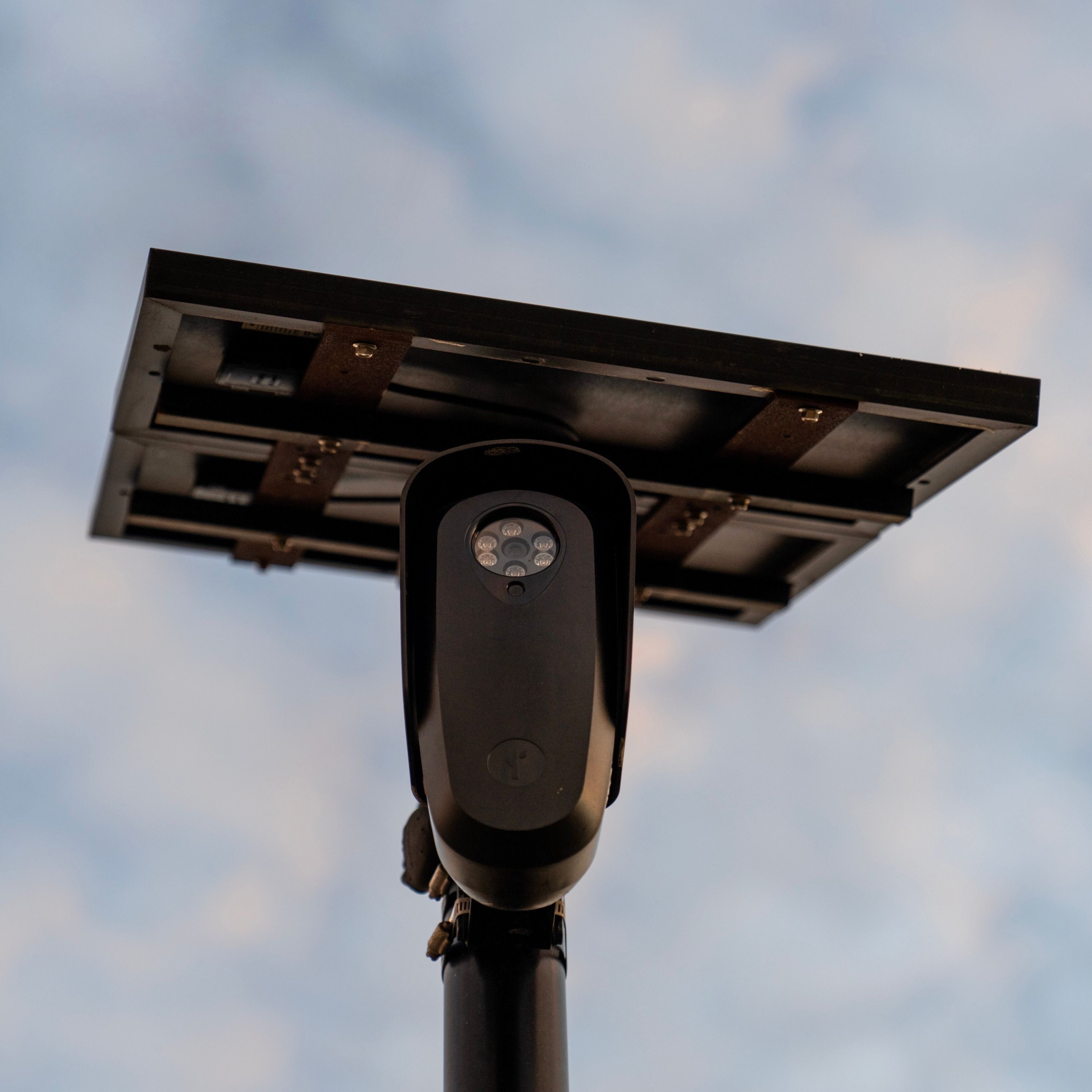
These things don't have a big sign saying like, this is the flop camera. You're being watched. They are really designed to be hidden.
- [00:17]
B
I'm Jane Coston and this is what a day. The show saying Toodaloo to Tennessee Republican Representative Andy Ogles, the Trump backed candidate who has said that both Muslims and gay people have no place in the United States, lost his primary on Thursday night. Ogles also supported rewriting the Constitution so that President Donald Trump, but not former President Barack Obama, could run for a third term. Hey Andy, since you won't be busy next year, could you explain what you did with the $23,000 you raised in 2014 for a cemetery for stillborn babies? You know, the cemetery you didn't build? I'm just curious. On today's show we talked to the Washington Post's Drew Harwell about how bad cops are using flock cameras to stalk everyday Americans. Before we get into that flocking mess, here's what we're following today. Friday, August 7th, I was in Iowa
- [01:07]
A
at a stop and we had 195, another one, 185 a gallon. And we'll see those days pretty soon again. Based on everything I see, as soon as the war ends, and I think it's going to end pretty soon, I don't think they can go much longer.
- [01:25]
B
That was President Trump on Thursday. Today is Friday. Correct me if I'm wrong, but it appears we're still at war. And according to a Guardian analysis, Iran's strategy is to keep it that way, at least until the midterms. The Guardian reports Iran wants to further tarnish Trump's image by stretching out talks, quote, in the hope of inflicting the same ruinous blow on his presidency as Jimmy Carter suffered over the 19791981 US embassy hostage crisis. The outlet reports that Iran's deputy foreign minister has laid out a months long timeline for negotiations, according to the Guardian's analysis, that could leave midterm voters at the ballot box with only Trump to blame for the lack of forward progress in the war he started. If by some chance the cost of living doesn't keep it top of mind for them. The US economy lost 23,000 jobs in July, according to a new report from the Labor Department released today. In addition, added job numbers from June and July were Revised downwards by 103,000 jobs. The unemployment numbers remain steady at 4.2%, but that's largely because fewer people are looking for work as the labor force participation rate hit its lowest non pandemic point since the mid-1970s. According to the New York Times. That decline comes in part because of immigration restrictions and deportations. As you may know, immigrants hold jobs at higher rates than native born Americans. But don't worry, National Economic Council Director Kevin Hassett is here to offer you some pure uncut cope on the jobs numbers. Here he is today at the White House.
- [02:52]
A
One is there was a big decline in government employment, which is partly because of Doge and partly because there was so much snow over the winter that there were extra school days at the end of the year. And so the normal time when teachers would take the summer off was June. But a lot of them got pushed into July and so then they show up as a layoff in July.
- [03:13]
B
In case you're wondering, no teachers teachers having July off is not why government employment declined. The BLS uses seasonal adjustments to contend with school year calendars, something that either Kevin Hassett knows or Kevin Hassett should know.
- [03:27]
A
I'm not even going to try to channel my inner Lindsey Graham, except retiring though he was. Except to say, as he said to me in some of his last words, this is a big effing deal. We all did good.
- [03:45]
B
Connecticut Democratic Senator Richard Blumenthal remembered his late colleague as the Senate worked to get a few things done before the August recess. Thus, the Senate overwhelmingly approved a Russian sanctions package today. It's a result of a year long campaign by the late Senator Lindsey Graham to reinforce US Support for Ukraine and try to force Russian President Vladimir Putin's hand as the grinding war drags on. The bipartisan legislation would penalize countries that continue to buy Russian oil, gas and other exports. At the time of our recording, the Senate still hadn't voted on the confirmation of Acting Attorney General Todd Blanch. Immigration and Customs Enforcement says its field officers across the country will have body worn cameras by the end of September. But here's the the agency's body worn camera policy could mean taxpayers who, mind you, are fronting tens of millions of dollars to pay for the cameras may be kept in the dark about some high profile confrontations, at least in their immediate aftermath. ICE's policy gives the agency broad control over what footage will be made public. The policy says ICE will promptly release video of shootings and other encounters in which its agents cause death or serious injury only after determining it is in the best interests of the agency, not the people's best interest. The agency's best interest. So much for accountability. And that's the news. Let's talk about flock cameras, I.e. automated license plate readers have been Sweeping the country with cameras popping up outside of stores and alongside roads in communities big and small. The largest manufacturer of these cameras is flok, with around 100,000 readers in use across the country. According to flock, the cameras are a boon to law enforcement. The company's CEO even told fortune magazine last year that they could eventually stop nearly all crime in America. You know, like minority report, and if you saw that movie, you know, it all worked out fine. As flock cameras become more and more prevalent, more and more people are protesting their use, even destroying them, or at least blocking their views. NewsNation reported earlier this week that 23 jurisdictions have canceled contracts with flocks, citing privacy concerns. With good reason. As tech reporter Drew Harwell wrote for the Washington Post, some law enforcement officers are using flock cameras to stalk xs, and their victims have little recourse. Drew, welcome to what a day.
- [06:03]
A
Yeah, thanks for having me.
- [06:05]
B
So you recently wrote an investigation into law enforcement abuses of flat cameras, which are essentially AI license plate readers. Your piece outlines a lot of very worrying stories that we're going to get into. But first, can you describe what these cameras look like and where people may have seen them before? Because people have probably gotten tickets from cameras that they have passed by in the mail. How do these cameras differ? Where are they?
- [06:30]
A
Yeah, the crazy thing about flock cameras is you've probably driven by them dozens of times and never even noticed because there's 120,000 across the U.S. to me, they look like those automatic air fresheners. They're basically like the size of a shoebox, and they'll just be hung high above a road on a big, like, utility pole at the top of them. They typically have, like, a solar panel because that's where they get their power from. But these things don't have a big sign saying, like, this is the flock camera. You're being watched. They are really designed to be hidden, and they scan every license plate that goes by. So they're basically meant not to be seen. But they're extremely powerful because they take timestamped photos of your license plate, put that into a big mappable database that the cops can use to see where you've driven many times. And so a lot of these people who have been surveilled in this way had no idea they were being watched the entire time.
- [07:23]
B
If you also think that it's totally fine and not at all terrifying that we're being watched all the time, stay tuned. We'll get back to my conversation with Drew Harwell in a moment. In the Meantime, make sure to subscribe, leave a 5 star review on Spotify and Apple Podcasts, watch us on YouTube and share with your friends. More to come after some ads what a day is brought to you by the Back from the Brink podcast. Since the devastating US atomic bombings of Hiroshima and Nagasaki 81 years ago, we've been under the existential threat of nuclear warfare. But it doesn't have to be this way. The Back from the Brink podcast debunks the myth that nuclear weapons keep us safe and we're stuck with them forever. The podcast also shows us how we can get rid of these weapons and what everyday people can do. Find it online@preventnuclearwar.org podcast or search for the Back from the Brink podcast wherever
- [08:12]
C
you get your podcasts Hi, I'm Alex Wagner. I do not need to tell you that being an American right now is a wild ride. But as a longtime journalist, I am not interested in the noise or the fear mongering. I'm interested in the stories at the heart of the headlines. That is why every week on my show Runaway Country, I'm joined by folks in the middle of the crossfire. From disillusioned Maha moms to newly fired immigration judges to Epstein victims themselves, to understand what it means to live through this political chaos as an actual human being. And now I'm excited to take tell you that Runaway country is available ad free to Friends of the POD subscribers. Friends of the Pod is the subscription that supports the work Crooked does as an independent media company and gives you a ton of great bonus and ad free content. With the midterms approaching, you are going to need more content to keep you sane. And now you can find Runaway country right there. Subscribe now@crooked.com backslash friends.
- [09:15]
B
Let's get back to my conversation with Drew Harwell. So what is the best case scenario? The best usage of Flock cameras?
- [09:23]
A
Yeah, Flock says their cameras are used to help a million criminal investigations a year. They have all sorts of positive anecdotes about catching kidnappers, thieves, fugitives of the law. Like being able to help cops identify where people are driving away, catch the bad guys. So from their standpoint, this is like a dream crime fighting tool that the cops always wish they had, that they now know where any car goes at any time. And so from their perspective, like why would they say no to any of this?
- [09:55]
B
I can think of some reasons. So to that point, your piece opens with the story of Marcy Bakley, who was a victim of someone abusing a flat camera. Can you tell the audience a little bit more about her experience with Flock.
- [10:08]
A
Yeah. So Marcy was a single mom in northern Georgia. She dated a police chief of a small town in suburban Atlanta. They broke up, and for months, he would send her these menacing text messages asking why she had driven to XYZ location at what time. And she was always creeped out because she never really knew why or how he knew where she was going. Until finally one day, he actually told her over text that he was using Flock. He had been logging into this police system to see where she was going, including to the doctor's office, the grocery store, out on dates. And so she was really disturbed by it. And he actually said, you know, okay, I'm not doing any weird stalker stuff. I'm just going to use it that one time. But we could actually see from the data that he was using it hundreds of times to stalk not just her, but her teenage daughter and running these searches in the middle of the night. And so it was really just an example of how bad the situation could get. You had this cop with basically no supervision, who was at the top of his police department, who was misusing this surveillance tool, that this woman had no idea that this was happening. And thank God nothing worse happened to her. But you could obviously see how dangerous that could be, having an abusive cop know where this person is at all times.
- [11:28]
B
Yeah, this sounds like a particularly creepy episode of Criminal Minds. How did this story end? Did he get prosecuted?
- [11:35]
A
Yeah, so Marcy filed for a restraining order against him. It was rejected, but she kept her case going. She complained to the local sheriff's office, who then routed her complaint to the Georgia Bureau of Investigation. They investigated and actually charged him with a bunch of crimes, including misusing license plate reader data. He was supposed to potentially go on trial this year, and he actually committed suicide before these charges could make it to trial. And he's just one of 50 cops who we've seen this issue play out where you have cops who are being charged or accused of a crime, and we don't even know. There's probably a lot of cases that we can't even tell because the women have not been able to get their cases taken seriously.
- [12:17]
B
Yeah, I think that. I mean, there are lots of alarming parts of your piece, but I think the big part for me was how widespread all of this. There was one officer in Niceville, Florida, who, who pled no contest to charges of computer system misuse, stalking and battery after misusing the flock system 192 times. And he Told you. He felt like he was being treated unfairly. And, quote, pretty much everybody uses that computer system improperly. Does Flock seem concerned that its system is being misused so frequently?
- [12:47]
A
So Flock's perspective on this is, I think, pretty interesting. I mean, Flock says, of course, they don't want any abuse to happen. They say it's sad. I talked to the chief executive who says, you know, we're building these tools to help agencies find bad actions after they happen. But that's kind of the extent of it. They take the stance that they don't want to, in Garrett's words, police the police. They want the agencies to set their own rules.
- [13:12]
B
And Garrett is the CEO. Correct.
- [13:14]
A
Garrett Langley is the chief of Flock, and his idea is to not police the police. And Flock basically sees himself. Yeah. As a contractor, like, just providing a tool and basically throwing their hands up in the air and saying, we know bad things are gonna happen, but we hope the agencies will take this seriously and taking the standpoint that we're solving all these crimes, but some people are just bad guys. They're gonna misuse whatever tools they get. And basically accepting that cases like this
- [13:42]
B
are inevitable, are the agencies taking it seriously? Because you mentioned that when Marcy first tried to reach out to police and file for a restraining order, it was denied despite the fact that she was being hunted by a police officer. So it sounds to me like not only is Flock not taking this seriously, but some police agencies aren't either.
- [14:06]
A
Yeah, and I think that's the big problem. There's 18,000 police agencies in this country. Some are taking this seriously. They're auditing cops search histories. You know, they're making sure cops are certifying that every search is for, like, a legitimate case. But there are a lot of agencies where the cops basically have free reign. And there's no federal law saying that agencies have to audit these results. There's a couple of states that have laws, but it's just a big, varying patchwork of how these agencies should treat this. And so in the middle of it, I mean, the police get to effectively police themselves. So some agencies really have a lot of supervision, and some don't. So in those cases where the cops basically have freedom to, you know, go home in the middle of the night, run these searches from their personal phone as many times as they want, that's where you see a lot of this abuse happening.
- [14:58]
B
Terrifying. So for people who are watching and listening to this, who are understandably concerned, how can they find out if Flock has been used against them?
- [15:08]
A
So there are websites like haveibenflocked.com that gather the limited amount of public records we have into these searches and allow you to put in your license plate and see if you've been searched. It's pretty interesting. And actually, a lot of these women we talked to who found out that they were being surveilled use websites like that, which are third party volunteer websites. But the sad fact of it is that these police officers have a huge amount of authority and a huge amount of secrecy to run these searches without anybody knowing. There's not a lot of transparency. We can't go in in real time and know whether somebody's being stalked or surveilled because the cops are doing it in private. So, you know, in a lot of these cases, these women are find out way after the fact of being surveilled. And then it's a whole other obstacle course because they have to basically find the right agency to investigate these cops. And it makes it really challenging because these women are afraid in a lot of cases. They don't know who to even turn these cops into because they are the law. So for normal people, it's very difficult just because of the lack of transparency into how these searches are running. You can do a little bit of searching on something like have I been Flocked? But a lot of it is just still a mystery to us.
- [16:24]
B
And Flock is not the only company making license plate cameras like this. Is there any way for people to avoid these cameras? It seems like these cameras are endemic, and there's really no means by which people can protect their privacy.
- [16:41]
A
Yeah, there's really not. Yeah, Flock is the biggest license plate reader company, but there are other companies like Axon and Motorola that are rolling out their own devices. You can go on a website like dflock and see how many cameras there are across the country. If you try to create driving directions between one place to the other, it's going to take you forever just because these cameras are basically everywhere. And that's part of the problem. If you're going on a public road, you basically have no authority or consent to say, I don't want to allow this. And so it's really hard to avoid that. And a lot of this is happening without the public's even understanding or knowledge. So, yeah, it's really hard to avoid surveillance at this level. And these cameras are being installed all the time. So this is really becoming a bigger issue for all of us.
- [17:32]
B
Drew, thank you so much for joining me.
- [17:35]
A
Yeah, thanks for having me.
- [17:37]
B
That was My conversation with Drew Hartwell, technology reporter at the Washington Post. Before we go, the reviews are in. The chemistry between Nina Parker and Louis Virtel is undeniable. Every Wednesday on Keep it, they serve as your guides through the magical journey of pop culture. They'll bring you the need to know entertainment news, juiciest celebrity gossip, and all the hottest takes you can handle. Plus some you probably can't. This week they're sitting down with the gorgeous and talented Monica Barbaro to chat about her latest rom com. One night only. Watch now on YouTube or listen wherever you get your podcasts. That's all for today. If you like the show, make sure you subscribe, leave a review. Remember, it's not just you. The Trump administration really does suck. And tell your friends to listen. And if you're into reading, I'm not just about these Trump voters. Speaking to Emis now in Ohio.
- [18:25]
A
Is this how you expected the second Trump term to go?
- [18:28]
B
No, not at all.
- [18:29]
A
I hoped it was going to be so much better. He also promised no new foreign wars. We're obviously in this war in Iran, which is why we're seeing the grass prices so high. What do you make of the president not keeping those campaign promises? He just told us what we wanted
- [18:45]
B
to hear to vote them back in. Like me, what a Day is also a nightly newsletter. Check it out and subscribe@cricket.com subscribe I'm Jane Coston and if you're wondering if Trump has gotten the message. Trump told Punchbowl News this week that this is the, quote, golden age of America and quote, a lot of people are saying I'm one of the greatest presidents ever. Are they? What a Day is a production of crooked media. Our show is produced by Caitlin Plummer, Emily Foer, Erica Morrison and Adrienne Hill. Our team includes Haley Jones, Greg Walters, Matt Berg, Joseph Dut, Johanna Case and Desmond Taylor. Our music is by Kyle Murdoch and Jordan Cantor. We had help today from the Associated Press. Our production staff is proudly unionized with the Writers Guild of America East.
- [19:28]
C
Hi, I'm Alex Wagner. I do not need to tell you that being an American right now is a wild ride. But as a longtime journalist, I am not interested in the noise or the fear mongering. I'm interested in the stories at the heart of the headlines. That is why every week on my show, Runaway Country, I'm joined by folks in the middle of the crossfire. From disillusioned Maha moms to newly fired immigration judges to Epstein victims themselves. To understand what it means to live through this political chaos as an actual human being. And now I'm excited to tell you that Runaway country is available ad free to Friends of the POD subscribers. Friends of the POD is a subscription that supports the work Crooked does as an independent media company and gives you a ton of great bonus and ad free content. With the midterms approaching, you are going to need more content to keep you sane. And now you can find Runaway country right there. Subscribe now@crooked.com friends.