← What A Day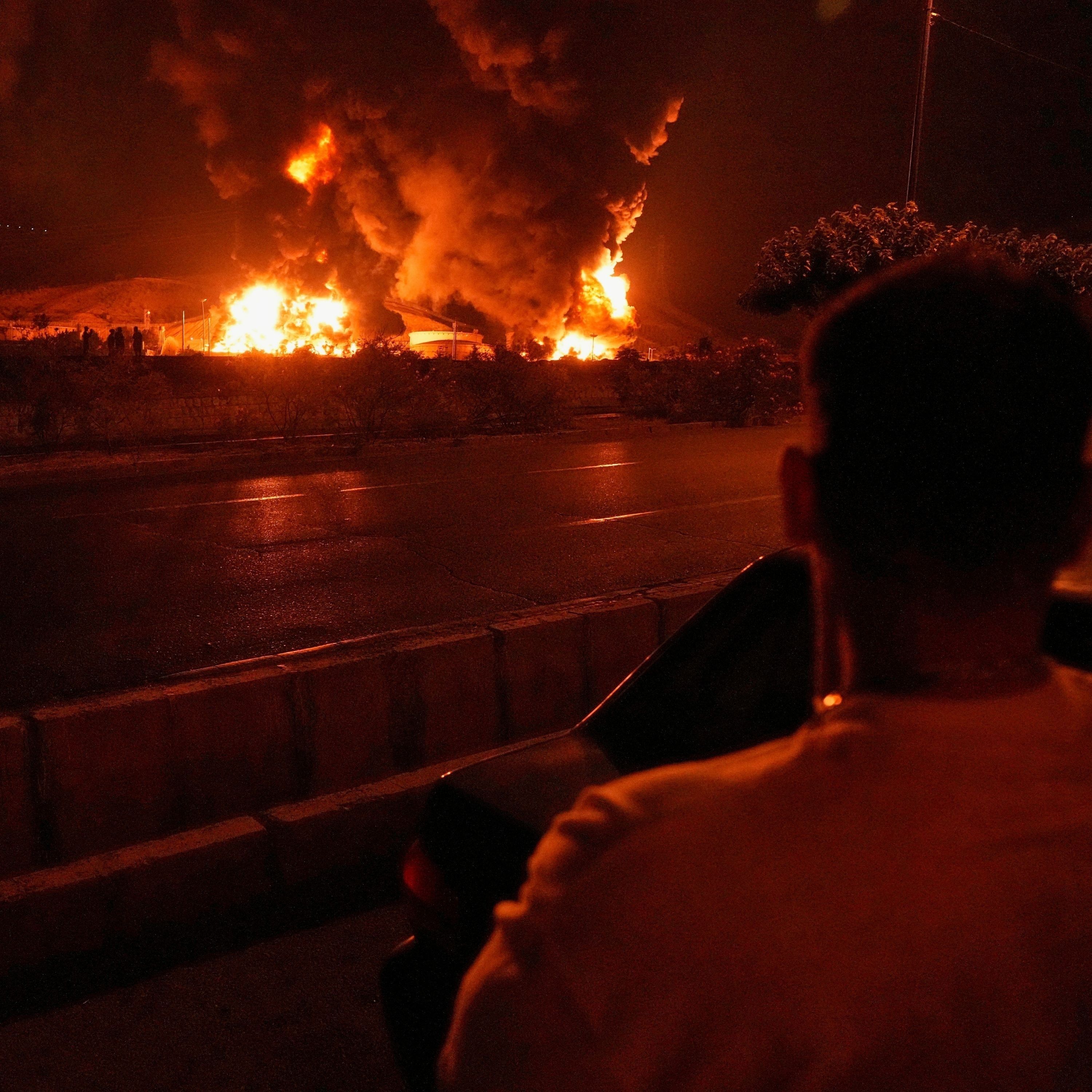
What A Day
The Israel Iran Conflict Explained
00:20:34
Tensions continue to escalate between Iran and Israel as the two countries swap missile fire. Israel claims to have killed multiple high-level Iranian officials and has asked for US military support. President Donald Trump is making posts online that vaguely gesture he might give it to them while Republicans argue about whether we should get involved. Pod Save the World’s Tommy Vietor joins the show to try and make sense of all the chaos. And in headlines: A New York City mayoral candidate is arrested while court watching, Department of Homeland Security flip-flops on worksite immigration raids, polls show nobody likes Trump’s Big Beautiful Bill, and Kraft-Heinz removes dye from its products.
Loading summary
Transcript72 lines
- [00:03]
Jane Costen
It's Wednesday, June 19th. I'm Jane Costen and this is what a day. The show that heard President Donald Trump say that calling Minnesota Governor Tim Walsh after the murder of two lawmakers would, quote, waste time. Because if we know anything about Donald Trump, it's that he is deeply task oriented as long as the task is about him. On today's show, it turns out the American people are not so jazzed about the big not so beautiful bill and masked Immigration and Customs Enforcement agents arresting New York City elected official. But let's start with Iran and Israel. You know, an easygoing, calm, non controversial, non anxiety inducing subject. Since the situation is so volatile, I want you to know that we are recording at 4:45pm Pacific on Tuesday. Let's rewind a bit. On the Evening of Thursday, June 12 Pacific Time, Israel launched a massive attack on Iranian nuclear facilities and military sites. And since then the two countries have been firing a barrage of missiles and drones at one another, resulting in hundreds of casualties. A spokesperson for the Israeli military claimed on Monday that it had achieved, quote, full aerial superiority over Iranian airspace. And on Tuesday, President Donald Trump seemed to, and again I am saying seemed to confirm American support for Israel's operation. Posting on Truth Social, quote, we now have complete and total control of the skies over Iran. Iran had good sky trackers and other defensive equipment and plenty of it, but it doesn't compare to American made, conceived and manufactured stuff. Nobody does it better than the good old usa. And for some reason the word stuff was put in quotation marks. He then posted, quote, unquote, unconditional surrender in all caps. This while bombing continued in both Iran and Israel. I probably don't need to tell you that Israel and Iran are not friends since, you know, Iran's supreme leader keeps saying he wants Israel destroyed. And Israel has been going after Iranian nuclear scientists for decades. This isn't even the first time in the last calendar year Israel has targeted Iranian military installations. So far, the Israeli military has stated that it has killed multiple high level Iranian officials, including the commander in chief and deputy commander in chief of Iran's military. But Israel wants American support specifically to take out Iran's uranium enrichment plant, which is buried in the side of a mountain. If you're anything like me and have the ability to recall the beginnings of the war in Iraq, you're not feeling great about this. Especially when this is how South Carolina Republican Senator Lindsey Graham, one of the biggest hawks in the gop, is sounding.
- [02:46]
Lindsey Graham
So we got a chance now to close the chapter on the largest state sponsor of terrorism in modern history. We got a chance to end the threat to the state of Israel forever by replacing this regime with something better. And I do believe the biggest winner of the Ayatollah leaving would be the Iranian people. So pray for our troops in harm, harm's way. There are risks associated with any operation. They join the military to keep their country safe and to make the world a better place. And taking on the Ayatollah does both fun.
- [03:19]
Jane Costen
This is a big deal for everyone. It's a big deal for the people of Israel and Iran who are fleeing their homes in droves to avoid bombing. It's a big deal for anyone who is worried about another major war in the Middle East. And it's a big deal for the right, currently divided between those like Graham, who want Israel and for some, the United States to finally take out a longtime enemy, and those like Georgia Republican Representative Marjorie Taylor Greene, who posted on Twitter, anyone slobbering for the US to become fully involved in the Israel Iran war is not America first Maga. She added, quote, wishing for murder of innocent people is disgusting. We are sick and tired of foreign wars, all of them. On Tuesday, Kentucky Republican Representative Thomas Massie introduced a measure in the House to require Congress to approve any US Attack on Iran. Virginia Democratic Senator Tim Kaine introduced companion legislation in the Senate. So to talk more about Israel, Iran, Trump, and what on earth is going to happen now, I talked to POD Save the World host Tommy Vitor. Tommy Vitor, thanks for coming back to Water Day.
- [04:21]
Tommy Vitor
Great to be here. I hate the reasons why.
- [04:23]
Unknown
Yes, even as we record right now, Israel and Iran are pummeling each other, with Israel continuing attacks throughout Iran and Iran hitting back with drones and missiles really quickly. Bottom line, why did this start again?
- [04:36]
Tommy Vitor
This started because for decades, Bibi Netanyahu has viewed Iran's development of a nuclear weapon as an existential threat to the state of Israel. And he has over the past few decades, wanted to bomb Iran, wanted the United States to bomb Iran for him. And then apparently this last few weeks just decided now was the moment to take out Iran's nuclear program because of reasons he really hasn't shown us evidence of quite yet about there being close to having a nuclear weapon.
- [05:05]
Jane Costen
Right.
- [05:05]
Unknown
And this, you know, last year there were attacks on air installations, there were the pager attacks. So this isn't new by a long shot. Israel has warned people in Iran's capital, Tehran, to evacuate. And on Monday, an Israeli attack hit Iranian state television while the host was live on air. Yeah, what's your latest understanding of what's going on?
- [05:25]
Tommy Vitor
I mean, ultimately, what Israel wants to do is they're going after their ballistic missile program and they're going after their nuclear infrastructure. The challenge there is that a lot of Iran's nuclear infrastructure is buried deep into the sides of mountains or underground. So it's not clear to me how Israel is going to be able to take out all that it wants to take out to prevent Iran from enriching uranium and creating a nuclear weapon.
- [05:49]
Unknown
Right. Unless you get American assistance with bunker busting bombs. But from Israel's vantage point, what are the best arguments for starting these attacks late last week?
- [06:02]
Tommy Vitor
We've seen no evidence of this yet, but Netanyahu has been suggesting that Iran had built some sort of new nuclear enrichment facility that would allow them to break out and create a nuclear weapon really fast. If I sound skeptical, it's because I don't believe him. I haven't seen the evidence of it yet. And I still, you know, all the timelines you hear, including from the Trump administration when Tulsi Gabbard testified before Congress in, like, March, was that it would take Iran a year to get a nuclear weapon. Given all the steps they need to.
- [06:31]
Unknown
Go through, what is Israel putting most at risk by doing this?
- [06:36]
Tommy Vitor
Their international standing. I mean, I think when you start a regime change operation, which is what this seems to be, it's not really just about bombing nuclear infrastructure. We're killing off, like, all these top generals and scientists, et cetera. And as we saw in Iraq after the ouster of Saddam Hussein in Libya.
- [06:53]
Jane Costen
And everything worked out great, these things.
- [06:55]
Tommy Vitor
Don'T tend to end simply. I don't imagine a motorcade of pro American, pro Israel, pro Western Iranians going to the Capitol and taking over. So these things just, they tend to lead to more chaos and risk and danger for everybody.
- [07:09]
Unknown
There's been a ton of infighting among Trump's biggest supporters about American involvement in this conflict. You've seen that from Steve Bannon, from Tucker Carlson, and from Georgia, Republican Representative Marjorie Taylor Greene and a host of other people. And a lot of it has involved yelling at each other, sometimes on Fox News. What do you think that says about this conflict and the MAGA movement, such as it exists right now?
- [07:34]
Tommy Vitor
Yeah, I mean, I think there's always been, like, pretty big fissures within the MAGA movement that have been papered over by support for Trump. But this conflict is really laying bare some of those splits. And it's very weird to sit here and look you in the eye and Say I'm team Tucker Carlson, Steve Bannon, Marjorie Taylor Greene. But I am, because I think they are correctly assessing that there's enormous risk for the US Getting involved in a regime change war in the Middle east in that Trump explicitly ran against wars in the Middle East. But then you have the kind of like Mark Levin, Sean Hannity, sort of traditional neocon side of the Republican Party that really, really, really wants Trump to get involved and to get involved in offensive military operations. To be clear, we're currently involved in defensive military operations, which enables everything that Yahoo does.
- [08:22]
Unknown
Democratic Senator Tim Kaine of Virginia drafted a resolution to stop the US from using troops in any fight with Iran without congressional approval or a formal declaration of war.
- [08:31]
Jane Costen
Remember those.
- [08:32]
Unknown
Remember when there was like a formal declaration of war and then we went to war?
- [08:36]
Jane Costen
I do.
- [08:36]
Unknown
Now, is Senator Kaine out on his own here, or is Congress actually discussing whether the US should eventually get here?
- [08:43]
Tommy Vitor
I hope Congress will debate this. It's crazy that they would die. Like, what's the point of having a Congress if we're not. They're not debating whether or not we should go to war.
- [08:50]
Unknown
I mean, dumb questions.
- [08:53]
Tommy Vitor
Yeah.
- [08:54]
Unknown
Now, if Iran comes out of these attacks with some of its nuclear weapons program intact, what changes for them? What's their end game here?
- [09:05]
Tommy Vitor
I think the big fear is that when the dust settles, Iran will have enough nuclear know how and infrastructure left, and we'll decide, okay, the only way to really deter these guys is to have a nuclear weapon. So let's do whatever it takes to get that done. It's kind of the North Korea model.
- [09:23]
Unknown
Something that I think a lot of people have been worried about is the concern that if Israel attacked Iran, there'd be a immediate broad response against Israel from across the Middle East. But that doesn't seem to be happening right now. One of the Iran's closest allies, Russia, has expressed some interest in helping with negotiations, but otherwise hasn't been wanting to help. And you're not really hearing anything from a lot of other Gulf countries. What does that say, do you think?
- [09:50]
Tommy Vitor
I mean, I think suggests that a lot of the Gulf Arab countries not so secretly dislike Iran a lot and probably don't hate this.
- [09:56]
Jane Costen
Right.
- [09:57]
Tommy Vitor
They like to see their rival in the region get weakened. It also tells you that a lot of the proxy forces that Iran uses to attack its enemies without having to attack them directly, like Hezbollah and the Houthi rebels, have been weakened by a couple years of fighting. And it also tells you that to some extent, Iran is trying to be disciplined like they have not attacked US Personnel in Iraq, for example, as far as we know. Probably because they know if they did those things, then the US Would feel like we had to respond. But those are like escalatory steps. You could see that. Or, you know, mining ships or targeting ships in the Strait of Hormuz or blowing up shipping in the Red Sea.
- [10:36]
Unknown
What outcome does the US Want out of this conflict?
- [10:40]
Tommy Vitor
I think we want the fastest end to the fighting possible and some sort of agreement that prevents Iran from getting a nuclear weapon. My concern is that the latter is now going to be harder to get done than it was a week ago.
- [10:57]
Unknown
Tommy, as always, thanks for coming on the show.
- [10:59]
Tommy Vitor
Thanks for having me.
- [11:00]
Jane Costen
That was my conversation with Tommy Vitor, host of Pod Save the World. We'll get to more of the news in a moment, but if you like the show, make sure to subscribe. Leave a five star review on Apple Podcasts, watch us on YouTube and share with your friends. More to come after some ads what a Day is brought to you by Nutrafol Hot days, humid nights and nonstop plans. All that heat can increase hair shedding, while a packed schedule can add stress.
- [11:35]
Unknown
Which can impact your hair.
- [11:36]
Jane Costen
Nutrafol's whole body approach and clinically tested formulas support your hair from within so you can focus on living your best life all summer long. You may have heard of Nutrafol's hair growth supplements and wondered, do they actually work? It's a fair question. Many hair supplements overpromise and underdeliver, but Nutrafol is different. As the one dermatologist recommended hair growth supplement brand, it's trusted by over 1.5 million people and is clinically tested to deliver real results in just three to six months. Everyone's root causes of hair thinning are different, so a one size fits all approach to hair growth doesn't cut it. Nutrafol has multiple formulas designed to give your body what it needs to grow and support your hair's unique needs. Whether you're navigating postpartum menopause, a plant based lifestyle, or just looking to see less hair shedding, Nutrafol has you covered. Adding Nutrafol to your routine is easy and no prescription is needed. Order online with free shipping and automated deliveries. Subscribe to save up to 20% and enjoy perks like one on one, naturopathic consults and a free Headspace membership to support your hair growth journ this summer, stop worrying about your hair and start making memories. For a limited time, Nutrafol is offering our listeners $10 off your first month subscription and free shipping. When you go to nutrafol.com and enter the Promo Code Day Find out why Nutrafol is the best selling hair growth supplement brand@nutrafol.com spelled N U T R-A-F O L.com promo code day that's Nutrafol.com promo code day with a home equity.
- [13:00]
Lindsey Graham
Investment from HomeTab, you get access to your home equity in cash without monthly.
- [13:05]
Unknown
Payments to use for whatever you'd like.
- [13:07]
Jane Costen
From paying off debt to making renovations.
- [13:10]
Unknown
Or handling emergency expenses. Receive your funds in just a few.
- [13:14]
Jane Costen
Weeks, start pursuing your financial goals and.
- [13:17]
Unknown
Start getting more out of life. See if you pre qualify for an.
- [13:21]
Lindsey Graham
Investment@Hometap.Com subject to eligibility terms and conditions apply.
- [13:26]
Jane Costen
That's hometap.com.
- [13:29]
Unknown
With mcvalue@McDonald's, you don't just get deals on the drinks, you get deals on McDonald's drinks. So when you're breaking a sweat, embrace the chill without breaking the bank.
- [13:40]
Jane Costen
And when your crew is running on.
- [13:42]
Lindsey Graham
Empty, keep your wallet full while refreshing the squad. Get more than you expect on your.
- [13:49]
Jane Costen
Favorite medium drinks like frozen Fantablue, Raspberry.
- [13:52]
Lindsey Graham
Iced Coffee or lemonade, now at just $2.29.
- [13:54]
Jane Costen
Price and participation may vary.
- [13:56]
Unknown
Cannot be combined with any other offer.
- [14:02]
Jane Costen
Here's what else we're following today.
- [14:03]
Tommy Vitor
Head of Lines.
- [14:07]
Lindsey Graham
I will be fine, but Edgardo is not going to be fine. And the rule of law is not fine. And our constitutional democracy is not fine.
- [14:20]
Jane Costen
That was New York City Comptroller and mayoral candidate Brad Lander. He addressed reporters Tuesday after being released from custody following his arrest for allegedly obstructing law enforcement at an immigration hearing for one of his constituents. Video taken earlier in the day showed Lander and a migrant named Edgardo being arrested by federal agents at an immigration courthouse. Lander was observing proceedings there and trying to escort Edgardo out of the building to keep him from being arrested. Lander repeatedly asked federal agents for a judicial warrant for the man they were trying to arrest before being grabbed and handcuffed by the agents.
- [14:55]
Lindsey Graham
You don't have authority to arrest U.S. citizens. You don't have the authority to arrest U.S. citizens.
- [15:04]
Tommy Vitor
You don't have the. I'm not obstructing.
- [15:05]
Lindsey Graham
I'm standing right here in the hallway. I have to see the judicial warrant.
- [15:09]
Jane Costen
Agents did not produce the warrant. A spokesperson for the Department of Homeland Security said Lander was arrested for assaulting law enforcement and impeding a federal officer. He is not currently facing charges. Check out Pod Save the People's latest episode where DeRay McKesson sits down with Lander about his bid for New York City mayor and discusses his views on everything from education to housing and water. Why not to rank Andrew Cuomo U.S. immigration and Customs Enforcement is once again flip flopping on exactly what kind of workplaces it wants to raid. The latest is that agents were told Monday to continue raids in the agriculture and hospitality industries, reversing an exemption they'd gotten just last week. The whiplash might be hard to follow, so here's a recap. Last month, the Trump administration said it would try to deport 3,000 undocumented immigrants each day, but farms and other businesses complained. On Thursday, Trump said he'd protect those businesses from ICE raids. The agency had orders to hold most worksite raids on agriculture, aquaculture, meatpacking restaurants and operating hotels. On Sunday, ICE told field offices that the pause would probably be lifted and that the White House never supported it in the first place. And here we are with raids in all the same places as a few weeks ago. On Tuesday, reporters on Air Force One asked Trump to clarify we're going to.
- [16:29]
Lindsey Graham
Get about There are far more in the inner cities, Democrat run cities, sadly. I mean, I'm just giving you a fact. There's far more in there than you have on a farm or someplace.
- [16:41]
Jane Costen
No one's getting exemptions anymore. Everyone is looked at.
- [16:46]
Lindsey Graham
But the bigger problem is the cities right now. That's where you are and that's that tends to be where the really bad ones are.
- [16:54]
Jane Costen
Spoken like someone who definitely knows exactly what's happening and has a very stable, very genius plan. President Trump's big, beautiful, amazing, wonderful, incredible, Best bill ever would increase deficits by $2.8 trillion over the next decade when you factor in the bill's effects on the wider economy. That's according to the latest analysis released by the Congressional Budget Office, a kind of legislative fiscal scorekeeper. The CBO looked at how the Big Beautiful bill would affect interest rates and inflation. The office dropped its report while Senate Republicans are still updating the bill, which was passed in the House last month. Congress is still trying to pass the bill by Independence Day, just a couple of weeks away. But is America in a rush for the Big beautiful bill? If you trust polls, Americans are not huge fans. A Washington Post Ipsos poll conducted earlier this month found 42% of Americans opposed the bill's changes to tax, spending and Medicaid policies. Earlier this week, CNN's chief data analyst Harry Entin said he was surprised at the public disapproval.
- [17:56]
Lindsey Graham
Holy cow. My Goodness gracious. And you know, you mentioned the KFF poll. We're talking about 29 points underwater on the net favorable rating, but that matches the Quinnipiac University poll from last week when it was 26 points underwater. Oh my God. You need Greg Louganis to get that far underwater.
- [18:13]
Jane Costen
Okay, Harry, simmer down a little. Food megacorporation Kraft Heinz announced on Tuesday that it will immediately stop developing new food products with artificial dyes. On top of that, it will remove all artificial dyes from its existing US products in 2027. That means we still might need to wait a few years to see less nuclear grain sweet pickle relish from the company. Kraft Heinz didn't mention why it's taking all this action, but the announcement comes while the government is scrutinizing synthetic dyes in the American food supply. Anyway, about two months ago, Health and Human Services Secretary Robert F. Kennedy Jr. Said the FDA is working with the industry to get rid of them. The FDA already banned Red Dye 3 back in January. The war on artificial coloring is one of very few things Democrats and Republicans are agreeing on these days. More than half of US States are trying to remove artificial coloring and other additives from the food supply. If only RFK Jr spent more time doing this and less time just asking questions about the polio vaccine. And that's the news. Before we go. If you're looking for a deep dive on the G7 summit and how it fits into the bigger picture of global politics, check out this week's Pod Save the World. Tommy Vitor is joined by Ohio Democratic Representative Greg Landsman for a candid debate on US Policy towards Israel, Iran and Gaza. What's working, what's not, and what needs to change. Plus, they discuss what the G7 signals about shifting global alliances. Listen to Pod Save the world now on YouTube or wherever you get your podcasts. That's all for today. If you like the show, make sure you subscribe, leave a review and join numerous right wing figures arguing that Fox News is propaganda. And tell your friends to listen. And if you're into reading and not just about how Representative Marjorie Taylor Greene had this to say about right wing media outlets we've watched for decades.
- [20:21]
Lindsey Graham
Propaganda News I'll call out Fox News.
- [20:24]
Jane Costen
And the New York Post.
- [20:25]
Lindsey Graham
They're known to be the neocon network news. We have propaganda news on our side, just like the left does.
- [20:32]
Jane Costen
Like me, what a Day is also a nightly newsletter. Check it out and subscribe@crooked.com subscribe I'm Jane Costen and what a time We're All Living in what a Day is a production of Crooked Media. It's recorded and mixed by Desmond Taylor. Our associate producer is Emily Foer. Our video editor is Joseph Dutra. Our video producer is Johanna Case. We had production help today from Greg Walters, Matt Berg, Sean Ali, Tyler Hill, and Laura Newcombe. Our senior producer is Erika Morrison and our senior vice president of news and public Politics is Adrienne Hill. Our theme music is by Colin Gilliard and Kashaka. Our production staff is proudly unionized with the Writers Guild of America east.
- [21:37]
Unknown
If you're frustrated with low sex drive, vilec can help. Vylease or Bremelanotide treats low sex drive in women with no daily medication, no alcohol restrictions and no hormones. Vileci is clinically proven to increase your interest in sex. Take control of your sex life on your terms and visit bylisi.com to schedule a telemedicine appointment. That's V-Y-L-E-E-S I.com Vilesi is a prescription medicine used to treat hypoactive sexual desire disorder in premenopausal women who have not had problems with low sexual desire in the past and have low sexual desire. No matter the type of sexual activity, situation or partner, the low sexual desire is troubling to them and is not due to medical, mental health or relationship problems or medicine or other drug use. Do not use Vilec if you have uncontrolled hypertension or known heart disease. The most common side effects include nausea, flushing, injection site reactions, headache and vomiting. Consult your healthcare professional for more information and see full PI@vyleesi.com or call 800-922-1038. Go to vileese.com for a telemedicine appointment to find out if Vileci is right for you. That's V-Y L E dashes.com did you know? 39% of teen drivers admit to texting while driving. Even scarier, those who text are more likely to speed and run red lights. Shockingly, 94% know it's dangerous, but do it anyway. As a parent, you can't always be in the car, but you can stay connected to their safety with Greenlight Infinity's driving reports. Monitor their driving habits, see if they're using their phone, speeding and more. These reports provide real data for meaningful conversations about safety. Plus, with weekly updates, you can track their progress over time. Help keep your teens safe. Sign up for Greenlight infinity@Greenlight.com podcast.