Loading summary
Transcript38 lines
- [00:00]
A
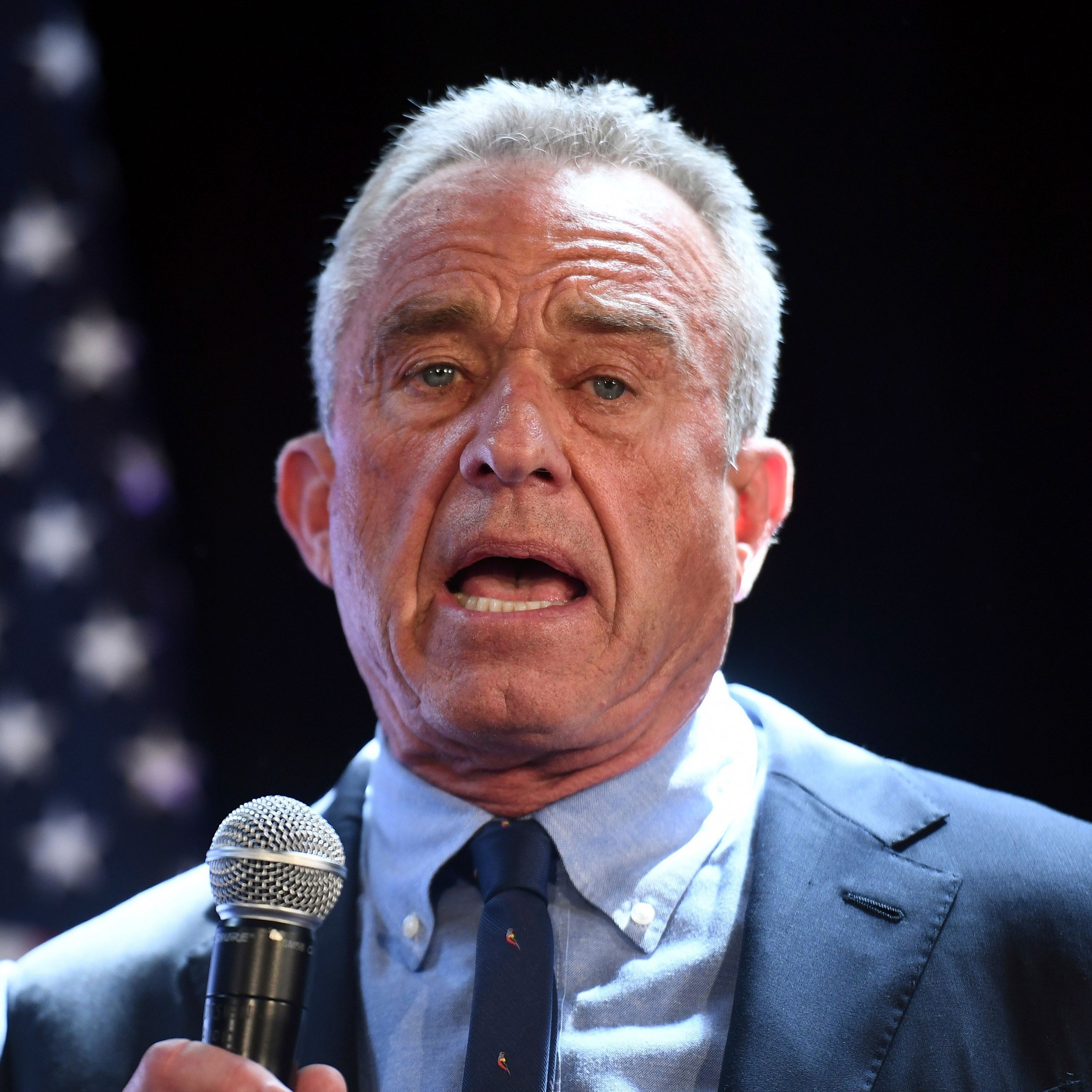
Foreign. February 17th I'm Jane Coasten and this is what a Day. The show that celebrated President's Day by thinking about all the presidents. We never think about James K. Polk, James Buchanan, James Garfield. We really have had a lot of James's in the White House. On today's show, will congressional lawmakers do their jobs and negotiate an agreement to reopen the Department of Homeland Security? Looks like not anytime soon. And former President Barack Obama feeds our inner conspiracy theorist by talking about aliens on a podcast. But let's start with Mahathe Trump administration's promise to Make America Healthy Again. It's been about a year since President Donald Trump signed an executive order establishing the President's Make America Healthy Again commission. And we've seen it show up in a lot of different ways. Some of them evil, like reducing the number of vaccines babies are expected to receive, and some of them kind of banal, like banning certain food dyes. It was also at the super bowl last week, in between a Bad Bunny halftime show for the ages and a defensive standoff by the Seattle Seahawks you probably already forgot about, Maha stole the Spotlight for about 30 seconds. It was via this advertisement from Maha center and a new nonprofit launched by a close ally of Health and Human Services, Secretary Robert F. Kennedy Jr. My.
- [01:28]
B
Sister'S name was Denise. She died of obesity at 25. She had a heart attack. I was so fat and nasty I would eat anything. I was like £345, a quart of ice cream every hour. I had so much self hate when I was like that, I just wanted to kill myself. We're the most powerful country in the world and we have the most obese, fudgy people. Something has to be done by processed food in this country.
- [01:55]
A
Yes, that was former heavyweight champion Mike Tyson saying that before he lost weight, he was, quote, so fat and nasty. Weirdly, that so nasty comment is not referring to his 1992 rape conviction or the time in 2003 when I said that he was so angry at the survivor that quote, now I really do want to rape her. Personally. That seems infinitely worse than being fat. But I digress. The Maha movement has brought together a lot of strange bedfellows, to put it mildly. From Tyson to wellness influencers, from people who want Americans to eat less sugar and others who want to ban the polio vaccine. It got me thinking. What exactly is make America Healthy Again? So to talk more about the wellness industry, Maha and the politics of figuring out what to eat, I spoke to Rena Rafael. She's a journalist focused on wellness Culture and the author of the Gospel of Gyms, Gurus, Goop and the False Promise of Self Care. Rena, welcome to what a day.
- [02:50]
C
Excited to be here.
- [02:52]
A
Now the thing about like the wellness space, historically wellness was kind of a hippie, crunchy liberal concept. Whether it was talking about food and food as fuel and what kinds of foods to eat or manifestation or was talking about all of these different pieces. But the Trump administration's Maha agenda, make America Healthy Again has taken it into a conservative space. Does this idea of wellness or health differ in liberal and conservative spaces or are they the same ideas packaged in different politics?
- [03:26]
C
Yeah, it's such a good question. And I will say it's a bit of both, right, because there is a little bit of a horseshoe theory of you have sort of more left leaning wellness lovers and then freedom first, you know, right leaning conservatives who have kind of met somewhere in the middle, both sort of aligned on a lot of issues. And then there's the fact that wellness is no longer counterculture, it is the culture. You cannot open any magazine or any newspaper without tons of spreads devoted to everything from supplements to the new latest fitness fad. Go into a local supermarket, go into Sephora and there's a whole clean section. I mean there is a little bit of a culture change where it was just natural that it was going to be adopted by more and more swathes of people. So for example, when it comes to, to sort of things that are considered now Maha initiatives, you have a lot of people on the left say, well I've always had that stance. And just because RFK Jr. Is sort of echoing that sentiment doesn't mean that he owns it. And then you have people who will say this did start more within sort of liberal circles, especially coastal circles, you know, 60s and 70s, the food movements, the co ops, you know, alternative medicine. And that there was a group of people who really cared about these issues who were anti establishment. And basically they will say, well the Democratic party had this group group of people and they kind of forfeited them. They didn't do enough that catered to what they were seeking and they kind of got co opted by the right.
- [04:54]
A
How do these ideas manifest in left versus right circles? I mean I can think like left circles tend to be more emphasizing plant based. Right circles tend to be more, let's put beef tallow on your face. But what does it look like from your view?
- [05:11]
C
Sometimes it's a matter of sentiment and just language choice. So you'll hear a lot more on the right about freedom, about how this is about empowerment, this is about freedom, this is about what I get to do with my body. Funny enough, that used to be a lot of, you know, sort of claims that you'd hear more on the left, you know, about body autonomy. A lot of times it also manifests in what they care about. So a lot of times you'll hear in more liberal circles that they care about farming, that they care about sort of the environment, and that's why they prefer organic food, because of the farming techniques. On the right, you hear more about that they care about family and they care about farmers and the industry of farming, not necessarily about the environment. The details seem to differ, but what you have now is a coalition of people who are anti establishment in various ways.
- [06:00]
A
As you've mentioned, one of the main areas, we're really seeing this idea of wellness take off. And we have been, as someone who was Paleo 10 years ago and has basically done all the things, I have been doing all the things. But we've seen this with food. There's been a focus on eating real food that's not processed, without preservatives, without chemicals. Now we can get into like, what do we mean by chemicals? Sometimes you see people saying, like, well, it's something that you can't pronounce, but then it's like, you know, go look.
- [06:27]
C
Up what in a banana is made out of.
- [06:28]
A
Yeah, like, go look up like what the exact chemical makeup of an apple is. But is the wellness industry onto something or is this one of those things where it's kind of like yes and no?
- [06:39]
C
Yeah, I mean, there's always a kernel of truth in a lot of the theories and a lot of the information and these sentiments. This idea, for example, that some sort of, you know, chemical is bad for you. Sure, but in what amount? I think a lot of times a lot of these things get confused about relative risk versus absolute risk. I always like to give the example about how, you know, you'll hear a bunch of influencers talk about how you can't have conventional fruit because of the pesticide residue. I mean, there's a kernel of truth where, yes, you probably shouldn't have too much pesticide residue, but what is the likelihood you're actually going to have it? And in the scheme of things, is that really what's holding back American health? Not really. And if anything, a lot of those ideas are actually harmful because what ends up happening is people decide, I'm just not going to have any fruit because I can't afford organic fruit. And I'M just too confused. Well, you mentioned at the top about you were on Paleo, you were on this. You mentioned sort of what I assume is a little bit of confusion and exhaustion. And I think a lot of Americans are feeling that. I always like to tell people, remember, we're really into green juice, and then it was functional elixirs, and then it was kombucha and then it was bone broth. And they're like, oh, yeah. And I'm like, do you notice how every six months there's something new you have to do for your health? It's a revolving door, almost like diets. The reason that there are so many different diets is because you go on them, they fail, and you put your trust in something new. And it's the same thing you're seeing around food. And so everyone keeps putting their trust into this new idea of, if I don't consume this one bad chemical, if I get rid of this, then everything will be fixed. And our health and nutrition is a lot more complex than that. It's a lot more nuanced than that.
- [08:11]
A
You made a point earlier that I think is really interesting, which is how, you know, wellness ideas originated with a lot of people as being anti establishment. And I think that you've seen Maha take on this. You know, we're going against Big Food and Big Pharma, but at the same time, the Trump administration is specifically working with food companies to reformulate their products to fit its standards of health, like removing additives and food dyes. And the one hand, I can see some advantages. But also if you're getting food dyes out of ice cream, that doesn't mean the ice cream is now good for you. So, to put it very bluntly, is any of this going to make America healthier? Will these policy changes actually lead to food and products that are better for us? And what is this doing to us?
- [09:00]
C
I've interviewed a lot of experts about that question for various articles I've written, and they all agree that it really won't move the needle at all. What people really need to be healthy are much more systemic and communal solutions. And this idea of getting rid of certain ingredients or encouraging people to buy certain things is not going to really do much of anything. The most it'll really do is that people who can afford these products are just further encouraged to buy the products that they're going to buy. But what about that mom who's working two jobs who can't afford to buy this food and neither has the time to actually Prepare it. And those are much bigger issues that obviously I don't think RFK has the answer for. And that's why they go after these very, very easy wins. I know it sounds complicated to get industry to get rid of certain dyes and whatever, but that's actually a lot easier than figuring out why Americans don't have the time to actually move their bodies or eat a more balanced diet. That's a much bigger ordeal and they won't go after that to that point.
- [10:04]
A
At the same time that the Trump administration is waging war on petroleum based food dyes and quote, ending the war on saturated fats, the administration is embarking on an anti vaccine agenda that is already having major consequences in the measles outbreaks we're seeing across the country. So in my view, this administration is purportedly so focused on wellness, but also it's basically like when it comes to diseases like measles, you're on your own. And it seems so unconcerned with, to put it bluntly, saving lives.
- [10:34]
C
Yeah, there's a lot of mixed messaging, even from RFK Jr himself where, you know, on one hand he'll say, you should get the measles shot, but then he has other messaging that's sort of more in line with vaccine hesitancy. So it's very, very confusing for people. And I think that kind of adds again to that confusion that the average person feels where they're like, I'm getting so much information about food, about vaccines, and I think this is why people are sort of turning to influencers and because people just don't know what to believe anymore.
- [10:58]
A
And I think that influencers will tell you very happily and they'll be very strict and there will be no nuance. But you report on this day in, day out. And I'm really interested in this question of like, where should Americans be looking for health advice? What should they be believing with the.
- [11:18]
C
Experts, with the scientists, with the researchers? But as I wrote in a piece for the New York Times, they don't have the time or the funds to actually become influencers. They're actually out there doing work. Same with doctors and physicians who just don't have time. And there's nobody funding them to become influencers. Also, their work takes a lot more time and it's often very complicated and have to give sort of nuanced takes. That's very different than an influencer who'll just say, buy my supplement and will resort to fear mongering or exaggerated claims that obviously do really well with the algorithm, which celebrates what is novel or what is sort of shocking, but it's, it's really kind of crazy. Now if you think back like even 30 years ago, if there was someone like a health influencer who wrote a diet book, it kind of sat there by your bedside and waited till you had 15 minutes before bed to read it. It's a different sphere now. You have health influencers who are posting several times a day. Not only that, you can DM with them and have a personal relationship with them. That's why oftentimes they have so much more sway than your, you know, general practitioner who maybe only gets you for 14 minutes every six months. So there are a lot of things that the exper are kind of battling now and all of them tell me that they don't see it getting any better.
- [12:33]
A
Reena, thank you so much for joining me.
- [12:36]
C
So glad to be here. It was great chatting with you.
- [12:38]
A
That was my conversation with Rina Rafael, author of the Gospel of Wellness and a journalist focused on wellness culture. More news ahoy. If you like the show, make sure you subscribe, leave a five star review on Apple Podcasts, watch us on YouTube and share with your friends. More to come after some ads. What a Day is brought to you by Nutrafol. Good hair days do more than we give them credit for. When your hair feels healthy, you show up differently. You're more confident, more relaxed, and you're not constantly checking mirrors or adjusting your hair. Your hair becomes one less thing competing for your attention throughout the day. Nutrafol supports hair health from within, working overtime to deliver results you can see and feel so your hair becomes something you enjoy, not something you stress about. Nutrafol is the 1 dermatologist recommended hair growth supplement brand and it's the number one hair growth supplement brand personally used by dermatologists. It's not a one size fits all approach. Nutrafol offers multiple formulas for men and women tailored to different life stages like postpartum or menopause and lifestyle factors such as a plant based diet. So you get support that's actually right for you. Let your hair be one less thing to worry about. See visibly thicker, stronger, faster Growing hair in three to six months with Nutrafol for a limited time. Nutrafol is offering our listeners $10 off your first month subscription and free shipping when you visit nutrafol.com and enter promo code DAYTEN. That's nutrafol.com, spelled N u T R-A F o L.com promo code DAY10 what a day is brought to you by Fast Growing Trees. Did you know? Fast Growing Trees is America's largest and most trusted online nursery with thousands of trees and plants and over 2 million happy customers. They have all the plants your yard or home needs, including fruit trees, privacy trees, flowering trees, shrubs and houseplants, all grown with care and guaranteed to arrive healthy. It's like your local nursery, but anywhere you live with more plants than you'll find anywhere else. Whatever you're looking for, Fast Growing Trees helps you find options that actually work for your climate, space and lifestyle. Fast Growing Trees makes it easy to get your dream yard. Just click, order, grow and get healthy, thriving plants delivered to your door. Their Alive and Thrive guarantee promises that your plants arrive happy and healthy. No green thumb required, just quality plants you can count on. Plus get ongoing support from trained plant experts who can help you plan your landscape, choose the right plants and learn how to care for them every step of the way. Fast Growing Trees also make amazing gifts, something which I had the pleasure of experiencing firsthand. Giving a tree is giving a gift that keeps giving for years to come. You don't need a big yard or a lot of space. You can grow lemon, avocado, olive or fig trees indoors, along with a wide variety of houseplants, all grown in care and hand selected to thrive in your home. The experts at Fast Growing Trees have curated thousands of plants for every climate and growing zone so customers can find options that truly work for their yard. And they have over 1600 varieties of trees and plants including fruit trees, evergreen trees, shrubs, flowering trees, shade trees, houseplants and more with plants for every growing zone and climate. Support is available seven days a week via email, chat or phone and advice is tailored for your yard, including personalized video consultations. Right now they have great deals on spring planting essentials, up to half off on select plants and listeners to our show get 20% off their first purchase when using the code WAD at checkout. That's an additional 20% off. Better plants and better growing at fastgrowingtrees.com using the code WAD at checkout fastgrowingtrees.com code WAD now is the perfect time to plant. Let's grow together. Use WAD to Save today. Offer is valid for a limited time. Terms and conditions may apply.
- [16:12]
B
The holidays are expensive. You're paying for gifts, travel, decorations, food, and before you know it, you've blown way past what you were planning to spend. Don't start the new year off with bad money vibes. Download rocket money to stay on top of your finances. The app pulls your income, expenses and upcoming charges into one place so you can get the clearest picture of your money. It shows how much to set aside for bills and how much is safe to spend for the month so you can spend with confidence, no guesswork needed. Get alerts before bills hit. Track budgets and see every subscription you're paying for. Rocket Money also finds extra ways to save you money by canceling subscriptions you're not using and negotiating lower bills for you. On average, Rocket Money users can save up to $740 a year when using all the app's premium features. Start the year off right by taking control of your finances. Go to rocketmoney.com cancel to get started. That's rocketmoney.com cancel rocketmoney.com cancel if you're an H Vac technician and a call comes in, Grainger knows that you need a partner that helps you find the right product fast and hassle free. And you know that when the first problem of the day is a clanking blower motor, there's no need to break a sweat. With Grainger's easy to use website and product details, you're confident you'll soon have everything humming right along. Call 1-800-GRAINGER click granger.com or just stop by Granger for the ones who get it done.
- [17:42]
A
Here's what else we're following today.
- [17:44]
C
Head of Lines.
- [17:48]
A
There are two lines in the water right now. One's a diplomatic line trying to find a way to end this regime diplomatically that will advance our national security interest. The other line is the military option I think President Trump is looking for which line can catch the biggest fish. The bottom line is we're into weeks, not months, in terms of decision making. South Carolina Republican Senator Lindsey Graham held a press conference Monday in Tel Aviv to discuss his favorite subject, ending the Iranian regime. US Special envoy Steve Witkoff and Donald Trump's son in law, Jared Kushner, are set to meet with Iranian officials today in Switzerland. This will be the second round of negotiations over Iran's nuclear program. The meeting comes as the United States has sent a second aircraft carrier to the Middle east as Trump pressures Iran to make a deal. The first was sent to the region in January. According to the New York Times, the two aircraft carriers are being accompanied by eight guided missile destroyers and a host of other military weaponry. The meeting also follows Trump's remarks on Friday that regime change in Iran would be the best thing that could happen. For whom? Well, that's another question, isn't it? So I guess the first question I have is, does this funding freeze in any way impact or limit your ability to carry out immigration operations across the country? No, it doesn't. And ICE has continued to enforce law across the country. They're already funded.
- [19:14]
C
Now the ICE officers won't be getting paid, but they're getting used to that.
- [19:18]
A
Seems like so, no.
- [19:20]
C
The immigration mission, the reason why President Trump was elected to be president, continues.
- [19:25]
A
White House border czar Tom Homan spoke with CNN's Jake Tapper on Sunday about the Department of Homeland Security shutdown. Funding for DHS expired over the weekend. Only agencies under its umbrella, like the Transportation Security Administration, the Federal Emergency Management Agency, Immigration and Customs Enforcement, and Customs and Border Protection are affected. And depending on how long the shutdown lasts, some federal workers could begin to miss paychecks. But as Homan noted, the work of ICE and CBP will mostly continue unabated despite Democrats demands for changes at those agencies. That's because Trump's tax and spending cut law from 2025 provided ICE and CBP with billions of dollarsmoney that can keep tapping for Trump's deportation operations. As for an agreement to fund DHS, Congress is on recess until February 23rd, so a Senate vote likely wouldn't take place before then. Speaking of dhs, a new group of third country nationals has been deported by the United States to Cameroon, lawyers told the Associated Press. The lawyers said the migrants were not Cameroonian citizens and landed in the country's capital on Monday. A White House official who spoke with the AP on condition of anonymity, acknowledged the flight to Cameroon but gave no details, according to the New York Times. The Trump administration also sent nine people to Cameroon last month. The deportations are part of the Trump administration's secretive efforts to remove immigrants to countries with which they have no ties. Lawyers say two of those migrants have since been repatriated to their home countries. So I want to do a little bit of a lightning round here because it's not often I'll get access to.
- [20:59]
C
President of the United States.
- [21:00]
A
So a couple questions here. Are aliens real?
- [21:04]
C
The real. But I haven't seen them and they're not being kept in.
- [21:10]
A
What is it, Area 51?
- [21:11]
C
Area 51? There's no underground facility unless there's this enormous conspiracy and they hid it from the President of the United States.
- [21:22]
A
Former President Barack Obama sat down with podcast host Brian Tyler Cohen for an interview released over the weekend. But the Internet just can't let the man have any fun. Obama's comments about aliens sent social media abuzz, prompting the former president to release a statement on Instagram Sunday to explain what he meant and calm everyone down. He wrote, quote, I was trying to stick with the spirit of the speed round, but since it's gotten attention, let me clarify. Statistically, the universe is so vast that the odds are good there's life out there, but the distances between solar systems are so great that the chances we've been visited by aliens is low. And I saw no evidence during my presidency that extraterrestrials have made contact with us. Really? If you say so. But we're still wondering, where are the aliens? Where are the aliens? And that's the news. Before we go. Ice and the war on immigrants, federal police, takeovers of major cities, racial profiling, surveillance. How did we get here? To begin to address these issues, you need to understand where it all started. If you haven't checked out Crooked's limited series Empire City the Untold Origin Story of the nypd, it's a must listen show that explains how the biggest police force in the world came about. And now we're taking the conversation further. Introducing the Empire City Podcast Club from Crooked Ideas, Join host Chenjerai Komanika virtually to discuss the history of power, policing and public safety. Each week you will listen to two podcast episodes, meet on Zoom for a guided discussion and take part in a live Q and A with special guests. The club launches on March 31st. Join the club@crookedideas.org Umbrella City and if you're in Pittsburgh, join us tonight for a discussion in response to community concerns about public safety, featuring host Chenjerai Komanika with Congresswoman Summer Lee. Get your free tickets at cricketideas.org/empire city. That's all for today. If you like the show, make sure you subscribe, Leave a review, Celebrate the return of an exhibit on the history of slavery to the President's House in Philadelphia's Independence National Historical park and tell your friends to listen. And if you're into reading and not just about how On Monday a district court judge ruled that the Department of the Interior must return the display after the Trump administration signed an executive order removing all racist related exhibits from federal sites last year. Like me, what a Day is also a nightly newsletter. Check it out and subscribe@cricket.com subscribe I'm Jane Coston and sorry, Trump administration, but the facts of slavery don't care about your feelings. What a Day is a production of Crooked Media. It's recorded and mixed by Desmond Taylor. Our associate producer is Emily Foer Our producer is Kaitlyn Plummer. Our video editor is Joseph Dutra. Our video producer is Johanna Case. We had production help today from Greg Walters and Matt Berg. Our senior producer is Erica Morrison and our senior vice president of news and politics is Adrian Hill. Our theme music is by Kyle Murdoch and Jordan Kanter. We had help today from the Associated Press. Our production staff is proudly unionized with the Writers Guild of America. EAS. Support is available 247 with VRBO care. We're here day or night, ready whenever you need help because a great trip starts with the right support. Early Birds Always rise to the occasion.
- [25:03]
B
For summer vacation planning because early gets you closer to the action.
- [25:07]
A
So don't be late. Book your next vacation early on VRBO and save over $120. Rise and shine average savings $141.
- [25:15]
B
Select homes only.