← What A Day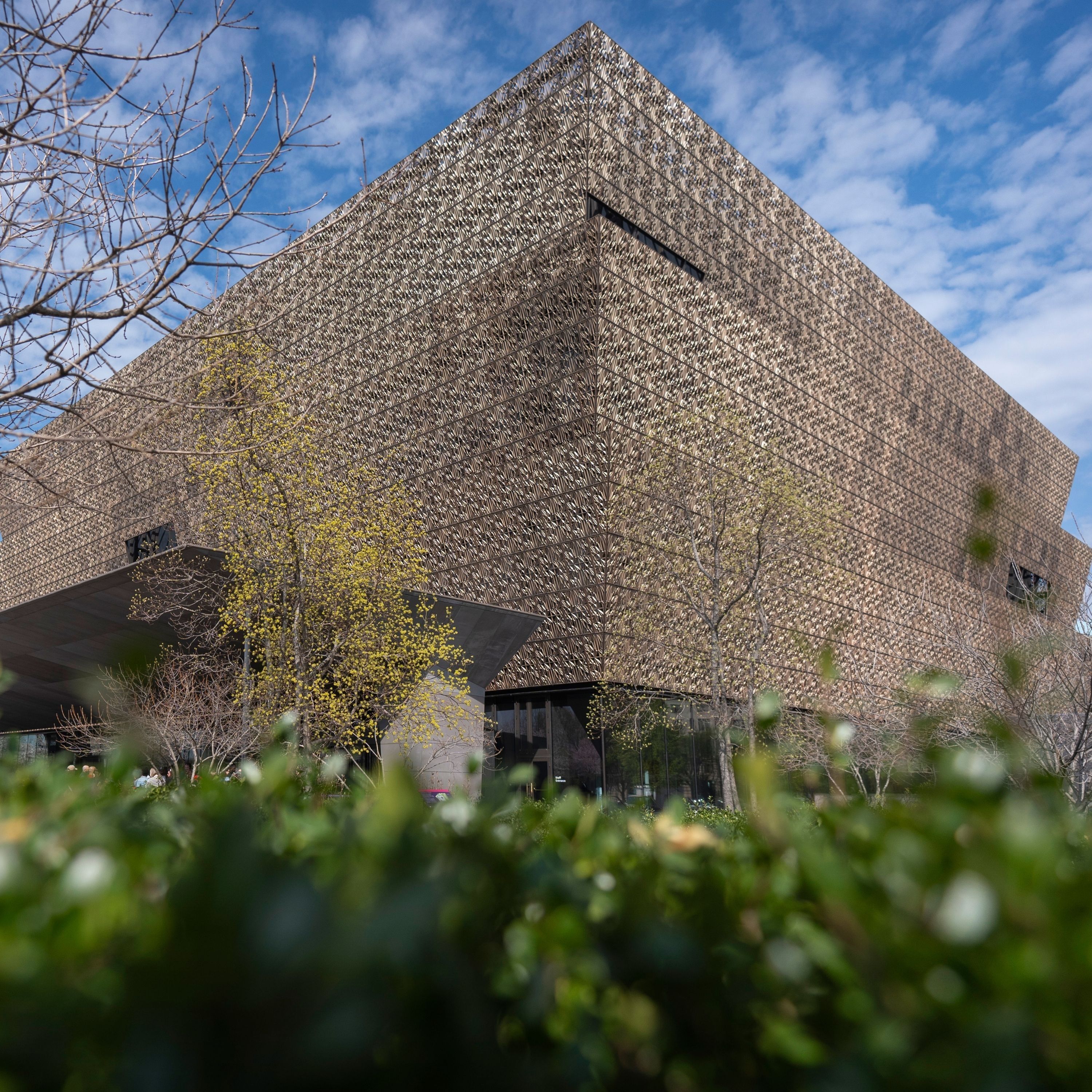
What A Day
The Smithsonian Gets The Trump Edit
00:20:55
The White House announced it's leading a "comprehensive internal review of selected Smithsonian museums and exhibitions" to ensure that the museums "celebrate American exceptionalism, remove divisive or partisan narratives, and restore confidence in our shared cultural institutions."Why? One reason is that White House special assistant Lindsey Halligan got in Trump's ear and complained that there was too much focus on slavery across the Smithsonian Institution. Halligan even told Fox News that in museums, there should QUOTE: "be more of an overemphasis on how far we've come since slavery." To discuss who's behind the changes in our cultural institutions, we spoke with Zachary Small. He's a New York Times reporter with a focus on the art world. And in headlines, the Israeli army says it's calling up 60,000 reservists ahead of its expanded assault on Gaza City, the Trump administration announces cuts to the Office of the Director of National Intelligence, and the new price of the PS...
Loading summary
Transcript32 lines
- [00:03]
A
It's Thursday, August 21st. I'm Jane Coston, and this is what a Day, the show that is offering you, our listeners and viewers, another episode of our continuing series, People Booing Republicans. In this case, it's Defense Secretary Pete Higseth and Vice President J.D. vance enjoying a warm welcome from people at Washington, DC's Union Station. That's one of the great things about our nation's capital. You could be heading to your train to New York or Charlottesville on a Wednesday morning and have the chance to boo the vice president along the way. On today's show, the Israeli military says it's calling up 60,000 reservists ahead of its expanded operation in Gaza City. And the Trump administration takes an axe to the office of the Director of National Intelligence. But let's start with our national museums. President Donald Trump has a lot of opinions on America's museums and the Smithsonian Institute. We know this because he keeps telling us. On Tuesday, Trump posted on Truth Social, quote, the Smithsonian is out of control, where everything discussed is how horrible our country is, how bad slavery was, and how unaccomplished the downtrodden have been. Nothing about success, nothing about brightness, nothing about the future. Personally, I've always wanted a museum to tell me about the future, like a history book for things that haven't happened yet. But as you might know, this isn't empty rhetoric. The White House has announced that it is leading a comprehensive internal review of selected Smithsonian museums and exhibitions to ensure that the museums celebrate American exceptionalism, remove divisive or partisan narratives, and restore confidence in our shared cultural institutions. One of the people tasked with leading this effort is White House special assistant Lindsay Halligan. She's a lawyer, not a museum curator, but she's now in charge of reforming the Smithsonian Institution. She spoke to Fox News on Wednesday and shared her thinking on how the Smithsonian should be talking about our nation's history.
- [02:19]
B
I think the fact that we had our country was involved in slavery is awful. No one thinks otherwise. But what I saw when I was going through the museums personally was an overemphasis on slavery. And I think there should be more of an overemphasis on how far we've come since slavery. Our country is a country of progress and it's the greatest country in the world. And we should be able to take our kids, our students, through the Smithsonian and feel proud when we leave.
- [02:54]
A
I'm glad we appear to be in agreement on the fact that slavery was bad. So to talk more about what is changing about our nation's Cultural institutions and who is doing the changing? I spoke to Zachary Small. He's a New York Times reporter with a focus on the art world. Zachary Small, welcome to what a Day.
- [03:13]
C
Thanks so much for having me.
- [03:14]
A
So in your piece, you detail the federal cultural institutions and agencies that Trump's taking aim at or trying to bend to his point of view. Can you talk about what institutions and entities this encompasses? Because it's a long list, from ballrooms to the Smithsonian.
- [03:30]
C
You're right. And the entities that the White House is looking to, let's say reform, basically extend to where the federal government is involved in culture. Now, compared to other countries, that is a relatively short list. The US Historically has not given a lot of federal dollars to cultural institutions, so most of them are privately funded. But you do have here the Smithsonian, which is a network of over 20 museums, the National Zoo, you have the Kennedy center for Performing Arts, which, of course, is this amazing center of performing arts, of dance, of opera. And, yeah, we have this ballroom project that's coming up that's going to be an expansion of the East Wing that was recently announced. And then, of course, the National Endowment for the Arts, you know, a legendary institution and one of the few avenues that artists have of receiving federal dollars for their projects.
- [04:22]
A
This week, the president said the Smithsonian concentrates too much on the dark history of America, including slavery, because I'm sure there's an uplifting story of slavery, too. But we talk too little about the bright side of American history. In your view, why is he taking so much aim at the Smithsonian? And actually, to your point, what powers does he have over the Smithsonian anyway? Because it's not technically part of the executive branch.
- [04:48]
C
Right. So what our reporting has shown is that the Smithsonian came into his sort of line of sight from a staffer called Lindsey Halligan. So Lindsey Halligan is a White House aide who said, you know, in her own words, that she had gone to the Smithsonian and she had looked around and she didn't quite like what she saw. And she went to the president with some of her complaints, and he gave her approval to go ahead and draft an executive order that would take aim at some of these complaints and ask for reforms to the Smithsonian.
- [05:22]
A
What were some of her complaints?
- [05:24]
C
I think that the complaints that you would see in the executive order is really this idea that American history is seen through a negative light, that it's the White House's position that DEI and this sort of, as they would say, a corrosive, negative view of American history has come into museums and the way that people are taught history. We saw this, including in some of Trump's earlier speeches as president, talking about manifest Destiny and how great these ideas are that historically in museums have been shown in more of a negative light as taking over land and talking about the history of Native American people losing their tribal homes.
- [06:09]
A
So there's also the Kennedy center for the Performing Arts, which you mentioned. Who is taking charge of the Kennedy center and what's their background?
- [06:17]
C
So the Kennedy center is one of those interesting topics that gets to one of your earlier questions of like, who actually has control of this? Does Trump have the ability to take over these institutions? The Kennedy Center? You look at it, and yes, presidents have appointed boards, but they've mostly stayed out of running the institution day to day, for sure. Trump came in and he installed Richard Grenell. He said, I want Richard Grenell to be president of the institution. He removed Biden appointees from the board, and Trump installed himself as chairman. So in that way, this bipartisan institution has now become very partisan. And Richard Grinnell is someone who was previously the ambassador to Germany in Trump's first administration and and now has this other all important task of trying to run the Kennedy center, which like many nonprofit institutions, is very complicated financially to do.
- [07:12]
A
Your article goes into even more cultural agencies, institutions, and even, as we mentioned, the ballroom construction project, which is all getting the Trump treatment. When you look at the whole group of people, which you were so helpful in your piece for basically listing out, what are some of the things that group of people has in common?
- [07:31]
C
Well, I felt like it was important to do this piece because it's so easy. Every day there's a new headline, of course, about the Trump administration. It's easy to lose sight of the people that are actually carrying out these plans and what Trump is saying in the speeches. When we looked at the people that are carrying out this transformation of culture under the federal government, it becomes clear that most of them do not have a lot of experience or any experience in the arts, in museum administration, or in history.
- [08:03]
A
What ideological differences do you see between these people? Like, you know, Rick Grinnell is very conservative. He's been someone who's definitely taken more of a culture war tack, even just online. But then you also have people who are a little more under the radar. Do you see any ideological differences between them? And how could that impact what these people do to our cultural institutions?
- [08:28]
C
That's a great question. And I think there are certainly shades between these people. When Trump comes out with his statements and says, woke is broke. I think that idea is largely shared amongst these people. But of course, you have like the architect of the ballroom, right, James McCrary. And this is someone who is a very traditional conservative who's very interested in conservative architecture and federalism and, you know, columns and marble steps.
- [08:55]
A
He's not very neo Grecian.
- [08:58]
C
Yes, Neo, neo Grecian neoclassical. He is not someone, though, that is necessarily in the ideologue or interested in sort of these larger political battles. You also have someone like Marianne Carter at the National Endowment for the Arts. And for everything that Trump has said about completely eliminating this agency, she has, you know, at least in her first term, she was a pretty popular director with staff who felt like she was interested in preserving the agency and doing what she could do behind the scenes to make sure that it survived.
- [09:31]
A
That actually leads me to my last question, which is what's been the response from Smithsonian staff, Kennedy center employees? Because the the GOP spending law has a lot more funding for the county center, but they've also been laying off tons of people to kind of really make it more ideologically in line with Trump. So have you gotten the chance to talk to staffers from any of these institutions and what are they saying about what's going on?
- [09:57]
C
You know, that there's sort of the rank and file and then there's the executives and then there's the trustees above them. And you're going to get different shades of stories depending on who you talk to. I think for the rank and file of Smithsonian or Kennedy center or the National Endowment for the Arts, they are pretty scared. There's a lot of unknown that they're facing in terms of layoffs that have been happening. Doge coming to visit the National Endowment for the Arts, for example, people take notice of these things. Also, many of these institutions had diversity offices, and people that worked for those offices have either been reassigned or have been laid off. So there are sort of significant shifts. The other interesting thing that people might not realize about the Smithsonian is that trustees at the Smithsonian include the chief justice of the Supreme Court and people from Congress and The vice president. J.D. vance. So in some ways, the political arguments and these discussions about balance of power are also being played out in these cultural institutions as they try and figure out a response to Trump.
- [11:01]
A
Zachary Small, thank you so much for joining me.
- [11:04]
C
Yeah, of course. Anytime.
- [11:05]
A
That was my conversation with Zachary Small, New York Times reporter with a focus on the arts. We'll link to his work in the show Notes. We'll get to more of the news in a moment, but if you like the show, make sure to subscribe. Leave a five star review on Apple Podcasts, watch us on YouTube and share with your friends. More to come after some ads what a day is brought to you by Acorns. We all have money goals. A car, a home, a vacation, an extremely expensive fitness watch that would obviously help me reduce my 10k time. You get it. Acorns helps you grow towards the money goals you have today and the ones you'll have tomorrow. Acorns is a financial wellness app that helps you invest in your future, save for tomorrow and spend smarter today. Acorns makes it easier to start doing more with your money and in fact you can start automatically investing with just your spare change. You don't need to be a finance whiz. Acorns puts your money into an expert built portfolio to make sure you're investing wisely, not wildly. Plus, Acorns can support your money goals in life. A new car, a first home, investing for your kids, saving up for retirement, and so much more. Acorns even has a checking account that automatically invests for you and an emergency fund that grows your money. And it's all in one easy to use app. I've really loved how easy Acorns is to use, even for someone who is a little new to investing. So sign up now and Acorns will boost your new account with a $5 bonus. Investment join the over 14 million all time customers who have already saved and invested over $25 billion with Acorns. Head to acorns.com wad or download the Acorns app to get started. Paid non client endorsement compensation provides incentive to positively promote Acorns tier two compensation provided investing involves risk. Acorns Advisors LLC, an SEC registered investment advisor. View important disclosures@acorns.com watt your new beginning starts now.
- [12:59]
D
Dr. Horton has new construction homes available in Ellensburg and throughout the greater Seattle area. With spacious floor plans, flexible living spaces and home technology packages, you can enjoy more cozy moments and sweet memories in your beautiful new home. With new home communities opening in Ellensburg and throughout the Seattle area, Dr. Horton has the ideal home for you. Learn more at Dr. Dr. Horton, America's Builder and Equal Housing Opportunity Builder.
- [13:29]
E
Hi there, it's Andy Richter and I'm here to tell you about my podcast, the three Questions with Andy Richter. Each week I invite friends, comedians, actors and musicians to discuss these three where do you come from, where are you going, and what have you learned? New episodes are out every Tuesday with guests like Julie Bow and Ted Dance and Tig Notaro Wood, Will Arnett, Phoebe Bridgers and more. You can also tune in for my weekly Andy Richter Call in show episodes, where me and a special guest invite callers to weigh in on topics like dating, disasters, bad teachers, and lots more. Listen to the three Questions with Andy Richter wherever you get your podcasts.
- [14:11]
A
Here's what else we're following today. Head of Lines I think that most of the people in Israel want that this war will end as soon as possible.
- [14:26]
C
Do you feel that your government will listen? Will any of this make a difference?
- [14:30]
A
I don't know. That was a protester speaking TO Britain's Channel 4 News in Israel earlier this week. Now, you would think that the hundreds of thousands of Israelis rallying for peace, or the international calls to stop the bloodshed, or the horrific reports of children dying of starvation or the rising death toll might persuade the Israeli government to de escalate the war on Gaza. But Israel's not doing that. In fact, quite the opposite. The Israel Defense Forces said Wednesday that it will call up 60,000 Army Reserve members and extend the service of 20,000 more ahead of an expanded assault on Gaza City. It's part of what the IDF is calling Operation Gideon's Chariot, and it aims to deepen operations in Gaza's most densely populated areas. Israel's troops already have a hold on the outskirts of Gaza City, according to an official. Israel's chief of staff is expected to approve the plan in the coming days. But the mobilization comes amid a growing campaign by many members of the Army Reserves, who say the government is only keeping the war going for political reasons that they don't agree with the hostages families. And some former army and intelligence chiefs also opposed the plan. Maximize efficiency, Eliminate redundancy. Guess which federal agency this week decided to make Elon Musk's favorite buzzwords its quote Mission Focus if you guessed the Office of the Director of National Intelligence, you'd be right. National Intelligence Director Tulsi Gabbard announced Wednesday a major overhaul of the department in an effort to get rid of gloat that bloat employees, of course. In a press release, the ODNI said it will slash its workforce by more than 40% by the end of fiscal year 2025. It would also cut its annual budget by more than $700 million, Gabbard said in a statement, in part, the intelligence community is rife with abuse of power, unauthorized leaks of classified intelligence and politicized weaponization of intelligence. And we hate politicized weaponization, don't We Trump administration, don't we? The cuts are part of the administration's re evaluation of foreign threats to American elections. Gabbard released a series of documents last month meant to question the intelligence community's findings on Russian election interference in 2016. And this week, at Trump's direction, she revoked the security clearances of 37 current and former government officials. Remember when this happened. And two days ago, I signed an order making English the official language of the United States of America. Well, we're seeing a major effect come to light just this week. On Tuesday, the Trump administration confirmed it's removed a decade old requirement that public schools must accommodate students who don't speak English. An Education Department spokesperson told the Washington Post the guidance was rescinded because it is, quote, not in line with administration policy. It's now up to individual schools whether or not to offer non English speaking students special programs and language assistance. Advocates worry that if the Education Department stops enforcing the laws that require such help, some districts might just cut it. The changes have largely slipped under the radar of public attention, but this is something we should be paying attention to because there are 5 million children in the US who are not fluent in English and many were born here. It's just another part of Trump's multi pronged push for an America first ideology at every level of government. Last month, the Justice Department sent a memo to all federal agencies directing them to that executive order to ensure that all websites, notices, forms and policies are in English only.
- [18:13]
D
Hi, I'm Dreamcast guy, having the worst day of my life.
- [18:18]
A
Sorry PlayStation fans. The price of all PlayStation 5s will go up by at least $50 starting today. And let me tell you, the gamers are not happy. These things weren't cheap to begin with. The PS5 Pro will now set you back a whopping $750. Jeez. Sony chalked the increase up to a quote, challenging economic environment. Which is a nice way of saying Trump's tariffs caused this. The company had been staving off tariff related increases by shifting some PS5 production out of China. It also stockpiled as much as it could, but Wired magazine reports those stockpiles are now running low. So the company's passing tariff costs to who? American consumers. Of course, other gaming companies have been forced to do the same. Microsoft raised Xbox prices in May and Nintendo delayed the release of the Switch 2 due to Trump's tariffs and upped the cost of the original. I'm going to guess that those prices are going to keep increasing because Mega Yay. Also on Wednesday, the Republican controlled Texas House of Representatives passed a redrawn congressional map that creates up to five new winnable GOP seats in Congress and further deepens a national redistricting battle between the states. We'll dive deeper into that on tomorrow's show. And that's the news. Before we go. Authoritarians thrive by convincing people democracy doesn't work. The best way to fight back Offering a real vision of what can this week, Stacey Abrams talks with Ezra Klein, New York Times columnist, podcast host and co author of Abundance, about the Abundance Agenda, a bold plan for Democrats to move from scarcity and defense to building big the economy, infrastructure and power to actually serve the people. Can this vision help restore faith in democracy and stop Trump and the GOP's slide toward autocracy? Find out by tuning in to assembly Required's episode today, wherever you get your podcasts or on YouTube. That's all for today. If you like the show, make sure you subscribe. Please subscribe Leave a Review Congratulate drugs on winning the war on drugs and tell your friends to listen. And if you're into reading and not just about how cocaine production in Colombia, Peru, Bolivia, and actually pretty much everywhere else cocaine is made has expanded rapidly since 2005. Like me, what a Day is also a nightly newsletter. Check it out and subscribe@crooked.com subscribe I'm Jayden Coston and I'll say it Drugs really played the long game effectively. What a Day is a production of Crooked Media. It's recorded and mixed by Desmond Taylor. Our associate producer is Emily Foer. Our video editor is Joseph Dutra. Our video producer is Johanna Case. We had production help today from Greg Walters, Matt Berg, Shauna Lee and Gina Pollack. Our senior producer is Erika Morrison and our senior vice president of news and politics is Adrienne Hill. We had help with our headlines from the Associated Press. Our theme music is by Colin Gilliard and Kashaka. Our production staff is proudly unionized with the Writers Guild of America East.
- [22:09]
E
Hi there, it's Andy Richter, and I'm here to tell you about my podcast, the Three Questions with Andy Richter. Each week I invite friends, comedians, actors and musicians to discuss these three where do you come from, where are you going, and what have you learned? New episodes are out every Tuesday with guests like Julie Bowe and Ted Danson, Tig Notaro, Will Arnett, Phoebe Bridgers and more. You can also tune in for my weekly Andy Richter Call in show episodes, where me and a special guest invite callers to weigh in on topics like dating disasters, bad teachers, and lots more. Listen to the three questions with Andy Richter wherever you get your podcast.
- [22:51]
F
Did you know that parents rank financial literacy as the number one most difficult life skill to teach? Meet Greenlight, the debit card and money app for families. With Greenlight, you can set up chores, automate allowance and keep an eye on your kids spending with real time notifications, kids learn to earn, save and spend wisely. And parents can rest easy knowing their kids are learning about money with guardrails in place. Sign up for Greenlight today@Greenlight.com podcast.