← What A Day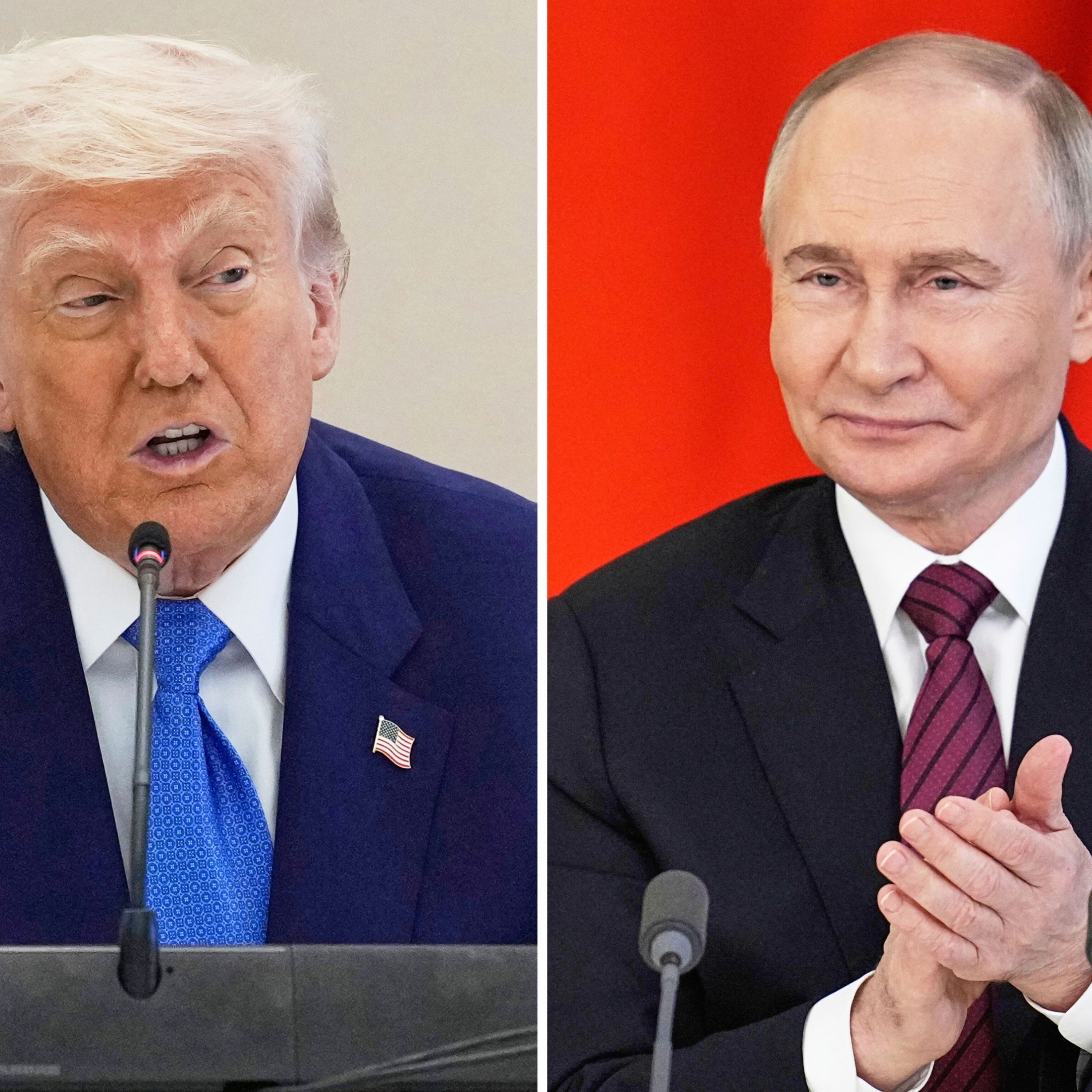
What A Day
The Trump Putin Breakup Explained
00:25:15
On the 2024 campaign trail, then-candidate Donald Trump repeatedly claimed he could end Russia’s war in Ukraine ‘on day one.’ Roughly 180 days into his second presidential term, the war has only escalated. What has changed is Trump’s attitude toward Russian President Vladimir Putin. This week, Trump announced a new deal to send U.S. weapons to Ukraine, after weeks of complaining about Putin’s increasingly destructive attacks. Ben Rhodes, former Deputy National Security Advisor to President Barack Obama and co-host of Pod Save the World, discusses the significance of Trump’s pivot. He also weighs in on the latest fault lines in the ongoing ceasefire talks between Hamas and Israel, mass layoffs at the State Department, and looming cuts to foreign aid. And in headlines: The House joined in on the Jeffrey Epstein discourse, the Supreme Court greenlights mass layoffs at the Department of Education, and former National Security Adviser Mike Waltz testifies at his Senate confirmation hea...
Loading summary
Transcript66 lines
- [00:02]
Jane Coastin
It's Wednesday, July 16th. I'm Jane Coastin, and this is what a day. The show saluting former University of Kentucky wide receiver Scott Mitchell, who ran down an attempted arsonist in Runyon Canyon in West Hollywood and prevented what could have been a truly devastating fire. That is, in my view, some truly heroic shit. On today's show, the House joins in on the Jeffrey Epstein discord. And former National Security Advisor Mike Waltz testifies at a Senate confirmation hearing to be U.S. ambassador to the United nations because we got rid of accountability a long time ago. But let's start with foreign policy, because we love good things, and sadly, no good things are happening. Take Russia's war against Ukraine. You know, the one President Donald Trump said he would end on day one and then some 180 days later, still hasn't. The reason the war is still ongoing couldn't possibly have anything to do with Trump's decision to spend months trying to cozy up to Russian President Vladimir Putin, a dictator who's had no issue sending hundreds of thousands of his own citizens to die in the meat grinder of war, a war he started to achieve his vision of making the Soviet Union great again. Nope. Trump spent Tuesday insisting this was all still former President Joe Biden's fault.
- [01:22]
Donald Trump
I think really the question should be asked, why did Biden get us into that ridiculous war? Why did Biden bring us there? That should never, ever have happened, that war. This is Biden's war. I'm just trying to end it because we're saving a lot of lives.
- [01:37]
Jane Coastin
While it's not all that surprising that Trump keeps blaming Biden for everything he doesn't like, what is surprising is the total about face he's taken on dealing with Putin. Here's Trump in May talking to reporters.
- [01:49]
Donald Trump
I'll give you an update. I'm not happy with what Putin's doing. He's killing a lot of people. And I don't know what the hell happened to Putin. I've known him a long time, always gotten along with him, but he's sending rockets into cities and killing people, and I don't like it at all. Okay?
- [02:06]
Jane Coastin
And here he is Monday in the Oval Office, just as he announced a new deal to send more weapons to Ukraine. At one point, Trump seemed to almost grasp that his Slovenian wife might have a better understanding of how Putin operates in the world than he does.
- [02:19]
Donald Trump
I go home, I tell the first lady, and I spoke with Vladimir today. We had a wonderful conversation. She said, oh, really? Another city was just hit.
- [02:29]
Jane Coastin
So it's like the first lady is not wrong. Despite all of those wonderful phone calls Trump has had with Putin, Russia has launched its most devastating aerial bombardments of the entire three year war over the last few weeks. It fired hundreds of drones and missiles into southwestern Ukraine on Saturday alone. And speaking of places where Trump claimed during the election he could bring peace, the latest round of ceasefire talks between Israel and Hamas still show no signs of progress in Gaza, even after Israeli Prime Minister Benjamin Netanyahu's visit to Washington last week. Good thing the Trump administration is gutting the State Department while Congress weighs a White House request to cut billions in foreign aid. Definitely a winning strategy. So for more on the wars in Ukraine and Gaza and how the Trump administration is wreaking havoc on American diplomatic efforts here at home, I spoke to Ben Rhodes. He served as the Deputy National Security Advisor to President Barack Obama and is now co host of Pod Save the World. Ben, welcome back to what Today.
- [03:28]
Ben Rhodes
I love being here.
- [03:29]
Jane Coastin
Let's start with Ukraine, which I cannot figure this out because Trump has done a 180 degree turn from the way he's talked about Ukraine and Russia, not just since the war began, but basically for the last 10 years. He's on the outs now with Russian President Vladimir Putin. Is this a good thing? Was this inevitable? To some degree?
- [03:51]
Ben Rhodes
Yeah, I think it was inevitable. I mean, Trump is the only person in the world who seems to have been surprised by the fact that Vladimir Putin lied to him. Right? Of course he did. Yeah.
- [04:00]
Jane Coastin
That's kind of part of his whole thing.
- [04:02]
Ben Rhodes
Yeah. His whole thing is to lie about what he's doing in Ukraine. And Trump wasted months, you know, pursuing this completely futile effort to end the war. It's good that he's now going to provide Ukraine with some support, including, really importantly, they've been under heavy missile bombardment. But to be clear, there's nothing new about this, given the stuff he's announcing. This is actually already stuff in the pipeline that the Biden administration had approved. So Trump is just letting stuff happen that was going to happen anyway. So he's talking now tough on Putin, but he's not doing anything materially different or new. And frankly, I don't think it really makes much difference because there's no strategy attached to it.
- [04:43]
Jane Coastin
Yeah. And part of the fallout between Trump and Putin is because Russia has been amping up its attacks while Trump has been talking about an alleged ceasefire and being so nice.
- [04:53]
Ben Rhodes
Yeah.
- [04:53]
Jane Coastin
And as you said, Russia's missile attack in the last couple of months has been the worst of the war.
- [04:58]
Ben Rhodes
Yeah.
- [04:58]
Jane Coastin
So why Is Russia doing this now.
- [05:01]
Ben Rhodes
Because the Ukrainians are uniquely vulnerable because of Donald Trump. Right. So if you're Putin, you're carrying out this war of attrition. Then Trump comes in, he humiliates Zelensky in the Oval Office. He says he's not going to give them a blank check of support. The Ukrainians are on their back foot, they're feeling vulnerable. What do you do? You press your advantage. Then the US Under Trump conceded in these negotiations that we believe that Russia should be able to annex all these regions that they occupy. Well, Putin's not the kind of guy who says, that's great, I'm done. He's kind of guy says, great, I'll pocket that and I want more.
- [05:31]
Jane Coastin
Right.
- [05:31]
Ben Rhodes
And so it's not at all a surprise that he would escalate things when the Ukrainians are being humiliated and isolated by Trump in this manner. Now, Trump finally, I guess, figured that out. But the Ukrainians are in a much worse position today than they were six months ago when Trump said he was going to end this war on day one.
- [05:50]
Jane Coastin
Yeah. It turns out appeasement doesn't seem to work.
- [05:53]
Ben Rhodes
It doesn't seem to work with dictatorists now.
- [05:55]
Jane Coastin
Weird.
- [05:55]
Ben Rhodes
Yeah, yeah.
- [05:56]
Jane Coastin
So Trump is, as we mentioned, sending Ukraine a new wave of weapons by way of NATO. And you've pointed out that that was in the pipeline to start with. But he's also giving Russia 50 days, the two weeks of foreign policy to reach a ceasefire deal before he imposes more economic pressures on Russia. I want to ask two questions here. One, what economic pressure can the United States possibly actually put on Russia, given that we actually don't do that much trade with Russia? So tariffs seem to me to be an ineffective policy. I mean, they're ineffective in a lot of different ways, but they're ineffective, especially here. And also, what kind of window could those 50 days give Putin to potentially escalate things in Ukraine even more?
- [06:39]
Ben Rhodes
You're exactly right. Frankly, I think sanctions, tariffs. The Russians have figured out how to live under U.S. sanctions, you know, in part, cuz they have a lot of oil and gas and they can sell it to a lot of people who want to buy it. And the more Trump pisses off other countries, the less likely they are to go along with US Sanctions and pressure on Russia. So there's a cost to Trump pissing everybody off with tariffs. Look, and on the 50 days, I think what Putin could do is just like continue the level and scale of bombardment to show he doesn't care about what Trump's Saying, so more tax on civilians in Ukraine, more tax on infrastructure that civilians rely on, like, you know, energy infrastructure. Right. Putin wants to demonstrate that he's not going to be, like, lectured into making peace by an American president. And so things could get worse for the Ukrainians. There's no reason to believe that Putin is so concerned about what Donald Trump thinks that he's going to have to change his war strategy in the next 50 days.
- [07:32]
Jane Coastin
In other ceasefire news, because that's apparently, you know, ceasefires that don't actually happen seem to be what's happening. Talks over ending the war in Gaza are reportedly once again on the brink of collapse. What appears to be the latest hangup.
- [07:47]
Ben Rhodes
The same hang up that's been the case since the beginning, which is essentially Hamas. Their position has been there needs to be an end to the war. The US And Israeli position has been essentially, there'll be a ceasefire, you release hostages, and then we're going to resume the war and we're going to ethnically cleanse Gaza. And so I hate Hamas. They're like a horrific organization that should not be governing Gaza in the future. But of course they're not going to agree to that.
- [08:17]
Jane Coastin
Right.
- [08:18]
Ben Rhodes
And the added complication has been that the Israeli Defense Minister went out and said, essentially, we're going to build a camp in the former city of Rafah that has been utterly destroyed by Israel, and we're going to move all the remaining people who are still alive in Gaza into this camp before we decide where to relocate them. That's not conducive to an idea of ending the war more broadly.
- [08:44]
Jane Coastin
Trump seemed so confident that this was something a businessman could end. Like, both of these conflicts were something that he could wrap up because you just needed somebody, an outsider, to come in and solve this. Anyone who knows anything about these two conflicts knew that that was an absurd claim. But does that failure say anything about faults in the White House's strategy? Or are these both just two intractable wars being waged by groups with long histories of conflict?
- [09:10]
Ben Rhodes
No, it does, because, look, look, any other president who came in and promised, I'm going to end the war in Ukraine on day one, and, you know, I got a ceasefire in Gaza and I'm investing all my prestige in it, like, and you had this level of failure, like, six months later, it would be a much bigger deal than nothing seems to stick to Trump in the same way it would stick to somebody else. Look, in the case of Ukraine, if you came in and said, here's a real strategy right on the one hand, if you continue this war with Vladimir Putin, there's this massive package of support we're gonna provide to Ukraine. There are these security guarantees. They're gonna get closer to NATO. Here's the pressure that we're gonna use to try to get you in the negotiating table. And then there we might negotiate some concessions on Ukraine. There was a case for a diplomatic plan. That's not what happened. He came in and he said Ukraine must make all the concessions. So that incentivized Putin to continue the war. And similarly on Gaza, I don't even like the term ceasefire, to tell you the truth, because right now what's happening is Israel is just bombing some remaining places that are not yet destroyed in Gaza and killing some additional people. Now what a US President who actually wanted to end the war would do is say to Israel, like, if you don't stop what you're doing in Gaza, I'm going to cut off all military assistance to you. By the way, I thought Joe Biden should have done that. So I'm not singling out Trump. If Trump wanted to end the war, he could that way, but instead he's just, you know, the pipeline's flowing into the Israeli military, so what incentive does Netanyahu have to actually end the war?
- [10:35]
Jane Coastin
Talking domestically, we just saw massive cuts to the U.S. state Department. More than a thousand people let go. The administration claims this is just a big reorganization, but how could those losses hobble US Diplomatic efforts, especially right now?
- [10:48]
Ben Rhodes
Well, you know, first of all, what they basically did is they eliminated any bureau that has any values proposition attached to it, right? So the Democracy and Human Rights Bureau, the Global Women's Issues Bureau, you know, all the, you can see why Trump type people wouldn't like this. But the reality is, if you take the destruction of USCID together with the elimination of any bureau in the State Department that has anything to do with values based propositions, together with, by the way, just giving the State Department a huge haircut. Guess who's not doing that? China's not doing that. China has, like a very coherent, methodical strategy for being more present around the world, for building relationships in places like Africa and Southeast Asia that are precisely the places that we are retrenching from in the Trump budget. On the one hand, they talk about the need to compete with China, the need to get critical minerals around the world. All these things that Trump talks about, he is literally like disempowering the capacity of the United States government to do those things.
- [11:48]
Jane Coastin
Speaking of values based propositions, The Senate is also about to take up a rescissions package that the President wants passed. It calls for cutting about $8 billion in foreign aid. But in a rare bit of maybe good news, it seems that former President George W. Bush's signature program to combat the spread of HIV abroad, pepfar, will be spared. This program used to have overwhelming bipartisan support. I used to work for an organization that focused on prevention of mother to child transmission of HIV that relied and still relies on pepfar. And we had support across the board. Why have Republicans turned against it?
- [12:25]
Ben Rhodes
It's baffling to me because it originated in a Republican administration.
- [12:30]
Jane Coastin
Genuinely the best thing George W. Bush ever did.
- [12:32]
Ben Rhodes
No question. It has saved tens of millions of lives at a relatively cost effective price tag. And to me, the withdrawal of Republican support from PEPFAR tells you everything you need to know about the way in which the Republican Party has kind of walked away from any values based proposition. Because there's kind of two reasons for it, or maybe three. One is just like Trump America first, we don't want to fund anything. Another is that there's some interaction in the right wing fever dream mind between PEPFAR and kind of reproductive health assistance, you know, mainly in part because you don't want to. There's funding to, you know, avoid transmission from mother to child. Like, like you worked on. Oh my God, that sounds like abortion, you know, like even though it doesn't.
- [13:20]
Jane Coastin
But like 100 not. But yeah, no, there's this kind of.
- [13:23]
Ben Rhodes
Weird correlation that they draw. And so that's like the second part of it. And then the other is just this kind of like they're starving the government through tax cuts that they have to find cuts elsewhere. And let's find it. Anything that helps people, I guess we cut whether it's in this country, in Medicaid, or whether it's PEPFAR around the world.
- [13:41]
Jane Coastin
We're still talking about $8 billion in cuts to foreign aid though. Do you think that there are enough Republicans to block this rescissions package? Because, you know, we just did the allegedly big beautiful bill where you had a bunch of Senate Republicans complaining about it, House Republicans complaining about it after they finally read it, and then they all ultimately voted for it.
- [14:01]
Ben Rhodes
Yeah, I assume, like there's maybe enough legacy support for PEPFAR that there's some like kind of small rump of it that survives. But I'm not optimistic about it. And I think Americans need to know, like, because we have such short attention spans, like, oh, they cut USAID and their projections of like millions of people are going to die because of those cuts and many of them already have. If you take away drugs that are keeping people alive and if you take away food that is keeping people alive, if you take away pepfar funding, like people will die. You may not want to think about that, but it's the reality here, right? And those fact cases don't seem to be enough to swing those Republicans when if Trump actually leans on them. At the end of the day, it's.
- [14:50]
Jane Coastin
Always interesting to me because the argument is always that, you know, well, we need to focus on veterans and the homeless here and then we absolutely are.
- [14:58]
Ben Rhodes
Not going to do that. Yeah.
- [14:59]
Jane Coastin
Yeah, we're not going to do any of that. Ben, as always, thanks so much for joining me.
- [15:03]
Ben Rhodes
Yeah, great talking to you.
- [15:04]
Jane Coastin
That was my conversation with Ben Rhodes, former Deputy National Security Advisor to President Barack Obama and co host of Pod Save the World. We'll get to more of the news in a moment, but if you like the show, make sure to subscribe, leave a five star review on Apple Podcasts, watch us on YouTube and share with your friends. More to come after some ads.
- [15:34]
Donald Trump
What.
- [15:34]
Jane Coastin
A day is brought to you by Zebiotics Pre Alcohol. Let's face it, after a night with drinks, I don't bounce back the next day like I did 10, 15 years ago. I have to make a choice. I can either have a great night or a great next day. That is, until I found pre alcohol zebiotics. Pre Alcohol Probiotic Drink is the world's first genetically engineered probiotic. It was invented by PhD scientists to tackle rough mornings after drinking. Here's how it works. When you drink, alcohol gets converted into a toxic byproduct in the gut. It's a buildup of this byproduct, not dehydration, that's to blame for rough days after drinking. Pre alcohol produces an enzyme to break this byproduct down. Just remember to make pre alcohol your first drink of the night. Drink responsibly and you'll feel your best tomorrow. Every time I have pre alcohol before I have drinks, I notice a difference the next day. Even after a night out, I can confidently plan on working out without worry. Summer is here, which means there are so many more opportunities to celebrate the warm weather before that backyard barbecue brew, glass of Pinot, watching the sunset at the beach, or a cocktail by the campfire. Don't forget your Zebiotics Pre Alcohol Drink one before drinking and wake up feeling great and ready to take on the next day. And all that summer has to offer, go to zebiotics.com wad to learn more and get 15% off your first order when you use code WAD at checkout. ZBiotics is backed with a 100% money back guarantee, so if you're unsatisfied for any reason, they'll refund your money, no questions asked. Remember to head to zebiotics.com wad and use the code WAD at checkout for 15% off.
- [17:05]
Mike Waltz
Now is your time to get into a new Dr. Horton home by taking advantage of its national Red Tag sales event going on right now through July 20th. Stop by any of its participating communities and find select red tag homes at Incredible Pricing. So whether you're buying your first home or looking for an upgrade, you don't want to miss the red tag sales event going on right now. Discover the Dr. Horton Difference at drhorton.com Dr. Horton America's Builder and Equal Housing Opportunity Builder Building a business may feel.
- [17:38]
Unknown
Like a big jump, but on deck small business loans can help keep you afloat. With lines of credit up to $100,000 and term loans up to $250,000, OnDeck lets you choose the loan that's right for your business. As a top rated online small business lender, OnDeck's team of loan advisors can help you find the right business loan to fit your needs. Visit ondeck.com for more information. Depending on certain loan attributes, your business loan may be issued by Ondeck or Celtic Bank. Ondeck does not lend in North Dakota, all loans and amounts subject to lender approval.
- [18:08]
Jane Coastin
Here's what else we're following today. Head of Lines.
- [18:14]
Donald Trump
They voted to protect.
- [18:17]
Mike Waltz
Rich and powerful men who were abusing, assaulting and abandoning young women.
- [18:27]
Donald Trump
That's what this vote is about.
- [18:30]
Jane Coastin
But enough about the 2024 election. The Epstein debate has landed in the House. California Democratic Representative Ro Khanna tore into his Republican colleagues on the House floor after they voted against forcing the Justice Department to release files on disgraced financier and convicted sex offender Jeffrey Epstein. Weird. Khanna had been trying to amend the Genius Act, a cryptocurrency bill, to require the publication of the Epstein documents. The bill would regulate stablecoins, whatever those are.
- [18:59]
Mike Waltz
There is something rotten in Washington, and this is a question of whose side are you on? Are you on the side of the people? Are you on the side of America's church children? Or are you on the side of the rich and powerful who've had their thumb on the scales and shafted Americans for decades?
- [19:25]
Jane Coastin
The MAGA infighting over the Trump administration's flip flopping on the files continues. House Speaker Mike Johnson told right wing podcaster Benny Johnson he wants the files released. South Carolina Republican Representative Ralph Norman voted with Democrats to include Khanna's amendment in the cryptocurrency bill. He said, quote, I think there are files. All of a sudden, not to have files is a little strange. We'll see how it plays out. I think the president will do the right thing. I'm sure he will, Ralph. He always does. The Supreme Court allowed the Trump administration to move forward with its plan to dismantle the Department of Education on Monday. For now, shortly after the White House said it would terminate around 1,300 workers. President Trump talked to reporters about the decision before heading to Pittsburgh on Tuesday.
- [20:11]
Donald Trump
We had a big win with the Supreme Court on the Department of Education, and we want, as you know, we want to bring education back to the states, take the federal government out of it. Little tiny bit of supervision, but very little, almost nothing. Like to make sure they speak English. That's about all we need.
- [20:30]
Jane Coastin
Who is they? What is he talking about? The legality of the potential layoffs is still being deliberated in lower courts. Also on Monday, several thousand people at the Health and Human Services Department got an email telling them that they were being fired. The layoffs come as part of a still ongoing legal battle that began when the administration tried to lay off 10,000 HHS employees in late March. The reorganization affected workers at the Food and Drug Administration, Centers for Disease Control and Prevention and the National Institutes of Health, among others. Some of those workers got their jobs back and are still protected for now. But the Supreme Court's decision to side with Trump means the odds are stacked against them. As legal challenges to the mass layoffs continue to play out in the lower courts. Federal immigration authorities are trying to get landlords to turn over information about their tenants, according to a subpoena obtained by the Associated Press. The subpoena was shared with the AP by an Atlanta real estate attorney who said it was sent to several of his clients. The document asks for leases, forwarding addresses, ID cards and rental applications, among other things. Landlords in Boston and Los Angeles have also received requests. The subpoena also asks for information about people who have lived with tenants. It's unclear how many subpoenas were sent out and where. Whether the documents are legally binding is up for debate since they're not signed by a judge. At the same time, the Trump administration is reportedly trying to keep undocumented immigrants from getting bond hearings during their deportation proceedings, according to the Washington Post that would allow immigration authorities to keep them in custody indefinitely.
- [22:05]
Mike Waltz
I'm confident under this president's leadership we can continue to spread peace and prosperity and I'm confident we can make the UN great again.
- [22:15]
Jane Coastin
Mike Waltz, President Trump's second nominee for U.S. ambassador to the United nations, testified before the Senate Foreign Relations Committee on Tuesday. Some Republicans critiqued the UN and condemned it for so called politicization and anti Semitism. During the Senate confirmation hearing, Waltz committed to vetoing one sided anti Israel resolutions and agreed the UN Needs reform, but suggested it has room for improvement.
- [22:38]
Mike Waltz
We should have one place in the world where everyone can talk, where China, Russia, Europe, the developing world can come together and resolve conflicts. But after 80 years, it's drifted from its core mission of peacemaking.
- [22:52]
Jane Coastin
Though Waltz is auditioning for a new role in the administration, there was a time not too long ago when he served as Trump's national security adviser. Remember that if you don't let me jog your memory with one Signalgate that was the March scandal involving Defense Secretary Pete Higseth texting war plans they say weren't war plans, but definitely were war plans to a Signal group chat that accidentally included the editor in chief of the the Atlantic. Waltz was at the center of the controversy because he was the one who allegedly added the journalist to the chat by mistake. Delaware Democratic Senator Chris Coons asked Waltz during the hearing if disciplinary action was taken by the White House investigation for the fuck up. Waltz said nope, nada, and insisted the use of Signal is not only authorized but highly recommended. He's notably no longer the national security advisor for reasons. So in summary, if you mistakenly add a journalist to a small group cabinet meeting on a platform you're definitely not supposed to be using to talk about not war plan war plans, you get a new job. Great. And that's the news. Before we go. If you enjoyed listening to Ben Rhodes, check out his show Pod Save the World. Each week he and Tommy Vitor break down the biggest international stories, from diplomacy to conflict, and explain how U.S. foreign policy shapes what's happening around the globe. This week they're covering State Department layoffs, meetings with African leaders, and the latest on Russia, Ukraine and Israel, Gaza. Watch Pod Save the world on YouTube or listen wherever you get your podcasts. That's all for today. If you like the show, make sure you subscribe, leave a review, thank a cat named Pepper who has discovered a rare virus for the second time, and tell your friends to listen. And if you're into reading and not just about how Pepper the cat who belongs to a virologist at the University of Florida, discovered a rare virus on a rodent he caught that might be connected to cases of encephalitis in humans like me. Water Day is also a nightly newsletter. Check it out and subscribe@crooked.com subscribe I'm Jayden Coston and Pepper discovered a rare microbe back in 2021. I have never discovered any rare diseases, so 2 points for pepper. What a Day is a production of Crooked Media. It's recorded and mixed by Desmond Taylor. Our associate producer is Emily Foer. Our producer is Michelle Eloy. Our video editor is Joseph Dutra. Our video producer is Johanna Case. We had production help today from Greg Walters, Matt Bur Berg, Sean Ali, Tyler Hill and Laura Newcombe. Our senior producer is Erika Morrison and our Senior Vice President of News and Politics is Adrienne Hill. Our theme music is by Colin Gilliard and Kashaka. Our production staff is proudly unionized with the Writers Guild of America east.
- [26:18]
Mike Waltz
Now is your time to get into a new Dr. Horton home by taking advantage of its national Red tag sales event going on right now through July 20th. Stop by any of its participating communities and find select red tag homes at incredible pricing. So whether you're buying your first home or looking for an upgrade, you don't want to miss the red tag sales event going on right now. Discover the Dr. Horton Difference@doctor.com Dr. Horton America's Builder and Equal Housing Opportunity Builder.
- [26:49]
Unknown
Want to pull off the season's freshest trends? You just need the right shoes. That's where designer shoe Warehouse comes in. Loving wide leg jeans. Pair them with sleek low profile sneakers. Obsessed with the sheer trend? Try it with mesh flats, Feeling Boho comfy sandals. Nail the whole free spirited thing. Find on trend shoes from the brands you love like Birkenstock, Nike, Adidas and more at DSW.