← What A Day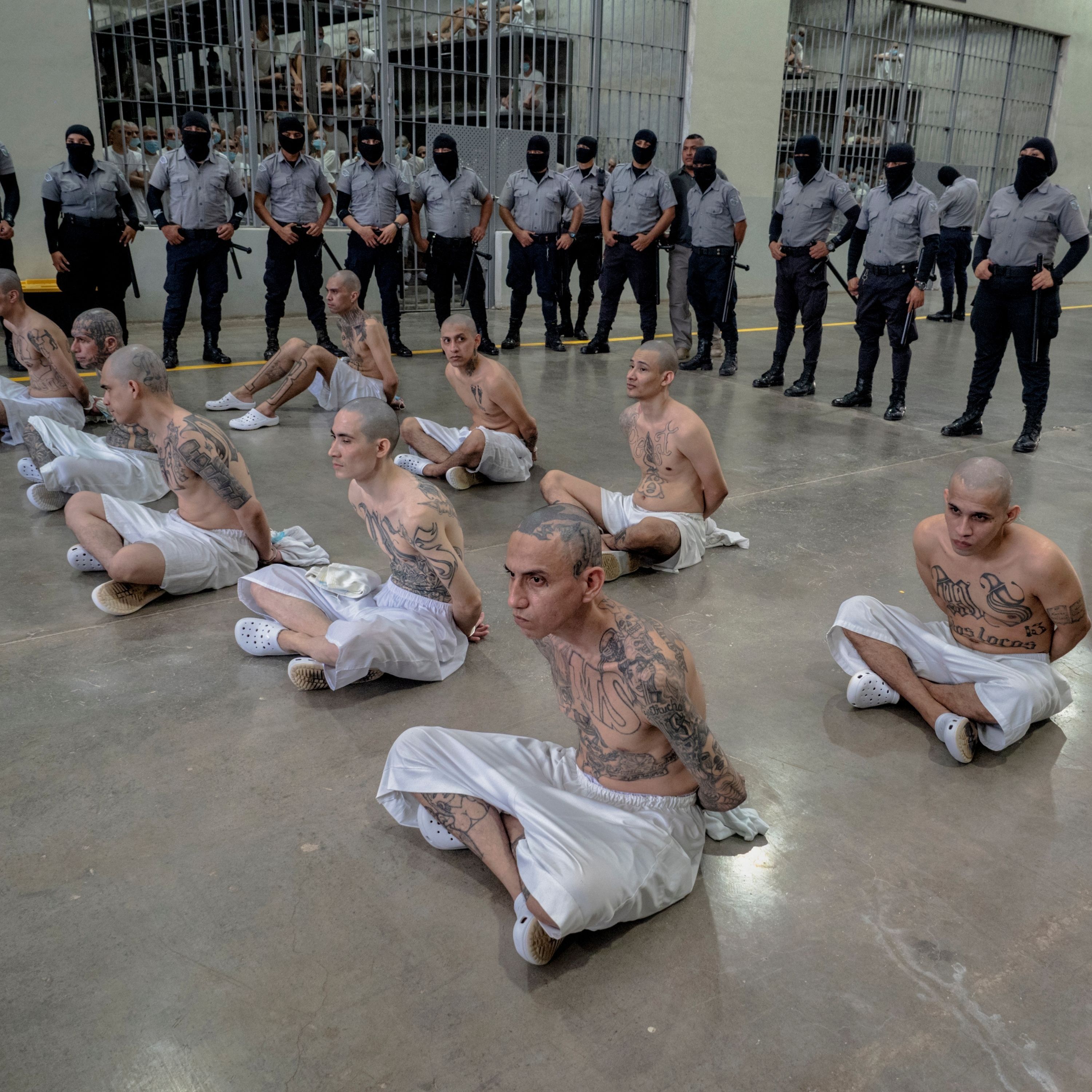
What A Day
The Truth About El Salvador's Mega Prison
00:21:40
We’re starting to hear the horror stories from some of the Venezuelan men who the Trump Administration deported to the Salvadoran super-max prison known as CECOT. Many of the migrants, who were abruptly released and sent back to Venezuela last month as part of a prisoner exchange with the U.S., allege they suffered physical, psychological and sexual abuse during their detention. At least one man is trying to sue the U.S. government over his time in CECOT. And then there’s Andry José Hernández Romero, the gay makeup artist whose story garnered national attention after his arrest. He says he faced constant harassment in the prison because of his sexual orientation. Melissa Shepard, director of legal services at the Immigrant Defenders Law Center and one of Romero’s legal representatives, joins us to talk his story and others who were detained at CECOT. And in headlines: President Donald Trump suggested he may soon meet in person with Russian President Vladimir Putin, Texas Democrats...
Loading summary
Transcript43 lines
- [00:02]
Jane Coastin
It's Thursday, August 7th. I'm Jane Coastin, and this is what a day. The show shouting out the New Zealand Air Force for rescuing three people from a US Research base in Antarctica despite the complete darkness of Antarctic winter and temperatures at minus 10 Fahrenheit. On a related note, I will not be traveling to Antarctica in winter. On today's show, Texas Dems face a bomb threat at their hotel as they protest redistricting votes. And the Department of Homeland Security lifts age limits on Immigration and Customs Enforcement officers and offers some major incentives. But let's start by talking about the Terrorism Confinement center, or ccat. That's the Salvadoran supermax prison to which the Trump administration has deported hundreds of migrants. Officials allege these men were violent gang members with little evidence. We are starting to hear the horror stories from some of the Venezuelan men who were sent there about four months ago until they were abruptly released last month in a prisoner exchange. ProPublica published an interview with one of those men on Wednesday. His name is Juan Jose Ramos. Ramos. He came to the US Legally during the Biden administration. Ramos says he was in the middle of his immigration case when he was deported. He says prior to his detention at sicat, he'd never been to jail in his life. He says there, all the officers would come in and beat you many times. It was even the prison director who hit you. I can barely see through one eye from all the blows to the head. His story is not unique. In an interview with NBC News, three men sent to CECOT alleged that they suffered physical, psychological, and sexual abuse. At least one migrant sent to Seekot is starting the process of suing the US Government over his detention in El Salvador. And then there's Andre Jose Hernandez Romero. His story garnered national attention after his arrest. He's a gay makeup artist who was seeking asylum in the US because of his sexual orientation. Since his release from ccat, Romero has said he faced constant harassment in the prison because of his sexual orientation. So to talk more about CKAT and what the men our country sent there endured, I spoke to Melissa shepherd, director of Legal services at the Immigrant Defenders Law Center. She is one of Romero's legal representatives. Melissa, welcome to what a Day.
- [02:31]
Melissa Shepherd
Thank you so much for having me.
- [02:32]
Jane Coastin
You represent Andre Romero, a Venezuelan makeup artist who was sent to seekat. He's been speaking out since returning, but can you tell us a little bit about his story and how he ended up there?
- [02:43]
Melissa Shepherd
Yeah, sure. So Andre fled Venezuela last year and came to the US Border seeking asylum. And he did it the way he was supposed to. The administration at that time rolled out the CBP1 application. He waited patiently for an appointment, appeared for his appointment, and unfortunately, he never stepped foot freely in the US and was immediately sent to an immigration detention center. He actually came to the United States seeking asylum because as a LGBT individual, he was persecuted in Venezuela and he also fled for political reasons. So he came to the US Seeking safety. He was detained, and he began looking for legal representation. We began representing him late 2024 and had already filed his asylum application when in March, he was sent to Texas without any notice to us, without any notice to him. And now, in hindsight, we're realizing he was told that he was being taken to a better place, when in fact, he was being staged in Texas for one of those flights that went to the notorious prison in El Salvador.
- [03:59]
Jane Coastin
Now, a big thing that was part of his story, and I feel ridiculous asking this, is that he was accused by the United States government of being a member of a Venezuelan based gang called Trenda Aragua. And the evidence they used was were his tattoos. Can you talk about his tattoos and why they were an issue? Please know, I feel like an idiot asking you about this because it's so ridiculous, but I think it's important to explain.
- [04:27]
Melissa Shepherd
Yeah, I mean, I think at this point, everybody has seen Andre's tattoos. But when he presented himself for the CBP1 appointment and was detained, he immediately went under an interview where they asked him a series of questions, including, are you a gang member? Have you ever been associated with this gang? All of which he denied, but for the simple fact that he had some tattoos. It gave him enough points on this scale that they were using to determine that he could be affiliated with the Trend Aragua gang. He has a few tattoos, very artsy types of tattoos. He's got a snake, butterfly, flowers. But most notably, he had tattoos on each of his wrists that were crowns. And one said mom, one said, dad. And those crowns are actually associated with a Three Kings festival that he has celebrated in his hometown since he was a young child.
- [05:23]
Jane Coastin
Your firm ended up representing seven other men who were sent to seacot. What have Andre and the other men told you about their experiences?
- [05:33]
Melissa Shepherd
They were told initially that they were being sent to Venezuela. And so when the plane landed in El Salvador and they were told to get off of the plane, they did not want to get off. They knew that this is not where they should be. But the moment that they stepped off of the plane onto those stairs to exit the plane, they started receiving beatings. And the beatings didn't stop for 125 days. The conditions they described, as they were intaked, their heads were forcibly shaved. Men were falling over on their knees. They were handcuffed, they were crying. They were only given five seconds to take off their clothes so that they could put on their new prison uniforms. They shared how the lights were never turned off in their cells. All night long, they had trouble sleeping. The guards would bang their keys on the cell so that they couldn't continue sleeping anywhere from sleeping to the food. They experienced absolutely brutal conditions.
- [06:32]
Jane Coastin
And to be clear, none of the men that your firm is representing had a criminal record, Correct?
- [06:38]
Melissa Shepherd
Right. Including Andre. These men did not have any criminal convictions. Andri, in particular, had never been arrested. He had never stepped foot inside of any type of prison or jail, either here or in any other country. So it was an absolute shock for him to go from a person who was free to detained in the United States in an immigration detention center to Seekot, you know, which is one of the most notorious prisons in the world.
- [07:08]
Jane Coastin
Right. It's a prison that's supposed to be for, like, hardened criminals who will never get out. But I wanted to ask because one of the other things, I mean, there's so much horrible about this case, but something that really struck me was how people didn't know that their loved ones had been sent to Seekot. And I was curious, did you or your colleagues have any access to your clients while they were there? Because you were already representing Andre beforehand. When did you find out he was there?
- [07:36]
Melissa Shepherd
Yeah. So Andre actually had an immigration court hearing on March 13. At that point, he'd already been sent to. To Texas, and he did not appear for his hearing. The Department of Homeland Security had no explanation as to where he was. We were able to speak with him that afternoon and told him that his hearing had simply been rescheduled to the next week. We started hearing grumblings about these flights being taken to El Salvador, but in fact, had zero access whatsoever, despite our request to give us access to our client.
- [08:07]
Jane Coastin
Now, all of these men are now back in Venezuela. Are they back with their families? I know Andre Omero Monroe's mother was desperately pleading for his return or even just to know how he was doing. There was a really interesting back and forth between Representative Robert Garcia and Kristi Noem in Congress being like, can you tell Andre's mother that he's okay? And she was like, I'll have to look into that. So how are they all doing now?
- [08:33]
Melissa Shepherd
Yeah. Fortunately, we have confirmed that all of our clients have been able to be returned to Venezuela. They're with their families. A lot of them have reported that, in particular their mothers have had a really tough four months without their children there and have described that they found their family members who had lost weight, who had become really depressed. And so I think it's a healing journey for not only the men, but their families as well.
- [09:01]
Jane Coastin
I mentioned that Andre Romero, the makeup artist we've been talking about, is speaking out, and he was quoted in the Guardian as saying, we have to clear our names. Now, to be clear, he didn't do anything, but how is he trying to move forward?
- [09:15]
Melissa Shepherd
Yeah, so I think what you're referring to, Andri in particular, is really referring to the fact that for the last four months, him and these other men have been called terrorists. He wants to clear their name because he's saying, I have no criminal record. I have zero association at all with Trend Aragua. And I want to make that really clear to the world. We are not bad men. We are human beings. He is sharing his story so that people know what happened to them and so that it doesn't happen in the future to us others.
- [09:48]
Jane Coastin
The release of these men was really sudden. What do you know about the prisoner exchange that led to their freedom? And do you know if other people are still being sent to Seekot?
- [10:01]
Melissa Shepherd
Yeah, the. The. You're right. The prisoner release was very abrupt. And in fact, other attorneys who were representing some of these men had no idea this was happening. So my guess is as good as yours as to why they were actually finally released. But it appears that it was as part of prisoner swap, and it's clear that these men were being used as leverage the entire time. And I think it goes to show that the US did have custody over these men, despite the government denying. So for the last four months.
- [10:30]
Jane Coastin
And do you know if the US Is still sending people to Seekot?
- [10:36]
Melissa Shepherd
As far as we know, we have not received any reports that they are still sending men to Seekot. But I can tell you that the government is using the tactic of sending folks to third countries. Even when they have relief in the United States, they're being sent to third countries that will accept them. And, you know, the. The men who were sent to Seekot really want to share their story so that this does not continue to happen. Whether it happens in El Salvador or if it happens in. In Sudan, we don't want this to continue to happen.
- [11:09]
Jane Coastin
The ACLU has filed a lawsuit arguing that these men were denied due process. Do you know where that case stands right now, correct?
- [11:17]
Melissa Shepherd
Yeah, there's a lot happening with that case at this time. I know Judge Boasberg did say that these men had their due process rights violated and so the government was supposed to return with a way in which they could provide some remedy to these men. And so I think it's going to be a case that we're going to be following very closely. As you can imagine, some of these men never want to return to the US after being betrayed and sent to a torture prison. But at the very least, we want to know what their options are and are going to be taking a close look moving forward.
- [11:53]
Jane Coastin
Melissa, thank you so much for your time.
- [11:56]
Melissa Shepherd
You're very welcome. Thank you.
- [11:59]
Jane Coastin
That was my conversation with Melissa Shepard, Director of Legal Services at the Immigrant Defenders Law Center. We'll get to more of the news in a moment, but if you like the show, make sure to subscribe, leave a 5 star review on Apple Podcasts and share with your friends. More to come after some ads What a day is brought to you by Deleteme Deleteme makes it easy, quick and safe to remove your personal data online. At a time when surveillance and data breaches are common enough to make everyone vulnerable. Data brokers make a profit off your data. Your data is a commodity. Anyone on the web can buy your private details that can lead to identity theft, phishing attempts, and harassment. But now you can protect your privacy with DeleteMe. As someone with a very active online presence, privacy is really important to me. I fortunately have never been a victim of identity theft, but I do know people who have been. And I think Delete Me can help take control of your data and keep your private life private by signing up for Deleteme now at a special discount for our listeners. Get 20% off your delete me plan when you go to JoinDeleteMe.com wad and use promo code WAD at checkout. The only way to get 20% off is to go to JoinDeleteMe.com wad and enter code WAD at checkout. That's JoinDeleteMe.com wad code WAD Amazon One.
- [13:22]
Various News Contributors
Medical presents Painful Thoughts I've been on.
- [13:26]
Jane Coastin
Hold to make a doctor's appointment for 23 minutes now. The automated voice has told me 47 times that my call is very important to them. I'm starting to think that they don't think my call is important at all.
- [13:41]
Various News Contributors
With Amazon One Medical 24. 7 Virtual Care, you'll get help fast without having to remain on the line to make an appointment. Amazon one Medical healthcare just got less painful. When's the last time you changed your air filter? Filtreat Brand is here to remind you that it's important to change it regularly to help keep your H Vac system running smoothly and efficiently. Multiple factors can impact the life of your AC air filter, like pets, cooking and poor outdoor air quality. Filtreat MPR 1900 air filters can help capture these unwanted micro particles, including bacteria and viruses, circulating in your home's air. Change your filter today with Filtreat Brand.
- [14:23]
Jane Coastin
Here's what else we're following today. Head of Lines.
- [14:29]
Various News Contributors
We had some very good talks with President Putin today, and there's a very good chance that we could be ending the ending the round, ending the end of that road. That road was long and continues to be long. But there's a good chance that there will be a meeting very soon.
- [14:48]
Jane Coastin
That was President Trump speaking to reporters at the White House on Wednesday. In his very normal way, according to multiple outlets, the president could meet in person with Russian President Vladimir Putin as soon as next week in an ongoing effort to broker an end to the Russia Ukraine war. Trump, of course, wouldn't say how close he was to reaching a deal, but said, quote, I've been disappointed before with this one. Trump's special envoy, Steve Wykoff, met with Putin in Moscow on Wednesday. Ukrainian President Vladimir Zelensky later said he spoke with Trump on the phone about said meeting. Wykoff and Putin's meeting comes before the White House's looming deadline for Russia to reach a peace deal with Ukraine or potentially face severe economic penalties that could also hit countries buying its oil. But knowing Trump, there's always a chance the deadline gets pushed because what is it? Oh yeah, probably two weeks, because it's always two weeks. A meeting between Putin and Trump would be significant. It would be their first since Trump returned to office.
- [15:48]
Various News Contributors
When people use the dog whistles like hunt them down, there are people that are willing to do that.
- [15:54]
Jane Coastin
That's Texas State House Democrat Ramon Romero speaking to MSNBC Wednesday morning. He and other lawmakers were forced to evacuate the Illinois hotel where they're staying because of a false bomb threat. They're in the state to block a Republican redistricting push in Texas. A statement posted to the Texas House Democrats official Twitter account read, quote, we are safe, we are secure, and we are undeterred. The lawmakers fled Texas Sunday to prevent their Republican counterparts from doing President Trump's bidding and passing a new congressional map to help him in next year's midterms, the situation has escalated quickly. The state's attorney general is threatening to expel the Democrats who fled if they're not back by Friday, Trump told reporters Tuesday federal agents may have to get involved. And Republican Governor Greg Abbott asked the states all Republican Supreme Court to oust House Democratic Leader Gene Woo from office. Wu told CNN late Tuesday that Abbott's actions are, quote, purely insanity. What we're looking at is a governor.
- [16:52]
Various News Contributors
Who is conspiring with a disgraced president.
- [16:56]
Jane Coastin
To use unconstitutional, illegal racial gerrymandering to destroy our communities.
- [17:02]
Various News Contributors
I have a duty to respond to that. I have an obligation to do everything I can to stop that.
- [17:10]
Jane Coastin
Texas nakedly partisan push to redraw their congressional districts has set off a chain reaction of other states threatening to do the same. Vice President J.D. vance is set to visit Indiana today to talk to lawmakers there about redistricting. For Democrats, their best bet to counter Texas is in California. State lawmakers there are weighing maps that could net the party five seats. This is one of the things that I'm so excited about because we've seen our ICE officers be terrorized by activists, by violent people who want to do them harm, and they have continued to go out bravely and do their jobs and make sure that they're upholding the rule of law. Department of Homeland Security Secretary Kristi Noem wants you to join her team. The GHS is looking for a few good folks to join ice. To encourage people to apply, GNOME announced Wednesday the agency would waive the age limit for applicants. It's unclear how old one can be to be considered for a job with ice, but the cap is now gone. The max age for a new hire used to be one day shy of 37 years old, in case you cared. In a press release, DHS explained that it lifted the age cap so, quote, even more patriots will qualify to join ICE in its mission to arrest murderers, pedophiles, gang members, rapists and other criminal illegal aliens from America's streets. But not like white pedophiles or rapists, so don't worry about those. The benefits package is pretty sweet, too, including a maximum $50,000 signing bonus and, quote, administratively uncontrollable overtime for deportation officers. I'm not sure exactly what that means, but the recruitment push is being funded by Trump's Big Beautiful law, which includes $170 billion for immigration efforts and border security. So who cares about how much all of this costs? DHS says it now has 80,000 applicants for 10,000 positions.
- [19:02]
Various News Contributors
I'm not here to doge the FAA, okay? That is not my gig. That is not what the president asked me to do. The president asked to fix it. Whatever resources you need, let's get it fixed.
- [19:15]
Jane Coastin
In a private town hall, Trump's new Federal Aviation Administration leader repeatedly took shots at Doge. You guys remember Doge, right? The Department of Government Efficiency, Elon Musk. Weird people. What a day. Newsletter writer Matt Berg attended the town hall on Wednesday and reports that FAA administrator Brian Bedford denounced Doge's cost cutting mission and told staffers his agency instead needs to be built up.
- [19:38]
Various News Contributors
Anybody who thinks, oh gosh, efficiency's gonna mean fewer jobs just isn't paying attention, right? The agency has got a huge growth mission ahead of it.
- [19:49]
Jane Coastin
His comments come after job cuts at the FAA prompted employees to leave en masse and concerns about air safety in the wake of deadly crashes earlier this year. The FAA is planning to overhaul decades old equipment that's often blamed for airplane communication issues and malfunctions. Trump's big beautiful law set aside more than $12 billion for that effort because broken clocks once a day, you get it. But some aviation workers say that's not enough. Bedford said he's set to talk numbers with Office of Management and Budget director Russell Vogt today. And that's the news. Before we go, the crooked store's big summer sale is here and everything is 20% off. So if you want a new friend of the Pod tee or the redesigned Call Congress Merch, it's all on sale for a limited time. Merch is a great way to show you support the pod without having to buy a meme coin or a golden phone with our faces etched on it. And right now it's all on sale. Shop 20% off everything@cricut.com store. That's all for today. If you like the show, make sure you subscribe, leave a review, congratulate Major League Baseball's first female umpire and tell your friends to listen. And if you're into reading, I'm not just about Jen Powell, who will be the first woman to serve as an umpire for a regular season Major League Baseball game this weekend. Like me, what a Day is also a nightly newsletter. Check it out and subscribe@crooked.com subscribe I'm Jane Coastin and before officially making it to the Big Show, Paul was the first female AAA baseball umpire in 34 years and was the first female umpire in spring training since 2007. Unfortunately, her reward will be umpiring three Atlanta Braves games this weekend. The Braves are 47 and 65. Sorry J what a Day is a production of Crooked Media. It's recorded and mixed by Desmond Taylor. Our associate producer is Emily Foer. Our producer is Michelle Aloy. Our video editor is Joseph Dutra. Our video producer is Johanna Case. We had production help today from Greg Walters, Matt Berg, Gina Pollack and Laura Newcombe. Our senior producer is Erica Morrison and our senior vice president of news and politics is Adrienne Hill. We had help with the headlines from the Associated Press. Our theme music is by Colin Gilliard and Kashaka. Our production staff is proudly unionized with the Writers Guild of America East.
- [22:41]
Various News Contributors
Amazon Pharmacy presents painful thoughts 20 more minutes to kill in the pharmacy before my prescription is ready. Maybe I'll grab some deeply discounted out of season Halloween candy. I never had a chocolate pumpkin with raisins before. Those were raisins, right? Next time use Amazon Pharmacy. We deliver. And no, those were not raisins. Amazon Pharmacy healthcare just got less painful.
- [23:11]
Andy Richter
Hi there, it's Andy Richter, and I'm here to tell you about my podcast, the three Questions with Andy Richter. Each week I invite friends, comedians, actors and musicians to discuss these three questions. Where do you come from, where are you going, and what have you learned? New episodes are out every Tuesday with guests like Julie Bowe and Ted Danson, Tig Notaro, Will Arnett, Phoebe Bridgers, and more. You can also tune in for my weekly Andy Richter Call in show episodes, where me and a special guest invite callers to weigh in on topics like dating, disasters, bad teachers, and lots more. Listen to the Three Questions with Andy Richter wherever you get your podcasts.